Creature Feature

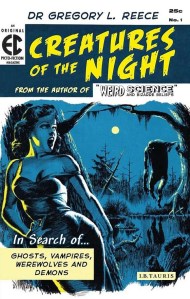
Gregory L. Reece’s Creatures of the Night is a strangely profound book. I picked it up to read on the plane home from Chicago and I wasn’t disappointed. Promising to explore ghosts, vampires, werewolves, demons and devils, Reece suggests that maybe the key to such fascination rests with the late Rudolf Otto. I had over a decade of students read Otto’s famous little book, The Idea of the Holy. Otto, whose palindromatic surname suggests something uncanny, characterized the holy as the fascinating mysterium tremendum, the wholly other. (I will refrain from calling it the wholly holy.) The mystery that makes us tremble. The monsters that haunt our nights and imaginations are aspects of this utterly other.

Along the way Reece proves an able tour guide. He recognizes, as I have repeatedly stated in this blog, that religion and fear are conjoined twins. He also knows how to get your skin crawling. For Reece there is no question that such things are real. Real doesn’t mean that they are physically lurking outside your window at night—for who is to say that only the physical is real?—but they are as real as religion. No doubt strange things have transpired in history and continue to occur. And the reason we go into church may ultimately be the same reason that we watch a horror film.

As Reece comes upon the topic of demons the air in the room (or plane, or bus) thickens. Here we have documented accounts of impossible events. No amount of rational training can remove the shudder from these stories. Explanations of epilepsy only go so far before terror takes over. By herding them together with vampires, werewolves, and ghosts, Reece stakes his claim that they all are real. Rational reductionists may shrink our world down so tightly that no room appears in the inn for our creatures of the night. But those who are honest, even among the reductionists, will admit to a mysterious tremor, even if unintentional, on a dark and stormy night.


Shopping for Fear

So I decided to visit a Halloween store. These have been showing up with metronomic regularity in September for several years now and are usually good for a cheap thrill. My personal preference for Halloween is more somber than garish, but the affirmation that other people enjoy a safe scare has a way of drawing me in. Those who read this blog on a regular basis know that I frequently point out commonalities between fear and religion. They both seem to hover around the same orbit in the brain, and, in some accidentals are very similar. Horror films therefore often indulge in religious imagery, and monsters do not infrequently partake of the divine. So it is no surprise to see my thesis borne out in shops intending to capitalize on fear.

I will freely admit that there may be cultural references that I’m missing here. A movie that I’ve neglected, or some television show or graphic novel may be informing some of the images in ways I can’t comprehend. Nevertheless, we all know of the power of the crucifix when it comes to vampires. I wasn’t aware that the cross had horrific effects on other species of monsters as well. Take this guy here. I’m not sure what he’s supposed to be—perhaps a zombie? It seems a little too corporeal to be a demon. The teeth just don’t look right for a vampire. In any case, he seems to have an extreme reaction to religion, with the cross melting right into his skull. Is there a conversion message hidden here somewhere? Of course it could be just a chinzy attempt to scare a real religiophobe. The cross has become the backup weapon against all supernatural evil.

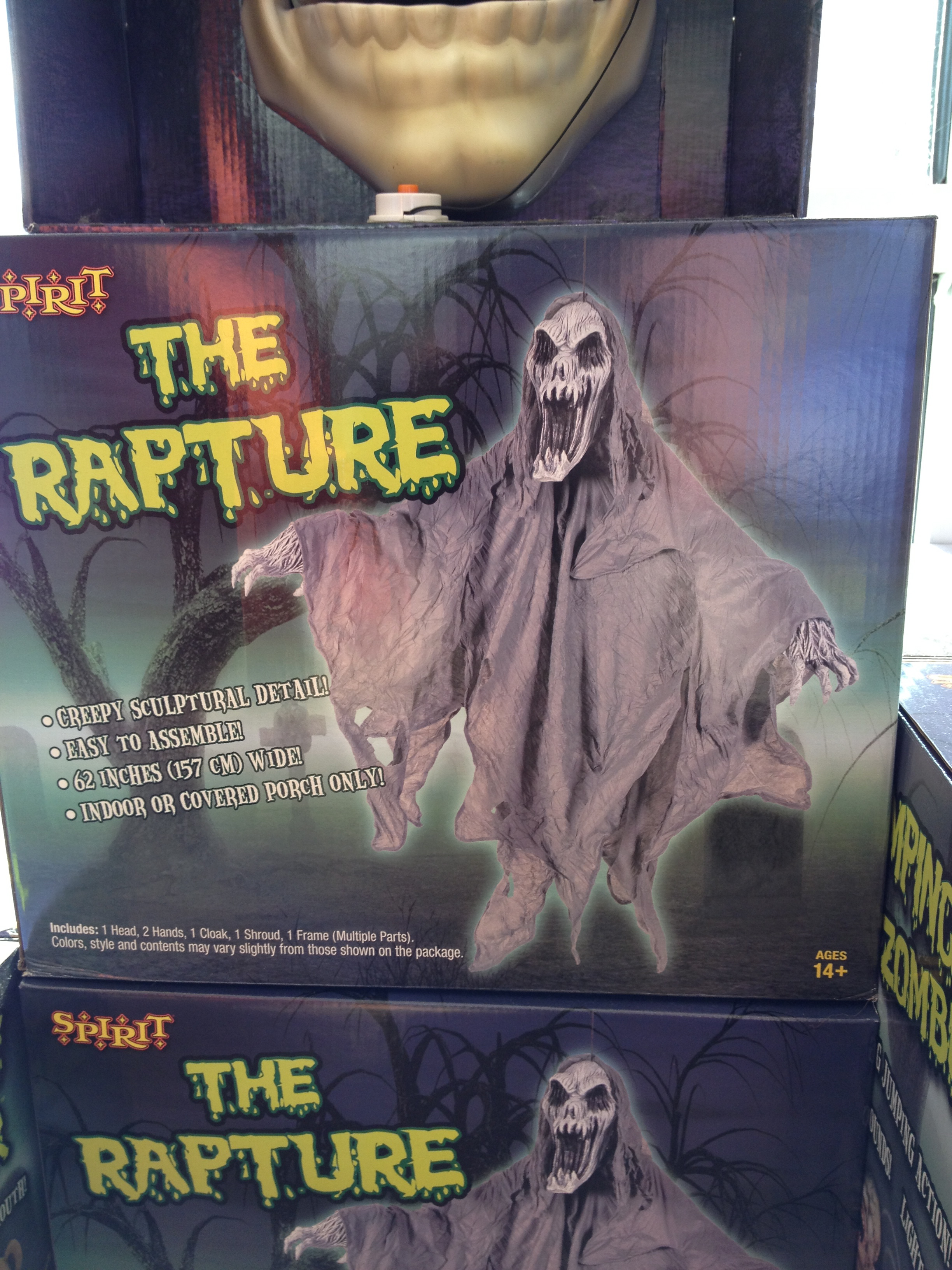
The use of a grim-reaperish ghoul rising from the grave to illustrate The Rapture was a new one on me. Last I heard only the squeaky clean and friends of the Tea Party got to go on the Rapture. (Well, the latter category might explain it.) The idea of the Rapture, as it was fabricated late in the nineteenth century, involved the chance for all the good Christians to escape before things really got rough down here for us normal folk. I would’ve thought that scary guys like this joining the heavenly crusade might take a little bit of the joy out of the occasion. Or maybe they’re being left here to haunt the rest of us. In either case it is clear that consumers respond to religious sounding language and symbolism when looking for a scare. Obviously there is plenty in the store with no religious significance at all, but finding hints of religion scattered in with the plastic scares does show a kind of Frankenstein’s monster of human sentiments and emotions. It’s only appropriate when the nights are now longer than the days.


Last Call

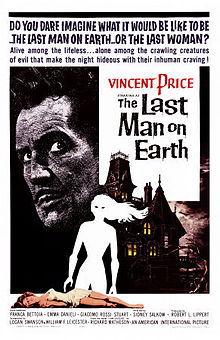
A believer in equality across media, I decided to balance out my recent viewing of The Last Woman on Earth with its chronological sequel, The Last Man on Earth. I have seen I Am Legend a time or two, but I have not yet read the Richard Matheson novel. Knowing that the first cinematic attempt at the story was the Vincent Price version, I was curious to see what the last man and the last woman had in common. Not surprisingly, it was a church. The story has been around long enough that spoiler alerts are superfluous, so here goes: basically, vampires have taken over the world. Somehow Robert Morgan has survived and spends his days hunting vampires and whiling the nights away with jazz and booze. As the opening sequence rolls, the camera lingers on a church where the marquee reads “The End of the World.” Of course, in a quasi-literalist sense this is true. Robert is the only non-infected person left. He is eventually located by the infected-but-inoculated crowd and chased down to be staked to death at the altar of a church. The culmination is strikingly similar to The Last Woman on Earth where the final scene also involves a death at the altar in a church.

The noticeable difference, however, revolves around gender. There is very little in the way of sexual suggestibility in The Last Man. Even the scenes of Robert with his wife are chaste and emotional distant. The appearance of Ruth does not even tempt him after three years alone. The Last Woman, however, revolved precisely around this axis—one woman, two men. The sexual tension is the fuel that moves this entire movie along. Of course, the 1960s became the decade of the sexual revolution, but even so the female is decidedly an object in Last Woman. Even in The Last Man, the woman leads to Robert’s death. She was sent to betray him, and although she changes her mind and attempts to save him, it is in vain. Robert dies in her arms. This fear of female power has never dissipated. How many women have been elected president since the 1960s?

While maybe not the heart of the matter, religious constructs may be the lungs or stomach of the situation. Although current religious thinking often insists on equality of the sexes, a tremendous cultural freight placing women in an inferior status continues to weigh heavily on our cultural mores. The largest Christian body in the world still denies women access to the priesthood. Even the idea of denying access underscores just how deeply this sentiment runs. The movies of the early 1960s had neither the budget nor the cultural support to suggest that things should change. Indeed, in both Last pictures the message was that the world had ended already—why bother trying to change anything at this late stage? The final shot, the stolid interior of a church, underscored the message: the status quo has the sanction of the divine.


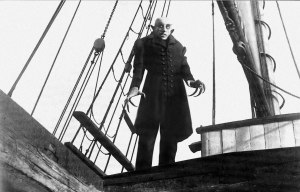
Psychotic Vampires

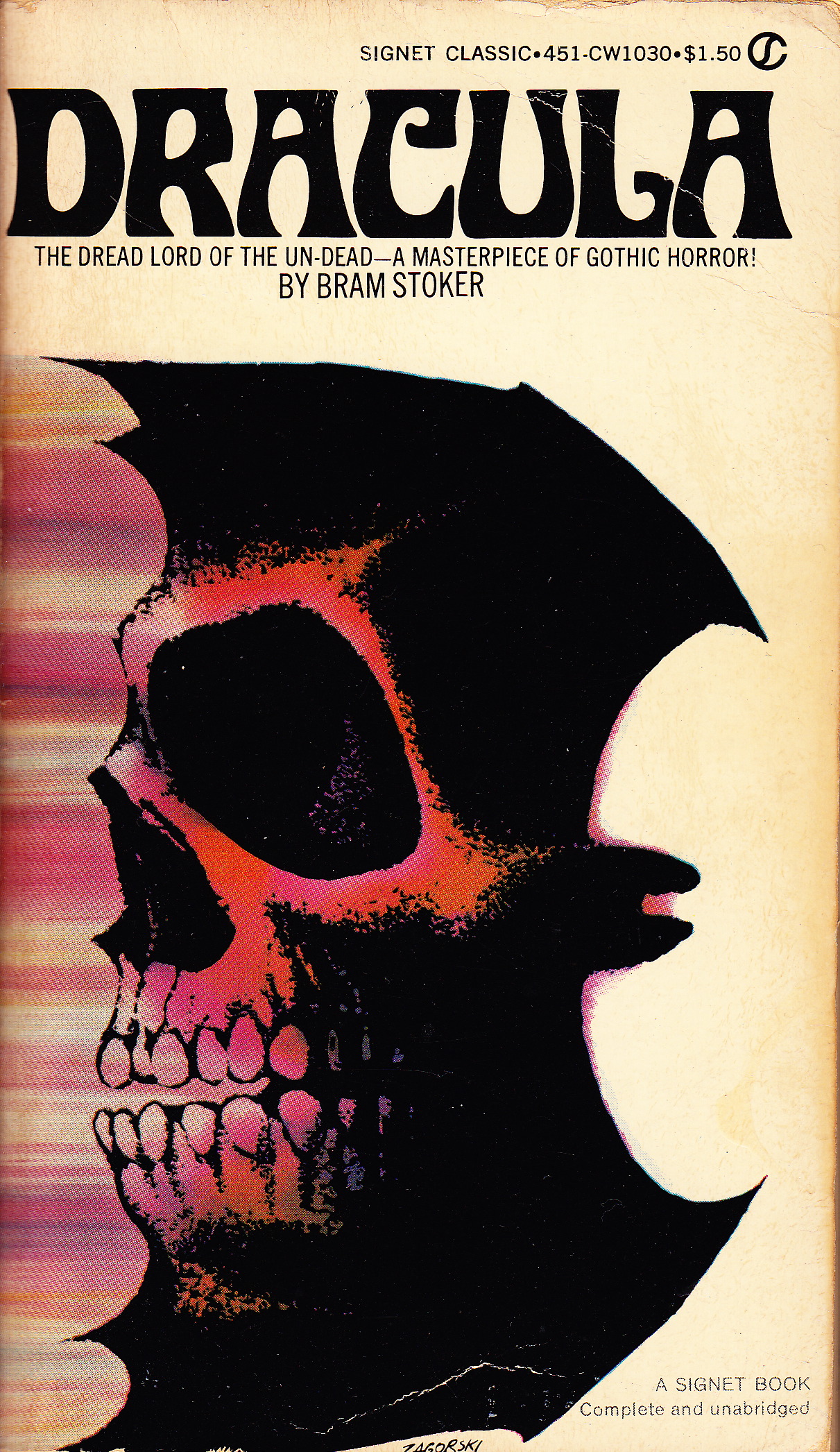
Over the past several months, and unrelated to the current vampire craze, I have re-watched some of the classic vampire movies: Dracula, Bram Stoker’s Dracula, Nosferatu (both Murnau and Herzog), and even Shadow of the Vampire—a movie about making vampire movies. Although the prototype of the vampire goes far back in civilization, in some form back to even the earliest of civilizations, the modern rendition rests mostly on the imagination of Bram Stoker. I’ve been re-reading Dracula to recapture a sense of why this particular telling of the tale has become iconic. One suggestion that comes as I’m reading is that it presses the religious taboos of its Victorian era sensibilities. Indeed, Stoker consciously wrote religiously provocative elements into his story. Of course, in movie form the story is altered to fit the needs of both time and scope.

A character that transforms in these various films is Renfield, the lunatic. In Stoker’s original Renfield is the foil for Dracula himself, his devotion interpreted as insanity by the science of the day. At one point Dr. Seward, Van Helsing’s protege and the man in charge of Renfield, notes with clarion penetration, “for a strong man with homicidal and religious mania at once might be dangerous. The combination is a dreadful one.” Renfield is, as a servant of Dracula, complicit in both homicide and religious mania. He uses Christianesque language when referring to his master. In describing his devotion, Seward notes, “He thinks of the loaves and fishes even when he believes he is in a Real Presence.” To a generation raised without Bible, this confession makes little sense.

I have contended throughout this blog that religion and horror are intimate familiars. To understand the appeal of the vampire, one must explore the religious context. Surely the simple neck-biting and blood-sucking without religious underpinnings would soon grow tedious. It is the sense of mystery—most fully realized in religious thought—that brings the vampire to life in the imagination of a generation lacking traditional religion. Not to mix metaphors too intimately, but there is a dose of Melville to be mixed in as well. Renfield is the epitome of madness, blindly following where he believes he is called. But the reader knows how sadly mistaken he is. So it is that I return to Bram Stoker’s Dracula and in so doing find a form of true religion.


Dark Light

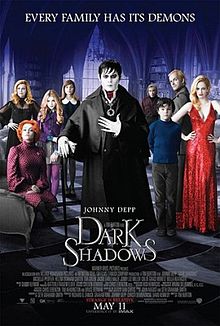
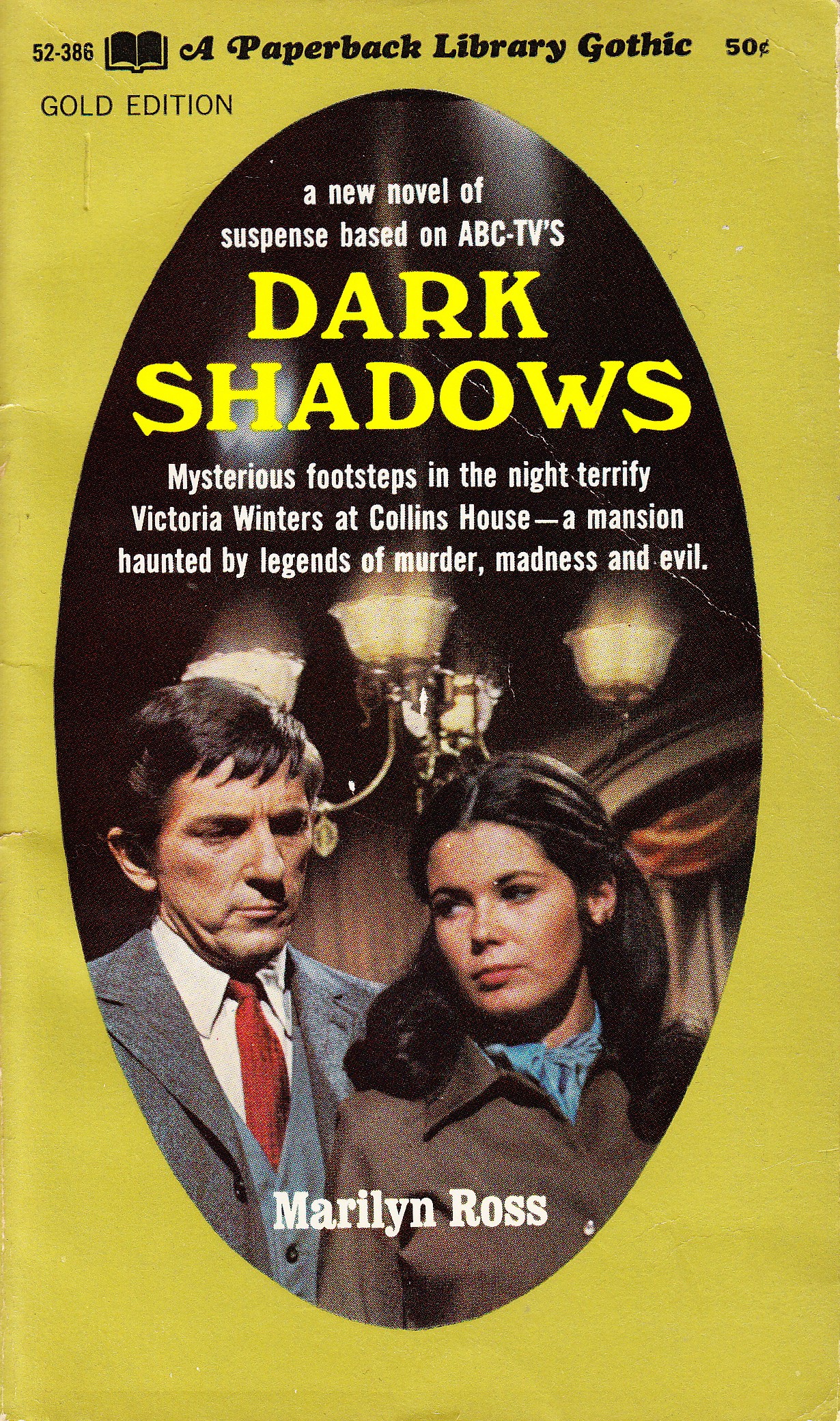
It took a few weeks and five states, but I finally got to see Dark Shadows. Although I’d seen the trailers, there was quite a bit over which I remained in the dark. After all, the television series ran daily for several years and the story of Barnabas Collins was never really resolved, to the best of my knowledge. Trying to fit all of that into a couple hours of cost-intensive Hollywood showmanship would be a tall order. I have come to trust the Burton-Depp collaboration, however, and I had read some time ago that Johnny Depp had wanted to be Barnabas Collins when he was growing up. It is difficult nevertheless to resurrect a vampire after some three-and-a-half decades of slumber. Speaking with some friends after the movie I discovered that I was not the only child discouraged from watching Dark Shadows after school as a child. But watch I did.

Barnabas Collins became a monster as the result of a curse. The series—which I remember principally as a series of impressions and images—and the movie make that clear. The man who has lost control of his own fate is a reluctant monster. An aristocrat who lives by draining the blood of the common folk. Despite the humor and carnality of the movie, social commentary is there. Sometimes buried in an iron coffin, and sometimes in a vintage VW bus from the early ‘70’s. It may not appear full blown on the big screen but it pulses through the veins nevertheless. Barnabas Collins is a reluctant and conflicted vampire, but he does kill others to survive.

Why would a kid raised in a religious setting be so drawn to a creature of evil? Perhaps it was because Barnabas was the ultimate penitent. He had to victimize others, but he always regretted doing so. Like any living (or undead) creature, his nature compels him to survive. He is sad about his lot in the world, but is helpless to change it. Like many children of the monster generation I was nourished by a long series of movies featuring impossible creatures, including vampires. The earliest vampire I knew, however, was Barnabas Collins. Although Bram Stoker had set the type nearly a century earlier, my measure of the vampire was the reluctant denizen of Collinwood. Although I read my Bible dutifully, and never missed church, I still found the plight of this lonely monster compelling. The movie may not live up to the standard of all Dark Shadows aficionados, but if it brings a subtlety of moral ambiguity to a generation of absurdly self-assured modern-day fundamentalist children, the curse of Barnabas Collins may really be a blessing in disguise.


Vampire Jesus

It was a dark and stormy night. Well, so far that could describe most any night in April or May of this year. Anyway, I had just read about vampire-bots for the first time. Robots, like all machines, require a power source. Those I’ve witnessed up close require rechargeable battery-packs that are surprisingly heavy. I’d read that some robots were being designed to consume their own energy sources—mechanical and chemical eating, if you will. One dreamer figured that blood could work as a source of energy. A robot could be designed to take energy from blood, and thus arises the concept of the vampire-bot. I don’t think such an insidious machine was ever really built, but it is theoretically possible. It is also a reflection of a biblical idea—the life is in the blood. Ancient people tended to associate life with breathing. With no CPR, an unbreathing body was a dead body. Blood obviously played into the picture too, but precisely how was uncertain. Clearly a person or an animal couldn’t live without it. To say nothing of robots.

One of those dark and stormy nights I watched The Shadow of the Vampire. Surprisingly for a monster movie, Shadow had been nominated for two academy awards. Not really your standard horror flick, it is a movie about making a movie—specifically Murnau’s Nosferatu, the classic, silent vampire movie that really initiated the genre. The actor cast as Count Orlock, however, is really a vampire. The premise might sound chintzy, but the acting is very good with Willem Dafoe making a believable Max Schreck (vampirized). Stylistic rather than gory, the story plays out to the fore-ordained conclusion and the vampire disappears in the cold light of dawn.

When I was an impressionable child I was told what is likely an apocryphal story about Leonardo da Vinci. The story goes that the man who posed for Jesus in the Last Supper was also the model for Judas, after living a life of dissolution. Willem Dafoe, of course, famously played Jesus in Martin Scorsese’s Last Temptation of Christ. From Jesus to vampire. Both characters are bound by the element of blood. Christianity still celebrates the shedding of divine blood symbolically while the vampire takes blood (also symbolically). Although the vampire cannot endure the sight of the cross, the same man effectively played both sides of the mythic line, almost as if the apocryphal story came true. There are implications to consider here, and not all of them insinuate Hollywood. On these dark and stormy nights, we have something to ponder.


Bleak Visions

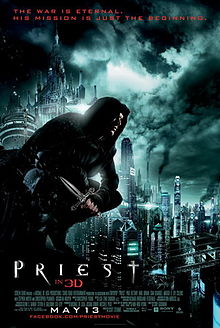
The day was leaden and rainy. Hopes for seeing the sun over the next several days dim. I had been warned about this, but once my mind has settled on vampires, they’re hard to resist. The reviews said Priest, as a movie, was full of cliched dialogue and predictable outcomes. This is true. But still, it is perhaps the most religious vampire movie ever made. While some have doubted my analyses of Underworld and other vampire films, Priest is set in a Pullmanesque world dominated by a church that has lost its belief in vampires. In fact, the civilized world, in scenes reminiscent of Blade Runner, owes ultimate allegiance to the church. Based on the graphic novels by Hyung Min-woo, the post-apocalyptic world of Priest presents an over-industrialized society where humans live in walled cities (ironically, Jericho has no walls). Vampires, more fierce than any Count, even by fifteenth-century standards, rip humans to shreds, but have been forced into reservations by the warrior priests. Their weapons are cross-shaped, but there is otherwise no reference to Jesus in the movie—only an amorphous “God.”

Despite the endless tropes, “a vampire killed my brother,” “the Priest is her father,” and endless chatter about the nobility of sacrifice, the movie is strangely compelling. Visually it maintains the appeal of a place somewhere between Planet of the Apes and the Book of Eli. And something appeals about priests who are willing to fight evil rather than sit around arguing about whether women should be allowed to join the movement or not. Keeping with modern proportions, we see only one female priest and none among the Monseigneurs, but she is the one who actually stops the vampires. And these are vampires that have evolved into the blind, naked denizens of the night who kill, apparently, for the sheer joy of it. The only article of faith the church can muster is, “if you go against the church, you go against God.”

I wonder if anyone in the world of religions is tracking how society perceives them. Religions once stood for our noblest aspirations, and our humblest weaknesses. Like bad caricatures from the movies, religious organizations don’t shy away from the desire for ultimate power. In His Dark Materials and in Priest, the church is content with nothing less than total domination. This is not missionary zeal, but good, honest power-lust. Not all religions are like that, of course. Still, there are those who perceive them that way. Maybe it is my own insecurity, or maybe it is the fact that I’m seldom convinced I have the answers, but I can’t help but feel the thrill of justification at the rebel who maintains conviction to the ideals s/he holds deeply. It takes no backbone to enforce obedience when might is on your side. But only those who have faced the vampires personally know who the real enemy is.


Dark Shadows Indeed

Part of my childhood died today. Like millions of others, I have been eagerly anticipating Tim Burton’s new Dark Shadows movie to wash the treacle of Twilight from the vampire’s mouth. Barnabas Collins was the epitome of the conflicted gentleman vampire, fully aware of and repulsed by his curse. After school I would religiously sit in front of the black-and-white television and watch the waves crashing into the cliffs of Maine as the moody story began to unfold in daily episodes. So when I read this morning that Jonathan Frid had died, I knew the vampire had found peace at last. And I was sad.

Although I’ve read scholarly analyses of monster fascination, nothing sets me back to childhood so directly as my beloved monsters. I don’t know why I feel a thrill in my chest and my pulse quickens when monsters appear before me. Perhaps it is a child’s way of coming to grips with a world beyond his or her control, or perhaps it was my way of dealing with a broken family. Lacking a father figure in life, I was fascinated by the gentle care and predatory nature of Barnabas Collins. He really did care, but he still had to bite you in the neck to survive. To my pre-adolescent mind, Jonathan Frid was Barnabas Collins. When I grew old enough for gothic novellettes, I consumed the serialized Dark Shadows books by Marilyn Ross, no matter how predictable or trite. I was reading about my heritage.

I have no doubts that Johnny Depp will portray a believable Barnabas Collins next month. Jonathan Frid, it is said, was consulted and was often present on the set of the new movie as it was being filmed. His turn to portray the tortured ancestor of the Collins family had lapsed, but he was the original. What is the draw of the vampire if not life after death? And although Jonathan Frid is gone, next month I will stand in line to see the resurrection of the vampire on the large screen.


Good Morning, London

First of all, Virgin-Atlantic Airlines gets a gold star in my book. Having flown quite a bit over the past six months, I’ve been reminded on just how stingy airlines can be, making even a brief flight a test of endurance. They are very generous with full body scanners and less so with basic human services, such as food, entertainment choices on long flights, and a sense that you’re doing anything other than propping up a flailing, deregulated industry. Virgin-Atlantic demonstrated that air time need not be torturous. So, with many choices of movie to watch, on Good Friday, I decided on one of my favorite genres of religious movie—the vampire flick.

I have been anticipating Dark Shadows for well over a year now, but I had heard nothing about Fright Night. Really, in many ways Fright Night was an unremarkable vampire movie, but then again, watching on a plane is maybe not the place where one would expect the gothic mood required for full enjoyment. Nevertheless, the full range of religious cures of vampires was present with one notable exception: crucifixes. Crosses abounded, but here on Good Friday I saw no corpi. There was holy water, so clearly it wasn’t purely Protestant sympathies that led to the abandonment of crucifixes in the movie. In any case, crosses were only a minor deterrent in this scenario. What finally dispatched the chief vampire in this case was a traditional wooden stake. Which, somehow reminds me of typical airplane food on most airlines.

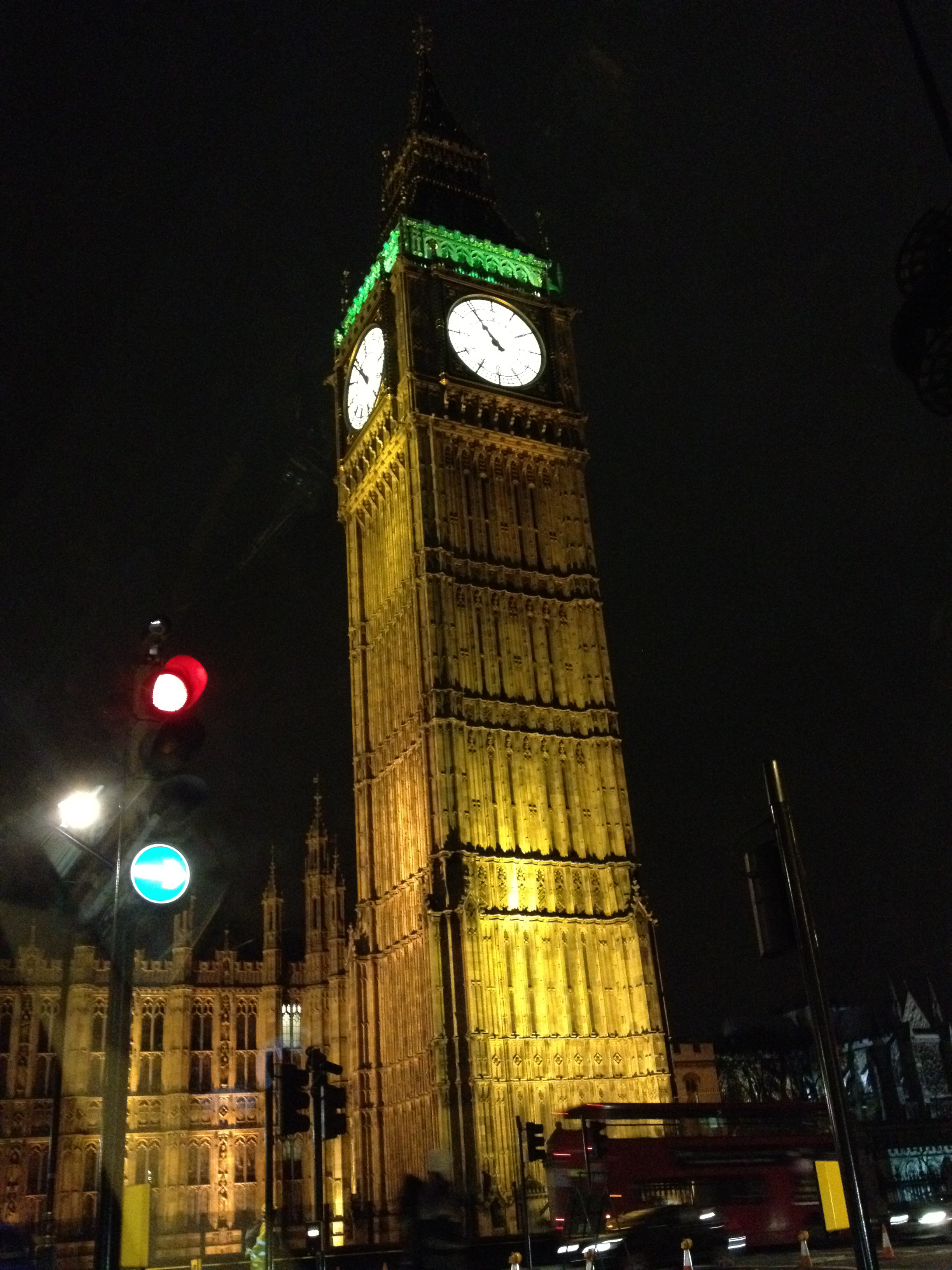
Driving around a secular London dressed in religious garb, St. Paul’s Cathedral lit splendidly in the night, was a reminder of the hold Christianity still has on even non-religious culture. It was kind of like the corpus-less crucifix in the movie. The inspiration behind the great gothic stylings of Big Ben and Parliament arise from their long association with Christian culture. On the streets people were milling about London late in the evening, not apparently fresh from church, standing in the shadow of Westminster Abbey and happily snapping photos. This may be a montage of disparate images colliding in my jet-lagged mind, but somehow virgins, vampires, crucifixes, and churches seem to fit naturally together.


Christian Underworld

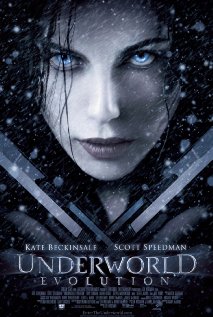
For constructing a mythology teeming with monsters, I must doff my metaphorical hat to the Underworld series of movies. Unrelentingly Gothic and stylish, I’ve watched the first two installments a number of times, but I have yet to see the last two (the latter of which is still currently in theaters). I have to admit that seeing Kate Beckinsale in her werewolf hunting gear two stories tall on midtown electronic billboards is some enticement to catch up with the story. Over the weekend I rewatched Underworld Evolution, number two in the set, to refresh my mind of the story. Quite apart from the implicit religiosity of vampires, the Underworld movies, while eschewing crucifixes and religious origins for vampires (which Bram Stoker’s Dracula by Francis Ford Coppola narrates to an explicit extent), nevertheless partake of the power of religion amid all the shootouts and weird transformations.

In Underworld Evolution, Marcus, the son of the original vampire, in a scene straight from Christian mythology, has the devil rebelling against his creator. As he is killing his powerful yet ineffectual father, Marcus predicts the beginning of a “new race created in the image of their maker—their new god. Me.” As he says this he has his own creator impaled on a demonic bat wing. Running him through with a sword he states, “And the true god has no father.” I admit I’ve been trying to read some post modern treatments of monsters, and this kind of reversal fits well with the conflicted outlook of the twenty-first century. Who is god? The good or the evil? The old certainties have grown gray and blurry. No wonder some people are uncomfortable.

Perhaps the most religious element in the film, however, is blood-memory. Blood is a cheap commodity in horror films, but it represents, in the Abrahamic traditions, life. In the Christian sense drinking communion wine is to consume the blood of Jesus, or at least to remember his death (the fancy word is anamnesis). Vampires, in Underworld Evolution, remember the lives of those whose blood they drink. The taking of life has a sacramental quality to it here. To a world less immersed in a Christian worldview, this concept might seem more macabre than it already is. Monsters often take their cues from the gods. So on a February weekend some of this feels terribly familiar. It may be a small underworld after all.


Let the Left One In

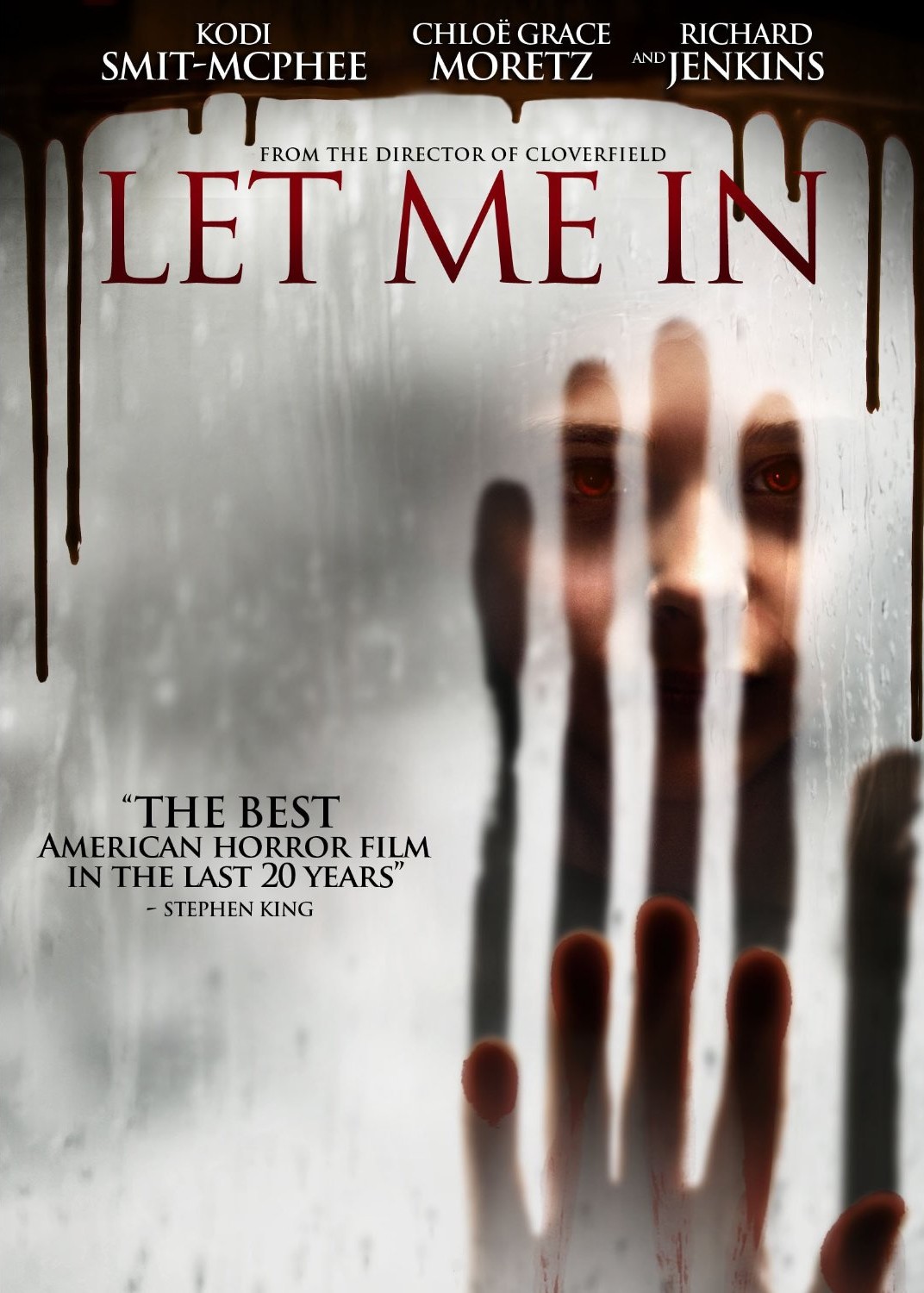
When you’ve got a good thing going, why stop? Reading Timothy Beal’s Religion and its Monsters put me in the mood for a vampire flick over the holiday weekend. I had watched with longing as Matt Reeves’ Let Me In flew into and out of theatres back in 2010. Advertised as a thoughtful vampire story based on John Ajvide Lindqvist’s novel, Let the Right One In, and having a real moral struggle unlike the Twilight saga’s dulled fangs, it had been on my “to see” list for quite some time. This movie doesn’t disappoint. The specific aspect to which I refer, of course, is the religious. Vampires may be the most religious monsters ever invented, and like all good, subversive movies Let Me In casts the religious aspect in an unexpected role. Religion and the vampire interact through the character of Owen’s mother. Her face never seen on the screen, she shuffles outside the range of view and tells her son of the need for prayer and belief. Her life is a shambles and 12-year-old Owen knows it.

Abby, the vampire next door, is a monster capable and desirous of love. Her vampiric self is not exposed to crucifixes or blessed communion wafers, but to the torment of outliving those she loves. Eternal life is her curse, and religion can do nothing to solve it. When Owen slips twenty dollars from his Mom’s purse to buy Abby some candy, Jesus is watching from the mirror. When the bullies torment Owen, Jesus is nowhere to be found. The symbolism, whether intentional or not, is apt social commentary. Our religion is there to punish us, not to help us. If in doubt, listen to the politicians and televangelists; God is intensely angry—Jonathan Edwards wasn’t even halfway there. Their surfeit of rectitude puts the rest of us to shame. Until they’re elected.

Vampires have their origin in creatures that steal the life-essence of the living. Whether blood, semen, or psychic energy, the vampire feasts while the victim withers. Let Me In, by telling the story of a pre-pubescent vampire, shifts the focus of culpability. A 12-year-old is beneath the age of responsibility according to the Judeo-Christian tradition. Unable to determine right from wrong, the child simply seeks what all living creatures do—the possibility of existence. When Owen discovers that his new friend, his only friend, is a vampire, he tries to find answers from his religious mother. She is asleep. He calls his absent father who blames the religion of his mother. The moral guidance here comes from the monster. The bullies would win if it weren’t for what the authorities call evil. Sometimes I think Jonathan Edwards got it all backwards, for when power determines who is righteous it is the bullies who dangle spiders over the fire.


Blood Lust

They emerge at night. They take your life-essence. They are very difficult to remove. In a particular political party their ruthless ways are highly praised. Yesterday I had occasion to watch the History Channel’s Vampire Secrets. Frequent readers of this blog know of my contention that horror films generally convey religious fears and certainly the vampire is prominent among such hosts of fear. Although superstition has held that actual creatures drew actual bodily fluids from their victims as far back as the Sumerians, today’s perception of the vampire has gone through several transformations. This particular documentary attempts to trace the origins of the modern vampire fascination through its major stages, beginning in ancient times. The writers and editors seem to favor a Far East origin of the concept, but linger for several minutes on the character of Lilith in Jewish folklore. Although Lilith does not really fit the profile of a classic vampire, she does contain a key to understanding the transformations: they are religious in nature.

People have believed in blood-suckers long before the GOP took on its recent transformation; there is no doubt, however, that the blood-lust of the vampire developed in the light of Christian ideas about the crucifixion. The regular imbibing of “blood” was an aspect of early Christianity that led to problems with the Roman authorities supposing this was some sort of precursor to Vampire: the Masquerade. By the time stories began to circulate about Elizabeth Bathory (ironically, at the same time the King James Version of the Bible was being translated) and her famous blood-lust, and after Bram Stoker later selected Vlad Tepes as a fictional model for his Dracula, blood-ingestion had become the singular hallmark of the vampire. In both cases, despite their historical facts, religious elements had entered in.

One of the most disturbing transformations, however, is that whereby religion itself becomes vampiristic. Originally established as a means of propitiating angry deities, religion very early assumed the aspect of blood-letting as a means of accomplishing that propitiation. With the development of religious abstractions, however, literal bloodshed has become distasteful and less common, but the deities still demand sacrifice. Even in the twenty-first century many accepting people are informed of the pecuniary sacrifice desired, commanded even, by the gods. While the occasional poverty-stricken cleric may occasionally appear, many far surpass the status quo in their crystal cathedrals while many of the faithful suffer want. The History Channel found vampire subcultures in the streets of New York City. They might also have found them in just about any town in any country of the world.

Saint or sinner?


Hunting Vampires

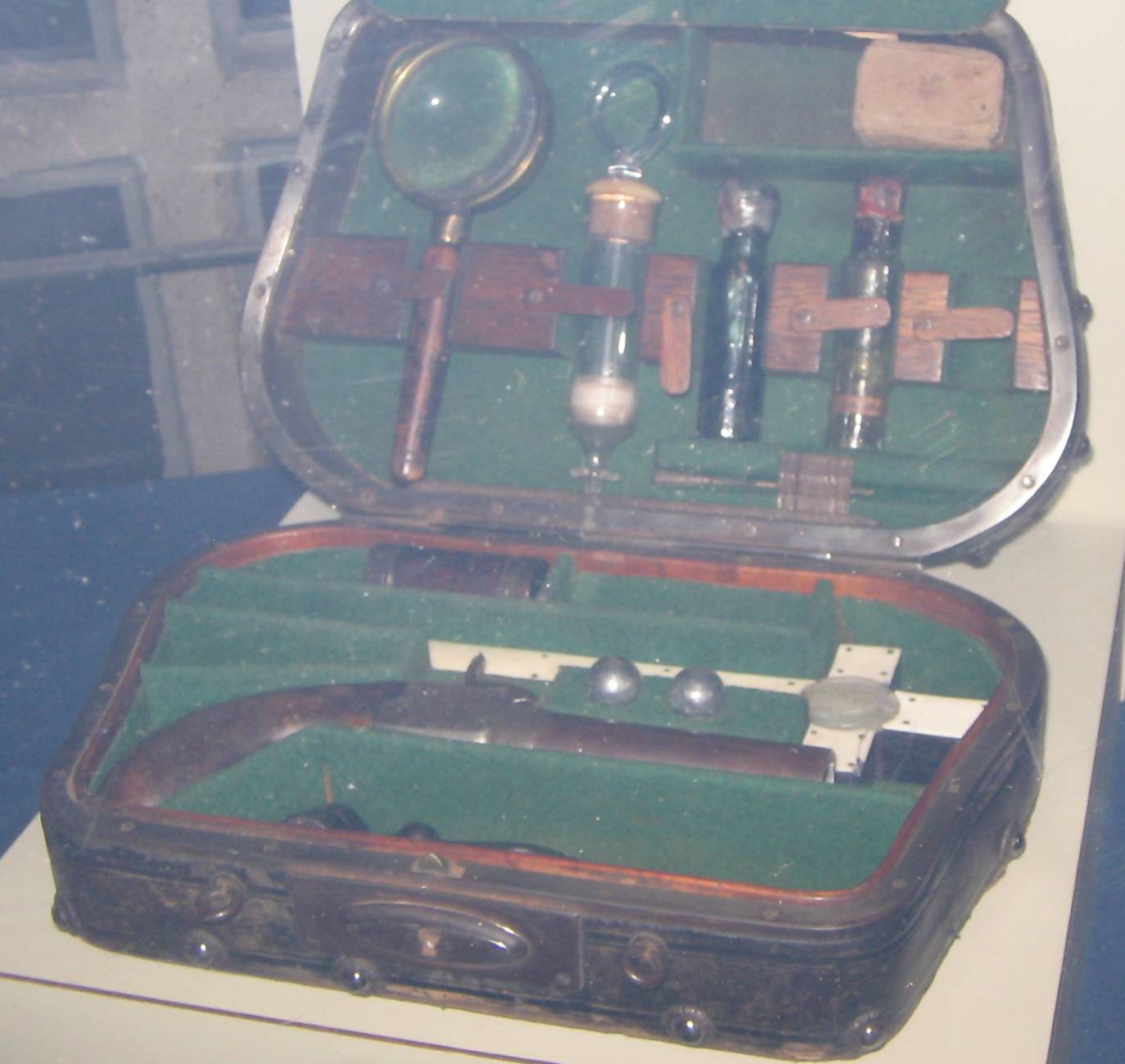
The Mercer Museum in Doylestown, Pennsylvania is a treasure trove of Americana from the turn of the last century. Henry Chapman Mercer, in addition to being wealthy, had the foresight to realize that society was rapidly changing, even back then. He undertook the collection of everyday artifacts from many human industries, poured himself another castle-like concrete building, and housed the baubles there. It is a fascinating walk through nineteenth-century America. And if you visit on a cold day it feels as well as looks like Currier and Ives have just passed through. My main draw, however, was a vampire hunting kit.

If only I had a polaroid lens...

Prominently displayed, the kit includes a Victorian Protestant’s tool chest for any blood-sucking eventuality. A cross (sans corpus), a pistol with “silver” bullets, glass vials with various apotropaic ingredients, even a little stake, all in custom-cut green velvet. Unfortunately, the kit is believed to be a forgery, although the items in it are from the Victorian era. The silver bullets are, for example, pewter. As the placard notes, vampires do not exist, but that doesn’t mean people didn’t believe they might have existed. The museum, naturally enough, hoped that the Victorian era kit might be authentic. Scientific analysis has revealed otherwise despite the fact that many people continue to believe in something that has no basis in reality.

Belief constitutes reality. Otherwise, how could it be that thousands, if not millions, of people don’t accept the fact of global warming? Brash barons of unhindered industrial progress insist that humans can’t harm the planet – it’s just too big. We can suck out all the resources that billions of years have deposited in intricate recesses and that nature has sprouted right on the surface. For, they say, God has given them to us. They believe that. If we held a mirror up to them, what would we see? Maybe we would be forced to change our minds and go after that vampire-hunting kit after all.


All You Zombies

Not being a cable subscriber bears a burden all its own. Not only would paying the extra monthly fees for television prove a hardship, but the constant temptation to watch it would rate as a deadly sin. So on this “All Saints Day” I find myself wondering if the world is still out there after last night’s much-touted “The Walking Dead” premiere. The new AMC series has been written up in local papers and this week’s Time magazine. The latter calls it “a zombie apocalypse.” The fascination with zombie goes beyond holiday-fueled monsters. As James Poniewozik states in his Time article, zombies symbolize society’s insecurities: pandemics, terrorism, economic instability. The unrelenting undead remind us that death is perhaps not the worst thing to fear.

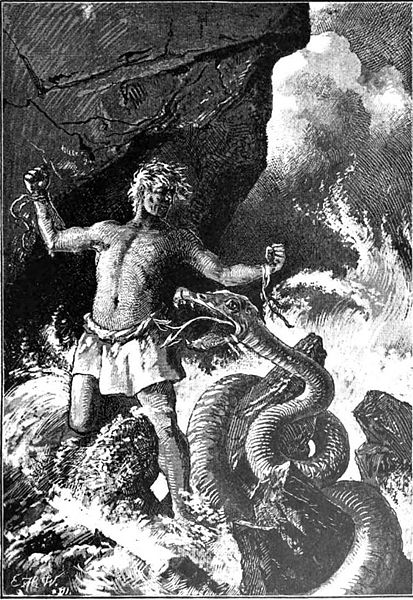
The religious side of this trend is fascinating. Revenants have no place in traditional Christian, Jewish, or Muslim theologies. Perhaps the closest semi-sanctioned version is the golem, a soulless protector of persecuted medieval Jewish communities. Traditional zombies are inextricably connected with magic, a means of manipulating the physical world through supernatural means. Like modern vampires, modern zombies have shifted from supernatural to biological, or at least scientific-sounding, explanations. Even Night of the Living Dead had an errant satellite to blame. The zombie has been reborn in a secular context, making it safe for religious believers to add it to their repertoire of fictional ghouls. And yet, the religious aspect has not completely vanished. The “apocalypse” that accompanies “The Walking Dead,” whether it is Armageddon, 2012, or Ragnarok, is a religious concept. Humans simply can’t face the end of the world without religious implications.

Audiences feeling a little let down after October’s terminal scare-fest, however, might find some cheer that Halloween is an end, but also a beginning. It is the start of the darkest time of year. Very soon not only do we drive home in the dark, but light will not have dawned by the time we start the car for work. In northern reaches of the globe, people can’t help but feel a little stress at finding our accustomed visual assessment of our world a little bit impaired for months at a time. And when we see that shoddy-clothed stranger straggling along in the half-dark, it may be time to remind ourselves that despite the naturalized zombie, there are still those who prey on their fellow humans. They may not be the undead. They may dress well and drive expensive cars and live off what they can legally draw from that stranger on the street. They may be the true harbingers of the apocalypse. They are the ones we should really fear.
Whose apocalypse?


Dark Side of Religion

Back in August I received a book to review for Relegere, the new online journal for Studies in Religion and Reception. The volume I received was The Lure of the Dark Side: Satan and Western Demonology in Popular Culture, edited by Christopher Partridge and Eric Christianson. I found this assignment to be a felicitous one for many reasons: the book was very interesting, the topic is intriguing, the authors are scholars who take popular culture to be worth serious study, and it exposes the roots of many perceptions of Satan and the demonic in western society today. While I cannot present the whole review here – I would encourage interested readers to explore the appropriate issue of Relegere when it is published – I would feel remiss if I didn’t at least mention a few of the highlights here.

Scary cover

First of all, the book is a collection of essays that cover the media of music, film, and literature. Many of my students like to point out the propensity of death metal bands for choosing ancient Near Eastern gods and themes for their band names and songs. The first two essays in this book explore black metal and its self-proclaimed Satanic intent. What is interesting here is that what many black metal bands declare as their “religion” does not, in fact, fit with mainline Satanism at all. This aspect of the book is worth reading just to see how religious ideas, both unholy and holy, easily become distorted when transformed into an artistic medium. By far my favorite essays, however, were those that analyzed horror films according to religious themes and concepts. It was refreshing to see serious scholars discussing vampires without flinching, noting how they are part of the same fabric from which religion is cut.

One of the recurrent criticisms of academic writing is that it generally reaches only academic audiences. Certainly at the prices common at academic presses the average layperson would need to be exceptionally motivated to pay out the cost to read what are admittedly generally dry and technical books. Equinox has fortunately released an affordable paperback version of this volume, making the price less of an issue. The content is, for the most part, readily accessible to the general reader. The cover is a tad lurid; when I took it along to the DMV to renew my driver’s license I felt a bit self-conscious in the waiting room. Beyond that, this was a rare academic book that should find a wide readership. For me, the bibliographies and filmographies demonstrated my own deficiencies in keeping up with popular culture. I would recommend it for those with a sturdy constitution who want to know the correct way to dispatch a vampire in the twenty-first century.