Personal Publishing

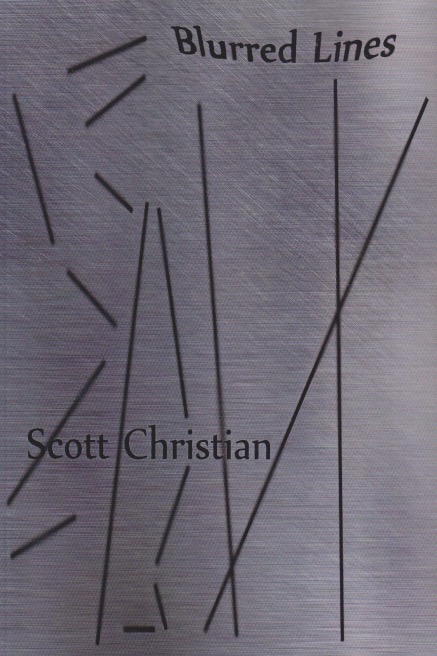
I recently joined the Greater Lehigh Valley Writers Group.  I haven’t really met any other members yet, although I know one from another local community.  By my reckoning, this is the fourth writers’ group I’ve joined and I do hope it leads to some friendships.  I like talking about writing.  I read Blurred Lines by Scott Christian because he’s a person I recently met and he kindly gave me a copy.  A collection of poems and stories, it’s a small book but a deeply personal one.  I guess that’s one reason that I like talking about writing with other people—it is deeply revealing.  There are those who write as a job, and there are those who write because they must.  This book falls into the latter category.  Some of us are compelled to write down what we experience, whether it be in poetry, fiction, or fact.

Self-publishing can be a way of expressing what the publishing industry suppresses.  I once told a group that it’s a little disturbing how much power publishers have in determining what people can read.  I write “can” intentionally.  Only the biggest in the industry have the financial wherewithal to get books into bookstores (where readers congregate like bees on a warm day in October) where they’ll be laid out on tables and priced to move.  Like many others, I began my writing in academia.  It took some time before I realized that academic prices are a deterrent to readers.  Breaking out of that mold is also difficult.  At the same time, publishers have resources to devote to marketing that an individual seldom has time for, or the reach to accomplish.  So it goes.

Another review of Nightmares with the Bible has appeared (this one in Catholic Biblical Quarterly).  While not glowing, it does recommend reading the book, despite the fact that the publisher has no interest in paperbacking the series and it takes a great deal of motivation for even me to spend that much for a book.  Yes, I can understand self-publishing.  It is a writer’s chance to get their voice heard.  Even some famous authors—Mark Twain comes to mind—had to get their start by paying to have their books published.  Some of us write because we can do no other.  We have thoughts and feelings to share.  And I keep joining local writers groups looking for the rare person who will talk to a stranger about that most intimate act we call writing.  Reading such a book is a very personal thing to do.


Them Apples

Although I’ve had this book as long as I can remember, I’d never read it.  Not the whole way through, until now.  As I kid I read Ray Bradbury when I could.  I’m sure I read a story or two in Golden Apples of the Sun, but I didn’t approach the entire collection.  I was drawn in at this late age by “The Fog Horn.”  This is the story that lay behind The Beast from 20,000 Fathoms, that classic of Harryhausen, the other Ray.  It’s been years since I’ve seen the movie, but the story was on my mind and I kept going.  Some of Bradbury ages well, while other stories, not so much.  The designation of his tales also changes over time.  As Stephen King says in Danse Macabre, Bradbury didn’t so much write science fiction (as the cover of this edition declares), even if the people occasionally get into rockets.

I realized as I read just how much my early writing style was influenced by Bradbury.  My stories were vignettes like these, not as accomplished, of course, but without lots of violence.  And with horror elements.  But it kept coming back to me how Bradbury’s characters, even the time-traveling ones, are stuck in the button-down forties and fifties.  I naturally overlooked this as a child but all these decades later and the strict binaries of, for example, men’s and women’s worlds, comes through on every page.  When women are the main characters, they’re usually not very flatteringly drawn.  The same goes for caricatures of races, although Bradbury is sympathetic he also uses stereotypes.  And many of the stories in this collection are just about everyday events, not a speculative element in sight.  Maybe I did try to read it through as a kid, but lost interest.

Writers struggle against irrelevance.  Those who look to the future sometimes get it right but often don’t.  And some reflect a present that we’d rather not acknowledge.  Of course, when I’m writing fiction I tend not to think in these terms.  The story simply takes you over and you can’t help being a refugee from the year in which you were born.  This is especially evident when Bradbury casts a rosy lens back toward childhood years.  As a child myself I had no idea that Bradbury was a time traveler from the twenties and thirties.  His childhood was nearly over by the time my mother was born.  It was a different world.  Some of his stories managed to transcend time and its for those that I keep reading him.


The Publishing Self

One of the things I noticed while researching Sleepy Hollow as American Myth was that many resources on the legend were buried in self-published editions of the “book” itself.  And other material about the legend was from self-published sources.  This lack of serious attention was behind my writing of the book.  Clearly the story is an integral part of American Halloween and Halloween is a big business.  Why aren’t mainstream publishers interested?  (I tried several agents but nobody seemed terribly drawn to the project.)  In any case, my thoughts today are about self-publishing.  Some of these self-published books aren’t even listed on Amazon, which is pretty amazing.  I even found one that apparently lacks an ISBN!  The author’s website (the only place it can be purchased) lists it as out of stock.  Self-publishing must require vigilance in order to be a way to make a living.

The profits from self-publishing are likely better than publishing with an academic press.  (Unless, of course, you’re given the rare trade treatment.)  If you’ve ever tried to find a publisher, the urge to self-publish is understandable.  The publishing world tends to be cliquish.  The same names keep coming up time and again.  If you’re friends with one of them, well, you can get in the door.  And mainstream publishing, surprisingly, doesn’t really like new ideas.  Most publishers prefer to keep on acquiring titles in the vein of one of their successes.  “More like this,” you can imagine them saying in their sleep.  New ideas are untested and may flop.  Bestselling authors seldom flop and those who imitate them often get a seat at the table.  The rest are left to self-publishing, or perhaps academic publishing.

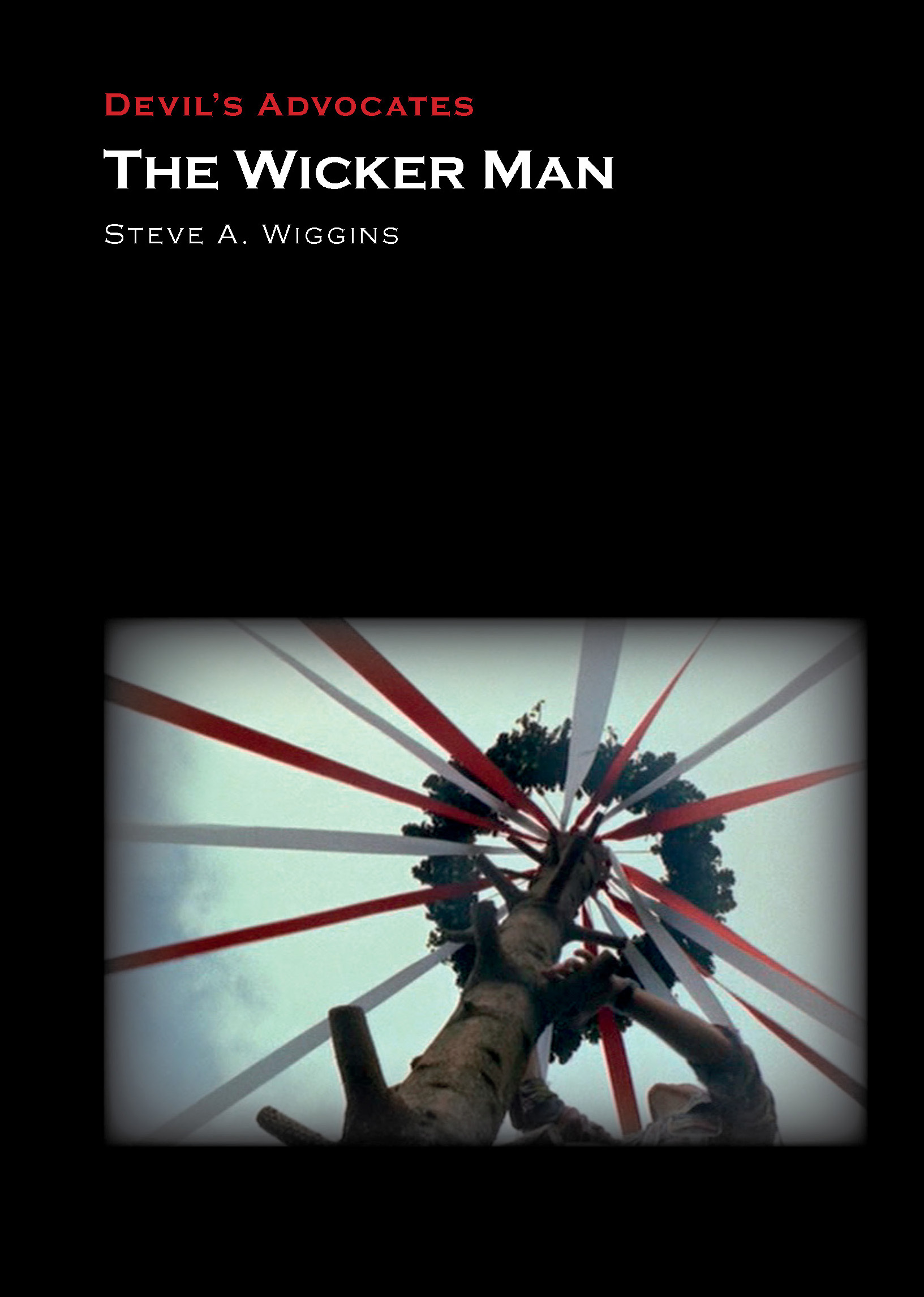
I’ve read many self-published books and most of them have led to disappointment.  You see, a book is better if someone reacts against it.  The problem in mainstream publishing is the reaction against is generally a rejection and that means even if you improve you still have to publish yourself.  I was sorely tempted to self-publish a book before Holy Horror.  Having found a publisher for that book somewhat painlessly (the agents weren’t impressed with it either), led me to keep on going.  Nightmares with the Bible and The Wicker Man were both series books, so again, fairly straightforward.  Sleepy Hollow as American Myth followed the track of Holy Horror.  Written not for a series, I tried to find an agent, failed, and again turned to McFarland.  At least they’ll publish it in paperback.  I’m still discovering self-published books on Sleepy Hollow that I missed in the writing of my book.  For all its faults, academic publishing at least generally offers a good bibliography.


Waking Poe

It’s personal and it’s deep.  My appreciation for Edgar Allan Poe, that is.  I’ve read a few biographies of him over the years, but my engagement with him feels more like that of a boon companion.  Still, I learn a lot from looking at him from different angles.  (And yes, he will be in my forthcoming book.)  Jonathan Elmer’s In Poe’s Wake: Travels in the Graphic and Atmospheric caught my attention but I can’t remember exactly how I heard about it.  This was a case where the back-cover copy won me over, noting as it does, that Poe’s image is everywhere.  Still, I approach things as an historian.  How did this lead to that?  And I must confess that I’m not a great fan of heavily theoretical work (I see plenty of it).  As soon as I see Deleuze, my eyes begin to glaze over.  Do we have to go there again?

All of which is to say Elmer’s book is erudite and, at times, quite academic.  I learned a lot from it, particularly the first two chapters.  Much of the rest of it was a bit too theoretical for my plebeian tastes, but I was still learning as I went.  I hope.  I guess I was thinking it would be more of a history of how Poe ended up, for example, on the cover of Sgt. Pepper’s Lonely Hearts Club Band.  Or how the Baltimore Ravens got their name.  Or even how the Ultima Thule daguerreotype became so ubiquitous.  These may well be impossible questions to answer, even as some of us are fool enough to rush in and try.  In academia, the theoretical is a much safer approach.  It impresses Deans and others in the department.

I occasionally listen to famous people talking about fame.  How it destroys some people and obliterates aspects of others’ lives.  Poe was reasonably well known during his lifetime, but not famous on the level that, say, the internet can instantly make you.  Or even TikTok.  Even back within my lifetime (which, I gather, is about the same as Elmer’s) Poe’s influence has grown dramatically.  His was a household name in my childhood, at least among a certain type of reader.  It wasn’t unusual to find people who’d never heard of him.  I suspect that is also true today, but Poe looms large over October and even the New York Times nods in his direction when the days grow shorter.  Like most writers, Poe isn’t who we think he is.  Elmer’s book does indeed explore his wake, and it is one that continues to cause waves over the centuries.


Victorian Inspiration

Some stereotypes hold the truth.  Since we couldn’t afford a vacation this summer, we arranged a couple of our versions of “staycations.”  For us that means driving some place a couple hours away, staying in a hotel for a night or two, and exploring a new place for the weekend.  We’ve done that to explore the Lancaster area and a couple of times to the Poconos.  When possible, and affordable, we like to stay in unusual places rather than the typical hotel.  For example, around Lancaster we try to book a caboose at the Red Caboose.  Since those are expensive over the weekend, typically we have to take a vacation day or two to do them before the weekend proper sets in.  On a trip to the Endless Mountains region, we stayed at the Victorian Charm Inn in Towanda.  This is a converted ten-bedroom house from the late Victorian era.  Not a typical hotel, it’s an inspiring place to stay.

What I mean by stereotypes is that such places inspire me to write in their genres.  After staying in the Red Caboose, I typically write fiction about trains.  I’d been on a gothic kick when we stayed at Victorian Charm and indeed, it inspired gothic writing.  Not that we could’ve afforded it, but when we were looking for a house, I really wanted to buy a Victorian.  We looked at a couple but neither one had been well kept up.  I thought they would inspire my writing.  Perhaps it would get old, living in such a house and reading Poe and other Victorian writers, but I wonder if it might have led to more gothic stories.  The fiction I do write tends to draw from my experience of living in various places.  Victorian mansions have a feel to them.

Writing is mostly a matter of discipline, rather than inspiration.  All writers, I suspect, crave inspiration.  I know that I do.  When I awoke to a thunderstorm in a Victorian mansion I experienced something that had never happened to me before in real life.  It made me wonder what it would’ve been like to have been able to live in such a place.  The cracked plaster, the faded elegance.  The nooks and alcoves.  An honest-to-goodness fainting couch.  And who knows?  Perhaps a ghost or two.  Our house was built in the Victorian Era, but by those of much more modest means.  It is an inspirational place to write, but it’s also the place associated with work.  That’s why, in stereotypical behavior, we need to get away on the occasional staycation.


Unique?

Is it embarrassing, or simply confirmation?  It used to be considered embarrassing to show up at an event dressed identically to someone else, if it wasn’t intentional.  It was considered, in some way, a slight on your personal expression.  This happened to me while still commuting when another employee and I had worn a very similar shirt for an event at work.  (He was more embarrassed than I was, for the record.)  What often feels more embarrassing to me is when I notice something I’ve never seen anybody else write about, get it all written up, and then discover that someone posted something similar on the internet someplace.  It has happened more than once—indeed, many times.  I feel embarrassed for not having known about the observation, no matter in how an obscure virtual a corner it was kept.

Perhaps these are just growing pains for the terminally curious.  Some of us constantly observe things we find curious, and start to connect the dots.  Someone else might’ve gone over this conundrum before, the way you pick up a waiting room magazine only to find the crossword puzzle already done.  What gives me hope in such circumstances are twofold facts: that someone else has spotted this confirms my observations, and that my interpretation is different from theirs.  My great fear, however, is that someone might think I’ve plagiarized.  This is a mortal sin for academics.  I would simply note that many of us read lots of stuff without noting where, and that I would remember if I intentionally lifted an idea from something somebody else pointed out.

I’m sure there are many examples of this on this blog.  Apart from posts that reflect an experience unique to yours truly, that is.  It’s getting tricky to say anything that hasn’t been said.  A recent newsworthy event occurred that called for comment from someone with my background.  By the time I’d scrawled a first sentence about it, others had written, and posted, full articles conveying what I would’ve had to say about the thing.  Embarrassing.  It has also made publishing much harder.  Even small, independent publishers in the non-academic sector only consider books sent from agents.  And agents are nothing if not aloof.  Too many submissions from too many wannabes.  Is there anything unusual, remarkable, here at all?  I’d say it’s my perspective.  Others can string words together.  Others can even buy the same cheap shirt that I purchase.  But they don’t see it from my angle.  Of that I’m certain.  Ask anybody else who’s made a similar observation.  They’ll confirm it.


Book Stages

There are stages to it.  Writing a book, I mean.  One stage, for me, is realizing that you’re writing one.  I started work on Sleepy Hollow as American Myth years ago, without realizing it.  That was followed by the stage of comprehending that I had a book idea and intentionally writing it.  I suspect that, in the throes of The Wicker Man, I thought “I should do a similar book on Sleepy Hollow.”  Devils Advocates, which is an excellent series, however, feeling the strain on academic presses, was moving to hardcover-first releases (the kiss of death).  I started writing the book anyway, hoping that maybe it might find trade interest.  It is still possible that an agent is out there who would’ve moved it in that direction, but I wanted the book out before Lindsey Beer’s movie gets released.  After the book is drafted, the next stage: find a publisher. (Unless you have an agent.)

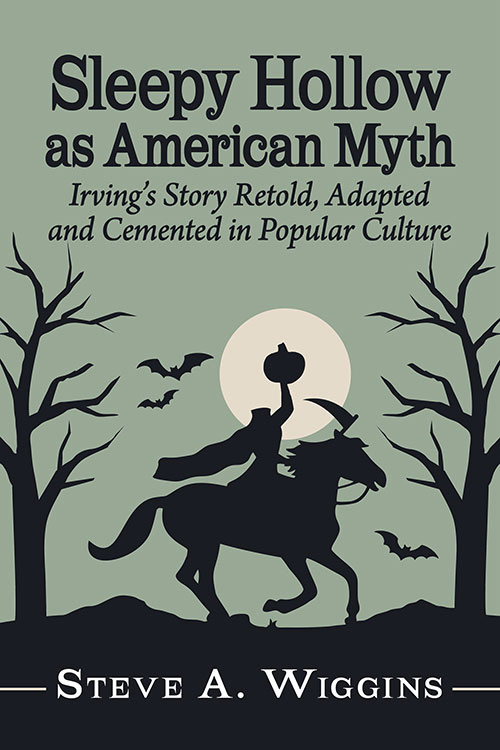
Since this is my sixth book, I felt confident (a strange, foreign feeling for me) that I could locate a publisher.  I’d done it five times before.  McFarland did a nice job with Holy Horror, but what sold me is that they dropped the price on it.  Many academic publishers continue to raise prices each year, so if you don’t buy a book right away you’ll end up paying a lot for this muffler.  The next stage is waiting to see what the cover will look like.  That wait is over.  Here it is, the cover of Sleepy Hollow as American Myth:

(Feel free to share widely, get everyone all excited!)  I’m currently in the waiting stage.  Waiting for proofs.  Of course, I’ve been working on my next couple of books as well.  You can’t just sit around, otherwise these tomes will never get written.  I haven’t decided which one will cross the finish line first.  If I had an agent they’d be able to tell me which might be more marketable, but since I work alone I’m left to my own devices.  I am bound and determined that the next book will go to a trade press.  I’m trying hard to scrub any whiff of academia from it.  In the meantime, however, I’m enjoying looking at the cover for my current book.  There aren’t a ton of nonfiction books out there on “The Legend of Sleepy Hollow.”  In fact, as nonfiction I know of only one other.  This isn’t what we in the biz call “a crowded bookshelf.”  I’m doing all the pre-publication promo that I can.  I’d be grateful for any shares or likes at this stage.


Good Timing?

Timing is important.  I hope I have a sense of it, but it doesn’t always work out the way you hope.  My last book, The Wicker Man, was released on the fiftieth anniversary of that cult film.  A bigger publisher with better reach published their own Wicker Man book that year, and mine garnered no attention.  I decided to turn to Sleepy Hollow instead.  This is a story that has been quite well known since 1820.  Although the Fox television series ran out of steam in 2017, I wrote the book when I did because Lindsey Beer has been tapped to direct a reboot of the Tim Burton film of 1999.  Looking for books on the “Legend of Sleepy Hollow” I found very little.  This is what is known of in the biz as “a gap.”  I decided to try to fill it.  Fandom helps in situations like this.

I’ve been trying to find the Sleepy Hollow fandom and engage with it before Sleepy Hollow as American Myth comes out.  I am confident that there are fans out there.  The tragic collapse of the Fox series didn’t lead to lack of love for the tale.  Indeed, further renditions have continued to appear.  Some have gained considerable attention.  The online fan base, however, seems to be, ah, sleeping.  I’m not sure when the Beer movie is slated for release.  It was announced in several media outlets but now we’ve come to the lull where updates have ceased to surface.  I’m certainly no Hollywood insider and I generally don’t even find out about movies until after they’ve left theaters (unless they’re very big).  I hope the timing is right this time.

It takes a couple years, at least, for me to write a book.  I’ve been working on this Sleepy Hollow project, in some way or other, since before Holy Horror came out in 2018.  I sure hope I got the timing right on this one.  The many trade publishers and agents I approached didn’t think so.  Maybe it’s just that people aren’t curious enough to read a book about Washington Irving’s story.  I try to make the case in my book that it has risen to the level of an American myth.  The story’s known world-wide, but its largest fan base is here in the States.  Had the Fox series been handled a bit better, keeping both people of color and the apocalypse in the foreground, it might’ve run a couple more seasons.  The underlying story’s not quite dead in the grave yet, I hope.  But then, timing hasn’t always been my strong suit.

F.O.C. Darley, from Le Magasin pittoresque, public domain

Not Content

I write books.  When I want to “create content” I do it on this blog.  (And a few other internet sites.)  These aren’t the same thing.  I find it distressing that publishers are trying to drive us to ebooks where content can easily be changed, as opposed to print books.  The shelves of this room are lined with books and the technology doesn’t exist to come in and change “data” without my knowing it.  Facts are secure in print, right Ilimilku?  I’m not looking forward to a Star Wars future where there’s no paper.  I was born in the last century and, perhaps, I’ll die there too.   You see, when you write a book you have a project in mind that has an endpoint.   It may change and shift as you write, but you know what a book is and that’s what you produce.  It gets shelved and you move on to other things.  (At least I do.)

Content is something different and the creative process behind it also differs.  If I find something wrong after the fact, I go into my past posts and change it.  I’m not afraid of admitting I’m wrong.  The point of this blog is to share ideas with the world, not to write a book.  (Although, I confess that I would not say “no” if someone in publishing wanted a selection of worthwhile posts for a book… just saying.)  It amazes me how publishers have pretty much gone after the money and have forgotten what the creative process is like.  Of course, they’re having to figure out how this whole internet with free content plays into it too.  But still, my book writing uses a different fold in my gray matter than my blog writing does.  All of it feels pretty different from writing fiction too.

These things together adds up to a writing life.  I have a ton of “not for publication” writing.  This is something different again.  I suspect it will never be read by anybody, moldering away on some old hard drive after some AI-induced apocalypse.  I write it for of the same reason, I suspect, that people used to spray-paint “Kilroy was here” on things.  The book of Job, it seems to me, was the preservation of words that someone simply had to write.  We know the framing story is folklore.  But those who have words to carve with iron on lead, or engrave on a stone to last forever.  It’s more, I hope, than just “creating content.”


Doing Without

I’m a creature of habit.  Although I’m no internet junkie (I still read books made of paper), I’ve come to rely on it for how I start my day.  I get up early and do my writing and reading before work.  I generally check my email first thing, and that’s where something went wrong.  No internet.  We’ve been going through one of those popular heat waves, and a band of thunderstorms (tried to check on their progress so I could see if it’s okay to open the windows, but wait—I need the internet to do that) had rolled through three hours ago, at about midnight.  Maybe they’d knocked out power?  The phone was out too so I had to call our provider on my cell.  The robovoice cheerily told me there was a service outage and that for updates I could check their website.  Hmmm.

I can read and write without the internet.  I’m on Facebook for, literally, less than two minutes a day.  I stop long enough to post my blog entry and check my notices.  I hit what used to be Twitter a few times a day, but since people tend to communicate (if they do) via email, that’s how the day begins.  This morning I had no internet and I wondered how tech giants would live without it.  I’m no fan of AI.  I use technology and I believe it has many good points, but mistaking it for human—or thinking that human brains are biological computers—flies in the face of all the evidence.  Our brains evolved to help our biological bodies survive.  And more.  The older I get the more I’m certain that there’s a soul tucked in there somewhere too.  Call it a mind, a psyche, a spirit, a personality, or consciousness itself, it’s there.  And it’s not a computer.

Our brains rely on emotion as well as rationality.  How we feel affects our reality.  Our perspective can change a bad situation into a good one.  So I’m sitting here in my study, sweating since, well, heat wave.  It was storming just a few hours ago and I can’t check the radar to see if the system has cleared out or not.  What to do?  Open the windows.  I’ll feel better at any rate.  And in case the coffee hasn’t kicked in yet, “open the windows” is a metaphor as well as a literal act on my part.  And I don’t think AI gets metaphors.  At least not without being told directly.  And they call it “intelligence.”

Photo by Chris Barbalis on Unsplash

Life After

Robert T. Bigelow is wealthy enough to speak his mind.  A hotel and aerospace entrepreneur, Bigelow has made no bones about his belief that aliens are among us, for example.  After the death of his wife in 2020 he initiated a contest for essay writers to give their best proof that consciousness survives death.  The results took the form of a five-volume, twenty-eight essay collection that, according to those who’ve read all, is impressive.  Having spent my life studying religion, I can trace my motivation back to this basic concern.  As a child I was terrified of Hell—a fear that has never abandoned me—and consequently studied religion as a means of reassurance.  I’m not alone in this; the whole Methodist movement began because of John Wesley’s similar concern.  Most of us don’t have the money Bigelow has to attempt reassurance.

Having said that, some time ago, the Bigelow Institute for Consciousness Studies—the organization behind the essay contest—offered $500,000 for the first place essay.  The second received $300,000 and the third $150,000.  Those who were selected for publication received a copy of the five-volume set.  Then, the Institute made an announcement: while supplies lasted, anyone with a legitimate interest in the subject could write to them for a free copy.  I’m not of the intellectual caliber of these essayists, but I have studied religion my entire life.  And I am quite interested in what the BICS is calling “absolute proof of life after death.”  All it cost was an email.  They even paid for shipping.

The set arrived yesterday.  The postal worker at the door seemed apologetic (I had to sign for it), noting the package was heavy.  Now, this is going to take some time to get through.  The five volumes are handsomely produced.  The hardcovers are printed in full color (I know from work this is quite costly).  They have gilt edges and ribbon markers.  And a wealth of thought within.  I guess you’ll need to stay tuned here to find out, after I finally finish, if the results are assuring.  Glancing through the table of contents, and having looked over the judges of the contest, I’m optimistic.  Although Robert Bigelow stands at the opposite end of the political spectrum to me, we both understand that deep-seated human need to know physical death is not the end of who we are.  Even the famous skeptic Harry Houdini wanted the answer to this question as he debunked mediums in search of someone legitimate.  In any case, I’ve got years of interesting reading ahead of me.


Discovering Ordinary

I wasn’t quite sure what sense of ordinariness to expect from Robert J. Wicks’ The Tao of Ordinariness.  I would say as a whole it is about becoming ordinary you.  I found the whole interesting, but it was chapter four that really caught my attention.  It’s here that Wicks starts to address those whose damaged childhoods have created a false (and frequently re-affirmed) sense of our ordinary selves.  I’ve always known I have issues—it’s pretty obvious that I’m not quite like other people I know.  I often lack confidence and, thanks to my career and publishing history, have had that sense pounded in even as an adult.  (Poundedness is not a protected category, however, and it won’t get you any special consideration.)  Up until that chapter I was thinking, “This is nice, but it just doesn’t match my experience of things.”  Then I learned why.

It is possible to change your outlook, of course.  It’s not an easy thing to do.  Our culture isn’t set up to allow for it, what with 9-2-5s and all that.  You see, my personality really fit the teaching mode and lifestyle.  I loved the work, although it was hard.  And I loved the fact that if you had free time during the day you could, if you needed to, run an errand or two.  I guess I’ve never been one to invest in that capitalistic idea that your employer is buying your time.  For some jobs, yes.  In fact, my first employment experiences were of that sort.  I started at nine, did physical work until five, with a lunch break in the middle.  Now work begins early and doesn’t really end.  Days off are few and they fly by quickly.  Changing your outlook requires time to think.  That, it seems, is what’s missing.  It makes it difficult to find out what my ordinary is.

Wicks’ book is a hopeful one.  His optimism comes through page after page.  He gives practical advice.  The subtitle reveals why the book is important: Humility and Simplicity in a Narcissistic Age.  (That last adjective is so common now that spell-check completes it automatically.)  Politicians have frequently been narcissists, but Trump has made it into a high art—care only for yourself and tell people the lies they want to hear.  You can see the calculating cynicism in every glance and gesture.  And yet, here we are.  Books like this are important.  We need to be told that there’s another way.  If only it were also possible to get your horse to drink.


International Standard

Probably nobody gives them much of a thought.  ISBNs, that is.  International Standard Book Numbers.  An ISBN is a book’s unique identifier.  And they cost money.  I’m not sure how self-publishing works, but at some stage, whether it’s obvious or not, you have to pay for an ISBN if you want wide distribution.  And since they cost money, most publishers don’t assign an ISBN until a contract is signed.  If a deal falls through, hopefully they can recycle the ISBN and assign it to another book.  The system only began in the 1960s and not all books printed their ISBNs.  The thing about them is, the best way to find the book you’re looking for is by using the ISBN rather than the title.  Titles can’t be copyrighted, and that’s why you see so many books with the same name.  The ISBN won’t let you down.

My book, The Myth of Sleepy Hollow, now has an ISBN.  I just found out yesterday.  It’s 978-1-4766-9757-4, in case you’re curious.  It won’t lead to anything on the web yet since I haven’t submitted the manuscript and work hasn’t begun on the title.  It is, however, a step in that direction.  In the past, when I’ve signed book contracts, I’ve always felt a little anxious until the ISBN is assigned.  Is the publisher really sure about this?  Once they assign an ISBN they’ve started to invest in your ideas.  My book has existed in draft form for several months, but I’m going through it again, for the umpteenth time, to make it presentable to the world.

One of my jobs at Gorgias Press, my first full-time publishing gig, was to assign ISBNs.  They had to buy blocks of them and they came in a printout in a large notebook.  If a project with an ISBN didn’t materialize, some White-Out and a pen could save the company some money.  It was all very hands-on.  I imagine it’s gone electronic these days.  The ISBN is a technical code, by the way.  The 13-digit code, which is now common (it used to be ten), has a meaning.  The schematic below explains that.  The “group” section has to do with language and that’s followed by the publisher’s ID.  Simple deduction (and dashes) tell me that 4766 is McFarland.  That’s followed by the title identifier.  I’m not a numbers person, however.  Those of us drawn to the words part generally try to provide the inside content.  And since it’s a weekend I’d better get to it.  I have a submission deadline I’d like to meet. But I’m thinking about the ISBN.

Image credit: Sakurambo; via Wikimedia Commons, GNU Free Documentation License

Number Six

Signing a book contract always makes me happy.  There’s a validation to it.  Someone thinks my thoughts are worthwhile.  And now I can reveal what it’s about.  Regular readers likely already have some inkling, due to the number of times I referenced Sleepy Hollow over the past couple of years.  I’ll provide more details closer to the time, but it struck me back when working on Holy Horror that few resources exist for “The Legend of Sleepy Hollow,” despite its status as such a well-known story.  An agent or two agreed with me that the topic was good but they really weren’t sure it was a commercial project.  This despite the fact that Lindsey Beer is slated to write and direct a reboot of the famous 1999 movie.  It seemed that a book on the topic available at the time might sell.

John Quidor, The Headless Horseman Pursuing Ichabod Crane, public domain via Wikimedia Commons

I tried a number of independent publishers that don’t require agents.  I learned that most of them won’t even reply to your emails.  It seems that to get published by any trade publisher you have to be already famous.  Or maybe my idea’s just not good.  Weird.  Finally I found a university press that thought it might be a good fit, and it occurred to me that McFarland, who recently dropped the price on Holy Horror, would be a good press for this kind of thing.  McFarland made an offer first, and yesterday they sent a contract.  Hopefully the book will be out next year.

This is quite a personal project.  The story is one of my early memories—most likely due to the Disney version of the story, and most likely as seen on television.  My treatment is, as in all of my books, idiosyncratic.  I look at things differently than other people do.  And I’ve been looking at Sleepy Hollow for half a century or so, and I’ve read quite a lot about Washington Irving and the Hudson Valley.  I don’t want to say too much since others write more swiftly than I do and some presses speed books along.  For the time being I can enjoy that rare feeling of having a book contract and an editor who’s excited about my project.  I do hope that the next book, number seven, might find a trade publisher.  What’s it about?  Well, I’m working on two at the moment, and it depends which reaches book length first.  And I can’t say anything since someone may scoop me.  So I’ll just bask a little bit before starting another work day.


Personal History

Being an historian by disposition has its own rewards.  I relate to the chronicling monks of the Middle Ages and their eagerness to record things.  On a much smaller scale, I try to keep track of what has passed in my own small life.  As we all know, most days consist of a stunning sameness, particularly if you work 9-2-5.  Although your soul is evolving, capitalism’s cookie-cutter ensures a kind of ennui that vacation time, and travel in particular, breaks.  Travel is expensive, however.  A luxury item.  It’s also an education.  My wife and I began our life together overseas, living three years in Scotland.  We traveled as much as grad students could afford.  Gainfully employed in the United States, we made regular summer trips to Idaho, and often shorter trips closer to home in Wisconsin.

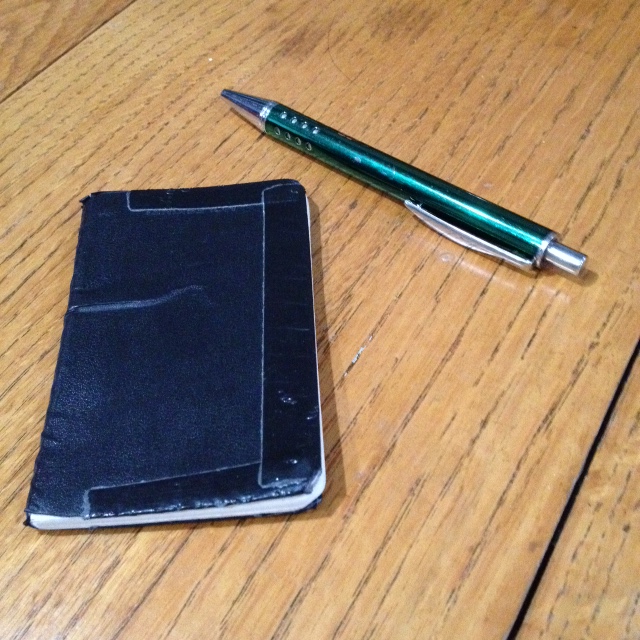
We repurposed an old, spiral bound, three-subject notebook to record our adventures.  It spanned twenty-two years.  When we moved to our house in 2018, this notebook was lost.  (A similar thing happened with an Historic Scotland booklet where we’d inscribed all the dates of properties visited.  It vanished somewhere in central Illinois in 1992.)  Recently, looking for an empty three-ring binder for my wife to use, I unexpectedly came across our old three-subject notebook.  The relief—maybe even ecstasy—it released was something only an historian could appreciate.  Here were the dates, times, and places that I thought had been lost from my life.  In that morass of years after Nashotah House my mind had gone into a kind of twilight of half-remembered forays to bring light to this harsh 9-2-5 world.  I carried the notebook around with me for days, not wanting to lose sight of it.

Those of us who write need to record things.  I’ve never been able to afford to be a world traveler.  The company’s dime sent me to the United Kingdom a few times, but overseas after Scotland has been more a reverie than a reality.  But now, at least, I could remember our domestic trips.  The notebook included ventures I’d forgotten.  You see, when you get back from a trip you have to begin the 9-2-5 the very next day, particularly if your company isn’t fond of holidays.  (This explains why I write so much about them.)  Pleasant memories get lost in the mundane cookie-cutter problems of everyday life.  And yet I could now face them with that rare joy known to historians.  I had a notebook next to me, ready for transcribing.  It was going to be a good day.