
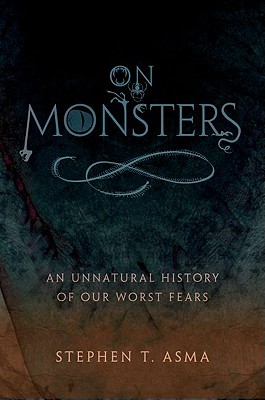
From the moment I saw Stephen Asma’s On Monsters summarized in the Chronicle of Higher Education, I knew I had to read it. Having been fascinated by monsters as a child, and then having grown out of that fascination, this book is a respectable way to indulge my juvenile interests while learning something. The book’s subtitle, An Unnatural History of Our Worst Fears, reveals perhaps why I was so compelled by this particular volume. Those of you who follow this blog know that I contend that religion and fear are very closely related, well nigh inseparable even. As Asma delves into the origins of our monsters, he pauses for a while on the Bible.
The Bible hosts its share of monsters. From lengthy descriptions of Leviathan and Behemoth to tantalizingly creepy references to Azazel and the night hag, the writers of holy writ were as aware of monsters as we are. Asma focuses on the fantastic beasts described in the apocalyptic material, Daniel and Revelation. Obviously not intended to be taken literally, the descriptions of these fantastical beasts represent various ancient empires that threatened the early Jews and Christians respectively. Their monstrosity rests in their intent to destroy, not their hideous physical form. To quote from our host, “monsters are not creatures of natural history but symbolic warnings of a horrifying life without the Abrahamic God (or, in the case of Christians, without his son).”
The ancient fascination with monsters very likely has religious roots. These beings appear to stand outside the rationally created order and lurk in places where the divine is not. The fear they engender leads to the very religion that shuns them. Vampires fear a crucifix, demons are banished at the name of Jesus, and even the headless horseman shuns a church. People run to their faith to protect them from monsters, and monsters, in their turn, provided early believers with a rationale for their faith.
 Steve A. Wiggins
2 thoughts on “On Faithful Monsters”