
Over the past two decades, an interest in presenting fairy tales more akin to the spirit of the brothers Grimm has blossomed into its own industry. For those of us who were reared on Fractured Fairy Tales, this is a welcome development. Among the more creative approaches to this genre is the 1997 movie, Snow White: A Tale of Terror. Hampered by lack of theatrical release in the United States, this gothic attempt at telling the story in its original, dark form has gone largely unnoticed. I recently viewed the movie for the first time myself, and although the basic storyline is somewhat trite the Grimmesque features redeem it at many points. (Who doesn’t secretly want to see the pretty-boy prince charming thrown out of a castle tower window?) Perhaps the most unexpected addition to the Disneyfied tale we all know is the religious component to the movie.
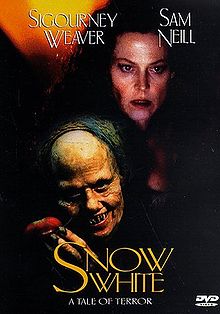
“Snow White”—never named so in the movie—has been raised by a pious father who wears a cross and insists that she say her prayers and read her Scriptures. Being a local lord, he suppresses ruffians who populate the woods, including a band of not-so-merry men who incorporate some that were tortured for refusing to go on crusade. When the not entirely wicked step-mother needs Lord Hoffman’s blood to raise their stillborn son to life, she lashes him to a crucifix, saying to the corpus that occupies the other side, “now you shall have company.” (Did I mention this is a horror film?) Along with the unexpected twists that those conditioned to happy endings find so disturbing, the film actually contains a subtlety on matters of religion that is frequently missed. It also resists corny dialogue that so often plagues films where the storyline cannot bear any substantial weight.
While it will never be my favorite movie, this particular film was an effective adult retelling of a familiar tale with more depth than the common story might suggest. The Germanic folklore collected by the Grimm brothers often reveals a depth of insight into humanity that is bleached out by Disney’s bright colors and cheerful smiles. It is more true to the human experience. The scene that remains seared in my mind is where one of the seven miners (only one is a dwarf—another is actually a friar) is revealed to have been disfigured by crusaders off to liberate the Holy Land. Refusing to participate, he had to watch his family burned at the stake and had a red-hot iron cross pressed to one side of his face. (Did I mention this is a horror film?) As in the days of Grimm and continuing into our own, the church continues to scar many even as it attempts to heal others.
 Steve A. Wiggins