
Edinburgh University is often the overlooked gem in the academic crown of the British Isles. I have to confess that that declaration is in part based on the natural pride of an alum, but it also arises from seeing the various projects the university has in some way sponsored or spawned. The study of religion is still taken quite seriously at my alma mater, and among the more recent incarnations is a website called The Religious Studies Project. (It at first reminded me of the Edinburgh Ras Shamra Project, with nearly the same initials, initiated by a couple of talented chaps just after I left town.) Founded by a couple of post-graduate students in religious studies, the RSP offers weekly podcasts and various articles on topics of interest in the realm of my erstwhile and eternal profession.
The Internet has forever changed the way that people learn about religion. This democratization of knowledge is generally a good thing, especially for those who test what they read (or hear) against other sources. This is the heart of the academic enterprise. Many people think that higher education is all about getting the answers. This may be true in some fields, but the disciplines known as the humanities—the things that make us human—find education in the perennial raising of questions. Religions should be the source of questions, not the monolithic bastions of all-answers. You can always tell when you meet someone truly educated in religion—s/he will be the one admitting that s/he doesn’t know.
In our cost-effective society we live under a prevailing myth that when you pay for something you should get a certain commodity in return. In fact, education often works just the opposite way, robbing the learner of easy certitudes, leaving him or her wondering more deeply. So I’m pleased to give my colleagues a shout-out.
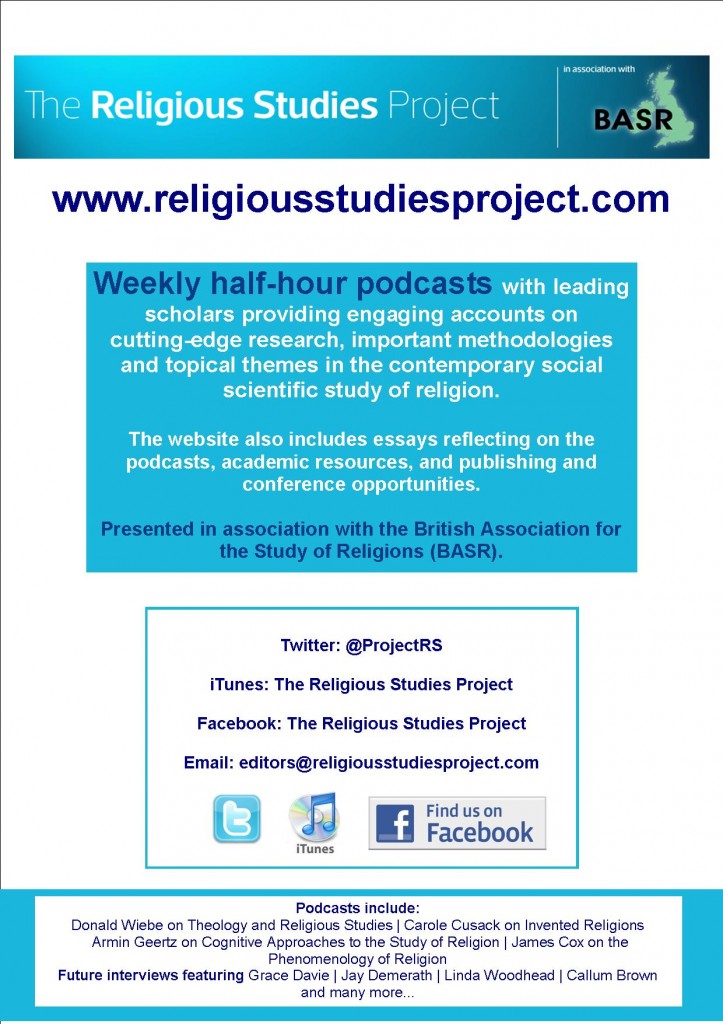
If you’ve found this blog you likely have some passing interest in religion. Having been trained in Edinburgh I laud the method I learned: ask questions. Seek answers. Ask more questions. This is the tradition of religious studies. Even if it doesn’t lead to jobs, we hopefully emerge from it a little bit wiser.
 Steve A. Wiggins