
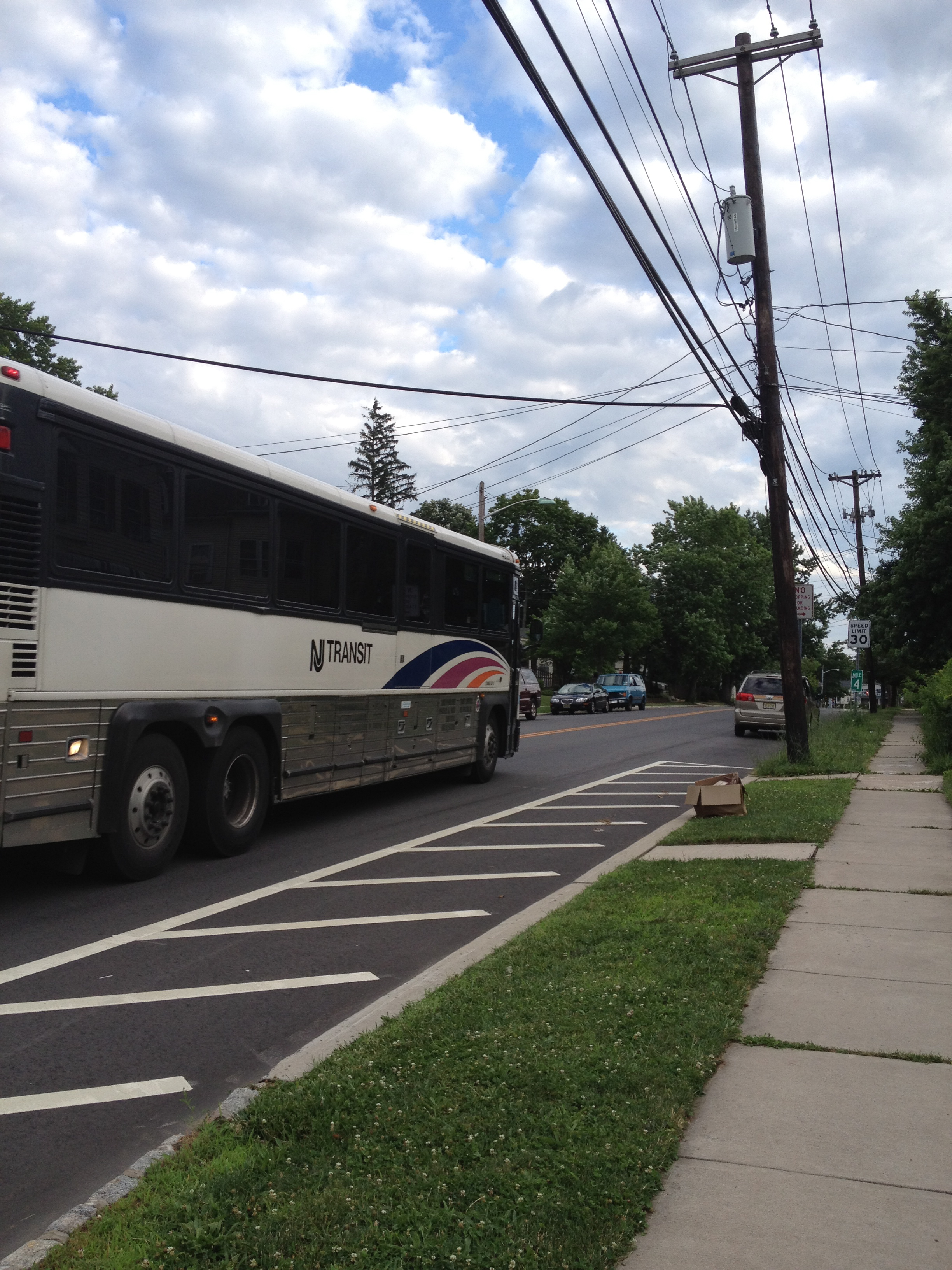
Few experiences encapsulate one’s lack of control like commuting by bus. As my first year of a daily commute to Manhattan draws to a close, I have experienced many mornings of standing in cold or hot air while a bus leisurely makes its way toward my appointed stop twenty, thirty minutes late. The commuter can’t head back home for a moment’s warmth/coolness, because the bus could come at any time. The sense of utter helplessness as you know that you’ll be late for work, and that you got up at 3:30 a.m. for this, settles like an iron blanket over what might have begun as an optimistic day. Then there are those who sit beside you, totally beyond your control. I’m a small guy and I sit scrunched next to the window to get as much light for my reading as I can. Very large people find the extra space next to me attractive, although sometimes they insist I squish even more against the window so they might fit. Overall, however, the exchange of comfort for reading time makes the arrangement palatable. It’s the loss of time that bothers me.
Without traffic, my bus can be at the Port Authority Bus Terminal in an hour. To manage this feat, it has to reach my stop before 6 a.m. On rare occasions it comes perhaps five minutes early. When you take a bus, subject to the vagaries of traffic, the only wise course of action is plan on being a few minutes early. Drivers who watch the clock are dangerous. So it always annoys me when passengers down the line complain if a bus is one minute early. On those exceptional mornings I hear strident voices raised, “you’re two minutes early—I had to run!” or “I was sitting in my car; you came too early!” The driver is scolded and the next day we’re all half an hour late for work. It is the problem of premature transportation. Time, to the best of our knowledge, is something you never get back. I would rather be early rather than late.
I first conceived of wasted time as a religious problem when I was in seminary. There was always so much to do, and relinquishing time to pointless activities such as standing in line, or waiting for the subway, grew acute. Now that I’m an adult anxious about holding down a job that requires a lengthy commute, the issue has arisen again. Clearly part of the difficulty lies in that time is frequently taken from us. The nine-to-five feels like shackles to a former academic. I had classes anywhere from 8 a.m. to 10:30 p.m. without considering the drain on my time. It was largely, I believe, because pointless waiting was not very often involved. Time, like any limited resource, must be parceled out wisely. Time to bring my morning meditation to an end and get ready for the bus. And if it’s early I will consider it as a divine gift.
 Steve A. Wiggins