
Once upon a time, theology was queen. I’m no theologian, but then, I didn’t make up the phrase. A recent article in the Chronicle of Higher Education discusses how some scientists say there is no longer a need for philosophy. In passing the piece mentions that theology had, long ago, been considered the queen of the sciences. According to medieval thinkers, philosophy was her handmaid. Antiquated archaisms apart, I sometimes think back on this whole venture of education. Few today acknowledge, and most probably don’t know, that education began as a religious exercise. Writing, and reading, were overseen by the gods. Even in the modern world the earliest universities were founded to teach theology and law. Many of the ivy league schools, including Harvard, Yale, and Princeton, began as training grounds for the clergy. How quickly our forebears are forgotten.
It’s not that I think religion deserves a privileged place in the academy, but I do believe it deserves a place. Science has a long track record of spectacular successes. Not only that, but the advances in science often capture the imagination—and here we are back in the realm of the humanities, that place where feeling and possibility are unlimited. Many of those of us in religious studies—apart from creationists and their kin—gladly award science its deserved paean to successfully unpacking the intricacies of the material universe(s). As the Chronicle article demonstrates, some on the science side of the circle want to claim all the marbles and go home. Some of us want to keep the game going well after dark.
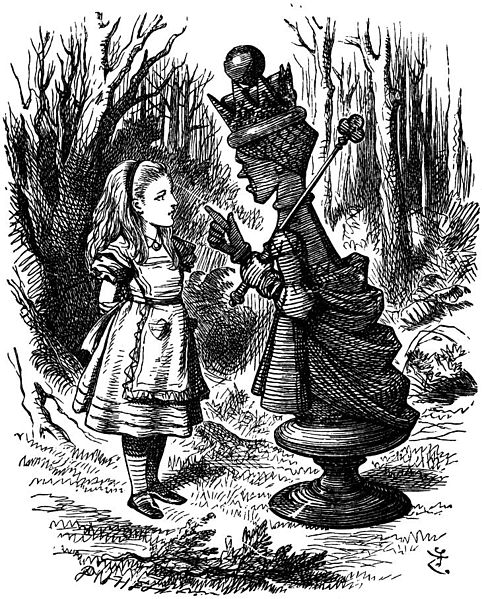 Maybe that’s a very wide metaphorical shift—from queen to playmate—it may be presumptuous. After all, what has religion, or philosophy for that matter, got to claim? What shiny Nobel Prizes to display gracefully, or great advances of which to boast? The benefits religion can claim are somewhat less tangible, but important nevertheless. While some people declare that meaning is a chimera, deep down, as a species, we know that it is important. Even more than that, the fact that you’re reading this right now owes its ultimate origin to religious thinking. Writing was the brainchild of the gods, an activity we learned in imitation of the divine. I will always find science fascinating, but I will always do so with a book held in my hands. “Now, here, you see, it takes all the running you can do, to keep in the same place,” in the words of another famous queen.
 Steve A. Wiggins
5 thoughts on “Queens and Playmates”