Religion Fiction

Children brought up in a religious environment, according to a recent BBC story, are more prone to believe in fictional characters. The story, based on research from my alma mater, Boston University, suggests that if children are taught to believe miraculous stories at a young age, they will more likely believe that fictional figures are based in reality too. Undoubtedly this will be seen as yet another brick in Montresor’s wall by those who can find no good in religion. The reasoning will go something like this: believing in no religion is the “neutral” position. If we raise children in a religious context, we are inclining them toward a fictional belief system and making them less likely to reason their way out of it. Therefore, we should raise children secular.

Even in the BBC story there are dissenting voices. Perhaps children who learn about Jesus find Thor a more compelling character. Perhaps they are open to possibilities that logic shuts out. Our brains have two hemispheres for a reason. I often wonder whether it is possible to be fully human while ignoring about half of what evolution gave us to work with. Logic tells me that religious belief serves a survival function. And my creative side still appreciates the possibilities that my Manhattan brain is forced to shut down every day when I punch the clock. If there’s nothing more than work, perhaps believing in fiction serves a valuable function after all. But I suspect this is playing right into the rationalists’ hand. Pass me another brick, will you, Fortunato?

The jury, however, is still out on the nature of reality. Even for materialists. Gods of the gaps tend not to survive very well. The question is actually much larger than that. We don’t know the nature of ultimate reality. We’re not even sure what reality is yet. Can a parent who believes in God, after the experience of growing to maturity in a heartless universe, be blamed for teaching their children the same? No humane parent raises their child purposefully teaching them falsehoods. Yes, some children are damaged by religious upbringings. Some are damaged by materialist upbringings as well. What seems to have shifted, in my humble opinion, is the popular perceptions of religion. What used to be understood as the foundation of a civil society is now challenged as a harmful fantasy that encourages children to grow up into terrorists or non-functioning adults. The belief that we can raise children with no biases, however, is clearly fiction. Until we have the full truth, there should be room for both Gilligan and the Professor on this island. But then again, I was raised to believe in the divine world, so what do I know?
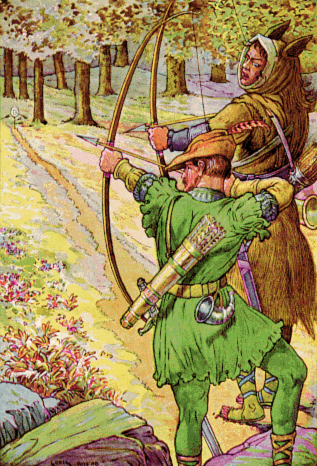
Fact or fiction?

Fact or fiction?

4 thoughts on “Religion Fiction

  1. jeremiahandrews

    Hello. Lots of good reading tonight.
    I was raised in a Catholic home, went to church, we had a family bible, which I came to understand later, my father had his favorite versus he would quote even though he never read it cover to cover, he just knew where to find them.

    As for fiction, I don’t think a belief in God was necessary to believe in “characters.” I was weaned on God and Church from my earliest memories. So I had that base early on. And church was an important part of my life, so much I ended up in Seminary later on.

    The 70’s and 80’s were rife with people we could believe in, Obi Wan, Luke and most importantly Yoda. The Star Wars Trilogy of that time was religious teaching on film, set in a fictitious star system far far away. George Lucas fed the minions with something to believe in that wasn’t “church” per se. I remember having spiritual experiences watching The First Trilogy, several times over. I remember sitting in those theatres feeling things I could not identify at that moment, but it was Huge for me. As I have grown into my adulthood, I find myself gravitating towards stories, fables, teachings of characters that I could identify with and believe in just as well. Most of my reading library here at home is littered with characters, themes, teachings and belief that only enhance my life as I’ve collected my books.

    I’ve studied religion: up, back and upside down from one tradition to the next. Pop Culture has added to my lexicon of belief that I learned for me and those beliefs have informed the man I am and the work that I do with others today. I think it was good that as a young person I was able to incorporate these people into my lexicon. I don’t think, and I never asked them, if my parents ever had these kinds of experiences watching the same stories unfold as adults? I never got the idea that any of the stuff I found interesting as a young man ever made itself known in my parents lives.

    The Hobbit Series was another set of films I watched, and read in junior and high school, but they did not impact me as much as Star Wars did. Even today with all the new films.

    But this is really something to think about.

    Like

  2. jeremiahandrews

    For the last fifteen years, I have been also enamored with Harry Potter and his whole world. I think there is another series of stories (in book form) not necessarily the films, that people could believe in and cheer for and incorporate into their lives, I know I did as a grown man. I have several books on my bedside table I read from continually, all my favorite parts over and over. J.K. Rowling also gave us something to believe in, much to the dismay of those minions who derided magic and anything to do with it for their children. Common themes of Love, Good and Evil, Memory and Redemption. That was another set of stories written for the ages. In the end it was the book that stood up, because I was not thrilled with the movies. I got to grow up all over again through Hogwarts.

    I just thought I’d add that to my comment.

    Like

  3. jeremiahandrews

    When I learned that Harry and I shared the same birthday, it was an instant connection. There was kismet. And I was good to go. July 31st is an auspicious day, not to mention J.K.’s birthday as well.

    Like

  4. Thanks, Jeremiah! You’ve had, it seems, a similar experience to mine. I don’t believe growing up religious made more more gullible than others. I find that fictional characters can be more powerful and inspirational than non-fictional ones. Even the (few) great politicians generally have skeletons in their closets. And true religion can come from fiction. Even knowing what Melville wrote about his own intentions in Moby Dick, it is still among the most religious novels ever written, in my humble opinion. Or at least in my perception.

    Like

Leave a reply to jeremiahandrews Cancel reply

This site uses Akismet to reduce spam. Learn how your comment data is processed.