Dusting the Lilim

Having grown up on a literary diet of comic books and Doc Savage novellas, I have always had an appreciation for the fantastic. Since our town was relatively dull, it helped to have flights of imagination within the price range of those with humble means. I discovered Neil Gaiman (it seems that many profound writers are named Neil or Neal) through the machinations of one of my Rutgers students. After reading American Gods, which was an obvious starting place for someone of my erstwhile profession, I have sampled a bit more of his fare. I long ago gave up on comic books since I prefer the pictures I make in my own head, although I must admit that the few graphic novels I’ve tackled have required considerable thought. So it was that I came upon Stardust, a graphic-turned-prose novel.

Stardust serves up a number of folklore themes with the charm and wit that Gaiman generously doles out. It is a story replete with witches, fairies, and storm gods. A figurative smorgasbord of the mythical. What particularly arrested my attention was Gaiman’s use of the title Lilim for his witches. Lilim (or lilin) are mythical creatures of Semitic pedigree related to the (in)famous Lilith. Some traditions make the Lilim her children, and it has been suggested that they also put in an appearance or two in Mesopotamian mythology. Gaiman’s portrayal is fairly accurate here with the Lilim being selfish thieves of the night, but not entirely evil.

Beyond the escapism of relatively happy endings, this mix of evil tinged with the helpless inevitability of aging speaks paradigmatically of mythical ambiguity. Many modern-day religions tout the answers, but mythology parades the possibilities. The mythology of old continually returns to us in new forms. Using a mix of fantastical creatures from various eras of human story-telling, Stardust is a gentle fairytale for adults. Like the book of Ecclesiastes the story has a fatalism to it, no real happy ending but no hair-rending tragedy either. Turning the classic quest for the father into an unwitting search for the mother, the novel offers seemingly endless potential for hope. Although penned a few years ago, that message is still desperately needed today.


Agnostic Gnostic

Ever have the feeling that you’re being watched? While touring the Salem Towne House in Old Sturbridge Village in Massachusetts, that fact that Mr. Towne was a Mason became abundantly clear. In the ballroom of his historic house the “eye of God” was looking down from the ceiling, and those who are astute observers could find other Masonic symbols in the house. Indeed, the ballroom walls were painted with cedars of Lebanon, the very trees Solomon was said to have utilized in the construction of the first temple in Jerusalem. Historically nothing is known of Solomon and the tradition of the Masons originating with that event can be nothing more than folklore, yet the connection is taken very seriously by some Masons.

Cedars of Lebanon

My grandfather was a Mason, but the desire to join the secret society never blossomed in me. I’d read Holy Blood, Holy Grail long before The Da Vinci Code ever drew attention to it, but being of a somewhat skeptical bent, I found most of it unbelievable. There is no doubt that the Masons had a very influential, if secretive impact on early modern history. I never seriously researched the group, but it is clear that their origin myths are very religious indeed. I looked right into God’s eye yesterday—how was I to question it? I was standing amid the cedars of Lebanon, after all.

Somebody's eye is watching you.

The desire to possess secret knowledge runs profoundly throughout history. Those who possess knowledge possess power. The Gnostic tradition is based on this very idea; God has revealed secret knowledge to some while the rest of us grope in the dark. Best to keep that knowledge clandestine. The Masons, wittingly or un, are part of this tradition. They are the putative guardians of esoteric knowledge, hidden amid the shadows of cedars and behind the clouds in the sky. In this day of abundant, free knowledge—it is given away every day on the Internet, for those who know how to discern—it may be difficult to comprehend that much can be hidden. As I stood looking God in the eye yesterday, however, I realized that there is far too much for any one scholar ever to learn.


Eyre the Apocalypse

Finishing Charlotte Bronte’s Jane Eyre last night proved timely from the point of view of today’s much anticipated apocalypse. (I hate to leave a book unfinished as the final trump begins to sound.) As I stress to my students at Rutgers (when I actually have a class), the Bible surrounds them whether they are aware of it or not. Quite aside from the present rapture-envy—that one’s just too easy—reading literature of the nineteenth century is an excellent way to show the Bible’s influence on western culture. Jane Eyre is suffused with biblical allusions and direct references, even with the faulty theological notions that the Scriptures had hatched in that century. Of course, the Bronte sisters, all successful novelists, were the children of a clergyman, but other writers of the period demonstrate an equally biblical worldview. In fact, much of the dramatic tension in the present novel revolves around distinctly biblical issues.

Interspersed with my reading of classical novels, I read many more recent literary explorations as well. A couple of weeks ago I completed Stephen King’s It, not a particularly favorite novel, but one that at times demonstrated that even masters of the macabre frequently draw on the Bible. For modern literature the Bible is the ultimate foundation. It would be interesting to live long enough to see if it still has any relevancy at the end of the present century. Jane Eyre, perceptive as most nineteenth century novels are, also pressed directly the wound that currently afflicts much of our nation. Cast upon misfortune, Miss Eyre is mistaken for a beggar. Miss Bronte observes, “Prejudices, it is well known, are most difficult to eradicate from the heart whose soil has never been loosened or fertilized by education,” a line that should be emblazoned upon the door of public officials who feel it is their right to withdraw funding from public education. You want an apocalypse? That’s the recipe right there.

Nevertheless, Miss Eyre presses on until she reclaims the man who had once “stood between me and every thought of religion,” dodging an impassioned missionary along the way. In revealing the manipulations of the cousin who dies on the mission fields, enriched by Miss Eyre’s beneficence, once again Charlotte Bronte displays her perception of how the church may ultimately rob a soul of its true potential. Upon learning of his death, the now Mrs. Rochester ends this penetrating novel with his words, strangely appropriate for this day of fictional endings: “’My Master,’ he says, ‘has forewarned me. Daily he announces more distinctly—“Surely I come quickly!” and hourly I more eagerly respond, —“Amen; even so come, Lord Jesus!”’” Of course, St. John is here quoting Revelation 22.20. Since I am scheduled to run a 5-K in a couple of hours, if the second coming is about to happen, it would be convenient should it transpire before I end up exhausted in my own personal apocalypse.

Jane Eyre stopping one of the horsemen of the apocalypse?


Of the Zombies, By the Zombies, For the Zombies

In what is sure to be a controversial move, the Center for Disease Control has posted an official government blog post entitled “Preparedness 101: Zombie Apocalypse.” (Be warned, if you click on this link it may be considerable time before the page loads—it has been receiving a tremendous number of hits.) Written by Ali S. Khan, the Assistant Surgeon General and head of the CDC, the article is actually about hurricane preparedness, but with zombie furor being what it is, many on the Internet are taking the warning seriously. Literally even. Citing the tsunami in Japan and the concerns for leaking radiation, the article begins with a lighthearted fear-fest that then reveals the actual concern. Humor in the government? This is something we should all encourage!

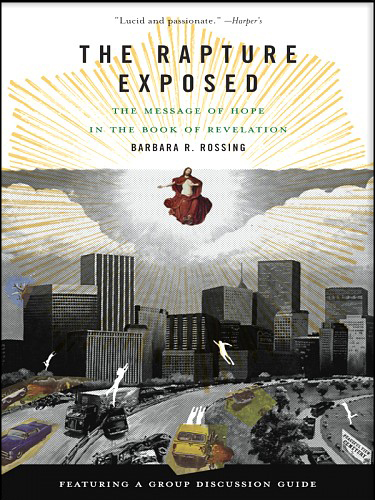
The analogue with the current rapture fever was immediately obvious. I grew up in terror of the rapture, but when I began to take courses on the Bible from scholars who knew about apocalyptic literature, its context, and what it was intended to do, I realized that the rapture was invented in the nineteenth century by evangelists with no critical training, misreading the book of Revelation. As much as we like to break history into discrete units, time simply keeps flowing and the current of fear generated in the nineteenth gushed into the twentieth century culminating in the birth of the Christian fundamentalist movement. For many people in the twenty-first century, fundamentalism and Roman Catholicism are the two ancient strands of Christianity that legitimately lay claim to the title. At least half of this history is backward.

The Bible itself, when read in context, shows the errors of the rapture-hungry. The idea is a blend of obscure bits of Paul’s letters, mixed into Revelation and stirred vigorously. Then half-baked. The Bible does not give us a rapture. The CDC does not give us a zombie apocalypse. We know where the myth of zombies originates (I have posted on the topic before) and we know zombies are as fictional as griffons and centaurs. Nevertheless, faith springs eternal. Those dissatisfied with all that life has to offer turn to zombies for an equalizingly grim future for all humankind. It’s all gonna rot, baby. Except, of course, for those who’ve been raptured before it happens. When the zombies fail to show up after Saturday’s non-event, all of us will feel pretty silly just looking at each other as Ali S. Khan comes up with his next zinger.

The author, upon reading the CDC blog.


P*ss Says Elijah

As celebrations of the four-hundredth year of the King James Version continue this month, it is time to reflect on how its language has influenced modern-day English. I recently finished my course on the Prophets, and as I was reading the wonderful stories of Elijah, I remembered the shock I first experienced when reading 1 Kings 21.21 as a child. In the words of Elijah: “Behold, I will bring evil upon thee, and will take away thy posterity, and will cut off from Ahab him that pisseth against the wall, and him that is shut up and left in Israel.” I had been raised with the certain knowledge that the “p-word” was cussing, if not downright swearing. What was it doing in the mouth of a righteous prophet? Then I realized even Saint Peter, according to Mark 14.71, “began to curse and to swear, saying, I know not this man of whom ye speak” just before the cock crowed.

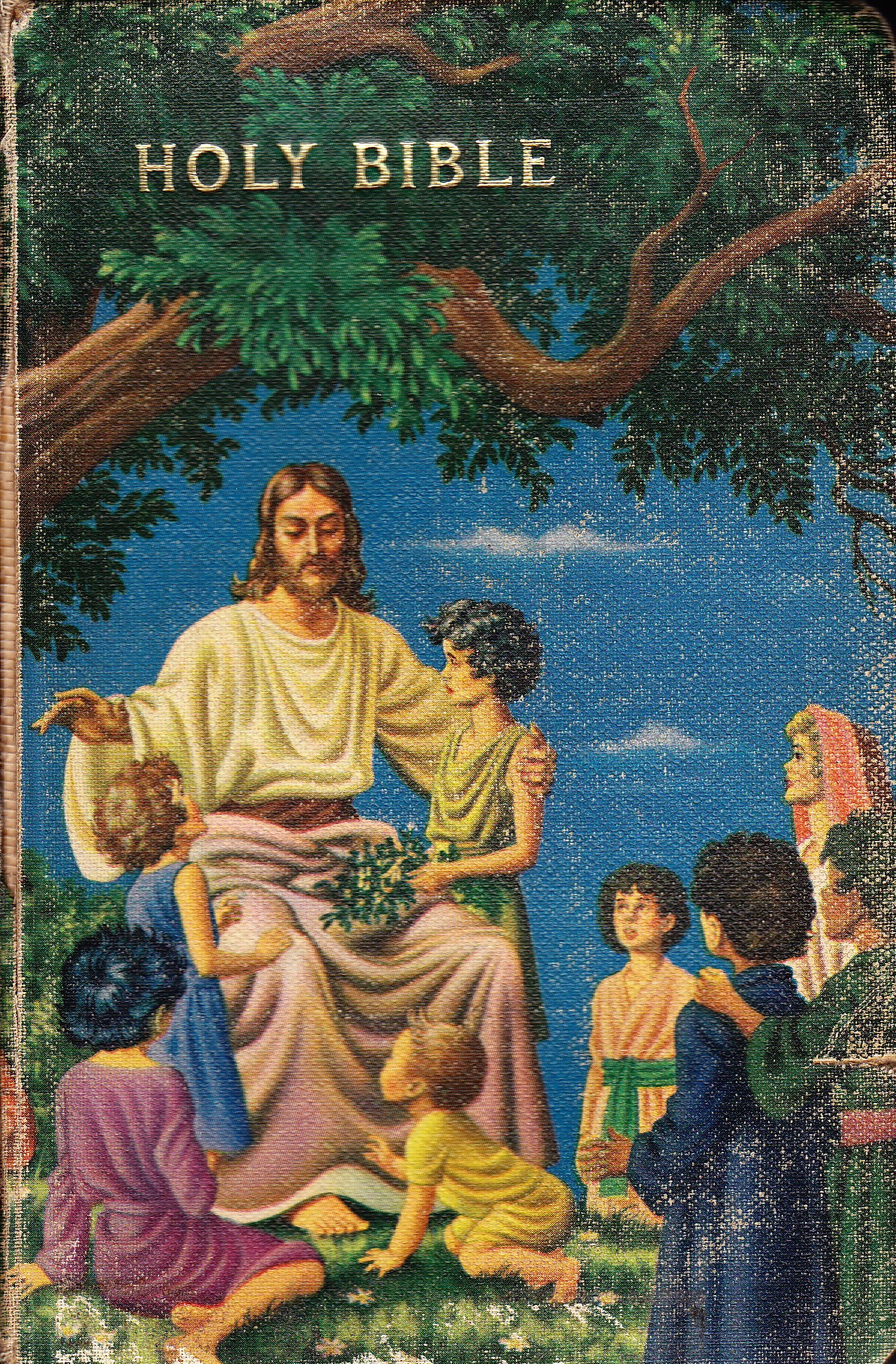
The Bible defies expectations. Today it has become a highly politicized document. The “Family Values” camp loves to cite select passages of the Bible but tends to ignore those juicy bits that contradict their 1950’s outlook. The Bible is a book of surprises. It suffers at the hands of its own apotheosis. I know biblical scholars who argue that the Bible should no longer be singled out as a special book, but we do owe it a debt of gratitude. If modern-day people want to revere the Bible, they should do so with an awareness of its context.

Recently a friend posted a comment on Revelation online, wondering why people found it so scary. In the many replies, several worried commenters noted how signs for the apocalypse are beyond ripe and the fruit is ready to fall from the tree. When I interjected that Revelation was a response to first-century Christian persecution couched in the language of apocalyptic literature, I was quickly corrected by others who noted that since Revelation is coming true right now, it must, ipso facto, be a future prediction. We revere the Bible without hearing it. Until we learn to actually read and appreciate the Bible in its context, I’ll have to take my side with the prophets of old. After all, p*ss says Elijah.

Be careful little mouth what you say...


Science of the Bible

It should be a local decision. Science, that is. This straight from the mouth of America’s darling Chris Christie. New Jersey’s governor does not wish to weigh in on this one. His children attend private school. Yes, even New Jersey is under the anti-evolution gun. In the light of the inevitability of Creationism trumping real science, I’ve been working on a sample syllabus for high school science teachers. The way I see it, this new focus in American education should teach science the way the Bible does – no holds barred, no punches pulled. No picking and choosing like Creationists do – Hey! Put that cell phone down, it is a device of black magic! (This will need to be followed up, supernaturally, by a course on how to handle witches in the classroom.) My proposed syllabus looks something like this:

Astronomy: study of that mysterious dome that encircles our earth. It seems to have holes poked through it, or so it looks at night. Science can change depending on the time of day. The sun and moon live in that dome as well, as our astronauts can attest. (Their views that the earth is round, without four corners as the Bible instructs, are, of course, heretical.)

Meteorology: study of the windows of the dome. When God opens these it rains. When God is angry he sends fire down from the dome. The loud sound that follows that is his angry voice. So play nice!

Geology: study of the very center of the cosmos. Our flat earth home, with its four corners and steady pillars reaching down into Sheol, is the exact center of everything. There are no such things as dinosaurs (or cats) since they are not mentioned in the Bible. The layers that you see here and there were all caused by the flood in a matter of about 150 days. The whole thing took only 6 days to make.

Biology: study of the separate kinds God created. Let’s be honest here: the chihuahua and the mastiff share a common ancestor? Preposterous! God made each kind separately and they’ve stayed that way for the past 6000 years. Oh, and yes, animals have telekinetic abilities – that’s how they knew to show up at the ark on time. And when the flood was over the marsupials all knew to swim to Australia. Koalas are surprisingly strong in the breast-stroke category.

Humanology: study of human beings (which are not animals). We were created after the animals (unless you read Genesis 2, where we were created from dust before the animals) and are therefore superior to them. Our natural lifespan is about 600 years, but if you are really wicked you might make it almost to 1000. Reproduction is by means of men planting seeds in women. Females contribute nothing to new children except a womb of their own. We teach these new generations by using the science of miracles, and since there are no schools in the Bible, what are we doing here anyway?


Alien Agenda

Aliens are now firmly among the canonical cadre of movie monsters. Just the list of highly anticipated movies of 2011 is enough to demonstrate the fact: I Am Number Four, Battle: Los Angeles (past, but formerly anticipated), Cowboys and Aliens, Super 8, Apollo 18 (now sadly relegated to 2012). With two part-time jobs and the constant hunt for something more permanent, I tend to fall behind, however. I have to wait until the DVD release to see them.

Watching horror films has been an avocation of mine since college. Once when a sociology student asked me why, in the course of a survey; I replied that it was better to feel scared than to feel nothing at all. Well, maybe I’d been reading too much Camus and Kafka at the time, but the habit has persisted and I am now professionally attuned to their religious elements as well. Even the aliens got religion. This past weekend I stayed up late to watch The Fourth Kind. It was suitably scary – when I read the reviews vociferously castigating the producers for claiming it was real, I suspected that the reviewers were overcompensating. The premise (alien abduction) is frightening enough – especially in such a remote location as Nome, Alaska – but the Bible had to be brought into it as well.

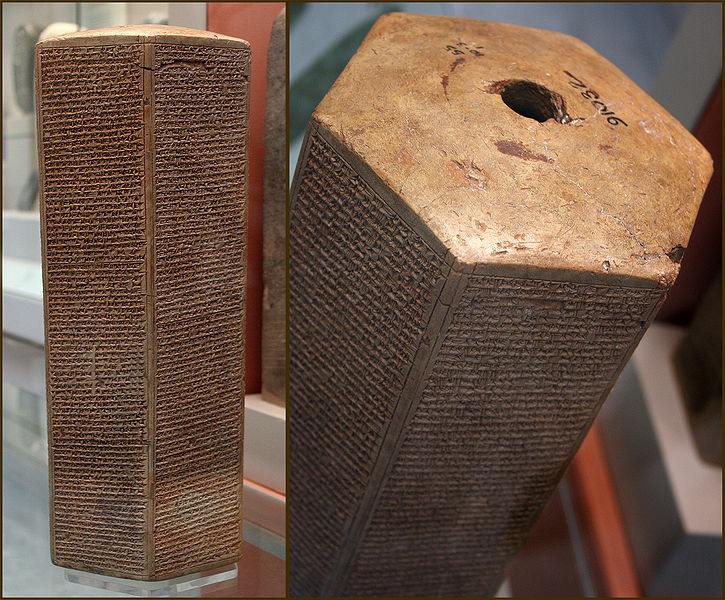
Admittedly the fear began to wane when Zecharia Sitchin’s Sumerian hypothesis appeared. Aliens speaking Sumerian is simply not convincing to those of us who’ve actually learned extinct languages. (It could explain some of the textbooks, however, now that I think about it.) The book of Genesis was then cited by the film to verify the much more ancient Sumerian claims. Many horror films deal either directly or indirectly with the fear of religion. The Fourth Kind was no exception. I was reminded of how the Bible played a small but crucial role in The X-Files: I Want to Believe movie as well. As a prop the Bible lends gravitas to otherwise questionable celluloid situations.

Never one to accept the ancient astronauts model, years of studying the Bible have convinced me that context explains most of the anomalous passages in scripture. Nevertheless, the monsters lose their bite without religion, so let’s give Sitchin’s crowd their due and just pretend for a little while.


That’s All, Folks

As May is now upon us, in keeping with the spirit of Beltane, we are being warned to make ourselves ready for the end of the world. At Rutgers Day on Saturday, the eBible Fellowship was out in force, handing out tracts declaring in no uncertain terms that this month will see the dissolution of all things. Now is the time to buy things on credit, apparently, but make sure the payments aren’t due at least until next month! I’ve written a few posts on this particular prediction before, but the flyers I received have helped clarify a few things for me. I wondered why the god of eBible Fellowship had chosen this year to end it all. It turns out that this is the 7000th year after the flood! Things have been going swimmingly for seven millennia, so it is time to call it all to a halt.

Reading further, I was amazed at how accurate the reading of the cosmic timeclock has become. According to the pamphlet, the Church Age ended May 21, 1988. At that time I was too busy trying to get into doctoral programs in Bible to notice, I guess. According to eBible, the Bible states that the tribulation began then and would last for 23 years. That does explain my career history. Reading the passages they cite, however, I just don’t see the numbers adding up. eBible claims that God stopped using churches in 1988, so if you’ve been spending your Sundays there, I guess the joke’s on you. It kind of makes me glad that I was never ordained.

Samuel de Champlain does not endorse eBible Fellowship

Intrigued, I decided to look at their website. For a temporary site there do seem to be a number of incomplete pages announcing that more is coming. There are podcasts about what to do in case you are not raptured on the twenty-first, as well as proof that the world is 13,000 years old, unlike the traditional Ussher date (his name is misspelled on the website). The group, which is based in Sharon Hill, Pennsylvania, states: “We are living at a time when the Bible is being highly exalted by God.” A classic statement of bibliolatry – I was not surprised to note that the King James Version is the one the Fellowship approves. I didn’t see that they calculated the fact that 19 days before the end of the world the KJV would become 400 years old. The only significant event I could find for May 21 of 1611 is that Samuel de Champlain returned to Québec from France. I sure I am missing the hidden meaning of that event, since crossing the sea is almost certainly a metaphor for the flood and Samuel is a prophet in the Hebrew Bible.


Happy Birthday King James

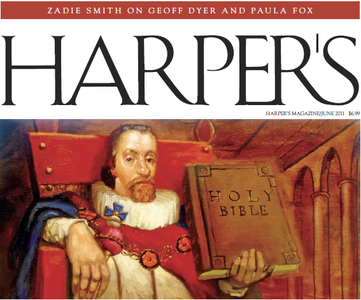
Four centuries ago a literary landmark was published. Today marks the birthday of the King James Version of the Bible, arguably the most influential book ever published in the English language. Those active in scholarly circles at bibliocentric institutions are popping the cork on their sparkling grape juice today, since for many the King James Bible represents the real liberation of God’s message. In some sense, the KJV also represents the origins of Protestant movement. Liberating the Bible from the clutches of scholarly Latin, Greek, and Hebrew, the King James Bible made the book accessible to the English-speaking world. As direct access to the Bible grew, the pontifical power of Rome (with apologies to besainted John Paul II) came increasingly under question. Inquiring minds wanted to know what God himself said. Of course, the Bible soon enough would evolve into a lash in the able hands of power-hungry theocrats.

Today the New International Version outsells the venerated King James. Some very conservative groups still hold to the King James Version as an “inspired translation” that no others can touch. The New International Version was hailed by evangelicals as a more up-to-date, safe translation of the Bible when it first appeared. The fact remains, however, that translations can never fully replicate the original. This is a major problem of bibliolatry. Languages are systems of thought and direct translation never fully captures the “meaning” of the original. Few who adore the Bible have the time to truly learn Hebrew and Greek, so guardianship of the truth must be passed to a reliable translation. The King James, in turn, also became the basis for some shaky theological ideas that are challenged by more accurate translations.

As the Internet rings with stories of the death of Osama bin Laden, the dangers of absolute religious adherence to any book of faith should become clear. Bibles, Qurans, Talmuds – these may be guideposts along the way, but they are often mistaken for the end of the journey. Written texts are subject to interpretation and even the KJV is read different ways by different believers. Instead of worshipping books, we would be better advised to read them. And if from that reading we learn to think then the time of the original composers of sacred writ will not have been wasted. That would be cause for celebration indeed.


Dukes and Serfs

Once upon a time in a land far away, a man and woman worked a fertile garden, blessed by God. That garden was in the incredibly rich, black soil of Savoy, Illinois. The zucchinis harvested were of biblical proportions. Some of them miraculously grew to the size of my calves seemingly overnight. The broccoli and carrots my wife and I grew had so much flavor that we couldn’t believe just how much leeched out while vegetables sat in the back of a truck or on a grocery-store refrigerated shelf. Even with their periodic mistings. It was as if Bunnicula had visited them at night. So long ago, the garden. It seemed obvious in those days why the writers of Genesis compared paradise to a garden. Ours was no Eden – it was hard work – but my wife and I had a lot of fun with it.

James Buchanan Duke, namesake of Duke University, owned a considerable estate outside Hillsborough, New Jersey. Having established both a tobacco monopoly and an electric company, Duke was enormously wealthy. He left his Hillsborough farm (not the tobacco farms which were in his native North Carolina) to his daughter Doris, making her one of the wealthiest women in the world. Her estate now consists of a socially conscious Duke Farms Foundation that has offered gardening plots to the plebeians of the region. So yesterday I found myself once again back in the garden. Sharing a plot with a friend, we arrived for opening day and were greeted by one of the organizers of the garden. Her name, of course, is Eve.

New Jersey planting requires more manure than the black earth of the Midwest. Yesterday I found myself shoveling horse manure, not for the first time in my professional life, while Eve supervised the garden. It seemed strangely biblical. Dodging between my summer classes this year, I will be emulating the first profession of our mythic father Adam. In the afternoon, after cleaning up, we headed to Rutgers Day, the university public-relations festival that shows off the tremendous wealth that cannot afford to hire full-time faculty any more. As I kept a weather eye on the clouds, worried about the seeds I’d just planted, the future continued to look stormy to me, even on the campus that has at times been my only source of barely sustainable income. Perhaps I should have changed my shoes, because it seemed to me that the smell of horse manure still hung heavily in the air.

I wonder if this is how Adam got started


Bell’s Hell

Hell makes the cover of Time. Or at least its absence does. For those of us who’ve delved deeply into the Bible for many years, it is no surprise. In fact, the uproar, as Time confesses, is among Evangelicals. So why Hell? Why now? The Evangelical pastor of Mars Hill Bible Church, Rob Bell, has just published a book questioning the existence of Hell and his fellow Evangelicals are in a conflagration about the loss of the sacred icon of God’s omnipotent stick that threatens them all into Heaven. It is a sad day when love cannot encourage enough that hatred becomes religion’s motivating factor.

The loss of Hell, however, represents so much more than just the loss of the scariest place under the earth. It represents the loss of control. Without Hell to wield and Hell to pay, many of the faithful may wonder what they might get away with. Neo-cons have been eager to court the Hell-mongers because the issue is making others lock-step in their own pattern. Diversity is not encouraged or appreciated. Lawns must be cut to the same height, trees carefully trimmed, shirts must be conservative and cookie-cutter, and one must wear that blessed smile that proclaims “Hell-dodger.” Cast any doubt into this fabled world and the results might be, well, realistic.

The Hebrew Bible knows no Hell but the one we make for ourselves. We hardly need a Devil to tutor us in the ways of evil. Human history reveals that we’ve had it in us all along. Instead of celebrating the death of Hell, several Evangelical pastors are simply adding Bell to its numbers. Time’s news is not news for many of us, but for those who haven’t considered seriously the implications of their faith as Holy Week rolls around, this may be a good time to take stock of options for eternity. What do we gain by fabricating an eternal torment devised by the most loving deity ever conceived? Hell can now claim its rightful place as a metaphor for the wickedness Homo sapiens devise for each other and for their planet.


Worshipping Religion

When does religion itself cross that invisible line into becoming the object of idolatry? In a world of an entire marketplace (“bazaar” might be a better word-choice) of religions, where each consumer selects his or her product, some take that choice with such conviction that the religion itself becomes their god. In ancient times religion was often a matter of ensuring that the gods were not angry. The average citizen had little control over this since the religious life of city-states and nations was the responsibility of the priesthood. Just pay your temple taxes and shut up. A religion anyone can live with. Last night as we discussed Jeremiah’s temple sermon in class the point became clear: even the God-chosen, fully approved temple in Jerusalem could become an idol.

Watching political candidates and parties and factions of parties posturing (apart from reminding one of peacocks and other showy birds) for possible election, they fly high the flags of their faith and hope that the market favors their brand. It is clear among many of their constituencies that the religions themselves have become objects of worship. How else can the rancor among a deeply divided Christianity (as only one example) be explained? Families and friends are torn apart by a common faith while ministers with the dubious benefit of seminary egg them on. Having been subjected to seminary as both student and instructor, I tremble when I think how clergy are trained. A holy nationalism pervades religions, transforming the faithful into armies that some, unfortunately, end up taking literally.

All the endless debates about religious violence and evolution and abortion should have taught us by now: no one has God in the witness stand. Our religions are our best guesses, no more, no less. In the face of great uncertainty many turn to the bravado of a faith that is willing to murder in order to prove its point. If God is really watching all this, perhaps a humble acceptance might be more appropriate? I think old Jeremiah might have agreed. Of course, he likely died at the hands of his own people who didn’t like his version of religion. That’s where the prophets have gone.


One Percent Solution

A colleague just pointed out an article in Vanity Fair that should be required reading for all Americans and it should be offered with a generous quaff of nepenthe. Please pardon any excess indignation you may find in today’s post. Whenever I’m teaching my course on the Hebrew Prophets I tend to get swept into the spirit of their oracular outrage. The latest statistics reveal that 40 percent of American income goes to only 1 percent of the population. Despite protests to the contrary, wealth does not trickle down like milk and honey (even though the latter takes its sweet time). The disparity between the ultra-wealthy and the middle class, as suggested by the article, has its closest analogues in Russia and Iran. Once the top is reached all political systems begin to look the same. Even President Obama’s budget will continue the legacy of tax cuts to the wealthy.

Where is the outrage? Americans are among the most complacent people in the world. Kept at the cusp of sufficiency, most people will not complain. Louis XVI himself could waltz into congress and be heartily greeted by his peers. All things being equal, if we the bottom 99 percent have enough then complaint is only sour grapes. All things being equal, however, is always hypothetical. All things are not equal. While many hard-working people are caught in a cycle of diminishing returns the bloated oligarchs help themselves to performance bonuses lofty enough to support hundreds of suffering families for a year. “Let them eat fake,” one can almost hear them say.

In the idealistic world of the Bible a pipe-dream was touted. Wealth itself is not evil, but it comes with an obligation. Trickle-down is a dried wadi in summertime. The wealthy are obligated to make certain that their fellow citizens all have enough. No one gets two houses before everyone has one. Once this level of fairness is reached, go ahead and get stinking rich. But that principle has never been realized. Those who have always require more. From those in such stratospheric positions magnanimity cannot be expected; for others to benefit some of their astronomic wealth must be taken. What are taxes for? Josef Stalin is laughing in his grave and shaking hearty hands with P. T. Barnum. They share a cigar and neither one of them need speak the motto they both know to be as true as the gospel.

Trickle-down economics


Genesis Rising

Educating against the grain of an unthinking religiosity is a sobering enterprise. Every semester students provide presentations for my intro class on various issues that the Hebrew Bible informs in wider society. Inevitably one group will choose evolution as the relevant topic. While the actual theory of evolution is outside the scope of a Bible course, I spend more time on Genesis than on any other book. I carefully explain how “science” is a concept absent from the biblical world and how the creation myths in Genesis have no basis in the physical reality we know. The world Yahweh is busy creating consists of a dome turned upside-down over a plate-like earth. That see-through dome keeps out the waters that rush back in a few chapters later to flood the world. It is a fantasy world that even the most intractable creationist can’t accept. (Well, maybe not the most intractable.)

Nevertheless, the Creationist movement that began about 1920 has done its homework. That homework, unfortunately, has been in disciplines that both biologists and biblical scholars ignore – public relations. Any observer of modern American society can easily see the distrust with which education is regarded. As a culture, we dislike those who “think they’re so smart” while we daily use the gadgets and devices they design and improve. Biblical scholars are especially suspect because they engage in the most hubristic of all human activities: storming Mount Olympus (oops, sorry, Heaven) itself.

In a typical Rutgers University intro class of 50 or so students, with a wide variety of majors including the sciences, student presentations on evolution ultimately end up suggesting “let the students decide for themselves.” Although they consistently rate my instruction highly, they just can’t let go of the gnawing belief that Genesis 1 describes the world as it actually is. Disappointed, I am not surprised. When headlines constantly demonstrate the antipathy – if not downright hostility – that governors and some presidents have for education, we will reap what we sow. That, by the way, is from the Bible.

(It's just made of green cheese)