Latest Temptation

It would be a rare day indeed when I claimed to be the first to see, read, or watch something. Caught up between constant obligations (part-time jobs can be more demanding than their full-time facsimiles) I often find my mind awhirl for a semester at a time, only to discover that inter-term courses start just two or three days after the current term ends. If there’s a great movie out there that everyone’s commenting on, I am lucky to catch it before it leaves the theater. Sometimes I even miss the DVD version. So it was that yesterday I finally got around to watching The Last Temptation of Christ, the 1988 Martin Scorsese movie. This film came out right after I finished seminary, while I shared an apartment with a seminary friend who was an irrepressible movie buff. Together we missed it and, despite teaching in a seminary for a decade and a half, I still missed this one by twenty years and a few. At last I can feel caught up with the late eighties.

I’m not a big fan of Jesus movies. Movie makers shooting such films portray an eminently likeable guy getting beat up and tortured to death with such contempt that it is wrenching to watch. Yes, I know that’s how the story goes, but must we be brought into the Schadenfreude? As a life-long religionist raised in the Christian tradition, however, I feel a professional obligation to see popular portrayals of the foundation stories. The first one I recall viewing was Franco Zeffirelli’s 1977 Jesus of Nazareth, a movie so reverently rendered that it is frequently cited as the best ever. The eponymous Jesus by Peter Sykes and John Krisch came out in 1979 and claims to be the most watched movie of the genre. I saw Jesus Christ Superstar in college, but even Andrew Lloyd Webber’s music couldn’t remove the depressing aspect. Then, of course, Mel Gibson’s The Passion of the Christ in 2004. All of them have left me depressed. Perhaps that is their intended purpose.

The Last Temptation was laden with controversy in its day. I was anxious to see why (okay, so not terribly anxious, but I was curious). So yesterday I got to satisfy an ancient itch. Despite the caveat at the opening of the film, many critics jumped on the portrayal of an indecisive Jesus who has a rather chaste love scene with Mary Magdalene in a “last temptation” vision while on the cross as irreverent. Perhaps two decades and countless movies later this criticism has been calmed, but I found Last Temptation to be a typical Nikos Kazantzakis introspective, full of self-doubt and deluded penance. Kazantzakis’ work is a man’s struggle against his personal demons. Do dream sequences count as theological fodder? The movie suffers from pacing issues and at times contrived dialogue. The best scene is where Jesus meets and dresses down Paul only to have Paul declare himself the true bearer of the message. Even that is in the dream at the end.

In 2004 a Fundamentalist atmosphere pervaded Nashotah House. Newly appointed “theologians” on the faculty easily bought into Mel Gibson’s theatrically distorted view of their faith. By the end of that academic year it was clear that the evangelical leadership had decided on a new victim for the sake of facile Christianity, but that is a story that can wait another couple of decades before being told.


The Violence of the Lambs

Religious holidays are curious affairs. In many Christian contexts “the holidays” are often poignant scenes of tension and angst. Granted, much of this is generated by human family dynamics, but then, what of religion is not? An unfortunate shooting episode erupted yesterday in Baluchistan, Pakistan during the Muslim festival of Eid al-Adha. According to Star-Ledger wire services, the followers of two rival religious leaders pulled out guns in the mosque and began firing. The festival of Eid is the commemoration of Abraham’s near-sacrifice of his son. Islamic sources suggest the intended victim was Ishmael while the Bible claims it was Isaac. Whoever came under the knife, however, the implicit human sacrifice is disturbing.

Human sacrifice has been a part of human culture for a very long time. Never a common practice, it was generally reserved for times of severe crisis, when you really, really needed the gods to pay attention. The story of the Akedah, or “binding,” of Isaac demonstrates the reluctance in Judaism to speak of Abraham as an actual murderer of a child. After all, this was only a test. Many biblical scholars see this story as an etiology, a story of origins. The binding of Isaac explains why human sacrifice is not permitted in the religion of Abraham. When it does occur, for example in 2 Kings 3.27, it is effective. Nothing like a good, old-fashioned human blood-letting to satisfy the gods.

Soren Kierkegaard found the story of the sacrifice of Isaac so disturbing he wrote an entire book to deal with it. Even if we, the readers of Genesis, are given the advance knowledge that this is only a test, the image of a religiously devoted old man with the knife hovering over his bound son is the very definition of horror. And that frozen moment comes to life and acts itself out time and time again in acts of religious violence. One of the most recent was in Baluchistan, but as sure as the knife rises above the sacrifice, there have been other incidents of religious violence since that awful moment. Human sacrifice may be at the heart of religion after all.

Precious moments akedah, shamelessly borrowed from James McGrath's blog


What Would Noah Do?

Unfortunately, religion and politics do mix. A story on POLITICO.com announced on Wednesday that the House Energy and Commerce Committee chair hopeful, Rep. John Shimkus has declared Genesis on the side of conservatives. Stating that the Noah myth (not his exact words) promises God won’t flood the earth again, Shimkus claims we have nothing to fear from global warming. In a twist that makes some of his fellow conservatives squirm, Shimkus admits global warming is a reality but suggests that we really don’t need to worry about it because “the Bible tells me so.” Time for Shimkus to go back to Sunday School.

Part of the problem lies in the concept of Bible itself. The Hebrew Bible isn’t too much of a self-referential work, claiming to be pure words of divine gold. Paul, on the other hand, found the Hebrew Bible useful to cite against enemies, and his admirer who wrote letters to Timothy in his name took the idea even further. For all that, the Bible wasn’t finally settled on for a couple more centuries. Once the concept took hold, however, the world could never be the same. A book written by humans had become direct revelation from the word of God himself. The Bible makes few such lofty boasts about itself, but its less conscientious followers are not nearly so shy. As I demonstrate repeatedly in my classes, the Bible has become a magic book.

Politicians now feel comfortable claiming God as their ally because “he said so.” Without having ever critically engaged Scripture, or even having read it in its original languages, those in positions of public trust know enough to flaunt it. And it always scores points with Americans. Liberals fear the ramifications of using the Bible while Neo-Cons charge bravely ahead to places Noah himself would fear to go. Maybe it’s time to put the Bible back in the schools. Only this time it should be taught by people who realize that the Enlightenment has taken place and that we can’t rely on magic to save us from dangerous situations we ourselves have created.

The lesson from the Cretaceous Period


Om, Are You Through with That?

High school curricula constantly change, and one of the tasks I have set myself is to read what my daughter is assigned in English class so that we can discuss it. Sometimes by happy coincidence I’ve already read the book, and teaching four classes of my own this semester, I appreciate the break. This practice has led me to several books I would otherwise have never found on my own. Siddhartha by Hermann Hesse is one such novel. Based, as it is, in the imaginary world of the Buddha’s India as seen by a Swiss writer, Siddhartha is an odd blend of Eastern and Western religious ideas. Having spent four years studying German in high school, I am embarrassed to admit that this is the first Hesse I’ve read.

Naturally, given the strong Buddhist orientation of the work, Siddhartha deals with religion. More than just religion, however, it is the story of self-realization, of becoming. At times it is difficult to sympathize with the protagonist since his religious arrogance and self-assurance make him unapproachable. Nevertheless, as the brief story unfolds he discovers that he is merely human, and a needy human at that. As he reveals his final thoughts to his lifelong friend Govinda, Siddhartha states, “in every truth the opposite is equally true.” Here is a gem worth keeping. When statements of faith are uttered, are not those speaking their creeds also affirming the antitheses? The world is just so, and therefore it is also entirely opposite.

Many students approaching the Hebrew Bible fail to realize just how Eastern the outlook often is. Since the Bible is foundational for Western culture, we easily assume it shares the viewpoint of our culture. Those who read it seriously find out that the ideas and concepts often fit much better into an “Eastern” outlook. The Bible is comfortable with opposites and contradictions. The Bible values the journey as much as the goal. There are parts of the Bible that read very much like Siddhartha. While I doubt that Siddhartha will ever be my favorite novel, it has become for me a commentary on the religious life. The protagonist can, after having rejected the teachings of the Buddha, only seek. And the search is the point of the entire journey.


Everlasting Life

From WikiCommons

In the 27th century BCE, the Egyptians began building pyramids. These monuments, testaments to the belief in an afterlife for the king, are among the most easily recognizable structures in the world. Shaped to reflect the primordial mound that first emerged from the watery mass that existed before the world, the pyramid was more than a tomb. Pyramids were the key to everlasting life. In the Old Kingdom of Egypt this was limited to the king, but since the king represented Egypt nobody seemed to mind too much. Inside the pyramids were spells and incantations to help the king make it through to the next world. His success in this venture was of national importance.

During later periods of Egyptian religion, notably during the breakdown in centralized authority during the First Intermediate Period, the idea of an afterlife became democratized. Citizens who could never aspire to kingship desired an afterlife as well. The official theology of the day bent to the will of the masses and allowed a “ba” or, very loosely considered “soul,” to be assigned to each person. Those who could afford mummification and a Book of the Dead could make it to the afterlife as well. The preserve of the royalty had been breached, and the afterlife was open to all. Interestingly, the Israelites, many centuries later, did not seem to accept this idea. It is only very late in the Hebrew Bible before we get inklings that an afterlife was being anticipated. Living la vida Torah was reward enough.

It seems almost impossible in today’s world of religion for eternal consequences to realize that the original monotheistic religion was largely unconcerned with the afterlife. Once the idea caught on, however, there was no turning back. What is the motivation for religious belief if an eternal reward is lacking? Metaphorical pyramids continue to be erected. Would monotheistic religion still exist if it returned to its original outlook? Would politicians, television stars, and sports players give God the glory if it all ended at death? It hardly seems likely. Once a pyramid has been constructed, it is almost impossible to take it apart again.


O Hades

Over the past week I have been grading essay exams for my mythology course. Most of my classes are large enough that assigning written work isn’t really feasible; adjuncts tend to teach many more classes than their full-time colleagues and getting grades in on time is impossible with too much paperwork. I tend to use “objective” tests, although I am aware, pedagogically, they do not reveal what a student actually knows. When I read essays, however, I am always brought to new levels of awareness. I also get the distinct feeling that I’m becoming a curmudgeon, complaining that back in my day you had to write better even to get into college. Regardless, it is a learning experience.

Last night I was reading an essay about Hades. This subject has particular interest for me since I recall attending revival services as a child where the guest evangelist shied away from using the word “Hell” in his sermons. He always called Satan’s realm “Hades,” rather like Paul, but when I studied mythology in school I learned that the places were quite different. Disney’s Hercules once again conflated the person of Hades with a Devil-like anti-god with fiery hair and the most Gothic chariot I’ve ever seen illustrated. This particular essay revealed an interesting religious training for the student; s/he wrote that unlike in Christianity, Hades was not God’s evil brother. The implication struck me – for her/his Christianity, the Devil is God’s diabolical brother. I don’t doubt for a minute that there are churches that teach such theologies, but the more I pondered the essay the more the idea expanded.

The dualism inherent in the view of God versus Satan clearly derives from Zoroastrianism. Judaism never recognized a “devil” character until meeting him in the Persian context of the Exilic and Post-exilic periods. I tarried long among the “orthodox” Episcopalians of Nashotah House where theological correctness was tantamount to being considered an actual human being. In such a school there was no time for those who thought dead Christians became angels or that you got to Heaven by being good. Yet the Devil was very real for these black-garbed acolytes of righteousness. The idea that he could be God’s brother, well, say a dozen Hail Marys and even more Our Fathers and we might let you back in the door. To me, nevertheless, it seems an almost biblical explanation for the origin of evil. Yes, Manichean in aspect, the idea does not fit nicely with a neat monotheism, but what is evil if not the antithetical DNA of God? Non-theology students have nothing to lose by expressing what they were taught in a secular mythology class, and for a brief moment in a student paper I had a glimpse of the true pluralism of Christianity.


La Puerta

A musician who has always deserved more acclaim than he has received in his solo career is John Cale. A founding member of the Velvet Underground, a band whose lyrics and insistent – if at times atonal – music capture their era far more effectively than most, Cale has gone on to produce some songs provocative enough to rival those of Lou Reed himself. On his Paris 1919 album, the song “Hanky Panky Nohow” contains these thoughtful lyrics: “nothing frightens me more than religion at my door.” These words are, ironically, prophetic. Religion at the door, in public office, behind major media corporations, has become an insidious threat to the founding principles of this nation. Right, Ms. O’Donnell?

Yesterday morning I went out to get the newspaper. Although I live in a relatively safe town, we are classified as the “Greater New York City” area, and I’m always suspicious of anything unexpectedly left on the doorstep. There was an unaddressed, blank, sealed white envelope there that jingled when I nudged it with my foot. At first I thought it might be a set of keys left at the wrong house, but when I did finally open it I discovered a bilingual set of aluminum faith coins. An accompanying letter assured me that God wants to save me and shared with me a dream of somebody in a white dress carrying a Bible. The letter, amazingly, misquotes John 3.16.

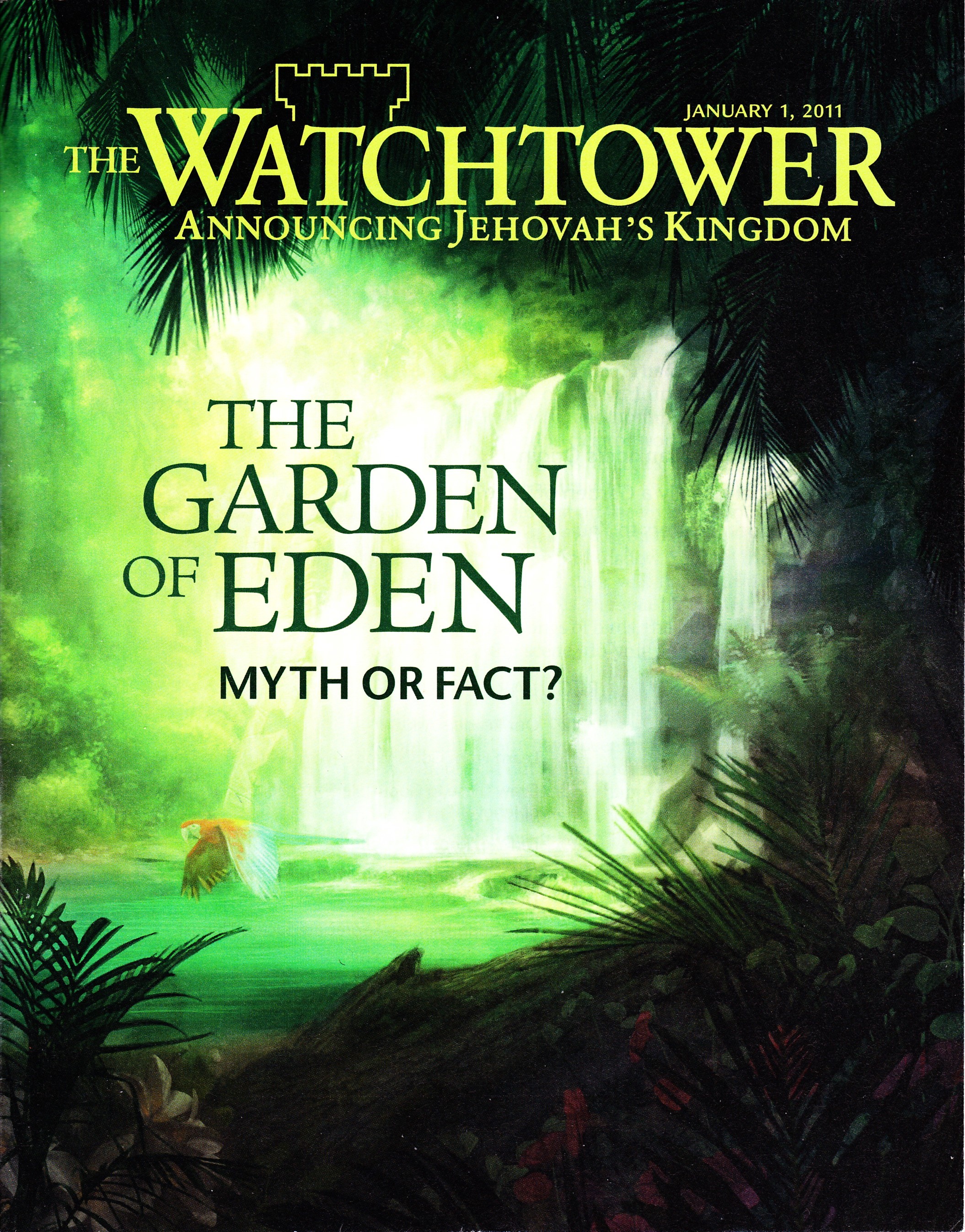
I am the frequent victim of Jehovah’s Witness visits. I have students handing me booklets that will save my soul. I receive offers of golden miracle crosses in the mail – I still carry mine around, but prosperity has continued to elude me – with the assurance that God wants only the very best for me. I open the paper and see the suffering of the people of Indonesia. I see a column about teen suicides resulting from bullying with victims as young as twelve hanging themselves. I see overweight politicians feathering their already overstuffed nests. I turn back to the anonymous letter. “Please hold this coin or pass it on to someone who needs it,” it instructs. I think I’m going to need a truckload of coins. Nothing frightens me more.


Tackling the Tabernacle

Over the weekend a student question led me to think about the inconsistencies of ancient thoughts of holiness and how it fits into a naturalistic world. The question concerned the tabernacle as described in the Torah. The Levites were responsible for the grunt work of physically breaking down and carrying the holy furniture such as the menorah, table, incense altar, and ark of the covenant. One of the reasons for this was that the holiness on a sacred object clung to anything or anyone that touched it, causing a potentially catastrophic mix. At the same time, there were also prohibitions against touching the furniture or even seeing it. By the time the poles were inserted to avert the former danger, the latter prohibition would have already been violated. How did they do this?

Overall, the Israelites did not push ideas to logical extremes. In other words, the extension of holiness to other objects (and people), while it clearly happens, does not always follow a logical direction and culmination. If special ritual precautions were taken, the danger of approaching holy objects was removed or at least temporarily neutralized. Since there is not logical way out of this conundrum, the Bible itself simply doesn’t address the issue. “Don’t ask, don’t tell” also apparently applies to the holy. When describing set-up and take-down procedure for the tabernacle, the Bible simply ignores this puzzling issue.

Probably the most salient point of all concerning ancient texts is that concerning intent. If the Torah is describing literal, historical events then this is a scientific problem to be resolved. If, however, the tabernacle is a foreshadowing of the temple in the wilderness, a literary metaphor reflecting Israel’s history back into a non-historical setting, then the question becomes a literary one. No archaeological evidence exists for the exodus or wilderness wanderings of the Torah, causing many to suggest they were not so much historical events as they might have been theological explanations. They are “foundation stories” like those all nations have. These stories helped to explain why the monarchy failed to achieve perpetuity – the chosenness of the Israelites only lasted so long but not forever – according to those who are theologians.

I appreciated the question. It is only by thinking seriously about the implications of Bible stories that we are able to get a handle on what might have been originally in mind for those who gave us our religious heritage.

Gabriel L. Fink's tabernacle from WikiCommons


Black Monks and Grim Reapers

Last night I assisted my daughter with a stint of volunteering at the local community “haunted house” for charity. This is one of the high points of October, so I was glad to be asked. I reprised my role that I developed for Nashotah House: in that context the character was called “the Black Monk,” based on a local ghost story. While I was on the faculty of Nashotah there were plenty of students who swore the Black Monk story was true, the actual event involved an early student who drowned while trying to walk across water (something many students think they are capable of) – this was actually during the winter, however, and Upper Nashotah Lake is not always as thickly frozen as people assume. The poor student broke through and is buried in the cemetery on campus. Halloween was a major event at that Gothic location until a new, evangelical administration came along. During a haunted hayride, the kids of the community lumbered along on a hay-wagon while costumed students jumped out to scare them. I played along in a costume my wife made where my face was invisible and the flowing black robes eerily blended into the night.

In my current secular context, of course, I was simply The Grim Reaper. This character has a very ancient pedigree. Religions from the earliest times have personified Death as a character that all people inevitably meet. The Mesopotamians had Ereshkigal, the Queen of the Underworld, the Ugaritians had Mot, the god whose name is “Death,” and the Hebrew Bible has “the Angel of Death.” We are often not given a physical description of this baleful but sometimes beneficent supernatural entity. When Revelation was finally penned, Death is one of the four horsemen, and he rides a pale horse, but we do not find many physical details. In the fifteenth century Death was pictured as a skeleton, often with a scythe. His role is that of the classical psychopomp, or guide to the next world. He is not evil, but when the doorbell rings you’d rather hope it had been Avon calling rather than the G.R.

Carlos Schwabe, Death of the Undertaker

Appealing to the fear of the unknown, I lurked last night in the shadows, face completely obscured, not speaking, stepping out to reminded holiday revelers that what is really scary is that which we can not define. When playing the silent ghoul, sudden movements are not necessary to frighten, shouts and screams are unimportant. The simple reminder of mortality and the unspoken question “is he here for me?” are sufficiently frightening on their own. Whether the Black Monk or the Grim Reaper, this character has a natural place on the chilly nights of October. And sometimes it seems there is just not enough October to keep all of us in line.


Eve’s Orchard

One of the innocent pleasures of autumn is apple picking. Not living in the country, many of us rely on the local orchards that open their trees and furrows to the public during the fall so we can feel once again in touch with nature. It may be only temporary, but this farm life is authentic and revitalizing – especially under a cerulean blue October sky. So it was that we joined our anonymous friends to pluck fruit and feel a part of the organic world away from laptops, palms, and cells. Picking apples always brings Eden to mind. In fact, no matter how secular the class I teach, if I ask students what picking fruit from a tree – usually I have to throw in the snake as well – represents, invariably most guess Adam and Eve. Of course, in the patriarchal world of the Bible, Eve gets the rap for taking the first bite, but a more sensitive reading reveals maybe this was what God intended all along.

Tasty fruit of knowledge

Within a generation of the origins of Christianity, a negative spin had been placed on that fateful fruit. This was the willful disobedience of sin rearing its ugly head in Eden. Of course, Genesis does not refer to the act as a “sin” – the word first occurs in the story of Cain and Abel. The human striving for knowledge, for the prerogative of the divine, the sadder but more informed life, was now a matter of blame. In the Greco-Roman cultural milieu where men set the standards, woman became the harbinger of sin and decay. Adam stood chastely by, happily clueless until Eve insisted he try this brand of iniquity. Pure fiction. And yet it is this version that has retained cultural currency in the western world. Blame it on Eve.

The patriarchal version


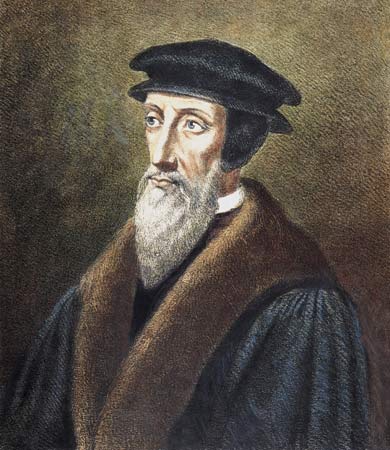
So much of our reading of the Bible is based on prior expectations. Even Bible translators know that they can’t go too far a field from the standard that the KJV set. When western Bible readers first cut their teeth on English prose, it was the dulcet tones of Elizabethan English that captured their attention. And the mores of Shakespearean England combined with the harsh repressions of a simmering Calvinism led to a Bible choked with sin to the point that a little fruit enraged the creator as much as fratricide just a chapter later. The fruit had rotted on the tree, and women were to blame. Perhaps it is time that we recognize the filters before our eyes when we approach the Bible. If we can understand that the patriarchalism is not the point, but merely the cultural shading of the time, we can release the message that the fruit is good. The temptation was not to become evil, but simply to become human.


Father Abraham

“Father Abraham had seven sons; seven sons had Father Abraham.” So began a camp song that I learned many years ago. The song always confused me because, no matter how I did the math, Abraham did not have seven sons. Abraham has a way of causing confusion. The story of Abraham contained in Genesis is complex and perplexing. He is presented as a man who experiences extraordinary occasions and then doubts what he learns from them. He is wealthy and timid, yet leads troops against an alliance of five armies. God speaks directly to him, and he remains in self-doubt. He always does what he is told, although he takes initiative once in a while as well. As Genesis tells it, he is the father of Ishmael and Isaac (and six others).

Historians have a somewhat different assessment. The only evidence we have for the historical existence of Abraham is Genesis. Although other ancient documents mention Abraham they clearly received their information from either Genesis itself or its oral sources. A prince powerful enough to route five kings might merit a reference in some clay annals somewhere, one might expect. Yet history is silent. Most historians require either multiple-source attestations or official, non-literary documents to support the historicity of ancient characters. Abraham simply doesn’t qualify. Those Genesis stories are foundation myths just like those common to all cultures. They represent self-understanding, not necessarily actual origins.

Nevertheless, religiously minded debates continue to flair around him. Abraham, through Isaac, is considered father of the Jews. Christians, courtesy of Paul, consider themselves adopted children who inherit over the natural born. Muslims sometimes trace their ancestry to Abraham’s first-born, according to Genesis, Ishmael. Abraham does not exit the stage as a single man, however. He bears in his person the promise of land, a very real commodity, granted by God himself. So the story goes. We have little trouble declaring other ancient (or not-so-ancient) characters legends or myths when they have no direct bearing on the historical origins of religion. Wars are not fought over Heracles or Theseus, after all. Because of Abraham’s inheritance, however, as the singly chosen ancestor receiving the divine favor, all major monotheistic religions wish to claim him. They are often willing to kill to make that claim real. Myths do have serious real-world applications. And I still haven’t figured out that bit about seven sons. Three seem to be far more than enough.

Abraham at sixes and sevens


The Chosen Peoples

My thanks go to Simon & Schuster for sending me a review copy of Todd Gitlin and Liel Leibovitz’s new book, The Chosen Peoples: America, Israel, and the Ordeals of Divine Election (2010). Briefly, the book traces the origins of the concept of being a chosen people in both Israel and the United States. This concept is then shown in relief with those who are “unchosen.” The authors conclude by highlighting the national sense of mutual goodwill between Israel and the United States. The full text of this review is on the Full Essays page of this blog.

I read this book wearing multiple hats. Since the first chapter traces Israel’s sense of chosenness from Biblical times to the present, I began by wearing my Biblical Scholar hat. Many of the questions asked and raised about the Bible reveal a naivety about traditional claims of biblical authorship. Although certainty cannot be achieved, biblical scholars have applied textual and literary techniques to the text for well over a century now, and many of the claims simply accepted by Gitlin and Leibovitz simply do not stand up. This may seem a minor flaw, but since Abraham is foundational to this outlook, it is essential to at least consider his lack of historical attestation. Gitlin and Leibovitz assume that Genesis, with its stories of Abraham, predates the books that follow. This is not a safe assumption to make, and using this background as a foundation for further analysis might well lead to structural problems with the argument later on.

Wearing the hat of an historian, I noticed how much of the force of the argument of the book is interwoven with the idea that God has actually chosen Israel. I have told my students for many years now that historians do not make claims on God or God’s alleged activities. Texts that narrate God’s actions tend to be classified as myths rather than history. The concept of chosenness, which Gitlin and Leibovitz are reluctant to relinquish, is based on the premise that God has indeed done the choosing. An historian would be extremely reticent to make such a claim. Having noted this concern, the authors do a fine job of providing a brief, readable history of the founding of modern Israel without recourse to what God was doing in the twentieth century. When the authority of the Bible is needed, it is quoted here in King James English, hardly the most accurate translation available.

Gitlin and Leibovitz suggest that chosenness is more a curse, at times, than a blessing. The reasoning seems to be that the concept of chosenness leads inexorably to Zionism. The ideas interact on a much more subtle level than that, although certainly the Zionist movement has owed and continues to owe quite a heavy debt to the concept. The generalizations here are a bit broad – political motivations may not receive their full due. Toward the end of the chapter the ideology of messianism is engaged and brought into the discussion. It is not clear that messianism is the same as chosenness; the two ideas both emerge in Judaism, but do not always overlap. When the authors state that Zionism has always been messianic at heart (p. 57), that may be correct, but it does not necessarily reflect chosenness. Gitlin and Leibovitz are very good at pointing out the inconsistent application of the idea of messianism in the formative stages of the modern state of Israel.

Please see the Full Essays page for the remainder of this review.


Noah’s Newest Neighbor

This week paleontologists announced the newest dinosaur discovery: Kosmoceratops, a plant-eating, three-ton beast with an improbable arrangement of fifteen horns on its head. Any beast arising from the sea would be jealous. As Kosmoceratops jostles its way onto the ark, scientists debate the utility of all those horns – placed incorrectly for defensive purposes, they seem to have functioned to attract mates. Isolated on a fairly compact land mass, these Cretaceous ceratopsids bloomed into a distinctive species as showy as any other so far discovered. As evolution continues to stir debate in this country, its evidence keeps marching along.

Every semester, four terms per year, I have students work on a project that includes (in part) evolution and the Hebrew Bible. Every semester as I overhear discussion, I realize just how deeply the anti-evolutionary front has its claws in the American psyche. Otherwise intelligent undergraduates studying a variety of subjects: science, business, engineering, psychology, express their doubts about evolution. The reason: the Bible doesn’t affirm it. Nor does the Bible affirm atomic theory, free market economics, or microchips. Evolution hits, perhaps, a little too close to home.

The dinosaurs stomp in the face of Creationism. As much as the fundies try to embrace them, dinosaurs are just too outlandish to fit in any world other than evolution. The God of the Bible doesn’t seem to have a surfeit of humor to have wasted so much creativity on dinosaurs that no human ever got to see. We reconstruct, with amazement, species after flamboyant species, and yet the foes of science keep a finger firmly tucked in Genesis. Serious Bible scholars seldom have difficulties with letting science do its job, including evolution. The agitation arises from another quarter. And with all those horns in front of us, that quarter might be the apocalyptic sea after all.


Crimeless Victim?

Anyone who’s spent much time with the Dead Sea Scrolls knows the name of Norman Golb. Long-term Oriental Institute professor at the University of Chicago, Golb has been active in research on the Scrolls for decades. Tuesday the New Jersey Star-Ledger ran a confusing article about the trial of Golb’s son for identity theft. After reading the piece several times it is still not clear what Raphael Golb has done that is either newsworthy or illegal. It does involve the Dead Sea Scrolls, however, and that is always enough to draw the attention of the Associated Press.

Is the truth in there?

The Dead Sea Scrolls continue to fire the imagination of the general public in a way that is somewhat baffling. The scrolls themselves are largely obscure and fragmentary, the information they contain is often arcane, and the published pieces raise excitement mostly in scholars rather than a general readership. The fact that it is not too difficult to fill a class on Ancient Near Eastern religions at Rutgers University seems to indicate that people are still avidly interested in the past, particularly in that conflicted part of the world where civilization began. While the media report the more sensational finds, interest quickly peters out while new and more exciting stories hit the wires. It’s fun to imagine what the field of studies would be like if sustained media interest told the public what to find fascinating in the ancient world.

This article, however, represents the unfortunate reality that scandal is often the drawing point for ancient studies. People are attracted to scholars behaving badly, intellectuals receiving their timely comeuppance. It is disappointing that the subject matter itself doesn’t receive more attention. The Ancient Near East is, after all, the source of what we continue to recognize as culture. Reading the article over again, the most disturbing element is not that Raphael Gold has allegedly committed identity theft. The most disturbing element is that a professional journalist describes him, apparently without a hint of irony, as “a brainiac.”


Goldilocks Comes of Age

NASA's Goldilocks, image credit Lynette Cook

“Even a simple single-cell bacteria or the equivalent of shower mold would shake perceptions about the uniqueness of life on earth.” So writes Seth Borenstein of the Associated Press concerning GJ581g, a newly discovered “Goldilocks planet.” This extra-solar-system planet is just the right distance from its sun, which is neither too hot nor too cold, and just the right size, neither too big nor too small, to hold an atmosphere and liquid water. This is the necessary environment for life as we know it to evolve. Like the life in the grout in my shower. It is an exciting prospect. This discovery suggests that other planets contain the right stuff for primordial soup, and the implication is, once again, that the earth must relinquish its place at the center of the known universe.

It is a curious notion that we share, quaintly parochial, that the earth is somehow special. The idea is an inherently religious one. Ancient peoples, beginning at least with the Sumerians, understood their world as apparent reality. The sky moves around us, not vice versa. Human beings, the apex of primate evolution, see the universe through self-crafted lenses. Lenses that we keep close to our eyes at all times. If there is life out there, and they come here, they will be the outsiders. We were here first. The Bible helps to shore up this homocentrism; the crowning achievement of divinity, according to Genesis 1, is us. Even scientists have long been reluctant to release the idea that we might just be one among many, a single, relatively common occurrence of life in a vast, indeed endless, universe.

Our species evolved as a religious one, feeling that God somehow gave us opposable thumbs and flexible vocal cords for a reason. (Presumably because God has opposable thumbs and flexible vocal cords.) From the very earliest of times we have considered ourselves unique on this planet and unique in this universe. Although reason has long suggested otherwise, and although scientists would often be the last to admit that it is a religious idea, we have grasped tightly to human singularity and defied the universe to prove us wrong. Once we actually discover that life out there, what will we do? If our past track record is any indication, we’ll head to that planet with Clorox in our hands and a divine mandate in our heads.