Final Stretch

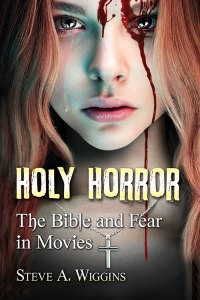
There comes a point, in my experience of book writing, when you can think of nothing else.  This is near the end of the process.  For months and months you’ve been working at it in increments, and the sudden realization hits you that other people are (you hope) going to read what you’ve been scratching out for a couple of years.  My interlocutors tend to be in print or email form.  I don’t work day-to-day with colleagues who know about the book, nor, I suspect, would they care very much.  In my case this comes as I’m trying to generate attention for Holy Horror, with very limited results.  But I don’t have time to think about that now.  Nightmares with the Bible is almost ready to submit.  If only I had more time to read everything.  If only.

Writing is a challenging form of expression.  Let me qualify that: getting writing published is challenging.  The actual craft flows.  The book that is intended to pass scholarly muster, however, must be full of notes and quotes.  I’m trying to leave those behind as much as possible since I’ve been reading about these topics for decades and that ought to count for something.  Still, that nagging doubt awakes you—haven’t you overlooked something?  Some vital source that you should’ve cited?  Some argument that knocks your book off its stilts?  Near the end of the process it’s hard to concentrate on other things such as blog posts and tweets.  Yet you need to build your platform while you’re standing on it.  And then there’s the small matter of work that will demand well over forty of your waking hours this coming week.  And the index—you can’t forget the index!

In the intervening months you might’ve read some newspaper headlines, read some books off-topic, read other people’s blogs, kept up with social media.  Now, however, you have tunnel vision.  You’ve said what you have to say, you think.  You must check it.  And recheck it.  Did you leave a sentence open for later comment?  What chapter was that in?  Have you figured out how to close it?  Woe betide those to whom this happens at tax time.  Or before a business trip.  Making a living as a writer you do not.  This avocation, however, is your life.  Your legacy.  Editors who’ve been remembered are few.  A book is a stab at immortality.  There are meetings.  There are work deadlines.  There’s a lawn to mow.  Those, however, are mere distractions at this point.


Theofantastique Interview

Two times.  In my “professional” life I’ve been interviewed only twice (not counting, of course, far too many job interviews).  The first time was as a talking head for Nashotah House.  This was in the days before the internet really caught on, so it was done in DVD format.  If you come over to visit I’ll dig it out and we can have a good laugh.  The second occasion was much more fun.  Although I write about horror a lot, I don’t mention Theofantastique nearly enough.  Back in the days when I started blogging, I discovered this site that featured all kinds of interesting stuff on religion and horror (and actually on all kinds of genre pop culture).  I always enjoyed the insights and got more than a few books for my own research and reading from tips I found there.

When I finally got brave enough to contact John W. Morehead, the curator of the blog, we both quickly realized we had some things in common.  John very kindly offered to post an interview with me on Theofantastique about Holy Horror.  It’s live now and it was really fun to talk to an actual person about my book.  You see, I work alone.  I knew that, leaving the classroom, I was departing my chosen career.  On those high school aptitude tests they told me that I should be an entertainer.  What professor isn’t?  I pity their students if they’re not.  I’ve been posting videos on YouTube for a few weeks now.  It’s immediately obvious how much having a live audience helps.

Unfortunately, Holy Horror isn’t exactly priced to move.  In fact, local bookstores have turned me down for free presentations based on the price alone.  It is, however, a fun book to read.  At least I intended it that way.  When life give you horror, make Bloody Marys, I guess.  By the way, John has been coming out with some interesting books also.  I posted on his The Paranormal and Popular Culture recently.  Theofantastique is often the place where I first learn of new horror films (I don’t get out much) and new books that I should read.  Of these two things there’s never a shortage—horror is a thriving genre—and talking about why you wrote a book helps to clarify things a bit.  Horror may seem a disreputable genre to many, but it has redeeming values.  To hear about them, please watch the interview.


Myth and Magic

Magic and religion are difficult to tell apart.  Scholars have known this for some time, but don’t often say anything about it for fear of offending.  A few days ago Religion News Service ran a story headlined “How the ‘Harry Potter’ books are replacing the Bible as millennials’ foundational text.”  While many reacted with shock, to me the fact that a foundational text can be identified at all is a relief.  You see, reading is good for you.  Really, really good for you.  One of the most hopeful things I observed as a parent was the increased quality and volume of young adult literature available.  Of course it’s produced to make a profit, but the fact is it showed that reading is alive and thriving.  If the young make a habit of it, well, let’s hope that habit’s hard to kick.

My own reading doesn’t always keep pace with my desire to do more of it.  I go for a couple of weeks sometimes without finishing a book.  I begin to feel depleted.  There’s something spiritual about reading, and fiction can reach parts of your soul that are on guard when non-fiction’s your subject.  And that’s like magic.  It took a couple years for me to catch on to the Harry Potter craze.  Eventually my wife and I broke down and bought book one and read it together.  As millions of readers can attest, that first book was a fishhook.  We all really hope the world does contain some magic.  Many people find that solace met with religion.  Either way, fiction can enhance the experience.  We read the original series, hanging tensely until the final volume came out.

Many of those who believe in a magical religion protested the sale of magical fiction.  We were still in Wisconsin at the time, but we saw the protestors outside a local bookstore the release day for one of the later volumes.  Like Death-Eaters the protestors opposed Harry Potter.  The root of the problem seems to have been unique truth claims.  Whenever a religion declares itself the sole harbinger of “the” truth, every other way of looking at things becomes evil.  Even if it expressly declares itself to be fantasy fiction for young adults.  Years have passed, and Harry Potter, like other forms of pop culture, has grown to the status of a religion.  Even Nones want to believe in something.  Magic and religion are, after all, very difficult to tell apart.


Six Impossible Things

Solipsism, as a philosophy, has its attractions.  The idea behind it is that since all we can truly know is our self, the self is the only being that really exists.  This outlook is expressed in tragicomic form in Kurt Vonnegut’s Breakfast of Champions.  Written in Vonnegut’s characteristic style, there’s confusion and continuity, and almost a mockery of the gullibility of readers.  Kilgore Trout, a penurious science fiction writer, wrote a novel where one character was human amid a planet of robots programmed to act like people.  Dwayne Hoover comes to believe this is true and acts on it, with several other characters ending up in the hospital.  The story ends with the narrator realizing, I think, that he’s the only real human being because he made up this entire novel.

As someone who generally works alone, and whose lifestyle includes early rising and early sleeping, solipsism suggests itself from time to time.  Writers tend to spend quite a bit of time in their own heads, either reading or expressing their own thoughts via their craft.  Anyone who’s been a victim of a solipsist (and we all have) knows that such a viewpoint is wrong, but it does address one of consciousness’ deepest fears—how do we know what others know or experience?  We keep secrets.  We hide our weaknesses and insecurities.  We show others, most of the time, only what we want them to see.  Addressing the individualism of the late sixties and early seventies, Vonnegut takes to task a society that still promotes prejudice and wages war.

Vonnegut experienced war and it’s clear that it haunted him for the remainder of his life.  He tried, and often succeeded, in finding some hilarity in life, but it always seems to stop short with a slap of cruelty.  I’ve been reading quite a few of Vonnegut’s novels over the past few years.  He’s a writer that mixes profundity with frivolousness in such an easy way that it’s beguiling.  Breakfast of Champions is, despite being an easy read, a difficult book.  Quickly finished with its goofy doodles and swift pace, it leaves you feeling as if you’ve been poisoned with an idea, somehow.  Or maybe it’s just me.  For this year’s reading challenge I’ve selected two more of Vonnegut’s novels, but I haven’t decided which ones yet.  I think about asking others, but then I remember that if he’s right in this one, there’s really nobody else to ask.


Vapid

The smoke encircled his head like a thief.  And not in a saintly way.  I was going to have to rethink this.  You see, the culture of the early morning commute is one where you stand in line with strangers before dawn.  Having grown up a victim of second-hand smoke at home, I can’t stand it now.  Should I go wait in the line (which was growing) where the last guy was smoking, or sit in my car?  Work anxiety always wins out in such situations, so off I trudged.  I discovered, however, that the man in front of me wasn’t smoking after all.  He was vaping.  What was this chemical stew hanging in the air that had just come from his mouth?

I worry about second-hand vape.  How desperate must a person be to smoke a device?  You see, my trust in technology goes only so far.  People are slowly beginning to understand that electronics don’t solve every problem.  Vinyl records are starting to come back, even at Barnes and Noble.  Independent bookstores are returning, despite the rise of Kindle.  I’m still waiting for it, but film cameras may once again appear.  There’s something about the Ding an sich.  The tech of the stereo was invented for the analogue record.  Yes, the MP3 is faster and cheaper, and you can buy just the song you want with the click of a virtual button, but we still have our favorite LPs around.  This isn’t misplaced nostalgia, like those who long for the 1950s.  No, this is simply the recognition that faster isn’t always better.  Some things were meant to linger.

Vaping is, however, an example of how a bad habit becomes a vice with no point.  Initially meant to come to the succor of smokers who couldn’t do it indoors, vaping was also quickly relegated to the outside.  Many people, it seems, don’t want to breathe someone else’s smoke.  Do you develop artificial cancer from artificial nicotine?  Another commuter comes up to the guy in front of me.  Like a couple of kids on a 1970s schoolyard, they exchange vape flavors.  The first guy doubles up with a coughing fit.  Spits off the curb.  The second guy says, somewhat anticlimactically, that this one’s strong stuff.  I have to wonder what future generations, if there’ll be any, will think of our love affair with devices.  The bus pulls in.  I’m the only one on the whole thing who clicks on the over seat light.  I have a physical book to read.


Look Out Below

Demons are seldom what you think they are.  Bernard J. Bamberger’s Fallen Angels: Soldiers of Satan’s Realm isn’t so much about demons as it is about, well, fallen angels.  A classic in the field, it was published in 1952 and has been periodically reissued when interest revives.  There are many aspects of this book that deserve development in a place like this blog, but I need to suffice with a few.  I won’t take much of your time, I promise.

First and foremost, Bamberger, who was a prominent rabbi, presents the seldom heard Jewish perspective on the topic.  The Devil really had more explanatory value for Christians than for Jews, and it is no surprise that he appears rather abruptly in the New Testament.  There are, of course, plenty of antecedents for him both in the Hebrew Bible and in Jewish apocrypha and pseudepigrapha, but the idea, and character, grabbed his main hoof-hold in Christianity.  This dualism has periodically been a source of embarrassment, but in general it has served the Christian narrative well.  We seldom see the Jewish outlook on it.

A second noteworthy feature of this book is its wide survey of these ideas in both what is now termed Second Temple Judaism and that of Late Antiquity.  The fallen angels seem to be there in the Good Book, but close reading of the texts suggests other meanings.  Judaism has never felt the compulsion that many Christians feel toward having the one, correct outlook.  Spend a little time with the Talmud and see how dialogical the search for the truth can be.  With no Pope or supreme human authority to declare the rightness of one outlook, the search must remain a process of discussion rather than an ex cathedra pronouncement.

A third, and for now final, observation is the sheer number of characters that pick up the baton of evil in both early Judaism and Christianity.  Even Islam.  A bewildering number of names for lead fallen angels and other demonically sourced characters populate these pages.  Since Judaism tended not to buy the fallen angel narrative, other sources for demons were considered.  Few doubted that they existed in the early days, but whence exactly they came was an open question.  Bamberger explores the options here and, beyond his book many others also exist.  That evil exists in the world seems patently obvious.  Religions of all stripes ask what’s to be done about it.  Some delve into its origin myths.  In the end, however, it is how we choose to respond that matters most. 


No Refuge

A convention in histories of the horror genre is to trace it to Gothic fiction.  Gothic fiction itself is traced to The Castle of Otranto, by Horace Walpole.  Having grown up reading Gothic stories along with religious texts, perhaps surprisingly I never came upon Walpole’s oeuvre.  Some weeks back I happened on a used bookstore, which, by convention, had its cheapest fare on sidewalk carts.  I was surprised to see a negligibly priced copy of The Castle of Otranto, which I took in to the counter.  The clerk looked puzzled a moment, then asked if it was from the carts.  “Oh,” he sniffed, “that explains it.  We don’t carry Dover editions; they’re too cheap.”  Perhaps that remark haunted me a bit, but I finally got around to reading the slim book and it left a kind of unanticipated horror in my mind.

Okay, so this was written in the eighteenth century, and set further back, in Medieval times.  A spooky castle, knights and knaves, and fainting damsels all populate its pages.  Religion, particularly in debased form, became a standard characteristic of the Gothic.  Here a monk, an erstwhile lord, holds a secret that leads to the downfall of a house of pretenders who have claimed ownership of the castle.  All pretty straightforward.  Even the ghosts and talking skeletons fail to raise fear.  One aspect, however, does hold horror.  The three princesses in the story are completely at the whim of the men.  They acknowledge as much and claim it against piety to declare any different.

It would be unfair to assert that such sexism was intentional—like most human behaviors it evolved over eons—but in this era to read it is to shudder.  We have moved beyond the horror fiction that men own women and that they have any right to determine their fate.  Especially in these days, it’s embarrassing to be reminded that such was ever the case.  Despite the word from on high we cannot hide from history.  The domination of men has been a testament to how poorly civilization has been run.  Some of its benefits can’t be denied, but on a whole we see a succession of aggression and wars, suffering and poverty, generally brought on my societies that have taken their cues from patriarchical ideals.  My reading of The Castle of Otranto brought this back with a force not unlike that of the giant ghost haunting its walls.  Is it too much to hope that some two-and-a-half centuries might show some evidence of progress?


Not-Quite-Normal Religion

I’ve been thinking about categories quite a lot lately.  In a world connected by the internet, it seems that traditional categories don’t stretch far enough.  For example, I recently read The Paranormal and Popular Culture: A Postmodern Religious Landscape, edited by Darryl Caterine and John W. Morehead.  Published by Routledge, this is an academic study.  It contains some things, however, that many academics would find challenging.  I can’t summarize the entire book here since there are twenty very different essays included, but I can say this is a book that makes you think about categories.  Even the word “paranormal” means different things to different people.  To my way of thinking it has to tip the hat to Rod Serling and that place where fiction and fact begin to overlap.

That’s appropriate for this book: there are articles about what people perceive as factual encounters with all kinds of creatures and events, as well as studies of the decidedly fictional beings like Batman and zombies.  Our categories, in the modern world, tend to be inviolable.  Even scientists who handle Heisenberg know, however, that we are now in the postmodern world (as the subtitle indicates) and true objectivity is beyond the reach of all.  None of us stands outside the box looking in.  We’re all in the middle of it, and we look around ourselves trying to figure out what is real.  Another problematic category that, reality.  We don’t even understand what consciousness is yet, and how can we hope to know what is really real?  We all have dreams and some take them more seriously than others.

Reading books like this with an open mind is a truly po-mo experience.  After finishing more than one piece I found myself having to put the book down for a while at least so I’d have a hand free to scratch my head.  You see, we’ve been taught to laugh at those who believe in the paranormal.  It has been the only acceptable way that rationalists can deal with that which flies in the face of the system.  The internet, however, has put those isolated, ridiculed individuals into a community and the advent of reality TV (and what can be more real than what we see on the tube?) erodes the laughter factor little by little.  Plumbers can find ghosts but scientists can’t.  The average person relates more to the plumber, I think.  It all comes down to categories.  Making sense of them can, and will, impact our views of reality.


Seeing the Future

Nine.  That’s the number of people before me in line.  It’s not yet 4:30 a.m., and our day began at least an hour ago, but work won’t start for another two.  As the bus pulls up to the stop, I think about work.  Well, like most people I think about work a lot.  You see, I’m often asked about how to get into the publishing business.  There’s a cosmic irony to this because I had never planned to be an editor and never undertook any of the usual training.  The anticipated trajectory of a doctorate in the humanities used to be teaching, which is what I did for many years, but when an educational career slips off the rails in a capitalistic society you have to be willing to learn real fast.  (Fortunately the long years of schooling do help with that.)

I’m sure that I’m not the only person whose career plans didn’t pan out as anticipated.  Back in seminary one night long ago, three friends and I had a “future dinner.”  We prepared a supper and each came as who we would be twenty years down the road.  I recall that I was a world-traveling professor and the author of several books.  “Come on,” my friends complained, “be realistic!”  It’s a bit beyond those two decades now, and I was a professor for many of them.  I have written several books, although so far only three have been published.  World-travel?  Well, that’s been a bit modest in recent years, I have to admit.  One of the other friends I’ve lost track of.  Another committed suicide after graduating.  We really can’t see far into the future.

Publishing is a challenging gig.  My rapid career contortions perhaps prepared me better than I think.  I have a kinship with those who ask about how to get started in it.  Generally we’re educated people who like books and wonder what kind of career you can find with that combination these days.  (There are more of us than you’d think!)  Compared to higher education academic publishing is a small world.  I’ve come to know many more academic colleagues since being an editor than I ever did as a professor.  I have something they want—a reputable venue for publishing their latest book.  Often I have to do a lot of educating since publishing doesn’t work the way that most people think it does.  It’s like being a professor without the status.  No, I didn’t see this in my future.  As I look for a seat on the already crowded bus I wonder how many of these other early risers planned their careers just like me.

Difficult to see where this is going.


In the Inn

One of those things that really bothers me is the concept of being forced out of a home.  It’s never happened to me personally, but that doesn’t mean I can’t fear it.  That idea works its way into more theoretical applications as well.  Lately both my phone and my laptop computer have sent me messages saying there’s no more room in the inn.  Now, dear reader, you may understand technology better than I (you almost certainly do), but I wonder just how much these weightless thoughts I store here can possibly tip the scale.  I back up my hard disc weekly—there’s no telling who’s going to get kicked out when all the room is finally gone!—but when I open my space manager I find all kinds of things I can’t identify.  Software that I’m not sure it’s safe to remove.  I have no idea what the function of many apps might be.  So I just start deleting.

No room for your data here!

And I keep deleting.  I won’t touch my writing, however.  It’s backed up on a high-capacity drive, but such drives fail.  I want to keep a copy here on my laptop where I can reach it.  The real problem is that this massive sorting exercise keeps me from doing the things that I’d rather spend my time on—writing blog posts, for example.  How can I relax to do that, though, knowing that there’s no room to store them when I’m done?  Why does iTunes take up so much space anyway?  I feel guilty deleting anything from it because of all those warning dialogue boxes with their dire notes that this action can’t be undone.  Occam’s erasure has its consequences, I guess.

I suppose this is related to my recent observations on how tech demands time.  I’ve got some big projects going.  One is to sort out and file all my browser bookmarks.  They are embarrassingly plentiful.  Then there’s the sorting of thousands and thousands of electronic photos into files.  When I first starting using devices there weren’t enough pictures or bookmarks to worry about.  Now each of these projects has been ongoing for months and neither is nearing the end.  I’m old enough to recall when office supply stores sent catalogues (print catalogues, no less!) to my employers stating things like, “We’re in the  midst of an information explosion.  You should buy folders in bulk.”  They meant manilla folders.  Were we ever so naive?  Now what about these ebooks that I also have in hard copy?  Which should I get rid of?  That choice, at least, is easy.  Even my manger has room for books.


Croce’s Lament

So how much time is there?  I mean all together.  I suppose there’s no way to know that because we have no idea what came before the Big Bang.  Those who invent technology, however, seem not to have received the memo.  New tech requires more time and most of us don’t have enough seconds as it is.  Perhaps in the height of folly (for if you read me you know I admit to that possibility) I’ve begun uploading material to my YouTube channel  (I hope I got that link right!). These are cut-rate productions; when you’re a single-person operation you can’t fire the help.  I figured if those who don’t like reading prefer watching perhaps I could generate a little interest in Holy Horror visually.  (I like my other books too, but I know they’re not likely to sell.)

The question, as always, is where to find the time for this.  My nights are generally less than eight hours, but work is generally more.  What else is necessary in life, since there are still, averaged out, eight more left?  Writing has its reserved slot daily.  And reading.  Then there are the things you must do: pay taxes, get physical exercise, perhaps prepare a meal or two.  Soon, mow the lawn.  It may be foolishness to enter into yet another form of social media when I can’t keep up with those I already have.  What you have to do to drive interest in books these days!  I think of it as taking one for the tribe.  Readers trying to get the attention of watchers.

There’s an old academic trick I tried a time or two: double-dipping.  It works like this: you write an article, and another one, and another one.  Then you make them into a book.  I did pre-publish one chapter of a book once, but getting permission to republish convinced me that all my work should be original.  That applies to reviews on Goodreads—they’re never the same as my reviews on this blog—as well as to my YouTube videos.  There’ll be some overlap, sure.  But the content is new each time around.  So you can see why I’m wondering about time.  Who has some to spare?  Brother, can you spare some time?  I’ve been shooting footage (which really involves only electrons instead of actual linear imperial measures) for some time now.  I’ve got three pieces posted and more are planned to follow.  If only I can find the time.


Bookmark This

I haven’t forgotten about horror.  In fact, this past late winter my list of must see movies has continued to grow.  I don’t subject you, my kind readers, to endless barrages about Holy Horror since I believe the idea behind the book is novel in its own right and can stand on its own.  The other day I even ordered bookmarks to be made, for free distribution.  Thing is, days are getting longer, and warmer, and people are thinking the opposite of horror just as spring is the equinoctial opposite of fall.  Like a good monster I’m biding my time.  And doing so on an editor’s budget.  (The pay scale’s not the same as that of a professor; believe me, I know.)  Horror’s funny that way—it is seasonal, at least in most people’s minds.

I make the point in the book that fear serves a useful function.  It occurs in other genres quite frequently, although they bear the outcast label less overtly than horror.  Perhaps this gets to the root of my fascination.  Having grown up as part of the pariah social class of the poor, my sympathies are with the genre that often fails to find respectability.  Many of those who criticize horror do not watch it.  Some of these films are quite sophisticated, and the genre blends into other “speculative” categories such as science-fiction and some action, as well as into the more naturalistic thriller.  And thrillers are merely dramas with an elevated pulse rate.  This difficulty of distinguishing genres sharply is one reason Holy Horror addresses some films that aren’t strictly horror.

Work continues apace on Nightmares with the Bible.  Again, the ex-professorate never receives sabbaticals during which concentrated work might be done on books.  In the pre-dawn hours, however, I steadily make progress.  Very shortly an article I wrote for Horizons in Biblical Theology on the topic will appear.  Safely during the spring.  As the days grow longer more of my weekend time is demanded by the outdoors aspect of home ownership, cleaning up after the freezing and thawing of a long winter when infelicities were safely covered under snow.  Sometimes I fear for the progress made on my next book—it is the first advance contract I have ever had—but then I remind myself that fear does serve useful functions.  It’s not called a deadline for nothing.  So even as the darkness fades I prepare for the next round to begin.


Winter Travels

Every now and again you read a book that drops you into a world of wonder.  That’s how I’d describe Italo Calvino’s If on a Winter’s Night a Traveller.  What’s it about?  It’s difficult to say.  It’s a novel about reading, and more specifically, interrupted reading.  You might call it Post-Modern, but in a good way.  I came across the book in a manner that, like the story itself, emerged from different narrative structures.  First of all a colleague sent around a quote from the book that grabbed my attention.  I decided that if I ever found a copy in a bookstore I’d buy it, based on that quote alone.  A second stream was the Modern Mrs. Darcy’s reading challenge.  One of this year’s categories was a book in translation, which this is.  And yet a third factor was that I found the book on the shelf of a used book vendor in Ithaca.  And so I read.

Like David Mitchell’s Cloud Atlas—and having nothing to do with the fact that it was the most recent novel I’d read—If on a Winter’s Night a Traveller is a nested story, a story within a story.  Breaking the “fourth wall” Calvino addresses his readers in the second person and makes them characters in the plot.  The reader buys a defectively printed book and when he tries to return it to the seller, a fantastical world opens up.  I’m not sure that there’s a particular genre here—literary fiction constitutes a genre of its own—but there are a few speculative elements that keep the story pulling you along without really giving any conclusions (that the po-mo aspect to which I referred).

Apart from being merely fun, the story is thought-provoking.  What goes on when we read?  Do we not get absorbed into the mind of the writer?  And not only of the author but also of others who’ve read the book with whom we might discuss it?  Writing is an endlessly addictive activity.  One of my observations about careers without sabbaticals is that those who wish to practice the art must carve time out from days interrupted by work to be writers.  For me that means awaking early, for this blog is only one of many writing projects I have going.  To write well, however, means reading much.  And if you’re casting about for a story that’s hard to classify and difficult to put down, I would gladly recommend If on a Winter’s Night a Traveller.


Chilly Fluids

I’m not sure why I did it.  Read In Cold Blood.  I’d known of Truman Capote’s main claim to fame for years, but an accidental recent mention, a cheap copy in a used bookstore, and a week of grabbing time to read did it.  I’m not a fan of true crime, and despite my fixation on horror movies, I try to steer away from anything that doesn’t have a hint of the speculative about it.  There’s a difference between horror and terror.  I’d happily lived a half-century without ever hearing about the Clutter murders and kind of wish that were still the case.  Yes, there are doubts about the veracity of Capote’s account at points and novelists are often convincing liars, but still, at the heart of the matter more than just four people are senselessly murdered in the course of the tale.

A few elements stood out in the reading of the book.  One was that given the naiveté of the 1950s I wonder how anyone could ever really want to go back to that decade.  We’re run by a government full of doddering old men who seem to idealize the falsity and utter conformity of an age that was really a pressure cooker in which cases such as this would explode.  I was born in the much idealized 1960s but I don’t think we should go back to them.  We learn, we change, we grow.  Knowing what we now do, it was kind of painful reading how blissfully ignorant so many people were.  We may be more afraid these days, but at least we’re more realistic.

Another factor, very much at home in this world older but no wiser, is how the Bible is cited at the trial in support of capital punishment.  Although it may not have been intentional on Capote’s part, he demonstrates a deep truth about Scripture.  It can be read in more than one way.  In conservative Kansas in 1960 it could sway jurors to seek the death of other human beings.  The murders were indeed savage and pointless.  Capote’s account of them is difficult to read.  Perhaps more difficult is the way the Bible is used to unleash the basest instincts of people against other human beings.  Yes, parts of the Good Book require the bad thing, but if we’re over fifty years beyond Holcomb we’re over fifty score beyond a time when just one interpretation stands for all.  If it ever did.  There’s a difference between horror and terror, but the Bible can participate in both.  I prefer to stick to the former.


Chapter and Verse

Maybe like me you’ve read some arguments based on chapter and verse.  I should mention that I mean chapter and verse in the Bible.  The typical scenario will go like this: Genesis (say) uses this word three times in chapter 38.  The case then often slips to making a point on the number of instances a word or phrase occurs within a circumscribed set of verses.  (The actual word doesn’t matter—this is a thought experiment.)  When I ran into an example of this a few days ago a thought occurred to me: chapters and verses are later additions to the biblical text.  They were never part of the original and were only added because Bible readers got tired of saying “That part in Genesis where…”  In other words, chapter and verse are artificial means of interpreting the Bible.  They’re very useful for taking quotes out of context.

I used to tell my students that you have to think carefully about what is the Bible and what isn’t.  As a culture where the book has instant recognition, we tend to think of that discrete unit of pages and cover as coming from one person—the author.  In reality most books (I can’t speak for the self-published) are the work of several people.  Just like it takes a community to raise a child, it also takes one to assemble a book.  That includes the Good Book.  Not everything between the covers is sacred text.  I’m pretty sure about that since as I was glancing through the latest edition of the New Oxford Annotated Bible I found my own name in the Preface.  As much as I’d like to claim otherwise I’m not exactly biblical. 

Modern ways of looking at ancient texts require a degree of facility in understanding how God’s scribes of yesteryear went about their work.  While early experiments in binding books may go back close to the time when the latter parts of the Bible were being written, the scroll—without chapter and verse—contained only the words of the text.  Most ancient manuscripts in Greek, anyway, didn’t even bother to put spaces between the words.  That leaves some room for ambiguity in among all those letters.  The Bible is a complex book with a complex history.  We do it a disservice as modern readers treating it as a modern book.  If you read Scripture online, or via electronic media, an even further layer of interpretation has been added.  That’s why we still need Bible scholars tangled somewhere in this world-wide web.