Devil or Con?

You can’t believe everything you read.  That’s one of the first tenets of critical thinking.  This whole process is about how to get to the truth, and in a materialistic world that truth can’t involve anything supernatural.  These were my thoughts upon finishing Gerald Brittle’s The Devil in Connecticut.  Controversy accompanied Ed and Lorraine Warren’s investigations and some of the people involved in these cases have later claimed the extraordinary events didn’t happen.  Others claim that the Warrens offered them to make lots of money by selling their stories.  The effect of reading a book like this is a blend of skepticism and wonder.  Among their fans the Warrens are held in the highest regard.  Anyone who begins to look into their work critically ends up frustrated.

So when I put this potboiler down—it is a compelling read—I went to the internet to find out more.  Then I realized what I was doing.  Using the internet?  To find the truth?  It’s a vast storehouse of opinion, to be sure, but what with fake news and alternative facts who knows what to believe anymore?  I found websites debunking the whole case as a hoax.  Others, naturally, claim the events really happened.  Both kinds of web pages have the backing of someone in the family involved.  It’s a pattern that follows the Warrens’ work.  In one of the many books I’ve read about them they claim to have ten books.  If my math is right this was number ten.  Even that remains open to doubt.

The word “hoax” seems a bit overblown.  Dysfunctional, maybe, but hoax?  Reading Brittle’s account it’s clear there were some issues in this family.  Having grown up in a working class setting, I’m aware such scenarios are extremely common.  Accusations were made that this was an attempt to spin gold from straw.  The nearly constant stress of blue collar families makes that seem less far-fetched than a stereotypical devil showing up in a modern house because a satanic rock band placed a curse on the family.  Lawsuits—the most avaricious of means for determining facts—apparently prevented a movie deal and have even made this book a collector’s item.  Somebody, it seems, is making money off the story.  As after reading the other nine books, the truly curious are left wondering.  My skepticism kicked in early on, but then again, I’ve always liked a good story. 


Not Your Parents’ Bible

As someone always interested in origins, I reflect on how I’ve ended up the way I have.  I mean, who plans to end up a Bibles editor?  In the grand scheme of a universe with a sense of humor, it’s an odd job.  I grew up reading the Bible, but lots of people do.  Most of them end up with ordinary people jobs.  Obviously, working on a doctorate in the field is admittedly strange, but then, my interests have always been to get to the truth.  The other day I spotted a book on my shelf—the book that arguably started it all.  The Lost Books of the Bible and The Forgotten Books of Eden.  These days I would recognize this for what it is, a cheap reprint of a book published quite some time ago (1926 and 1927).  No “value added content.”  Just a reprint.  But why did this book have such influence?

It was the first time I’d realized—and growing up in poverty with parents lacking college educations you have to teach yourself a lot—that there were other books about as old as the Bible.  The idea fascinated me.  Somehow my fundamentalist upbringing had convinced me the Bible was the first book ever written—after all, its author was God and how much more primordial can you get?  Now this particular book (Lost Books of the Bible etc.) contains some apocryphal Gospels.  Not having a strong grasp on the concept of canon, I wondered why these books had been excluded, or, to use the title conceit, “lost” and “forgotten.”  In college I would learn about the canonical process.  I’d hear more about it in seminary.  There I would learn that even older sources existed.  In the pre-internet days, in a rural town without so much as a public library, how would you find out about such things?

Helmer Ringgren’s Israelite Religion captured my imagination in seminary.  Even there, however, nobody on the faculty seemed to know much about what had come before the Bible.  Harrell Beck told us of ancient Egypt in our classes, but clearly there were further depths to plumb.  I learned about James Pritchard’s Ancient Near Eastern Texts, which I bought at the Harvard Divinity School bookstore.  Other texts went back beyond Holy Writ.  Just how far would have to wait until the University of Edinburgh.  I sometimes wonder if I might’ve taken a different turn here or there had anyone been able to answer my young, unformulated questions about the origins of the Bible and other ancient books.  Now we just have to ask the internet.


If It Itches

The problem, or rather a problem, of growing up Fundamentalist is taking things literally.  I suppose we’re all born naive realists, learning only later that things aren’t what they seem.  One of the dynamics of finding something new to say about demons involves an unconventional method of research.  Richard Beck’s Reviving Old Scratch: Demons and the Devil for Doubters and the Disenchanted is a case in point.  Being part of a series called “Theology for the People,” this book is not an exploration of literal demons or the Devil.  Well, it kinda is and kinda isn’t.  It is an engaging and often insightful treatment of the question of evil and what to do about it.  Evil is a question, but most of us, at least pre-Trump, could recognize it when we saw it.

Beck is a professor of psychology.  This meant that at several points I found myself pausing to consider some of the points he was making.  Some parts didn’t work for me—welcome to the world of reading—but others were eye-opening.  One thing that all books about the Devil seem to have in common is the observation that evil is clearly present in our world.  Governments, and Beck uses Rome as an example, easily become oppressive and harmful to the weak and powerless.  As a volunteer in a prison ministry, Beck knows whereof he speaks.  When governments are run by the unstable (think of the one with a toothbrush mustache or any other who declare themselves geniuses) oppression follows.  Evil not only bobs in the wake of oppression, it is oppression.  Beck has a Christian anchoring—call it theology—behind this, but it clearly works even without that.

Getting over my literalism, I know that academic books about demons or the Devil come with more serious titles and more hefty price-tags.  The value of a book, however, has to do with more than the cash you shell out for it.  Beck does a service by offering a theology that isn’t too theological.  I’ve known many candidates for the ministry who lost their compassion by getting tangled in the weeds of theology.  Even to the point of making sarcastic remarks to someone who wanted to help them when they fell on the ice.  I know myself, and I have to learn to trust those who practice theology in ways that I do not.  This may not be conventional research, but it is important reading.  Old Scratch, after all, is not just in the details.


Learn and Let Learn

My wife often works weekends.  Generally this involves trips to New Jersey, and since my unconventional schedule means we see each other awake only a brief time during the week, I often tag along.  The colder months of the year, and general economic caution, mean things to be done around the house can wait.  Most of the locations where she works have nearby bookstores, but even a guy with proclivities like mine finds it hard to spend more three or four hours in one place, even in such a welcome environment.  It finally occurred to me that one need not be a resident to find shelter, and free wifi, in the public library.  I’ll pack my laptop, and if it’s going to be a full day, a sack lunch, and head to the library for a change of scenery.  It has led to a kind of renaissance for my spirits.

Public libraries generally do not house the books I read.  The source of my jouissance has rather been discovering how well used the libraries are.  In both affluent and more modest neighborhoods, people willingly spend part of their Saturdays in buildings dedicated to learning.  Not all are there for the books, but they seem comfortable surrounded by them.  We gather in a temple to the human mind.  And everyone’s generally quiet.  Mentors coach young people who want to learn.  Some even dress well, as if the library might be a place to be seen.  In a nation where education is under attack, I always leave refreshed without spending a penny.

Such opportunities are a rarity.  Before the library opens, if we happen to be at her venue early, I may need to find a Starbucks.  They more or less assume you’ll consume to utilize their free wifi, but beyond that a day at the library comes without cost and considerable gain.  A variety of ethnicities are always present, and nobody’s right to be here is questioned.  It’s a microcosm of what we could be as a nation, had we the will, the desire to learn and let learn.  People generally have a difficult time with silence—just ask any introvert.  I suspect this is one reason not everyone shares my enthusiasm for a cloistered experience of a Saturday.  Libraries are where we’re forced to be relatively quiet to respect the needs of those actually there to read.  Hoi polloi prefer to be loud, as any bar on a weekend afternoon will reveal.  But the libraries remain, and even in their own way, are buzzing hives of the life of the mind.


Mostly Clear

“Chiasm” is a literary technique based on the name of the Greek letter chi, shaped like a latinate X.  The idea is fairly simple and generally resembles a sideways V more often than an actual X.  It goes like this: a poem, or story, begin at a large, or wide premise, narrows down in steps to a center, and then, by corresponding steps, again out toward a larger, or wider resolution.  Another way to think of it is a set of Matryoshka dolls; first you take them apart, and then you put them back together.  David Mitchell’s Cloud Atlas is a chiastic story.  Starting on a cross-ocean voyage at an indeterminate time in the recent past centuries, it moves on to a Briton on the continent in about the turn of the last century, then a mid-twentieth-century American investigative journalist, a late twentieth-century or present-day rogue publisher in Britain, a clone in future Korea, and finally, to a planet of the apes-like Hawaii of the distant future.  Not really finally, though, since after the center of the X, it moves back outward through the nesting stories to bring us back to the beginning.

I’m not going to attempt to retell the story here, so don’t worry—it doesn’t get any more complicated.  There are, however, a couple of remarkable things about the tale.  In the brutish, nasty, post-collapse future that marks the center of the narrative, religion is central.  Some of the Hawaiians have come to believe the protagonist of the nesting story, the clone mentioned above, was a god.  To find her story, however, you’ll need to read the book.  Suffice it to say, that origin myth is part of the overall complex structure.  The second of the remarkable features, and one that makes this book very salient, is that in all the ages the issue of accepting those who are different is central.

In the outside framing story, the initial and terminal points of the chi, one of the characters is a missionary.  He’s trying to “improve” he life of Polynesians by making them into slaves, whereby they benefit from the largess of Christianity.  Quite a bit of the narrative draws its energy from the eventually faltering sense of superiority of the AngloSaxon “race.”  In that sense it’s definitely a parable for our time.  A story that deserves to be read.  Defying easy genre identification, Cloud Atlas is a thought-provoking novel that doesn’t fear religion and its larger implications.  A couple of the nesting stories have exquisite twist endings worthy of the Twilight Zone.  This book will make some demands on your time, but its message makes it a sound investment in a world rapidly heading toward a future that reveals just how troubled our species is.


Long Journey

Although it may be only a venial sin, overwriting is nevertheless an offense.  As a professor I read many papers from students who had great difficulty clarifying what they were thinking only to disguise it with too many words.  I have finally finished Andrea Perron’s House of Darkness, House of Light.  Because academics too often dismiss personal testimony, I feel compelled to consider it.  Now over 1,300 pages later, I have discharged my duty.  Ed and Lorraine Warren, despite being famous, are difficult to assess in book form.  Yes, they (ghost-)wrote ten books, but they never had permission to include the Perron story that stands behind The Conjuring.  The eldest daughter took on the task herself and even seems to be aware of (in the acknowledgements) a dubious talent for overwriting.  What the Warrens saw as demons, she sees as ghosts.  Who has the right to decide?

I wish the author well in her writing career—those of us who write tend to be natural boosters of others—but it would’ve been nice to have had a more condensed version focusing on the events in the Harrisville house.  One interesting thing caught my attention here: according to Perron the Warrens called by phone after the Perrons moved from the offending house and tried to talk Carolyn, the mother, into a book deal.  Offering a healthy income from the proposition, they gave a hint of what other writers have claimed—they had the business angle firmly in mind.  I’ve read enough from people who actually knew the Warrens to believe they sincerely believed they were helping people.  They also had to make a living, and ghost stories tend to sell well.  Some use that as evidence that they were only trying to make money.  I’d remove the only, without dismissing the financial incentive.

It’s nearly impossible to read a very long book and feel that you haven’t come to know the author.  Also, it’s difficult to dismiss material written, even if overwritten, so sincerely.  We live in a world that we don’t understand nearly as well as we think we do.  Call it old school on my part, but I believe in extending the benefit of the doubt to eyewitnesses, particularly when there are several of them and they have a decade to observe closely what many others never get a chance to see.  This set of three books is a window into a realm over which the drapes are usually drawn.  For those willing to do some hard mining, there’s something of value here.


The Price Is Wrong

The costs for academic books can seem criminal.  Don’t get me wrong; I work in academic publishing and I know the reasons—or at least the reasons publishers seem to believe—for such pricing.  Still, when I see a book that my little public library will never be able to convince its network that it should be able to borrow, I look at the prices and blanche.  At least the pallor looks good with my skin type, or so at least I’m led to believe.  Why are books so very expensive when so few of them retain any resale value?  Publishing—the information business—is unlike any other.  In fact, it could be argued that the printing press was the earliest internet.  Ideas could be spread more quickly, among those who were able to read, than they could have previously.

These days books are the handmaidens to the internet.  The problem, of course, is that the web contains ideas that haven’t been vetted.  Publishers offer that service, but you have to pay for it.  Books don’t sell like they used to—physical books, I mean.  Inflation, however, ensures that the cost of paying employees is constantly going up.  This is the hidden factor of “overhead”—the cost of doing business.  You need to sell a lot of books to pay a staff.  Not only that, but unlike most “commodities”—I shuddered as I typed that word—books can be returned to a publisher if they don’t sell.  It’s like an entire business model run on consignment.  And the honest truth is—academic authors may want to cover their eyes for this part—very few books sell more that a couple hundred copies.  That means that the per unit cost has to go up.  Next thing you know you’re selling a kidney to continue your research.

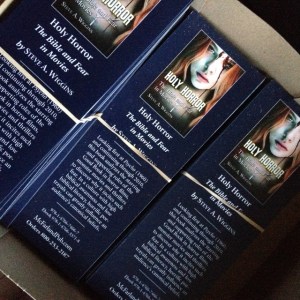
I keep a running list of books I’d like.  Some are for research and some are for other pleasures.  The list grows quite lengthy when more and more interesting books get published.  I look at academic books and I wonder if maybe there’s another way.  If they were priced down in the range of mere mortals, would they sell enough copies to meet their costs?  I’m well aware that Holy Horror is priced at $45.  Believe it or not, that’s on the lower end of academic extortion pricing.  Many books on my “must read” list cost three times as much.  Are we paying the price for keeping knowledge solvent?  Or is all of this just criminal?


Strange Ending

Perhaps it’s from growing up as a biblical literalist, but I’ll probably always have problems with post-modernism.  You see, when you’re taught as a kid that there is one absolute right and you already know it (it’s Genesis to Revelation, no Apocrypha, please), you kind of get the idea that things are just what they seem.  Po-mo teaches, among other things, that there’s no true objectivity—reality is subjective and there is no neutral ground upon which to stand.  I’m down with that, but the old ways of looking at things remain.  This is a long-winded way of saying I finished Kohta Hirano’s ten-volume manga, Hellsing.  Over the past year I’ve been reading for a friend of mine, but manga has never really been my thing.  I read The Watchmen as a graphic novel, but looking at pictures somehow feels like cheating.  It’s that literalist thing again.

I might be dropping some spoilers here, so if you’re even slower than me be warned.  There’s quite a bit of shape-shifting here and it’s not always easy to tell who’s who.  In a kind of homage to my childhood monsters there’s vampires, werewolves, and even a Frankenstein’s monster in the series.  All of them are engaged in a constant state of combat against which the Protestant Hellsing organization stands for a stable civilization.  The Catholics are associated with Nazis along the way.  It’s a fascinating look at how an eastern culture might view the religious wars of those in the west who all go by the name “Christian.”  I think this is the genius of the series.  The friend who lent me the volumes has no declared faith, but he finds the dynamic fascinating.  Real religious fighting has made it easy for him.

The story, however, falls clearly into the generation of those without absolutes.  For someone my age a plot clearly laid out is a thing of beauty.  In college we used to argue about how absolutes might exist.  Where did they come from, and which is the strongest?  Did God make them or does God have to conform to them?  Even without the answers, the fact that absolutes existed was assumed.  Argument-driven science tells us that a theory is never proven.  Science is the best explanation we have at the moment, based on the evidence amassed.  In its own way, it has become post-modern.  Hellsing is a kind of mind-blowing work.  It will likely be a long time before I attempt another manga series.  Although I accept the po-mo premise, I still find old-fashioned fiction my favorite.


How Many, Now?

One thing you can say for the Bible—it’s been interpreted six ways to Sunday.  This point was brought home to me in reading Michael Willett Newheart’s “My Name Is Legion”: The Story and Soul of the Gerasene Demoniac.  Part of the Interfaces series, now apparently defunct, it takes an unusual biblical character and explores it.  Them, in this case.  The story of the Gerasene or Gadarene demoniac is one of the more famous episodes in the Synoptic Gospels.  Jesus and the disciples cross the Sea of Galilee and the possessed man runs out at them.  He has superhuman strength, and he lives among the tombs.  Jesus asks the man, or the demon, its name only to receive the reply “Legion.”  He then casts the demons into a herd of swine that drown themselves in the lake.

Newheart approaches the story creatively, first by considering the Gospel of Mark as a book, and then treating his version of the story via narrative criticism.  This was pretty good, and I learned quite a bit from his analysis.  The book then moves on to psychological criticism.  I have to admit that this approach is one I haven’t ever used and, like many reader-response methods, it can seem somewhat arbitrary.  That’s not to suggest it shouldn’t be utilized, but rather to note that results could be uneven.  Your psyche’s not my psyche, savvy?  Subjective approaches may be all that we really have when considering an ancient text, but I always tend to look at things historically.

This book caught my attention because I’m researching demons.  You can’t really ignore a book with this title if you’re trying to figure out how the New Testament looks at them.  In any case, the historical method seems to me the only way we can really engage the question of what the ancients thought demons were.  I don’t want to say too much or you won’t have any reason to buy my next book.  (That’s a joke, by the way, before anyone suggests I’m exploiting my readers.)  Newheart doesn’t really raise the question of what demons are.  He does briefly mention The Exorcist, but it isn’t his main interest.  The character of Legion, however, is difficult to place if we can’t really say what demons are.  I did find the allusion to the Roman occupancy to be worthy of consideration.  The demoniac, however, may have begged to differ.  It couldn’t have been easy being an unnamed character in the Good Book.  And demons are often not what they seem.


Sixes and Sevens

Few eras conjure mental images as readily as the sixties.  As the first decade of my life, I idealize them a bit, I suppose.  I wasn’t old enough to appreciate the truly wonderful and troubling things going on around me, and being raised in a Fundamentalist family I probably couldn’t have enjoyed many of them in any case.  Morris Dickstein’s Gates of Eden: American Culture in the Sixties was written in the seventies.  Since he’s a literary scholar much of the culture he analyzes is print culture, emphasizing the works of Jewish novelists and African-American writers.  That fits the sixties image pretty well.  He also looks at the music, but not as much as I had anticipated he might.  For me the music of the decade conveys what it really was about.

At one point Dickstein describes the political situation in the fifties that led to this incredible decade.  I had to remind myself that this was written forty years ago, for he seemed to be describing, with eerie prescience, the world of Trump and his followers.  Repressive conformity and the superiority complex of that era led to a breaking point where individual expression tumbled long-held rules and regulations that had tried to repress women and those that didn’t fit the WASP mold.  Most of us thought those controlling, catatonic days were over for good.  It seems we underestimated the will of those who lack imagination of where things might go if freedom were allowed to be free.  Some people, it seems, believed the sixties were a disease to be cured.

Historians who have a wider grasp than I do say that time has to pass before accurate pictures can emerge.  Instant potted histories tend to miss much of what becomes clear only with the slow passing of further decades.  To me the music defines them.  I only started to become culturally aware in the seventies, and that was in a small town.  When I learned to look back, largely in the eighties, I could see, and hear, that I’d lived through an extraordinary time.  The nineties, largely spent at Nashotah House, were again isolated from culture.  Who knows how this new millennium will be assessed?  Has a new music emerged that will help define us?  Or will it be, as Dickstein unwittingly projects, a new era of acceptance, love, and peace?  Or did the world really end at the millennium?   It could be, we might dare to dream, that a new decade as remarkable as the sixties is waiting to usher in Eden again.


Friends with the Devil

The Pine Barrens of New Jersey strike the first-time visitor as eerily odd, even today.  Stunted trees grow from sandy soil, crowded close together and growing hard up to the edge of the road.  You can see the sky above, but dwarf trees of uniform height block your lateral views over any distance.  It feels claustrophobic.  Add to this tales of inhospitable residents and an actual profusion of tree-climbing lizards, and you’ve got the grounds for wondering what else might lurk in the deciduous woods.  Brian Regal and Frank J. Esposito aren’t so easily frightened.  Their fascinating book, The Secret History of the Jersey Devil: How Quakers, Hucksters, and Benjamin Franklin Created a Monster is a bit of a chimera on its own.  The subtitle gives a pretty good idea of what you’ll find in the book.  For someone who had lived in Jersey for a dozen years, and who loves monsters, it was a must-read.

Not to provide too many spoilers, Regal and Esposito spend some time in colonial New Jersey sketching the little that can be known of the rather prominent Daniel Leeds.  Anyone from Jersey knows that its eponymous state demon is also known as the Leeds Devil.  This particular family had good connections despite being Quakers—a capital crime in some parts of the British Empire.  Daniel, however, had a falling out from the Friends and made his name by publishing an almanac.  This almanac and the proximity of Philadelphia to the Barrens brings Benjamin Franklin into the story.  Franklin competed with the Leeds almanac, and Poor Richard eventually won out in this war of the words.  Demonized by their former Friends and gently satirized by Franklin, the Leeds family was eventually all but forgotten.  Then stories began to emerge of a dragon-like monster in southern Jersey.

To get the details you’ll need to read the book.  Particularly interesting for this blog is the way religion and monsters interplay.  There’s a good bit of history of monsters in the story, including Quakers and early attempts among scientists to understand birth defects.  The very word “monster” is, in its “word cloud,” related to ideas such as revelation and portents.  Early scientists resorted to divine anger when they couldn’t explain what nature had wrought.  And of course folklore is a very potent lubricant.  There are some gaps in the story here, but this is an enchanting exploration of whence monsters might come.  The Jersey Devil has international fame now, and its birth may have begun with insults flashed back and forth among religious believers that eventually were taken literally.  The devil’s in these details.  Or at least in the spooky topography of the Barrens.


Lore of the Folk

Once in a great while you read a book that has the potential to shift paradigms.  The unusual and provocative Raising the Devil: Satanism, New Religions, and the Media, by Bill Ellis, is such a book.  Perhaps the main reason for this is that Ellis is a folklore scholar who takes his subject seriously.  He cites some unusual sources non-judgmentally, but critically.  He suggests that folklore can actually dictate reality for its believers, while not demanding that it defines how everyone else sees the world.  This fine parsing allows him to examine the satanic cult scares of the 1980s and ‘90s with a kind of passionate dispassion.  He traces the historical contexts that made such panics possible, all the while keeping belief structures in place.  In the end, the giving in to this folklore on the part of society can lead to tragic results.  Understanding folklore might well prevent that.

Since our prevailing cultural paradigm is a materialism based on empirical observation, at least among those deemed “educated,” it is easy to lose track of how belief constructs our worlds.  Ellis finds the cradle of satanic panics in the Pentecostal tradition where deliverance ministry—a Protestant form of exorcism—takes seriously the belief in demons of many kinds.  This leads to a study of ouija boards and Spiritualism.  Although neither led to Pentecostal theology, both play into it as doorways for demonic activity, in that worldview.  Add into this dissociative identity disorder (what used to be called, and what Ellis refers to as “multiple personality disorder”) and the recipe for a spiritual mulligatawny is simmering away.  You need not believe what the victim says, but if s/he believes, you must pay attention.

Outside the strict confines of Satanism, other cultural phenomena allowed for panics to grow.  Popular narratives, largely false, of satanists cum evangelists (think Mike Warnke) mingle with cultural fears such as the Highgate Vampire scare and cattle mutilations to make a narrative of satanic ritual abuse believable.  A folklorist sees the connections that a strictly wielded razor by Occam tries to shave away.  All of this fits together.  When we don’t pay attention to how real this is to those involved, a half-baked public panic can erupt.  Ellis suggests such circumstances might well have led individual witch hunts into large-scale witch crazes.  While both are unfortunate, the latter tend to lead to many, many ruined lives.  The subtle awareness that one need not believe in order to understand those who do is something worth pondering.  Reality may be far more complex than the activity of electro-chemical signals in a strictly biological brain after all.


Type Right

Image credit: Rama, via Wikimedia Commons

I’ve mentioned before on this blog that I’d like to get a typewriter.  An old one, without electric capacity.  Clacking keys flying before the dawn.  At first this might seem impractical—why buy a typewriter when almost all publishing is now electronic, at least in one stage of its life cycle?  You type something out and you’re going to have to “re-key” it for the hegemony of technology.  But wait—there is a method to this madness.  I’ve heard it said that good writing is just clear thinking.  That sounds right to me, but with a proviso: good writing is edited writing.  The editor may be someone else, or it may be the author, but the point is that something written, with rare exceptions, improves upon rewriting.  Like ordinary stones in a rock tumbler that come out glistening.  Type it, then retype it.

Back in college I wrote all my papers out by hand before typing them.  (Sometimes three lines of handwriting on each college-ruled line.)  “Keyboard composition,” as it was called then, was shorthand for quick, sloppy writing.  The uniformity of type hides a host of syntactical sins.  I used to see the same thing with student papers prepared on a computer in my teaching days—colorful images and fancy type utilized to mask a lack of engagement.  The paper written and rewritten shows itself to be of a higher standard.  I (or others) notice more errors on this blog when I run out of time for editing, often because work looms.  If I have the time, I edit.  And I actually miss writing my thoughts out longhand.  What I need is a typewriter.

Reading has always been a large part of my job.  Student papers and book proposals aren’t so very different.  Many of both come in what appears to be first draft form.  It’s understandable—good writing takes time not only to hammer out a draft but to think, mull, change angles, and hammer again—and we’re all so terribly busy.  The end result is often worth it.  At this point in Nightmares with the Bible I’m printing out my draft so that I can see what I’ve written.  The handwritten comments come after the keyboard composition, but they still come.  The important thing is that drafts require re-reading.  Better, re-writing.  The niceties of pleasing writing can be added or enhanced by an editor.  When editors write books, other editors edit them.  And as I sit here typing this silently on my computer, I’m imagining the satisfying sounds of a manic typewriter early in the morning.


Internet of Happiness

Are we really happier for instantaneous news?  Has the internet brought us paroxysms of ecstasy with the quality of information?  Wouldn’t you just rather wait?  I don’t think we should go to extremes, or go backward.  Samuel Morse, it is said, developed the telegraph in part because he was away from home and only found out about his wife’s death after her burial, for which he could not return in time.  More rapid communication was necessary and the telegraph provided the means.  No, I’m not suggesting that happiness lies in being uninformed, but perhaps I lingered long enough among the Episcopalians so as to believe in the via media, the middle way.  Some of the happiest times of my life have been spent without a screen glowing in my face.  There is, however, good stuff here.

One example is blogging.  I wish I had more time to read blogs.  Verbomania, for example, showcases writing that sparkles.  The weekly posts set me up for a good weekend.  There are many more that I could name as well—and for me blogging has become a way of life.  Marketers call it “platform building” but I think of it as fun.  And the practice I get writing this blog daily has made my books much more user-friendly.  A family friend with no college education tried to read Weathering the Psalms, with “tried” being the operative word.  There’s no comparison with Holy Horror.  (Weathering the Psalms was written to be my “tenure book,” and it may well be my last technical monograph.)  I have this avocation of blogging to thank for that.

But instantaneous news—does it make us happier?  Sometimes perhaps, but often the opposite.  It’s a phenomenon I call the internet of unhappiness.  (There’s a whole field of study emerging called “the internet of things,” which, no matter how much I ponder I just can’t comprehend.)  News, after all, tends to focus on negatives, as if there’s too much happiness in our lives.  Just yesterday there were early morning helicopters hovering not far from where I live.  Within seconds I could learn of some kind of domestic dispute about which I’d otherwise have been none the wiser.  The next few hours I spent occasionally reloading the page for updates.  They didn’t make me happy.  Add to that the three-ring sideshow that the American government has become and you’ll soon be wanting just three channels from which to select before turning off the TV and going outside for a walk.  And when the 1970s start to look like happy times, you go to your closet and start digging for the semaphore flags.

They must be in here somewhere…


Remembrance

When reading C. S. Lewis’ Surprised by Joy, a number of things stood out in high relief.  One of them was his statement that the early years of autobiographies are often the most interesting.  Now, many people may have difficulty drawing a straight line between Lewis and William Peter Blatty, but the overlaps are there.  I’ll Tell Them I Remember You is a young man’s autobiography, so mostly it deals with early years.  Even more than that, it deals with Blatty’s mother.  Those of us who write often find a kind of inspiration in the life stories of other writers.  To hear Blatty tell it, or rather, to read him tell it, it was his mother who made him the man he became.  It’s a nice tribute.

Blatty is probably best remembered as the author of The Exorcist, but his background as a comic screenwriter comes through in his account.  (He also wrote, for example, the Pink Panther screenplay A Shot in the Dark.)  But more to the point currently, with a spoiled child wanting to try to force a wall that America doesn’t want on it, Blatty’s parents were immigrants.  From Lebanon.  It may be that since I’m writing a book about demons in movies that The Exorcist seems like an important national achievement to me, but it also seems an apt parable for the situation in which we find ourselves.  It worth thinking about—the invasion of evil and how to expel it.  Metaphorical writing is often the best.

Perhaps writers are naturally obstreperous people.  If my novels ever get published you’ll see that characters don’t do what you want them to.  And yet we like what happens when they don’t.  I would have found a bit more information about Blatty’s life an asset.  His mother certainly makes an impression, even if its third-hand.  Writers, if my own experience is anything to go by, often feel they are conduits.  Receivers.  It’s like listening to the radio when driving a car through the mountains.  Suddenly a station comes in clear, but just for a moment.  Ideas for stories are like that—they often arrive when you can’t do anything about them.  Writers carry notebooks for a reason.  I used to have a waterproof one in our shower.  You never know when the signal’s going to come in loud and clear.  And you never know when the people you’re trying to block out might be adding more value than you’d ever imagined.  You might be surprised.