Goliath and Company

First UltraViolet.  Then Google +.  Well, actually neither of these was first—tech initiatives cease to exist all the time.  Giants aren’t immune to extinction, it seems.  I’ve got to be careful with my confessions toward Luddite sympathies since, as it turns out, tech is king.  Emperor, in fact.  But since tech only works as long as society holds together, I still want paper knowledge in my library.  I don’t own a Kindle and despite what visitors say, I don’t want to “save room” by getting rid of books.  I like books.  I wink at them from across the room.  Sidle up to them when in private.  Get to know them intimately.  Books are a way of life.  If the grid breaks down, I’ll have books to read and candles to do it by.  For a while there I even made my own candles, although most of those were used up in the aftermath of Hurricane Sandy.

Just sayin’

You see, my hairs bristle when I hear tech experts complain that “authors should be taught to write in XML.”  Said techies have apparently never written a book.  Ideas, you see, flow.  When you’re in the zone, there’s no stopping to mark-up your text.  In fact, the best, purest kind comes in scribbles on paper with misspelled words and all.  You can hold it in your hands and remember the Muse who had you at the time.  For me the hours of inspiration are before dawn.  I mostly use a computer now, but I can still find myself typing too slow to keep up with manic inspiration, desperate to record my ideas before paid work starts.  Work is the Medea of creativity—both mother and slayer.  Once I login I check out.  I need to wait for another day to dawn.

We’ve invested heavily in technology.  The internet is largely responsible for the globalization against which the world has recently rebelled.  No matter how many times people like me say we love books somebody will say, “Have you considered a Kindle?”  Why?  I bought a house as a place to keep my books.  These little bricks are bits of my mind.  Pieces of my soul!  What we read makes us who we are.  The last person who said the remark about authors learning XML literally sighed with disgust as he said it.  How could, you could feel him thinking, anyone be so backward as to think this is a problem?  I recall Hurricane Sandy.  Sitting in an apartment lit by candles we’d made ourselves, we read old-fashioned books and were eerily content.


May Care

The thing about the Devil is that evil is no laughing matter.  Darren Oldridge had no easy task limiting the dark lord to The Devil: A Very Short Introduction.  He nevertheless does an admirable job packing lots of provocative stuff into a small package.  The historian of religion part of me found his short history of Satan in chapter 2 a compelling synthesis of the character’s background.  Longer sources get tangled in theological weeds once the New Testament’s over, what with erstwhile saints being recast as heretics over some minute point of doctrine.  Lots of ideas about the Devil were floating around in those days, even as they are today.  A particularly important point, however, is made early in this book: even during the Enlightenment most intellectuals—including scientists—assumed the reality of the spiritual world.  It was only when materialism alone came to reign that there could be no Devil because there could be no spirits.

A vast disconnect continues to exist between “public intellectuals” and hoi polloi.  The vast majority of people in the world are religious.  Even in, especially in, the United States a great number of people believe in the Devil.  Many of those same people can’t recognize political evil when it stands naked before them.  Here’s the irony of it all: Oldridge discusses how an evil system, let’s say Nazism, blinded many otherwise decent people to the evil they were asked to perform.  Rhetoric that demonized the other, when dispersed over large crowds, has historically had that effect.  Today we see “Christians” claiming that a social system of helping those in need is of the Devil.  The greatest weapon of the prince of darkness is the sincerely believed lie.

Lies have always been associated with the Devil.  When the number of untruths coming from the White House has broken the very meter for measuring lies, those who claim the name of the crucified man who advocated care for the poor shout all the more loudly.  Not at the lies, but at those who don’t accept them.  Historically, the reign of facts has kept some checks on the Devil.  Even Jesus accused Herod of watching Fox—or was it being a fox?—too bad there are no facts to check.  Oldridge doesn’t tip his hand as to whether there is an actual Devil or not.  Society has, however,  no trouble making up its mind.  All they need to do is turn on the television.


The Desert

Now, I’m fairly certain Athanasius of Alexandria didn’t have access to CreateSpace, or even an Amazon Prime account.  He did write the classic Life of Antony (or Anthony), which I took the opportunity to read recently.  I’m not going to go into this life with great detail—Athanasius does that, in as far as he can—but the reading of this book raised the perils not only of demons but of easy self-publication.  As usual, there’s a story behind it.  Antony was famous for being an early monk who fought demons so effectively that they feared him.  His story wasn’t written in English, seeing that the language had not yet evolved.  When I tried to find an affordable copy that I could access quickly, I found the edition pictured here.  It was fairly obviously a conversion, likely from a PDF (based on my own so doing, in the line of duty).  A minimal cover was applied and it was offered cheaply on said Amazon (with free shipping).

Those who work in publishing know how to spot a print-on-demand title.  That means the book is printed when it’s ordered, or, printed a few copies at a time so that the overhead of offset printing (how books were traditionally made) can be avoided.  Self-publishers can name themselves a press—this one Beloved Publishing—and anything in the public domain can be reproduced and sold to rubes like me.  When a scholar, erstwhile or while, approaches a book s/he wants to know certain facts about it.  Who was the translator?  What was the original language?  When was it written?  Who was (in this case) Athanasius?  Some of this I knew simply by dint of studying ancient texts for most of my adult life and having attended and taught in seminaries.  Still, an introduction of some sort would have been appreciated.

This edition appealed to me because the Life on Antony is a short book.  Most mainstream publishers bulk books like these up with hefty introductions and notes and charge four times as much for it.  They usually put in other works too, since this one weighs in at less than a hundred pages, even with loose typesetting.  Sometimes you just want the contents, with minimal introduction.  So let it be with Antony.  Or so I thought.  This edition, which has a few quirks, contained Athanasius in English, which is what I needed.  The translator remains unknown.  It is print-on-demand.  It is also affordable.  In case any readers of this blog wonder why I sometimes tend not to engage with the contents of the books I review, I would point out that this is what my own books are for.   A guy has to try to make a buck somehow, now and again.  (Antony forgive me!) 


Troubled Trilogy

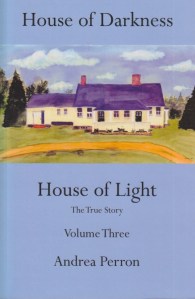
The quest for the truth is never-ending.  New information keeps emerging and our poor brains have evolved to survive the perils of weather and wild animals, not to receive all available information.  It’s the fear that I might’ve missed something that has me going back to a place I’d rather not go.  Andrea Perron’s account of what happened in Harrisville, Rhode Island is the only real published source by eyewitnesses that’s readily available.  Her three-book account, however, is a deeply personal ramble that isn’t easy for the fact-finder to follow.  A couple of months ago I posted on volume one, intimating that I would probably have to go back and read two and three.  There’s a compunction about completion that humans have.  An economist once told me not to measure a venture by sunk funds.  The same applies to books, I guess.

In my ongoing research into demons, and particularly the work of Ed and Lorraine Warren, I felt I had to continue with the troubled trilogy.  Volume one barely mentioned the Warrens.  Volume two finally revealed some of the story.  It took 260 pages to get there, but finally, an eyewitness account!  It has plenty of gaps, of course, but it is, as they say, different from the movie.  You have to understand that a certain sector of the internet was buzzing like flies in January over The Conjuring.  Based on a true story, it was a sympathetic treatment of the Warrens’ work that it was hoped would give credibility to the demon-hunting duo.

House of Darkness, House of Light in total is well over a thousand pages long.  I know, I know—“caveat emptor.”  Nevertheless, I’ve always felt that long books owe it to their readers to deliver on the promises.  I want my haunted house books to be scary.  Or at least moody with a gothic sensibility.  I do understand the desire—the compunction—to approach life philosophically.  Were I ever to put my life out there on display, beyond the occasional forays on this blog, I would hope to do it in a way that left readers wanting more, not less.  Biography is a dicey subject.  Autobiography even more so.  The traditional publisher steps in with an editor firmly in hand.  I know because I’ve been doing this for about a decade now.  The writer and the editor, like the farmer and the cowman, should be friends.  It’s tough, painful even, when someone takes a pen to what you’ve carefully crafted.  The results, when they work, give the reader what s/he wants.  The quest may indeed be never-ending.  At least trilogies have only three parts.


Quiet on the Winter Front

There’s a weird silent time, after a book is published, when you start wondering how it’s doing.  Holy Horror was apparently released November 29, and published December 29, if done according to standard publishing practice.  The release date is when stock is received in the warehouse.  The book is printed and technically available, but not yet published.  Publication is about a month later when the sellers, distributors, etc., have received their orders and can begin sending them out.  Publishing, as I’ve noted before, is a slow business.  Somewhere around this point you start wondering how your book is doing.  Reviews take some time to appear.  The publisher falls silent (I know this from the editorial perspective as well).  You start thinking, did it really happen?

This is the internet syndrome.  We’ve become used to instant results and it’s difficult to believe that can get by without minute-by-minute updates.  The problem is publishing is slow.  Reading a book takes time.  Not all readers review.  It’s perhaps the kind of malaise you expect in late winter.  In my case, however, my book was an autumn book that missed its release date by a few months.  Yes, hardcore horror fans are still chomping at the bit for upcoming features like Us, but the public in general is well on its way to Valentines Day and what comes after.  We are pretty much a holiday-driven culture and Holy Horror was a Halloween book released after Christmas.  That, and the combination of Bible and horror is unexpected, with many, I’m guessing, thinking the book is something it isn’t.

Often at work I ponder how publishing has changed, even if it runs like sap in January.  Professional writers—those who lived from their books alone—used to be rare.  Most authors were otherwise employed, and many of them worked in publishing.  It stands to reason when you think about it.  I’ve worked for three publishers and finding other writers is, and has been, a rarity.  Instead editorial boards consist of people who largely don’t have the experience of writing a book of their own talking about author expectations.  A disconnect has emerged where writers find employment in other industries and find themselves wondering why publishers do things the way they do.  Even with that background knowledge, I do wonder how my little book is doing.  It’s only natural.  And now that we’ve progressed to February, it’s only eight months more until October.


Desert Demons

After reading many popular books, coming to a scholarly tome can be a shock to the system.  This is especially the case when said academic volume contains lots of information (not all do, believe me!).  David Brakke’s Demons and the Making of the Monk: Spiritual Combat in Early Christianity has been on my reading list for quite some time.  One of the perils of being a renegade academic is that you have no university library at hand and I’m not sure I want to reveal this side of myself to the local public librarian yet.  In any case, it would be difficult to summarize all that Brakke covers in this insightful treatment.  One of the elements that struck this reader, however, is the protean nature of the demons with which the eponymous monks wrestled.

Keep in mind that although demons appear throughout the Bible in various forms there is no single definition of what they are.  They appear to be spiritual monsters, in short.  Some passages seem to suggest they are fallen angels.  Others that they are foreign (primarily pre-Christian) gods.  Later ideas add the possibility that they are children of the Watchers, or even, as Brakke explains, evil thoughts.  The desert monks didn’t dwell on trying to discern their origin myth—they were out there to purify their souls, not to do academic research.  The Hebrew Bible does suggest that demons were creatures of the desert.  As monasticism began, appropriately in Egypt, one natural resource found in abundance was wilderness real estate.  The mortgage, however, was a constant struggle with demons.

Many of these demons developed into the seven deadly sins.  Not surprisingly, men living alone in the desert found themselves the victims of sexual temptation.  This led to, in some cases, the demonizing of women.  We’d call this classic blaming the victim, but this is theology, not common sense.  Anything that stood between a monk and his (sometimes her) direct experience of God could, in some sense, be considered demonic.  Brakke presents a description of several of these early desert-dwellers and their warfare with their demons.  Much of their characterization of evil would be considered racist and sexist today.  Brakke does make the point that during the Roman Empire—the period of the earliest monks—race wasn’t perceived the same way that it is in modern times.  Nevertheless, some of this book can make the reader uncomfortable, and not just because of demons.  Or, perhaps, that’s what they really are after all. 


Evolving Intelligence

In the process of unpacking books, it became clear that evolution has been a large part of my life.  More sophisticated colleagues might wonder why anyone would be concerned about an issue that biblical scholars long ago dismissed as passé.  Genesis 1–11 is a set of myths, many of which have clear parallels in the world of ancient West Asia.  Why even bother asking whether creationism has any merit?  I pondered this as I unpacked the many books on Genesis I’d bought and read while teaching.  Why this intense interest in this particular story?  It goes back, no doubt, to the same roots that stop me in my tracks whenever I see a fossil.  The reason I pause to think whenever I see a dinosaur represented in a museum or movie.  When a “caveman” suggests a rather lowbrow version of Adam and Eve.  When I read about the Big Bang.

The fact is evolution was the first solid evidence that the Bible isn’t literally true.  That time comes in every intelligent life (at least among those raised reading the Good Book).  You realize, with a horrific shock, that what you’d been told all along was a back-filled fabrication that was meant to save the reputation of book written before the advent of science.  The Bible, as the study of said book clearly reveals, is not what the Fundamentalists say it is.  Although all of modern scientific medicine is based on the fact of evolution, many who benefit from said medicine deny the very truth behind it.  Evolution, since 1859, has been the ditch in which Fundies are willing to die.  For this reason, perhaps, I took a very early interest in Genesis.

Back in my teaching days it was my intention to write a book on this.  I’d read quite a lot on both Genesis and evolution.  I read science voraciously.  I taught courses on it.  I’d carefully preserved childhood books declaring the evils of evolution.  To this day Genesis can stop me cold and I will begin to think over the implications.  When we teach children that the Bible is a scientific record, we’re doing a disservice to both religion and society.  This false thinking can take a lifetime to overcome, and even then doubts will remain.  Such is the power of magical thinking.  I keep my books on Genesis, although the classroom is rare to me these days.  I do it because it is part of my life.  And I wonder if it is something I’ll ever be able to outgrow.


Epigraphic Ephemera

Photo credit: Napoleon Sarony, via Wikimedia Commons

“We live in an age when unnecessary things are our only necessities.” ― Oscar Wilde

In certain kinds of books, epigraphs are popular.  In fact, I’m currently reading a book where every part of every chapter begins and ends with an epigram.  It starts to taste like an epigram cracker after a while.  Don’t get me wrong, every great once in a while there’s a quote that just illustrates your point in a chapter so pithily that you can’t resist.   Still, epigraphs ought to come with a warning label.  Working in publishing one of the first things I learned is that unlike quotes in the body of a text, an epigraph that’s covered by copyright isn’t considered “fair use.”  It’s an ornament, an embellishment.  If you want to use one, you need to get permission from the rights holder.  (Unless it’s in the public domain.)

While the idea of copyright itself isn’t that complicated—the creator of intellectual property is the owner of said property—copyright laws can be complex.  Publishers discourage the use of epigraphs (which only academics seem to use any more) because of permissions complications.  You see, when you publish a book (or article) you’re trading your copyright for whatever emoluments the publisher or the journal has to offer.  Most publishers, no matter how noble, are businesses.  There are costs with producing books.  If someone wants to reuse part of a another book—apart from the standard academic quote—they must have permission to do so.  Epigraph permissions can really slow a book down.  And make it expensive.

Reading is an involved process.  We human beings are seldom given such direct access to the interior lives of others.  Think about it—books are private thoughts made public.  Sometimes writers like to show that others have been thinking along similar lines, especially if what they have to say challenges convention.  Thus the epigraph.  The quotable quote.  But did you have permission to take that?  I like poetry.  It takes longer to read than prose, but it says so much in so few words.  That means using poetry in epigraphs becomes a nightmare.  Rights holders often charge by the percentage of the poem used.  And once a book becomes e book there no stopping the spread of its epigraphs used so carefully by permission.  Indeed, e-books are easily pirated, increasing the concerns of those who sell other’s thoughts for a living.  Before sticking that clever quote at the start of your chapter, it’s worth pondering the epigraph above (in the public domain, of course).


Prejudices of the Time

When my daughter was in middle and high school, I made an effort to read every book she was assigned for her English classes.  This gave us something to talk about during the years when many teens grow laconic and uncommunicative.  Some of the books I’d read before, but one frightened me off.  Ken Kesey’s One Flew Over the Cuckoo’s Nest pressed the wrong buttons.  You have to understand that I saw the movie for a class in college.  It disturbed me.  Even before encountering H. P. Lovecraft, one of my deepest phobias was insanity.  Children of alcoholics sometimes fear those who are out of control, and mental patients had become, in my head, associated with the non-rational behavior of my father that frightened me so.  During a clown ministry event we visited the local state hospital for mental patients.  I trembled for about a week after we left.

One Flew Over the Cuckoo’s Nest is in many ways a sixties novel.  One reflection of that is the fact that the religious imagery in the novel is presented in the form of punishment.  Everyone knows the narrative of R. P. McMurphy’s battle of the wills against Nurse Ratched.  The latter uses electroshock therapy as punishment and she tries to wear McMurphy down by using it repeatedly after the fight in the shower.  The electroshock table is described as a cross.  The metal headset is a crown of thorns.  Indeed, one of the patients is described as being crucified to the wall of the ward where he hangs throughout the novel.  The sixties frequently saw religion—especially the staid, conservative evangelicalism of the 1950s—as a form of punishment.  That’s pretty clear here.

Although the novel celebrates the freedom of the sixties, it also reflects the prejudices of the times.  The African-American attendees on the ward aren’t portrayed sympathetically.  The women—nurses and prostitutes alike—are there for the pleasure of the male patients’ gaze, exemplified in the leering laugh of McMurphy.  Still, there’s a kind of catharsis to this tale.  The Chief, from whose point-of-view the story’s told, is arguably cured by the antics and special attention McMurphy shows him.  Beneath the callous, self-serving conman there is a human decency that “the system” fails to find.  Indeed, McMurphy is a kind of Christ figure.  A fallen savior, no doubt, but a liberator nonetheless.  This was a difficult novel to read.  I couldn’t make myself pick it up half-a-decade ago, but I suspect somewhere beneath the surface I’m glad I’ve finally read it.  It didn’t cure any of my phobias but it made me think.


Book Life

Like a book, life can be divided into chapters.  This is perhaps an instance of art following reality, or perhaps it’s the other way around.  The episodic nature of life suggests the chapter structure of books.  As I was waking up this morning (disappointingly before 4:00 a.m.) I was reflecting on the chapters of my life.  As with a book, the most recently read decade is perhaps freshest in one’s mind, but the decades do seem to fall roughly into format.  We tend to think of that first decade—childhood—fondly, even if in reality it wasn’t all games and candy.  It’s biology’s way of encouraging us toward that weird teen chapter of puberty with its intense emotions and maturing bodies.  That chapter is recalled, at least in my experience, as a turmoil involving both good and bad.

The twenties, in my book, were spent in higher education.  It was a cerebral chapter.  Finishing college and starting grad school.  Finishing a masters and discovering employment difficult to find with a master’s degree.  In my book marriage was in the twenties chapter, along with a doctorate.  The next chapter, the thirties, was spent entirely at Nashotah House.  That involved becoming a father as well as a professor.  The other faculty were fathers of a different sort.  I always thought chapters should show some continuity but the forties chapter was that part of the book known as the crisis.  The upending of convention.  The self-reinvention.  The move.  I suppose in terms of a novel that was when it started to get really interesting, but from my perspective life had been plenty interesting enough by that point.

The fifties have been a bit more settled.  The publishing chapter.  The house-buying move added drama, of course, but otherwise the nine-to-five is like a mind-numbing drug.  Mine involved a commute that lead to its own unpublished book, as well as two somewhat academic  tomes.  All of this was going through my head the way thoughts do when you can’t force yourself back to sleep.  The paradigm suggests itself to someone who has, in one form or another, been writing for his entire life.  Or writing his life.  My first attempts at being a novelist began in chapter two.  On yellowed paper somewhere in the attic I still have that first handwritten attempt at literary expression.  The current chapter has me becoming a gruncle (with a nod to Gravity Falls fans) and wondering how a great niece might read a book written like this.  If she will even have an interest.  That’s the way of books, as any librarian knows.  Maybe some warm milk and a cookie are indicated.

Life is a book.


Mastering the Elements

First time home ownership is best left to younger people.  And perhaps younger houses.  The constant onslaught of things falling apart, or falling off (it has been an extreme weather year) has soured me on the idea.  You get set in your ways, you see.  The move from apartment to house didn’t come with a raise that would cover all the repairs invisible to a home inspector’s eye.  Although our house has stood for over 120 years, the last owners let lots of things go with a lick and a promise and we, the naive middle-aged first-time buyers in a seller’s market, bit.  I thought there would be repairs to make, but not all at once.  The royalties from books like Holy Horror don’t make even a small dent in the contractor’s fees.  We should maybe have bought a house in Jericho instead.  One right on the city wall.

The shake-down voyage of a ship reveals the problems, so the theory goes.  It stands to reason that people have to go through a shake-down year as well.  I’ve got the roofer on speed-dial, and I keep a wary eye on a garage that has more love than actual care poured into it.  All I want to do is read and write (which I could do just fine as a renter, thank you) in a place dry and not too cold.  The weather, however, has been unforgiving.  Rain and more rain.  There’s something primal about all this—an element of having to struggle against nature in order to survive.  In the modern world we’ve taken for granted our ability to keep the beasts and weather at bay.  Storm systems like the one that has just blown through serve to remind our species that there are things that will forever remain beyond our control.

The lament is the most numerous genre of psalm

Something like this was going through my mind as I wrote Weathering the Psalms.  (We didn’t own our house at Nashotah House, though.  Whose house?  Nashotah’s house.)  Living in the Midwest gave me a new appreciation for the weather.  Some of the storms we witnessed were nothing short of theophanic.  Global warming has a way of bringing the weather front and center.  Elements of this element, however, are within our control.  We understand at least the human-driven elements of global warming.  We deny they exist to scrape together a few more pennies at the end of the day.  Meanwhile those who buy houses need to do their homework.  If need a roofer too, I’ve got one on speed-dial.


Mastication Meditation

Musing while munching a bowl of Wheaties, a thought came to me.  Not only do we owe the practice of eating breakfast cereal to an evangelical strain of Christianity, but we also encounter the early morning ideas that stay with us through the day.  Cereal boxes start our day.  Advertisers and marketers know that images are important.  If successfully done they stay with us and may influence future purchasing choices.  In the case of Wheaties (which I’ve always liked) the box shows some athlete or other, implying that we’ll be champions too if we partake.  We are what we wheat.  Now, I don’t follow sports.  I can tell a football from a basketball, but watching grown men (usually) chasing one about really has no appeal to me.  I don’t eat Wheaties to become big and strong.  (At my age you don’t want to get bigger.)

As I ponder my fodder, I wonder what it would be like if we put pictures of people reading on our cereal boxes.  Would we experience a massive renaissance of literacy if cool people were shown with a book instead of a ball?  Don’t get me wrong—I’m all for exercise.  I’m a fidgety sort of guy who doesn’t sit still well.  I like to get out and jog or walk.  I don’t mind doing household repairs.  I like to move about.  But reading is one of the great rewards I allow myself.  When work becomes dull, I look forward to an evening of reading (I tend to do my writing in the morning, before the mental exhaustion of the day kicks in.  Wheaties are, after all, a morning food).  It’s kind of like living in pre-television times, I suspect.

Among the publishing industry the fate of book reading is a constant topic of discussion.  Or, not to put too fine a point on it, book buying.  Reading itself is doing fine.  If, for example, you are reading this you are probably doing so on a screen but you’re still reading.  You don’t have to pay for reading, and it passes the time.  No, the crises is getting people to buy books.  People like yours truly buy books even when many are available free online.  I spend at least eight hours a workday in front of a computer screen, and by the end of it, nervous and twitchy, I need a break.  I need a physical book.  And maybe a physical constitutional walk.  If only my breakfast cereal encouraged others to explore the joys of the literary life—but then, I’ve got to get going; my Wheaties are getting soggy.


Turnabout

Fair play, so the adage dictates, includes turnabout.  Well, that may be overstating it a bit, but after reading Joe Nickell I decided to give the other side a shot.  Guy Lyon Playfair’s account, This House Is Haunted: The Amazing Inside Story of the Enfield Poltergeist, was originally written in the aftermath of the truly bizarre happenings at that location in the late 1970s.  My reason for reading the book, as maybe you’ve guessed, is that Ed and Lorraine Warren had a hand in the story.  Or at least a finger.  The movie The Conjuring 2 was based on the Enfield case and it placed the Warrens front and center in its resolution.  This is Hollywood, however, and since I’m working on a book on demons I need to try to dig beneath the surface a bit, into regions where tenure-seeking academics often fear to tread.

Interestingly, the Warrens are not even mentioned in Playfair’s book.  The edition I read was updated in 2011.  Playfair himself was one of the two primary investigators from the Society for Psychical Research.  The other was Maurice Grosse (who features in the movie).  Before eyeballs start rolling, it’s worth noting that the Society for Psychical Research is actually a respectable academic association.  As Playfair makes clear in his book, many of the members are skeptical and few believed that the evidence gathered by Grosse and Playfair indicated anything paranormal at all.  The book isn’t shy about dropping the names of the many investigators who dropped in—some uninvited—to either study or debunk the infamous poltergeist.  The incident, however, went on to inspire the movie Poltergeist by giving it free license to change almost all of the details.  Of the many investigators the Warrens remain unmentioned.

On this blog I’ve been chronicling the on-going struggle of trying to figure out what Ed and Lorraine Warren were up to.  Those who met and interviewed them invariably state that they were/are sincere.  They didn’t accept payment for their investigations, and often seem to have been genuinely interested in helping the people plagued by what mainstream science claims simply can’t exist.  Nevertheless, they had and have detractors even amid the parapsychology crowd.  Playfair’s account is quite interesting.  Called in early after the onset of strangeness on Wood Lane, Playfair recorded and recounted what he saw.  He caught some trickery and wasn’t shy about pointing it out.  At the end of the episode, however, he remained convinced that something unexplained had happened there.  Nickell dismisses it all with a sentence or two.  In the interest of fair play it would seem only right to hear the other side of the story.


Not Quite Thursday

I discovered Jasper Fforde, as these things so often happen, at the recommendation of a friend.  A writer of rare talent, he’s conjured a few meta-worlds where fiction is the subject of fiction.  Probably best known for his Thursday Next novels, the premise is that fiction can be distorted by malevolent sorts within the Book World, which is like the Outside (our world) only much more interesting.  The sole problem with series is that in order to follow the storylines, you need to be able to recall where things were left the last time.  That’s complicated when you don’t read the books in order.  I haven’t followed Thursday Next in sequence—I find Fforde’s books sporadically and pick them up when I do (I prefer not to buy fiction on Amazon, for some reason).

The latest installment I found is One of Our Thursdays Is Missing.  It’s a bit more convoluted than the last plot I recall, but the writing is still good.  In this story, which mostly takes place in Book World, the written Thursday Next has to find the real Thursday Next (who is, of course, also written, thus the “meta” I mentioned earlier).  This is probably not the best place to start the series for neophytes.  There was an interesting aspect, however, that I feel compelled to share.  The majority of this novel takes place on an island dedicated to fiction, divided into different “countries” by genre.   Just north of Horror and east of Racy Novel is Dogma.  It’s just southeast of the Dismal Woods.  This plays into the plot, of course, but the placement is interesting.  As Thursday tells it, the full name of the region is Outdated Religious Dogma.  Then I realized something.

Simply placing Dogma on this island plays into the idea that religious thought is fiction.  There are other islands in Fforde’s world, including non-fiction.  Dogma, of course, is not the same as religion.  The definition of dogma is something that is incontrovertibly true, by the authority that states it.  Problem is, nothing is inconvertibly true any more (if it ever was).  When Christianity ruled Europe, such ideas became highly politicized.  Indeed, parts of the world could well have fit into the Book World map.  Fforde’s novel is really just for fun, and Dogma doesn’t play a major role in the story.  That doesn’t prevent it, however, from being a legitimate point over which to pause and wonder.  Fiction can be factual, but not in a dogmatic way.


Fun with Skeptics

You have to love skeptics.  Really.  Like most people who’ve spent many years attaining a doctorate, I’m naturally skeptical about many things.  One thing that I only temporarily lost (between about 1991 and ’99, if I recall) was an open mind.  That is to say, I discounted many things out of hand because people with doctorates don’t countenance such things.  I eventually realized the folly of academic arrogance and went back to considering things by actual evidence.  The results were interesting.  In order to help with my Ed and Lorraine Warren dilemma, I decided to read The Science of Ghosts by Joe Nickell.  It’s hard not to like Nickell.  He was a stage magician and eventually earned a doctorate in folklore.  He then made a career out of being a paranormal investigator.

He begins his book by claiming to have an open mind about ghosts.  Very quickly, however, a skeptical reader with an open mind notices his magician’s tricks.  He’s very good at misdirection.  While putatively not debunking (but actually debunking) ghostly encounters, he time and again comes to the states of consciousness when individual super-impose images from the  unconscious mind onto what they’re seeing: when falling asleep, in the middle of the night, when waking up, when doing routine chores, when concentrating, when working.  That about covers over 90 percent of human time.  During these periods we’re likely to mistake what’s not really there for what is.  It could explain much of the driving I’ve witnessed in New Jersey, if not ghosts.  And he also picks straw men (and women) to knock over (pardon the violent metaphor).  Accounts by the credulous are his favorites to explain away.

What we really need is a middle ground between credulousness and a skepticism that can’t be convinced even by evidence.  Yes, ghost hunters use ridiculous methods for claiming “proof.”  Yes, some credible people legitimately see incredible things.  Nickell never deviates from his definition of ghosts as a form of energy left by the departed.  Nobody knows for sure what ghosts are, of course.  If they did there’d be little mystery about them.  Although Nickell claims openmindedness, he states at several points that at death brain activity ceases therefore nothing can think, walk, or talk afterward.  As any experimentalist knows, the results reflect the way an experiment is set up.  If the assumption is that there can’t be ghosts, there won’t be ghosts.  To get to the truth of the matter something between credulousness and biased skepticism must be brought to the table to see if it really tips.  Skeptics are fun, but an actual conversation might be more fruitful.