Holy or Not?

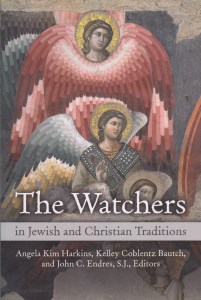
The ancient divine world was a slippery place. When you stop to think about it, this makes sense. The deities and demons of antiquity were invisible. Different opinions existed as to what they were. The idea of “the Bible” that contains infallible information didn’t exist. Apart from the books now accepted by Protestants, the “Apocrypha” and even more fun Pseudepigrapha contained many more traditions than the average reader might guess. I’ve been a student of that ancient divine world for decades now, and I learned quite a bit from The Watchers in Jewish and Christian Traditions, edited by Angela Kim Harkins, Kelley Coblentz Bautch, and John C. Endres, S.J. Appropriately divided into three parts (origins of fallen angels, Second Temple developments, and Jewish and Christian reception) these collected essays explore different dimensions of these mysterious beings.

Watchers are seldom mentioned in the Bible, in just a few verses of Daniel. In some traditions they are high angels—think the hymn that includes the word “ye Watchers and ye holy ones”—but mostly they are fallen angels. If you limit yourself to the Good Book you really get only four verses of Genesis 6 to explain them. Other ancient writers, some of whom likely influenced the New Testament, took up the subject. The book of 1 Enoch contains a section called The Book of the Watchers. Here the Watchers come down to earth with a couple of purposes—to share forbidden secrets with humanity, and to mate with human women. The offspring of these matings are giants, Nephilim, or demons. Perhaps all three. These events are retold in Jubilees and are taken up by early Christian writers especially.

Although this book isn’t a monograph with conclusions based on all the information it contains, it nevertheless gives a very good sense of the various traditions that developed around these Watchers. Even when reading through the Bible as a child, the Genesis 6 episode caught me off guard. The story isn’t highlighted in children’s Bibles, and the way it’s told in Hebrew leaves a lot of ambiguities in the adult reader’s mind. It’s almost as if this brief account is bing kept deliberately obscure. The Good Book drops this bomb then blithely goes on its way without mentioning it again. This episode reminds us just how little the Bible clarifies. It wasn’t written to be the “inerrant word of God,” and those heady days just after Eden were full of stories that it never bothered to tell. The Watchers, meanwhile, made their way into popular culture because the silence of Scripture allows readers to fill in the blanks with either angels or demons.
Taming Shakespeare

It hardly seemed credible, from what I heard in high school, that anyone would read Shakespeare if it weren’t required. I’m not completely naive, but I do wonder if we insist on introducing kids to the Bard before they’re ready for him. The real stumbling block is the unfamiliar words from the Elizabethan period. With enough regular reading they’re less of an obstacle to adults. Or should be. Or not to be. In any case, one of this year’s reading challenge books required that I read The Taming of the Shrew. I’d never read it before and kind of shied away from it because of the chauvinistic theme—Katherine has to be “tamed” by Petruchio so that her poor, sweet sister Bianca can be married. The overall theme is biblical—Rachel can’t be wed before Leah, so Laban declares. The play’s a comedy at the expense of women.

Those who know Shakespeare better than I question whether the playwright’s motives were as undeveloped as all that, but it is in keeping with the time. That’s not to excuse such patriarchal thinking, but we can’t rightfully blame people for thinking in the terms of their time. Yes, we now realize (except on Pennsylvania Avenue) that women and men deserve equal treatment. We are all human beings and should be treated as such, not as if one gender were somehow more important or better than another. In the Tudor Era, however, that idea had not yet caught on. The Taming of the Shrew contains clues as to why.

Perhaps the most reviled part of the play is Katherine’s closing speech as to why women should be subjected to men. Her reasoning is distinctly biblical. Indeed, the edition of the play I was reading took pains to point out the biblical allusions in the speech—primarily to letters of the New Testament. The fear, unaccountably real after all these centuries, is that we might go back to such thinking. The Bible, after all, doesn’t change much. The most conservative of society still read it in the King James, although the Bible Shakespeare’s contemporaries knew best was the Geneva translation. And, like the schoolchild reading Shakespeare, such conservatives need a little help with the language since words have changed their usages over time. They also may need some assistance realizing that not only words evolve, but so does our understanding of what it means to human. It’s not women who need to be tamed, Mr. Shakespeare. No, it’s quite the opposite.


Secularcist

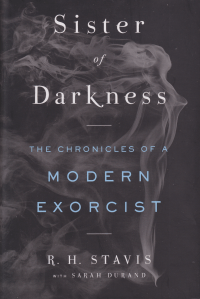
It should be fairly obvious that I’ve been researching demons lately. In the current political climate, it feels like a natural thing to do. Where there are demons, there are also exorcists. Many times those who write books on their experience in this realm will lapse into something along the lines of, “If there are demons, then Catholicism has to be true. All of it.” Or something like that. I have to admit that reading the better written accounts makes me start to think that way. R. H. Stavis’ Sister of Darkness: The Chronicles of a Modern Exorcist is another approach altogether. A secular exorcist, Rachel Stavis doesn’t use the time-worn rituals of movie fame. And her book offers an interesting rationale for her exorcisms—she sees entities.

I have often wondered if “growing up” isn’t largely teaching ourselves to discount what we perceive as children. I’m sure I’m not the only kid who was told there are no such things as monsters but didn’t fully internalize that “fact.” Besides, some things are worse than monsters. In any case, Stavis states that she sees entities and it’s clear from the book that she does indeed believe this. This isn’t for show. She describes various types of demons and how she learned to exorcize them. It’s a fascinating account. Her explanations won’t convince everyone, and her answers of where demons come from remain somewhat vague, but her clients swear by her methods. And she’s upfront about wanting her work to increase the good in the world by banishing evil.

I know many Christians who’d be ready to stone a pagan even for such a good deed as exorcizing a demon. Stavis doesn’t belittle any religion, however, and leans a bit toward Wicca herself. As I read I imagined what a reader convinced of the rectitude of one and only one religions would say. Only Jesus can drive out demons? (Judaism had, and still has exorcists, as do some sects of Islam.) Since a demon is a Christian monster, only a Christian can drive it out? One of the more interesting facts of the history of exorcism is that it was, in the Middle Ages, sometimes an interfaith exercise. The three major religions represented in Europe (the Abrahamic triad) recognized that any of the three could drive out demons. Each welcomed the help of the others. We’ve gone backwards since then. We haven’t again yet reached the stage where we realize that anyone doing good is on the side of good. Even demons, it seems, are conservative these days.


Of Gears and Gods

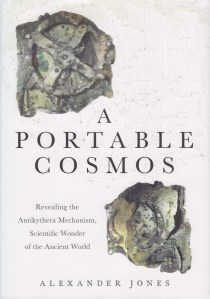
We develop pictures in our minds of the kinds of things that belong together in different eras. Dinosaurs, for example, don’t belong with our own species, no matter how much we may occasionally wish it were so. Horseless carriages don’t populate the seventeenth century and complex machines, we tend to think, didn’t really come about until medieval Europe (and then they were often used for torture). Our view of the world is, of course, one of comfort with the certainties of history. That’s why the Antikythera Mechanism is such a fascinating artifact. A very sophisticated device with gear trains and cranks and dials, it astonishes those who first encounter it in that it was made before the Common Era somewhere in the sway of ancient Greece. It is, in essence, a kind of computer. Long before Joseph met Mary.

Alexander Jones’ A Portable Cosmos: Revealing the Antikythera Mechanism, Scientific Wonder of the Ancient World is a pretty thorough introduction to the device, including the mechanics of how it works as well as how astronomy works. You see, the Antikythera Mechanism was designed to demonstrate the relative motion of the planets, including the sun and moon. For a device in the geocentric world of ancient Greece, that’s pretty remarkable. It predicted eclipses and showed the phases of the moon. It also makes me ponder the fact that most ancient people considered the planets deities. Long before Newton, then, some were recognizing that even the gods could be made to work according to a crank and gears.

Science and religion coexisted peacefully in those days. Although only one such device has been discovered, it’s virtually certain that more existed. Gods and gears both had a place in such a world. Along the centuries, however, the idea grew that if gears worked, we no longer required a deity. Occam’s razor has its uses, to be sure, but it can shave a little too closely from time to time, nicking delicate flesh. The idea that one side only can be right—and since we can see with our eyes that science works—tends to favor the mechanistic universe. There’s no disputing that science makes our lives easier and that its method is self-correcting and generally effective. The hands that cranked that ancient geared device, however, likely belonged to a believer in gods. Such belief didn’t prevent progress, but then some kind of Fundamentalists killed Socrates for his own form of heresy. Perhaps the true answer lies in balance. It may also be the most difficult of principles, scientific or otherwise, to achieve.


Russian Passions

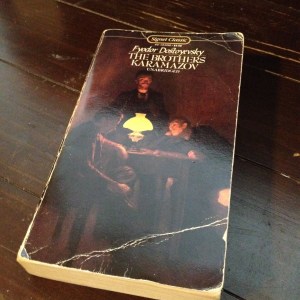
Dmitri didn’t do it; guilty anyway. That’s it in six words. I have to confess my tolerance for really long novels isn’t what it used to be. Blame it on being a child raised by television—every thirty minutes I’m ready for something new. I first read Fyodor Dostoyevsky’s classic The Brothers Karamazov when I was in seminary. Seminarians are an odd breed, and many of them relished the deep, ponderous novels with profound things to say about humankind. The Brothers Karamazov is such a novel. When you’re a student, reading’s part of the job description. As a writer Dostoyevsky gets away with things that’d lead to you failing composition class these days. Speeches that stretch on for chapters, characters taking 100 pages to die, and children talking like adults. It’s a heady mix.

I’ll have to admit that I remembered very little of the story from my last reading. I knew Fyodor Karamazov got killed. I couldn’t remember by whom. All the buzz in seminary was about the famous Grand Inquisitor scene. That’s the part where the Grand Inquisitor interrogates Christ and finds him wanting in the eyes of the church. So daring. So deep! And so early in the book. As I made my way through many heavy-lidded pages, with some dismay I realized that after I’d read the high point of the book I still had 457 pages to go, none of which I remembered from my reading three decades ago. I don’t mean to disparage the classic—I noted and underline several passages as I read. The blame is entirely on me. Still, the endless gloom of personal guilt that hangs on every character, even Alexei—whom Dostoyevsky states outright is his hero—become overbearing at times. This is a nation battened down by Christianity.

Often I’ve expressed the idea that we force children to read great novels before they’re ready to do so, ruining the classics for them for life. I first read Moby-Dick in seminary and I’ve read it several times since. It seems nobody’s really ready for Melville before their twenties. What is the age for Dostoyevsky? I think I comprehended more this time through. There were ideas here that, had I more time, I would likely have enjoyed lingering over. If life were so kind as to allow us the leisure to digest huge books I have no doubt that we would all be wiser, if not more satisfied. Fyodor Karamazov is dead. Alexei is cheered by the school boys. This long journey has itself been the goal.


Book Recommendations

Working in publishing has its perils. One from my personal experience is that you run into many books you just have to read. Not necessarily for work, but because you want to. This varies from publisher to publisher, of course. There weren’t too many Gorgias Press titles I felt compelled to read, although there were a few. Since then, however, my employers have transported me back to that kid in a candy store feeling time and again. Friends will sometimes send me book recommendations—I always appreciate that. Often the books are from the very publisher for whom I work. In some cases I was actually in the editorial board meeting where the book was approved. It makes me feel like my small contribution matters when someone recommends a book on which I voiced an opinion.

In these days when thoughtful approaches to life are under constant duress, it’s nice to be reminded that people pay attention to books. Relatively few buy them, of course, but books are the storehouse of our knowledge. We all turn to the internet to get information quickly. If you linger, however, you find that much of the web fall into the “opinion” column rather than that of factual reporting. Books from established publishers are vetted on at least one or two levels before a press makes a commitment to print them. Self-publishing has muddied those clear waters a bit, but the seal of approval of a reputable publisher is what makes a book. For example, if a publisher discovers a serious error in a work it will often be pulled from the market. We don’t like to spread errors.

The problem is volume. We long ago surpassed the point during which one individual could read every known book in her or his lifetime. In fact, those who were credited with doing so in the past are given a pass because many ancient texts lay undiscovered under the soil during their times. For all our foibles we are a prolific species when it comes to writing things down. For academics, publishing is often a requirement for tenure and promotion. There are a lot of books out there. This is one surplus, however, that isn’t as celebrated as it should be. I have had people suggest we have too many books in our home. Unlike too much food in the fridge, however, these pieces of intellectual nourishment don’t go bad. And if you point me to a book about which I’m already aware, I always appreciate the conversation anyway. Of some good things you can’t have too much.


Spiritual Walls

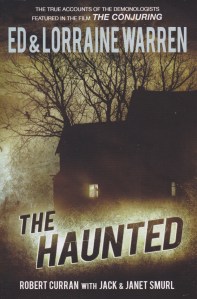
I often ponder what a difference walls make. Perhaps our ancient, cave-dwelling DNA just runs away with imaginations, but walls make us feel safe. Most of the time. As I was reading the ensemble-written The Haunted, by Robert Curran, Ed and Lorraine Warren, and Jack and Janet Smurl, the concept of walls showed its other face. In the mid-to late-1980s, the Smurls lived in a haunted house. The West Pittston duplex in Pennsylvania was also home to their four daughter’s and Jack’s parents. And the entity that harassed them there was deemed a demon. It’s easy to be skeptical about such accounts—no physical proof exists, after all, and proving anything is pretty near impossible anyway. Although I wasn’t aware of it at the time, apparently this become quite a media event. It’s easy to question the whole thing. Then I think about walls.

Although there are public haunted buildings, I often wonder about specific residences that foster claims of haunting. If spirits are, well, spiritual beings that can pass through walls, why would they stay in a house? In the case of the demon that everyone in the family saw, what does it mean to see physically a being that has no physical reality? And when the priest exorcised their house, why did they look to see where the incorporeal being might be hiding? It seems that the demon needed walls too.

Human beings are natural actors. We behave differently at home than we do in public. We act differently with friends than with strangers. Even closer to home, we act more natural with our families than we do even with friends. Beneath all these layers of pretending, most of us still act differently when we’re alone. That’s where walls come in. Although knowing someone’s in the next room might temper our behavior, the family unit within its walls is one intimate collective. What was happening within the walls of the Smurl household three decades ago? Any recounting will involve retelling. Interpretation. And we all know what a difference walls can make. The neighbors, according too this book, could hear demonic screams. Some even experienced invasions of their own during the height of the haunting. Books like this have a way of drawing you in, opening windows and doors through the walls into someone else’s life. What actually happens to them, however, is something we’ll only learn when walls begin to talk.


Original Sinner

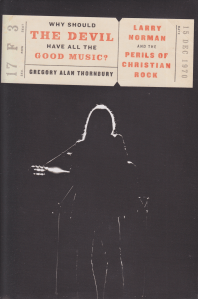
Musical preferences are a personal matter. In the case of the kind that loudly thunders from open car windows, often they should be more so. Still, music is a deeply moving phenomenon. When a musician is paired with a compelling personal story, it can be quite a gripping narrative. Gregory Alan Thornbury’s Why Should the Devil Have All the Good Music?: Larry Norman and the Perils of Christian Rock is one such account. Although Larry Norman was never popularly famous—many people today have never heard of him—he was a tremendously influential person. Like most true innovators he was, as Thornbury shows, a difficult person. He often had more enemies than friends, but there can be no doubt that he lived, at least in his own mind, by his convictions. And on his own terms.

I didn’t know until reading this brief biography that it was common for Larry Norman to wait around after concerts and talk with fans. When a friend invited me to see Larry in concert I was, as is generally the case, so wrapped up in my own issues that I hadn’t done much research. I was thrilled to see the artist that I, like Thornbury, had discovered during college. It was my friend’s idea to go backstage to talk to him. To this day those few minutes remain some of the most thrilling of my life. Norman was a name dropper, according to those who know, and I’ve met a few famous people over the years, including Jeff Bezos, but Larry was different. The breadth of his impact on rock in the 1970s and into the ’80s, was vast. Many secular artists count him among their most profound influences. And he had time to sit and chat with a seminarian from nowhere.

While my friend and I waited to see him, the guy in front of us wanted to play Larry a song. In an act of hubris I can’t fathom, he’d brought his own guitar to the concert. Larry kept saying “I don’t understand why you want to do this.” But surely he knew. Throughout his career he helped start many younger artists on their track, some to Christian stardom, others to more quiet lives. He had, however, something he couldn’t give away. Larry Norman was a true original. Despite his uneasy dalliance with fame, he was willing to sit and talk with a star-struck young man who would go on to become a lifelong admirer of an artist who remained true to himself, even if he was too Christian for some and too secular for others.


Pittsburgh Demons

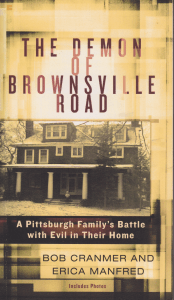
Far be it from me to question someone else’s demons, but every story has at least two sides. After reading Bob Cranmer and Erica Manfred’s The Demon of Brownsville Road: A Pittsburgh Family’s Battle wit Evil in Their Home, I have to wonder about the other side. I have no doubts that strange things happen behind closed doors. Indeed, the aspect of space, or location, has far more entanglements than our science allows. I don’t question the haunting described in the pages of this book—Bob Cranmer was once a prominent political figure in Pittsburgh and has the credibility that comes with elected office (or at least used to). What is open to question is the interpretation.

The Catholic tradition, which is involved here, does accept that a demon can infest a house. The way this account is laid out, however, is as a personal battle between Cranmer and the demon. The story is not unlike Amityville—family moves into house, discovers it’s haunted, and has to decide what to do about it. They call in a priest. From there the stories diverge. Cranmer’s family started experiencing various misfortunes. These were attributed to the demon. The story is strongly patriarchal; Bob Cranmer is a take-charge kind of guy and he alone can take on this fallen angel in the final instance. There are priests involved—including a prominent monsignor in Pittsburgh—but also clergy from other faith traditions and a paranormal investigation group from Penn State. Did the events happen as described? I don’t know. I wasn’t there.

A few things seem a little off here, though. A Catholic official stating that sex between married couples drives off demons? The discovery that the sins in this house stem from it being an illegal abortion clinic? That Native Americans murdered a family now buried on the property? The book doesn’t give documentation because it’s not that kind of book. Don’t get me wrong. I’m glad the Cranmer family finally found relief from the presence that was haunting their home. Even watching a movie like The Amityville Horror makes people uncomfortable because the idea is so scary—home is a sanctuary and when it’s invaded by an invisible (in this case sometimes visible) enemy it becomes a nightmare. The reader is left with the impression that it came down to a battle of wills and that of a former Republican politician was stronger than that of one of Satan’s minions. Some things, particularly in the climate these days, are difficult to believe.


Zombie Wars

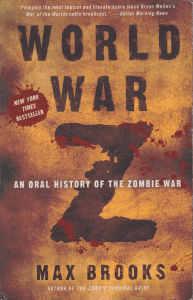
I suppose, rationally considered, most monsters can’t possibly exist. Maybe that’s the psychological relief required to enjoy the movies made about them. We can imagine the thrill, but we know we’re safe once we leave the theater. Culturally, monsters fight for supremacy. The early 2000s belonged to the vampire. They were everywhere. I once heard a literary agent advise wannabe authors to write on vampires since the publishing industry was showing no signs of slowing down on them. Then came the zombies. They’re still with us. World War Z came to my attention as a movie, but as one I never saw. I’ve watched many zombie films and none has lived up to the status of the spectacle that launched the genre, George Romero’s Night of the Living Dead. It remains a classic to this day. Still, I was curious and so I read Max Brooks’ World War Z: An Oral History of the Zombie War.

Let alone the chapter after chapter of tough-talking, cool-sounding reminiscers, I have trouble buying zombies. Yes, I get the scare factor, but maybe I’ve read too much science even to visualize myself into a fantasy world where a creature with no digestive system would be driven to eat. It just makes no sense. Human bodies can function with missing parts, of course, but without the integration of muscles, ligaments, digestion, and brain, it seems difficult to accept that they’d keep coming after you when they’ve been decaying for years. It’s all I can do to get out of bed most mornings, even as a healthy, living body. Analysts, I know, talk about zombies as metaphors, but with over 300 pages of stories in no way believable, I had to wonder about the limits of credulity. Maybe Carl Sagan was right after all.

I hope I’m not unsophisticated enough not to realize that the real point in Brooks’ novel is how the surviving humans treat each other. There is a moral to the story. We develop new and “better” weapons to kill one another. We’re smart enough to have world peace and prosperity, but wars are constantly erupting. We have a nation with many brilliant people and yet we elect a Trump. Self-destruction, it seems, is written into our genes. We consume one another. Even when the enemy is completely imaginary we find ways of believing. So I read World War Z, appreciating the irony. I still can’t get over, however, the trope that all you need is a human brain to want to destroy others.


Indie Bookstore Day

Although a year can seem like a long sentence, holidays are the punctuation marks that help us make sense of and organize it. Ordinary time, such as time at work, or commuting, can be endlessly tedious. Holidays, some personal, some local, others national or international, help us break up the time. Give us something to look forward to. My pity goes out to those religions that recognize no holidays and face time with a grim, Presbyterian determination to get to judgment day. The rest of us like to celebrate once in a while. So what’s today? It’s Independent Bookstore Day! Anyone who reads more than a post or two on this blog knows that I’m a lover of books. I first started taking solace in reading when things were difficult in my younger years, and reading has never let me down. In fact, I’ve often told myself that I could put up with just about any job as long as I could write.

It’s because of being in publishing that I learned about Independent Bookstore Day. Yes, it’s a promotional holiday, but it’s also a genuine celebration. As the outside world daily reminds us, those of us who read are a minority. The realistic author knows that the reading public is a small fraction of the whole. The number of people, percentage-wise, who spend their money on books is minuscule compared to those who fling their lucre elsewhere. But those of us who read appreciate the depth and reflection of each other. We may read different things, but we read. And that’s why I don’t mind going to an indie bookstore today and buying something.

One of the simple pleasures in life—call it a punctuation mark, a comma maybe—is being surrounded by unfamiliar books. Oh, I often worry what happens when we decide to move; we have lots of books at home. The last time the movers actually complained in our hearing that we had too many boxes of books. Talk about me at the bar afterwards, but don’t castigate my simple pleasures to my face, please. Books are the rare opportunity to commune with others on a deep level. How often have you put down a book and felt that you knew the author? Their soul was revealed in their writing and you had touched it. Just being in a bookstore is cause for celebration. If you have no plans for today, why not make your way to your local indie? Stand up and be counted as the literate resistance. It’s our silent Bastille Day, after all.


Movie v. Book

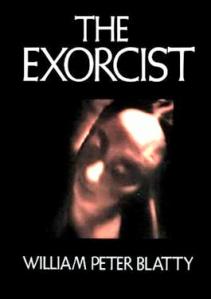
The debate is about as old as celluloid itself; which is better, the book or the movie? The response obviously depends on personal taste, and I suspect that many people base their answer on criteria that can’t exactly be quantified. Often it’s a matter of the specifics—which book? Which movie? In my own experience I’ve done it both ways, read the book first and watched the movie initially. I’ve even gone to movies not realizing there was a book and, of course, some movies aren’t based on books at all. You couldn’t grow up when I did, however, and not know that The Exorcist was a movie based on a book. I never saw the movie in a theater. There was a lot of buzz about it in my hometown, of course. I hadn’t been introduced to modern horror yet—still being a Fundamentalist at the time—and besides, it was rated “R” and I wasn’t.

I finally got around to reading the book. At this point in my life I’ve seen the movie several times, so I knew how the story was “supposed to go” beforehand. The fact that William Peter Blatty wrote the screenplay suggested it would be close to the novel, and indeed that’s the case. Novels, by their nature, tend to have more information about the storyline than is obvious from a film. The author can take time to explain things that don’t translate visually, including scenes where one character lectures another, like this blog. Since I’m writing a book about demons in movies, I paid careful attention to this. One of the themes from the novel that didn’t make it to the movie was witches.

That surprised me a bit. I had seen the movie first and it was plenty scary just as it was. I had to remind myself that my younger years coincided with the rebirth of the fear of witches. Literal ones. I’m not an astute enough sociologist to say whether the “witch hunts” of McCarthyism led to a hypostatized fear of real witches or not, but people were afraid in those days, as I recall. The Exorcist tapped into cultural fears in a way rare for a horror movie. It spoke to the fears of the era, but it didn’t mention witches. I couldn’t help but make the comparison with Rosemary’s Baby, which hit theaters shortly after The Exorcist. Rosemary believes the Satanists are witches. There’s a whole supernatural concoction of malevolent entities on the loose. Witches, ultimately in the novel, are simply one avenue the desperate Chris MacNeil explores to find out what’s wrong with Regan. The movie, wisely in my opinion, chose to leave it out. Demons are scary enough on their own, but of course even that’s debatable.


Watching Research

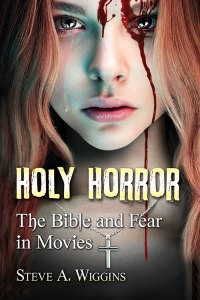
Now that Holy Horror’s been announced, I’m at work on my next book based on horror movies. Although some people might question the aesthetic of the horror genre, these films are sometimes remarkably intelligent and can indeed be good cinema. Having spent the better part of last weekend watching multiple flicks, however, I’ve come to realize that watching films for research is quite different than viewing them for fun. We all know the feeling of going to the theater to be exposed to the mythology of the present day; movies are the new mythology and are a common source of meaning and hope for individuals in a post-religion era. We go for the spectacle and the story. We leave, if the movie is good, with a renewed sense of purpose, or in a thoughtful state. That’s what mythology does.

In writing up my analyses of many films, I’ve noticed how little the detail is generally acknowledged in many synopses. They can make a flick seem banal. I’ve even had very intelligent people ask me why I think watching movies should be considered intellectual exercises. One reason for this, at least in my experience, is how often people rely on what they see in movies to inform them of important things. Historical events, for example. For the average person, an historical recreation on celluloid can provide recall better than a detail from some 400-page tome on the topic. Human beings are visually oriented by nature and evolution. It takes us years to learn how to read, and if we don’t keep up with the practice our ability to comprehend advanced writing atrophies. It’s easier to watch a film.

No doubt movie scripts are available for purchase. To get the message of a film, however, you need to watch. Immerse yourself in a kind of flickering light baptism. Research watching, however, involves multiple viewings. Taking notes. Watching again to make sure you got that detail correct. Some may doubt that this is an intellectual exercise at all. Still, one of the concerns that some scholars feel is that we’ve lost touch with what hoi polloi believe. People have turned to mythology from the beginning of time in the quest for meaning. Science tells us how the world works, but not why. For such questions we need our mythologies, ancient and modern. Since Nightmares with the Bible focuses on demons, I’ve had to construct a cinematic demonology that’s quite different from those of the Middle Ages. It requires, after all, a modern research method for a modern mythology. And movie watching. Lots of movie watching.


Candles vs Demons

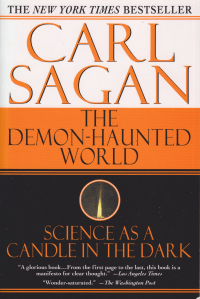
Among scientists who write Carl Sagan has always struck me as one of the more open minded. Dedicated to the scientific method, he nonetheless admits that there are some things scientists don’t know. The last time I was in Ithaca, therefore, I picked up a copy of his tour de force, The Demon-Haunted World: Science as a Candle in the Dark. I wasn’t really sure what to expect—I’ve been researching demons and I supposed they would be addressed in his book, since they feature in the title. Although that is indeed the case, the book is a collection of essays vindicating in various ways the practice and teaching of science. It is quite a scary book. It was also Sagan’s final book published in his lifetime.

Reading this just after Gabriele Amorth’s An Exorcist Explains Demons, noteworthy for its credulousness, The Demon-Haunted World was like whiplash into reality. Back into the realm of observable facts and testable hypotheses, it was indeed like a candle in the dark. Sagan admits that science can’t speak definitively on the supernatural—something that sets him apart from other science writers—but that doesn’t mean we shouldn’t apply scientific thinking anywhere it’s appropriate. And that includes the universe of politics. Published some two decades before the rise of Trump, the book is surprisingly prophetic when it points to the possibility of the rise of fascism in a nation that distrusts science. Indeed, the book shows Sagan clearly worried that an authoritarian, totalitarian government was on the rise. It’s almost preternatural in its accuracy.

The tome is large enough to dissuade a full summary within the word-limits I set for myself on these daily posts, but I can say that this book is necessary now more than ever. Sagan was a celebrity in his lifetime, a “rock star” scientist. Even so he worried about the deplorable state of science understanding among political leaders he met. For many years America has been mired in conservative causes that distrust science implicitly. Another strain that runs throughout this book is the need for education. Not only has America catered to anti-science groups, it has fallen behind much of the rest of the world in science education. Those who claim to make America great again can’t see that their very tactics have made our nation fall behind the rest of the world when it comes to education, across the board. Surely Sagan was right that a good grounding in scientific thinking is the equivalent of lighting a candle. As for the rest of the country it has been getting darker and darker, and our “leaders” have no idea even how to strike a match.


Private Browsing

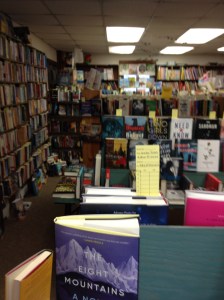
Montclair, New Jersey, is a diverting place. At least it is for me. I used to teach—strictly as an adjunct of course—at Montclair State University. And like many other diverting towns, Montclair has multiple bookstores. On the occasions my wife has to spend a Saturday working in Montclair I often accompany her. If the weather is decent I can walk to both bookstores and have a leisurely browse. Since anything leisurely is rare these days, I eagerly anticipate such trips. Typically I’ll sit in my wife’s work place counting off the minutes until I can leave to get to the Montclair Book Center just as it opens. Used bookstores are a bit like archaeology—you never know what you’ll find, and some of the treasures may be unique. I often have the store mostly to myself, for private browsing.

This time, however, I had another task to accomplish first, before I could go to the first bookstore. By the time I arrived, it had been open for over an hour and there were, surprisingly, plenty of people there. We’re accustomed to hearing that people no longer care for books. While it’s true they won’t bring in the numbers of, say, those wanting the latest video game, it’s also true that on a pleasant Saturday morning an independent bookstore can be a crowded place. It warmed my heart to see so many readers out. And they weren’t all old like me. Younger people talking about the merits of this or that author, browsing in the sections I frequently haunt. Although I found none of the books on my list, I still had that blessed feeling you have when you discover you’re not really alone.

The other store, Watchung Booksellers, is a couple miles to the north, at least by the walking route I use. A small indie, it typically has what modern-day people might be expected to be interested in. I arrived to find it crowded as well. I’ve been there a number of times in the past and usually there are two or three others browsing. This time it was actually a little difficult to get around the small space. Seeing children there made me especially glad. A crowded bookstore is a sign of hope. As we struggle against the forces of ignorance and hatred that seem to have gripped the privileged classes, Saturdays at bookstores doing brisk business are an indication that the future may correct such ill-informed sentiments. Bookstores are termometers of national health, and seeing them busy made my Saturday. It’s worth getting up early just to spend such a day in Montclair.