Evil Masters

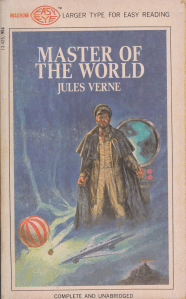
Whoever Modern Mrs. Darcy is, she keeps me honest. This is my third year of doing her reading challenge, and in an effort not to go out and buy all the books I want, I try to select from among my own pre-existing collection tomes I’ve never read. One of the categories this year was a classic you’ve been meaning to read. I spied on my shelf a copy of Jules Verne’s Master of the World that I bought before my high school years but had never actually consumed. I think I was a bit put off by 20,000 Leagues under the Sea. Don’t get me wrong—that’s a great book, but it’s dense and long and very detailed. And I was probably too young when I read it. Master of the World, like 20,000 Leagues, was part of Verne’s magnum opus Voyages extraordinaires, a set of fifty-some novels recounting, well, extraordinary voyages.

What makes Master of the World topical to this blog is the Devil. I’d better explain that. The story surrounds a somewhat naive detective trying to solve the mystery of a great, inaccessible, hollow mountain in North Carolina. While investigating this mountain (prior to the age of heavier-than-air flight) he learns of an automobile that is terrorizing the United States by driving 200 miles per hour. The credulous colonials seriously think that perhaps the Devil is driving this car. While that may be but passing fancy, it’s an image that replays itself throughout the book. Anyone who recklessly drives so fast—and the car can transform into a boat, submarine, and airplane as well—must be diabolical. The Devil’s amusements seem pretty tame, and the driver isn’t supernatural after all, once he’s discovered.

Robur the Conquerer is Master of the World, in his own opinion. At the climax he flies his marvelous machine into a hurricane, proclaiming his mastery like a good mad scientist. The machine, called The Terror, is destroyed and Robur is presumably killed in the storm. When our narrator returns home after several weeks missing (he was kidnapped by Robur and thus learned a bit more about the driver’s madness), his housekeeper has the last word. She declares that although Robur was not the Devil he was worthy of being so. The Devil has become a lot more nasty since Verne’s day, apparently. Why, our own government makes Robur the Conquerer look like an amateur demagogue. Either we’ve become terribly more accepting of everyday evil, or the dark lord has grown even worse over the century. I, for one know which one to believe.

Nightmares with

One of my greatest phobias is that people will think I’m arrogant. Those who know me realize that I’m highly self-critical, as befits a lapsed Fundamentalist. Self-image isn’t my strong suit. So it is with great trepidation that I celebrate a tiny bit at another book contract. Book number three (still not officially titled) now rests with McFarland Books. Shortly after I signed the contract for the book nameless here forevermore, Lexington and Fortress Academic announced a new series: Horror and Scripture. Maybe you know the feeling too. You’ve just done something you’re proud of and then you’re upstaged. My book deals with the Bible and horror films—what could be more Horror and Scripture than that?

The new Lexington/Fortress series has two editors. One of them is a friend of mine. (Monsters and horror don’t often mix with the Good Book, and those few of us interested in such things receive glances askew.) She asked me if I’d consider contributing to the series. This takes a lot of careful thought on my part. I have a sum total of about an hour a day to write, often less. I can read research-related material on the bus, if I can stay awake, but other than weekends—already quite busy catching up from not being home all week—I have very circumscribed writing time. Nevertheless, I do get up at 3:00 a.m. so that I can have that vital hour to write. Why not focus my efforts onto another book? Perhaps insanely, I submitted a proposal. This week a contract came.

In the short span of one year I’ve gone from being able to claim two books to four, almost like a parable. My untitled book is written and submitted. My contracted book is already half-drafted. After my McFarland book I’d already begun work on a sequel, you see. It lacked form and substance, but the proposal forced me to bring it together. Now, barring any unforeseen disaster, I should be able to submit this new book within a couple of years. By admitting this to you, dear readers, I fear I open myself to accusations of either arrogance, or at least greed. It is, actually, rather like this: my wife often tells me “we must cut the coat to fit the cloth.” I don’t have an academic position, but I’ve learned a lot about the publishing industry over the past decade. Research is a constant in my life, as it is with most credentialed people, no matter their jobs. So it is with fear and trembling that I announce my next book: Nightmares with the Bible. Watch this space for cryptic updates as the details unfold. And please don’t think less of me for it.


Exercising Exorcism

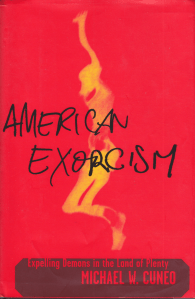
About the last people, ironically, that you’ll find researching demons are religion scholars. That’s perhaps a slight exaggeration, but there’s an embarrassment to the topic that serious academics just can’t shake. Nobody wants to be thought truly believing in that stuff. Michael W. Cuneo, who teaches sociology and anthropology at Fordham University, isn’t afraid to look. His American Exorcism: Expelling Demons in the Land of Plenty is a user-friendly, often witty look at what is an amazing phenomenon. Exorcism had pretty much gone extinct by the middle of the twentieth century. Then The Exorcist happened. Cuneo makes no bones about it—Hollywood wrote the script on what was to become a somewhat bustling business through the end of the millennium and beyond. And it wasn’t limited to Catholics. Protestants, mainly of Evangelical stripe, cottoned onto Deliverance ministry and joined the fray against the demonic.

American Exorcism reflects Cuneo’s personal account of attending exorcisms. As he puts it at the end, no fireworks occurred. In fact, he’s skeptical that demons exist and he strongly suspects exorcisms work in the same way that a placebo does. He’s well aware that the majority of people he met and talked with in the making of this book disagree on that point. Cuneo himself attended at least fifty exorcisms, both Catholic and Protestant, and shysters among the exorcists were rare. Most were sincere, devoted people who are helping others in distress for no fees, no glory, and no promotion. They see a need, believe they know the diabolical cause, and take the devil by the horns (metaphorically speaking).

There is a solid mistrust between academics with their studied skepticism and exorcists with their eyewitness accounts that defy belief. Cuneo suggests that even what they think they see may not really be happening in the real world. My question, coming down to the end of the fascinating book, revolves around what exactly this real world is. There can be no doubt that present day concepts of exorcism are largely based on “the movie.” Cuneo seems just a bit reluctant to say what I also declared in my forthcoming book—pop culture, the movies, dictate reality for many people. At least in the realm of religion. Sacred institutions have lost their authority to make ex cathedra pronouncements about what is real and what is not. Few bother to, or can, delve into the tedious work of reading academic studies on the subject. It’s far easier to let the unseen presences behind the camera take over. Isn’t that what possession is about, after all?


Morning Thoughts

One of the persistent dangers of being a morning person is the fact that places aren’t open early when you have to be out and about. Since my wife had to work yesterday morning, instead of spending a good part of the weekend alone, I drove her to her location. (The fact that there was a used bookstore nearby had absolutely nothing to do with it, of course.) The bookstore didn’t open until ten. My wife’s meeting started at 7:30. Much of what I have to accomplish on the weekend involves the internet and occupies me well before such late hours. Although I’m anything but trendy, Starbucks is open early and it offers wifi. And it’s ubiquitous. Kind of like churches used to be. As I pulled out of the parking lot where my wife’s meeting was being held, I found a sign saying Starbucks, this-a-way.

It was still early (for the secular) when I arrived. In fact, the banner outside read “Now Open.” This implied that previously it hadn’t been open, so this was virgin Starbucks territory. It was early enough that a table was actually available. I had a lot to get done, and by the time I was finished the place was jammed. In fact, when I first arrived, some of the other new patrons were joking that they would move in now that Starbucks had come to town. Groups sat in small knots for an hour at a time. People borrowed the extra chairs at my table. Countless more came in and walked out with paper mugs steaming in the chill air. I was here to wait opening time for a used bookstore. I was pretty sure I was the only one with that motive.

There are more of us out there, however. While looking for a birthday idea for a writer friend of mine I ran across a writing box online. There were several reviews. Many people lamenting on Amazon the loss of the culture of the bookstore and the hand-written manuscript. They’re the ones who review used bookstores and weep the closing of indies with authentic tears. We’re the displaced. Our society is extinct. I love old books. Touching them takes me into the past. Yes, their words are public domain and can be found online, for free. What’s missing is the thingness of it all. I’m not a materialist, but I’m even less of an electronist. My spellcheck won’t even let me keep that word. Say what you will about the old way of doing things, paper was never so uppity as to refuse the words I intentionally placed upon it. At any time of day or night.


Jewish Annotated

A project with which I have some small acquaintance is the second edition of the Jewish Annotated New Testament (some of you may be noticing an annotated theme lately). The idea behind it is deceptively simple: most of the writers of the New Testament were Jews. What do modern day Jewish scholars see in the text? This annotated Bible gets adopted into both Christian and Jewish courses, and many seminaries have an interest in learning what the writers might have been thinking as they were composing “the other testament.” So far, so good. I was looking at the Amazon page for the book the other day, specifically for the Kindle edition. As usual, you can’t please everyone, and some of the negative comments had to do with functionality. Then one said simply, “There is no such thing as a Jewish New Testament.”

I’m not so naive that I don’t know what trolls are, but I got to thinking about this comment. It didn’t come from a “certified buyer,” so it could be an opinion piece. The mononymed reviewer might be Jewish, Christian, or neither. From a Jewish perspective s/he might mean: Jews don’t accept the New Testament as scripture, so what else is there to talk about? From a Christian perspective the point might be: this is a Christian document so it doesn’t matter what Jews think about it. Either way there’s a call for some exegesis here. Both perspectives can be argued against. Jews have a very real interest in what Christians say about them. And, like it or not, the first Christians, and even Jesus himself, fell squarely within Judaism.

Christianity has become a religion of privilege. That happens when you’re the biggest religious body in the world. Christians get a bit testy when Islam begins encroaching on its numbers. There’s still some hard feelings about the Muslim expansion of the seventh and eighth centuries, too. Being an imperial religion will do that to you. Thoughtful Christ-followers, however, have begun to look back and wonder how this whole thing got started in the first place. Without Jews there would’ve been no Christians. Nobody’s claiming the New Testament is Jewish scripture. Neither side wants that. It’s simply a recognition that we might have something to learn from each other. And that’s not a bad idea. In fact, if we were willing to listen a bit more than talk, who knows how much true understanding might come to pass? The Jewish Annotated New Testament is one possible place to start.


Russian Along

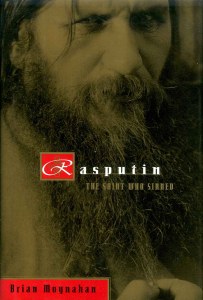
Living at Nashotah House—if you haven’t been, trust me—makes one curious about Rasputin. While on the faculty there, his name was used as a common slur. When Brian Moynahan’s Rasputin: The Saint Who Sinned came out in 1997 my wife and I bought it and read it together. Two decades on the details had become fuzzy and, having read about Aimee Semple McPherson and her faith healing reminded me of the famous Russian scallawag. For all his personal faults, Rasputin did seem to have genuine healing abilities. He was more shaman than orthodox, to be sure, and Siberia was the home of shamanism as well as Rasputin. For those who don’t know the story, in pre-Revolution Russia Grigory Rasputin rose from a Siberian peasant family to the most trusted advisor to the Empress of Russia, Alexandra Romanov. Her weak-willed husband, Nicholas, also gave credence to the mystic, despite the latter’s well known drunkenness and womanizing.

The fascinating aspect of Moynahan’s treatment is that it brings out the saintly side of this figure who’s grown such a notorious reputation. That’s not to whitewash his extreme lifestyle, but it is to acknowledge that he was far more complex than many critics make him out to be. He seems to have been sincere in his faith, and perhaps a little mentally imbalanced. He was kind to the poor, and charitable. He wasn’t a bigot, a sin quite common in his day. He was a working class mystic who took advantage of being inebriated with power. His influence over Alexandra was so strong that he could appoint Prime Ministers even in the midst of a world war. This is a fascinating personality.

Reading the book at this point in history, however, proved strangely unsettling. Many of us wonder how a rational, fairly educated and prosperous nation could tolerate the buffoons who inhabit Washington, DC. Daily we see insanity—with no exaggeration—on the level of the throes Tsarist Russia, or even of Rome under Caligula. Instead of taking steps to right the course, the Russian, excuse me, I mean Republican, Party does any and everything in its power to keep the illusion of normalcy alive. Even while foreign ministers of his own party tell the European powers to ignore their own president, American Rasputins just can’t survive without their daily power fix. The sad thing about that last sentence is that after writing it I felt as if I were somehow being unfair to Rasputin. And I lived at Nashotah House long enough to know what I’m talking about.


Down the Road

First of all, thank you to my regular readers. I’ve been making daily posts on this blog since July 2009—nearly nine years of illustrated commentary. It seems, however, that I’ve reached my limit. My storage limit, that is, on Word Press. As a result I’m going to be upgrading my account. Now, I’m enough of a Luddite to be uncertain of how this might impact any auto-updates (I flatter myself to think there are some) or links to this blog. I’m planning on continuing Sects and Violence in the Ancient World, but it will be but one page on a website that will offer the opportunity for me to go into more detail about my books. I don’t know how it will look yet, but it shouldn’t be disappearing from cyberspace.

Timing, as they say, is everything. It’s never been my strong suit, however. My current book still has no final title, so it’s a little difficult to promote it properly. Oh, it’s finished, and in the hands of the publishers, and although I can give it its own page, I can’t really title it yet. Perhaps in the height of hubris, the new layout will have pages for my previous two books, A Reassessment of Asherah and Weathering the Psalms. These were both academic titles with very limited sales, but they represent a significant portion of my life and I’d rather not have them completely forgotten. My latest book is for a more popular readership, but I don’t have the platform to interest agents (not for lack of trying), so I’m incorporating it into a website that will allow for its self-serving promotion. So embarrassing. You can imagine how red my face must be.

By the way, there’s another book about half-written. (Actually, there are several, but this one looks like it might actually appear.) A new series has been announced—I’ll write about it once I learn if my proposal has been accepted—that follows my own aesthetic closely. In conversation with the series editors, I’ve put together a proposed book based on my current work. If it happens, a new page will pop up on this future website I’m envisioning. Since I’m no Luddite, I can see possibilities for these pages. The blog will continue with its daily babbling. I’ve been doing this so long I wouldn’t know any other way to start my day. Combined with the hubris of those who spend too much time in supernatural headspace, this could be interesting. If you’re search brings you to what looks like the wrong page, please persist. Sects and Violence will be only a click away.


Always Have with You

The place wasn’t meant for a family of six. Properly speaking, it was a one-bedroom house, or hovel. The attic, from which we could see the sky through the roof, was divided into two rooms, with no doors. You had to pull down the stairs in order to climb up there and that trapdoor had to be kept closed in the daytime. The house was heated by a single, oversized gas stove that sat in the middle of the living room—no ducts, vents, or radiators here. The bathroom had only a sink and a toilet. No tub. No shower. The only window that opened was the kitchen window, and before we moved in my mother insisted that my step-father pull out the nails that held the vinyl blinds permanently closed over the windows that would never open. The only reason we weren’t called “white trash” is that we lived above the Mason-Dixon line.

Reading Nancy Isenberg’s White Trash: The 400-Year Untold History of Class in America was, therefore, a little bit uncomfortable. First of all, bullies who care only for the wealthy are nothing new in American politics. Second of all, it reminded me of how, when I was found without a job, no college or university wanted to hire a guy with no connections, despite the Ph.D. That’s business as usual in these United States. What I have realized is that in this nation of self-made individuals, those allowed to make it often start from a class higher than my own. I was a first generation college student, and once my step-father gave in to the pressure to put a proper bathtub in his house, I’d come home to find carp swimming in it. White trash and ivory towers clash, don’t you know.

The saddest part of this book is that nothing has changed. Four centuries on and we still treat the poor with contempt. We love rags to riches stories because they’re so rare. The vast majority of the poor have a very hard existence. Even though, according to government statistics, we were considered a poverty-level family, we had it better than many. True, there were too many cars in the driveway, all of them used—very used, and the house was bulldozed as unfit for habitation immediately after we moved out, but many have it far worse. This book opens some old wounds, but it should be required reading for all politicians. Not that it would make much of a difference, though. The suffering of the poor is just far too easy to ignore as long as there is money to be made off of anyone less fortunate than yourself. That’s the American way. It always has been.


After Darkness

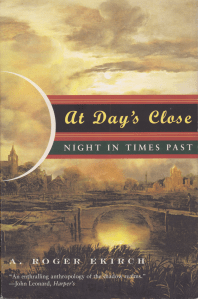
Some historians, I suspect, despair of the volumes already written on all periods, ancient and modern. History, however, can cover a variety of segments of time. A. Roger Ekirch, for example, thought to write a fascinating history of darkness. At Day’s Close: Night in Times Past is a thoughtful exploration of what night has historically meant. For those of us born in the era of constant light, the realities of what it was like after dark in the past are almost unimaginable. I’m sure Ekirch didn’t intend it to be so somber, but the reality of frequent crime in unlit regions made reading much of this book a sober experience. Confident of their ability to get away with it, many up until modern times took advantage of the night to commit all kinds of crimes. Makes you kind of want to check the door locks once again before turning in.

Much, but increasingly less, of our lives is spent in sleep. The advent of artificial light has led to changes in lifestyle that, according to biology, aren’t terribly healthy. The natural rhythms of sleep and wakefulness may be challenged by jobs or enticements to stay up late and surf the web or any number of other factors. Now that light has become so very portable in the form of smart phones and tablets, even less of darkness remains. Although it’s a bit repetitive and not laid out chronologically, At Day’s Close contains many provocative observations about the dark. There’s even a bit about monsters.

Night has always been symbolic. Death and fear were associated with night early on, and we still call the era of scientific progress the Enlightenment. Churchmen (for it was an age of such) tended to condemn night as evil, the Devil’s time. Not all agreed, for some considered the dark a creature of God and complained of the hubris of setting up lights at night. The religious symbolism of night is very rich and very ancient. Those of us used to artificial light have difficulty imagining what it took to navigate after dark in ages past. More than an annoyance, night could be a truly dangerous time. Dreams, once mainly the products of the night, also had religious significance before being rationally explained. The industry of banishing night also has, in some respects, the effect of banishing dreams. We should stop and think before we put night to flight. Half of our time is spent in darkness, and all of our time is highly symbolic.


On the Nature of Publishers

An occupational hazard of the editor is paying obsessive attention to publishers. That stands to reason. Many academics are less concerned than some publishers think they are about such matters as who publishes their book. I suspect that many have, for whatever reason, found no welcome home among elite publishers. This happens often enough to make many scholars less worried about reputation than the practical matter of getting a publisher interested at all. There are a lot of original thoughts out there, and some of them occur to a person and just won’t let her or him go. An example: what terms are used for weather in the Psalms and why? Before you know it you’ve awaken before the sun for five years and written 75,000 words on the topic and you want to get it published without having to pay someone to do it. That kind of thing. I’ve been pleasantly surprised by the number of scholars who understand this kind of reasoning.

Also, it’s a matter of scale. I work for a premier publisher in the academic world. It may surprise many people to find out just how often when someone asks what I do (not very often, for the record) and then follows it up who I do it for, the interrogator has never heard of my employer. Academic presses, even important ones, are really only known among academics. Keep scale in mind. If you’ve ever walked passed Norton’s offices in Manhattan, and then those in which I spend my days, you know what I mean. Academia is small scale. For the average person reading a book is something they generally choose not to do. Of those who do read, very few read academic books. Those who read academic books tend to stick to their own discipline, or related ones. You get the picture—smaller returns at each step.

So, having written a book about horror movies, where do I take it? This isn’t one of those footnoted, look-how-erudite-I-am kind of books. It’s more of a I-noticed-something type. The question then becomes, who publishes such kinds of thing? I do worry about academic reputation—who doesn’t?—but this is a book I want the correct readers to find. That’s why McFarland suggested itself. People reading on pop culture, know to keep an eye on their offerings. Hopefully enough people will find it to have justified the effort. It won’t impress those enamored of collecting (academic) names. It isn’t the kind of book my employer would publish. Nor would I want them to. Call it an occupational hazard. Like any subject, knowing too much about publishing can take away from the fun.


Of Our Being

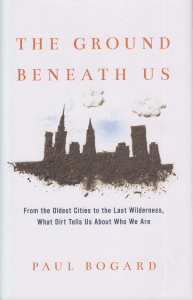
It happens every year. What with my commute schedule and personal disposition, I read a lot. This blog and Goodreads are my accounting system for keeping track of the thoughts that arise during all of this. Every year I get stopped by my first really important book that I’ve read since December’s roundup of last year’s titles. Paul Bogard’s The Ground beneath Us is this year’s first such book. Subtitled From the Oldest Cities to the Last Wilderness, What Dirt Tells Us about Who We Are, this tour of several fascinating locations is a wake-up call. Divided into three sections—Paved and Hallowed, Farmed and Wild, Hell and Sacred—Bogard’s book offers a kind of travelogue with the additional reminder that how we’re treating the land is the most terrifying example of what lack of foresight imaginable (why, Prometheus?) looks like. In a world with a rapidly growing population, we’re paving and building at unprecedented rates. World harvests, experts say, will last only another sixty years. Then we starve.

A dilemma I’ve struggle with here before is the fact that nobody owns this world. Nobody but those driven by money. There’s little that can stop them. This is exemplified by his chapter on fracking in my native Appalachia. Companies protected by loopholes—nooses, actually—devised by Dick Cheney can take over a town and destroy its environment. And this was even before Trump. And this is only but one example. Those who look soberly at where we’re going—and the melting permafrost in the northern hemisphere is about to make the globe nearly uninhabitable for our species—are ignored because they stand in the way of profits. Everybody loses. As a species we have neither the will nor the power to prevent it. Epimetheus reigns.

Not just doom and gloom, The Ground beneath Us is a thoughtful reflection on the human spirit. The titles of the subsections reveal that sacred ground—one of my recurring themes on this blog—is very real. Bogard isn’t a religionist, so you can’t accuse him of special pleading. His moving accounts of visiting sites hallowed by any number of factors, whether violence or simple belonging, reveal what home really means. What a dangerous, maybe even sinful, concept ownership can be. With chapters covering areas as diverse as Mexico City sinking under its own weight, to Ames, Iowa where what we’re doing to the soil is studied, to parts of Alaska accessible only by air, Heaven and Hell are daily and plainly played out before us. This is a very important book. We can only hope enough people will read it before it’s too late.


Hey Jude

Reading Jude the Obscure was, at times, like reading my own biography. Authors strive for that effect, to be sure, but Thomas Hardy hits close to home on this one. I don’t mean in the aspect of marrying the wrong woman and losing his true love, but rather in the sense of what Jude was meant to and couldn’t be. For any readers behind on their Hardy, Jude Fawley was an orphan who grew up with scholarly abilities but no connections to university folk. Teaching himself Greek and buying what books he can afford, he eventually moves to Christminster (Hardy’s version of Oxford) in order to begin his studies at the university there. His application is summarily rejected because he is a working-class nobody who would be happier not overreaching himself. He then decides to try to become a parson only to find that path blocked to him as well.

Okay, so that’s a bit brief for a 400-page novel, but you get the gist of it. Hardy, according to the introduction, added the university theme later since the novel’s main focus is on the hypocrisy of the church regarding marriage. Both Jude and his true love (and cousin) Sue end up marrying other people who make them miserable. They each separate and then live together and raise children until tragedy causes Sue to have a religious conversion and return to her first husband. Jude dies in obscurity, as the title warns. Hardy was famous for his anti-church sentiments and Jude the Obscure was one of his most criticized works. The university theme, however, was the part I just couldn’t let go.

Being from the working class you may not have any idea how higher education functions. Even with raw talent and ambition, there are so few places available that you can easily find yourself in the rejected pile. Jude fatefully moves back to Christminster, hoping on some deep level that he’ll be accepted. That never happens although his fellow stone-cutters know that he is just as learned as the professors who regularly parade through town. The author didn’t intend to write cheerful stories. The friend who first suggested I read Hardy’s work knew about that tendency. The world is a place of comfort for some and struggle for others. Like Jude, those on the outside just can’t see what’s wrong with their own earnest application to be counted among the educated. Like any country club, however, the real point of it all is to learn how to game the system. Like taking a sad song and making it, well, better.


Creating Science

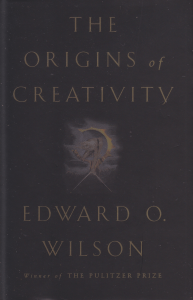
Religion and science. Cats and dogs. We’re used to hearing these two just can’t get along. High profile scientists sometimes denounce religion tout court, and some religionists doubt science’s claims implicitly. Human beings, truth be told, are both rational and spiritual. Often not both at the same time. Edward O. Wilson is a biologist who believes, as expressed in The Origins of Creativity, that the humanities and science are both essential and that the hope of humanity is that both will be embraced. It’s a fine vision—guided by science but aware of the values brought by art, we would live in a world utilizing the best our species has to offer. So, why don’t we?

Apart from the obvious fact that humans are also irrational and non-religious—what else could justify wars?—Wilson has a rather odd answer. The belief in creation myths, he avers, is what leads to much unrest in the world. Not religion per se, but creation myths. Muslims, Christians, and Jews share basically the same creation myth. Their divergences come in other forms. Many don’t much care about the creation myth of their tradition so much as about issues that are based on outdated understandings of humanity. Wilson doesn’t condemn religion per se, which is refreshing, but he does seem to circumscribe it far within its natural boundaries. I suspect his real target is creationism.

In this very insightful little book, another curiosity lurks. Wilson, although he supports the humanities and advocates for them, stresses that they are problematic by being limited to humans. I think I get this, partly. There is much to the world beyond human ability to perceive. Our senses of smell and taste are especially limited. We can’t see as well as an eagle or hear as well as a bat. Incorporating their experiences into the humanities would be way cool, but we would never experience them ourselves. This is terribly speciesist of me to say, I know, but humanities are all about what it means to be, well, human. We are limited. Rationality is limited. We don’t have all the facts, and if history is anything to go by, we never will. Accepting limitations is very human. So is attempting to exceed them. The humanities at their best embrace both. Wilson acknowledges that the study of religion is important, and that our universities let us down by not giving the humanities their due. Science can take us only so far. Creativity is about the most godlike trait we possess.


Title-less

I’ve been offering a few teasers about my forthcoming book. One of the reasons for not making an announcement is that the title hasn’t been settled yet. It’s pretty hard to promote a book without one. I’ve written enough about it that readers can tell it’s about horror movies. The publisher is McFarland, an independent academic publisher that specializes in pop culture and has an impressive list concerning monsters and other frightening things. Once we get a title down, I’ll say more. In the meantime, I can take the opportunity to say a bit more about the publishing industry. Not that people generally ask me about it, but I suspect many authors secretly want to know some insider tips. If not, I suspect there’s one or two other blogs to read today.

I’ll admit up front that I tried unsuccessfully to interest agents in this book. At least four wrote back to tell me it was a great idea, but a writer without a platform is like, well, an editor. I help other people get their ideas published—always a bridesmaid, as they say—physician heal thyself. When I realized I was wasting months trying to find a professional to promote my book, I decided to revert to the tried and true. When you want to know who to approach about your book, look at the spines of the books you read to write yours. Who are the publishers who produce books in this area? Sometimes the interests of a publishing house will change with the editors, so the more recent your comps, the better.

Horror sells. My project wasn’t really mercenary in that way, but rather it was the result of years of watching horror, usually by myself, and finding some commonality in the films. What exactly that commonality is will, I hope, become clear once I can freely write about my book topic. Others, you see, could swoop in and take my thesis—a perpetual fear of someone who barely has time to scribble out a blog post a day. Finding the time to write books in the off-work and off-commute hours is a real juggling act. In my case, perhaps a jugular act. Without an agent, I turned to McFarland. Many of their books helped me form the ideas for my own. Besides, they have a Scottish connection, and that means something to this old Edinburgh alum. If you want to get published, it helps to know the players. That may become even a bit easier once I’ve got a title.


Winter Blossoms

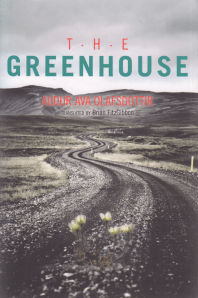
Audur Ava Olafsdottir is a remarkable novelist. Iceland, of course, is held to be the most literate country in the world. I began reading Icelandic fiction of a considerably earlier period while living in Scotland. There was still a trace of Scandinavian heritage from Viking days discernible there, particularly in the Orkney Islands. I started taking on reading challenges three years ago. Given that I spend many hours a week sitting on a bus, it seemed natural enough to put my time toward a specific goal. The Modern Mrs. Darcy’s reading challenge encourages me to move beyond the bounds of my usual fare. One of the categories for this year’s challenge is a translated book. I enjoyed Olafsdottir’s Butterflies in November so much last year that I selected The Greenhouse for this year’s translated offering.

The story of two young people who accidentally have a child together, the tale makes effective use of religious imagery in reflective ways. The young man takes a job in a monastery rose garden in a remote country. When his one-night stand visits him to have him watch his daughter while she finishes her thesis, everyone notices how miraculous the child is. She even bears a striking resemblance to baby Jesus in the painting in the chapel. The narrative is gentle and reflective. The monks are drawn out of their scriptorium by the beauty of the roses and the child that is so intimately tied up with them. There’s nothing preachy, or even overtly religious here. It’s a simple reflection that religion pervades life, even in secular Europe.

One of the saddest realities of the present is that religion has made itself so odious to so many. Human beings are naturally inclined toward religious thoughts and behaviors. When any form of orthodoxy enters the picture, though, it begins to fall apart. The young couple, unmarried—not even girlfriend and boyfriend really—transform the town they’re in, making it a more habitable and humane place. They’re not condemned for “living in sin.” Even a priest admits things can get pretty complicated where relationships are concerned. A coming of age novel, The Greenhouse has Icelandic magic that comes through even in translation. Olafsdottir is a novelist who doesn’t feel the need to apologize for describing what is plainly obvious to those who pay attention: religion is all around us, and it need not be something to condemn. In fact, if cultivated without the acidic soil of orthodoxy it might even make the world a better place.