Contacting Faith

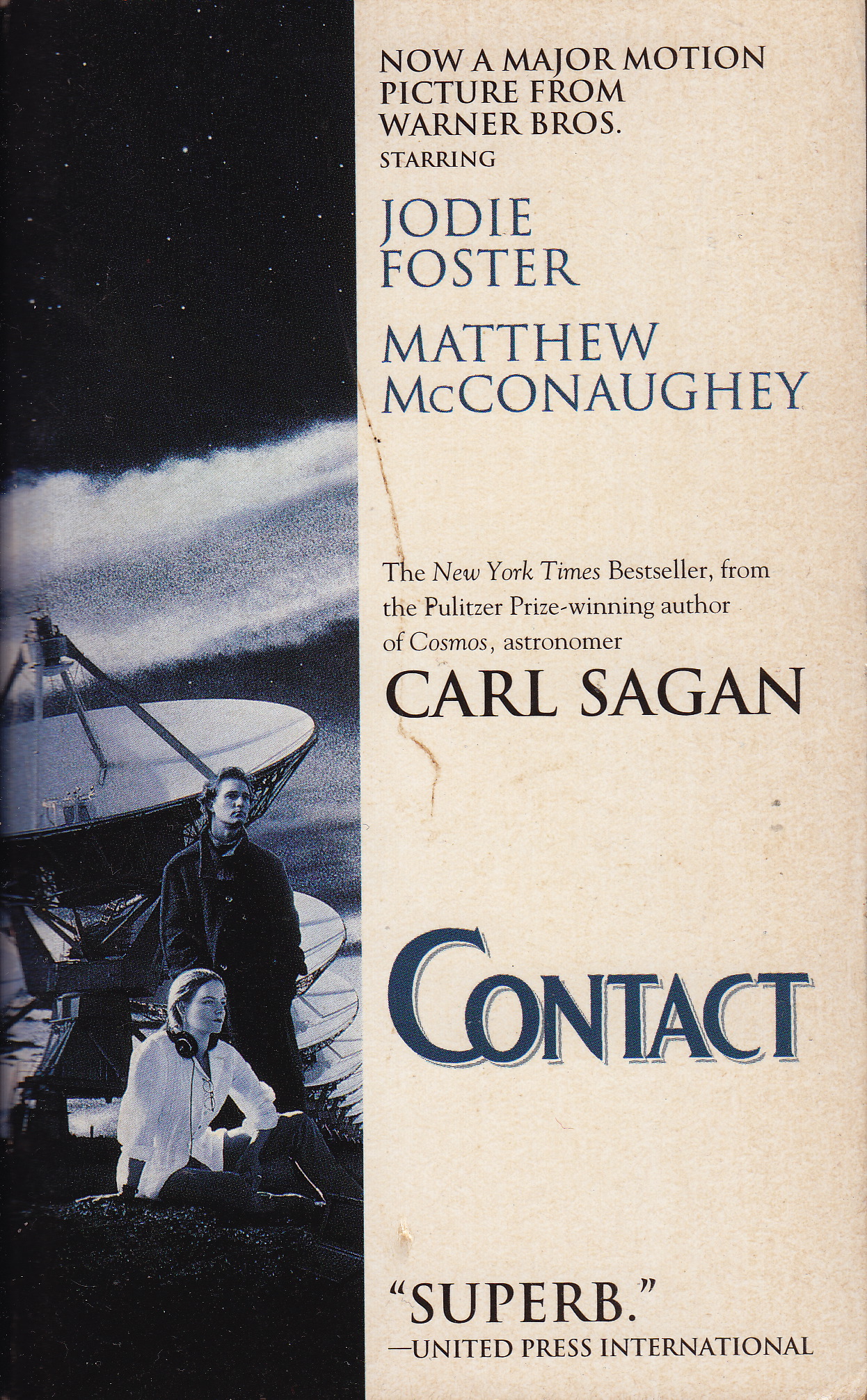
Contact_0001Sometime after the movie Contact came out, I saw it while on a flight to somewhere here or there. As with most movies on airplanes, it didn’t receive my full attention and I seem to recall not hearing a lot of the sound. Having always been intrigued by the possibility of aliens, however, I told myself I’d watch it again. Several months ago I did just that, but as Carl Sagan hoped, much of the story had become somewhat dated. I finally finished reading the novel, and this was a case of the book being better than the movie (as is frequently the case). A number of things surprised me about the story, the primary one being just how prominent religion is in the plot. In the movie some crazy preacher sabotages the first machine just as it’s nearing completion, and even though Ellie Arroway is long connected to Palmer Joss, their relationship doesn’t seem to dominate the script the way it does the book.

Almost immediately upon reading about adult Ellie, it became clear that religion was a major interest that Carl Sagan had. While the chiliasts receive many scathing comments throughout the novel, thoughtful Christian thinkers, such as Palmer, find a way of being taken seriously by Ellie, despite her own personal unbelief. Unable to understand how someone could not accept the evidence before their eyes, she wants to belittle religion but can’t when serious thinkers like Palmer remind her that they have a sophisticated worldview as well. The story represents a long struggle between alternative outlooks. While as a novel it doesn’t always flow, it pulls the reader along, partly based on the intriguing character of Sagan himself.

Carl Sagan believed in life on other planets. He was less sanguine about the possibility of either ancient astronauts or current-day visitors from space, but he kept an open mind. While he was the respected author of numerous scientific papers, other astronomers didn’t always know what to make of such a popularizer. Of course I never knew him, but I have to wonder if his true beliefs didn’t appear in his fiction rather than in his factual writing. At times I found the novel slow and plodding, and as the machine gives ambiguous results, I wondered where the rest of the story could go. Sagan profoundly brings the end back to belief. Without evidence, Ellie finds herself in the place of the religious who believe on the basis of experience and faith alone. And she finds her best friend is a clergyman. Contact, with its God-like aliens, is really a story of finding oneself a place in an infinite universe. To do that well, Sagan seems to have believed, requires both science and religion.


Magic Faith

MakingWe all like to believe we don’t believe in magic. In this day of sophisticated materialism, the idea that unseen forces might work upon the world seems terribly naive and not a little embarrassing. Randall Styers’s Making Magic: Religion, Magic, and Science in the Modern World has been on my reading list for a few years now. Not so much a history of magical thought, Styers offers a history of thought about thought on magic. There are several takeaways from a study like this. One is that magic and science share common ancestors. In fact, some theorists trace the origins of science to magical thought. The height of alchemy was also the period when experimental analysis of the natural world was blossoming. There was a mysterious sense to what we now think of as impassive particles whirling around for no particular reason. Making Magic makes clear that we can’t divorce developed thinking from magical outlooks. In many ways it is difficult to distinguish religion from magic.

Not that Styers advocates magical thought. He does, however, invite us to think about it. Another takeaway from this study is that magic, when described by religious writers, is a foil. Magic is used to show how the unenlightened think about things. Those of us here in the true light would never think such backward thoughts. Indeed, magic, as Styers makes clear, often served as a kind of social control. Lower classes think magic works wonders. The upper classes know that power lies in exploitation. Magic, in other words, can’t be divorced from politics. Those in the know would only encourage magical belief to continue. Invisible forces indeed.

Magic as a regulatory force is indeed the thesis with which Styers is working. The difference between prayer and magic is somewhat effaced when closely examined. Religious belief is seen as benefiting society while magic is for selfish benefits. I do wonder, however, where the modern magical religions, such as some branches of Wicca, would fit into this scheme. They also seek the good of society. Magic need not be selfish. Making Magic is concerned with the analysis of magic by scholars who’ve shown a surprising interest in the topic. It doesn’t really address those of today who, after finding the atomic world strangely vacuous, have turned to magic to re-enchant a world grown dull and dry. Whatever one may say about magic, it still exists, and its believers are among us. Our world with its solemn, feelingless answers could, at times, use a little such conjuring.


Permian Record

GorgonIt looked like an arm bone to me.  Then again, I have no formal training in either anatomy or geology.  The strata of Pennsylvania shale was littered with shell fossils from before the dinosaur era.  Had I found a rare early animal?  You see, I love fossils.  In fact, I was so disappointed the first time I walked into a Fossil store that I’ve never had the heart to go back.  Something about finding the remains of creatures millions of years old is inherently fascinating, and I was fortunate enough to grow up by a river that had plenty of fossils for the taking (a great pass-time for children of humble means).  When I saw Peter D. Ward’s Gorgon at a local book sale, I had to get it.  In addition to my love of fossils, I also have a special interest in Medusa, and the title grabbed two aspects of my attention at once.
 
The gorgon of the title is explained by the subtitle: The Monsters That Ruled the Planet Before Dinosaurs and How They Died in the Greatest Catastrophe in Earth’s History.  As Ward explains, many in the media express surprise that there was anything before the dinosaurs.  Perhaps I grew up with too much Genesis on the mind, but I knew about the Permian Extinction—the most deadly episode in Earth’s biological history.  Over 90 percent of life forms died out, including some of  the cooler species of mammal-like reptiles like the dimetrodon.  I have to confess, however, that I don’t recall ever hearing about gorgons before.  They are a South African species.  Well, they were, long before apartheid and other ridiculous human foibles.  Indeed, one of the charms of Ward’s account is that he doesn’t separate the human element from the paleontological.  His visits to South Africa often demonstrated how the current dominant species of the planet participates in its own extinction.  Valuing personal gain over social justice cannot have long-term payoffs.
 
This is a compelling story of people committed to finding answers in a barren land.  To an inveterate fossil-hunter like me, it was a dreamy sort of read.  I had my fossil “arm bone” assessed by a geologist.  It was actually a trilobite trail.  A trace fossil.  Sometimes things aren’t what they seem.  The answer of why of the Permian Extinction transpired turned out to be the most distressing aspect of the tale.  Climate change, Ward demonstrates, can easily lead to mass extinction through the very act of breathing.  Our evolution has favored the current atmospheric makeup of our planet.  Dinosaurs, who appeared after the Permian Extinction, had evolved lungs for processing air with less oxygen than we’re used to.  Greenhouse gases can shift subtle, invisible balances that are necessary for taking a breath.  And I could extrapolate to a future where technology will again come to the rescue, but only of those who can afford it.  And I wonder what far distant evolved intelligent species will make of a civilization where financial gain was considered the greater good than survival of an entire species?  Humanity itself will have become a fossil by then. But a well-dressed one.


Magic Tricks

Magia SexualisTo a scholar who has spent many years studying ancient religions, new religions hold a strange appeal.  After all, we are trained to look at obscure texts from forgotten cultures and to decipher the mute clues they have left behind.  New religions have the benefit of being (generally) documented in ways that ancient religions aren’t, and often exist in societies more literate than those of the remote past.  Finding out about them may be easier, but understanding them may be just as difficult.  In my research on magic, I was led to Hugh B. Urban’s Magia Sexualis: Sex, Magic, and Liberation in Modern Western Esotericism.  I’ve always found Urban’s work engaging, and since this book is one of the few academic studies to investigate magic seriously, I was eager to see what he had to say.  As usual, I wasn’t disappointed.
 
Sex magic is frequently at the heart of magical beliefs.  Urban shows that this has been the case from ancient times.  Those of us who’ve studied ancient Syrian, Egyptian, Mesopotamian, or Aramaean religions aren’t surprised by this.  Those cultures inhabited a world pummeled by magic, and it doesn’t take a genius to figure out that sex might have had something to do with it.  The majority of Urban’s book, however, concerns figures starting in the nineteenth century who introduced new religious forms of sexual magic into the occult circles of their times.  Focusing on a specific practitioner in each chapter, he brings us up to the present with some familiar, or often less familiar, names.  Magic, by its very conception, is a religious idea.  Even if some of the more notorious modern magicians such as Aleister Crowley and Anton LaVey took religion in a darker direction, it was still religion.  The founding of Wicca by Gerald Gardner naturally receives some attention.
 
As Urban notes from the beginning, sex magic is not a topic for titillation.  It involves some transgressive, but also original thought about something that is so basically human that we all know about it even if we won’t discuss it.  And the dark practitioners have seemingly exhausted the vaults of extremism regarding sexuality that even a straight-laced, nay even Presbyterian, culture may find itself with no further options.  Where does one go when the foulest of profanities has been executed?  Certainly not back to the beginning, for we’ve come too far for that.  The postmodern world deconstructs itself leaving us to wonder if there can be any magic left at all.  It is no wonder, I should venture, that Harry Potter was gathering steam even as Urban wrote his book.  Magic will, by its nature, always find a way.


Old Curiosity Shop

I’m not sure how I’ve managed to live in New Jersey eight years without discovering the Old Book Shop in Morristown. Used books represent the opportunity to find things otherwise hidden away, even often from the all-seeing internet. That’s why I visit book sales at any opportunity, and haunt used bookstores. The Cranbury Bookworm, never easy to reach, was denuded of its glory by a greedy landlord and has only a few shelves remaining in a much diminished location. The Montclair Book Center takes a concerted bit of driving from here, but I always enjoy it when I go. Over the weekend, however, the Old Book Shop was my destination. Although it’s not a large space, the books on display are reasonably priced and represent intelligent collecting. I found a book or two on my wish list there, and many more that, were I in a more lucrative line of work, would have come home with me.

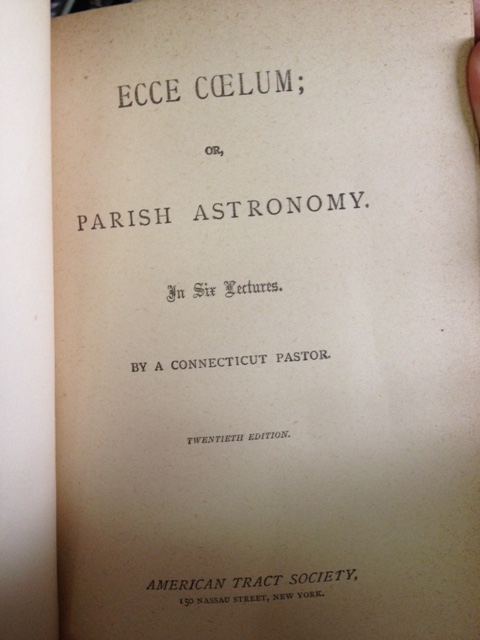
One book my daughter found in the science section, Ecce Coelum; or Parish Astronomy, by a Connecticut Pastor, was clearly from the days when science and religion got along better together. A little research revealed the author as Enoch Fitch Burr. What really caught my eye was the dedication, “lectures on astronomy in the interest of religion.” I’m not sure how I managed to leave that book behind, in retrospect. As a layman both in science in religion terms, I have had lifelong interests in both. It’s only been within the last couple of decades that I’ve noticed a growing tension between the siblings. Like all childhood fights, it is a contested matter of who started it. It does trace its roots back to Galileo and Bruno, but more recently to the Creationists and their never-ending campaigns to have their religion christened science. Back when Ecce Coelum was written, science and religion had much to learn from one another.

IMG_2200

Now they no longer speak. Those who believe all answers lie in material explanations treat religion as a mental disease. The conservative religionists call the scientists atheists, as if that were still an insult. Name calling and bad feelings, I don’t believe, will ever lead to the truth. The science of today will eventually find its way into the used bookstores of tomorrow. Religion books have long lined these shelves, reminding me of the day when she was the queen of sciences. She’s often treated as the jester these days. What scientist now declares, “behold the heavens!”? We might actually benefit to a great degree if both the empirical and the ecclesiastical would behold their world with a little more wonder. And tomorrow’s readers will puzzle at our strange hardness of heart.


Power of Gods

PowerOfGodsOnce a biblical scholar, always a biblical scholar. This stuff just can’t be unlearned. Suspension of belief, however, is a necessary component of enjoying fiction. I finally found time to slot in Nancy Madore’s Power of Gods, the second in her Legacy of the Watchers trilogy. In the novel she continues the tale of the djinn who infiltrate the world—well, actually, they have been here from the beginning—causing trouble for human plans. The interesting theme that shows up in this second volume is that people are ill-equipped to see the larger picture. With our limited imaginations and vocabularies, we can’t get beyond this world to see what’s really going on outside. Madore uses the literary conceit of djinn where many would probably use demons, but the result in similar. People are pawns in a cosmic game. Even less than pawns, really, but that’s as far as the analogy will go.

While empirical method is unrivaled in revealing the mechanisms of the physical world, life constantly reminds us that something more is going on. Biology doesn’t always play well with physics. And behind biology is the absolute drive to continue living. Life is addictive. Saying it’s biologically programmed doesn’t answer anything. Call them djinn or call them gods and angels, these beings represent the non-corporeal. At their best, religions also deal with that element of life that goes beyond, but also includes the body. Power of Gods adds, of course, speculative elements to all of this. HAARP is brought into it, and our own government is implicated in spiritual manipulation. Freedom of religion indeed.

To be human is to be subjected to forces we don’t understand. We label them, advertise them, and sell them, but we don’t comprehend them. Elements of life that should seem quite simple are among the most complex. When they get to a point that we are completely at a loss to name them, they become divine forces behind the mundane world that makes up far too much of existence. It’s clear that Madore has written her trilogy with people like biblical scholars in mind. We, after all, share the vocabulary and the concepts. And we understand the idea of an unseen world influencing us in unexpected ways.


American Bible

BibleInAmericaAny book that sets itself the task of addressing American culture has, it seems, a built-in obsolescence.  Culture shifts are radical and swift, and it would seem that distance is necessary for any serious analysis.  I am reminded of historian Barbara Tuchman’s opinion that history cannot be written without the passage of at least a half-century. We’re simply too close to the subject matter otherwise.  The Bible in America, edited by Nathan G. Hatch and Mark A. Noll, does not claim to be an analysis of the current situation, but it stands as a representative of how much has changed since the 1980’s.  The era in which the book was written is stamped all over it like the Preppy look or Doc Martens.  American culture was very different then.  Some of the contributors noted that the Bible, as we’ve often been told, is on its way out.  Elections of the new millennium would give the lie to that observation, and we might now argue the same, but I wonder if our view is long enough.
 
The source of my wonder is a basic observation.  The Bible was foundational for the idea of the United States.  Those who have joined the “melting pot” (willingly or unwillingly) have been brought into a soup whose stock is Bible flavored.  I’m not naive enough to think that it is undiluted or even anywhere near its original form, but as a former biblical scholar I’m sensitive to the motifs and themes of the Bible and I see them daily in undiminished numbers.  Transmutation is not the same as exodus.  I make no judgment whether this is a good or bad thing.  It simply is.  Those who think it is an exaggeration to put such prominence on the Bible in American culture should read the first couple of essays in this book.  It may have been that without the Bible the will to cross the dangerous water to an uncertain (and to many, catastrophic) future would not have been so pressing.
 
Like most collections of essays, this little volume has a grab bag of wisdom.  Reading it is like taking a stroll through the ’80’s again.  We seemed to know things with a certainty then that has all but vanished these three decades hence.  The Fundamentalist movement provided a Tea Party appropriate to Mad Hatters and White Rabbits alike.  Presidents declared that we were on Crusades again.  Megachurches have the budgets of small developing nations.  I’m not about to make any predictions for the future of the Bible here.  An observation, simple, but fairly obvious, will have to suffice.  Since colonial times, Americans have always had their Bible.  It hasn’t always been the same book, and it hasn’t always been interpreted in the same way, but it hasn’t ever gone away.  I can’t say about the future, but right now I’m about ready to put on my Ray-Bans listen to some Madonna.


Human Race

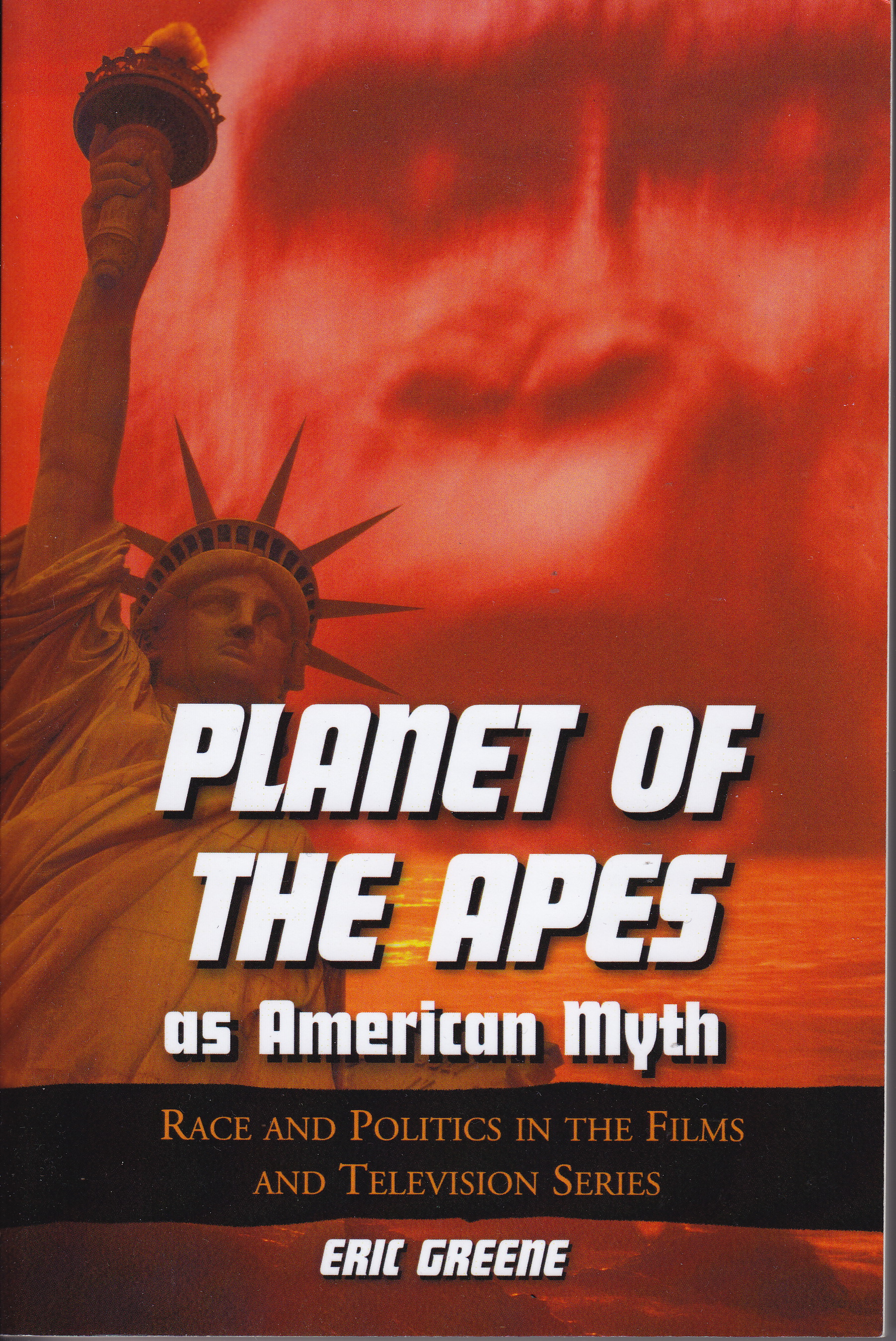
PlanetOfTheApesMythFor reasons no one fully understands, Planet of the Apes touched a deep level of responsiveness in American society. I have to admit to having fallen behind a bit; I need to see Dawn of the Planet of the Apes to be back up to speed, but nevertheless, I remember the television releases and airings of the originals, and even have gone through the entire series in the form of home theater offerings. One Saturday long ago on a visit home, I sat through a marathon of the entire five-movies sequence all in a day. It should be no surprise, then, that as soon as I saw Eric Greene’s Planet of the Apes as American Myth it went on my reading list. Race and Politics in the Films and Television Series, the subtitle read. I admit that I grew up in a conservative, but sheltered environment. Having friends who were African-American, although, admittedly, they were a small fraction of the demographic in my small town, I never realized that there was a problem. Not until I took history and social science classes in school. You have to learn things such as racial distrust.

Struck by Planet of the Apes when I first saw it, I had no idea that it was a racial tale. It makes sense now, in the light of Greene’s analysis. To a child fearing evolution as much as Hell itself, the movie was a kind of forbidden fruit, and by making it science fiction, there was no reason to suppose there was a message here. It was a powerful kind of captivity. I have watched the movie, and current adaptations, many times over. Greene does an excellent job of demonstrating that the movies came at a time of great racial distress. Civil rights, the Vietnam War, the fear of the Communist—xenophobia was perhaps at an all-time high when the apes invaded our planet. As the series goes on, the identifications become clearer and clearer.

But more than that, Greene pointed out some very obvious—in retrospect—religious symbolism in the movies. Some of it was so intentional that it was written into the script. Among the scenes from the life of Jesus, the movies borrow most heavily from Exodus. Moses figures abound. Even Charlton Heston, in his role as Taylor, was following up on the Ten Commandments. Holy families and sacrificial victims mark just about every stage of this dystopia, a world where trust is always far from any relationship with someone physically different. It’s about time that I watched Dawn of the Planet of the Apes. And after that, I need to go back to the beginning, and watch them all with renewed eyes. In the light of current events, also with the hope of a more just future.


Christian Horrorshow

Books & Culture is the review organ of Christianity Today. Christianity Today is the evangelical answer to the more liberal Christian Century. Working in publishing, particularly in the field of religion, it is important to keep an eye on what the popular magazines are saying about our books. Well, neither is as popular as it used to be, but still. I’ll grown used to Books & Culture taking a rather wholesome reaction to books that challenge worldviews. In fact, it’s not unusual to find a fairly mild tome castigated as somewhat insidious. Negative reviews tend to sell books as well as positive reviews. Sometimes better.

I was a bit surprised to see a two-page spread in a recent edition of Books & Culture focusing on horror stories. Horror and evangelical generally don’t play well together. Well, maybe I should temper that a little bit. The first article was actually on Shirley Jackson, best known for her excellently moody The Haunting of Hill House. That particular book has spawned or inspired at least five scary movies, two of them versions of the book itself. I have to confess that this is the only Shirley Jackson novel I’ve read. The article, somewhat strangely for an evangelical magazine, had made me want to explore some of her other offerings. Horror doesn’t have to be splatter to be effective.

DSCN0216

The second review in this issue was for an Oxford anthology called Horror Stories. The reviewer, Victor LeValle, also comes out with a positive review of the collection. All of this makes me wonder if I missed something growing up as a conservative Christian who felt distinctively unsavory because his love of monsters and the macabre. I can’t remember ever not liking mild horror stories. They manage to evoke parts of my psyche that most other literature bypasses. I discovered Poe at an early age. That’s not to say that I like being afraid. Fear is not what I’m seeking here. It is a kind of strange redemption. In college many of my evangelical friends couldn’t understand my fascination. “Why don’t you watch something more uplifting?” I’d be asked. I was as surprised as anyone when one of my very few Grove City dates agreed to see Nightmare on Elm Street with me. Not even Shirley Jackson could’ve seen that one coming. I wonder how she’d respond to being written up as an evangelical inspiration?


Once and Future Bible

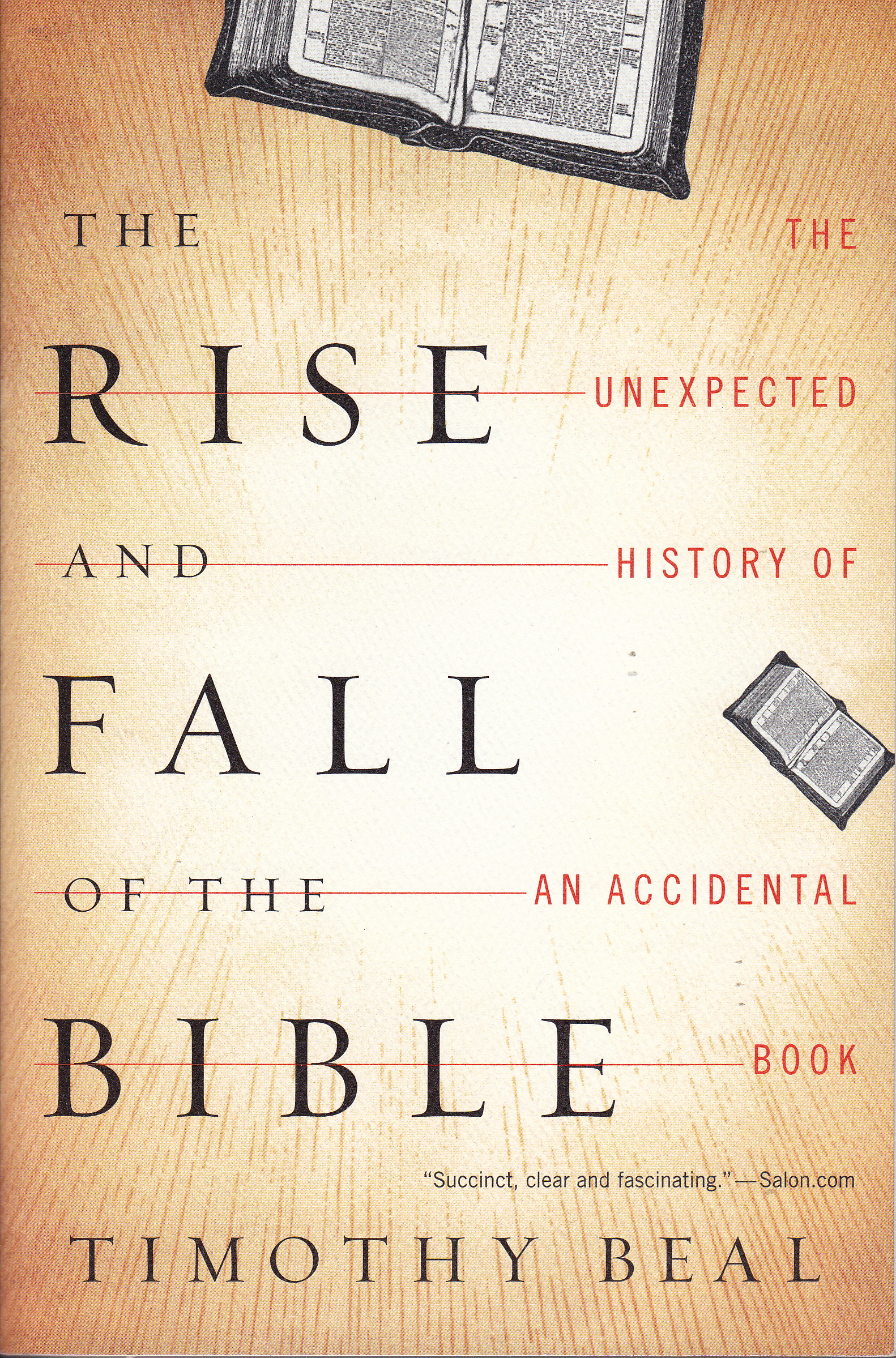
RiseFallBibleWhile I may not share Timothy Beal’s view that print culture is on its way out (I harbor hopes every time I see vinyl records making appearances in stores), he is certainly correct most of the time in The Rise and Fall of the Bible. Written for non-specialists, this book nevertheless gives his fellow biblical scholars pause to stop and think. Beginning with an eerily similar childhood experience (although mine was considerably more dysfunctional and appears to be veering back in that direction by career exigencies), Beal recounts how he came to study the Bible with a critical eye and to observe a number of important things. One of the scholars associated with the Iconic Book movement, he shows how our biblically illiterate society still values the symbolic nature of the book in various ways. We still buy, for example, lots of Bibles. We still want elected officials at least willing to swear on one. We still think it has some special kind of power.

Beal gives a brief history of “the Bible” as an idea. It is essential, as he notes, to realize that as a “thing” the concept of Bible is fairly recent. Certainly nobody in Jesus’ day thought of it as we do. What’s more, and more to the iconic element, Bible sellers have been looking for “added value” to boost the sales. Biblezines (of which I’d not heard) and Manga Bibles are only two examples of the many “extras” Bible vendors add to their texts. In essence they are making new Bibles. Beal wonders how much buyers read the actual biblical text as opposed to the other, more eye-catching material in these books. Bibles are made trendy and hip, decorated, dissected, and dolled up. And we feel virtuous for purchasing them. We play right into Big Dan’s hand, if you get my meaning.

A fascinating collection of interesting bits about the way the Bible has been re-presented to the same public for over two centuries, The Unexpected History of an Accidental Book is an appropriate subtitle here. Those who fueled the Bible craze—those that we now routinely call Fundamentalists—are among those most distressed by the indignities perpetrated upon what was once considered a sacred text. What can be more fundamental than making money off people’s beliefs? Still, for Beal and his colleagues who have managed to land the rare positions teaching Bible, there is an urgency about this whole enterprise. “These jobs,” in Bruce Springsteen’s words and my own experience, “are going boys, and they ain’t comin’ back.” Meanwhile our culture will continue to make love to its holy book, even though they may not recognize who they wake up next to in the morning.


God on the Brain

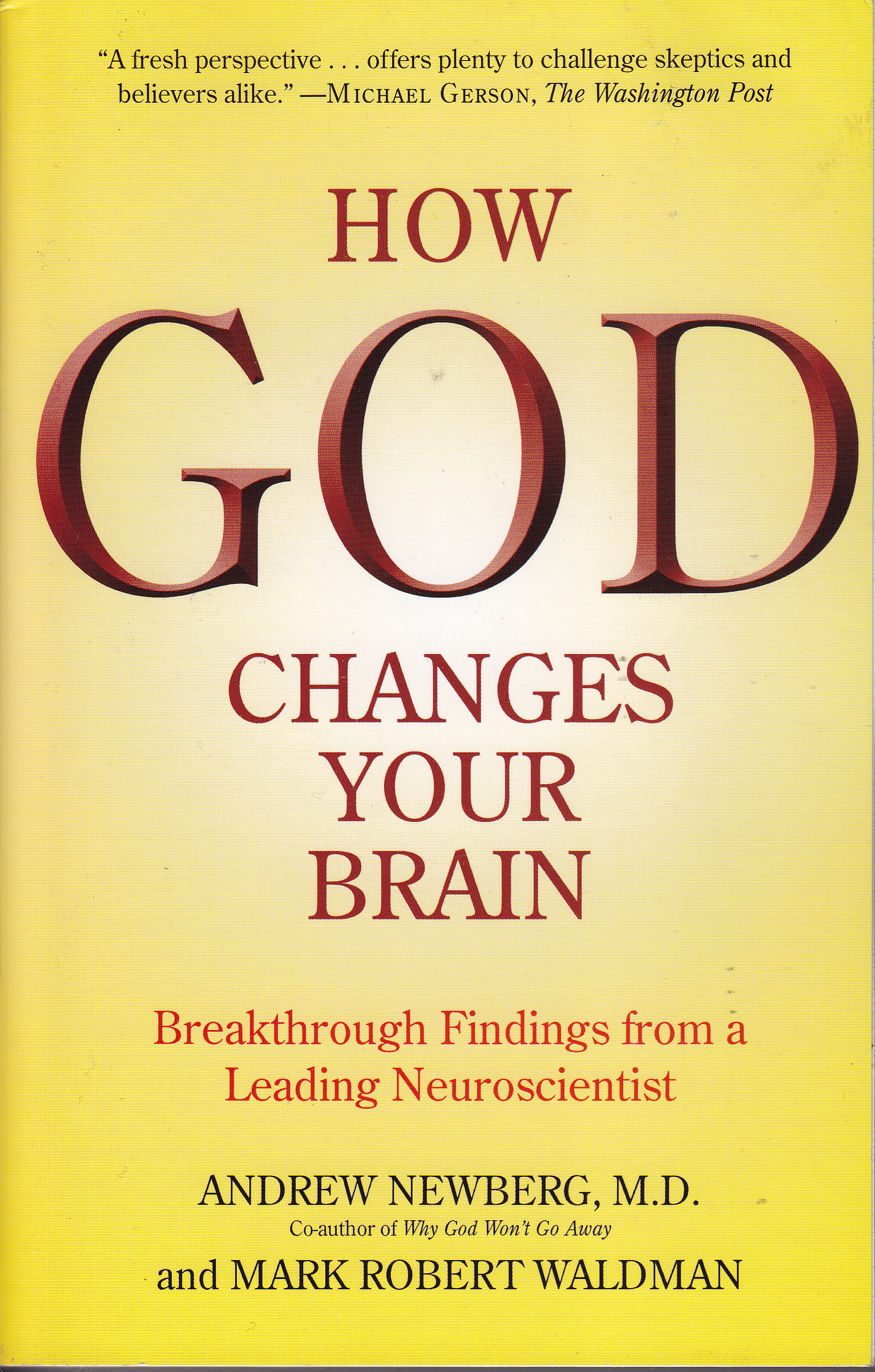
HowGodChangesBrainThose of us with scientifically oriented minds, but with affinity for the less quantifiable aspects of life, tend toward academic study of the humanities. It is not unusual for someone with a background in the hard sciences to dismiss such “softer” fields as less rigorous at best, or, at worst, a sheer waste of time. Many people in the humanities cower under this cloud of being considered somehow inferior for not being able to put numbers to everything. I suspect that’s why I find neuroscience so fascinating. While still teaching at Nashotah House, I would prompt students to think that whatever decisions they made about ancient texts, those decisions were mediated, in a very real way, by their brains. We don’t understand brains completely, but I’m amazed at what we have discovered so far. Years ago I read the book, Why God Won’t Go Away. It was an eye-opening study of what brain mapping reveals during states of religious inspiration, or at least, intense meditation or prayer. We can, to an extent, see inside someone’s head while they are communing with the other.

I recently became aware of the new book by Andrew Newberg (lead author on Why God Won’t Go Away) and Mark Robert Waldman, How God Changes Your Brain: Breakthrough Findings from a Leading Neuroscientist. I was a bit nervous at first, since I couldn’t recall how reductionistic Newberg was in his initial book on the subject. Neuroscientists sometimes perceive the world as being, in a sense, as all in our heads. I was pleased to see that Newberg and Waldman recognize that the “God question” is an open one. They address it right up front. I was drawn to the book because of one of their conclusions that had leaked into the footnote of something else I’d been reading: the brain changes as soon as it is introduced to the concept of God. Brain wiring is continually changing, but the takeaway here is that as soon as we introduce our children to the God concept, their brains will not unlearn it. It stays with us for life. Changing concepts about God is therefore quite difficult. Few even try.

This book, however, doesn’t see this as necessarily negative. In fact, the authors challenge the horsemen of atheism in that all studies seem to indicate that religion is actually good for you. Particularly meditation. In a world that is increasingly run on stress (just ask any business-person) this is an important reminder that prayer, or meditation, can actually heal some of the brain damage caused by life in a stressful environment. The nice thing about this is that the empirical evidence seems to be pretty strong. Our brains seem to be telling us to relax, step back, and not take all of this so seriously. Those are layman’s terms, of course, filtered through my brain. Even reading this book made me feel much more relaxed. It reminded me why, for much of my life, monastic living has seemed so very appealing. Instead, I live in the secular world with its many rewards and stresses. If I learned anything from this wonderful little book, I will be spending a bit more quiet time each day, and won’t be feeling guilty about it at all.


America’s Book

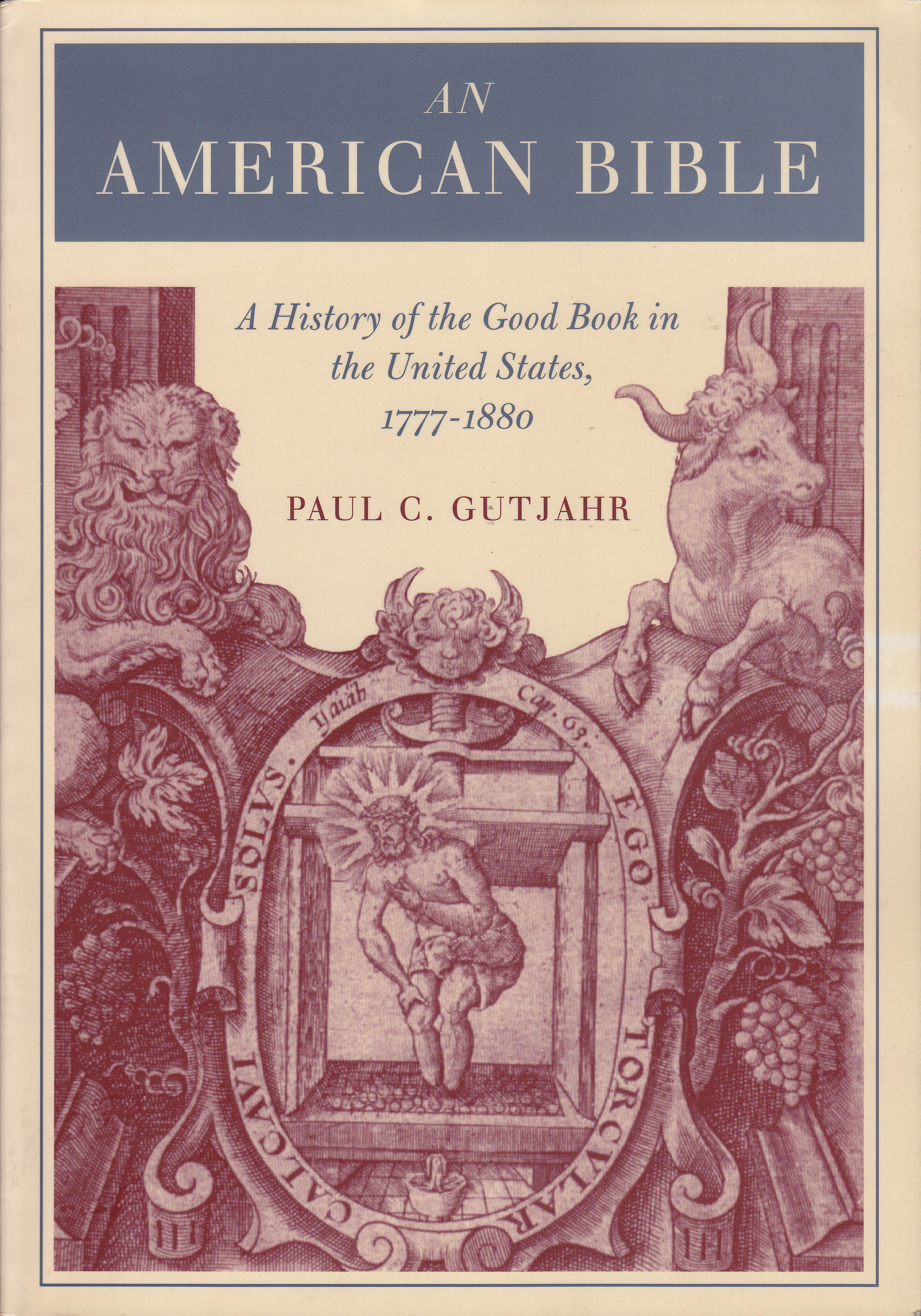
AmericanBibleOne thing that would be difficult to overstate is the influence the Bible has had on America. In our increasingly secular society, it may seem like the Bible has lost its edge. Then comes a presidential election and the Bible is headline news again. Actually, it is present all along in more subtle forms, causing embarrassment for those who think it’s just puerile mythology. Many useful aspects of this may be glimpsed in Paul C. Gutjahr’s An American Bible: A History of the Good Book in the United States,1777-1880. Thorough, insightful, and at times even witty, this reader-friendly analysis probes many aspects of how the Bible has impacted society in ways long forgotten. Who remembers that there were “Bible Wars” in the nineteenth century? That Bible publishing could at one time make one wealthy? That Bible illustrations caused scandal because bare-bosomed biblical ladies appeared in the pages of sacred writ?

The Bible is America’s book. Although Gutjahr only covers about a century of the story, there’s no question that the Good Book has roots that reach down into the sixteenth century and branches that continue to sprawl into the twenty-first. Some of it may be chalked up to civil religion, but the whole picture is more complex than that. From earliest days the colonial invaders drew on their understanding of the Bible to justify actions that really can’t be justified, and assuaged their guilt with the same holy book. Medieval European culture held the church and its founding document in high esteem, and when the Reformers broke from the hierarchy, the Bible became, well, sola scriptura. It was the Protestants who were annoyed enough at the situation to seek a life in somebody else’s land.

Once here, however, the Bible became foundational. Schools were established to teach students to read, and the main reading material was the Bible. A moral society, it was believed, would be founded on such curricula. Colleges were built primarily to train ministers. Revivals periodically swept the land. We currently live in the days of mega-churches. The elites sometimes overlook the appeal of the Bible to the average person. Here is a book that offers hope. And even if it’s rough, a love to those who don’t get their share of the culture’s spoils. It is more than a book. The Bible is a symbol. On his inauguration George Washington not only laid his hand on it, he also kissed the Bible before the crowds. If, like me, you didn’t know that, I suggest An American Bible as a reminder of how it has brought us to where we are. Borrowing a term from its sub-title, it too is a good book, and it serves to remind us of the power of an idea.


Life as we Know it

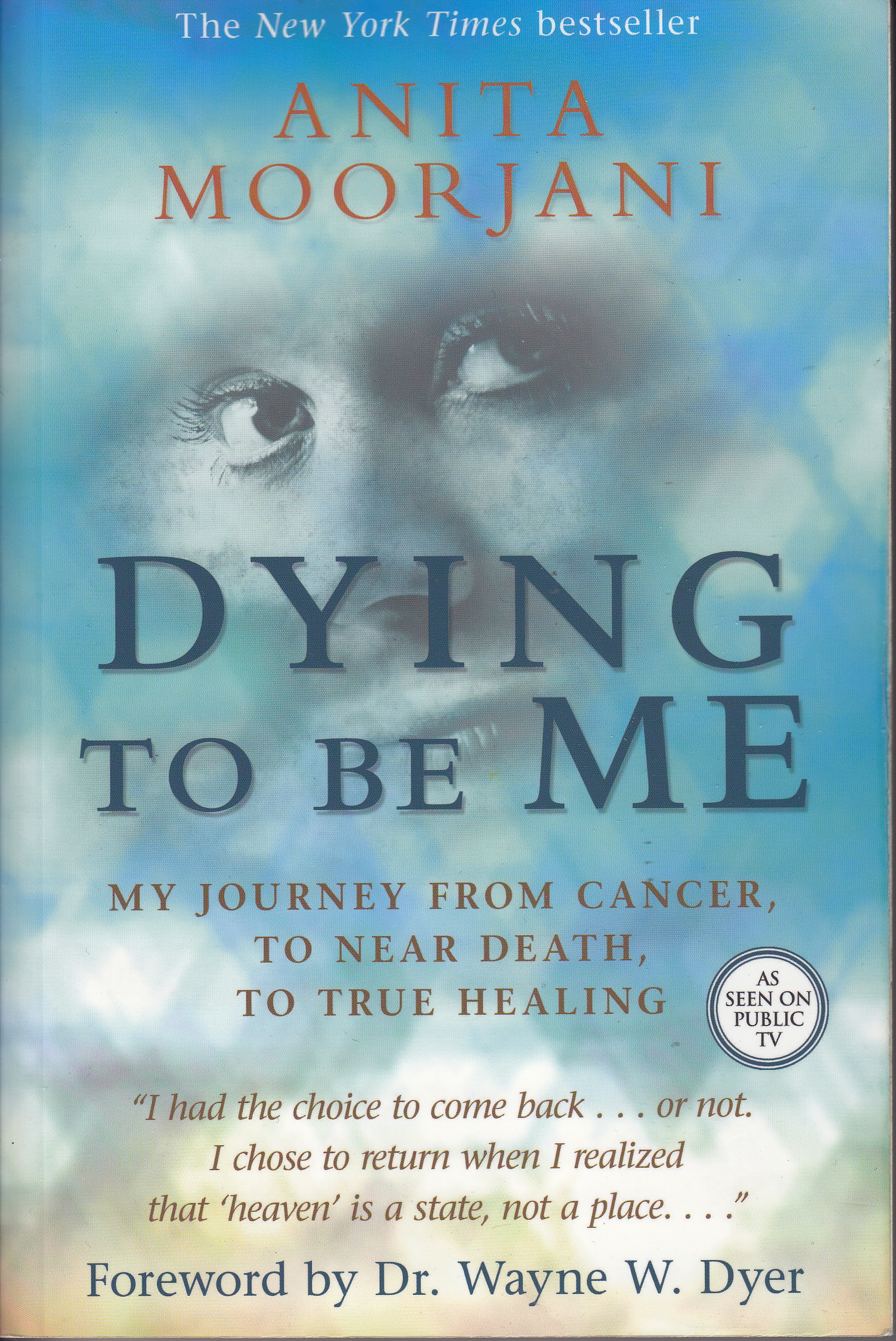
Dying2BMeA friend asked me for a book. Since my life has mostly been about books, I’m generally happy to supply what I can. This friend is a cancer survivor and wanted to read Anita Moorjani’s Dying To Be Me. The last time I saw this friend, she handed me the book, saying she didn’t care for it. Although the author tells of her dramatic Near Death Experience, and is very optimistic about all that we can improve by loving ourselves and others, she isn’t a Christian. Raised as an Indian living in Hong Kong and sometimes attending a Catholic school, Moorjani is conversant with several religions but doesn’t favor one above the others. Her experience of being in a coma with very advanced cancer and having a prognosis of days, at most, to live, yet coming out of the coma and being completely healed of disease within weeks could be overlooked on the basis of a belief system. I decided to read her account myself.

Ironically, Moorjani directly describes why she can’t accept any single religion in her book. Her reason is because religions tend to block being open to possibilities that fall outside of doctrine. Her Near Death Experience, described in great detail, doesn’t fit any particular religion very well, including her native Hinduism. It led her to believe in a kind of universalism with everyone ending up realizing their own divinity and loving all others unconditionally. Even though many of her interpretations of her experience are a bit too New Agey for me, I have a deep appreciation for her advocacy of trying to understand others and loving everyone. I saw nothing incompatible with Christianity there. Or any other ethical religion.

Religion can divide as much as, if not more than, plain common sense. Those who think deeply about it realize that religion should make life better for all. That seems to be its evolutionary purpose, apart from personal survival. Of course, some religions also reject evolution as well. When missionaries reached far shores and found good people living ethical lives, they feared for their souls, thinking only one religion could fit all. Many of us are heirs of such missionaries, being taught from our youngest days that living in fear and self-abasement is the loving, Christian way. It may be that a Hindu who learned to trust herself by nearly crossing the brink of death has something to teach the missionaries as well. If only they could listen.


Book Ideas

Call it sour grapes. When I was a young scholar, I used to wonder how to develop book ideas. You see, at a young age—twenties or thirties—even a doctorate means your understanding of the world is limited. I’d written a substantial dissertation on Asherah, and I was faced with developing several new courses from scratch at Nashotah House. My mind was focused on the immediate concerns. I did continue my research, however, into ancient Near Eastern deities, with an eye toward writing an account of celestial gods and goddesses. A substantial piece on Shapshu ended up being snatched up by a Festschrift, and colleagues began to tell me that to get hired away from Nashotah I had to write something biblical. Thus Weathering the Psalms was born. The research and writing took a few years because I never had a sabbatical, or reduced teaching load. In fact, administrative duties as registrar and academic dean were added to my remit. Still I scribbled away in the early hours and finished a draft. Then I was cast into the outer darkness.

Publishing was never my first choice of career. I’m more a writer than an editor. In publishing, however, you are not encouraged to write your own content. I can’t help myself. As I rounded the corner from my forties, I had finally read enough material—both relevant and extraneous—to have book ideas. In fact, too many. Held back by the lack of publication, I didn’t know how to channel this energy. One of the benefits of working for publishers is you learn how to come up with a viable book idea. I’ve got a backlog now. I’m currently working on a few books, but one is in the forefront of my mind and eclipses all other projects at the moment. Having watched what sells, I think this one has a real chance. Time to write, alas, barely exists. The writer, you must understand, has to build a platform. Get a fan base. Welcome to my platform.

Daily I receive the first books of young scholars. In this publish or perish—strike that—publish and perish atmosphere, even the mediocre is encouraged by dissertation advisors. Young scholars, maybe thirty, think they have something profound to say. Call it sour grapes, but I’m not getting any younger and I don’t have an institution to support me while I write what should be written. The face looking back at me in the morning has more gray hairs than I remember growing, and has wrinkles that my mind doesn’t recognize. It’s too full of books to write to pause long. The bus is coming soon and I have younger scholars’ careers to build with premiere branding. My own ideas ferment unseen in the basement. What some call sour grapes others call fine wine.

Photo credit: Dragonflyir, Wikimedia Commons

Photo credit: Dragonflyir, Wikimedia Commons


Fresh Thinking

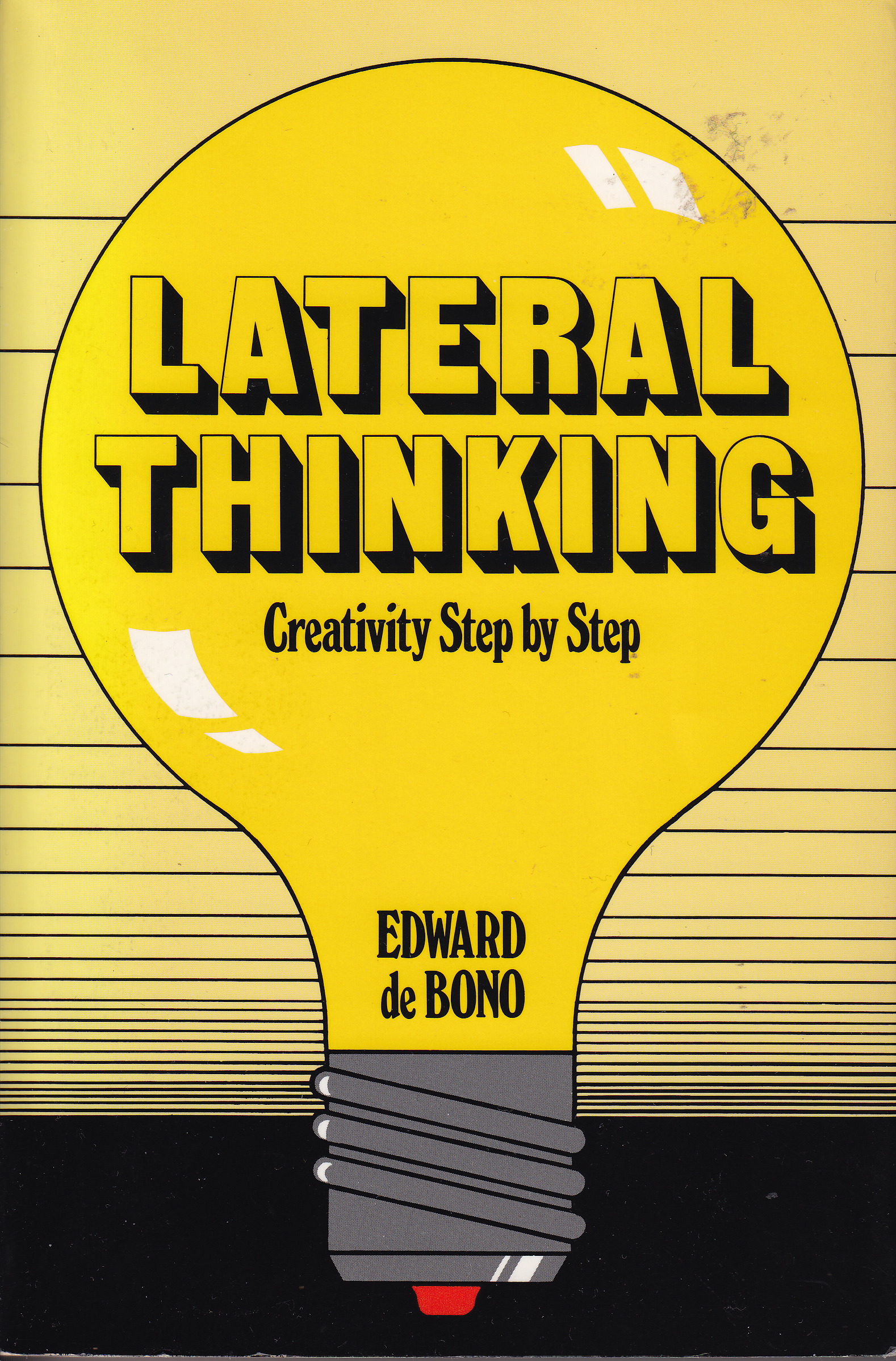
Lateral Thinking_0001Creativity receives an immense amount of lip service. Too bad that doesn’t correlate to actual appreciation. I’ve been working since I was 14. In all the jobs I’ve had, the first was the one that used my creativity most fully. I was a teenage assistant-janitor, doing manual labor. Laborers have great incentive to be creative since it can reduce the amount of work you have to do. Of course, at other times it can create more work. While I was teaching (the second-most creative job I’ve held), I picked up Edward de Bono’s classic, Lateral Thinking: Creativity Step by Step. Shortly after purchasing it I lost my teaching job with a change of administration and I’ve been involved in the least creative phase of my career ever since—publishing. I hope that I’m still a lateral thinker, and I read de Bono wishing to verify that I might be.

Lateral thinking, simply put, is the ability to see things differently. Logical thinking, with which we’re all familiar, is linear, or what de Bono calls “vertical.” Each step is based on the previous step and each step has to be right all the time. My mind, however, finds avenues out to wander among the daisies during the whole process. My interior dialogue is often a long stream of “what ifs” and questioning why things are done the way they are. I guess it’s no wonder that the church was leery of me. Lateral thinking, de Bono notes, does not sit well with dogmatism, nor with the arrogance of presuming you’re already right. If you’ve already got the answers, you need not ask any more questions. You go to seminary to learn to shore up the party line. Individual thinking is unwanted, and what’s more, it’s even dangerous.

So I have moved into the realm of business which, it would seem, stands to gain the most from creativity. Instead, standard business practices hamper, if not actively discourage, creativity. Having people sit in cubicles and maintaining rigid, often long, hours, and performing tasks that a lemur could be trained to handle. This is hardly the breeding ground of new ideas. I’ve attended “brainstorming” sessions in the industry where the leader shoots down immediately any idea that doesn’t lock-step with where s/he believes the company should be going. That’s not brainstorming, it’s brainwashing. Creativity may indeed lead to a temporary loss of profits. The truly creative business mogul will know, however, that it will lead to great leaps ahead further down the road. If you want to find the truly creative among the company, I suggest one place to go. Ask the janitors. Their ideas are likely the most creative of all.