Assume Nothing

You know what I’m talking about.

It’s rude.

Disorienting, isn’t it?

One of my greatest bêtes noires is the email that only gives enough information to frustrate or irritate.  I get them all the time, mainly from business-people.  Look, I know you’re busy.  We’re all busy.  A single-sentence email that doesn’t explain anything is rude and exasperating.  One of the reasons, if I might speculate, that I always received very good teaching evaluations boils down to a simple trick: good explaining assumes little on the part of the listener/reader.  When I write an email, for work or for whatever life outside work is called, I explain why I’m emailing and I use common courtesies such as “Dear X,” and “Best wishes.”  They take me all of seconds to type, and they make the receiver, I believe, feel human.

The other day I sent such an email and received a one-sentence response that assumed I knew a lot more about the topic than I did.  It frustrated me so much that I had to write this blog post before going back to it and asking, yet again, that sender explain (in this case) himself.  What was he trying to say?  Who was he, even?  I’d been asked to contact him by someone else.  I had no idea who he was (I briefly explained who I was in my initial email).  Electronic communication, IMHO, even if brief, need not be rude.  If we’re all that busy maybe it’s time to step back and consider that life’s too short for generating hurt feelings and generating negativity.  Emails without niceties are rude.

Of course, there are people you know well and that you contact frequently.  I still try always to give them the courtesy of opening, body, and closing.  I grew up in the generation of letter writing.  One thing even businesses knew in those days was that rude behavior lost you customers and/or clients.  Now in Generation Text rudely apocopated emails are standard and I have to wonder if anyone’s done a study on how much business money is wasted on the time it takes to recover from receiving a rude email.  The writer may not be intending to be rude.  Many of us were taught growing up that a “please,” “thank you,” or “I’m sorry,” went a long, long way in avoiding hurt feelings.  Go ahead and call me a snowflake.  But remember, it’s December.  So I’ve just had to spend a quarter-hour of my busy day writing this rant before responding to an email that made me mad by its brevity.  I’m not a texter, and I think I’m discovering why.


Making Memories

I’m a little suspicious of technology, as many of you no doubt know.  I don’t dislike it, and I certainly use it (case in point), but I am suspicious.  Upgrades provide more and more information to our unknown voyeurs and when the system shows off its new knowledge it can be scary.  For example, the other day a message flashed in my upper right corner that I had a new memory.  At first I was so startled by the presumption than I couldn’t click on it in time to learn what my new memory might be.  The notification had my Photos logo on it, so I went there to see.  Indeed, there was a new section—or at least one I hadn’t previously noticed—in my Photos app.  It contained a picture with today’s date from years past.

Now I don’t mind being reminded of pleasant things, but I don’t trust the algorithms of others to generate them for me.  This computer on my lap may be smart, but not that so very smart.  I know that social media, such as Facebook, have been “making memories” for years now.  I doubt, however, that the faux brains we tend to think computers are have any way of knowing what we actually feel or believe.  In conversations with colleagues over cognition and neurology it becomes clear that emotion is an essential element in our thinking.  Algorithms may indeed be logical, but can they ever be authentically emotional?  Can a machine be programmed to understand how it feels to see a sun rise, or to be embraced by a loved one, or to smell baking bread?  Those who would reduce human brains to mere logic are creating monsters, not minds.

So memories are now being made by machine.  In actuality they are simply generating reminders based on dates.  This may have happened four or five years ago, but do I want to remember it today?  Maybe yes, maybe no.  It depends on how I feel.  We really don’t have a firm grasp on what life is, although we recognize it when we see it.  We’re further even still from knowing what consciousness may be.  One thing we know for sure, however, is that it involves more than what we reason out.  We have hunches and intuition.  There’s that fudge factor we call “instinct,” which is, after all, another way of claiming that animals and newborns can’t think.  But think they can.  And if my computer wants to help with memories, maybe it can tell me where I left my car keys before I throw the pants containing them into the wash again, which is a memory I don’t particularly want to relive.

Memory from a decade ago, today.


Powerful Wink

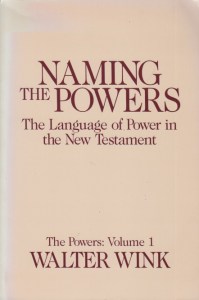
Those of us who became academically aware (in the biblical field) in the 1980s knew the name of Walter Wink.  Now, if you’ve ever become academically aware, you know that we all know some names vaguely, as if seen in a glass darkly, and some more intimately.  Wink fell into the former category for me.  He specialized in “the other testament,” and although I read Greek quite well, my academic track led me through Hebrew to Ugaritic and beyond, in the opposite direction.  I taught New Testament in my academic career, but never found the time to go back to Wink.  I knew he’d written about “the powers,” and the idea was interesting, but I had other research I was doing and I never got around to him.  Now I’ve finally finished the first volume of his famed trilogy on the powers (Naming the Powers).

“Powers” was a circumlocution for many things in antiquity.  It is a high abstraction.  Why do you do what you’re told?  The powers.  They can be human, such as bullies or governments (which are increasingly difficult to distinguish), or they can be supernatural.  Much of Wink’s book is technical—this isn’t easy going, even if it’s theology.  He looks closely at the terminology of power and exegetes it minutely.   The book comes alive, however, in part 3.  There were quite a few worthy insights here, but the one that struck me the hardest is how institutions generate a power that no one individual can control or contain, let alone comprehend.  As Wink points out, a school isn’t a building.  What goes on inside such a building takes on a power that reaches beyond any of the individuals involved in teaching or learning.  Think of Harvard.  What is it?  Who is it?  It bears power simply by the citation of its name.  No scientist can quantify it, but none will dispute it either.

Thinking about “the powers that be” in this way is transformative.  Wink draws this into the ancient perception that what is happening “down here” is merely a reflection of what is taking place on high.  Not unique to Christianity, or even monotheism, the idea that our lives reflect the reality of some higher power is pervasive in human thought.  And institutions.  Harvard, as most prestigious universities, essentially began as a place to train clergy.  Even at this stage it began to exert a power.  Today Harvard (and many other schools) still hosts a seminary and training ground for clergy.  They face a largely unbelieving society when they’re done.  And if they’re at all like me, it might take them decades to realize something may be missing.


To Be Continued

I’m about in the middle of Neal Stephenson’s Fall: Or Dodge in Hell.  I’ve also just about finished Walter Wink’s Naming the Powers.  At the same time I’m revising the draft of Nightmares with the Bible, which will become my fourth published book.  While doing all of this at the same time (and working about nine hours a day), it occurred to me that to really “get” an author you should theoretically read her or his oeuvre from start to finish.  Ideally, to trace the arc of thought, you shouldn’t leave anything out.  The reason that this is as important as it is futile is one of the nagging problems that came to me while working on my doctorate: how do you know what a source you’re citing is really saying?

Pardon my nihilism, but this is an important matter when it comes to academic practice.  Academics cite many sources, and often miscite them.  I’ve seen it regarding my own work.  One scholar argued the exact opposite of what I published in an article and even made the point that he was building on what I’d stated.  Clearly he was digging where I’d been building or vice versa.  We were going in opposite directions and what I’d written was to undermine what he was arguing.  The thought came to me now because both Stephenson and Wink are the writers of many volumes.  I need to cite my sources, but it’s clear that the books are merely slices of lifetimes of thought.  Academia wants you to show your work, but its dated even before you press the “send” button.

I’m not knocking scholarly process.  It’s the best system we’ve come up with for getting near to the truth.  Since no one person has the entire truth, however, we get closer still if we follow a writer from start to finish.  Those of use who use pseudonyms in order to keep our day jobs only complicate things.  Our works (which we hope will outlast us) are only fragments of a larger world of thought that goes on behind the writing of books.  And what about weblogs, or “blogs”?  The million-plus words on this one are a stream of consciousness that weave within, behind, and outside of the books, articles, and stories I write.  Some writers make bold as to attempt biographies of other writers.  Some try to read everything said writers wrote.  Even so they’re only getting part of the picture.  To understand where a writer’s coming from requires more commitment than we’re likely willing to spare.  Now, if you’ll excuse me, I’ve got some books to finish.


Back to Normal

The western philosophical tradition is built on the idea that permanence is reality.  From the Greek philosophers on, the idea has been to identify the basic, unchanging building blocks of reality to get at what’s really real.  The eastern philosophical system posits that change is reality.  Permanence is illusion, and that which we think of as unchanging is a deceptive projection of our own minds.  This dichotomy keeps coming back to me when things change and I keep waiting for them to go back to “the old way” or “the usual way.”  Most recently, for example, the shift to or from (I can never remember which) Daylight Saving Time.  This was followed closely by a mandated trip to San Diego, three time zones away, that lasted five days.  While there I met with potential authors later into the evening than I generally stay up on eastern time.  Now that I’m back home I keep waiting for things to go back to the way they were.

My response to all of this is to wonder if maybe I have the wrong philosophical disposition.  Problem is, the entire western world is built on the proposition that permanence is reality.  The things that worry us are, in eastern thinking, part of the constantly changing flux of reality.  While away from the usual constant connectivity of life at home, bills still come electronically.  Websites ask you for passwords that, like eastern thought, are constantly changing.  I play along, even to the point of “buying” property so that it will always be mine.  Right now lots of things are up in the air in the western world—the future of democracy itself is uncertain—and I keep waiting for things to get back to normal.

Part of the problem is that I keep too busy.  It is easier for me to maintain this illusion if I slow down and have time to think it through.  Things change too quickly for that, however.  Using time as a pole star to navigate this constantly heaving sea, I’ve become a little confused about my longitude.  I’m settling back into eastern time at the new hour they tell me that it is, but I feel as though I’ve left lots of things behind.  I’ve had a little time off work over the holiday and there’s a tremendous amount of change awaiting me once I fire the laptop up again.  I want to go back to where I was before I boarded that plane, back before I “gained” an hour.  Back before I had to learn everything you need to know to “buy” a house.  I look to the east and nod.


The God Test

Humans don’t mean to be cruel, I’m pretty sure, when they test animals for intelligence.  We’re a curious lot, perhaps a bit too self-absorbed, but we want to know how other animals are like us.  Of course, we reserve actual thinking for ourselves, given how well we’ve managed to conserve our only environment, but we grant some special spark to our biological kin.  So we devise tests for them.  Since we can’t get beyond human experience, many of these tests are devised for creatures like us.  When animals fail our superiority is reconfirmed.  Then it’s back to the lab.  I’ve got to wonder how it feels to the subject of the experiment (or is it object?).  Some being that has mastered the art of capturing you, perhaps with the aid of alien technology, is trying to get you to understand something that’s only clear from its (the captor’s) viewpoint.  You need to suss out that viewpoint and solve the puzzle in the same way.

This makes me think of many forms of religion.  We’re born to a lower species (human) as the experimental subjects of gods, or a God, who watch(es) to see how we figure things out.  There’s a right answer, of course, but we’re only given hints as to what it is.  We’re given toys to play with—some of them dangerous—and we’re allowed to select clowns and buffoons to lead us.  We can kill off unthinkable numbers of our own kind and the only clue that we’ve succeeded is some tasty treat at the end.  Of course, we have to assume that the intelligence governing this whole farce is much greater than our own.  Doesn’t feel so good, does it?

Holism is the ability to see a continuity in all of nature.  And nature doesn’t just mean this warm globe on which we find ourselves.  It’s vast and mysterious and some parts of it are very cold and others very hot.  There are places we cannot go, and others that seem inevitable, given the choices.  Like the victims of bullies we don’t think about the larger system, but seek to impose our wills on those who see things differently than we do.  Some tote guns while others pack books.  All of us will shoo away insects that buzz too close.  Most of the animals “beneath” us will simply eat them.  Is this all a game?  Or is it some kind of experiment where we have to guess the answer, but with only a fraction of the information required?


Whose Computer?

Whose computer is this?  I’m the one who paid for it, but it is clearly the one in control in this relationship.  You see, if the computer fails to cooperate there is nothing you can do.  It’s not human and despite what the proponents of AI say, a brain is not just a computer.  Now I’m not affluent enough to replace old hardware when it starts slowing down.  Silicon Valley—and capitalism in general—hate that.  I suppose I’m not actually paid well enough to own a computer.  I started buying laptops for work when Nashotah House wouldn’t provide faculty with computers.  Then as an itinerant adjunct it was “have laptop, will travel (and pay bills).”  I even bought my own projector.  At least I thought I was buying it.

I try to keep my software up to date.  The other day a red dot warned me that I had to clear out some space on my disc so Catalina could take over.  It took three days (between work and serving the laptop) to back-up and delete enough files to give it room.  I started the upgrade while I was working, when my personal laptop can rest.  When I checked in it hadn’t installed.  Throwing a string of technical reasons at me in a dialogue box, my OS told me that I should try again.  Problem was, it told me this at 3:30 in the morning, when I do my own personal work.  I had no choice.  One can’t reason with AI.  When I should’ve been writing I was rebooting and installing, a process that takes an hour from a guy who doesn’t have an hour to give.

As all of this was going on I was wondering who owned whom.  In college professors warned against “keyboard compositions.”  These were literal keyboards and they meant you shouldn’t type up your papers the night before they were due, writing them on your typewriter.  They should’ve been researched and “written” before being typed up.  That’s no longer an option.  This blog has well over a million words on it.  Who has time to handwrite a million words, then type them up all in time to post before starting work for the day?  And that’s in addition to the books and articles I write for actual publication.  And the novels and short stories.  For all of this I need my laptop, the Silver to my Lone Ranger, to be ready when I whistle.  Instead it’s dreaming its digital dreams and I’m up at 3:30 twiddling my thumbs.


Clean Thoughts

Brainwashing, it seems, does not exist.  Many of us who remember at least bits and snatches of the Vietnam War and the subsequent fear of cults, grew up hearing the term.  Someone’s personality had changed after some kind of trauma—slow or fast didn’t matter, but it had to be slightly prolonged—so that they were no longer recognizable as their former selves.  Scholars began to work on this idea and found it lacking.  Since the 1990s, at least, we’ve known there’s no such thing as “brainwashing.”  When you get right down to it, there’s no such thing as a mind to brainwash since it’s merely an actual brain making up a story to keep itself from being lonely in this cosmic wasteland.  Anyway, there’s no such thing as forcing someone to think something weird.

Then enter Trump.  I know many intelligent, educated people who cannot see the stark, naked contradictions.  Nothing, it seems, can convince them that simply saying “no I didn’t” doesn’t make it all right (alt right?).  The fact that well over a thousand pending lawsuits stood against him before he laid his hand on that Bible and swore—let’s call it swearing—to uphold the constitution, seems not to have registered.  I’m reminded of being a kid and crossing my fingers behind my back and believing that made a temporary lie okay.  Thing is, most of us outgrew that.  As the evidence of criminal activity while in office stacks up until it teeters, the supporters shout that the truth is just a lie and Jesus love me, this I know.  Too bad brainwashing doesn’t exist anymore.  It might help to explain a thing or two.

Following the news is something for which I simply don’t have time.  Or the fortitude.  Faced with blatant criminal activity, the Republican Party launches countersuits saying that investigating a crime is itself criminal.  There’s no such thing as brainwashing, though, so you can sigh in relief.  Still, as I go through the day and headlines pop up, as they will, I pause and wonder.  Not that things were better when we believed in brainwashing—for what good does it do you to believe something that’s not true?—but I’ve become strangely nostalgic for Watergate.  I see the lawsuits piling up behind the intrepid base, unfazed by any baptism in reality, and think about the explanatory value of brainwashing.  Maybe it doesn’t exist, but it sure could explain a lot.


Rescued, Technically

One of the scariest tropes in horror (or other) movies is where the protagonist has to rely on the monster (or antagonist) to be rescued.  All the time the viewer is wondering if the monster is going to turn on the hero since, well, it’s a monster.  The tension builds because the situation is untenable to begin with, but there is no other way out.  So lately that’s the way I’ve been feeling about technology.  The first and only time I drove to Atlantic City (it was for a concert some years back), navigating by GPS was still new.  In fact, I didn’t have a device but my brother did so he brought it along.  I remember not trusting it to know the local traffic rules, but once we got into an unfamiliar city I had to rely on it to get us to the venue.  The fact that I lived to be writing this account suggests that it worked.

I no longer commute much.  Still, I’m occasionally required to go into the New York office for a day.  It’s a long trip from here, and to handle the true monster of New York City traffic, I have to leave the house before 4 a.m. to get a spot on the earliest possible bus.  If I do that I can justify catching the bus that leaves the Port Authority before 5 p.m., the daily urban traffic apocalypse.  The last time I did this, just this week, it was raining.  Rain almost always leads to accidents in New Jersey, where the concept of safe following distance has never evolved.  And so I found myself on a bus off route because the major interstate leading into Pennsylvania was completely closed.  The driver announced he wasn’t lost, just trying to find the back way home.  When the streets turned curvy and suburban he asked if anyone had a maps app on their phone.

Lately I’ve been complaining about smartphones.  Truth be told, I do use mine as a GPS when I get lost.  It’s at that stage in an iPhone’s life when it shows you a full battery one second and the next second it’s completely dead, so I let my fellow passengers—every single one of whom has a smartphone—do the navigating.  People on the narrow, off-route roads might’ve wondered what a bus was doing way out here, but we finally did get to the park-n-ride.  The monster had helped us to escape.  And people wonder why I like horror movies…


Amityville Rehaunted

One of the problems with scarce resources is the desire not to squander any of them.  Time is so rare these days that I keep multiple writing projects going (and growing) and when they’re ripe I pluck them and take them to market.  One of my writing projects had me read Hans Holzer’s Murder in Amityville.  Why?  Fair question.  It was the “inspiration” behind Amityville II: The Possession.  I discuss this film in Nightmares with the Bible, and I’ve been going back and reading those period pieces from the 1970s that formed so much of our culture through the end of the last century.

In case you didn’t grow up with an interest in parapsychology, Hans Holzer was a pretty big name then.  I can assert that with some confidence because I grew up in a small town without access to big city resources (where fame is made) and I knew about him.  Holzer wrote well over 100 books, which might give you a hint regarding their quality.  He was an interesting person.  Like Ed and Lorraine Warren he made a living by investigating, writing, and lecturing.  (I can’t seem to break into that cycle—times have changed!)  A firm believer in ghosts and demons, Holzer was naturally drawn, like other moths around the candle, to Amityville.  Murder in Amityville is his summation of his investigation and all I can say is it’s a good thing he wasn’t a lawyer.  Apart from containing lengthy transcripts of Ronald DeFeo’s trial, the book also contains interviews conducted by Holzer.  Full of leading questions and lacking evidence, it fails to convince even a sympathetic reader.

Still, you’ve got to give Holzer credit for including interviews where his loaded questions get him nowhere.  In interviewing a town historian for Amityville, Holzer kept bringing up allegations about the house at 112 Ocean Avenue only to have the nonplussed historian tell him point blank that his (Holzer’s) allegations are incorrect.  His assertions of an “Indian burial ground” are taken for granted, although no historical records substantiate it.  His interview with DeFeo demonstrates Holzer’s irrepressible faith.  After being told by DeFeo that he’d heard no voices—something he made up for a failed insanity plea—Holzer keeps coming back to what the voices told him to do.  Not only that, when Holzer does stumble upon a good question he fails to follow up, chasing some other notion down another rabbit hole.  There was clearly enough material here to work into a horror movie, but for sorting out the troubled home life of the DeFeo family the critical reader finds her or himself being asked to take a lot on faith.


Home Phone?

I wonder if anyone’s done a study on how cell phones affect our psyches.  The other day my wife upgraded her phone.  What with this being technology and all, the setting up rendered both her old and new phones useless so we would have to go back to our dealer.  Since she has to drive to work and I don’t, I gave her my phone for the day.  I use my phone little on most days.  Soon, however, I began to feel very isolated.  Anyone could reach me by email or landline, but I was without my cell phone for about 10 hours and I grew edgy.  What had happened to me?  Was I experiencing withdrawal from tech?  My smartphone is with me all the time and I’ve come to depend on it being there, even if I don’t use it.  Is this healthy?

That night we were back at the dealer’s shop.  One of the techies was trying to help us and because of the uber-security state in which we live, he had to text me a passcode to get into my wife’s phone (it’s my name on the joint account).  When his text didn’t come through he asked if he could see my device.  I handed him my iPhone 4S and he acted as if I’d just passed him a human-alien hybrid baby.  As if he’d never seen anything so antiquated.  In all seriousness he said, “You have to upgrade.  Soon this phone will no longer work.”  I have to wonder about the extortion of companies that sell you expensive devices then force you to upgrade when your salary doesn’t keep up with inflation.  My old phone does what I need it to do.  A new one will be capable of much more for which I won’t use it.  I work at home and I don’t give my cell number out to work colleagues.

There’s a psychological study in here.  I don’t want people who don’t know me personally calling my cell.  That’s what a landline is for.  Not only that, but my hours are unconventional.  Even people I know forget and send me texts after 8 p.m., waking me from a night’s sleep.  You see, the phone is always present, and those of us who don’t conform must pay the price.  The thought of being out of contact with others feels like solitary confinement.  Tech companies have given us tweeting presidents and bosses that can reach us at any hour.  And we happily comply.  I appreciate the welcome text or call from family or friend, but when it comes to work and other necessities, I still prefer to receive a letter.  Maybe I need to see a shrink.


Local Hauntings

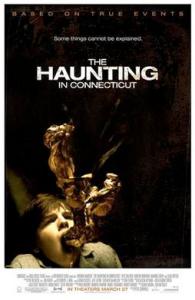
In my on-going research (as I think of it), I watched The Haunting in Connecticut.  I recently wrote about A Haunting in Connecticut, distinguished from the theatrical version by an indefinite article.  Both claim to be based on a true story and the story itself is disputed because it doesn’t fit into a materialist paradigm.  Ah, but that’s another can of worms.  Regarding the movie, it abandons the base story to add an entirely fictional subplot that drives the horror.  Or so the writers and director think.  The tale ends up jumbled and the confusion it generates is not the kind borne of intelligent planning.  The Campbell family, struggling to pay the bills against a case of childhood cancer is real horror.  In our healthcare system that is a true story.

According to the diegesis of the movie, Matt Campbell can see the dead because he’s close to death.  In case you don’t know the story—the family has to move to be closer to the hospital where Matt is receiving his treatment.  Once ensconced in their new house they learn it used to be a funeral home and hauntings ensue.  The writer of the original book claims to have made much of it up, while interviews with witnesses make the claim that much of it actually happened.  Matt ends up in a mental hospital.  In the movie a subplot of necromancy and a young boy medium are added.  Souls whose bodies have been bound are trapped in the house until Matt figures out how to break the spell with the help of the medium’s ghost.  Instead of Ed and Lorraine Warren investigating, a local minister is added.  Also suffering from cancer, he figures it out too, but too late to help the Campbell family.

In Holy Horror and Nightmares with the Bible I do not treat made-for-television movies.  A large part of the reason is that they often lack the cultural impact of a theatrical release.  (Although Game of Thrones and The Walking Dead may have reached a point of familiarity with numbers to rival big screen efforts.)  In the case of the cinematic treatment of the Snedeker (“Campbell”) family, however, the television treatment might well have been scarier than the big-budget studio effort.  Whether fictionalized or not, the Discovery Channel show stays closer to the book (In a Dark Place, by Ray Garton).  Using the Usher-like ending of destroying the house doesn’t seem to offer any release in the big-screen version.  Sometimes reality is scarier than the tales we tell after dark.


Fly Away

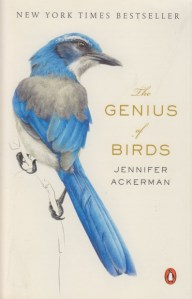
Humans can be quite likable, but we have some nasty traits.  One is that we tend to think of ourselves as the only intelligent beings on the planet.  The funny thing about evolution is that it gave us both big brains and opposable thumbs—a winning combination to destroy the planet.  (Just look at Washington, DC and try to disagree.)  Jennifer Ackerman’s The Genius of Birds is poignant in this context.  Page after page of nearly unbelievable displays of intelligence among birds demonstrates that we are hardly alone on the smarts scale.  Birds make and use tools, have better memories than most of us do, and can solve problems that I even have trouble following.  We tend to take birds for granted because they seem to flit everywhere, but the book ends soberly by noting how global warming is driving many species to extinction.

Homo sapiens (I’ll leave out the questionable and redundant second sapiens) like to think we’ve got it all figured out.  We tend to forget that we too evolved for our environment—we adapt well, which has allowed us to change our environment and adapt to it (again, opposable thumbs).  Many scientists therefore conclude that we are the most intelligent beings in existence.  Ironically they make such assertions when it’s clear that other species can perceive things we can’t.  Ackerman’s chapter on migration states what we well know—migrating birds can sense the earth’s magnetic field, something beyond the ability of humans.  We lack the correct organ or bulb or lobe to pick up that signal.  And yet we think we can rule out other forms of intelligence when we don’t even know all the forms of possible sensory input.  We could learn a lot from looking at birds, including a little humility.

The Genius of Birds explores several different kinds of intelligence.  What becomes clear is that birds, like people, have minds.  Like human beings they come on a scale of intellectual ability that doesn’t suggest only one kind is necessary.  For our large brains we can’t seem to get it through our thick skulls that we need biodiversity.  We need other species to fill other niches and our own remarkable ability to thrive has only been because we are part of a tremendous, interconnected net encompassing all of life.  Other species have contributed to our evolution as we clearly do to theirs.  When we end up thinking that we alone are smart and our own prosperity alone matters we are sawing away at the branch on which we sit.  Further up the birds look at us and wonder if we really know what we’re doing.


Dayglow

Yellow and orange leaves on a damp pavement.  A sky claustrophobically occluded with gray clouds.  A decided chill in the air.  All you have to do is add a few pumpkins and the feeling of October is complete.  I don’t know why this particular image of the change of seasons grips me the way it does.  As a homeowner I don’t want to turn the heat on too soon because the gas bills will jet up and will stay that way for seven or eight months.  I get depressed when skys are cloudy for days at a time.  Around here the leaves have only just begun to change.  In other words, there’s a decided difference between the way I imagine October and the way that it feels on the ground.  In my imagination there are Ray Bradbury titles, The October Country, The Autumn People, but here in the physical world I shiver and add another layer.

Over the past several weeks I’ve been struggling to figure out why horror appeals to me.  It seems to be the Poe-esque mood rather than any startles or gore.  The sense of mystery that hangs in the air when you simply don’t know what to expect.  Will it be a warm, summer-like day or will it be rainy and raw, a day when you wouldn’t venture outside without the necessity to do so?  October is like that.  It is changeable.  Beginning in late September it is dark longer than it is light and for much of the rest of the year I will go to bed when it’s dark outside.  It’s always still dark when I awake.  Is it any wonder that October has its hooks in me?

Short stories, of which I’ve had about twenty published, seem to be the best way to capture this mood.  You see, it isn’t a sustained feeling.  It’s piecemeal like that extra quilt you throw on your bed at night.  The urge to hibernate creeps in, but capitalism doesn’t allow for that.  October is an artist, and I’m just the guy wandering the galley, pausing before each painting.  This feeling only comes after summer, and it is fleeting.  In November the leaves will be down and the cold will settle in quite earnestly.  The candles we lit for Halloween will be our guide-lights to those we hold out to Christmas when the dayglow will begin to return at an hour that reminds us change is the only thing that’s permanent.  And in this there’s a profound hope.


Spiritual Fear

There’s an old adage that if a headline asks a question the implied answer is “No.”  I’ve found that to be true, largely.  I hoped differently when I saw the article titled “Are Horror Films Secretly Spiritual?” by S. Rufus in Psychology Today.  Rufus, admittedly not a fan of horror, ponders whether it might not meet a spiritual need for some.  She would not count herself among that number, should the assertion prove to be the case.  Indeed, her post has more sentences ending in question marks regarding this assertion than it has straightforward declarative ones.  Rufus notes that ancient religions involved a kind of fear-based response appropriate to the lifestyle of those open to constant threat by the natural world.  She seems to believe that civilization has saved us from that.

Now one of the questions with which I constantly struggle is why I watch horror.  I do not like being afraid, and when people find out about my fascination with horror they tend to treat me as if there’s something wrong with me.  I guess maybe I think that civilization has not so much eliminated the sources of threat so much as changed them.  Those who grow up poor know fear.  Fear of want is extremely prevalent in our capitalist society.  I see the “street people” when I go into New York City.  They are not few.  Once you start to get away from affluent suburbs just about anywhere you start to see the run-down houses of those who can’t cope with the demands of a consumerist society.  Even those of us with an education are liable to joblessness and the very real terror that attends it.

Civilization, in other words, comes with its own costs.  Religions originally began—some of them at least—largely from the fear response.  Yes, people were afraid.  The gods, properly propitiated, stay the hand of disaster.  For now.  Some religions, such as those in the monotheistic family tree, tend to suggest higher principles like love can be the motivation.  These religions, however, quickly begin to make threats against those who are heterodox, and reintroduce fear into the formulation.  I suspect, from my own experience of all of this, that the answer to the question may actually be “yes”—horror films do offer something spiritual.  There is a catharsis, if I may borrow a term from psychology, in them.  The spiritual element may, however, run much deeper than that.  Until human society truly takes love and justice as its operating principles, we will have horror films to help us learn to cope.