Goats, Sheep, and Politics

Reasonable evangelicals need a new name.  As a voting bloc, evangelicals have, according to many of their leaders, fallen from grace.  Ironically it was the “draw”—whatever that could possibly be—of the cult of Donald Trump that caused it.  While encouraging their sheep to vote for him both in 2016 and 2020, some of these leaders had their eyes opened to what many of us saw from the beginning, but it took an insurrection to pry their lids apart.  A story by Rachel Martin on NPR, “’How Did We Get Here?’ A Call for an Evangelical Reckoning on Trump” explores this unfortunate, and avoidable catastrophe.  Such evangelicals don’t excel at fact-checking.  It’s far easier to believe what you’re told by a dynamic individual.  Along the way they’ve jettisoned the morality of that “old time religion” for the lust of power.  Now some of their leaders are wondering what they’ve done.

I’m not one to idolize the 1950s.  Heck, I wasn’t even born yet.  One truth from them, however, has always stayed with me: religion and politics don’t mix.  Try this experiment some time: ask Trump evangelicals what party their church (if it existed then) supported in the 1950s.  Many Christians were Democrats, particularly in the south.  Oh, if they confess this they’ll start using language about the Dems falling from grace (while still defending Trump, who can never fall from anything), shifting the onus back onto a theology not even half-baked.  Now their ministers are trying to remind them that morality actually is part of being an evangelical.  A very small part, but not completely evaporated.

History will teach us, if we’ll let it.  Richard Nixon saw evangelical voters as a bloc.  Himself a Quaker (currently among the most liberal of Protestant denominations, and devoted to peace), he was a political opportunist.  Evangelicals are taught that they are sheep.  Sheep are easily herded.  Imagine what might happen if their leaders tried to get them to think for themselves.  To fact check.  I used to tell my students not to take my word for things just because I could call myself “doctor.”  Check my sources.  See if I might’ve missed something.  This is the way knowledge progresses.  The NPR story gives me a modicum of hope.  Some leaders are realizing that their own mindless support of a known criminal—before he even got the nomination in 2016—was maybe a bad idea.  Of course, others still defend his actions after his attempted insurrection.  Sheep, if fed, will always follow.


Lizard Lords

In the aftermath of last week’s attempted coup by the alt-right crowd, NBC ran a story about conspiracy theories.  Specifically the lizard people (actually aliens) who secretly run the world.  If you hang out in weird places, like I do, you already know the story behind this: fueled by David Icke, some conspiracy theorists believe a race of shape-shifting alien lizard people control the government.  They’re deadly serious.  (You can fairly easily find videos purporting to show lizard people caught transforming at government events.)  The NBC story, by Lynn Stuart Parramore, traces the belief to an old anti-Semitic trope.  I haven’t studied this enough to have any opinions on the idea, but what caught my attention is that this particular conspiracy grew out of objections to Darwin.

While teaching I’d planned to write a book on Darwin and Genesis—I researched it for years.  I would add to Parramore’s story the fact that most of our political troubles today can be traced back to that same unwillingness to accept evolution.  Over the centuries in western culture, the Bible (while not necessarily read) had grown into such an object of veneration that anything which challenged it had to be rejected.  Charles Darwin was well aware that anyone following the dictates of science would be pilloried by a “Bible believing” culture, and this was in the middle of the nineteenth century.  Elitist intellectuals assumed this literalism would just go away but it never has.  When it appears (which it frequently does) they laugh at it and insist that if we ignore it it’ll just go away.  Then an armed mob takes over the U. S. Capitol.

The concern shouldn’t be that people believe in lizard people, but that they can’t let go of a threadbare literalism toward a book.  Biblical scholars are routinely ignored by those who believe their way of reading the Good Book is the only possible way to do so.  All other ways are “interpretations,” and these interpretations don’t reflect what God has told them personally, so they’re clearly wrong.  This view, simply dismissed by most of the educated, is extremely widespread.  It must be addressed in some way, rather than being treated as some passing fad.  There may be no lizard-people taking over, but this view of the Bible has been politically active for going on two centuries.  Instead of studying it and trying to understand it, we cut departments and positions that might help to solve the problem.  Maybe the lizards are controlling us after all.


Slow Jinn

You can sort of tell when an author has a background in religion.  Early on in my blog writing, I made note when novels had religious elements.  It’s so common that I seldom do that anymore.  Matt Ruff’s father was a minister.  His understanding of the religious landscape comes through in The Mirage.  It wasn’t on my reading list, but someone gave me a copy and the story drew me in.  In case, like me, you only know Ruff from Lovecraft Country, this tale’s quite different.  There may be some spoilers here, so if you’re thinking of reading it fresh, you’ve been warned!

Set in an alternate reality in which the superpower in the world is the United Arab States, the story follows three police agents of Homeland Security as they uncover a perhaps unwelcome truth: the world they know is a mirage.  It is, in fact, the work of a jinn.  Before commenting on that, I would say that you don’t learn about the jinn until a good way into the story.  Up to that point I’d call this simply literary fiction.  The jinn adds a speculative element to it, and also explains, mostly, how things ended up the way they did.  Jinns, by the way, are often considered demons in Arabic culture.  They are quite different from Christian demons, and that point makes itself clear as the story unfolds.  Our three protagonists begin to uncover hints that the twin towers didn’t actually stand in Baghdad, and that Christian terrorists didn’t fly planes into them on November 9 (11/9).  They have run-ins with Saddam Hussein and Osama bin Laden as warring factions vie for power in the UAS.

This is a great story for trying to understand the world from the point of view of a different religion (unless you’re Muslim).  This is a world where Christians are terrorists (you get to meet David Koresh as well) and the United States is a backward country divided over religion.  Reading this as events unfolded in Washington, DC last week was a little bit disconcerting.  Alternative realities are often just a heartbeat away.  The plot is a bit complex at points, but it’s a fairly quick, if profound read.  Religion is the heart and soul of this book.  That religion could be either Islam or Christianity.  Perhaps even something different.  The way it plays out is very much like real life, dividing people against each other until reality becomes difficult to bear.  For anyone interested in what a Muslim-run world might have looked like, this is a good starting place.


Look, New…

You may’ve noticed a new look to my website.  That isn’t intentional.  I woke up Friday only to learn that Word Press (which used to be friendly to individual bloggers) decided to change at least one of the few templates they allow paying customers to use (if I upgrade even more to “business class” I have lots more options).  One of those templates happened to be the one I’d labored over, sacrificing an entire weekend about a year ago to get it just how I liked it.  Now, I’m a Neo-Luddite.  Behind the scenes my daughter and one of my nieces have helped me with technical aspects of this blog from the very beginning.  Several years ago I reached capacity for the free service, where, understandably, templates are limited.  Now I pay for both the domain name and the privilege of hosting it on Word Press.  But they like to limit privileges to try to force you to upgrade.  What would Amos say?

A few weeks back my iPhone began to lose its charge at an alarming rate.  I’d unplug it, and, doing nothing but occasionally checking for non-existent texts, it would be red-lining a couple hours later.  I feared I might need to get it serviced.  This went on for several weeks.  It occurred to me that Christmas was approaching and Apple has been known to slow down devices in order to encourage you to buy a new one.  Upgrade!  Everybody’s doing it!  Well, I don’t make enough money to constantly upgrade, so I kept my phone plugged in all the time when I was home (which, during a pandemic, is pretty much all the time).  Then, a few days after Christmas, when it was clear I wasn’t buying a new one, the battery began to hold its charge again.

The tech industry has us in a strangle-hold.  As soon as you purchase that first laptop, tablet, phone, or smart-watch, you’re an indentured servant to upgrades.  So I went to Word Press’s template library and tried to find something that didn’t look too bad with the images and “feel” I’m going for here.  Almost as if they’d chosen an algorithm that made available only a handful of templates that worked worst with what I’m trying to do on this website, I found their selection extremely limited.  If I upgrade to “business class” (which I will need to do when the capacity for my “service level” (not cheap) is full) I will have a plethora of choices.  Until they add a new service level above that, that is.  Then I’ll need to upgrade yet again to unlock all the neat features they “offer.”  Thanks, Word Press.  I’ve been with you over ten years now and I have to ask, is that the way you treat a longterm, paying friend?

Remember this?


Prophet Margins

One of the most misunderstood of biblical phenomena is prophecy.  One of the reasons it’s so misunderstood is that other ancient peoples came to associate it with predicting the future.  Now, what prophets said often had implications for the future, but they were more forth-tellers, as they say in the biz, than fore-tellers.  Amos, for instance, was a prophet concerned with social justice.  We know little about his life, but we can discern that ancient prophets could be paid to become “yes men” (“yes persons” just doesn’t sound right, and most were male) for the establishment.  Kings then, as now, surrounded themselves with sycophants who would tell them their policies were approved, or even ordained by God.  Amos was not one of those.

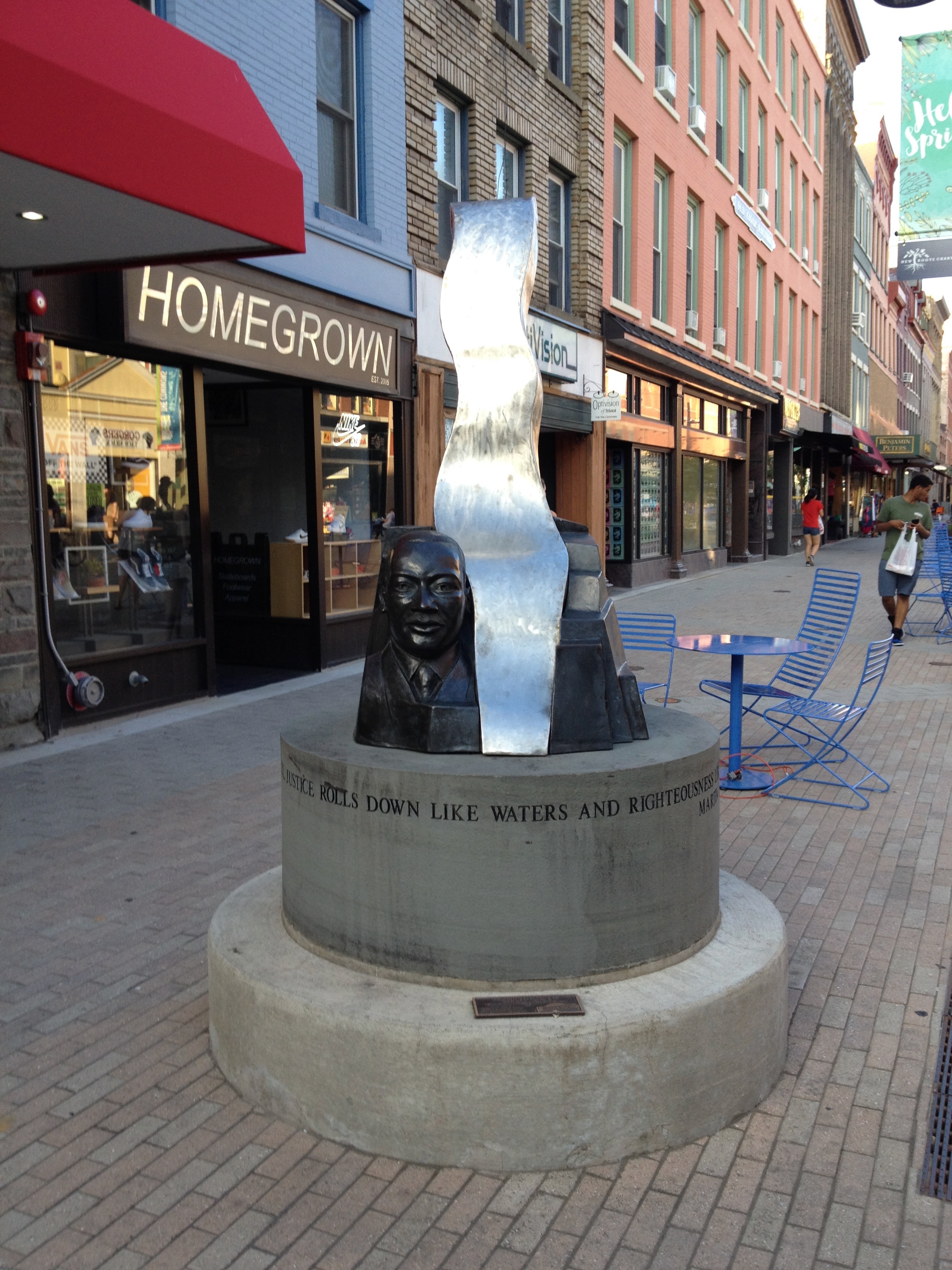
Amos points out in the book attributed to him that he was no paid prophet.  He was an honest worker with a great concern for social justice.  He lived in a prosperous time, but the wealth disparity between the rich and the poor troubled him.  (Amos has never been a favorite among prosperity gospelers, since his message has always been recognized as authentic among both Jews and Christians and he condemns the inequality rampant in society.)  Many in the eighth century BCE believed ceremonial actions—like, say, holding up a Bible in front of a church—pleased God.  Amos boldly declared such things sickened God as long as society favored the rich at the expense of the poor.  There’s a reason Evangelicals and Republicans tend to avoid Amos.  “But let judgment run down as waters, and righteousness as a mighty stream,” is not an easy thing to hear when you’re busy giving tax breaks to those who earn more than enough while refusing basic health care to the poor.

Prophets tend to speak of the future in conditional terms.  If your ways don’t change, then this will happen.  Some Christians, anxious to prove that Jesus was the messiah, came to see prophets as great predictors of the future.  Amos would likely have taken exception to them.  Even in his own day Amos made people uncomfortable.  His favorite image for God was that of a lion ready to attack.  His contemporaries told him to shut up.  Amos then made the famous statement that he was no professional prophet.  He would not adjust his message so that the comfortable could feel good about themselves.  If Amos were in America the last four years would’ve had his throat raw with pointing out to “Christians” how they’d come to misrepresent everything the prophets stood for.  We need more like him today.


Christian Fragility

Having read White Fragility, I was intrigued when a friend asked me if there might be such a thing as Christian fragility.  I think he was onto something.  To see how this might work, it needs to be understood that white fragility is the intense fear of having whiteness problematized.  We have been raised, conditioned, to think of it as the default form of humanity.  All others are “minorities”—aberrations, as it were.  Because of that “Caucasians” are reluctant to discuss race.  What my friend was suggesting, I think, is that there might be such a thing as Christian fragility as well.  Long considering itself the default true religion, Christianity has falsely convinced millions of Americans that this country was founded as an explicitly Christian one.  Many are surprised to learn Islam was here very early, largely because of African slaves.  And what of the indigenous religion of American Indians?

The idea of America as the ideal Christian nation is so deeply rooted that it’s something we bristle at talking about.  Think about it: educational institutions of the secular stripe don’t like to admit that many of them were founded as seminaries.  When I was growing up the two forbidden topics of conversation were politics and religion.  It seems that fragility may be a useful explanation.  Many academics refer to our culture as “post-Christian.”  They haven’t gotten out much.  Our culture is thoroughly suffused in Christianity.  It’s the air we breathe.  It’s the basis for many of our laws.  Much of science training (as I’ve argued before) is based on Christian assumptions.  Because Christianity shares so much background with Judaism clearly the picture is more complex than this, but the point I’m trying to make stands: we feel very uncomfortable when that implicit Christian identity is challenged, no matter how secular we are in reality.

Prior to Trump fear of “godless Russians” or “godless Communists” ran deep.  Ironically, evangelical Trump supporters now look to Putin’s Russia as a kind of model for political leadership.  We’re flailing about in Christian waters, baptizing the worst of human behaviors because we can’t bear to discuss whether something beyond Christianity might be worth considering.  I can’t claim to have absorbed the concept of white fragility fully, but I think the basic idea is sound.  American culture is extremely reticent to open discussions that suggest white, and Christian, aren’t defaults.  That people come in all kinds of shades of pink, tan, brown, red, yellow, and black are just as American.  That Islam, Buddhism, Hinduism, Jainism, and any number of other religions belong in a melting pot.  Christian fragility might well explain why this is so.


It Happened on Epiphany

Photo credit: Martin Falbisoner, via Wikimedia Commons

Can you spell treason?  It does begin with the letters “T-R-.”  The events of yesterday made it difficult to sleep securely in “the land of the free” as thugs took over the capitol building in Washington, and even after that Republicans still contested the electoral votes from Pennsylvania, preferring a treasonous president to a democratically elected Joe Biden.  As all of this was playing out, Georgia gave control of the senate to the Democratic Party.  Like many Americans born in a democracy, I stared at the news aghast yesterday as Republicans, fully in the public eye, tried to dismantle the very system by which they themselves were elected and even went so far as to claim they were patriots for doing so.  They draw the evil courage to do this from their “Christian” faith.

Yesterday was Epiphany, a Christian holiday.  To see Republicans—claiming the name Christian—attempting to overturn democracy on that very day was sickening.  To my mind it will live on like 9/11 as one of the most dangerous days in US history.  When asked to get the crowds that he personally incited to disperse, Trump released a video on Twitter telling his followers that the election was stolen and fraudulent but they should go home.  Pouring gasoline on a fire he himself lit, sending both houses of congress into hiding, his snakes-in-the-grass continued to support the myth that Trump hadn’t been defeated.  When the smoke clears this American thinks it’s time to dust off laws about treason and start applying them again.

Congressional leaders, and the president, swear to uphold the Constitution—hand on the Bible.  In the most closely watched election in history, with no evidence of fraud, when the loser wouldn’t concede his party backed him.  The Republican party has been infected with evil, I fear.  Even after seeing the turmoil that their posturing caused, they tried to discount the votes from my state just to keep a very dangerous man in power.  Our democracy didn’t die yesterday.  It died four years ago.  Claiming the name “Christian” without ever reading the Bible or attending church or caring about their fellow human beings, the Republican party has gone down in infamy on the feast of Epiphany.  The electoral vote count by congress is a mere formality, and I, a native and resident of Pennsylvania, am outraged that anyone claiming the power of a democratically elected office—disputing the very process that gave them any influence at all—questions my right to vote.  Why hasn’t treason been invoked?  Four years under the influence of the Evil One has shown its effects, and it happened on Epiphany.


Manifest Duty

As slaves to Mammon our celebrations are frequently curtailed.  In agricultural culture, winter was a time when fields couldn’t be cultivated (at least in northern climes) and thus the twelve days of Christmas could be relaxed without much consequence.  The history of this holiday complex is fascinating, and while many of us have been back to work for a few days already, today, Epiphany, is the “official” end of the season.  Twelfth Night, in some traditions yesterday and in others today, was a day of celebration, the twelfth day of Christmas.  Ancient pre-Christmas holidays such as Saturnalia lasted several days.  Today’s business world frequently gives a Scrooge-like single day off and many of us spend our hard-earned vacation days to fill out the week that is inevitably slow at work otherwise.

In Christianity, until recent times, Epiphany was a bigger holiday than Christmas.  Of the two it was the original day for gift-giving,  That makes sense in the commemoration of the visit of the magi that Epiphany represents.  They were the first givers of Christmas gifts.  Since Jesus was Jewish the idea of a manifestation, or epiphany, to the gentiles became an important marker.  Magi are styled as Zoroastrians from Persia.  The story occurs only in the gospel of Matthew and clearly wasn’t intended to coincide with the arrival of shepherds and angels.  As the Epiphany story grew to include Christmas it also encompassed many of the shadowy events of Jesus’ early years.  His questioning of the teachers in the temple was a kind of epiphany, as was his baptism.  All these things came together during a fallow time and were sufficient reason to take it easy for twelve days between the end of December and the beginning of January.

Some of our employers have expressed surprise that things continue to run fairly smoothly with workers reporting remotely.  These same people also seem surprised that people come back from several days off refreshed.  I suspect that they are also astonished at how well their computers work after being rebooted.  Time off is sacred time.  Whether we dress it up with elaborate stories of kings, wise men, sages, or magicians traveling great distances to see a baby in a foreign nation or whether we make it the day when one cousin baptized another, Epiphany grew into a major feast in medieval times.  Today it’s just another work day.  And with it the end of another holiday season will need to last us until near the end of yet another year.


Impatience

It’s only human nature, I suppose.  We see our own circumstances and fail to appreciate how others have equally (or perhaps more) complexity to juggle.  I’m thinking ahead to work on Monday.  The week before the holiday break the most popular question posed to me in my work emails was, “Why haven’t I received my copies of X yet?”  It’s a fair question.  What it betrays, however, is a lack of comprehension of just how complicated a business publishing is.  I should be flattered that we make it look so easy!  To begin with, publishing, and printing, are nonessential businesses.  Most of them may be up and running at, at least partial capacity, but the flow of materials to printers didn’t stop just because a pandemic hit.  It simply did what backlogs always do—it piled up.

Publishers have very intricate and, for the most part, efficient operations.  If a blockage occurs at any point—even the end point—other things back up.  Have you ever seen a toilet overflow?  I have, and it’s not a pretty sight.  Add to that the fact that many academics, unable to travel or do their other privileged activities, decided to finish up their books and send them in early.  Everybody should be happy, right?  Have you ever overeaten?  The happiness lasts only until your brain catches up with what your body has done.  I can’t speak for all publishers, but this combination of more input of material than expected and the inability to *ahem* process it has stressed the system.  Schedules exist for a reason.

Covid-19 has affected everything.  And continues to do so.  As we live through this pandemic we find our coping mechanisms.  Once we reach a level of uneasy symbiosis with our situation we stop thinking about how others might be dealing with it.  I think of those who’ve been out of work for months now and who’ve been evicted from homes because of what the wealthy can call force majeure and hire lawyers to argue.  Indeed, the coronavirus outbreak is the very definition of force majeure and the response we all ought to have is compassion and kindness to one another.  It’s not easy to think of other people before meeting our own needs—it’s not human nature.  Species that learn cooperative, altruistic behavior, however, are those that thrive.  As we say goodbye to a year of willful government inaction—the Trump administration knew of the danger well before it hit, but doesn’t believe in science—let’s vow to do what our leaders won’t.  Show compassion.  Recovery will occur and let’s hope we come out of it better than we went in.  This seems a good mantra for the beginning of a new year.


Seeking Renewal

Now that many are breathing a sigh of relief that 2020 is finally over, I stop to ponder time.  Measuring time, although most forms of life do it in some way, is a human organizing principle.  Calendars were originally religio-agricultural devices.  In order to keep the crops on their seasonal cycles, the gods were invoked—there was nothing secular about their world.  It’s not known who invented holidays or even the concept of a new year, but it is clear that it was a fairly early idea.  Different cultures today still celebrate New Year’s Day at differing times of the year.  Having it a week after Christmas helps to make this a holiday season, but it is no guarantee that a sharp break in continuity will come after a bad year.

Lots of bad stuff happened in 2020, but clearly the circumstance that made it a “bad year” was the Covid-19 pandemic.  Here in the United States it became a full-blown crisis because of the cause of four years of ethical famine, Donald Trump.  Those who can see beyond their religio-politics know that he is a man who spent his entire career looking out for nobody but himself.  Such people do not work as public servants and are downright terrible in a crisis.  The pandemic quickly grew into a crisis and we spent nearly ten full months out of twelve isolating ourselves.  The other crises of the year (generally pointing fingers at Washington), such as the important resurgence of Black Lives Matter and the California wildfires, were exacerbated by the pandemic about which our government did nothing.  Lack of interest has led to death numbers that have become a Stalinistic statistic.

As much as we like to think nature bends to human plans—our calendars—we have no idea what 2021 might hold.  We’re left with a country that has been neglected for four years.  Our Republican-controlled senate can’t even agree to provide any kind of relief to average people without adding riders and conditions to make our situation even worse.  Still, I’m optimistic.  New Year’s, whenever it is, marks change.  I’ve been noticing for over a week now that the sun is rising earlier than it had been as we descended into December.  The light is beginning to return.  While we can expect nothing good from the White House for twenty more days, we can look beyond that and know that change is on the way.  The division of time may be an artificial construct, but it can, if we allow it, become a sign of hope.


2020 in Books

As has become traditional on this blog, I like to revisit my reading for the year before the next one begins.  No matter what else goes wrong, we have books.  As I noted yesterday, I’ll be devising my own reading challenge for the coming year and if nothing else, it’ll be diverse.  For 2020, according to Goodreads, I finished 78 books.  Since I was in the final stages of getting Nightmares with the Bible to the publisher, several books early on were about demons, and many of them were quite good.  The nonfiction that really stick out in my mind, however, includes D. W. Pasulka’s American Cosmic, Richard King’s Ahab’s Rolling Sea, Gary D. Rhodes’ The Birth of the American Horror Film, Jeffrey J. Kripal’s Secret Body, Barbara Ehrenreich’s Living with a Wild God, and Ernestine Hayes’ The Tao of Raven.  If anything ties these books together it is likely their honesty when it comes to the spiritual quest.  It can legitimately take many directions.

Fiction has, at least for much of the year, been driven by a few factors: books I have on hand during a pandemic, The Modern Mrs. Darcy’s reading challenge, and books on my reading wishlist.  That list is constantly growing and the books that stand out particularly are again diverse.  Especially memorable were Ralph Ellison’s Invisible Man, Hank Green’s An Absolutely Remarkable Thing, Han Kang’s The Vegetarian, Scott Shibuya Brown’s The Traders, Andrew Michael Hurley’s The Loney, and Silvia Moreno-Garcia’s Mexican Gothic.  Apart from their diversity these books have little in common.  I suppose that’s a testament to the importance of reading widely.  On that list there are only two “white” men but a lot of great books.

Another couple of categories might apply: big books and short story collections.  Big books intimidate me, but I read five of over 500 pages: Ellison’s Invisible Man again, Herman Melville’s Moby-Dick, Mark Twain’s The Innocents Abroad, George Eliot’s Middlemarch (my longest book for the year), and Ann Radcliffe’s The Mysteries of Udolpho.  These books are all in the “classics” category, I see.  Short story collections are more edible, and I read nine of them, including four “by” Rod Serling.  The first was an edited collection of his works, and the other three were his own Twilight Zone adaptations.  I read a few plague books because of the pandemic, but they weren’t really among my favorites.  Perhaps they were a little too close to reality.  Nevertheless 2020 was a good year of reading, overall.  I’m looking ahead to what gems 2021 might hold.


Reading Ahead

One of the highlights of the changing year, for the past five years of my life, has been the Modern Mrs. Darcy’s reading challenge.  My wife pointed this out to me at the start of 2016 and I’ve used it to guide some of my reading for each year since then.  The idea is fairly simple: many of us get set in our reading habits.  The reading challenge listed categories of books, with a total of twelve volumes, that often forced you to read things you normally wouldn’t.  In pre-pandemic Januaries we’d go to a local independent bookstore and pick out some of our chosen books to fit the various categories.  It became kind of an extended holiday ritual.

It must be tricky to come up with new categories all the time.  Therefore it’s understandable that the Modern Mrs. Darcy has decided to shake things up a bit for 2021 with a somewhat more complex scheme of determining what to read.  Unfortunately for me, I have about enough complexity in my life right now.  For a reading challenge what I crave is simple-minded direction: read a book in (blank) category.  So now I’ll be left to my own imagination for 2021.  Not that that’s ever a problem.  My reading wishlist is enormous and, like the universe, expanding rapidly.  Every year new books of great interest appear.  Every year I learn of books I should’ve read long before now.  I also do research, in my own way, and these books can be rather insistent regarding one’s time.

Goodreads also has a reading challenge (which I also started taking in 2016), but it’s based purely on the number of books you pledge.  There’s a sense of accomplishment when you can tick off that final pledged book (hopefully in September or October), and still have a few months of bonus reading left.  Each year becomes a year in books.  Like many people, I’ve survived the pandemic so far by spending lots of time with books.  For my last post of the year tomorrow I’ll do my traditional summary of the year’s reading.  I began the year thinking of Sea Lab 2020, a formative, optimistic Saturday morning cartoon from my childhood.  We were then hearing rumors of a new disease in China, not anticipating that 45 would decide to sacrifice over 300,000 Americans on the altar of his personal disinterest and pride.  Through it all, however, there have been books.  Reading improves intelligence.  Let’s all hope, then, for a much more intelligent 2021 ahead.


Thoughts of Christmas

Christmas, in merry old England, used to be the day when bills were due.  There are vestiges of that still.  Just this past week, when my mind was on upcoming celebrations and family time, companies continue to email me their bills, reminding me that all celebrations are but temporary.  Money’s the real thing, and it takes no holidays.  While the holiday season may be subdued for some due to lack of travel, for me any day that I don’t need to leave the house is a good one.  We had a pretty nasty patch of weather on Christmas Eve, and one might be tempted to say that the atmospheric conditions outside are frightful.  There’s a coziness about staying indoors around the holidays.  Besides, there’s a pandemic out there too.

We’ve got a quiet day planned at home with our usual traditions.  We added a Yule log to our celebrations this year—much of what we now recognize as Christmas derived from the teutonic Yule.  Otherwise, we are quiet people with rather simple tastes.  Even if we can’t afford much, the holidays mean time off work.  Time for those close to us without constantly having to auto-correct back to earning money at work.  I frequently reflect on how distorted capitalism has made us.  Our European colleagues have far more time off work than Americans do.  They don’t seem to suffer for it.  There’s not much light outside anyway, so why not hunker down a while?  Reflect on what’s really important?

First thing this morning, after watering the tree, I fired up the computer to write a few words before the festivities began.  The first two emails in my inbox were, as if on cue, bills.  Computers have no idea this is a holiday, and our neighbor’s early morning car announcing its lock secured tells me that he’s just getting home from work.  The fiction that we all have today off, as time home with family, plays out every year.  Holidays are often the privilege of the affluent, which is why, I suppose, Saturnalia was marked by a reversal of roles for several days.  Rome wasn’t exactly a friendly empire, but it wasn’t a capitalist one either.  This Christmas I’m hoping that those who have to work today—healthcare workers, those who keep stores open for last-minute supplies, emergency workers of all kinds—will have adequate time for peace coming to them.  Even non-essential work can be wearying.  Let’s celebrate, thankful that we’ve survived these last few years at all.  The bills will wait until tomorrow.


Winter Rebirth

It seems like 2020 has already had many longest nights.  The Trump administration has hurt so many people so badly (many of them his own supporters) that this feels like four years of night finally beginning to experience dawn.  It is finally the solstice!  This ancient seasonal holiday, coopted by Christianity for its own purposes, retains great symbolic value.  The story of Jesus’ birth is about light coming into the world.  So are the myths behind Saturnalia and Yule and even Hanukkah.  We tend to want to view things literally when the true meaning comes in the form of symbols that strike at the very heart of what it means to be human.  We fear the dark, and we’ve been living in it for so long now that perhaps the light hurts our eyes.

A friend pointed out the Winter Solstice Fest, put on by Shift.  It streamed (I almost wrote “aired”) over the past weekend.  Involving many indigenous, and even some new age practitioners, it was a celebration of light’s return.  Although I couldn’t watch all of it—weekends are so necessary when work becomes the only reality of five days per week—but what I did see inspired me.  The chauvinism of one religion asserting its superiority over other explorations of spirituality can contribute to the darkness.  When we take symbols literally we’re capable of great damage.  Being inclusive forces us to recognize that we are all seeking light while learning to walk in the dark.

One of the reasons I watch horror is because, on the balance, it is dark half the time.  Perhaps because I can’t seem to sleep until sunrise any more, I spend quite a lot of even summertime in the dark.  Since there’s much that can only be done in the light of day, I explore how darkness might contribute to our spiritual growth.  Although horror often receives a naughty reputation, it too is about exploring the dark for meaning.  Today, at this latitude, we’ll have only nine hours and sixteen minutes of light.  It’s easy to believe illumination might never return.  Humans have created rituals to assure ourselves, to encourage the courses of nature to continue as they have for countless eons before we ever evolved.  While we’re in the darkness, perhaps we should consider making friends with it.  It’s quiet.  And shy.  And if we don’t learn to live with it, half of our time may never blossom.


Conflict Management

Conflict has come to dominate the twenty-first century in an unhealthy way.  No longer do religions, political parties, or even scholars of different disciplines want to try to see it from somebody else’s point of view.  Such “I’m rightism” is distressing, given that the greatest minds in history always left some room for doubt.  Einstein tried not to say too much about God, but his occasional references left some space for admitting he just didn’t know.  He was following closely in the footsteps of Sir Isaac Newton, who, ironically and iconically stands as one of the founding fathers of empiricism.  I say “ironically” because his real driving interests, as became clear only after his death, were religious.  With the science and religion conflict paradigm, it took a long time for many to admit that Isaac Newton was fascinated by religion.

A story in The Guardian recently noted that Newton’s unpublished notes on pyramidology have gone on auction.  These papers are even further indications of just how much religion mattered in the mind of the man who gave us a clockmaker God who wound up the universe and left it to run according to scientific principles.  My wish isn’t to cast any aspersions on Newton.  No, quite the opposite.  I wonder if we mightn’t use his wide-ranging interests to raise a relevant question: why do we see religion unworthy of attention while science, because it can be “proven,” is all we really need?  Especially since scientifically-based hypotheses about the origins of religion tell us that human beings need it.

Admittedly Newton was just as human as the rest of us.  Perhaps far more intelligent than most, but still human.  The humanities are the part of the human curriculum that has been under duress for many years at “universities.”  As business interests and money have taken on larger and larger roles in how schools conceptualize themselves, the humanities—which don’t make money—are undervalued and cut.  Capitalism takes no prisoners.  Education that has bought into that paradigm is bound to overlook certain facts.  Newton’s “arcane” interests were well hidden for a couple of centuries because who wants to think of the great rationalist as beholden to such a paltry thing as religion?  We’d rather keep our eyes firmly closed.  A conflict paradigm seems the better way to eradicate this troubling, so very human, aspect of even geniuses.  As long as there’s money to be made conflict will be the reigning model.