Idol Thoughts

The Enlightenment led, in some respects, to a condescending view of the past.  Historians know, for example, that the basics of science and engineering predate the Middle Ages.  Just consider the pyramids.  The people of antiquity were anything but naive.  We tend to think in Whiggish ways, despite our awareness of past achievement.  Perhaps it’s because we misunderstand past religious thought.  After all, the Enlightenment is generally understood as freeing the human race from “superstition” and leading to empiricism.  Empirical thinking had been there all along, of course, only it hadn’t been the sole way of making sense of the world.  Consider, for example, the “idol.”  In the biblical world food was left for statues of the gods, but it seems to me that people were smart enough to figure out that images didn’t actually eat it.

Elaborate rituals, of course, attended the making of gods.  These symbolic actions were said to make this object more than just a piece of wood, stone, or metal.  Assuming it required food, however, strains credulity.  The symbolic nature of the offering, however, was accepted.  The same is likely true of the offering of food to the deceased.  Even in ancient Israel the time-honored practice of leaving sustenance for the dead was carried out.  Was this symbolic rather than naive?  I tend to think so.  Reason told the ancients that the dead ceased to move, and therefore to eat and drink.  It was nevertheless a sign of respect to leave food, which, in a world of frequent malnutrition, could have been put to better use.  It was a symbolic sacrifice.

Surely they didn’t understand the fine interactions of nature that require microscopes and telescopes to see, but their knowledge relied on the divine world to address what remained mysterious.  We still, for example, have difficulty predicting weather.  We understand that the atmosphere is subject to fluid dynamics and countless minuscule factors that contribute to it.  We’re also aware that global warming is a reality.  Like the ancients we can choose to ignore, or pretend that the obvious doesn’t exist.  Like them, we do so for a reason.  Our political leaders are unwilling to stand in the way of the wealthy.  Reelection and all its perquisites—including personal enrichment—are simply too enticing.  Empirical evidence is worth ignoring for such emoluments.  When we feel tempted to assert our superiority over those of past ages, we might pause to consider that we still offer food to idols.  And get just as much in return.


Fear of Religions

There’s a narrative of fear in Christianity that seems to have been absent at the beginning.  This is evident when driving the highways of America where you’ll see billboards (which are meant for selling things) advertising the truth of a kind of biblical Fundamentalism.  On my recent trip across Pennsylvania this fear stood out in some rather obvious ways.  And it doesn’t reflect the Christianity reflected in the Good Book.  Stop and think about it: although the persecution of early believers was probably never as widespread as the usual narrative says it was, the writings we have describe facing persecution with joy.  Believing that they would be delivered, the oppressed welcomed the opportunity to prove their faith.  The Chick tracts I read as a child, however, focused intently on how scary the future persecution would be.  Fear, not joy, was the motivation for belief.

As we stopped in a turnpike rest area, we noticed a kiosk of Christian books amid snacks both salty and sweet.  The only other reading material available had to do with tourist attractions and finding directions.  It was, upon retrospect, odd.  Pondering this I recalled the narrative I heard repeatedly in my youth—a time was coming when it would be illegal to be Christian.  There would be persecution and the only proper response was a faith borne of fear.  This was not a religion of love thy neighbor.  No, this was a religion of armed survival based not on turning the other cheek, but on asserting itself with a show of firepower.  This kind of weaponized evangelicalism has taken over the narrative of Christianity.  Paul of Tarsus, knowing he would likely be executed, wrote of his joy from prison.  In the land of plenty we tremble.

The more cynical side of my experience suggests that politicians—who have learned that fear gets them elected—found in this form of Christianity a convenient set of sheep without a shepherd.  There’s fear in these billboards.  Fear that another religion may take over.  Or that secularism may make cherished beliefs illegal.  This isn’t cause for celebration, as the sermon on the mount proclaims it should be, but rather a call to arms.  In this country we have more than enough.  Among those left out, however, this fear grows just as rapidly as among those who fear they may lose the abundance they have.  They try to convert the weary traveler whose eye is drawn to the billboard.  And even those who stop for a drink of cold water which, the Bible suggests, should be freely given.


Mere Humanities

Categories, while necessary, can be troubling things.  One place to see this clearly is in academia, which is itself a category.  In the long history of deciding what counts as a legitimate job (you can make a living now being a YouTuber!) somewhere in the Middle Ages, based on the idea of the monastery, the university arose.  This required some justification—people are to be paid for researching topics and teaching others to do the same?  Not quite back-breaking labor, but it can lead to lumbago nevertheless.  Topics had to be worthy to permit this excused absence.  Law and theology were the earliest majors available.  Hobbes’ two swords.  Church and state.  This makes sense since monasteries were all about obeying rules and obeying God.  Theology was the queen of the sciences.

Perhaps unbelievable in today’s world, it was thought that other topics than theology—called humanities so as to distinguish them from divine discussions—should be added to the curriculum.  These were topics that the educated were expected to have mastered, and they included things like history and, yes, mathematics.  In the early days the building blocks of science (such as math) were considered humanities.  Theology wasn’t.  The Reformation complicated things because now there were lots of theologies.  And this thing called the Enlightenment was suggesting that they were all just a bit naive.  Still, universities grew up around theological training grounds, including places like Harvard, Princeton, and Yale.  Slowly, however, theology began losing relevance and became more and more a humanities subject.  Call it a strange form of incarnation.

By the time I became aware of theological study, it was firmly, and deeply a humanities subject.  Often called “religious studies,” other academics often considered it a throw-away major, but if you dug deep enough you found yourself learning dead languages that even a scientist couldn’t comprehend.  When I began attending a Christian liberal arts college, it was clear the engineers and others of what would come to be called STEM topics were given preferences.  Science, Technology, Engineering, and yes, Math.  Some of the subjects that had started out as mere humanities, now received the praise (and cash) while theology—religious studies—had become a purely dispensable humanities topic.  These days humanities majors are dropping like theologians, and going to university means preparing for either business or science-based careers.  Subjects in which you make more mere money.  And one of the founding subjects of this entire enterprise will earn you a starting salary position at Walmart.  And that’s a category worth avoiding at any cost.

Photo credit: Ben Schumin, Wikimedia Commons


Thunder Towers

It sounded like brontide.  The Martin Tower, the tallest in the Lehigh Valley and once corporate center for Bethlehem Steel came down yesterday morning.  Completed only in 1972, the following decade saw the collapse of the steel industry, and the building has sat vacant a dozen years.  Now it’s gone.  The reasons the building could no longer stand are many and I won’t try to explain them as if I understood.  The fall of the tower, however, put me in mind of human folly and the belief that corporate profits will only ever grow.  Capitalism is built on a set of myths that the wealthy truly believe—I suspect many others do too, otherwise the system couldn’t possibly last.  Adam Smith may have been right academically, but in reality humans are greedy, venal, and shortsighted.   At least those who “rise to the top” are.

We didn’t move to the Valley for the steel.  Having settled in New Jersey just about when the Martin Tower was abandoned, like many other displaced academics I was looking for a job.  There were cities in the Midwest—we weren’t far from Milwaukee or Madison—but there was no work.  If you’re “overeducated” your best bet is to settle near a huge metropolitan area, as closely as you can afford to.  Then hang out your shingle.  Capitalism, however, has made New Jersey affordable only for the excessively wealthy.  Besides, I was born within the imaginary lines that we call the Commonwealth of Pennsylvania.  In fact, when I got my license transferred last year the computer asked me if I still lived in Venango County, where I was born.

I didn’t see the tower come down.  It’s not visible from my house, but it was always right there when I drove to Lowes to pick up some necessary hardware to survive in this area.  (Weed-whacker and lawnmower—reel variety.)  My mythology of towers always takes me back to Babel.  In the biblical worldview towers were a sign of arrogance.  God seemed to think they were trying to invade divine turf, and so he made it so we could no longer understand one another.  There hasn’t been a moment’s peace since.  We build towers tall to show what we can do.  We don’t really need an angry deity to come down and confuse our language any more.  We’ve got capitalists and their excess money to lead the way.  The sound of thunder roared and I divined just where such leadership will guide us.


Bradbury’s Dream

There’s a Ray Bradbury story—I can’t recall the title, but with the Internet that’s just a lame excuse—where explorers on Venus are being driven insane by the constant tapping of rain on their helmets.  They try to concentrate on discovery, but the distraction becomes too much for them.  Living in Pennsylvania has been a bit like that.  I grew up in the state and I knew it rained a lot.  Here in the eastern end we’ve hardly since the sun since March.  And when you’ve got a leak in your roof that only compounds the problem.  If I were weathering the Psalms, mine would be a lament, I’m afraid.  You see, the ground’s squishy around here.  Mud all over the place.  Rivers have been running so high that they’re thinking about changing their courses.  And still it rains.

There’s a lesson to be taken away from all this.  The fact that we use water for our own ends sometimes masks the fact that it’s extremely powerful.  Not tame.  The persistence of water to reach the lowest point contributes to erosion of mountains and valleys.  Its ease of transport which defines fluidity means that slowly, over time, all obstacles can be erased.  It’s a lesson in which we could stand to be schooled from time to time.  Rain is an artist, even if it’s making its way through the poorly done roofing job previous occupants put into place.  Would we want to live in a world without valleys and pleasant streams?  And even raging rivers?

There’s no denying that some of us are impacted by too much cloudiness.  When denied the sun it becomes easy to understand why so many ancient people worshipped it.  Around here the temperatures have plummeted with this current nor-easter and the heat kicked back on.  Still, it’s good to be reminded that mother nature’s in control.  Our high officials have decided global warming’s just alright with them, and we’re warned that things will grow much more erratic than this.  As I hear the rain tapping on my roof all day long, for days at a time, I think of Bradbury’s Venus.  Okay, so the story’s appropriately called “The Long Rain” (I looked it up).  Meanwhile tectonic forces beneath our feet are creating new mountains to add to the scene.  Nature is indeed an artist, whether or not our species is here to appreciate it.  If it is, it might help to bring an umbrella this time around.


Linking In

Like many in the internet age, I have most of my “connections” online.  It’s somewhat of a rarity to be invited, for example, to connect on LinkedIn by someone I actually know.  I remember the early dissemination of information from that network—it was strictly for people you really did know in real life, because they could help or hurt your career.  I took that seriously for a year or two, but it became clear that this was another Facebook with a more professional cast.  I’ve been told of authors who try to build their online platform by adding thousands of connections on LinkedIn.  The website, however, is not intended as an advertising venue.  It has, however, become one.

I’m not denigrating LinkedIn.  I’ve found two jobs through it and I’ve had recruiters reach out to me because they found my profile there.  For a religionist that can be quite flattering.  Academia and society tend to tell you that such a skillset is okay but basically useless.  Having others who know the wide diversity of human employment these days can be a sign of hope.  Nevertheless, advertising has crept into LinkedIn.  I’m not talking about the frequent invitations to go professional on the site, which will only cost a small fee that will suddenly show up on your credit card bill when you least expect it and thought you were in the clear.  No, I’m talking about connections contacting you to do gratis work for them.  Advertising their book, or their services.  Letting others know, they ask, that they can provide this or that service.  (Just to be clear, I’m not referring to people who contact me personally because we have an actual connection!)

For those of us working stiffs not in a position to hire anyone—professionally or personally—this is another symbol of how any form of communication becomes commodified.  Fully over half of my email is soliciting money in one form or another.  Hearing from an actual person with an actual message for me is so rare that I’m stunned to find one in my inbox.  Capitalism just doesn’t know when to let go.  And it doesn’t have a good read on what little I actually do buy.  Underwear (and just using that word will color the tailored ads I receive for weeks) vendors seem to think I’m concerned about the fashion of garments others don’t see.  The books Amazon suggests, based on a solid track record, are generally far off from my interests.  What hope do those who don’t know me have of selling me their wares through LinkedIn?  The dream of connection without cash changing hands nevertheless remains alive.

Old school connectivity


Dandy Lions

O great—just what I need right now.  I knew lawn care would soon become a necessary avocation after buying a house, but this I did not expect.  Over the weekend I found myself pulling up dandelions that were growing out of cracks in the front steps.  Since we compost, I laid them out on a slab, figuring when they dried out I could make them into more soil.  (From which more dandelions will grow, I know, but still it just feels right.)  I came back a day later to find that the dandelions had returned to the vertical position.  Zombie dandelions!  They apparently couldn’t stay dead.  Now, I’ve been writing about demons for the past several months and I’d forgotten about zombies.  Well, I did post about resurrection on Easter, but my short-lived digression left me unprepared for this.

Really, the persistence of life is a sign of hope.  Perhaps dead zones, such as morality in Washington DC, will someday come back to life.  There’s hope for a tree, Job tells us, even if cut down.  These dandelions were a message for me.  Don’t give up.  Prior to religion being hijacked by theology it was a system intended to make life better for people.  Human beings were more important than heretical thoughts.  You help those who need it, regardless of what they believe.  Or don’t believe.  That was the point behind resurrection, I suspect—we can rise above all this dirt in which we find ourselves.  There’s a nobility to it.  Then again, fear trumps hope just about every time.  The dandelions are rising and we have no hope of outnumbering them.  

The ancients feared the dead coming back.  It’s a primal phobia.  All those things we buried with tears we hoped would stay the way we left them.  Life, as Malcolm says, will find a way.  Politicians, it seems, will find a way around it.  Call it executive privilege or whatever you will, the end result is the same.  The yellow-headed fuzzies will threaten you even when uprooted and left to dry in the sun.  Now, our lawn isn’t pretty.  Grasses of different varieties contend with weeds I’ve never seen before for scarce resources.  I’ve never minded dandelions.  They don’t ask much, only they now seem to be demanding the right to come back from the compost.  And if we let that happen, all hope is lost.


On Publishing

I fear I may be transitioning.  I may actually be becoming someone who knows something about publishing.  Reading about the merger between Cengage and McGraw Hill actually seemed interesting.  What’s happening to me?  Actually, the largest impact has been the realization that scholars need to become more aware of the world around them.  As a doctoral student I was taught to find an unexplored subject and write obscurely on it.  Then, when it’s time to publish, to say to the editor that general readers will understand and find it compelling.  It took some time, however, even though I frequented Waterstones and Blackwells, to realize that the books they housed were not the kinds of books I’d been taught to write.  Back in America, where the brands were Borders and Barnes and Nobel, the same thing applied.  People want books they can understand.

Two articles that caught my attention recently addressed the plight of the academic monograph.  One was “Worried About the Future of the Monograph? So Are Publishers” from the Chronicle of Higher Education.  The other was “Making Monographs Open” from Inside Higher Ed.  Both share some common themes: scholars write books so obscure that even academic libraries won’t buy them and since it’s “publish or perish” it becomes the publisher’s problem.  Listen, I understand that mentality.  Isolated in the woods of Wisconsin with the wind howling through the trees, writing about weather in the Psalms seemed perfectly natural.  Forgetting that the average reader doesn’t know Hebrew, I assumed everyone would find my disquisition irresistible.  Even back in the early 2000s publishers disagreed.  Life is so interesting!  There are so many minutiae to explore!  If you haven’t had the pleasure of following in the tracks of a thought that won’t let you go, you’ve never been really seduced.  But then, somebody’s got to pay for all this.

Scholars are reluctant to acknowledge that publishing is a business.  Indeed, higher education is now a business as well.  Everything’s a business.  To stay solvent publishers have to sell enough books to cover the cost of making them.  As these articles point out, that cost isn’t negligible.  The scholar who explores the publishing industry (as rare as that may be) will discover plenty of resources to help rethink academic writing.  Even without reading the industry rags, just paying attention when you’re in your neighborhood bookstore can be an eye-opening experience.  I was looking for a book (hardly even academic) last time I was in Ithaca, New York.  If any town is likely to have such books on the shelf, it’s Ithaca.  I had to ask and leave empty-handed.  There are lots of books out there, colleagues!  And if you want to get yours published, it pays to do a little research.  Your time will not be wasted.  And I fear I’m becoming someone who knows a little about such things.


Suddenly Spring

Maybe it’s just a sign of passing years, but spring seems much more sudden to me now.  One day I’m wearing multiple layers and shivering in the mornings and the next day I need to take a machete to the lawn for its first mowing.  Those weeds along the fence, which weren’t there a day ago—I swear!—are now two feet tall and aching for an appointment with the weed whacker.  I mean, the snow shovel’s still on the porch.  When did this happen?  How did we go from brown grass to sprouting trees of heaven just overnight?  I haven’t had time to build up my calluses yet for pushing the lawn mower (we have the environmentally friendly kind, powered by naught but human effort).  Morpheus was right, I guess.

This past week was so unexpectedly busy that I haven’t had time to stop and muse over some important happenings.  My current project, Nightmares with the Bible, involves trying to sort out The Conjuring universe, and I wanted to reflect on the passing of Lorraine Warren.  Her obituary in the New York Times  by Neil Genzlinger was surprisingly respectful.  Whether or not she was really onto something, people in general seem to believe she and Ed were sincere in their convictions.  There are those who claim they were charlatans, but those who perpetrate hoaxes tend to leave telltale signs.  Those who claim they couldn’t have experienced the paranormal because there’s no supernatural to experience are entitled to their opinions, of course.  Being tolerant of those who see differently, however, has never been more important.

The natural cycles of the earth never fail to surprise me.  Supernatural or not, the explosion of life following one warm, wet week is nothing shy of astounding.  I walked around to the seldom visited north side of the house to find a veritable jungle that wasn’t there just the week before.  Staring at the flowers and weeds, I can’t help but think of the hackneyed phrase “pushing up daisies.”  Much happened this past week.  The mower was oiled up and played the grim reaper to the grasses and other plants of my neglected yard.  Life, as Jurassic Park (which my lawn resembles) teaches, is persistent.  I never met or in any way corresponded with the Warrens, but I feel that in some sense I have gotten to know them.  And just yesterday it still felt like winter.


Different Kind of Salvation

It’s encouraging and disheartening all at the same time.  And seldom has the evil of money been so obvious.  Last night I attended an environmental panel discussion at a local church.  It was encouraging to see so many people out on a rainy, chilly night in Bethlehem, a city famous for its might steel mill.  Everyone there knew the problem and agreed that something had to be done.  As the speakers gave their presentations it became clear just how corrupt politicians are.  Corruption is bipartisan, of course.  In the name of “economic growth” we allow the fracking rape of our state despite the known and proven environmental hazards.  Despite the fact that Pennsylvania has a green amendment in its state constitution.  Money, as Cyndi reminds us, changes everything.

Shortly after even Mitch McConnell admitted climate change is real, at the state level climate deniers are running things.  It brought to mind the frightening and omnipresent teachings of my Fundamentalist youth: the sooner we can destroy this planet the sooner we’ll make Jesus come again.  Convinced of the absolute certainty of that second coming, there is almost a mandate to ruin, pillage, and plunder natural resources because the Good Book ensures us that, upon a white horse the savior will come in the nick of time.  Politicians, elected officials believe this.  They also believe in mammon.  If you’re gonna go down, you might as well do it in style.  Like John Jacob Astor on the Titanic.  It’s the way of the aristocrat.  Rising seas drown rich and poor alike.

It was a miserable night to be out.  The weather has been freakishly off for some time now, and all the science—real science, that is—predicts it’s only going to get worse.  How the government became the enemy of the planet that gave it birth would be a fascinating story if only it were fiction.  The truth is we’ve elected people that can be bought.  And bought easily.  Laws are passed that violate the constitution of this commonwealth and meetings are held behind closed doors.  Local activists are very active while most of us struggle to keep ourselves employed, heads, as it were, above water.  We need to pause now and again to consider what a wonder this planet is.  We must learn that the only power money has is that which we freely give it.  Rain was pouring down.  Brontide was actual thunder as the state legislature drew up chairs for the last supper.


When Like Rome

Among the constant topics of discussion, both in the academy and in its publishing ancillaries, is the loss of interest in religion.  After a period of growth early in the new millennium, as measured by college majors, interest has dropped off and Nones are set to replace evangelical Christians as the largest religious group in America.  The corresponding lack of interest in religion is extremely dangerous.  I’ve often posted on the necessity of looking back to see where we might be going, and the further back we go the more we understand how essential religion is to the human psyche.  My own academic goals were to get back to the origins of religion itself—something I continue to try to do—and I discovered that they rest in the bosom of fear.  I’m not the first to notice that, nor have others been shy about using it to their advantage.

Lack of classical education, by which I mean reading the classics, has led us to an extremely tenuous place.  More interested in the Bible, I followed the track to another ancient system of thought, but as I find out more about the religion of classical Greece and Rome, the more I tremble.  You see, ancient Roman writers (especially) were extremely conscious of the fact that fear motivated people.  In order to construct a steady state, they infused it with a religion based on fear and supported by said state.  An overly simplified view would suggest that the Jews and Christians took their religion too seriously and refused to play the Roman game.  When they wouldn’t worship the emperor (who surely knew he wasn’t a god) they threatened the empire.  The response?  A good, old-fashioned dose of fear.  Crucifixion oughta cure ‘em.

See what I mean?

The thing is, our American form of government, buoyed up by an intentional courting of evangelical Christians as a voting bloc, manipulates that fear even more stealthily than the Romans did.  People ask me why I “like” horror.  I don’t so much like it as I see its role as a key.  It is a key to understanding religion and it has long turned the tumblers of the state.  Ancient societies kept religion under state control—something the Republican Party has been advocating as of late.  Why?  Religion, based on fear, ensures the continuance of power.  Those of us who watch horror are doing more than indulging in a lowbrow pastime.  We are probing the very origins of religion.  And we are bringing to light the machinations with deus.  Let those who read understand.


Self-Convinced

Like many people, I suppose that my own views are right.  All people think this, I suspect, otherwise they’d change their point of view.  Unless they’ve been brainwashed, of course.  Religion has a way of convincing people that they alone are right.  (And perhaps also those who believe just like them.)  I have plenty of experience with this.  Seemingly normal, friendly people suddenly turn on you when you’re not there to defend yourself.  All in the name of religion.  The place, unfortunately, that it’s most found is in “conservative” religions.  With preachers braying about righteousness and being washed in the blood of the lamb the human element is often sacrificed.  Anyone who dares to think differently is going to Hell, and, in most of these traditions, you wish them godspeed.  Then there are those who wish for true dialogue.

Dialogue means, however, that you have to admit you may be wrong.  That’s one of the features the self-convinced fear most.  Ironically, even those who think they’re right can admit that they could be wrong.  Otherwise what’s the point of discussing anything at all?  As Tom Nichols points out in The Death of Expertise, many are offended that someone has greater knowledge of any area than they.  Like it or not, some of us have studied religion, the Bible, and spirituality for our entire lives.  You might not agree with everything such a person says—we often disagree among ourselves—but at least one might admit that a mere Ph.D. counts for something.  Even if on the stock market it simply won’t trade.

Ironically, as a young man I too was self-convinced.  For some reason that I can’t fathom, I decided that if my beliefs were solid they would stand up to the challenge of higher education.  As an undergrad I majored in religion at a conservative college and graduated summa cum laude.  I chose a liberal seminary to challenge further what I believed and came away magna cum laude.  Then the doctorate.  (Edinburgh didn’t offer such trifles as honors; if you made it through the program you should be so thankful.)  Tolerance became a massive part of my outlook, even as I ended up on the faculty of a very conservative seminary.  I was willing to listen, but the same could not be said for those who saw things differently.  Many of whom were far less educated, I say with all due self-abasement, than yours truly, in such things.  As time goes on I can’t help but reflect on this.  Even as I do I know others are completely convinced I’m wrong.


Vapid

The smoke encircled his head like a thief.  And not in a saintly way.  I was going to have to rethink this.  You see, the culture of the early morning commute is one where you stand in line with strangers before dawn.  Having grown up a victim of second-hand smoke at home, I can’t stand it now.  Should I go wait in the line (which was growing) where the last guy was smoking, or sit in my car?  Work anxiety always wins out in such situations, so off I trudged.  I discovered, however, that the man in front of me wasn’t smoking after all.  He was vaping.  What was this chemical stew hanging in the air that had just come from his mouth?

I worry about second-hand vape.  How desperate must a person be to smoke a device?  You see, my trust in technology goes only so far.  People are slowly beginning to understand that electronics don’t solve every problem.  Vinyl records are starting to come back, even at Barnes and Noble.  Independent bookstores are returning, despite the rise of Kindle.  I’m still waiting for it, but film cameras may once again appear.  There’s something about the Ding an sich.  The tech of the stereo was invented for the analogue record.  Yes, the MP3 is faster and cheaper, and you can buy just the song you want with the click of a virtual button, but we still have our favorite LPs around.  This isn’t misplaced nostalgia, like those who long for the 1950s.  No, this is simply the recognition that faster isn’t always better.  Some things were meant to linger.

Vaping is, however, an example of how a bad habit becomes a vice with no point.  Initially meant to come to the succor of smokers who couldn’t do it indoors, vaping was also quickly relegated to the outside.  Many people, it seems, don’t want to breathe someone else’s smoke.  Do you develop artificial cancer from artificial nicotine?  Another commuter comes up to the guy in front of me.  Like a couple of kids on a 1970s schoolyard, they exchange vape flavors.  The first guy doubles up with a coughing fit.  Spits off the curb.  The second guy says, somewhat anticlimactically, that this one’s strong stuff.  I have to wonder what future generations, if there’ll be any, will think of our love affair with devices.  The bus pulls in.  I’m the only one on the whole thing who clicks on the over seat light.  I have a physical book to read.


Sustain Chapel

It seems that holidays come thick and fast in the spring, especially when Earth Day follows directly on the heels of Easter.  Given the hard time mother earth has been having with too many Republicans waging war on her, it’s worth taking a few minutes to consider finity.  Our planet is not infinite.  The resources with which it came loaded out of the showroom are all of limited supply.  Somehow we’ve managed to convince ourselves, at least in this hemisphere, that there’s always more where that came from.  Unless, of course, you’re referring to the degrees that contribute to global warming.  Of those, the GOP narrative goes, there really aren’t any.  No credible scientist doubts climate change, although those who are already old and who are benefitting from it will claim otherwise.  Any story depends, of course, on the teller.

Over the holiday weekend I was out of town.  Driving home a few hours I was distraught at just how much litter lines our otherwise scenic highway system.  Stuff falls off of trucks and, despite advertising against it, out of car windows.  The few trash bags piled for pickup by the earth-conscious can’t keep up with the cast-offs of a throwaway culture.  We desperately need to take the narrative back from those with the loudest, and most incoherent mouths.  We all rely on this same planet and the power we cede to the wealthy is due to our complicity in their claims of ownership.  They’ve proven themselves, should I dare to be biblical, unfaithful stewards.

The earth, it is true, is a place of immense beauty.   It’s not aesthetics alone, however, that motivate us.  We simply cannot survive without this biosphere in which animals, plants, microorganisms, and minerals coexist.  We evolved in it.  The mythical narrative of special creation unwittingly played into the hands of those who will claim it all for themselves if the rest of us don’t deny that they had indeed “earned” the right to be considered the most prestigious.  Our societal sin of rewarding bad behavior has led us to this crisis.   We pollute far beyond our needs.  We “speculate,” hoping that “development” will lead to “growth.”  The wealthiest build rockets to escape our planet, but there’s nowhere to go.  Might it not be better to invest in this gift that we already have?  To learn the lessons of nature?  To become students in the classroom of Mrs. Earth?  There have been many holidays lately, but this may indeed may be the most important of them all.


Rise Again

Resurrection, as I argue elsewhere, is a scary thing.  Since today’s Easter, at least in the western Christian world, people are—or should be—thinking about resurrection.  In the case of Jesus, a young man who died “before his time,” resurrection seems only fair.  Indeed, in the earliest biblical hints of the concept it applied to people in precisely that category.  The story’s different for older folk who are beginning to wear out and are ready to go to a better place.  Christianity made the idea of resurrection more palatable by stating that you get a new and better body next time around.  The creeds say, after all, “the resurrection of the body.”  Heaven, it seems, is an embodied location.  Resurrection is necessary to get there.

Horror writers and film makers have used revenants to great effect.  When they do, pop culture latches on.  Think about the vampire craze of the early 2000s.  Or the ongoing fascination with zombies.  Even your basic garden-variety ghost.  They’re all revenants that attract and repel us.  We’re not quite sure what to make of life after death.  It’s okay if it’s played out beyond human senses, but as much as we want life to go on we don’t want to witness it here.  Horror films like to play on this ambiguity.  They’re closely related to religious ideas.  I’m occasionally asked why I watch horror; it’s essentially the same question as why I study religion.  Sometimes you just need to look closely enough to find the connection.  Resurrection, as I discuss in Holy Horror, is tied to some of humanity’s most basic fears.

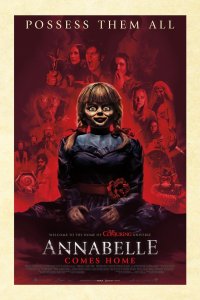
Just two days prior to Easter, Good Friday in fact, Lorraine Warren passed away.  A fervent believer in resurrection, she was half of the dynamic paranormal investigating couple of Ed and Lorraine, about whom I’ve posted from time to time.  This coincidental occurrence illustrates once again the connection between resurrection and horror.  The Warrens were fond of declaring that haunting spirits of the human kind were those that had not passed over into the next world.  Revenants were confused spirits (not to be mistaken as demons, which were something completely different).  Resurrection, presumably, awaits just the other side of the veil.  Clearly religion shares this roadmap with horror.  Just as the Warrens will be resurrected as characters in this summer’s forthcoming Annabelle Comes Home, such returns to life may take many forms.  It’s Easter for some of us, and it can integrate horror and hope, if viewed a particular, perhaps peculiar, way.