Discriminating Tests

That explains it.  That glow coming through the window as I got out of bed this morning is the full moon.  Since this is the first full moon after the vernal equinox, that means Sunday’s Easter.  If Sunday’s Easter this is Good Friday.  That brought to mind an article my wife sent me from The Atlantic, “Most American Christians Believe They’re Victims of Discrimination.”  In this piece Emma Green explains that Christians of a certain stripe believe they’re under threat.  Most people express surprise at this outlook, but having grown up in a Fundamentalist tradition I can say that this is hardly new.  The narrative of persecution among conservative Christians has been around for a long time.  They have a mandate, you see.  A mandate to make the entire world like themselves.

Hearing the many cries of legitimate oppression doesn’t help, of course.  In this linked world of instant communication and news 24/7, we’ve become perhaps too aware of just how widespread oppression is.  Christians have felt persecuted from the very beginning, and they don’t like now being cast in the role of oppressor.  Forcing other people to conform is no longer considered right or desirable, but Christians have a mandate.  What strikes me as odd here is that we have a means of learning about this—of arming ourselves with knowledge—but we’d rather be surprised at the polls and pay for it with years of actual oppression.  What is this mysterious means of knowing?  The Bible.  If read, this viewpoint can be understood.  And if handled carefully, disarmed.

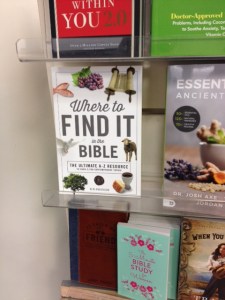
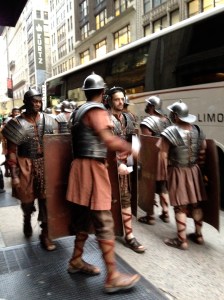
The Roman Empire, after which, tellingly, American politics is modeled, oppressed Christians.  At least for a while.  Then the faith became establishment.  And it began oppressing.  An ocean away, Christians fled here because they wanted freedom of religion.  They didn’t always want to share that freedom with other groups experiencing discrimination.  Especially, of course, if they could be compelled to do heavy labor without pay.  Now these groups feel they’re being judged for saying “Merry Christmas,” or for declaring loudly that Sunday’s Easter.  They can’t point to behaviors that in their understanding of the Bible are bad and tell people not to do them.  They don’t understand that Allah is the same deity they worship, only in monotheistic form.  And they get all this news while the moon is still in the sky.  I look at the puddle of light on my bedroom floor and head for my writing nook.  It may be Good Friday, but I’ve got to work today, getting Bibles ready to sell.


Looking Back

Image credit: David Hunter McAlpin Fund, 1944, via Wikimedia Commons

Like many I’m shocked and saddened by the fire at Notre Dame cathedral.  At the same time a recurring theme of this blog has been that modern people are disinclined to pay for the past, and some analysts are saying that lack of funds for regular upkeep of the cathedral over many years are at least partially behind the tragedy.  Monuments that have stood for centuries require constant care, but it’s so easy to take them for granted.  Cathedrals aren’t just religious buildings.  They are humanistic in the sense that they stand for our natural tendency to create great markers of our time on earth.  So very human.  Many human acts we wish to erase, but some represent a loss to the very soul of our species when they’re gone.

Even in this secular age the great cathedrals of Europe are on the agenda of many a traveller.  My own recollections of Notre Dame have grown hazy with the years—I do recall the stolid towers and flying buttresses.  Even the doubtless inauthentic but still ancient crown of thorns.  The famously secular French stood in the streets and sang hymns as the fire raged. 

My single trip to Paris was followed by a stop in Germany where we saw towers of cathedrals left standing even when the remainders of the buildings were gone—bombed out during World War Two.  Asking a friend about it we learned that the Germans felt these skeletal churches were appropriate reminders of the horrors of war.  No masses could be said in them ever again, but they stood, in their ruined majesty, as their own kind of monument to human folly.

We live in a post-cathedral world.  Symbols of the unity of a nation, demanding resources beyond what could really be afforded, cathedrals served to unite.  Citizens of London, it is reported, shoved bombs off St. Paul’s Cathedral during the Blitz.  Religion today has been turned into a means of dividing and conquering people.  It builds border walls rather than cathedrals where those of any faith might be allowed in and invited to wonder.  Images of that famous spire helplessly falling amid the flames suggest the shock of the twin towers collapsing.  Although the structure survives, much has been lost forever.  And if people react like they are wont to do, there will be outpouring of resources to rebuild and restore, but only for a while.  We tend to think that looking at the past is frivolous.  Yet, my photos of Notre Dame remind me that a life spent looking back may well be the only kind worth living.


No Refuge

A convention in histories of the horror genre is to trace it to Gothic fiction.  Gothic fiction itself is traced to The Castle of Otranto, by Horace Walpole.  Having grown up reading Gothic stories along with religious texts, perhaps surprisingly I never came upon Walpole’s oeuvre.  Some weeks back I happened on a used bookstore, which, by convention, had its cheapest fare on sidewalk carts.  I was surprised to see a negligibly priced copy of The Castle of Otranto, which I took in to the counter.  The clerk looked puzzled a moment, then asked if it was from the carts.  “Oh,” he sniffed, “that explains it.  We don’t carry Dover editions; they’re too cheap.”  Perhaps that remark haunted me a bit, but I finally got around to reading the slim book and it left a kind of unanticipated horror in my mind.

Okay, so this was written in the eighteenth century, and set further back, in Medieval times.  A spooky castle, knights and knaves, and fainting damsels all populate its pages.  Religion, particularly in debased form, became a standard characteristic of the Gothic.  Here a monk, an erstwhile lord, holds a secret that leads to the downfall of a house of pretenders who have claimed ownership of the castle.  All pretty straightforward.  Even the ghosts and talking skeletons fail to raise fear.  One aspect, however, does hold horror.  The three princesses in the story are completely at the whim of the men.  They acknowledge as much and claim it against piety to declare any different.

It would be unfair to assert that such sexism was intentional—like most human behaviors it evolved over eons—but in this era to read it is to shudder.  We have moved beyond the horror fiction that men own women and that they have any right to determine their fate.  Especially in these days, it’s embarrassing to be reminded that such was ever the case.  Despite the word from on high we cannot hide from history.  The domination of men has been a testament to how poorly civilization has been run.  Some of its benefits can’t be denied, but on a whole we see a succession of aggression and wars, suffering and poverty, generally brought on my societies that have taken their cues from patriarchical ideals.  My reading of The Castle of Otranto brought this back with a force not unlike that of the giant ghost haunting its walls.  Is it too much to hope that some two-and-a-half centuries might show some evidence of progress?


What’s Wrong with Heroes?

There can be no doubt that under Trump conservative Christians have been flexing their muscles.  Few things corrupt so readily as political power, and evangelicalism—already an unrealistic way of looking at things—is itching to throw punches.  A story on For Reading Addicts that my wife sent to me bear the title “DC Comics cancel latest comic after backlash from conservative Christians.”  The piece by Rowan Jones notes that Second Coming was cancelled due to pressure from evangelicals with the cultural sensitivity of the Kouachi treatment of Charlie Hebdo.  Cartoons, it seems, are a real threat to true believers in a way that reason is not.  Jones notes that the comic was actually largely supportive of Christian values, but like an evangelical Brexit the reaction was taken without understanding the issue.

The anger of conservative religions—it hardly matters whether they are Christian, Muslim, or Aum Shinrikyo—often plays itself out in displays of violence.  I wonder if part of this insecurity comes from the fact that the expectations of their faith don’t work out they way they’ve been led to believe they will.  The myth of the blessed existence of the true believer is given the lie by life in a secular world.  While the evangelicals support Trump, 45’s tax plan takes money from their pockets and hand it to the ultra-wealthy.  This raises no objections, but a cartoon showing Jesus helping the poor?—now that’s offensive!  And still no second coming takes place.  It’s difficult to retain a fantasy view in the face of cold reality.

Who doesn’t like a hero?

Religious beliefs are a deeply personal matter.  It is a dicey business to try to get someone to change their outlook when they’ve been convinced that the consequences are eternal.  Although vaguely aware of other religions all along, Christianity in the “new world” was taken quite by storm at the 1893 World’s Parliament of Religions in Chicago.  Suddenly it was clear that other moral, decent religions had developed similar ethics to what had largely been supposed to have been Christian innovations.  It’s difficult to feel superior when others in the same room seem just as intent on improving the lot of humankind as you do.  Even when a particular religion holds all the political power of a nation it’s overly sensitive to cartoons.  This is a curious situation indeed.  I’m not a comic book reader—I don’t even have time for internet articles unless someone sends them to me with the suggestion that they’re worth my time.  And I, for one, think a little more humor might just make the world a better place.  Either that or we need a hero.


Chilly Fluids

I’m not sure why I did it.  Read In Cold Blood.  I’d known of Truman Capote’s main claim to fame for years, but an accidental recent mention, a cheap copy in a used bookstore, and a week of grabbing time to read did it.  I’m not a fan of true crime, and despite my fixation on horror movies, I try to steer away from anything that doesn’t have a hint of the speculative about it.  There’s a difference between horror and terror.  I’d happily lived a half-century without ever hearing about the Clutter murders and kind of wish that were still the case.  Yes, there are doubts about the veracity of Capote’s account at points and novelists are often convincing liars, but still, at the heart of the matter more than just four people are senselessly murdered in the course of the tale.

A few elements stood out in the reading of the book.  One was that given the naiveté of the 1950s I wonder how anyone could ever really want to go back to that decade.  We’re run by a government full of doddering old men who seem to idealize the falsity and utter conformity of an age that was really a pressure cooker in which cases such as this would explode.  I was born in the much idealized 1960s but I don’t think we should go back to them.  We learn, we change, we grow.  Knowing what we now do, it was kind of painful reading how blissfully ignorant so many people were.  We may be more afraid these days, but at least we’re more realistic.

Another factor, very much at home in this world older but no wiser, is how the Bible is cited at the trial in support of capital punishment.  Although it may not have been intentional on Capote’s part, he demonstrates a deep truth about Scripture.  It can be read in more than one way.  In conservative Kansas in 1960 it could sway jurors to seek the death of other human beings.  The murders were indeed savage and pointless.  Capote’s account of them is difficult to read.  Perhaps more difficult is the way the Bible is used to unleash the basest instincts of people against other human beings.  Yes, parts of the Good Book require the bad thing, but if we’re over fifty years beyond Holcomb we’re over fifty score beyond a time when just one interpretation stands for all.  If it ever did.  There’s a difference between horror and terror, but the Bible can participate in both.  I prefer to stick to the former.


You Call That Working?

A recent post of mine on the United Methodist Church got a lot of response (for me, anyway) on other social media.  As I pondered this—I’ve written about the topic many times before—it occurred to me that most people probably have no idea what biblical scholars do all day.  (That is, besides write books that only other biblical scholars read, and teach their classes, or, very occasionally, edit books.)  Biblical studies is arguably one of the oldest academic pursuits in the world and what it boils down to in a word is “contexts.”  We try to understand the multiple contexts of the biblical texts.  Think about this a second: when you pick up a book, newspaper, magazine, or their electronic equivalents, what is the first, if often unconscious, thought you have?  Isn’t it something like “what kind of book, newspaper, etc., is this?”  Is it fiction or non?  Is it reputable or not?  Who wrote it and when?  These are all contexts.

The Bible was written about two millennia ago.  Very little of that original context still remains.  In fact, none of the original manuscripts even still exist.  It was a book written in Hebrew, Aramaic, and Greek.  The vast majority of people in the western world do not read these languages, and so the Bible comes to us in mediated form—translation.  Translation, as any writer knows, is a form of interpretation.  It is not, and can never be, the original.  To figure out what the Bible “means” it has to be interpreted—even just reading it is a form of interpretation.  Biblical scholars want to be able to interpret it in informed ways.  We learn about its various contexts and use them to help us understand.

What did people think like thousands of years ago?  Can you even remember what it was like to look up a distant location without the internet?  Writing letters or dialing a rotary phone to get information on it?  Going to triple A to get maps?  And all of that was only two decades ago.  Life in biblical times was very different than life today.  The people then didn’t understand science the way that we do.  The writers of the Good Book didn’t have any idea that what they were scribbling would one day be considered holy scripture.  They had completely different contexts.  Whether the contexts are historical, literary, or social scientific (we still haven’t figured out an elegant way of saying the latter) biblical scholars use a variety of methods to get to those contexts.  We can’t go in with the answers already in our heads—if we did we’d only find what we were looking for.  At the end we have an answer, not “the” answer.  And so biblical studies continues.


Common Tyrants

“Common tyrants, and public oppressors, are not intitled to obedience from their subjects.”  The words aren’t mine, nor are they from this century.  That, however, makes them no less true.  Jonathan Mayhew was an eighteenth-century clergyman arguing that Bible’s admonition to obey government officials did not apply to those who abused power.  In reading these words I felt a sense of loss in a very basic way.  No, I’m not a fan of turning back the clock—it can’t really be done anyway—but when the word of a single book was not disputed those tempted to follow tyrants could be made to justify it with a Good Book that could also be used to refute it.  We no longer have a common frame of reference, but tyrants still exist.

Shouting matches have been substituted for discussions because those who support tyrants can’t see how they are also being oppressed.  It’s one of the ironies of history.  This internet age has only found a way of magnifying people’s differences on the political scale, even as it has brought us to the common marketplace of culture.  Who doesn’t use Amazon?  Tyranny, by definition, is the arbitrary use of power.  One might think of, oh, declaring a national emergency when none exists just to get what one wants.  One might think of surrounding oneself with criminals against the nation just to get what one wants.  One might think of business practices meant to ruin others just to get what one wants.  There seems to be a common theme here and it’s one on which the Bible has a great deal to say.  The only Scripture that gets quoted is that which supports tyranny, eh, Mayhew?

When the debate was about the Good Book we were largely all on the same page.  Not all colonials wanted to break with King George III.  Some profited from the connection.  Others thought Holy Writ prevented revolutions rather than inspiring them.  Tyrants have always been with us.  You’d think that with all the media we have these days that we’d be able to spot one fairly easily.  The camera, however, has a way of giving the lie to the Good Book.  Anyone can say they read it.  Or claim they obey it.  Its own test seems to be “by their fruits you will know them.”  The words aren’t mine.  They’re from a distant century past.  But it seems the fruit is dying on the tree, even as spring begins.


Culpability Defined

What seems to be lacking in the United States government is any realization that actions have consequences.  While in Christchurch, New Zealand at least 49 people have been murdered only for being Muslim, Trump feels that tweeting “heartfelt” condolences somehow exculpates him from fostering an atmosphere of hatred.  Indeed, the main shooter in that travesty cited Trump as an inspiration.  The sickening lack of awareness that deeds have consequences has once again led to a body count.  Meanwhile in these states the Republican Party refuses to condemn the daily and consistent message of racism coming from an edifice that is more and more appropriately called the “White House.”  Do you have to pull the trigger to be guilty?  History will decide.  

Politics has always been a crooked game, but until 2016 most elected to the highest office—God help us, even George W. Bush—realized that the office had responsibility associated with it.  It wasn’t a place you could play loose and easy and tweet from the hip and think it was your right as “just another citizen.”  Muslims have been part of American culture from very nearly the beginning of this experiment in colonialism.  Freedom of religion was one of the pillars of democracy that Trump has been chopping down like a cherry tree while tweeting “No I didn’t.”  The GOP applauds.  Here’s how to instill one religion as the norm, not considering the consequences.  Massacres in the name of Christ don’t make you Christian.  Not cutting history class should be a requirement to run for elected office.  Or at least taking basic civics.  Instead we have a government that refuses to recognize that it can inspire murderers around the globe and then offer heartfelt condolences with no apologies.

Where is the condemnation of racism?  Where is the line between black and white?  Where is the sense of any culpability for creating and sustaining the warm, moist environment where the bacteria of hatred thrives?  When you awake to the news that yet another white supremacist has taken inspiration from an angry white man who has nothing to be angry about and has consecrated murder as patriotism how can you look the world in the eye?  Hiding behind a tweet does not bring back the dead.  How do we get the message through?  Millions of us have repeatedly marched in protest.  We flipped one house of congress and we daily sign petitions until our fingers bleed but no response comes from those who won by a mere technicality.  If there are indeed ghosts in this world there will be mass immigration and it shall be richly deserved.


If It Itches

The problem, or rather a problem, of growing up Fundamentalist is taking things literally.  I suppose we’re all born naive realists, learning only later that things aren’t what they seem.  One of the dynamics of finding something new to say about demons involves an unconventional method of research.  Richard Beck’s Reviving Old Scratch: Demons and the Devil for Doubters and the Disenchanted is a case in point.  Being part of a series called “Theology for the People,” this book is not an exploration of literal demons or the Devil.  Well, it kinda is and kinda isn’t.  It is an engaging and often insightful treatment of the question of evil and what to do about it.  Evil is a question, but most of us, at least pre-Trump, could recognize it when we saw it.

Beck is a professor of psychology.  This meant that at several points I found myself pausing to consider some of the points he was making.  Some parts didn’t work for me—welcome to the world of reading—but others were eye-opening.  One thing that all books about the Devil seem to have in common is the observation that evil is clearly present in our world.  Governments, and Beck uses Rome as an example, easily become oppressive and harmful to the weak and powerless.  As a volunteer in a prison ministry, Beck knows whereof he speaks.  When governments are run by the unstable (think of the one with a toothbrush mustache or any other who declare themselves geniuses) oppression follows.  Evil not only bobs in the wake of oppression, it is oppression.  Beck has a Christian anchoring—call it theology—behind this, but it clearly works even without that.

Getting over my literalism, I know that academic books about demons or the Devil come with more serious titles and more hefty price-tags.  The value of a book, however, has to do with more than the cash you shell out for it.  Beck does a service by offering a theology that isn’t too theological.  I’ve known many candidates for the ministry who lost their compassion by getting tangled in the weeds of theology.  Even to the point of making sarcastic remarks to someone who wanted to help them when they fell on the ice.  I know myself, and I have to learn to trust those who practice theology in ways that I do not.  This may not be conventional research, but it is important reading.  Old Scratch, after all, is not just in the details.


Checkmate

March has been designated as Women’s History Month.  Since history has been written, well, historically by males, women have frequently been excluded.  History as a serious attempt to describe “what actually happened” is a fairly recent phenomenon.  Yes, men (mostly) have been writing their views of what events meant from the days of the Bible and the Classics on.  A few females had made their way into the narratives, but reading history often makes it seem like males were the only people of consequence.  I was thinking about this the other day after I read a reference to the Red Queen in Lewis Carroll.  Chess, I realized, is a game with a message.  Now I don’t often have time for games, but this felt important.

I’m not a good chess player, but I know that if you lose your queen you’ve got to be far better than I am at it to win the game.  In fact, the queen is the most powerful piece on the board.  Now if you plan to come back with something like “using the bishop, knight, and rook you can surpass the power of the queen” it suggests two things.  One, you’re better than me at chess, and two, you’re missing the point.  The queen can move in both perpendicular and diagonal lines.  She can land on either color.  The range of her motion is limited only by the size of the board.  The bishop is limited to one color square only and the rook takes two moves to equal the queen’s diagonal skills.  

Think about the king—he moves one space at a time, and mostly only to avoid capture.  The queen is out there defending the realm.  Even as a kid learning to play chess, it was obvious that the queen did far more than a bishop limited to his ecclesiastical domain, or the rook with his brute force.  The knight makes a move the queen cannot, but his range in limited.  If a player retained only a queen the opponent’s king could still be captured, in my mind.  Chess should be a queen’s game.  

History is a way of looking at things.  Although it involves facts—and this is where the government narrative goes off the rails; the denial of facts is an autocrat’s game—it’s not the same as facts.  History is an interpretation of facts.  The fact is that male history of the world just could not have been possible without women.  It’s time not just to acknowledge it, but to celebrate it.


Mostly Clear

“Chiasm” is a literary technique based on the name of the Greek letter chi, shaped like a latinate X.  The idea is fairly simple and generally resembles a sideways V more often than an actual X.  It goes like this: a poem, or story, begin at a large, or wide premise, narrows down in steps to a center, and then, by corresponding steps, again out toward a larger, or wider resolution.  Another way to think of it is a set of Matryoshka dolls; first you take them apart, and then you put them back together.  David Mitchell’s Cloud Atlas is a chiastic story.  Starting on a cross-ocean voyage at an indeterminate time in the recent past centuries, it moves on to a Briton on the continent in about the turn of the last century, then a mid-twentieth-century American investigative journalist, a late twentieth-century or present-day rogue publisher in Britain, a clone in future Korea, and finally, to a planet of the apes-like Hawaii of the distant future.  Not really finally, though, since after the center of the X, it moves back outward through the nesting stories to bring us back to the beginning.

I’m not going to attempt to retell the story here, so don’t worry—it doesn’t get any more complicated.  There are, however, a couple of remarkable things about the tale.  In the brutish, nasty, post-collapse future that marks the center of the narrative, religion is central.  Some of the Hawaiians have come to believe the protagonist of the nesting story, the clone mentioned above, was a god.  To find her story, however, you’ll need to read the book.  Suffice it to say, that origin myth is part of the overall complex structure.  The second of the remarkable features, and one that makes this book very salient, is that in all the ages the issue of accepting those who are different is central.

In the outside framing story, the initial and terminal points of the chi, one of the characters is a missionary.  He’s trying to “improve” he life of Polynesians by making them into slaves, whereby they benefit from the largess of Christianity.  Quite a bit of the narrative draws its energy from the eventually faltering sense of superiority of the AngloSaxon “race.”  In that sense it’s definitely a parable for our time.  A story that deserves to be read.  Defying easy genre identification, Cloud Atlas is a thought-provoking novel that doesn’t fear religion and its larger implications.  A couple of the nesting stories have exquisite twist endings worthy of the Twilight Zone.  This book will make some demands on your time, but its message makes it a sound investment in a world rapidly heading toward a future that reveals just how troubled our species is.


Time Saving

As we suffer through another pointless Daylight Saving Time, I’m thinking of rituals that have lost their meaning.  Life is full of them.  We do things because we’ve always done them this way and even when they become harmful because of the way lifestyles change (auto accidents, for example, increase after shorting people of an hour’s sleep) we can’t seem to let go.  DST alone should’ve been enough to convince those who claimed religion would simply go away when science kicked in that they are wrong.  This is one reason that I’ve always found the origins of ideas fascinating.  Why did people believe this?  Why did they do this?  What started this whole process?  (Just to be clear, I’m not asking this about DST; I’ve written about that before.)

We can’t know the ultimate origins of religion.  I’ve suggested in the past that what we would term religious behavior has clear origins in the behavior of animals.  A somewhat fully developed consciousness provides incentive to rationalize such behavior.  The earliest organized religion of which we know involved state functionaries (priests) supporting, probably for sincerely believed reasons, the “secular” government.  Kings and priests needed each other and people quickly conformed.  Even when those on the inside came to realize that they were merely pretending, they kept on doing so.  It was too late (or if DST, too early) to change anything, so the mascarade continued.  Tracing the history of religious ideas reveals perhaps more than we want to know.  And human beings are natural actors.

Once, while in a restaurant, I sat near the kitchen.  The smiling servers, as they neared that portal lost their smiles and harried looks came to their faces as they told frantic cooks what the couple at table eight wanted.  Yet they continued to pretend they were happy when at table-side.  Or think of work with its “public facing” information that is inevitably different from what is known by those on the inside of the company.  Actors.  We’re all actors.  Perhaps it’s the price to pay for living in a civilization.  If we stopped to think about why we’re doing something as inane as pretending five o’clock is now six o’clock, or even that all people are the same and should be at work between nine and five, society could not stand the scrutiny.  Anarchy would erupt in the streets.  We should be thankful that people don’t think about these things too deeply.  Or, then again, maybe I didn’t get enough sleep last night.


Lingua Franca

The history of Israel and its neighbors has been appropriated deeply in the mindset of western cultures.  Both the British and Americans, for example, have thought themselves the “new Israel,” for once a people is chosen so all people wish to be.  I’ve been thinking about this in linguistic terms of late.  To get to the main point, we need to read a little history—it’ll be painless, I assure you.  Israel was a nation frequently conquered.  The imperial powers to the east, beginning with Assyria and continuing through Babylonia and Persia, overran the land.  This hostile takeover involved not only Israel, but its neighboring nations as well.  These early, violent attempts at globalization worked themselves out linguistically, in part, by the necessity to communicate in a common language.

In the broad sweep of world history, the conquering nation tends to impose its language on the conquered.  Think of Alexander of Macedon and the adoption of Greek as the “lingua franca”—the official language of empire.  Ironically—and this is what captures my attention—when Assyria overran Israel, it also conquered “Aram.”  (Aram was the area north of Israel, roughly what we think of as Syria today.  Their language was Aramaic, which is closely related to Hebrew.)  Instead of the Assyrian language being imposed on the defeated peoples, the invaders adopted Aramaic as the official imperial language.  Some of this may have to do with the fact that Aramaic, being alphabetic, was much easier to learn to write than syllabic Assyrian (known generically as Akkadian, along with Babylonian and its dialects).  It may have been the last time a conquering nation admitted at least some of the culture of the defeated was superior.  (Ironically, the Romans felt that way about the Greeks.  Those who have ears…)

Aramaic continued in favor even as the conquered adopted Alexander’s Indo-European Greek centuries later.  Lingering into Roman times many of the people of what was left of Israel were bilingual, knowing Greek and Aramaic.  The latter was the language of Jesus.  Aramaic later survived in the form of Syriac, but the area was overrun by Arab invaders and Arabic became the lingua franca.  Still, nestled in the middle of this linguistic history is that episode of the ascension of Aramaic to imperial levels.  That’s the thing about globalization—it’s an exercise in compromise.  Many distrust and hate it, and even today some sub-cultures fear they’re being wiped out by granting too much to those who “don’t belong.”  In some ways it’s an understandable fear.  Learning new languages is hard, especially for adults.  There is perhaps a lesson in the survival of Aramaic, though, that might still come in handy when cultures collide.


Symbolic Delays

Weather affects more than the Psalms, of course.  With all the hype of the latest winter storm things were closed or delayed before any accumulation even started.  Now I’ll admit up front that I’m a fan of snow days; we dutifully trudge to our desk jobs as if we’re doing something vital when many of us are really just trying to make money for the man.  A snow day’s a little unplanned levity in our lives when staying off the roads seems like a good idea.  It’s one of life’s guilty pleasures.  Of course, the dreaded delayed opening brings its own set of issues.  You can’t sleep in unless it’s announced the night before, and once you’re up your mind heads to work anyway.  Working remotely, alas, means you have no excuse, no matter what the weather.

Snow is a great symbol.  I don’t mean its whiteness and purity—there are plenty of white things that aren’t pure.  No, I mean it’s a great symbol in its ability to control people.  We don’t like rain, although we understand its necessity.  Snow, however, fills us with a childlike wonder.  Anticipation.  Unlike a winter rain, it can be fun to play in.  It covers everything.  The suggestion of a blanket ironically makes us feel warm, even as the temperature dips below freezing.  But for me the most potent symbol is light.  I awake early, even on snow days.  As I make my way downstairs in the dark, it’s immediately evident when snow covers everything because the sky is lighter than it should be this time of day.  Whatever light’s trapped below the clouds reflects off the snow creating a luminosity that’s almost otherworldly in its calm.  It doesn’t last too long for the sun is rising earlier, at least it is until our pointless time change, but for a few hours we’re in the midst of an unnatural light.

Darkness is far too prevalent.  We know that someday even our mighty sun will use up all its fuel.  We crave the light for it’s limited.  Days are noticeably longer now than they were at the start of December.  Those few moments of serenity before the sun comes up, when the snow produces what seems like its own light, are among the most tranquil of life.  Before the plows begin scraping metal against asphalt, hoping for a snow day while wrapped in a fleece throw, face clouding the chilly window before it.  Yes, it’s a powerful symbol.  Even if the internet means work awaits just as usual.  


Christianity sans Christ

Pieter Breughel the elder

“He that is without sin among you, let him first cast a stone at her.”  (Please pardon the sexist translation, but the King James is in the public domain.)  That verse, and many others, have been going through my head since my former United Methodist Church decided to close its doors to those who are different.  The reason this verse sticks out is pretty obvious—according to the Good Book we’re all sinners.  The “Christianity” that the UMC has embraced is that of Paul, not that of Jesus.  In fact, Jesus seems to have exited, stage left.  You see, only with a great deal of casuistry of exegetical caliber can anyone claim that Jesus (aka God) said anything about homosexuality.  Not a single word.  His response in the famous story of an adulteress (what of the adulterer who partnered in her crime?) caught in flagrante delicto, he gave our opening quote.

At one point Peter, exasperated with his master’s kindness, sputtered how many times did he have to forgive—seven times?  More like seven times seventy.  The one without sin has itchy fingers where stones are abundant.  Once at Nashotah House we had a student from Kenya.  He was already a priest, and he had a family back home.  At one point I asked him about his wife.  He informed me that his brother now had her as wife while he was gone.  It was the way of their culture.  This same student—for we are all students all the time—had harsh words for American sexual practices.  He later tried to find a way to stay in the United States, leaving family behind.  The Bible may turn a blind eye to polygamy, but polyandry is definitely stone-worthy.  Who is without sin?

Ironically the UMC has lined up against the Gospels.  Christianity’s sexual hangups began with the apostle from Tarsus, not the carpenter from Nazareth.  We have been forced to see, time and again, what comes of making priests remain celibate.  It’s against nature, and none of us has a free hand to grope for a stone.  Instead, we queue up ready to judge.  Love, the church says, is wrong.  God, says the Gospel, is love.  There’s a mansion with many rooms above our heads.  We’re not told if the doors come with locks or not.  Unless this seem unnaturally profane, anyone who has truly loved another knows it is more than just a physical act.  Such spiritual intimacy is difficult to spread too thinly without cheapening it to the point of a tawdry sit-com.  Even then, however, we shouldn’t judge.  There aren’t stones enough in the world for that.