The Devil, You Know

I’m the first to admit that I’m behind the times. Too much of my free time is spent reading weird news or going to used book sales to keep abreast of what’s happening in the adult world. If it weren’t for my wife sending me news stories via the internet, I would still be wondering why Gorbachev isn’t helping to hunt down Osama Bin Laden. Since I’m captive to a religious worldview, I was interrupted in my calculations by the news that Ted Cruz is, allegedly, Lucifer. My research had me on the trail of Santa, since the simple transposition of two letters would give us the title of the Zoroastrian prosecuting attorney. And, I figured, it was fairly safe to out St. Nick when Christmas is still eight months away. Hopefully I’ll still find something in my stocking come December. I kind of figured that when we found the real devil he would be a Republican in any case. Even as I write this, Cruz is out of the race. I thought the Devil never gave up.

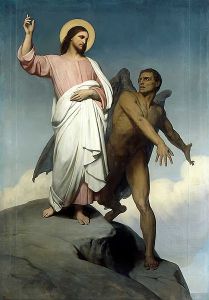
I wonder where else in the civilized world would politics be such a joke. Can you trust the opinion of a man named Boehner? It’s easy to change your name—just ask anyone who came through Ellis Island. They’re laughing at us, folks. Seriously, they are. I don’t get much email, but I’ve had two international missives asking me what’s going on over here. It’s a good thing I don’t know, otherwise I’d have to try to explain. You see, the Bible doesn’t say much about Satan at all. In the Hebrew Bible there is no devil. By scraping together the few references to “the Satan” and morning star, some have said the alleged Ted Cruz of ancient times was clearly in the Bible. Somewhere between the Testaments he showed up. By the time Jesus was old enough to climb temple towers, he was there. In the meantime the Zoroastrians had come down from the North Pole…

Then there’s the fact that when he’s not wearing a conservative suit and announcing a female running mate, the Devil is described as looking like Pan. Goat horns, goat feet, but always the torso of a man. And he’s red, just like the Coca-Cola red of Santa’s suit, and states like Texas. It’s a good thing I don’t read any more conspiracy theories than I already do. You’d probably find me tootling away on my pan-pipes waiting for a bus in the Port Authority. No, there’s a reason I stay away from the real news. It might interrupt my fantasy world. And, I’m afraid, it might actually be more entertaining. And don’t worry about my Christmas—I plan to have an eleventh-hour conversion, just in time to have a chimney installed in my apartment. If I can only be sure I get it done before February.

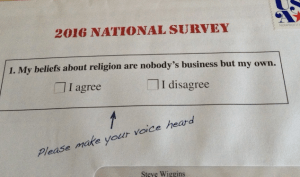
There's something political going on here...

There’s something political going on here…


Lily White

The funny thing about being “white” (I’m more of an anemic pink myself) is that my race seems to think all the gods share our ethnic traits. I’ve seen Thor, so I know. The Daily Kos ran an article recently about Crystal Valentine, a black poet, and how she responded to Megyn Kelly’s 2013 statement that Jesus is a white man. I won’t say what Valentine’s apt response is, but I will say I feel a lot better knowing that I’m not the only one who’s a couple years behind the news. I remember 2013 well. It was a year of transition, some would say enforced exile. If you could pull that trick off 2500 years ago, you’d have no end of books written about you. Just check out the offerings on The Exile and you’ll see what I mean. But I digress. Is Jesus white?

Historically all we can say is that Jesus was Jewish. We don’t have any Jewish men from two millennia ago to ask about their skin tone. One of the problems of having an only child, especially for a deity, is that you have to decide on the race (and gender; perhaps twins would be better?). Other religions sometimes make similar claims, but the problem persists. Especially when one race claiming God’s ethnicity develops an industrialized military economy. Who’s going to argue with that? So if Jesus is white, it stands to reason that his dad is too, right? If you listen to the sidewalks of Manhattan you’ll have your answer. Or the question.

IMG_1558

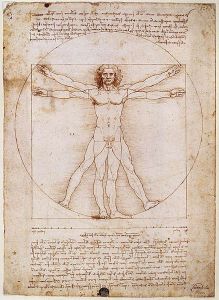
All of this makes me wonder about the image of God. Theologians like to make it sound academic by calling it imago dei. If you can read Latin then you obviously know the truth. With monotheism and imago dei, you’re gonna run into problems. Nobody likes to be told they’re adopted. Since this theological construct has caused no end of pain and misery, I have to wonder if we’re better off thinking that we’ve not had a case of mistaken identity after all. We all evolved out of Africa. We should, it seems to me, treat our parents with more respect. And that, dear reader, is straight from the Bible.


Same Old Story

Once upon a time fairy tales were considered appropriate only for children. Unlike myths, fairy tales are frequently oral (yes, there are oral myths but this is not the place to discuss technicalities) and have origins that are obscure. A friend recently sent me a story entitled “Phylogenetic analyses suggests fairy tales are much older than thought” by Bob Yirka on phys.org. Using phylogenetic analysis, researchers have traced some fairy tales back thousands of years, into the Bronze Age of the ancient Near East. This will no doubt surprise some analysts who supposed fairy tales were a more recent, European invention. The tales change with time and distance, no doubt, but the basic story is very deeply rooted in who people are. Fairy tales are adult fare, after all.

I tried to make this point in an academic article that was rudely rejected by the journal Folklore some years back. I mean “rudely” literally. I’ve had academic articles rejected before—many of us have—but the letter that came with this one was insulting. My “error”? Suggesting that the story of the musician who travels to the underworld came from ancient Sumer. The article had its origins in my wife’s reading of the Mabinogion. The story of Bran’s head being washed down the river still singing reminded me of an Edinburgh ghost story the tour guides used to tell right outside our window. You’ve probably heard similar: a tunnel is discovered, a musician (a bagpiper, since this was Scotland) is sent down while playing so that those above can follow the sound, but the musician never emerges. I traced the story through the Celtic tradition of Uamh ‘n Òir, the cave of gold, through Bran, Orpheus, and finally back to Ishtar’s descent into the underworld. It was a fun piece, but serious. It ended up published in a Festschrift to a scholar with a noted sense of humor.

Photo credit: Kim Traynor, Wikimedia Commons

Photo credit: Kim Traynor, Wikimedia Commons

The fact is, traditional stories often go back very far in history. We haven’t the tools to trace many, nor can the results be taken for Gospel, but the implications can. People are storytellers by nature. We find meaning in what would today be called “fiction.” Too often I’ve had to hang my head in embarrassment when admitting to a fellow academic that I read (and sometimes write) fiction. It is something, however, that ancient mythographers and folklore singers would have understood. We can be academic some of the time, but we are human full-time. And telling stories is something that predates even the Bronze Age. Of that we can be completely certain. And they lived happily ever after.


Fast One Flood

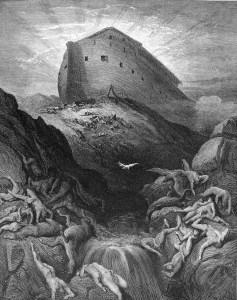
I’m not sure what to believe anymore. This crisis of faith revolves not around religion, but around media. Pundits have been saying for some time that the internet has meant the slow death of journalism, and there are so many websites that redistribute news that its like the whole world is involved in a constant, perpetual game of “telephone.” All of this is preface to a story a friend sent me that appeared on the website God. I’m not sure I trust God. The story is too good to be true. At least in a schadenfreude sort of way. God is hosted on thegoodlordabove.com, and, well, we all know about dot coms. The article concerns the destruction of Answers in Genesis’ Noah’s Ark theme park by a flood. That is believable. Floods do occur, as Noah knew. What becomes unbelievable is that the National Weather Service forecaster stated that there were no storm clouds in the area at the time. That qualifies as a miracle.

Martin,_John_-_The_Deluge_-_1834

Did this really happen? I don’t know. I wasn’t there. Plenty of times when I was there (wherever there happened to be at the time) I wasn’t even sure what happened. Can I find the truth? One of the police sites for internet rumors is Snopes (also a dot com). I remember when Snopes began as a place to quell fears of urban legends. Back when the worldwide web was young, there was a verisimilitude to stories gleaned from the net. Living in the sparsely populated Midwest, it was easy to believe that some of these things could happen to you. At times I held onto Snopes like a crucifix, especially if I had to go out alone at night. Snopes tells me that thegoodlordabove is not to be trusted. The story is false, like others that have originated on the site. Answers in Genesis, unfortunately, is still going strong with its theme park.

Authoritative texts aren’t what they used to be. There was a day when all you had to do was pull a black leather book off the shelf to find the definitive answers. In Genesis or any other of the books. Now we rely on the worldwide consensus of the web. You can’t trust God on a website. Snopes, however, is pretty reliable. It’s the Scully to our natural Mulder. That’s why the web will never have the same impact as print media. Even the website for your bank or government can be cleverly faked. I might’ve looked no further had the purported flood not fallen from a cloudless sky. I guess I’d better be a wary believer. For the internet tells me so.


Story of God

Synchronicities come at kinds of synchronaddresses. After I had written a recent post on human sacrifice, I watched the first episode of Morgan Freeman’s The Story of God. My wife actually figured out how to get it without the miracle of the triple play, and we watched the initial installment on death. I’ve stated repeatedly on this blog, as I used to in my lectures, that death is a universal concern of religion. I wasn’t really expecting to learn anything new from the show, but it is a good idea to keep up with what hoi polloi are being told about the field in which I’m supposed to be a specialist. In any case, The Story of God is very much like Through the Wormhole, only from the other side. Science and religion. Religion and science. Like chocolate and peanut butter, two great tastes that taste great together. Really, I mean that.

So after telling us that the Egyptians may have invented the afterlife (although it’s clear they didn’t), the show takes us through other religious expressions: Christian, Hindu, Aztec. The Aztec segment brought up human sacrifice again, in its particularly grisly expression, as a means of thinking about what happens after death. In the light of the article I’d read (see last Sunday’s post) I couldn’t help but think how this was an ideal form of social control. There’s no doubt who’s in power when you’re looking up at your still beating heart, strangely cooled. As I’m pondering that heart, I’m thinking it wasn’t the Egyptians who first had this idea at all.

DSCN6127

Neanderthals, it appears, may have buried their dead. Even if they didn’t other ancient, pre-historic people did. And with grave-goods which, if you think about it, are rather superfluous without any afterlife in which to use them. It stands to reason, even before reason, that as soon as people began to recognize death, they had to be wondering what happened next. It is a bit simplistic to suggest that religion began because of the fear of death. It is also equally simplistic to suggest that death had nothing to do with the beginnings of what we call religion. People have died as long as there have been people. And survivors have carried on after the passing of others. Maybe we are all grown up now, but it seems that we aren’t fully human unless we give some sort of thought to what comes next. Even if the answer is “nothing,” it’s some kind of religious statement, whether intentional or not.


God’s Rain

Photo credit: Micahmedia, Wikimedia Commons

Photo credit: Micahmedia, Wikimedia Commons

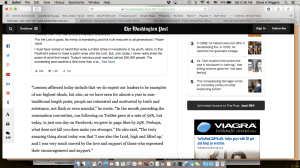
Music has been in the news this week with the death of the artist formerly and forever known as Prince. Also, in a lesser covered story, Bono’s friendship with Bible translator Eugene Peterson. This post will focus on the former former artist. I’ll have to circle back later to pick up Bono and Peterson. I have to admit that I haven’t listened to Prince much lately. I saw “Purple Rain” when it came out, and some of his songs have resonated with me throughout the years. What makes him such an intriguing figure is his view of sexuality. My source here is the Washington Post, specifically, an article by Michelle Boorstein stating that Prince was, beneath the sexy exterior, a conservative Christian. Specifically a Jehovah’s Witness. He would not be alone in this role since Alice Cooper is famously also a conservative Christian. Life upon the stage is that of the actor. With Prince, as Boorstein points out, the question goes deeper: he wrote about religion, but he also wrote about sex.

Those of us who indulge in creative writing know that poetry is perhaps the only place where dishonesty is impossible. Song lyrics are true. Prince often cites Christian tropes (see Boorstein’s article for samples), but his material is deeply sexual as well. This leads to the suggestion that he saw sex as a means of worshipping God. Once again, Prince doesn’t find himself alone in this place. Scholars brave enough to examine both religion and sexuality often find a connection there, and not just a tangential one. Both are about communing with something greater than the individual. Thinking back to my first viewing of “Purple Rain” I can say it wasn’t the religion part that stood out to me.

Histories of Rock-n-Roll are rife with stories of performers’ untamed sexuality, so that’s hardly news. What really strikes me is that with recent deaths—David Bowie, and now Prince—the media seems intensely interested in their views of religion. We don’t often look to artists for advice on how to live our lives, but as the polar opposites of scientists and rationalists, they are in touch with and willing to share their feelings. And we the people want to know what they thought of God. Often because it is so surprising. It’s easier to put someone in a box. Religion, however, is way more complex than most non-specialists think. It has room for creativity, for sexuality, and for exploring the meaning of life. I many not listen to Prince much, and when I do it’s not for religious advice. I am, however, inclined now to think in new ways about colorful rain.


Mother Earth

Son, behold thy mother.

Behold thy mother.

As a planet-locked earthling, I’m thinking about Earth today. Such a quotidian planet. While I’ve been to others in my mind, this is the only one on which I’ve ever been or am likely to be. And yet there are no laws protecting it from my own species. Corporations are treated as individuals, legally. Only they’re much, much bigger and have lots more money. They can drill and dig and spew and slew all they wish. I can mutter a feeble, “Hey!” but they legally have to pay no attention. It’s like that guy with a loud device on a quiet bus. Or someone smoking too close to the door. They invade the little space you occupy and there’s nothing you can do about it. We look to our politicians to learn how to be better bullies. Our corporations look past us to the bottom line. When the planet dies, that will indeed be the bottom line.

We tend to make fun of those who believe there’s other life out there. Whether sci-fi nerds or gullible believers in conspiracy theories, we tell them all intelligent life is located right here. In your bank account. Your net worth. The contribution you make to the GNP. It all comes down to numbers. As if there weren’t something magical about walking in the woods. As if all of this is just dress rehearsal for the play of getting rich. The beasts we had to fear used to lurk in the jungle. Now they brazenly drive through our cities in expensive cars with tinted windows. They build towers to defy the spacemen to come down. “Don’t worry,” they seem to say, “our money is great enough that we can come to you.” And yet, we are still left with only one planet. And it seems to be getting quite stuffy down here.

I worry about our throwaway culture, because there’s nowhere else to go. You can’t prevent me from fracking the very ground beneath your feet. Or like Martin Luther, prevent me from flying over your head. You don’t like my loud music? You don’t like my noxious fumes? I can blow my vape into the shared, public airspace if I want. Ownership is a funny concept. Our species has been on this planet for a geologic sneeze and yet we plant our flags and bray our allegiances. It takes treaties and accords for us to act like civilized people. We won’t call it “global warming” because that offends those big people called corporations. If it feels a little warm in here to you, turn on the air conditioner. If we use up this planet, we can always buy another one.


Prayer before Meals

It was in Wisconsin. Oshkosh. I was teaching for a year in a replacement position, and my roster of classes at the university covered several aspects of religious studies. During the course of prepping a course, I first saw it. The Flying Spaghetti Monster. It was only a virtual Flying Spaghetti Monster sighting, but since Creationism was much in the news in those days, I boiled with curiosity. By now it would probably be a strain to explain the whole thing, since everyone knows about his noodly appendages and predilection for pirates. The short story is that the Flying Spaghetti Monster was an invented deity to demonstrate the ridiculousness of trying to get Creationism taught as science in public schools. For those who believed in other gods, such as the FSM, there should be equal time in the classroom, the argument went. Since that time Pastafarianism has taken on the semblance of a real religion with “believers” earning the right to have driver’s license photos taken with colanders on their heads, and even a book of scriptures being written.

An Associated Press story from Sunday’s paper tells of the world’s first known Pastafarian wedding. Bylined Akaroa, New Zealand, the blurb indicates that the Oceanic nation down under has decided that Pastafarians can officiate at weddings, and a couple was married with al dente accoutrements. The Church of the Flying Spaghetti Monster, it seems, is going the way of the somewhat more serious Jediism and Avatar religions in that people are deliberately electing fiction as their faith. Interestingly, this may not be a new phenomenon. We are told, for example, that Zarathustra deliberately outlined a new religion—one that may end up having had the greatest impact on humanity of all time, if roots are considered. In those days the strict division between fiction and fact may not have been a mental filter yet discovered. The “it really happened” test of religious veracity was still some distance in the future. Metaphor meant something then.

IMG_2753

The internet, it seems likely, has facilitated and accelerated the appearance of new religions. As with most things, the real issue comes down to money and power; if a government recognizes a New Religious Movement as legitimate, it may be granted tax exempt status. And how can it be proven that someone really does or does not believe what s/he says s/he does? If you’ve got a box of Barilla on your pantry shelf, who’s to say? It’s a short distance from that colander in the cupboard to the top of one’s head. And who doesn’t like pirates? And who’s to say that under that rotelle moon in a stelline-studded sky someone hasn’t indeed kissed their hand and swore the ultimate starchy allegiance? Keep watching the skies!


Biblical Stories

The Bible had quite a week last week. It went from being vetoed as the “state book” of Tennessee to making it onto the list of the ten most challenged and banned books of the year for the first time. Did you ever get that feeling that you should’ve thought a bit more closely about career options? I mean, the Bible’s not half bad. Yes, it has some naughty bits, a few instances of cursing, and adult situations. There are homicides, suicides, and genocides. It endorses slavery and advocates religious intolerance. It’s not all bad news, however.

IMG_2634

We find it easy to make summary judgments based on our own tendency to elevate human products to divine status. That which is most holy, after all, becomes the most profane when it’s defiled. The Bible itself can be like any other book. Printed on paper, bound between two covers, it contains ideas that must be interpreted. There’s no such thing as “just reading.” Even that road sign that says “slow children” is open to hermeneutics. What is objectionable is the use to which the Bible is put. And that use is objectionable due to the claims made about it. Saying that God rolled up his immaterial sleeve and took a transcendent pen into his incorporeal hand and began to scrawl is a bit naive. We know that people wrote the Bible—and much of it is sublime—and other people compiled it into a book that eventually acquired sacred status. It wasn’t born holy, it had to grow into it.

Once the Bible became objectified it turned into what people eventually use all objects for: a weapon. We can take sticks and stones and break your bones (no, that’s not in the Bible), and we can take paper and ink and hang you as a witch. Or pillory you as a liberal. Or say that it forbids the love you feel in your God-given heart. Something strange has happened here. The Bible’s not a bad book. It’s a bit on the long and repetitious side, but it has many, many memorable sayings and noble sentiments. Entire civilizations have been based on it. Or readings of it. They’ll ask you to put your hand on it and swear in court, and then they’ll ban it so your kids can’t read it. It’s been a tough week for the Good Book. Somehow, however, I don’t think we’ve heard the last of it because people love a conflicted story.


Le sacrifice humain

The thought of lying tied to an altar while you know someone is about to murder you is a terrifying one. For several reasons. Clearly, you don’t want to die. A more potent fear, however, may be that a darkly savage deity lies behind the dead. An angry, demanding god who desires nothing less than your annihilation. A story in the Washington Post by Sarah Kaplan suggests new findings by anthropologists now suggest a much more frightening rationale behind the world-wide phenomenon of human sacrifice. Kaplan reports that the article in Nature suggests human sacrifice was a means of social stratification. Maintaining control. Surely it must be obvious that those sacrificed are never the powerful and elite, unless, in a reversal of power structures, they suddenly find themselves on the wrong side of the might that makes right. Think of England’s King Charles I, for example. The societies scrutinized in this study, however, are less “civilized” and human sacrifice is a means to remind people who’s in charge.

404px-Ofiara_Abrahama1

What I find interesting about this is how easily the discussion slips into religion being part of the mix. Those of us who’ve spent our professional youths earning advanced degrees in the field have long realized that there is a political element to religion. Temples, yes, were built to the glory of their gods. They were also built to help finance the monarchies in power. Even the temple in Jerusalem was only erected after the monarchy was finally entrenched. Priests supported kings and kings supported priests. They were the elites of society. As Nathan so aptly pointed out, you don’t sacrifice your own lamb when you’re rich. You take someone else’s. Thus it has always been with the exercise of power.

The Nature study examines stratified and egalitarian societies. Human sacrifice is most pronounced in the most stratified. Those where—let’s not be too blunt here—the top one percent want to demonstrate their obvious control over the rest, human sacrifice is most common. Is it really religious? I think the answer is obvious. The gods people worship are those that are most like themselves. The difference is largely one of power. Might, despite all protestations to the contrary, does make right. Or at least right-wing. Human sacrifice still occurs. If the new study is right (and who can argue with science?) there is only one way to avoid being at the wrong end of the sacrificial knife. Or stone. Or torch. And it is to sacrifice the potential to become rich in order to ensure true equality.


States Slights

States, at least the united kind, can have personalities. Some of us move after the diminishing herd of jobs and so end up in places we hadn’t really planned to live. In each state where I’ve made by domicile (six, as of the present), I’ve met people born and bred, down home and with no intention of ever leaving their native land. To such people, I imagine, state symbols may be important. I always felt unjustly proud of Pennsylvania’s Keystone status. I was born there, but neither of my parents and none of my grandparents were. I don’t live there any more myself. I was pleased and just a little surprised to learn that New Jersey has a state dinosaur (the hadrosaurus), discovered right here in the Garden State. This past week, according to an NPR story my wife sent me, Tennessee is trying to garner its own state dinosaur, in the form of the Bible as the State Book. I think it would be a great idea for each state to have an official book, but I would think that it might be a book written by someone from that state.

IMG_1363

Senator Steve Southerland, according to the story, put forward the legislation due to the Bible’s importance in the Volunteer State. The problem is, of course, the Bible is a religious book and that by choosing a religious book you’re getting dangerously close to choosing a state religion. “There used to be a wall here,” you can almost hear the constitutionally minded saying. The Bible is important. Whether we want to acknowledge it or not, no well-informed individual can deny that the United States has had a long and complicated love affair with the Good Book. As I try to show in many of my posts, the Bible still permeates our society in unexpected ways. Nobody’s trying to erase that history, but really, which state is going to select the Rigveda for its own book? Or the Qur’an? The Analects?

States are justly proud of their contributions to the whole. We have state flowers, mammals, trees, and birds. Tennessee’s is the Mockingbird. We have state slogans and mottos. But can any single state claim the Bible more than any other? I have to be just a little suspicious about claims that there’s no religious jingoism at play in suggesting it should be any state’s book. Yes, many Bibles are printed in Tennessee. Many writers have called the state home as well. Wouldn’t the more distinctive contribution come from a book that Tennessee actually had a hand in producing? Bibles, like it or not, can be claimed by all. I can see a tug-o-war coming with Texas, should this state symbol be canonized.


Rainbow Nation

By now I suppose it’s old news that North Carolina has joined the wall of ignominy as the latest state to try to discriminate against gays. It seems our aging leadership just doesn’t get it that a large majority of people in the younger generation just don’t have a problem with accepting homosexuals for who they are. Laws are generally still made by old white men, though. One might be tempted to say “good ole boys.” They may make the claim that this is political, but as one astute editorial in the New Jersey Star-Ledger pointed out, this is about religion. The editorial, which ran on Saturday, notes that studies have shown that when people learn a law sequestered under “religious freedom” is actually discriminatory, the law loses support. The government by the people thing seems to be working backwards. What will it take for elected officials to realize that we are a rainbow nation? And rainbows, according to the Bible, are good.

MyFavoriteNoah

I’m always amazed at these attempts to turn the clock back. It is the season of “spring forward” is it not? Religions that have a problem with homosexuality also have an unscientific understanding of human sexuality as well. Not one person in the Bible had a clear idea of how conception worked. If they didn’t understand the facts of life, how can we expect to learn the life of facts from them? What amazes me most is that such views don’t take the whole picture into account. Intersex individuals—of whom there are many—demonstrate that easy definitions of gender are sure to be wrong. Even tying the concept of gender to sex seems to be misguided. And yet we pass laws the favor a first-century understanding of what it means to be human.

In the end what will change the minds of the corporations will not be their heads or their hearts. The decision will be made by their backsides where their wallets will be growing a bit lighter as corporations decide to take their facilities elsewhere. It’s a sad commentary on our society when justice isn’t enough to strike down a prejudicial law. It takes money to do that. It is a strange world indeed where it take lucre to lead to light.


Or Just Sleeping?

442px-Nietzsche187aYesterday was the anniversary of the death of God. The Time magazine cover, the first to be text only, asking “Is God Dead?” was one of the iconic images of the 1960s. Fifty years ago yesterday, the media ventured out onto a limb that hasn’t snapped but hasn’t exactly bloomed either. Maybe it’s because the idea wasn’t original. Philosopher Friedrich Nietzsche had suggested that God is dead in 1882, nearly a century before Time. A friend in seminary reported seeing graffiti that read “‘God is dead’—Nietzsche; ‘Nietzsche is dead’—God.” Although we laughed over it, this waggish statement contained a profound truth. The concept of God has proven remarkably resilient. Indeed, it may be part of what makes us human.

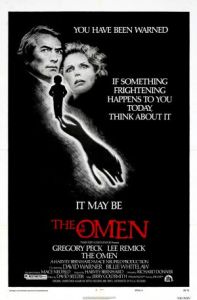
The media, nothing if not endlessly self-referential, responded. In fact, an article by Lily Rothman on time.com, is a Time story about a Time story. An endless regression of unbelief. Roth mentions theologians in her column— theologians still, and perhaps always have, debate the question of God’s existence. The ultimate untestable hypothesis, God, in that sense, is an easy target. The media reach readerships of which the rest of us only dream. I didn’t see the Time cover as a child (we did not subscribe), but it made its way into Rosemary’s Baby as a statement of the Zeitgeist more effective that a declarative sentence. It is a question that haunts. Miracles, according to the Bible, used to be large and spectacular. Today they don’t happen at all. What went wrong?

Rothman’s story begins with a seminary professor being fired. William Hamilton, at the then Colgate Rochester Divinity School, was dismissed over the question of God’s existence. Seminaries have been particularly sensitive to questions of God’s continuing presence. We sometimes forget, however, that magazines exist to make money. The same is true of some theologians. If you wanted to get noticed when the Vietnam War claimed so many headlines, you needed to say something striking. As the article points out, the question of God’s death seems a lot less radical today. Living through this campaigning season running up to the Republican National Convention it might be less difficult to disbelieve. I wonder what Nietzsche would’ve said.


The Philosophical Neanderthal

HumansExtinctExtinction. It’s a depression concept, but one that nevertheless constitutes a reality in evolution’s world. When applied to members of our own species we term it genocide and declare it an evil. Our perspective—not to dispute the value judgment—is hopelessly foreshortened. Our brains have evolved to promote individual survival, not to see the longue durée. How often do we worry about the extinction of Homo erectus? Or the australopithecines? Without them we wouldn’t be here, and yet, they’re gone. The case of the Neanderthals is perhaps closer to home. We now know that Homo sapiens overlapped with Neanderthals. Some of the questions raised by Neanderthal extinction are given serious consideration by Clive Finlayson in his study, The Humans Who Went Extinct: Why Neanderthals Died out and We Survived. To get a sense of how this works out, and how it applies with our current contribution to global warming, we must be prepared to view the extreme longue durée. Duration beyond comprehension.

One thing that becomes clear from the very beginning here is that climate has driven evolution perhaps more than we often think. Species, which tend not to live through the relatively long reach of climate change timescales, adapt to the circumstances of their environment. They either do, or they go extinct. Climate, however, is a balancing act teetering toward equilibrium. Hot and cold, evening each other out. Over an even longer duration, our sun will run out of metaphorical steam and things will get quite a bit chillier out there. For the meantime, however, shifts between ice ages and periods of warming will continue to seesaw across time and our race, among many, will need to adjust to survive. Perhaps acknowledging our own role in the current global warming might be a way to start. Our species tends to be short-sighted.

There is an irony here. History and prehistory have shown that, as Finlayson points out, that those best equipped to survive radical changes are the poor. Extinctions—some of them quite dramatic—have occurred before. They will surely come again. When times get tough, it seems, the comfortable get going. Going extinct, that is. Those who climb the corporate ladder the highest have the longest distance to fall when things go bad. The poor, who have to struggle every day to survive, are the ones who know how to get along in circumstances that turn sour. I have called this an irony for what might seem obvious reasons. There is another as well; here we have science pointing again in the direction of the Bible. There it was noted long ago that the meek would inherit the earth. And that’s a bit, it seems, that should be taken literally.


Ark Apocalypse

I get lost in the web. Although my work requires that I remain plugged in to the internet all day long, I confess to feeling lost on the weekend. I don’t know what to browse or where to look for titillating new information. A friend then asked me what I thought of Gabriel’s Ark being sent to Antarctica. I had no idea what Gabriel’s Ark might be and I had to hunt through the corridors of rumor and conspiracy that make up much of the worldwide web to find it. Once I did the story grew incredible and also impossible to verify. Maybe this is why I avoid the web on weekends.

337px-Folio_29r_-_The_Ark_of_God_Carried_into_the_Temple

So the story goes like this: Gabriel, the archangel, gave Mohammed a secret weapon called an ark that would herald the last days. This ark was buried in Mecca. So the story goes, it was unearthed in September and it was the power of that ark that led to the tragic crane collapse that killed over a hundred pilgrims in Mecca last year. Days later the weapon went off again, leading to the death that the media blamed on a human stampede. Wanting to rid themselves of the ultimate weapon, the Saudi officials handed it to Russia. A research ship headed for Antarctica took on the mysterious cargo in Arabia before chugging south. Patriarch Kirill of the Russian Orthodox Church met with Pope Francis, so the story goes, to receive an ancient document to control the ark. The Patriarch then showed up in Antartica to enact a strange liturgy before the trail goes cold on the story.

No major, respected news media carried the story. That only confirms that it is a cover-up in the eyes of many. What is so fascinating about all of this is that those who continue to keep the story alive clearly believe that the end of days is being unleashed not via the Christian apocalypse, but a supposed Muslim one. It’s as if Revelation didn’t deliver, so now we need to turn to some other ancient, obscure document to document the apocalypse. Meanwhile, those who’ve spent their lives learning to read ancient texts by accredited universities scrounge for whatever work they can find. Odd people aspire to very powerful political positions. Money is the only thing that matters. Maybe it is the end of days after all.