Why July?

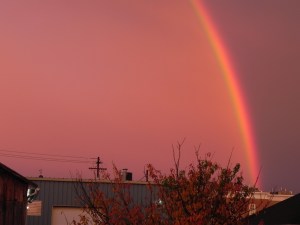
The weather in July can be exhausting.  I’ve always pretty much associated the Fourth of July with hot, sticky weather and this year’s holiday weekend has lived up to that.  Combine it with the incessant rain in the eastern half of the country and you’ve got a mix that won’t permit you to open your windows, but makes you simmer if you stay inside.  We often handle this by seeking out air conditioned facilities where you don’t have to spend a ton of money in order to find some relief.  It also happens that today is the anniversary of our moving into our new house when, as I recall, the current rainy cycle began.  Restless, stormy nights may be Gothic, but they don’t fit the staid, steady nine-to-five lifestyle very well.

Despite it all, I still value summer.  The sense of carefree days, as my friend over on Verbomania says, give estival days a shimmer like none other.  So much so that it’s difficult to keep track of what day it actually is.  For me this particular date will always remind me of buying a house for the first time and spending a literally sleepless hot night learning the hard lessons of homeownership.  Still, since I mentioned Independence Day, I continue to find myself relieved at the lack of land lordliness when it comes to the list of those who hold something over my head.  If only I could catch up on some sleep over a long weekend it might all seem more real.  July can be like that.

As I saw this weekend approaching from a distance, I made plans at how much I would accomplish.  I would get so much writing done that I’d be well ahead on my next project.  I might figure out what it was most important to say, and maybe finally find the meaning to life.  (Summer makes me feel optimistic, it seems.)  I would post new videos on my YouTube channel.  The weather, however, as the Psalms indicate, can change your plans.  Twilight lengthens to the point of making night and day difficult to distinguish.  Sleep doesn’t refresh the way it usually does and morning—my writing time—is hazy and lazy.  My next book sits untouched on my hard disc while I look over boxes that remain unpacked from a year ago.  Childhood summers set the pattern of dropping all and experiencing the mini-anarchy that lack of structure brings.  Despite all that I’d hoped to accomplish, I find myself welcoming this hot and humid anniversary.  That’s what July is like.


From Above

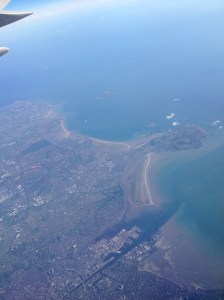
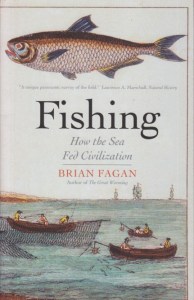
You can see a lot from 35,000 feet.  Alan Parsons Project’s “Eye in the Sky” comes back to me, although I’d never make so bold as to associate myself with Horus.  As I’m preparing for my return flight, I wonder what I might see.  Not much, I expect, since all the window seats were taken and I’ll be sitting in the middle section.  I like to see where I’m going.  On the way over, for example, about three hours into the flight, we were over the Grand Banks.  I’d just finished Brian Fagan’s Fishing, and the Grand Banks were on my mind.  The last land I saw was Cape Cod, although from the monitor I knew we’d passed near Nova Scotia and Newfoundland.   In other words, there was nothing but the north Atlantic beneath us.  We were hundreds of miles from land.  Then I saw it.

Was that an oil platform all the way out here?  I didn’t have enough time to wake my napping phone for a picture, but there was clearly a large platform and a nearby tanker.  Later I checked and, sure enough, Hibernia, the world’s largest oil platform is smack-dab in the middle of the Grand Banks.  A number of thoughts occurred.  We’d been flying for hours, and a platform this far out would make a great setting for a horror story.  (Okay, so my thoughts move in predictable directions sometimes.)  Another thought was this: why are we so dependent on petroleum that we’re all the way out here drilling for a polluting, non-renewable resource?  Is it not for profit margin alone?  This was an epiphany for me.

I still carry a little cautious hope around in a hidden pocket that there might be some places left for humanity to explore, but not exploit.  Fagan mentioned in his book that we’d trawled much of the ocean floor.  Although I admiring the engineering that could plant a platform in the stormy Atlantic, I still can’t help but feel a little bit let down that we’ve driven yet another stake into the unexplored world.  We really know so little about the oceans (apart from the fact that many creatures that live there can be eaten and otherwise exploited).  Our lack of scientific knowledge is addressed by great wells drilled down to draw out pollutants to grease the wheels of capitalism.  Yes, I was using fossil fuel in flying.  I’d be happy with solar-powered planes, if they existed (they’re above the clouds much of the time, so it would seem worth dreaming about).  In the meantime, however, the earth just keeps getting smaller and smaller.  Even from 35,000 feet.


Not for Men

Does anyone else think that feeding fishmeal to herbivores so that they, in turn can be eaten, is weird?  Brian Fagan in his Fishing: How the Sea Fed Civilization describes the long history of eating seafood.  In evolutionary terms it makes sense, but so does veganism.  One thing that becomes clear from this study, however, is that human civilization simply could not have developed the way that it did without fishing.  Food for those performing massive public works came from the abundance of the ocean.  Theology played its part too.  Roman Catholicism established a habit that still exists of eating fish on Friday.  In Catholic areas of this country Friday fish fries, and the occasional fish boil, are cultural icons.  As Fagan points out, part of the reasoning behind this was the belief that God gave humans fish to exploit.

We find, interestingly enough, that religious thinking often stands behind tragic results.  Although I’m a vegan, I find it distressing that the oceans—so vast in extent—have been depleted by human activity.  The main problem, which we’re slow to learn, is that technology has made fishing too efficient.  This isn’t some kid with a rod and reel on the bank of a muddy river, but rather the industrial-scale trawling that begins by locating fish schools with sonar.  Not only that, but the land habitat to which we bring the fish is also being depleted.  I’m probably not the only one who gets the feeling that Fagan’s writing about more than just fish.  Where there is abundance, we take it as an invitation to exploit.  Tech makes it so easy!

In the early history of humankind, seafood was a necessity.  As Fagan shows, it was sometimes reserved for hard times.  Now we feed fishmeal to domesticated animals not because it’s what they naturally eat, but because—you guessed it—it’s cheap.  I’m still not allowed to give blood because of the Mad Cow Disease scare that rocked Britain when I lived there.  In part it was caused by feeding herbivores feed that consisted of meal made from other herbivores.  I no longer eat fish.  With the world population what it is, and global warming stressing agriculture, it seems we need to be thinking about what’s for dinner.  Quite apart from the fact that fish are, despite proclamations of ecclesiastical bodies, animals just like any others, we’ve managed to scour the ocean so thoroughly that recovery may be impossible in some locations.  The reason often given is that God gave us the oceans to use.  And that kind of thinking always leads to disaster. 


Weathering the Sun

I may have given up on Weathering the Psalms a bit prematurely.  Those who know me know that the weather impacts my mood.  Now that I have a yard to mow that feeling has grown exponentially since perpetually wet grass is happy grass and is impossible to cut with a reel mower.  Today, while those of pagan inclinations celebrate the sun, there’s more rain in the forecast.  As there has been since Sunday.  If Yahweh’s the God of the sun, then Baal’s had the upper hand for some time now.  As an article on Gizmodo has pointed out, this has been the rainiest twelve months on record for the United States.  And we’re largely to blame.  We’ve known we’ve been warming the globe since the 1980s, at least.  Yet we do nothing about it.  You can’t stop the rain. 

Our species occupies that odd role of predator and prey.  Most predators, actually, are prey to somebody else.  Not being nocturnal by nature, we fear the dark when we feel more like prey.  Since we’re visually oriented, we crave the light.  Today, when the conditions are right, we have it abundantly.  Ironically, of the seasonal celebrations, the summer solstice is the only one with no notable holidays.  Easter and a host of May Day-like holidays welcome spring and Halloween and Thanksgiving settle us into fall.  December holidays around the other solstice are the most intense, but summer, with its abundant light and warmth, is perhaps celebration enough.  Or maybe we know that marking the longest day is a transition point, since now we’ve reached a natural turning point.

So, it’s the solstice.  From here on out the days start getting shorter and we slowly move toward the time of year when horror becomes fashionable again.  The light that we crave now ebbs slowly to the dark we fear.  There should be a holiday around here somewhere, for those of us outside academia continuing working right on through.  The problem is western religions, especially Christianity, place no especially memorable events here.  Resurrection’s a hard act to follow.  Calendars, apart from telling us when to plant and harvest, are primarily religious tools in origin.  When things are their darkest, six months from now, the church moved the likely spring birthday of Jesus to counteract pagan festivals encouraging the return of the light.  I, for one, would like to see a day to commemorate it, even if it’s raining again.


Tyranny of Plants

Notwithstanding what I wrote yesterday, there is a tyranny of plants.  Specifically those which make up lawns—in my case, mostly weeds.  A friend recently reminded me that weed is just a name for a misplaced plant, and I confess that I’m fine with weeds but neighbors may not be so open-minded.  Non-conformity is still a virulent stigma.  If an observer from outer space were to observe us during the spring and summer, they might well conclude that we were in the service of our yards.  The irony here is that yard care is perhaps the ultimate sign of success.  You have really made it if you can keep it neat and trim.  And you’ve excelled beyond that if you can pay someone else to do it for you with their tractor full of buzzing implements.

Because I’m concerned about fuel consumption, we purchased a reel mower when we bought our house.  I never mowed the lawn as a child.  First we rented, and when a stepfather came into the picture he didn’t let the kids mow.  (It wasn’t to be kind—it was a control thing.  If he saw a snake he’d race across the yard to dismember it.  More than once I’d be out playing only to find snake suey, with flies.)  College at Grove City involved carefully manicured lawns done by others, and after grad school we lived on campus at Nashotah House where the students cut the grass.  From there it was back to renting.  In other words, I never had the opportunity to learn how to mow lawns.  My lines aren’t straight, and I’m tempted to sneak out at night, when the grass is high, and leave crop circles at which the neighbors might wonder.  I don’t like being a slave to plants.

The reel mower is like pushing the grim reaper in a baby carriage.  Or at least it must seem so from the perspective of the grass and weeds I call my lawn.  The suddenness with which constant lawn care becomes a major concern has tightened my focus on the fealty we owe to ground cover.  We’ve had a break from the rain for a couple days and after work I find myself pushing that mower like a deadly thurible, releasing the scent of newly shorn grass.  Our particular town retains the right to fine those who let the grass get too long.  As I go along cutting back both grass and weeds indiscriminately, I wonder at the biblical nature of even this.


World Environment Day

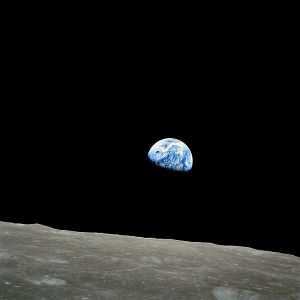
Do you like where you’re living?  Planet earth, I mean.  Today is World Environment Day.  It’s not enough of a holiday to score time off of work, but it is well worth observing nevertheless.  More than that, it’s vital.  Other holidays tend to be the decaying remains of religiously appointed observances or sops thrown to the Cerberus of patriotism, but World Environment Day impacts every one of us, all of the time.  Whether sleeping, waking, working, or playing, it’s in the context of the one planet we have.  Even those in space have to check in here to survive.  We might try to make World Environment Day an international holiday, but I’m sure we could never all agree to it.  Business would collapse if everyone took the same day off, all at the same time.  Instead we’re left to dream.

I recently watched The Lego Movie.  Although released in 2014 it perfectly anticipated 45 with “President Business.”  Overlooking for a moment that Legos represent big business, the film underscored the problem: the only thing hard enough to cut a diamond is another diamond.  And the only way to fight business is with business.  Perhaps there aren’t enough people to envision what life could be like without the constant stress of having to make more money.  It’s a sickness, really.  But it’s a pathology we worship.  There are some abysses, it seems, into which nobody dares peer.  Who doesn’t want to be in charge?  And those in charge care nothing for Mother Earth.

We have spent the past two-plus years watching helplessly as the Republican Party has done its level best to lay waste the planet.  Rolling back and abolishing environmental initiatives deemed detrimental to “business,” these are folks who need to feel what it’s like to lose a job or two and have to reinvent themselves.  Not that long ago, most of the humans on this planet lived on farms or supported those who did.  Daily in touch with the planet in a literal way that those who mow with industrial, sit-down lawn helicopters can never be—how can you be in touch when your feet never even meet the ground?—they knew that paying attention to the planet is crucial.  But that’ll have to wait.  It’s a work day, after all.  And a Wednesday, no less.  In the middle of the week-long worship at the altar of Mammon.  Still, I urge you to take a moment or two today to consider how to save the only planet we’ve got.  It’s worth celebrating.


Not from Nazareth

The world just doesn’t feel safe any more.  I’d better give a little context as to why.  You see, I just learned that what I thought was the work of carpenter ants is actually that of carpenter bees.  I never knew such things existed!  This still might not give you the thrills you were hoping for, so here goes a true story: when I was maybe six or seven my mother took my older and younger brother and me to a place in the woods where we could run around and holler and not bother anybody.  We had our dog there too, as well as our grandmother.  After a while my brothers started a game—throwing a stick to see who could get to it first, me or our dog.  I was running along, stepped on a stump, closely followed by the dog, when a swarm of angry yellowjackets flew out.  I was wearing shorts at the time and received multiple stings on my bare legs.  We didn’t think our dog would survive; he was completely covered.  So I have a thing about bees.

My phobia isn’t as bad as it used to be.  I’ve been stung many times since, and it always feels like an insult as well as a bad memory.  (I still don’t wear shorts, except on very rare occasions, when the bee quotient is zero.)  Believing in turning the other cheek, I’ve even captured and released bees from the house rather than killing them.  Still, to this day, when I get a haircut if the woman pulls out a set of clippers you have to pry my fingers from the naugahyde when she’s done.  Anything that sounds like buzzing near my ears sends me into spasms of terror.  Please pardon the graphic fear.  It’s heartfelt.

I used to have nightmares about killer bees.  I still worry about them a lot, and wonder that if, instead of a wall, we might put up a massive, small-weave net this side of Texas.  I don’t know how high they fly, but we should try to do something, don’t you agree?  Now I’ve learned that bees can eat you out of house and home, literally.  The carpenter bee, to the untrained eye, looks like a bumblebee.  They’re big, heavy-bodied insects that can crawl through three-eighth-inch holes, perfectly round the insect guy tells me.  They’ll eat and mate, and release their larva, ready to grow stingers, into the world of my back porch.  They appear to enjoy the global warming, judging by their numbers.  Maybe it’s a good thing we settled not far from Nazareth because a friendly carpenter might soon come in handy.


Idol Thoughts

The Enlightenment led, in some respects, to a condescending view of the past.  Historians know, for example, that the basics of science and engineering predate the Middle Ages.  Just consider the pyramids.  The people of antiquity were anything but naive.  We tend to think in Whiggish ways, despite our awareness of past achievement.  Perhaps it’s because we misunderstand past religious thought.  After all, the Enlightenment is generally understood as freeing the human race from “superstition” and leading to empiricism.  Empirical thinking had been there all along, of course, only it hadn’t been the sole way of making sense of the world.  Consider, for example, the “idol.”  In the biblical world food was left for statues of the gods, but it seems to me that people were smart enough to figure out that images didn’t actually eat it.

Elaborate rituals, of course, attended the making of gods.  These symbolic actions were said to make this object more than just a piece of wood, stone, or metal.  Assuming it required food, however, strains credulity.  The symbolic nature of the offering, however, was accepted.  The same is likely true of the offering of food to the deceased.  Even in ancient Israel the time-honored practice of leaving sustenance for the dead was carried out.  Was this symbolic rather than naive?  I tend to think so.  Reason told the ancients that the dead ceased to move, and therefore to eat and drink.  It was nevertheless a sign of respect to leave food, which, in a world of frequent malnutrition, could have been put to better use.  It was a symbolic sacrifice.

Surely they didn’t understand the fine interactions of nature that require microscopes and telescopes to see, but their knowledge relied on the divine world to address what remained mysterious.  We still, for example, have difficulty predicting weather.  We understand that the atmosphere is subject to fluid dynamics and countless minuscule factors that contribute to it.  We’re also aware that global warming is a reality.  Like the ancients we can choose to ignore, or pretend that the obvious doesn’t exist.  Like them, we do so for a reason.  Our political leaders are unwilling to stand in the way of the wealthy.  Reelection and all its perquisites—including personal enrichment—are simply too enticing.  Empirical evidence is worth ignoring for such emoluments.  When we feel tempted to assert our superiority over those of past ages, we might pause to consider that we still offer food to idols.  And get just as much in return.


Bradbury’s Dream

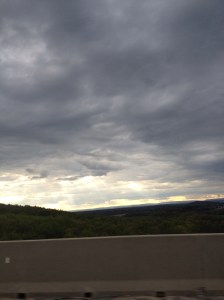
There’s a Ray Bradbury story—I can’t recall the title, but with the Internet that’s just a lame excuse—where explorers on Venus are being driven insane by the constant tapping of rain on their helmets.  They try to concentrate on discovery, but the distraction becomes too much for them.  Living in Pennsylvania has been a bit like that.  I grew up in the state and I knew it rained a lot.  Here in the eastern end we’ve hardly since the sun since March.  And when you’ve got a leak in your roof that only compounds the problem.  If I were weathering the Psalms, mine would be a lament, I’m afraid.  You see, the ground’s squishy around here.  Mud all over the place.  Rivers have been running so high that they’re thinking about changing their courses.  And still it rains.

There’s a lesson to be taken away from all this.  The fact that we use water for our own ends sometimes masks the fact that it’s extremely powerful.  Not tame.  The persistence of water to reach the lowest point contributes to erosion of mountains and valleys.  Its ease of transport which defines fluidity means that slowly, over time, all obstacles can be erased.  It’s a lesson in which we could stand to be schooled from time to time.  Rain is an artist, even if it’s making its way through the poorly done roofing job previous occupants put into place.  Would we want to live in a world without valleys and pleasant streams?  And even raging rivers?

There’s no denying that some of us are impacted by too much cloudiness.  When denied the sun it becomes easy to understand why so many ancient people worshipped it.  Around here the temperatures have plummeted with this current nor-easter and the heat kicked back on.  Still, it’s good to be reminded that mother nature’s in control.  Our high officials have decided global warming’s just alright with them, and we’re warned that things will grow much more erratic than this.  As I hear the rain tapping on my roof all day long, for days at a time, I think of Bradbury’s Venus.  Okay, so the story’s appropriately called “The Long Rain” (I looked it up).  Meanwhile tectonic forces beneath our feet are creating new mountains to add to the scene.  Nature is indeed an artist, whether or not our species is here to appreciate it.  If it is, it might help to bring an umbrella this time around.


No Animals Harmed

Out for a walk after work the other day, I spied a black cat.  Not the superstitious sort, I didn’t let this deter me from continuing on.  Then I noticed that it was a mere three or four feet from a ground hog that was just as large as, if not larger than, the cat was.  They were staring at each other, weighing their options.  The ground hog didn’t appear too concerned.  Then a rabbit hopped up, on the other side of the cat.  A perfect syzygy of fauna that remained still for a moment in a tableau of nature.  About the same time as the cat noticed  the rabbit, the rabbit noticed it back and quickly hopped away.  The cat crouched and slunk after the bunny and the woodchuck ambled off at its own pace.

Not only was this conjunction an odd combination of three species of mammal—four if you count me—but it was such a conscious interaction that I had to think of it as almost human.  Three very different individuals, probably all with eating on their minds, had to assess how to interact, wordlessly.  As far as I could tell the drama ended amicably.  The cat looked well fed, in any case, and the rabbit far outdistanced it from the start.  Chuck was unconcerned.  Although the hard line still exists in science, drawn between ourselves and our fellow animals, I’m convinced that they have a share of consciousness.  We’re told that they’re mere “machines” following instinct.  These three “machines” along the trail were sure acting like they were thinking.

What are they thinking?

As the situation played out, no violence ensued.  Three individuals out enjoying the spring happened to find themselves in a scenario that called for negotiation.  The cat, like Republicans, felt compelled toward aggression, I should imagine.  It had a choice: take on a larger, more worthy foe, or turn its attention to the weaker, more vulnerable prey.  Naturally, it turned toward the weaker of the two.  There were differing agendas at play here, and with a dose of consciousness added in, these critters behaved so like human beings that I felt compelled to share it.   The ground hog and rabbit looked on the situation with some wariness.  They thought about it, and each took the prudent route to safety, for the time being.  Nature, it seems, will find its balance if we let it.  And we, if we would acknowledge it, still have something to learn from nature.


Suddenly Spring

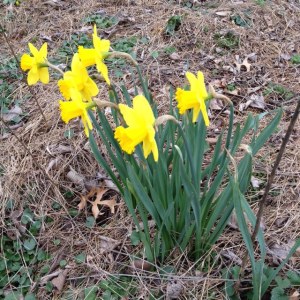
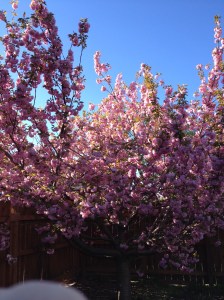
Maybe it’s just a sign of passing years, but spring seems much more sudden to me now.  One day I’m wearing multiple layers and shivering in the mornings and the next day I need to take a machete to the lawn for its first mowing.  Those weeds along the fence, which weren’t there a day ago—I swear!—are now two feet tall and aching for an appointment with the weed whacker.  I mean, the snow shovel’s still on the porch.  When did this happen?  How did we go from brown grass to sprouting trees of heaven just overnight?  I haven’t had time to build up my calluses yet for pushing the lawn mower (we have the environmentally friendly kind, powered by naught but human effort).  Morpheus was right, I guess.

This past week was so unexpectedly busy that I haven’t had time to stop and muse over some important happenings.  My current project, Nightmares with the Bible, involves trying to sort out The Conjuring universe, and I wanted to reflect on the passing of Lorraine Warren.  Her obituary in the New York Times  by Neil Genzlinger was surprisingly respectful.  Whether or not she was really onto something, people in general seem to believe she and Ed were sincere in their convictions.  There are those who claim they were charlatans, but those who perpetrate hoaxes tend to leave telltale signs.  Those who claim they couldn’t have experienced the paranormal because there’s no supernatural to experience are entitled to their opinions, of course.  Being tolerant of those who see differently, however, has never been more important.

The natural cycles of the earth never fail to surprise me.  Supernatural or not, the explosion of life following one warm, wet week is nothing shy of astounding.  I walked around to the seldom visited north side of the house to find a veritable jungle that wasn’t there just the week before.  Staring at the flowers and weeds, I can’t help but think of the hackneyed phrase “pushing up daisies.”  Much happened this past week.  The mower was oiled up and played the grim reaper to the grasses and other plants of my neglected yard.  Life, as Jurassic Park (which my lawn resembles) teaches, is persistent.  I never met or in any way corresponded with the Warrens, but I feel that in some sense I have gotten to know them.  And just yesterday it still felt like winter.


Different Kind of Salvation

It’s encouraging and disheartening all at the same time.  And seldom has the evil of money been so obvious.  Last night I attended an environmental panel discussion at a local church.  It was encouraging to see so many people out on a rainy, chilly night in Bethlehem, a city famous for its might steel mill.  Everyone there knew the problem and agreed that something had to be done.  As the speakers gave their presentations it became clear just how corrupt politicians are.  Corruption is bipartisan, of course.  In the name of “economic growth” we allow the fracking rape of our state despite the known and proven environmental hazards.  Despite the fact that Pennsylvania has a green amendment in its state constitution.  Money, as Cyndi reminds us, changes everything.

Shortly after even Mitch McConnell admitted climate change is real, at the state level climate deniers are running things.  It brought to mind the frightening and omnipresent teachings of my Fundamentalist youth: the sooner we can destroy this planet the sooner we’ll make Jesus come again.  Convinced of the absolute certainty of that second coming, there is almost a mandate to ruin, pillage, and plunder natural resources because the Good Book ensures us that, upon a white horse the savior will come in the nick of time.  Politicians, elected officials believe this.  They also believe in mammon.  If you’re gonna go down, you might as well do it in style.  Like John Jacob Astor on the Titanic.  It’s the way of the aristocrat.  Rising seas drown rich and poor alike.

It was a miserable night to be out.  The weather has been freakishly off for some time now, and all the science—real science, that is—predicts it’s only going to get worse.  How the government became the enemy of the planet that gave it birth would be a fascinating story if only it were fiction.  The truth is we’ve elected people that can be bought.  And bought easily.  Laws are passed that violate the constitution of this commonwealth and meetings are held behind closed doors.  Local activists are very active while most of us struggle to keep ourselves employed, heads, as it were, above water.  We need to pause now and again to consider what a wonder this planet is.  We must learn that the only power money has is that which we freely give it.  Rain was pouring down.  Brontide was actual thunder as the state legislature drew up chairs for the last supper.


Thunderers

“Storms are the embodiment of Mother Nature’s flair for the dramatic, and the words that we use to write about them are infused with that drama,”—the words aren’t mine, but they express something I often acknowledge.  The quote comes from a Verbomania post about the word “brontide”—a noun for things that sound like distant thunder.  Weather-related words are indeed part of the religious vocabulary as well.  I wasn’t quite daring enough to suggest it in Weathering the Psalms, but it seems that thunder may be behind most basic religious beliefs.  Well, that and bad luck.  Think about it—most cultures have a very powerful storm-deity.  That power is expressed in thunder.  Even in the twenty-first century a sudden clap can made the sophisticated duck and cover.  

We don’t know as much about ancient Mesopotamian culture as we’d like to, but it’s pretty clear that storm deities commanded major of respect.  Eventually in the city-state of Ugarit, in what is now northern Syria, a god named Hadad (aka “thunderer”) became the patron of the city and was known mainly by his title “lord” (Baal).  There may have been more than one lord, but the one in charge of day-to-day affairs was the one who controlled storms.  We’ve entered another rainy season around here (something you tend to notice when the roof leaks), and my thoughts often turn to how very much the weather controls us.  Interestingly, thunder hasn’t been much in the picture.  We’ve lived in our house coming up on a year and I have been awoken by thunder (something that still scares me as much as when I was a kid) only once.  Thunder is the approach of gods.

There’s drama about the weather.  In fact, fiction writers have long known that one of the most effective ways to suggest the mood of a story is the meteorological method.  Weather sets the scene.  The sound of distant thunder has a naturally ominous, almost predatory quality.  The growling, low and loud bursts from the sky sound so like human expressions of rage that it is only natural that they should be interpreted this way.  Since the sky is (or used to be) out of the reach of humans, the sounds from above were from the realm of the divine.  When gods approach the mood is threatening.  We dare not meet them.  That mythology has long informed our perceptions of meteorological phenomenon, acknowledged or not.  Brontide is an underused word that brings the drama of both nature and the divine together.  It could be a psalm word.


Sustain Chapel

It seems that holidays come thick and fast in the spring, especially when Earth Day follows directly on the heels of Easter.  Given the hard time mother earth has been having with too many Republicans waging war on her, it’s worth taking a few minutes to consider finity.  Our planet is not infinite.  The resources with which it came loaded out of the showroom are all of limited supply.  Somehow we’ve managed to convince ourselves, at least in this hemisphere, that there’s always more where that came from.  Unless, of course, you’re referring to the degrees that contribute to global warming.  Of those, the GOP narrative goes, there really aren’t any.  No credible scientist doubts climate change, although those who are already old and who are benefitting from it will claim otherwise.  Any story depends, of course, on the teller.

Over the holiday weekend I was out of town.  Driving home a few hours I was distraught at just how much litter lines our otherwise scenic highway system.  Stuff falls off of trucks and, despite advertising against it, out of car windows.  The few trash bags piled for pickup by the earth-conscious can’t keep up with the cast-offs of a throwaway culture.  We desperately need to take the narrative back from those with the loudest, and most incoherent mouths.  We all rely on this same planet and the power we cede to the wealthy is due to our complicity in their claims of ownership.  They’ve proven themselves, should I dare to be biblical, unfaithful stewards.

The earth, it is true, is a place of immense beauty.   It’s not aesthetics alone, however, that motivate us.  We simply cannot survive without this biosphere in which animals, plants, microorganisms, and minerals coexist.  We evolved in it.  The mythical narrative of special creation unwittingly played into the hands of those who will claim it all for themselves if the rest of us don’t deny that they had indeed “earned” the right to be considered the most prestigious.  Our societal sin of rewarding bad behavior has led us to this crisis.   We pollute far beyond our needs.  We “speculate,” hoping that “development” will lead to “growth.”  The wealthiest build rockets to escape our planet, but there’s nowhere to go.  Might it not be better to invest in this gift that we already have?  To learn the lessons of nature?  To become students in the classroom of Mrs. Earth?  There have been many holidays lately, but this may indeed may be the most important of them all.


Sustainability

There comes a time, it seems to me, when each generation realizes it’s made a mess of things.  Well, at least the thinking members of a generation do.  I mentioned a few days ago that I kind of idealize the sixties.  The book about them that I mentioned wasn’t shy about showing the misguided aspects of the time.  In many respects life is better for many—not for all, and that’s important to remember!—and we’re more connected with better, if too expensive, medicine.  More people are finding some kind of enlightenment and realizing that we continue to use up this limited planet far too swiftly.  At the moments when such thoughts become oppressive, I recall the young.  Perhaps we’ve done something right by gifting ourselves our forward-looking offspring.

A website my wife recently pointed out to me, Sustainable Millennial, is a locus of hope.  For too long we’ve bought the lie that anything really is disposable.  Bread cast upon the waters comes back, even if you put it on a rocket and send it to space.  You see, society has bought into what was a deliberate economic plan—help people find meaning in consuming (the war was over and the economy slowing, we were restless).  If you could get people to spend money for things to make themselves happy, well, just ask MC for the results.  Problem is you only have room for so much stuff.  Better make it “disposable.”  Trash heaps never fill up, do they?  Heaps become hills and hills become mountains, and all the sudden we need to get Daniel on the phone.

Our young understand something we’re slow to ken.  We’ve polluted, used up, and “thrown away” what can never be replaced.  The good news is that there are other ways to live.  We can reduce waste and even stop paving any space wide enough for a car to squeeze through.  All that’s being made is mere money.  What we’ve needed is voices not long enough vested in the system to try to change it.  By the time you’re middle aged you spend far too much energy trying to figure out how retirement’s supposed to work to have any left over to challenge the system.  The young are, and always have been, the future.  There are fewer angry white men because they realize that the plan of their forebears for personal gain simply hasn’t worked for the majority of people.  Daniel isn’t the only visionary, but even his young companions fade before they started worrying about disbursements and tax consequences.  If the young don’t lead we’re lost.