J L Seagull

Perhaps it has happened to you as well.  At some undisclosed period life became so busy that you felt as if—in a good southern California metaphor—you were riding on a huge wave and you couldn’t get off.  Back in my teaching days I had time to plan my trips to AAR/SBL and fit in some human activities as well as maybe even getting around to see the outside once in a while.  It’s great to run into so many people from every stage of my academic life—toddlerhood at Grove City College through my current doddering editorship—but I can’t help having the feeling that I’m popular now because I’m thought to have something others want.  The keys to the kingdom.  A possibility of getting published.

Those of you who read my daily reflections know that I’m glad to share publishing knowledge.  I encourage academic authors to learn a bit about the publishing industry.  It’s rapidly changing and when you have an inside track (here is the real added value) you need to look beyond your current book project to see what goes on behind the veil.  Widen the focus.  There’s a whole world out there!  My glimpses out the hotel window inform me that there’s an entire bay to be explored.  I watched seals or sea lions (it’s hard to tell from this distance) playing in the water as the sun rose.  Then a seagull flew up and landed inches from my face on the windowsill of my room.  It stayed for nearly a minute, looking me over as I looked it over.  Noticing the tiny white feathers that formed a W on the edges of its beak.  Its Silly Putty pink feet with small black nails.  The emerging red patch on the underside of its bill.  It took a step off the ledge, spread its wings and looked elsewhere for a snack.  I soon learned why.  A second later a larger gull landed in its place.  We too regarded one another curiously.  Had the glass not been there, we could’ve easily touched.  It also lept off to be replaced by an even larger, more mature gull.  None of the three were in any hurry to get away, but when they realized I couldn’t give them what they wanted, they left.

I’m a great fan of metaphor.  Academic writing, unfortunately, doesn’t encourage the craft of utilizing it (neither does it often encourage being coherent).  Later this morning—it will be early afternoon back home—I have to rush to the airport to catch a hopeful tailwind back east.  Someone else will check into my room.  If, perchance they sit by the window with the curtain drawn before dawn, the gulls will visit.  And maybe a lesson will be taken away.


Wisdom of Trees

Stepping out of the airport the first thing I noticed was the palm trees.  I’ve traveled to this area enough times that I shouldn’t be surprised, but I always am.  And since we are creatures of the culture in which we’re raised, palm trees inevitably make me think of Gilligan’s Island.  We grasp for culture to help us make sense of this odd world of negotiating other people and, like many children born in the sixties, I was raised on television.  Gilligan’s Island (somehow appropriate training ground for attending AAR/SBL—it actually featured a professor) was as close to seeing a palm tree as I ever got, being raised in a very humble household.  To me, palm trees were as much creatures of fantasy as the monsters that populated the movies I watched on Saturday afternoon.

My first experience of a real palm tree was in Israel, 1987.  I’d signed on as a volunteer at Tel Dor, an archaeological dig near Haifa.  Then, as yesterday, I encountered palm trees—so alien and yet so natural—at the airport.  Welcome to Tel Aviv!  And so we think of palm trees as being part of paradise, a place where it’s always pleasantly warm and although well-watered it doesn’t rain too much.  Trees symbolize our culture.  Although back home in the northeast most of the leaves are down from the hardwoods, the region is also defined by its large plants.  Trees do that for us.  Spreading high over our heads, with dense cellular structure that makes them heavy, trees have always been attractive to our species.  And they can help us define, at a glance, where we are.  “Paradise” derives from a Persian word for “garden.”  Even in arid zones they value their trees.

Looking out my hotel window I see the bay.  In the bay stands a marina.  Back home most boats are shrink-wrapped by now and I’ve already seen smaller bodies of water start to freeze over.  Paradise has no ice.  For the castaways, being on the island was always a challenge, but never a terribly serious one.  Thurston Howell III used his money (useless where there’s nothing to buy) to try to assert his influence.  Everyone treated him with respect, always calling him “Mr. Howell.”  In that paradise, however, one of the two characters (who had names) referred to always by title, the professor—the skipper, of course, was the other one—was the person looked to for guidance.  If anyone would figure out a way to be rescued, it would be the academic.  I’ll be spending the next few days on an island with mostly professors.  And when it gets too intense I’ll look at the palm trees and remind myself that this is paradise.


Daylight Saving Time Zone

One or two of you out there—you know who you are—put yourselves through reading my musings on a daily basis.  I haven’t missed a post in nearly a decade, but travel always complicates things.  Yes, it’s that time of year again—I’m on my way to AAR/SBL.  The American Academy of Religion and Society of Biblical Literature Annual Meeting is the trade show of the guild.  This year we’re meeting in San Diego, California.  The hope of many of us is that it’ll be sunny and warm.  Last year, of course, I missed the conference for the first time, exchanging the Denver Hilton for a night on the floor of Newark’s Liberty Airport.  This year I’m flying out of a different venue—one where egress is possible in the case of snow.

I always like to post a reminder to the faithful few that normal service on this blog may be interrupted.  One never knows what might happen when away from the regular routine.  And three time zones will surely wreak havoc with circadian rhythms that haven’t yet caught up with the end of Daylight Saving Time.  Or is it the beginning of Daylight Saving Time?  It makes no difference, because it lead to lack of normal sleep, no matter what we call it.  In any case, San Diego may make usual posting unusual.  At the very least it’ll be a few hours off.  I’ve become a creature of habit, posting my thoughts between six and seven on weekdays.  On weekends I’m up just as early, but I give the web a chance to sleep in.

These annual meetings are exhausting when you go on behalf of a publisher.  Unlike the leisurely experience of a paying customer, you don’t get to go back to your room for a nap, or even to sleep in.  Every year colleagues ask me to receptions but I decline because every day is a school day.  And I have appointments from 8:30 until 6:30 daily.  Sometimes even later.  You, my gentle reader, have been given advance notice.  I’ll try to continue my daily chronicle of life inside this particular head as thousands of scholars of religion mill about, wondering about the answers to the big questions.  Right now the big question is whether I’ve packed everything I’ll need.  I’ll gain three hours on the way out, but I have to leave them at the desk when I get back.  Along the way I’ll scatter posts like breadcrumbs to help me find my way home.


Geography Lesson

As someone who eschews easy labels, I’m always conflicted when someone asks what my doctorate is “in.”  Universities have departments, of course, and different academic fields have differing standards of what qualifies you as an expert.  My Ph.D. was mainly in the field of history of religions, but focused (all such project must be narrow) on what is best called ancient West Asian cultures.  Recently someone showed me a website with free geography quizzes on it.  (I post the link here with the caveat that this can be very addictive.)  This friend asked me how good my Asian geography was.  I knew that once I got east of Iran I was going to be in trouble.  Some countries, such as Russia, India, China, and Japan are hard to miss, but the others I was properly humbled over.

I tried the quiz again and again until I could point to any of the official Asian nations with a fair degree of accuracy.  Eurasia is a very large landmass, and when you consider that it is, apart from human-made canals, attached to Africa this is a lot of space to label.  Considering that many isolationist politicians can’t correctly find smaller countries on a map without an app, I started to realize just how lopsided the world is.  Many more people live in Asia than populate the “New World.”  They actually have more space than we do here, but much of it is too cold or too dry for comfortable living.  Still, I considered that if I’d had this quiz as a kid I might’ve known my geography much better than I do.

As I’m preparing to attend the American Academy of Religion and Society of Biblical Literature Annual Meeting in a few days, I recall priding myself at knowing all fifty states of my native country.  I’ve been to all but five of the lower 48—Alabama, Kansas, Oklahoma, New Mexico, and Nevada have eluded me (the conference never meets in them and I don’t have friends who’ll put me up for free in them).  But at least I know where I haven’t been.  

After trying my hand at Asia on the app, I attempted Africa.  Let’s just say I still have a lot left to learn.  And unlike when I was a kid, I look forward to taking quizzes.  Work interferes with web time, though, and learning modern countries isn’t the same as knowing where Hatti or Elam used to be.  Religion, after all, forms borders just as impermeable as mountains, oceans, or deserts.


Author Revise Thyself

Monster fans may have noticed that, despite the season I haven’t been writing much on the topic.  One of the reasons for this is that I’m in that dread stage known as “revision.”  As an editor I often see book proposals—or even entire books—that have never been revised.  You can tell.  I learned this while writing Holy Horror.  If you’re one of the people who took out a second mortgage to buy a copy, the book you purchased was based on a manuscript rewritten thoroughly at least five times.  The idea is that like rocks in a river, all that pouring over a text smooths the words like stones over the millennia.  Few rocks emerge from volcanic or sedimentary situations as smooth and round.  That takes revision.

My peer review report for Nightmares with the Bible came in a few weeks ago.  Nightmares had been revised a couple of times, at least, before I submitted it.  I understand the review process very well, as I deal with it daily.  Sometimes single blind (the writer doesn’t know the reviewer’s identity), other times double blind (neither reader nor writer know the other’s identity), the process is meant to provide feedback on a manuscript.  Having written many more manuscripts than have seen publication, I know just how useful peer review can be.  Like anything, however, it can also be treated legalistically, as if the reviewer knows more about a subject an author has just spent years researching.  No matter your impressions about this, once the reports come in, revision is in the cards.

Self editing is difficult.  And occasionally embarrassing.  You read again what seemed to make sense to you at the time, but even after you hit the “send” button you’ve continued reading.  New information comes to light.  Monographs are a very expensive form of dialogue.  Well, not so expensive as all that.  Many people are happy to pay out the cost of a monograph for a dinner out, which lasts an evening.  A book, mutatis mutandis, lasts much longer.  Like that meal, it’s taken internally and digested.  You can read the same book twice, however, without having to pay the second time around.  It’s a good idea, then, to revise before sending it to a patron’s table.  Ironically, revising a book on monsters takes time away from writing about monsters.  I also have essays awaiting revision, circling overhead like planes at Newark’s Liberty Airport.  And then there’s work, which has nothing to do with my own writing at all.  There’s a reason Nightmares occurs in the title.


Seventies

It’s pretty rare for me to be out on a week night.  Like a kid on a “school day” I’ve got to get up early the next morning.   And yawning a lot at work is bad form, even if nobody can see you.  I risked it recently, however, to meet with some colleagues from the Moravian orbit in Bethlehem.  As we talked, current projects came up, as they’ll do when doctorate-holders get together.  Demons are a conversation stopper, but I nevertheless asserted that our modern understanding of them derives directly from The Exorcist.  The insight isn’t mine—many people more knowledgable than yours truly have noted this.  One of my colleagues pointed out the parallel with The Godfather.  Before that movie the mafia was conceived by the public as a bunch of low-life thugs.  Afterward public perception shifted to classy, well-dressed connoisseurs who happen to be engaged in the business of violence and extortion.

The insight, should I ever claim as much, was that these films were both from the early seventies.  They both had a transformative cultural impact.  Movies since the seventies have, of course, influenced lots of things but the breadth of that influence has diminished.  I noticed the same thing about scholarship.  Anyone in ancient West Asian (or “Near Eastern”) studies knows the work of William Foxwell Albright.  Yes, he had prominent students but after Albright things began to fracture and it is no longer possible for one scholar to dominate the field in the same way he did.  Albright died in the early seventies.  Just as I was getting over the bewilderment of being born into a strange world, patterns were changing.  The era of individual influence was ending.  Has there been a true Star Wars moment since the seventies?  A new Apocalypse Now?

You see, I felt like I had to make the case that The Exorcist held influence unrivaled by other demon movies.  We’re still too close to the seventies (Watergate, anyone?) to analyze them properly.  Barbara Tuchman suggested at least a quarter-century has to go by for the fog to start clearing.  Today there are famous people who have immense internet fame.  Once you talk to people—some of them my age—who don’t surf the web you’ll see that internet fame stretches only so far.  It was true even in the eighties; the ability to be the influential voice was passing away into a miasma of partial attention.  The smaller the world gets, the more circumscribed our circles of influence.  And thus it was that an evening among some Moravians brought a bit of clarity to my muddled daily thinking.


Frozen Streams

I was walking in Ithaca, with my feet not far from Sagan.  Winter had settled in prematurely, as it often does in upstate.  I was wearing a hoodie and old fleece combo and I suppose I looked a bit tatty.  My wife and daughter had gone to see Harriet, but movies about how badly people have mistreated others, strangely for a guy who watches horror, really depress me.  Ithaca, until recently, supported three independent bookstores, so I figured I could pass the time easily enough.  It was growing dark and breezy, and I visit bookstores only with a list, otherwise it’s too dangerous.  Autumn Leaves, a used vendor, I’ve visited many times.  Their religion section is disappointingly small, but I tend to find offerings in other areas when I blow in.

Buffalo Street Books is the last remaining indie that handles new books, but I stopped by The Bookery, now closing, on my way.  This was saddening.  Ithaca houses both the ivy league Cornell and the highly regarded Ithaca College.  I suspect many of the street sweepers hold doctorates.  Has book culture entirely bent the knee to Amazon?  At the end of the last millennium, Ithaca housed 25 independent bookstores.  Today it’s evident that Buffalo Street (formerly The Bookery II) struggles to keep its hold.  I feel ethically obligated to buy something there, to take one for the team.  I had a short list and the shelves in The Bookery had been nearly bare.  It was just too depressing to stay there.  I found an inside bench and sat to read until the movie was over.

Or so I thought.  I ventured back outside and now it was fully dark, being six p.m., and I wandered back to the familiar Ithaca Commons.  I went into a couple of shops, but they looked at me as if I were homeless.  (I suppose I was, in a sense.)  I haven’t had a haircut in a while, and my beard is scruffy and white.  My hoodie and fleece don’t speak to affluence.  I had unconcealed books—I routinely refuse bags—and I suppose I could come across as a touch eccentric.  (I don’t have enough money to be authentically eccentric.)  I wondered how street people do it.  Outside the east wind was decidedly sharp and windbreaks on the pedestrian zone are few.  I came to the monument to Martin Luther King Junior.  I was walking in Ithaca but I really felt that books could make that dream come true.


Old Grains

Back when I was somebody—a professor is somebody, even if only a seminary professor—I was invited to meet with a group of Seattle writers and intellectuals.  I was in Seattle already because driving all the way out here was possible when you live in the Midwest and your summers are basically open and free.  (Professor’s privilege.)  One of the group members, the one who invited me, asked me about grain.  When the club met they ate.  With a bent toward history, one of them brought period-appropriate bread.  What kind would be fashionable for a night of ancient Near East talk?  (I was still researching and writing on Ugarit at the time, before Ugaritology passed away.)  Without stopping to think I replied “Einkorn.”  I didn’t know if einkorn was still around or not.  All I knew is that it was the earliest (at least as understood at that time) domesticated grain.  The loaf that arrived that night was a more accessible grain variety.

All of this came back to me as I stood in the local health-food store.  We don’t shop here for regular groceries—it’s expensive to eat healthily—but we’d been invited to someone’s house and said we’d bring appetizers.  The health-food store had vegan cheeses, so we needed crackers to go with.  Then I spied the word “einkorn.”  The Seattle discussion had to be well onto two decades old by now.  I was finally able to answer my question, einkorn was still alive.  The craze for ancient grains did not exist in my professorate days.  Some companies, according to occasional news stories, were trying to brew the beer of ancient Egypt or Sumer, but the health conscious hadn’t gone so far as to trying to replicate the diet of the earliest agriculturalists.

Ancient grains cost more because the yields are smaller.  Although the grain heads look disturbingly like those house centipedes that scamper in the basement when you flip on the light, they aren’t nearly the size of a current wheat head.  It stands to reason that it takes more of them to make up the same amount of flour, and appetites have grown over the millennia.  Like most vegans, I read boxes.  Another ancient grain cracker, apart from brown rice, included amaranth, flaxseed, millet, quinoa, sesame, and sorghum.  Never mixed this way in antiquity (for amaranth and quinoa were part of the “new world” and the others “old”), modern mixologists have devised new ways of using ancient grains.  Einkorn nearly went extinct with the development of wheat, rye, and barley.  But it hung on, and now, as a dozen millennia ago, it has a way of sustaining both dreams and fantasies.

Greatest Weakness

What a privilege it must be to work in a world of ideas!  (And to get paid handsomely to do so.)    My particular (and peculiar) career—if that’s what you call it—is intimately bound up with academics.  Those who know me personally treat me nicely, but the vast majority who haven’t a clue that I’m anything other than a guy who’s helping them get published sometimes forget their privilege is showing.  I’m not busting on my homies; I know what it’s like.  But I’ve noticed some interesting trends (“turns” in academese) that are fascinating from the point of view of an ordinary mortal with a mortgage and a great deal of anxiety about it.  For example, I find catch phrases time and again.  (See what I did there?)  Academic writers learn that if they buck the conventions they’ll be relegated to presses that don’t enhance your career.  All roads lead to Harvard, after all.

All of this is preamble to a curious trend that I’ve been seeing claiming that an idea’s greatest strength is also its greatest weakness.  I read this time and time again, so I began to wonder about the origin of this idea.  Now, not even Google understands “what is the origin of the phrase greatest strength is greatest weakness?” but it does bring up about a thousand-and-one websites about job interviews.  I’ve had many of these throughout this thing I’m calling a career, and just like everyone else I’ve read that when asked what your greatest weakness is reply that your greatest strength (whatever it may be) is it.  The classics such as “I’m a workaholic,” or “I just can’t stop acquiring more x” (and we all need more x), are tired cultural tropes.  How did academics pick up on this?

Does it stretch back to Achilles and his heel, or Goliath and his gigantism?  Or is it that to admit weakness is to disqualify yourself from a job?  A well-meaning friend told me I should go through this entire blog (as if anyone, including me, has time to do that) and expunge all mentions of having lost my job.  They should be replaced with insinuations that I’d chosen to leave.  “Nobody,” he implied, “likes a loser.”  Well, I guess my greatest weakness is that I’m an honest graphomaniac.  I write incessantly.  Novels and nonfiction books, short stories and essays, and even a learned article or two.  I used to be an academic you see.  And I was always honest.  It was my greatest weakness, if you see what I mean.


After Easton

I’m still recovering.  The Easton Book Festival was a fine example of liminal time.  Ordinary time—the day-to-day, or “workaday” variety of time—may pay the bills but comes up short on meaning.  Literary time is rare and sacred.  No, there weren’t great crowds at my two sessions.  In fact, the crowds were modest.  More people showed up for my church presentation on Sunday morning than came to either of my more “secular” presentations.  The festival, however, wasn’t about numbers.  It was about the love of books.  Much of the time those of us who love reading are perceived as “Poindexters” who deny the excitement of a life spent in sports and adventure.  There’s no reason, however, that the two can’t get along.  After all, authors write about adventure and sports as well as religion and philosophy.

As Halloween nears and November encroaches on the days of trees losing their leaves, I reflect on how my entire October was leading up to this.  Half a year ago I was contacting libraries and bookstores about doing Holy Horror presentations in the autumn.  Only the Moravian Book Shop and the Easton Book Festival took me up on my proposal, but they allowed me, as my wife expressed it, “to put myself out there.”  To be part of the conversation.  People are busy, I know.  Still, I came away with the business cards of a few more successful writers, and I gave away a handful of bookmarks for my too-expensive tome.  I was after conversation, not fame.

Although I met the director of the festival a couple of times, I don’t know the results.  I do sincerely hope that another will be offered next year.  Gatherings of the bookish are dicey affairs.  I attended the banquet not knowing a soul, but left having learned of others nearby who practice the craft.  Many had made that transition from workaday to writer.  I learned that getting the pennies I do for my books is, really, an aberration of the academic publishing scheme.  Most academics have good paying university jobs and don’t really need the cash.  Book festivals are opportunities to learn, classrooms in everyday life.  I met authors of topics more obscure than my own who’d earned healthy advances.  This was liminal time indeed.  I feel honored to have been included among those feted for putting their words out there for reading and possible rejection.  Books are conversations, and in a world far too busy, book festivals are a source of truly significant discussions.  Long may they continue!


Conservation?

I am not a conservative.  There, I’ve said it.  You have very little control over who your parents are or how they raise you.  As I confessed here many times, I was raised in a conservative Christian home of the fundamentalist stripe.  Like most kids scared of Hell I took it all very seriously.  It is the reason I followed the career path—or perhaps career swamp trek—that I have.  In any case, the other day I was looking through a Baker Academic catalogue.  Baker, in case you don’t follow the high drama of the publishing industry, is one of the many Christian publishing houses with roots in Grand Rapids, Michigan.  Like most publishers in that collective, it tends toward the conservative end of the theological spectrum.  As I flipped through I noticed bio after bio of authors with Ph.D.s from Edinburgh, Cambridge, and other prestigious universities in the United Kingdom.

I hadn’t been warned, you see.  Many conservatives who want a doctorate study in the UK because they can do so without taking all those classes that will make them examine the Bible critically.  That’s not why I went to Edinburgh, but I can see how it might look like that from the outside.  I went to Grove City College—a bastion of conservatism.  (I was raised that way, remember?)  My next educational move should give the lie to my attempt to remain conservative; Boston University School of Theology was considered the most liberal United Methodist seminary in the pre-Internet days.  I attended for that very reason.  Edinburgh, my true alma mater, was selected because they offered a scholarship that made it possible for a poor kid to finish a doctorate.  I wasn’t conservative when I went, and I wasn’t conservative when I came out.

I didn’t get the memo, I guess.  The sneaking suspicion that I might be conservative has dogged my career.  My dissertation can be read that way, but it’s not a conservative argument.  I merely suggested the decision to marry Yahweh off to Asherah was a bit hasty, based on the actual evidence.  I’m all for married deities—they tend to be less frustrated toward humanity.  Maybe the Almighty could speak to Mrs. God about correcting these worries about what I “really believe.”  I went to a conservative college to learn—there were a fair number of attempts to indoctrinate there, but if you thought about things you could see through them, even with a fundie upbringing.  But as I thumb through the catalogue I can see how perceptions can work against you, especially when your first job is at a conservative seminary, eh, Mrs. God?  


Flipping

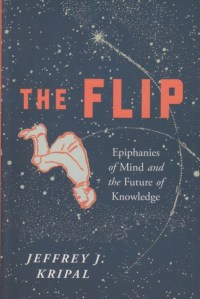
The mind-blowing book I mentioned last week is here unveiled.  I discovered Jeffrey Kripal’s work years ago, and have subsequently had a few conversations with him.  The Flip: Epiphanies of Mind and the Future of Knowledge is a challenging and necessary book.  In a way that only full-time academics can, Kripal examines the large picture.  When I say “large” I mean cosmic in scale.  He does so through the lens of the humanities and, especially, religious studies.  If anybody’s going to make religious studies cool, it is he.  The world is full of weird things.  If we’re honest most of us will admit to having had strange things happen to us.  Often we’ll filter them out or explain them away, but at other times we will stop, scratch our heads, and wonder what just went on.

The Flip is not a book of such anecdotes (and I, along with the author, am willing to take anecdotes seriously).  There is some strange stuff in here, but there is also a lot of science.  Historically the humanities, as understood by ancient Romans, included what we would call sciences.  Humanities, in other words, were attempts at understanding the world.  Today religious studies is among the humanities while science is separated out into STEM.  Kripal takes science seriously.  In fact, much of what he discusses here is the application of quantum physics to the macroscopic.  (I’m probably not explaining this well, but then, I guess you’ll have to read the book!)  In other words, science and the humanities need to come together again.  It’s not either/or, but both/and.

Holding out a hand across the aisle is uncomfortable.  Religion has done a great deal to disgrace itself of late, and it’s no wonder respectable folk want to keep their distance.  To understand what we are, however, requires a willingness to admit that humans are both deeply intellectually curious and deeply religiously inclined.  We can be both.  In fact, it is unlikely we can be any other way.  Anomalous occurrences aren’t generally welcome in religious studies any more than they are in the sciences.  That doesn’t stop strange stuff from happening.  This little book of big ideas uses that disjunction to lead the reader into spaces where the future might faintly be discerned.  Wide-ranging and provocative, this book needs to be read.  It is a strange world where two different approaches to knowledge so often decline to speak to one another.  Here they do, and their conversation is mind-blowing.


Time To Meet

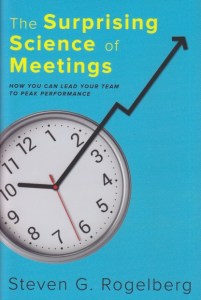
I feel compelled to state up front that this wasn’t the mind-blowing book I was writing about in yesterday’s post.  One of the perks of working in publishing is the occasional offer of a free book.  (It’s not as generous as you might think, so when one is offered I always say “thank you.”)  The Surprising Science of Meetings, by Steven G. Regelberg, isn’t exactly “mind-blowing.”  The realization that some people make a living studying meetings was certainly, well, surprising, but the corporate world is all about returns on investments and boring stuff like that.  We all hear of companies that value innovative and exciting ideas, but most of us know the feeling of being desk drones parked behind a soulless monitor all day.  At least I’m no longer confined to a cubicle.

The academic world I once knew was the stimulating environment of learning for its own sake.  The academy has followed the business world to its own form of perdition and as Rogelberg points out, there are millions of meetings any given day.  Many of them are poorly run.  This book is for those who want meetings to flow more effectively, to better the bottom line.  Still, I found the chapter on servant leadership particularly hopeful.  I couldn’t help but wonder if Rogelberg was aware that servant leadership was something that developed in the church, out of the effort to imitate the way Jesus was said to have led his flock of disciples.  The point was not to aggrandize himself (this is a chapter 45 and his ilk should read) but to help others to be their best.  This is the kind of leadership—rare, to be sure—that the church has always, at least vocally, promoted.

It didn’t take long for ecclesiastical organizations to start running like businesses, however.  The bishop became a boss rather than someone who reluctantly had the crozier forced into his (or her) hand.  I’ve always believed you should have to take a pay cut to become a bishop.  That would immediately weed out most of the climbers.  In fact, if servant leadership is really the ideal, and the good of the company is really the goal, pay cuts should be expected as you climb the corporate ladder.  Can you imagine a business world where workers were well compensated, and those who really had vision sought promotion because their motivation wasn’t their own bottom line?  It’s an intriguing idea, to be sure.  I’d like ponder it more, but I’ve got a meeting to get to.


Pay Per View

One of the things editors can teach academics is that the latter should pay more attention.  Especially to the world of publishing.  An erstwhile academic, I learned to go about research and publication in the traditional way: come up with an idea that nobody else has noticed or thought of, and write about it.  It is “publishing for the sake of knowledge.”  (Yes, that is Gorgias Press’s slogan, and yes, it is one of my hooks—marketing, anyone?)  The idea behind this is that knowledge is worth knowing for its own sake.  Researchers of all kinds notice details of immense variety and there’s always room for more books.  Or at least there used to be.  The world of publishing on which academics rely, however, is rapidly transforming.  Money changes everything.

The world has too many problems (many of them generated by our own species) to pay too much attention to academics.  Universities, now following “business models” crank out more doctorates than there are jobs for employing said wannabe profs, and those who get jobs pay scant attention to knock-on changes in the publishing world.  Just the other day I was reading about “pay per use” schemes for academic writing that, unsurprisingly, came up with the fact that most academic books and articles lose money.  If someone has to pay to read your research, will they do it?  Especially if that research is on a topic that has no obvious connection with the mess we’re busy making of this world?  Probably not.  Publishing for the sake of knowledge is fast becoming a dusty artifact in the museum of quaint ideas.

For those still in the academic sector that means that research projects now have to be selected with an economic element in mind.  “Would anyone pay for this?” has to be one of the questions asked early on.  The question has to be answered honestly, which requires getting out from beyond the blinders of being part of the privileged class of those who are paid to think original thoughts.  Academia has followed the money.  A capitalistic system makes this inevitable.  How can you do business with an institution that doesn’t play by your accounting rules?  And academic publishers, which have difficulty turning a profit due to low sales volume, are bound to play along.  This situation will change how we seek knowledge.  More’s the pity since some of the things most interesting about the world are those that nobody would think to pay to view.


Book and Bell

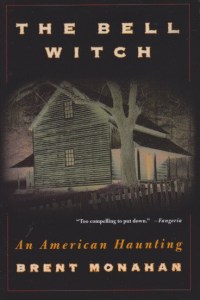
The Bell Witch: An American Haunting, by Brent Monahan, is a book I’ve read before.  The subtitle was used for a cinematic version.  I discovered the book, however, through what might be considered a chance encounter with the author.  He was teaching a course on offering distance education courses at Rutgers University, and, as an adjunct teaching over eight classes per year, I’d been selected for the distance education program.  (As life goes, of course, I was hired by Routledge for a full-time job before I could actually deliver the course.)  By a strange irony, I had watched An American Haunting just the weekend before the course, and I had no idea who would be teaching it.  Neurotically punctual, I was the first one there for the class, and as Dr. Monahan and I talked, I knew I’d need to read the book.  I posted on it back when I did, but this time I decided to pay better attention than one can on a bus.

Of course, when you watch the movie first, which I had, you know “the reveal” well before it comes late in the novel.  In case you’ve done neither, I won’t give it away.  The tale is based on an historical haunting, attested in sources from near the period.  And it is a strange kind of possession story.  The “witch” is actually a demon conjured by a trauma, and although book wraps things up nicely, it leaves a few questions at the end.  I suppose that’s appropriate for a scary book.  One of my current projects involves tracing the accounts behind fictionalized narratives to their originals.  The Bell Witch was well researched, and is a good example of how the line between fiction and fact can be effectively blurred.

The Bell Witch legend is credited with influencing several horror films, including The Blair Witch Project and others which tellingly have “Bell Witch” in their titles.  The story has a fairly incredible longevity, given that it was a localized legend from early in the nineteenth century.  Monahan’s novel is written as a “confession” from the schoolmaster, and historical personage Richard R. P. Powell.  This blurring of the lines makes for the kind of ambiguity that gives horror its particular ability to stand between fact and fiction.  The early versions of the lore, combined with elements intended to offer verisimilitude, leave plenty of queries at the end.  So much so that I’ve occasionally contacted the author for clarification.  What really happened?  It depends which side of the line you prefer.