O Hades

Over the past week I have been grading essay exams for my mythology course. Most of my classes are large enough that assigning written work isn’t really feasible; adjuncts tend to teach many more classes than their full-time colleagues and getting grades in on time is impossible with too much paperwork. I tend to use “objective” tests, although I am aware, pedagogically, they do not reveal what a student actually knows. When I read essays, however, I am always brought to new levels of awareness. I also get the distinct feeling that I’m becoming a curmudgeon, complaining that back in my day you had to write better even to get into college. Regardless, it is a learning experience.

Last night I was reading an essay about Hades. This subject has particular interest for me since I recall attending revival services as a child where the guest evangelist shied away from using the word “Hell” in his sermons. He always called Satan’s realm “Hades,” rather like Paul, but when I studied mythology in school I learned that the places were quite different. Disney’s Hercules once again conflated the person of Hades with a Devil-like anti-god with fiery hair and the most Gothic chariot I’ve ever seen illustrated. This particular essay revealed an interesting religious training for the student; s/he wrote that unlike in Christianity, Hades was not God’s evil brother. The implication struck me – for her/his Christianity, the Devil is God’s diabolical brother. I don’t doubt for a minute that there are churches that teach such theologies, but the more I pondered the essay the more the idea expanded.

The dualism inherent in the view of God versus Satan clearly derives from Zoroastrianism. Judaism never recognized a “devil” character until meeting him in the Persian context of the Exilic and Post-exilic periods. I tarried long among the “orthodox” Episcopalians of Nashotah House where theological correctness was tantamount to being considered an actual human being. In such a school there was no time for those who thought dead Christians became angels or that you got to Heaven by being good. Yet the Devil was very real for these black-garbed acolytes of righteousness. The idea that he could be God’s brother, well, say a dozen Hail Marys and even more Our Fathers and we might let you back in the door. To me, nevertheless, it seems an almost biblical explanation for the origin of evil. Yes, Manichean in aspect, the idea does not fit nicely with a neat monotheism, but what is evil if not the antithetical DNA of God? Non-theology students have nothing to lose by expressing what they were taught in a secular mythology class, and for a brief moment in a student paper I had a glimpse of the true pluralism of Christianity.


The Colbert Confessions

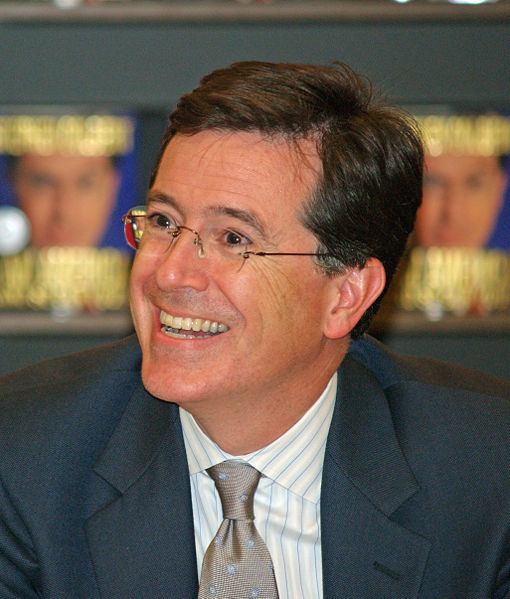
Gnu WikiCommons image by David Shankbone

The New Jersey Star-Ledger ran a human interest story on Montclair resident Stephen Colbert yesterday, “outing” his Catholicism. Well, given the fact that his religious affiliation is available on Wikipedia, maybe this isn’t so much news as filler. Nevertheless, the story repeatedly makes the point – cited by Colbert’s colleagues – that the mere fact that he is a practicing Catholic makes Colbert an evangelist every time he mentions the church. This is a bizarre concept, and one that would likely surface only in the United States. Many famous people in a variety of media are practicing Catholics (and I even hear, some public officials) and many of them would be shocked to learn of such an avocation being applied to them. Is the mere fact of belonging an affidavit? Does the government know about this? Does Christine O’Donnell even care?

What was noticeably absent from the piece was humor. Yes, the columnist mentioned that Colbert is a comedian and has a show on Comedy Central. She even noted that Colbert makes jokes about religion. What I mean by humor here is that little allowance is given for the fact that religious humor crosses some invisible line in our society, as if God is deeply offended when people use the sense of humor he gave them against him. Colbert is not shy about making fun of religion when it is appropriate, and for the last few decades, it has frequently been appropriate.

One of the surest signs of health in an institution is its ability not to take itself too seriously. Academic institutions are just as guilty, if not more so than churches, at presenting themselves as above reproof. Nevertheless, churches, colleges, synagogues, universities, and mosques are human institutions. Run by humans, they are bound to lead to comedic errors. When these happen it is standard procedure quickly to draw attention elsewhere while damage control is done. What Colbert does is evangelize for laughter. It is all right to take one on the chin now and again, but religious institutions, always in stiff competition with their rivals, do not give themselves much time to laugh. I say we need more Steve Colberts who aren’t afraid of the well placed snicker. And can you imagine having him as your Sunday School teacher? Montclair looks better all the time.


Demo C. Rats

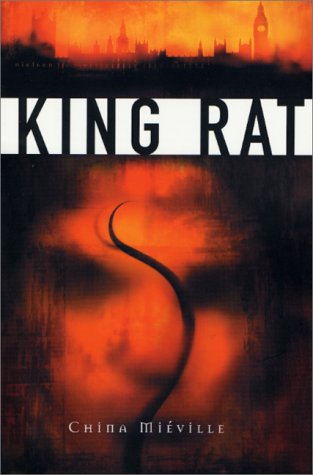
I just finished China Miéville’s novel King Rat. I’ve been thinking a lot about rats lately. This retelling of the tale of the Pied Piper of Hamelin has a strong Marxist flavor that intrigues the reader into greater possibilities. Each week as I drive the many miles required as a professional adjunct, I think about the bourgeoisie of academia. Many university programs are simply not possible without the many adjuncts willing to be exploited in order to keep them going. While the adjunct is kept below a certain number of courses so that costly benefits do not need to be paid, full-time faculty are kept below a certain number of courses so that they are free to build the university superstructure. Some teach no courses, do no research, and conduct no administration. It is a fair guess whether they even bother to breathe or not. Yet they are paid full salaries and benefits. Academic fossils paid simply to exist.

Saul, the rat-man who would be king, has a conscience. He was raised by his human father to appreciate the sense of what Karl Marx wrote. As the novel progresses, the rats congregate around him, wanting him to be their king. I have been an adjunct instructor for five years now. As I have watched my prospects grow slimmer, my work load has increased for less and less payback. I frequently chat with full-time colleagues who appreciate everything I’m doing. This academic year I am scheduled to teach eleven courses, strictly part-time, of course. Otherwise someone might have to pay benefits. This week one of the schools I teach at actually expanded parking privileges for adjuncts. Not to be nice, but because they had to.

Saul, the would-be king. So biblical. So human. At the end of the story he lives up to his idealism, granting rats autonomy without being sure how it will play out in the real world. There was a time when academics were idealists. Universities are now, like all other aspects of “modern life,” businesses. I’m sure that full-time instructors devote very little thought to those who work for table-scraps to support the system that underwrites their comfortable lifestyles. Certainly a university president or dean would loose nary a wink of sleep over those who’ve given themselves over to the task of Atlas, holding up their sky. It is business as usual. And as the bourgeoisie know, every aspect of life is business. What happens when the rats go free? The end of the story has not yet been written.


The Problem with Demons

One of the perks to life among a university community is the special programs that come to campus. As an adjunct instructor with a schedule so confusing that even Escher would get lost, however, I do not often have the opportunity to take advantage of such programs. More’s the pity since next week Montclair State University is hosting an event called “The Real Exorcist.” One of the very few authorized exorcists of the Catholic Church will be speaking on campus. The event overlaps with a previously scheduled class at Rutgers.

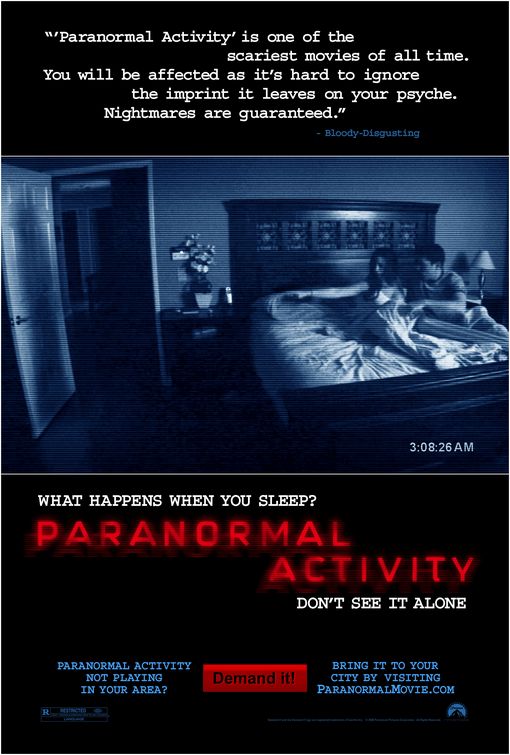
A little disappointed, last night I sat down to watch Paranormal Activity, the indie movie that made such a splash last year. Assuming it was a ghost story, I wasn’t too concerned about watching it alone on an October night. When I discovered it was a demon story, however, I wasn’t sure watching it alone was such a good idea. You see, in the hands of paranormal investigators the demon has undergone a transformation. Ancient Mesopotamians believed in a set of lesser gods who caused misfortune, although they don’t seem to have been pure evil and they didn’t call them demons. By the time we reach nascent Christianity, demons are cohorts of the Devil and are utterly malign and capable of possessing a person making them do the bidding of their dark lord. That’s where they remained on the divinity scale until modern day investigators using scientific equipment found them. I confess to having watched Ghost Hunters a time or two. Here the demon has morphed into a non-human disembodied entity – the very antagonist of Paranormal Activity.

Being aware of the origin of concepts is often a comforting place to be. When I realize that no special revelation has suddenly validated the existence of a baleful creature set to do me serious harm, a relief encompasses me. The problem with demons is that they don’t evaporate so easily. “Invented” by the Mesopotamians to explain misfortune, by the change of the era they had evolved into (largely) an explanation for epilepsy and mental illness. Now today they are back as haunting entities that have no human sympathy since they were never human. Paranormal investigators take them very seriously, despite their checkered theological pedigree. I guess I side with Shakespeare on this one: “there are more things in heaven and earth, Horatio…” After all, it is October and the nights are growing noticeably long.


Crimeless Victim?

Anyone who’s spent much time with the Dead Sea Scrolls knows the name of Norman Golb. Long-term Oriental Institute professor at the University of Chicago, Golb has been active in research on the Scrolls for decades. Tuesday the New Jersey Star-Ledger ran a confusing article about the trial of Golb’s son for identity theft. After reading the piece several times it is still not clear what Raphael Golb has done that is either newsworthy or illegal. It does involve the Dead Sea Scrolls, however, and that is always enough to draw the attention of the Associated Press.

Is the truth in there?

The Dead Sea Scrolls continue to fire the imagination of the general public in a way that is somewhat baffling. The scrolls themselves are largely obscure and fragmentary, the information they contain is often arcane, and the published pieces raise excitement mostly in scholars rather than a general readership. The fact that it is not too difficult to fill a class on Ancient Near Eastern religions at Rutgers University seems to indicate that people are still avidly interested in the past, particularly in that conflicted part of the world where civilization began. While the media report the more sensational finds, interest quickly peters out while new and more exciting stories hit the wires. It’s fun to imagine what the field of studies would be like if sustained media interest told the public what to find fascinating in the ancient world.

This article, however, represents the unfortunate reality that scandal is often the drawing point for ancient studies. People are attracted to scholars behaving badly, intellectuals receiving their timely comeuppance. It is disappointing that the subject matter itself doesn’t receive more attention. The Ancient Near East is, after all, the source of what we continue to recognize as culture. Reading the article over again, the most disturbing element is not that Raphael Gold has allegedly committed identity theft. The most disturbing element is that a professional journalist describes him, apparently without a hint of irony, as “a brainiac.”


Higher Ethics

As a part-time public servant (I teach part-time at two state schools, Rutgers and Montclair State) I am required to sit myself in front of the computer for over an hour each year to watch a slide show on the ethics expected of public servants. Probably the first time this was a good thing since I had seriously been considering taking a tip-jar to class with me to help meet the costs of living in New Jersey. You see, part-timers do not get benefits. Some, like me, teach twice as many courses as their “full-time” colleagues and get paid less than half of what their betters do. I am a bargain-basement public servant. I figured a tip-jar might just help to cover mileage (not reimbursed). As I listen to the stern-voiced lady spilling out all the unethical practices (like tip-jars) that can lead to the dismissal of bad public servants, my mind can’t help but to wander to what Bruce Springsteen famously called “the mansion on the hill.”

Froma Harrop, a journalist in Providence, wrote an op-ed piece on higher education that appeared in yesterday’s New Jersey Star-Ledger. After surveying the situation at her local Brown University, Ms. Harrop laments the seemingly endlessly escalating costs of higher education. In the past four decades tuition has increased an average of 15 percent, whereas incomes (at least some) increased at an average of 6.5 percent. She notes, however, that the money is not going to professors or academic programs. The lion’s share of university money goes to sports teams. Students who often have trouble passing my admittedly easy introductory-level courses are pampered, petted, and preened by the university. The average undergrad has plenty of stories to tell of how they have been forbidden goods and services that the university reserves for its sports stars. Ms. Harrop also cites the fact that the number of administrators has nearly doubled in the last 30 years. For all that, the schools haven’t become more efficient, just top-heavy.

So as I waste an evening looking blankly at my computer screen, I realize that I am a public servant. Strictly part-time. I also realize that many public servants – those who hold high political office come to mind – earn far more than they strictly need. In fact, the benefits package alone of some of these “servants” would easily support a family of three mere mortals. And they don’t even have to make their own car payments. As an undergrad I took enough courses in ethics to officially declare it a minor. I have studied religion, a discipline akin to ethics, all my life. As the stern-voiced lady tells me all the bad things I cannot do with state money, I wonder what the top public servants are doing tonight.


Disconnect

Religion has a bad name among many intellectuals. Hailing from the misty period of superstition in a “demon haunted world,” religion seems to be a quaint hold-over from less enlightened times. Academics, for whom respectability is everything, generally keep a decorous distance from religion as the intellectually suspect field indulged in by the weak-minded. Then something enormous happens; terrorists, fueled by religious fervor, decide to kill many innocent victims. Or a religious guru leads followers into the jungle where they all commit ritual suicide. Or a group of zealots purchase heavy armaments and stockpile them in a Texas hideout to await the Second Coming. The next autumn the university want ads are filled with openings for specialists in this or that religion. Until the next budget crunch comes along.

An unfortunate aspect of this situation is that many deans and administrators make the equation of the study of religion with the promotion of a religion. Why populate a university faculty with superstitious religious sorts when a good secular economist will bring in more practical, if less transcendent, rewards? How often do administrators survey their religious studies faculty to ensure that level-headed, academic treatment of the subject matter is offered? How can we expect to move ahead if those empowered to assure an educated student clientele continually apply the brakes in religious studies departments?

I am no economist. This much is evident by my pay scale. Nevertheless, each year when I return to the multiple campuses that are my temporary homes, I notice the details. New furniture in classrooms and libraries, freshly painted and redecorated facilities. Often, entirely new buildings that were not there the semester before. There was a day when such things were known as window-dressing. I attended Edinburgh University for my doctorate. There were campus buildings that dated from the late middle ages. Classrooms often had mismatched furniture and blackboards rather than fancy projectors and smart-ports. And the educational experience was authentic. The religion faculty was thriving and universally well regarded. I’m no economist, but with fundamentalists already holding a match to the fuse about to light up a Quran, I have a feeling already of what I’ll be seeing in the want ads of next year’s university hiring season.


Delicate Matters of Faith

Friday’s New Jersey Star-Ledger ran an op-ed piece by Phyllis Zagano entitled “Teaching how, not what, to think.” The essay concerns a tale of two professors, one at the University of Illinois and one at Seton Hall. Both have come under fire for teaching on the issue of gay marriage, one from, one against, a Catholic viewpoint. Zagano’s point of view, evident from her title, is that professors should teach students how to think, but not what to think.

This is one of the most difficult aspects of teaching religious studies. I am in my eighteenth year of teaching in the field. In that time I have taught at both religious and secular schools and, in both settings, presented the material objectively. There are those in both settings who complain. Students at Nashotah House frequently wanted me to bend the Bible to fit conservative Anglo-Catholic teaching. Under immense logical pressure to accept what reason told them of the world, they wanted an authoritative book to back them up in a pre-decided outlook. A theological ace of spades to trump the uncomfortable conclusions of rationality. At the University of Wisconsin Oshkosh and at Rutgers University students frequently want to know my religious outlook so that they might know how to categorize what they are learning: is it sanctioned or is it anathematized? We need to know who you are so we can evaluate your authority in such delicate matters as faith.

I frequently ponder the issues raised by Zagano. I know of no other field of study where the stakes are so high, with the possible exception of political science. Religion is an all-encompassing phenomenon. All of life must conform to religious teaching, often with eternal consequences. It therefore makes an enormous difference what you are being taught. Like Zagano, I try to teach students to think for themselves. Both at the seminary and university I refused to reveal my personal outlook on the issues; I try to kick-start the thinking process. I have paid the price for this in the past, but it is a non-negotiable component of education. If the truth is uncomfortable, it is always possible to let someone else do the thinking for you.


Bible, Bible, Who’s Got the Bible?

Rutgers University boasts a truly diverse population. In my fourth year as an adjunct in the Religion Department at the New Brunswick campus, I am continually reminded of the religious and cultural mix of the human race. As I began my twelfth section of Introduction to the Hebrew Bible last night, it occurred to me just how tight a grip Christian-based publishers have on the Bible. I generally spend my first class session on defining the Bible since many students enter such a course (and it is always full) with notions of what the Bible is. In fact, “the Bible” is a difficult document to define.

Binding a book together indicates that what is between the covers belongs together. This is almost a subconscious fact that we pretty much take for granted. If a publisher put all of this in the same place, it must belong together. For the general consumer market, that translates into Bibles that contain the Hebrew Scriptures and the Christian Scriptures. This mix of 66 books satisfies most customers in the United States and Canada, but the Catholic reader expects some 13 additional or expanded books in her or his Bible. Jewish customers expect somewhat less, with 27 books normally in “the Bible” being specifically placed there by a later, revisionist sect. Orthodox Christian Bibles may add or leave out a book or two, depending on the tradition.

The irony of this situation strikes me as we have Bible-thumpers constantly appearing in the news. Their well worn, black leather King James Versions are “the Bible.” For them. Their message to the American public: we must get our lives back in line according to (my interpretation of) this book. What of those in this country who have fewer or more books in their Bibles, or, Yahweh forbid, completely different scriptures? Is there no room in a nation of religious liberty for them? I have a modest proposal. For the politicians who want their Bible to drive our society, stop by my class at Rutgers sometime. I am always glad to see the diversity. And it shouldn’t be too hard to find a section to fit in your schedule – I teach four sections of the class throughout the year, including summer and winter terms.


Can You Handle the Truth?

Time magazine’s Religion feature this week announces Claremont School of Theology’s decision to go interfaith. In response to declining enrollment, the United Methodist seminary has decided to offer training to Jewish, Christian, and Islamic leaders. Naturally, this will have to be done with the approval and support of training facilities for rabbis and imams, but it will be a way forward for the beleaguered Christian seminary. Seminaries have been in a state of crisis over the past few decades (otherwise it is hard to explain how I might have been hired by one, and a particularly conservative one at that!). And it is not difficult to see why.

Religion is, by nature, conservative. If truth is unchanging, there is no improving upon it. Religions claim to espouse the truth, so stability, orthodoxy – stagnancy – are required. Yet theological seminaries compete with graduate schools for students and faculty. Seminaries crave academic respectability – this is the entire reason for academic accreditation (my old-time colleague Daniel Aleshire of the Association of Theological Schools is quoted in the article). The basic operating premise of institutions of higher education, however, is that we are still learning the truth. We are not there yet. No God reveals the laws of physics in whole cloth (or vellum). Humans must theorize, discover, criticize, and theorize further. Meanwhile, seminaries wave their muted flags and shout, “Over here! We already have the truth!” To be accredited, they have to hire Ph.D.s who have been critically trained. Critical training does not accept simple truth claims. The result: seminaries hire critical faculty while religious authorities insist that the party line be toed. Something has to give.

Offering to bring different religious traditions together is a wonderful idea. Established religions need exposure to each other if the human race is going to survive. Exposure, no doubt, however, will reveal the amorphous nature of truth. The fact is that we are still looking for answers. Everything we have learned about religion points in that direction. What I find particularly telling about this situation is the motivation. Claremont is trying this route for financial reasons. The great god of all higher education, Cash, has finally gotten his talons into religious institutions as well. If there is any unchanging truth out there, it has a dollar sign in front of it.

In gold we trust...


Woeful Wisdom

“There is a wisdom that is woe; but there is a woe that is madness. And there is a Catskill eagle in some souls that can alike dive down into the blackest gorges, and soar out of them again and become invisible in the sunny spaces. And even if he for ever flies within the gorge, that gorge is in the mountains; so that even in his lowest swoop the mountain eagle is still higher than other birds upon the plain, even though they soar.” Herman Melville takes the credit for this passage. It is one of the many pericopes that make Moby Dick the greatest book ever written. Those who know me only as a biblical scholar may be surprised to read that, but I invite anyone who has ever instantly fallen in love with 1 Chronicles 1-9 to reply and argue the point.

Although Moby Dick has fallen into the provenance of books that are kept alive only by required high school and undergraduate required reading lists, this novel still comes back to me at many points in my life and fractured career as both a solace and a warning. Melville was clearly a man tormented by his search for meaning. He drew heavily on the Bible for Moby Dick, likening Ishmael to Ecclesiastes at one point, and the whaling haunts of New Bedford to tophets. To appreciate Moby Dick deeply, one must be familiar with the Bible.

Is this the Bible, or what?

Considering the great changes that are taking place in society, I often wonder if we have reached a breaking point. In my university life, I see students absolutely frantic to achieve an A in an easy class, one that would not have broken a sweat in my undergraduate days. Their anxiety is real; grade inflation has forged the B into the new D, or F. Yet these same students know nothing of life apart from the internet. In times like these, I betake myself to the Catskills, and with Melville, turn my eyes upward, seeking madness.


What Hath AI Wrought?

Earlier this week an op-ed piece in the New York Times afforded the laity a rare glimpse into The First Church of Robotics, that is, Silicon Valley’s incredible and slightly disturbing vision of the future of technology. The writer of the piece, Jaron Lanier, an insider, expresses a concern that his area of specialization, a kind of artificial intelligence, is blurring the hard line between human and machine. Perhaps it is time we all watch Terminator again. Quoth Lanier, “It should go without saying that we can’t count on the appearance of a soul-detecting sensor that will verify a person’s consciousness has been virtualized and immortalized. There is certainly no such sensor with us today to confirm metaphysical ideas about people, or even to recognize the contents of the human brain. All thoughts about consciousness, souls and the like are bound up equally in faith, which suggests something remarkable: What we are seeing is a new religion, expressed through an engineering culture.” To put this in context, Lanier had been discussing the current concept that it might be possible to digitize human beings to incorporate all people in a Matrix-like universal brain.

I am woefully undereducated on the technology side of this issue to discuss whether or not such high-end digitization is possible. What interests me is the suggestion that this is a new religion. We haven’t even figured out the old ones yet. Defining what a religion is presents a nearly insurmountable barrier even to specialists in the field of religious studies, and some disgruntled conservatives claim that atheism and “sciencism” are religions. No matter how fast or how far you run, someone will always be able to label you as the adherent of one religion or another. Religion is an all-consuming category, a mental conundrum that cannot be contained by mere academic classification and circumscription. It is the universal solvent.

Meanwhile, universities and other learned bodies are reluctant to support the study of religion. In a world where the vast majority of individuals, university professors included, are motivated by religious guidelines and parameters, it is the elephant in the room we’d rather not discuss. From the sidelines I have watched reputable school after reputable school disembowel religion departments since they “don’t bring in money” and add nothing new to our understanding of the human condition. The sad truth is, religion indoctrinates much of the world. Deans and university presidents could learn a lot by reading op-ed pieces in the New York Times. Or at least have their avatars read them and store them away for future recall.


Weather the Psalms

Among the academic detritus cluttering my desktop is a book I wrote while employed at Nashotah House. Not being a native Midwesterner and finding myself where severe thunderstorms are a blasé fact of life for much of the year, I was captivated by and terrified of the weather. At the same time, daily recitation of the Psalms was a major part of our required, twice daily worship. With the thunder louder than I could ever imagine it outside, we’d calmly read the Psalms, at our stately pace, confident that he who rides upon the clouds could protect us, his humble servants. After many years of recitatio continua I noticed the plenitudinous mentions of the weather in the Psalms. After a painstaking five years of reading and rereading the entire Psalter, I had translated every verse with a weather reference and had written commentary on them.

Publishers showed no interest, this despite the enormous success of Sebastian Junger’s The Perfect Storm, and Erik Larson’s Isaac’s Storm (both of which I eagerly read) and the recent release of Twister. One publisher deigned to make comments as to the great problems of my thesis, so I sat down to revise this behemoth of a book. The very day I was called into the Dean’s office and fired was the last time I looked at the material. I had been revising the book that very morning. The one sad aspect of this entire episode is that every colleague to whom I mentioned the book was excited to read it when it came out. There was a real interest, but no publisher willing to take on the project, this side of vanity publishing.

Some days I think I may go back to that dead beast of a project and try to resurrect it. My academic publishing has slowed to a tortoisene pace without full-time institution support or interest (independent scholars are not worth investing in, I have learned), especially under the weight of teaching nearly a dozen classes a year. Nevertheless, the idea seems sound to me. I keep a weather-eye on the academic horizon and I have yet to spot a book like mine anywhere within the publication catalogues. Considering the importance of storm gods in the ancient world, perhaps we’ve simply moved beyond this interest, tucked away in our interior settings. Nevertheless, when a rare thunderstorm comes to New Jersey, I still remember the majesty of the weather and a forgotten book on the Psalms.

Even the NWS recognizes Noah


Reaping the Exodus

Strange coincidences transpire. In 2007, just after the professor in my discipline at Rutgers University retired, I showed up in the Religion Department seeking adjunct work. With the vicissitudes of “full-time” employment, at times my part-time stint at Rutgers is all I have. While covering the book of Exodus my first year there, students began asking me what I thought of The Reaping. I hadn’t seen the movie, which had been released on Good Friday of that year, but I promised my charges that I would. Still on my Hollyptic kick, I decided to rewatch it last night. The script was handled much better than that of Lost Souls, although the movie as a whole lacks credibility. It is, however, an example of how the Bible mystique continues to pulse through Hollywood’s veins.

The concept of bringing the plagues against Egypt into the bayou was a fresh one, but the satanic cult aspect has been overdone. A strong female lead in the role of a disenchanted former clergy-woman was a nice touch, and although the premise of her back-story was contrived, it was also decidedly eerie. The element of the movie that students wanted professional comment upon, however, was Katherine’s scientific assessment of the plagues of Egypt. This idea has a comparatively long history. Since critical biblical scholarship began, naturalistic suggestions for the non-historical plagues have been offered. Strangely, these offerings are intended to buttress an historical event that the theories themselves undermine. There is no archaeological or historical evidence for the exodus. Why then, are scientific explanations of the plagues necessary?

The story of the exodus is liberating; slaves liberated by a loving God forms a back-story that most oppressed people want to be true. The sad fact is that religion is more often used to repress than to liberate. Somewhere along the trajectory of human social evolution, religion became a key element in the control of the masses. This becomes clear from the merest glimpse at religion as it existed in ancient Egypt itself, or any of the other cultures contributing to Israel’s religious tradition. The Reaping, like so many films that springboard from the Bible, offers a conflicted worldview where nobody really knows who is in charge of the universe. In that aspect, it mirrors human religious experience.


True Colors

Over the past year several colleagues have urged me to join Facebook. To put this in context, I am one of those dinosaurs who made it through a Master’s program without having touched a computer – all theses and term papers were typed on a typewriter. It was only with the sheer volume of written material for my doctorate that I finally gave in to the technological revolution. Since then I’ve been sucked further and further into it, always a little bit reluctantly. When I read I like to have a book or magazine or newspaper in hand. When I communicate, I prefer a conversation to an electronic chat. Well, there are advantages to the technological world, but Facebook seemed a little too much. Caving to pressure, however, I eventually gave in and became a Facebooker.

One of the things I’ve learned from the daily updates of people – many of whom I’ve not seen since high school – is just how religiously conservative many of my friends are. I get daily, sometimes hourly, news updates about what the Lord is doing. He’s a pretty busy guy. Sometimes these friends look at my blog and wonder what has happened to me. When they ask, I have to wonder how deeply down the rabbit hole do they really want to go. I’ve been a professional religionist for nearly 20 years now – unfortunately several of those years have not included regular employment, but the work it took to get here can’t be undone – and prior to that I spent nearly 10 years in school studying religion. Anyone who makes it through an advanced degree in this field and comes out with the same viewpoint as when they entered it has had their mind firmly closed all along.

Religion is a phenomenon that can be studied, just like pottery or fashion history. Once a genuinely open mind is brought to it, perspectives begin to shift. Some of my friends who are less gracious about this respond by quoting the Bible at me, as if I’ve somehow learned how to forget the Bible while earning a Ph.D. in it. What they don’t realize is that if you want to learn about your religiousness in any serious way, there will be several Rubicons to cross and some pithy snippet from Paul is not going to change that. I don’t use Facebook to announce my religious thoughts to the diverse body of “friends” on my account. I use this blog for that. Those who are truly curious about religion might learn something from someone who’s been in the biz for nearly three decades. Others are content to announce to the world what the Lord is doing through Facebook.