Thanksgiving Reentry

One of the facets of attending AAR/SBL that I’d forgotten is how international attendees marvel at American Thanksgiving.  While it is far too focused on food for my liking, it is nevertheless an oddity among late capitalism’s sops.  I’m slowly becoming acclimated to the 9-2-5 environment I so desperately wanted to avoid in my career, but I’ve noticed that, at least in my case, the three publishers for which I’ve worked have this in common.  What is “this”?  The only four-day weekend in the entire year is Thanksgiving.  Probably that stems back to the fact that it falls on a Thursday and employers probably don’t want bloated, food-comatose employees trying to keep awake on Friday, and failing.  Perhaps there’s also the kinder motivation in realizing that by this point people have been working hard for many months and the US has comparatively few paid holidays.

I’m thankful for being home after the conference.  My trip to Boston underscored how much of a hermit I’ve become.  Afraid of crowds because of Covid, and not having ready cash as a result of being scammed, staying home has become a comfortable idea.  Being with others, I was glad to find, provided stimulation.  There are colleagues, both in publishing and in academia, that I look forward to seeing.  I’ve been slow to admit, I suppose, that my ouster from the latter is indeed permanent.  It’s wonderful to see friends who remember me when.  Looking back, I was very naive, even as a professor.  And I see many who, pardon my saying so, still are.  Unless you’ve been in the business world where a four-day weekend is a big deal, living in the ivory tower shelters you from much.

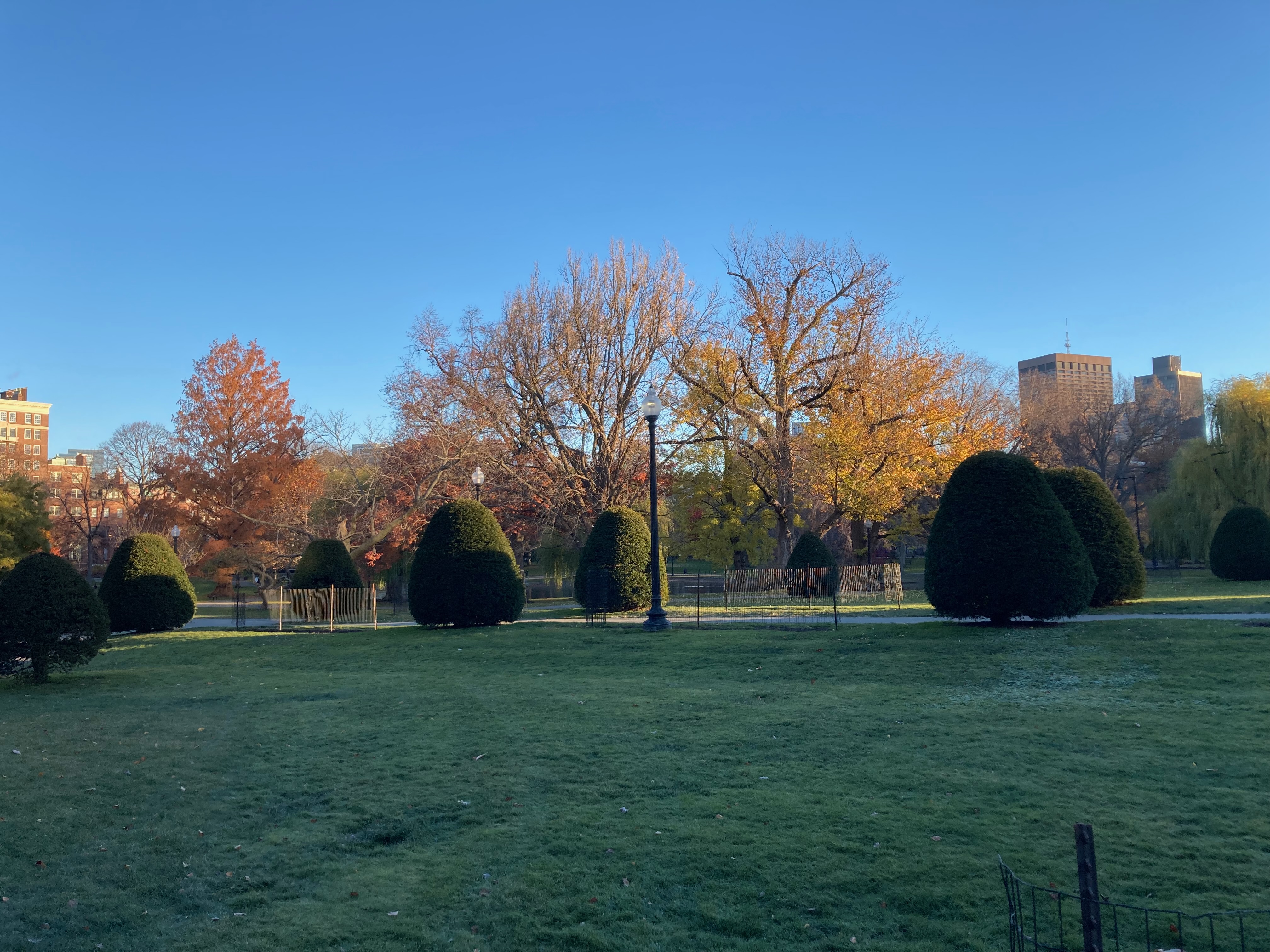
So I’m still in the “reentry phase” of conference recovery.  Although I was thankful to have been able to travel to Boston by train, getting home on a rainy night with heavy New Jersey traffic was a test of endurance.  In my hermit’s life I drink a lot of water and even rehydrating after shorting myself for five days takes an effort.  I’m thankful for the opportunity to have been in New England again.  And for friends on both ends of the trip who appear to welcome me for what I am.  What I’ve become.  Even though sleeping in a luxury hotel where the thermostat isn’t kept quite as chilly as we can afford to keep it at home, I’m thankful to sleep once again in my own bed knowing that there is a wider world out there and I can still function in it.


Little Girl

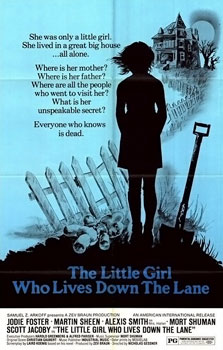
It might be inferred from the fact that I’ve mentioned it once or twice that I’ve seen The Little Girl Who Lives down the Lane before.  On a rainy autumnal afternoon it’s the horror movie that most often comes to mind.  While some find the “horror” designation overkill, it is the genre under which I bought the DVD many years ago.   Besides, it won a Saturn Award for best horror film.  I picked it up at a two-for-one sale not knowing what it was about but I was immediately taken by the atmospheric setting and weather.  A proper New England fall, after the leaves have come down.  It opens on Halloween with one of the most cringy openings ever.  Charlie Sheen plays a pedophile asking 13-year old Jodie Foster (Rynn) probing questions of where her father is when he finds her alone at home.

There will be a spoiler later in this paragraph.  Rynn lives on her own after her father dies by suicide and she murdered her mother and put her body in the basement.  Frank Hallet (Sheen), and his insufferable mother, own the Maine town where Rynn lives.  Befriended by Mario, a high school student who discovers her trying to drive, she eventually confides that Hallet’s mother was killed going down to the basement.  Meanwhile her son Frank keeps trying to insinuate himself into Rynn’s life, and, strongly implied, bed.  The story has some improbable plot elements and a few surprising moments, but not any jump startles.  It’s a slow burn, building to where Rynn attempts to poison herself, but Frank, not trusting her, drinks her tea instead.  Moody, rainy, and played out on a carpet of dead leaves, this is one of those horror movies that gets the season right.

Ironically for October nights, there aren’t a ton of horror films I know of that manage to capture this feeling.  I suppose that’s why I’ve seen this one a few times before.  I’ve gone through many lists of “October movies” and come out thinking that few people must think about this season the way that I do.  Or at least I haven’t found many horror movies that allow the season to pull its own weight.  Little Girl wasn’t welcomed with open arms when first released, but it has become a kind of cult classic.  Foster’s acting is pretty amazing considering her age at the time the film was shot.  But the autumnal weather does it for me, every time, even as we slip into November.


Shaping Halloween

Halloween is the favorite holiday of many.  I suspect the reasons differ widely.  Although the church played a role in the development of this celebration, it didn’t dictate what it was to be about.  It was the day before All Saints Day, which had been moved to November 1 to counter Celtic celebrations of Samhain.  Samhain, as far as we can tell, wasn’t a day to be scared.  It commemorated and placated the dead, but it wasn’t, as it is today, a time for horror movies and the joy of being someone else for a day or a few hours.  There isn’t a preachiness to it.  Halloween is a shapeshifter, and people love it for what it can become.  If December is the month for spending money you haven’t got, October is the month for spooky things.  Halloween is the unofficial kick-off of the holiday season.

For me, it’s a day associated with dress-up and pumpkins.  Both of these bring back powerful childhood memories.  The wonderful aroma of cutting into a ripe pumpkin can take me back to happier times.  I remember dressing up for Halloween as far back as kindergarten.  I could be someone else.  Someone better.  It was a day when transformation was possible.  I’m probably not alone in feeling this, although I’m fairly sure that wasn’t what was behind the early use of disguises this time of year.  I’ve read many histories of Halloween and they have in common the fact that nobody has much certainty about the early days of its inception, so it can be different things for different people.  Even within my lifetime is has moved the needle from spooky to scary, the season of horror movies and very real fear.

There’s a strange comfort in all of this.  A knowledge that if we can make it through tonight tomorrow will be somehow less of an occasion to be afraid.  It is a cathartic buildup of terror, followed by the release of being the final girl, scarred, but surviving.  And people, from childhood on, enjoy controlled scares.  Childhood games from peek-a-boo to hide-and-seek involve small doses of fear followed by relief.  The future of the holiday will be open to further interpretation as well.  As a widespread celebration it is still pretty young.  And like the young it tests its limits and tries new things.  At this point in history it’s settled into the season of frights and fears in the knowledge that it’s all a game.  I wonder, however, if there isn’t some deeper truth if we could just see behind its mask.


Halloween, Disney Style

I really don’t spend much time on social media.  It’s literally just a few minutes a day, half an hour at most.  I’m too busy to spend more.  I tend not to join groups because, well, I don’t spend time there.  One group I did join on Facebook is for Halloween fans.  I believe that’s where I heard about the movie Halloweentown.  I was surprised that, as a fan of Halloween for pretty much all of my life, I’d not known about this 1998 movie.  Watching it, it became clear why not.  It is a Disney television movie.  In the nineties we didn’t have television (a few channels from a snowy aerial at Nashotah House) and certainly didn’t subscribe to the Disney channel.  While the movie failed to penetrate my consciousness, it went on to start a franchise.  Once I heard of it, I decided I should see it because I’m interested in the darker side of Disney.

Television movies, with their comparatively small budgets and limited viewerships, don’t have the finished feel that theatrical films possess.  This is the story of a family of witches, three kids and a mother, living in the human world.  The children don’t know they’re witches.  Then when their grandmother visits on Halloween, they sneak into the eponymous Halloweentown with her.  This is where witches and other monsters live because humans fear them.  The “monsters” mostly consist of obvious humans wearing masks and makeup.  There are a few mildly frightening moments as the evil Kalabar tries to take over the human world by persuading his fellow monsters to join him.  But this is Disney where threats are gentle and good fairly easily defeats evil.  While the movie isn’t even as scary as Hocus Pocus, some people watch it to get in the Halloween mood.

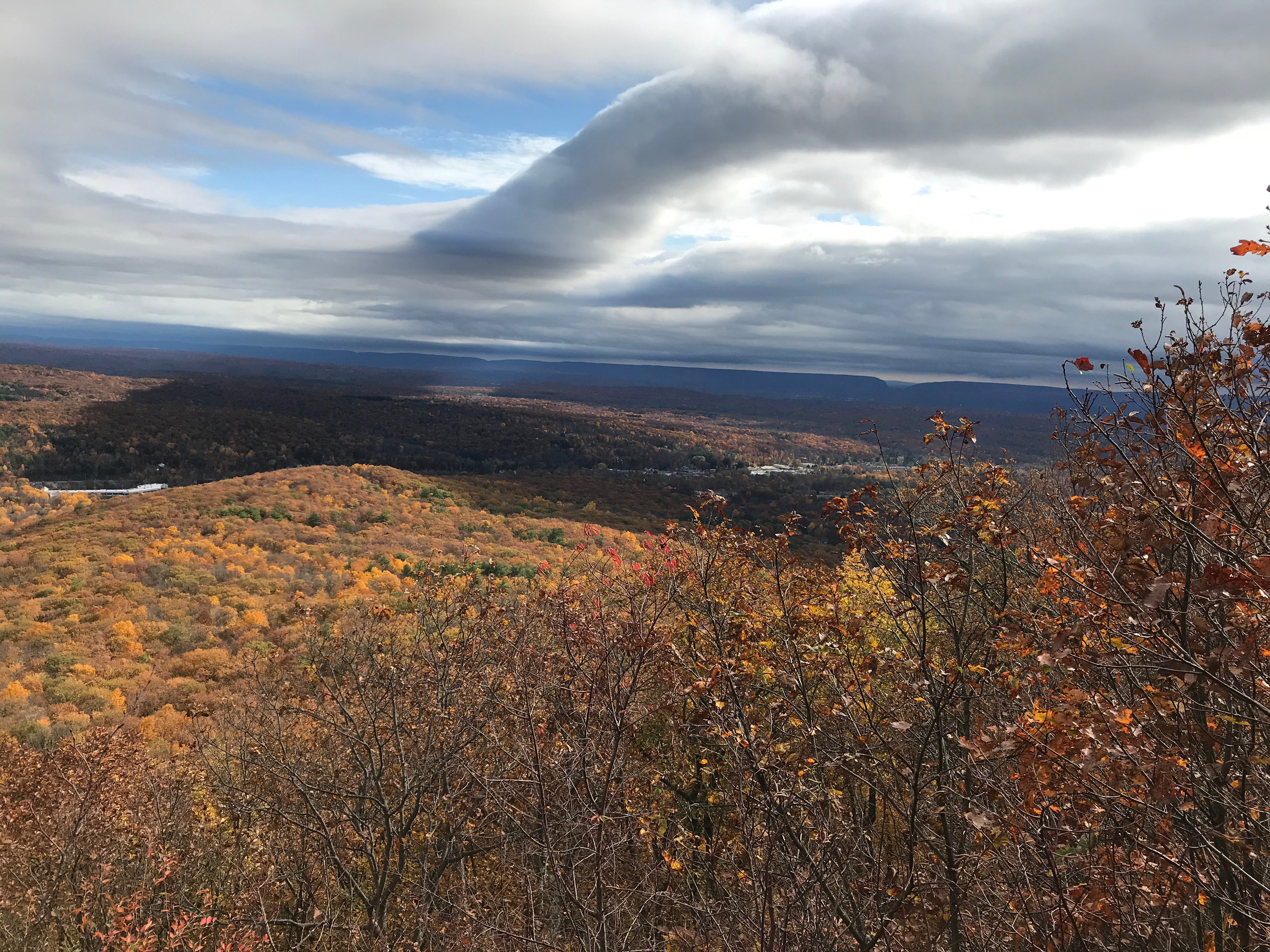
One thing that I’ve noticed about many movies that try to capture the autumnal feeling while being shot in California, is that they miss the more dramatic temperate shift in seasons.  This annual outdoors Götterdämmerung resulting in the colorful dying of leaves and the surrender of summer to the inevitable chill to follow is integral to my experience of Halloween.  In fact, one of the few criticisms I’d make to John Carpenter’s Halloween is that Haddonfield, Illinois was shot in Southern California.  Other movies make a similar gaff.  I’m always on the lookout for movies that manage to emulate that Halloween feel.  The film that perhaps does this best, in my experience, is The Little Girl Who Lives Down the Lane, shot in Canada and Maine.  I’m still searching, however, for my own Halloweentown.


Learning Curve

There’s a learning curve to cold weather living.  Now, I need to define cold weather as when you have to turn on the heat.  Around these parts that generally happens mid-October.  We keep our house chilly not because we unduly enjoy shivering, but for two good reasons: it costs a lot to heat a house and it doesn’t benefit the environment to do so with too much zeal.  The cost aspect goes without saying.  It costs more to live in the colder seasons.  At night our thermostat is set to 62.  That’s fine as long as you’re in bed under tons of blankets, but I’m a habitually early riser.  Most of my writing is done before work, when the house is at its chilliest.  I bundle up with several layers of pajamas, a stocking cap, and fingerless gloves.  The part that requires relearning each year is the exercise bit.

Before going out for a pre-work jog, I do some light calisthenics.  I can’t really do these in my pajamas, though, because they can raise a sweat, even in winter.  Besides, I have to go jogging later, so I need to get my exercise clothes on.  Every year I have to remind myself, when do I make the switch?  I don’t enjoy stripping off my warm clothes to put on some chilly ones so I tend to put it off until the exercise mat starts to call loudly.  As the sun rises later and later, as the solstice approaches, jogging gets later and later (with a slight reprieve when we pointlessly end Daylight Saving Time).  There comes a point when I have to start work before my jog.  I can never remember when that happens—November?  December?  It will mean altering my routine, particularly if I have any early meetings.

I used to wonder why, in older films, especially those set in Europe, people were shown sitting around their houses in woolen suits and vests, full-length dresses with shawls.  As a homeowner with a low thermostat, I had an epiphany.  They did it to keep warm.  Europeans often describe American houses as “overheated.”  I haven’t had any European guests lately, but I doubt they’d say that about our place.  Our daytime temperature is 64.  Outdoors, that’s getting to be jacket weather.  My European colleagues don’t mind wearing puffy vests and jackets on Zoom meetings.  Heating a house in Europe is much more expensive than it is in the colonies.  In the dead of winter it’s not unusual for me to be wearing five or six under-layers during the day, and fingerless gloves at work.  The thing is, I need to relearn this each year.  Winter’s on its way, so I’ll do my best to be a good student with my chilly lesson.


Booking Halloween

I’ve met several people who say that Halloween is their favorite holiday.  One of the (likely commercially-driven) realities, however, is that not many nonfiction books on Halloween exist.  I mean the kind with a known publisher behind them, the sort that have been vetted.  My recent book, Sleepy Hollow as American Myth has a chapter on Halloween in it, and I’ve often considered writing a book on the topic.  Halloween and Other Festivals of Death and Life is an edited collection brought together by Jack Santino.  It is one of the (few) academic books on Halloween that I hadn’t read.  Although I learned a lot from it, it suffers that inevitable trait of books that are assemblages of essays: they are uneven in focus, scope, and execution.  Santino is known for a couple of influential articles on Halloween, so editing such a book seems a natural development.

Some of the essays in this book were quite helpful to me.  The problem with drawing together anthropologists, however, is that they have discrete regional as well as thematic interests.  In some ways this is very appropriate for Halloween.  The holiday, as most holidays, has regional variations.  Reading about how it’s celebrated elsewhere, or elsewhen, gives you an idea just how lacking it is of any kind of “top-down” authority.  For all of its variations, Christmas has a somewhat “canonical” narrative (although this isn’t the full story).  Halloween grew from folk traditions and when the church got ahold of them it tried to focus them on All Saints Day, and later, All Souls Day.  But Halloween and it adjutants comes the day before All Saints, thus allowing the varied influences of the day to come to light, if they can be found.

The part of this tradition that I’ve always found disturbing, highlighted in this book, is the pranking.  I suppose that growing up poor, the idea that someone could damage your stuff when it’s really what you feel you need to survive, is quite distressing.  A light-hearted prank feels less insidious, but reading what some regional celebrations in North America included made me realize why many local authorities have tried to contain and control celebrations.  Nobody wants to lose everything due to a thoughtless prank.  Trick or treat was sometimes trick and treat.  I recall being in a crowd in England celebrating New Year’s.  Some partiers threw lit firecrackers into the crowd.  My only thought was to the damage or injury this might cause.  Halloween is that way, however.  And it is likely impossible to write a book that captures it in its fullness.


Hello September

Labor Day is as early as it can possibly be this year and as late as it can possibly be next year.  We live in a time of extremes. In any case, it’s our hello to September and our goodbye to summer.  Since I still think of weather quite a bit, I’m reflecting on how most of the month of August around here has felt like autumn.  A month that I normally think of as consisting of hot dog days as summer reinforces its grip has been one of chilly mornings requiring long-sleeved jogging togs, and even fingerless gloves indoors for a morning or two.  July was hot and rainy.  The kind of hot that saps your strength and energy.  August felt like relief after that, but now we greet September, wondering what might lie ahead.  Many of the trees around here have already started to change, which looked a little odd when it was only August.

A couple weeks ago

Autumn has always been my favorite season, as it is for many people.  It is poignant, however.  Summer has its endless lawn mowing, but trades that off with not requiring a jacket to be outdoors and plenty of sunshine.  More than that, even traditional capitalistic businesses tend to slow down a bit in the summer, if for no other reason, because many employees take vacation time and everything has to put on the brakes a little.  Because we work at breakneck pace for the remainder of the year, this more relaxed season is a welcome respite.  We know, as nights grow cooler and longer, that it is time to put that away for another year.  It’s a season of transitions which is what makes it so melancholy.  Work starts to feel more serious after Labor Day, but the holidays are at least within grasp.  Halloween is really the next on the list.

I sometimes wonder if I’ll ever be able to retire, and if I do, if these day off holidays will be so important to me.  I’ve been interested in studying holidays pretty much all of my professional life.  Never really a fan of the capitalistic ethos, after being thrown into that world I quickly learned to look at holidays as stepping stones to get me through the year.  The first four months are rough.  They do have holidays sprinkled here and there, but March and April and most of May are holiday free zones.  That’s one reason the more relaxed fit summer is welcome.  The pace picks up again tomorrow, but for today, at least, we have one last ounce of summer to live.


Big Bites

Although Jaws takes place on or near the fourth of July, it’s not holiday horror.  Holiday horror draws its source of fear from the day, and although Mayor Vaughn—like many politicians—insists holiday income is more important than a few lives lost, the fear derives from the shark.  I can’t remember when I first saw Jaws.  It couldn’t have been during its initial theatrical release (I was too young), I do know that I read the book first.  I wasn’t expecting Hooper (then my favorite character) to survive.  I was also surprised when I heard people starting to refer to Jaws as horror.  When I first saw it, whenever that was, I wouldn’t have called it horror—it’s just a movie about a shark.  Since thriller and horror bleed into each other I’m more open to the designation now.  Besides, animal attack horror is its own well-established category these days.  Jaws, half-a-century old this year, is experiencing a comeback but the shark never left.

JAWS, 1975

My wife surprised me by suggesting we watch it last weekend.  We’d seen it together on television many years ago.  A number of analyses have been appearing in the media, highlighting the importance of the movie, and I noticed a few things watching it again.  Probably the most obvious shift, for me, was finding Quint the most engaging character.  I don’t know how many times I’ve read Melville’s Moby-Dick, but it’s been at least two times since seeing Jaws the last time.  The connection was much clearer with this viewing.  Quint is after sharks because of their attacks on crewmen of USS Indianapolis in World War II.  Quint was a survivor but his life’s mission is revenge on sharks.  So much so that he smashes the radio to prevent Brody from radioing in an SOS.

So here was a confluence.  I watch horror movies.  My favorite novel is Moby-DickJaws falls somewhere between the two.  The mainstream success of the latter may have been an early contributing factor to the grudging admission that horror can be good cinema.  Just in the past two or three years standard media outlets have been valorizing some horror and in this summer’s movie season, eyes have turned back to Amity and its local Captain Ahab and great white.  The great white shark, mainly feared because of this movie, is considered a vulnerable species.  As with Moby Dick, I felt sorry for the animal, watching the movie.  Both seem to have revenge on their minds as well, whether it’s a holiday or not.


Quarter Day

Some years it sneaks up on you.  The solstice, that is.  The weather remains an area of fascination for me, and not one of infrequent complaint.  The late spring (pretty much all of May and June up until Juneteenth) around here has been rainy and chilly.  Oh, we’ve had hot days sprinkled in, but even this week I had to wear a thermal shirt and fingerless gloves in the morning since there was no sun and the furnace has been off since last month.  The last couple of days, starting, ironically, at Valley Forge, have been getting hot.  And today begins astronomical summer.  I write about the seasons quite a lot.  Having been born and raised in a rainy, temperate zone climate, I grew up accustomed to four distinct seasons.  And we’re now at the longest day of the year.

The quarter days always make me reflective.  Culturally, there’s no real celebration associated with solstices or equinoxes.  The winter solstice falls relatively near Christmas and other winter holidays.  The spring equinox is close to Easter.  The start of summer, which should be ebulliently hopeful with its abundant sunshine, tends to get overlooked.  Some like to say summer is when life is easy.  It does mean mowing the lawn quite a bit.  The grass loves all the rain we’ve had this year.  Waypoints, however, are important.  We divide the year so we might anticipate.  Our agricultural roots focus on planting and harvest.  Even our hunter-gatherer forebears had to follow the food that changed location depending on the prevailing weather.  The seasons are deep within us.

The summer solstice always makes me think of Ari Aster’s Midsommar.  The underlying fear of too much light.  Even here there is a profound message for those able to excavate it.  If things are going well we tend to sabotage them.  Still, I prefer to think of this as a season of hope.  Summer illuminates.  I write this noting the sun’s chasing of twilight outside my window, even before five a.m.  There are still some clouds in the sky because old patterns are difficult to break.  But it is a season of light.  The next quarter day, when we start to realize that the darkness will be increasing until the sister solstice comes to our rescue in winter, is likewise passed over in silence.  By then many will be ready for a respite from the heat that comes with too much light.  Others of us will be thinking of cycles and how they are full of hope and anticipation.


The Valley

Juneteenth seemed a good day to get to Valley Forge.  With all the nonsense going on in the White House, we need to be reminded what this country was founded on and for.  I like to think that we weren’t the only ones there yesterday for that reason.  In fact, in the gift shop I found a book titled America’s Last King.  By the time we left it was sold out.  Like many Americans, I suppose, I only had a vague idea why Valley Forge was important for our young country.  We took a tour that helped explain it.  A tour that some in Washington ought be be required to take.  Valley Forge was a winter encampment—the third in the War of Independence.  George Washington had just suffered two defeats and the British had taken Philadelphia.  His poorly provisioned army set up winter headquarters in this strategically secure hill country.  Inadequately clothed, barely fed, many dying, they planned how to keep their efforts to survive alive.

What happened that winter of 1777–1778 at Valley Forge that kept the United States alive depended on two things, both brought by immigrants.  Let me say that again, in case ICE is having trouble hearing—immigrants saved America.  The young country was in very real danger of defeat.  What turned the tide was an alliance with France (the name Lafayette still looms large here in the east) and the help of Baron Friedrich von Steuben, a Prussian.  Without these foreigners, America would never have survived to become great.  Oh, and Mr. Kennedy, Washington ordered vaccinations at Valley Forge to prevent so many of his troops from dying from small pox, an inconvenient truth.  What emerged from Valley Forge that winter was a more organized, healthier United States Army that would go on to defeat the British so that we could be free two and a half centuries later.

I needed Valley Forge.  Although it was a hot day and the roads are paved, I needed to be reminded what it felt like to be proud to be an American.  Juneteenth is to commemorate the end of slavery.  History shows that many in Washington’s army were of African descent.  It seems that DC has forgotten what America is and what we were fighting for all those many years ago.  It wasn’t to exclude those who were different.  No, it was to pull together to survive.  Our would-be king spends his idle days planning military parades in his honor.  The US Army was born in Valley Forge.  And as an American with ancestors here from Washington’s day on, I really needed that visit to remind me of how America became great.


Scary Father’s Day

Given my circumstances, I never really celebrated Father’s Day growing up.  By the time I was old enough to get the concept, my father was long gone.  My step-father, some years later, was no real father.  Besides, we were poor and it was hard to think what such a celebration might entail.  All of which is to say that I never really expect much from the day myself.  My wife and daughter suggested we try Nightmare in New Hope again—this is the horror movie museum in New Hope, Pennsylvania, which had been closed last time we tried.  It was an appropriately rainy day, the kind we seem to specialize in around here.  I suspect that the museum will show up in a future blog post or two, but suffice it to say that it’s an impressive little collection.  It’s an odd feeling, this human desire to be in the presence of something you’ve seen in a movie.  I recommend it for any horror fans who happen to be along the mid-Delaware.

Not being large enough to take all day, we considered what we might do that afternoon.  In keeping with the theme, a visit to Vampa: Vampire and Paranormal Museum was suggested.  This museum is in Doylestown, which is only about a quarter hour from New Hope.  There’s more to it than just the museum, so it too will likely come up in future posts.  This museum contains a truly impressive array of artisanal vampire hunting equipment from Europe, dating between the seventeenth and nineteenth centuries.  I’ll try to put together a photo essay of it soon.  But that’s just the first room.  A second deals with demonic possession.  Then rooms have displays of occult and other esoteric artifacts, along with creepy suggestions to be careful of engaging too much with them.  The final room is dedicated to St. Michael the Archangel, and it warns that the struggle with evil is real.

Both places had a steady stream of visitors yesterday.  It would be fair to say that by the time we finished I was over-stimulated.  You have to understand that I personally don’t know many people interested in horror.  Going to these places was the sacrifice of a rainy Sunday afternoon for my family but will likely become one of those pleasant, lingering memories of the unusual that take on a rosy afterglow over the years.  This blog quite often ponders over why such things take on meaning for someone interested in religion and belief.  Being in the presence of artifacts, as noted above, puts you in touch with a kind of earnestness that mere electronic reading on the internet lacks.  If you happen to be along the mid-Delaware, the side trip to Doylestown is a worthy add-on, Father’s Day or not.


A Father’s Day

Some thoughts I hope I’m allowed to share on Father’s Day: I recently saw a review of The Wicker Man that pointed out (rightly) that my treatment of gender was outdated.  Similarly, the (few) readers of Nightmares with the Bible make a not dissimilar observation about my use of Poe’s formulation of women in danger.  I am very much aware that gender studies (which wasn’t even a potential major when I was in college) have done much needed work in clarifying just how complex a phenomenon it is.  I have posted several times on this blog about precisely that.  Still, we all write from a position.  My training is not in horror studies, and it’s not in gender studies.  My writing, despite the price, is intended for non-academic readers, but I too may be between categories here.  I’m trying to escape the academy that has already exiled me, but the framing of my questions is too academic.  I get that.

I also write from the perspective of a man. There’s no denying that I write as a straight, white male.  This is how I experience the world.  And how I experience horror.  Returning to Nightmares, I think my point might’ve been better expressed as noting that writers, directors, producers, and others in the film industry understand that viewers of their particular films may be more moved by a female possession than a male.  Or, in Wicker, that publicly expressed concerns about rape and sexual violence are more commonly expressed by women.  Statements can always be qualified, but that happens at the expense of readability.  There’s no such thing as a free lunch after all.

Academics can’t be blamed for doing what they do.  They critique, poke, and probe.  My books since Holy Horror have been intended as conversation starters.  But they’re conversation starters from the perspective of a man who watches horror and tries to understand why he reacts to it the way he does.  There is an incipient ageism, I fear, that sometimes discounts how people raised to use “man” when referring to mixed or indeterminate genders—taught so earnestly by women who were our teachers—sometimes take our earliest learning for granted.  Those early lessons are often the most difficult to displace.  I try.  Really I do.  I’ve had over six decades looking at the world through a straight man’s eyes.  I welcome comment/conversation from all.  Of course, my intended readership has never been reached, and they, perhaps would have fewer concerns about my view.  Romance (hardly a feminist-friendly genre), after all, is one of the best selling fiction categories, even today.  And many of the writers—generally women—express the gender-expected point of view. That’s a genre, however, outside my (very limited) male gaze.


Remembering Holidays

Memorial Day is an important stepping stone to get through the capitalistic year.  Not only does it mark the unofficial beginning of summer, it’s also the first holiday after the long, long drought of March, April, and nearly the whole month of May.  That’s a long stretch of unbroken work.  My ideal holiday may be one where I could hole up in my study with books and endless time to write, but that kind of situation isn’t really realistic.  There’s a lot to do.  Around these parts, however, getting outdoors to take care of those weeds has proven difficult.  Every day since last Tuesday (nearly a full week, as of today) it has rained at least a little.  Sometimes a lot.  And the temperatures dropped on Wednesday, back to early April levels, as if May were vying for the title of the cruelest month this year.

We’ve been making the best of it, getting out to see local attractions while dodging raindrops.  The weeds, I’ve noticed, love this kind of weather.  And I have a visceral reaction to putting on a heavy jacket to go out pulling weeds while watching each passing cloud for a potential downpour.  On the plus side, we have rainbows.  In fact, two nights in a row, about the exact same time, near sunset, we had a rainbow in the exact same spot in the sky.  That’s a sign of hope.  And indeed, the summer takes on a more relaxed atmosphere at work and a few holidays start creeping back in.  Until the stretch of September-October, the second annual drought.  But by then, however, off in the distance I can see the holiday season that starts in November and I know I can make it through to December.

It’s an odd way to live, isn’t it?  Experts talk about how work will be different in the future, but I have a mortgage due in the present, so I step from holiday to holiday, grateful for the time to recover.  With a government trying its best to eliminate benefits to seniors I may have chosen a bad time to reach my sixties.  At least I’m young enough to still pull weeds and push a mower.  (Once the grass dries, that is.)  The main point is not to waste this rare gift of a holiday.  There’s no rain in today’s forecast (but there is for Wednesday, every day through next weekend).  Seeing the sun buoys me up.  And if I can’t have that I can always hope that at least I can have rainbows.


Museum Life

Allentown is the third largest city in Pennsylvania after Philadelphia and Pittsburgh.  Here in the Lehigh Valley it abuts Bethlehem and is just a few miles from Easton.  Getting an early jump on Memorial Day this year my family visited the Allentown Art Museum.  My daughter had been there before and let us know that it’s not huge, but certainly worth seeing.  They do have a Rembrandt among their collection, and a few Medieval pieces, including a tapestry that I could swear I saw on a book cover once.  In any case, I would recommend it.  We’re still fighting with rain around here, so it was a great Friday diversion.  We’re museum people, and I’ve pursued creative outlets my entire life.  I like to look at those good enough to be on public display.  As I told my family, when I was young I was curious about art and checked out books from the library on the great masters so that I could learn to identify paintings I hoped some day to see.  And as a bonus, the Allentown Art Museum is free.

One of the features of the facility is a personal library designed by Frank Lloyd Wright.  The books on display aren’t his actual books (I don’t think), but being a book person I had to look over the titles.  Washington Irving was well represented.  Since Sleepy Hollow as American Myth will be out shortly, I was curious to see if they had The Sketchbook of Geoffrey Crayon, Gent.  This is the book in which “The Legend of Sleepy Hollow” first appeared.  It seems they have all of Irving’s books because I did indeed find the Sketchbook.  Such an unexpected connection was a bonus on what was already an enjoyable visit.  I wandered out into the paintings again and found Tompkins Harrison Matteson’s “The Return of Rip Van Winkle.”  As I discuss in the book, “Rip Van Winkle” is also in the Sketchbook.  Not for the first time, I’d made a personal connection with art.

Visiting art museums always leaves me in a liminal space.  For a while my soul was mingling with those of others driven by creativity.  I’ve made a few art works myself over the years but I’ve really had no training.  I did take a drawing and painting class in college, but I kept none of my output.  I enjoyed making it, however.  My daughter asked why I don’t do more and the issue always comes down to time.  Work takes the lion’s share and now weed control (they love the rain) takes most of the rest.  And writing, of course.  That’s why I need to go to museums.  To become fully human again.


Peace

Mother’s Day should be a time for peace.  In these days when misogyny is in style, it’s an especially important holiday.  The one holiday to explicitly honor women, it’s always been an occasion for reflection for me.  We have 364 days of warring and hatred, and one dedicated to the givers of unconditional love.  I can imagine a different world.  One in which women don’t have to become alt-right to gain positions of authority.  Where compassion and humane treatment would be world priorities.  I can imagine.  Although fathers are necessary too, we have no shortage of men pushing forward their personal agendas.  None of them would be where they are without mothers.  And women are the ones who give us care.  I can imagine a world where Mother’s Day wouldn’t have to feel so politicized, almost polemical.

With all eyes on Pope Leo, I can’t help but think how many treat Mother’s Day like an indulgence.  You know you want to get back to your vices, so why not pay for them in advance?  Celebrate mothers today so we can get back to business as usual tomorrow.  I don’t believe that we’ve lost the ability for transformation.  We can make the world a better place.  Think what it would be like if, before undertaking some cruel action, a person stopped to imagine their mother watching them do it.  Would not the world start to improve?  It is a world where we seem to prefer guns to roses, but it’s also a world with an unwritten future.  Pay attention to your mother.  Maybe things will start to get better.

I believe in the transformative potential of holidays.  We have to take their lessons seriously.  I’m sure I’m not the only working stiff who lives life anticipating the next holiday when things might change for the better.  We have to remember, however, what the holidays teach us.  Not treat them as simply facile days of obligation.  Think of Mom and then get back to the grind.  It doesn’t need to be a grind.  We can learn to cooperate and get along, just like Mom told us to.  Instead of isolating such thoughts to a single day, we could repeat them like a mantra.  I don’t know about you, but looking at the headlines, I could do with a bit of peace and love.  And I still believe that things can, and likely will get better.  And I give the credit to our mothers.