Seeking Reality

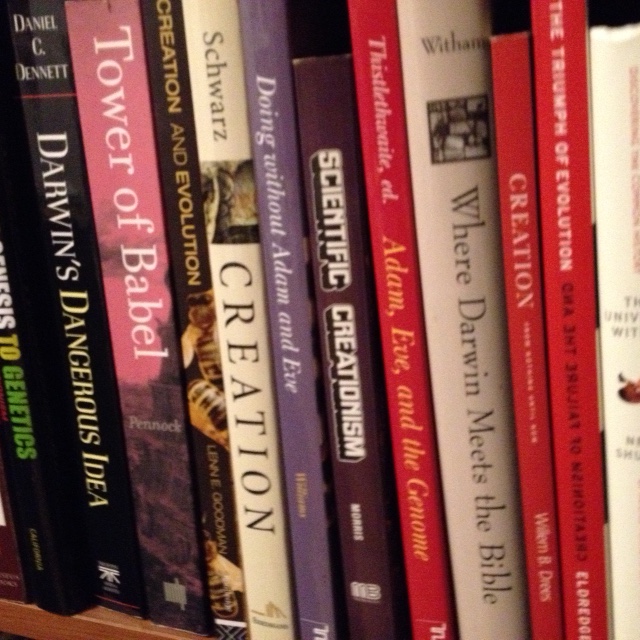
I spend a lot of time struggling to figure out the fundamental basis of reality.  I’m hampered in this by a brain that was evolved—optimized—to help me survive in my environment, not to penetrate the depths of what’s really real.  That’s why I began studying religion in the first place.  The connection was organic.  Raised as a fundamentalist daily reminded that an eternal hell of torment awaited, it made sense to study the antidote (the Bible) as much as possible.  When I prepared for college, which wasn’t the plan at the beginning, I could think of no other major beyond religion.  In Paul Tillich’s nomenclature, it’s all about ultimate concerns.  I didn’t accept the very evolution that had made me this way.  That required thinking through.  

Attending a liberal arts college wasn’t really a conscious decision.  Nobody in my family had been to college and I didn’t know the difference between a research university and a stand-alone liberal arts institution.  Somebody has to teach you these things.  Religion, I found out, is a pretty good way to work toward perceptions of reality.  These days the award for that goes to philosophy, but the two fields are closely related, as much as philosophers socially distance themselves from theologians.  They’re both seeking the same thing, really.  Public perceptions of theology, however, trail after televangelists and their ilk, leading a wrong impression in the minds of the masses.  Even professors are prone to accept this facile supposition.  Seeking reality doesn’t mean you won’t get laughed at along the way.

Although there have been some among religious leaders who claim to have found the answer, the rest of us continue to struggle.  The more I read both of science and of religion the more complex it all seems to grow.  And of course human agendas require the keeping of secrets.  Knowledge that is for employees only because they kind of have to know.  The price on the sticker represents a mark-up that could be cut down.  What is this item really worth?  So it goes with the search for reality.  There’s no end to the searching.  Even after Siddhārtha Gautama was enlightened, he continued to have to work at it.  Christianity used to teach that love was the point of it all.  That message seems to have changed with the arrival of the messiah known as Trump.  Those of us who can’t stop searching even if we find can’t help but wonder if there isn’t something more worthy on which to spend our time.


Quiet Quarantine

I’m an introvert.  I require quiet time—quite a lot of it—to recharge and prepare myself to be social.  Some people think introverts don’t want to be around others.  That’s not true.  The fact is being with other people is enjoyable, but it requires a special kind of energy that introverts don’t have in great reserve.  When the COVID-19 outbreak began introverts collectively (yes!) felt a need to help their extroverted friends and colleagues deal with the “new normal” of isolation.  Now that we’ve been in the situation for over a month, I have seen a different pattern emerging.  Extroverts are now taking over the quiet space and trying to make it noisy.  I don’t think it’s intentional, but I do think that introverts may be the ones most stressed out by this situation.

Here’s an experiment.  Put an extrovert in self-isolation with a room full of communication devices.  What do you think will happen?  If you’re on the introverted receiving end, you already know.  Days interrupted by cheeps, dings, and chimes as someone needs to talk to you.  Why you?  You’re quiet, you know how to listen.  The extraverts can’t become quiet, and of quiet and noise the same one is always on the receiving end of violence.  Quiet shatters, noise doesn’t.  Five weeks into this and the introverts have bags under their eyes and the extroverts are exclaiming “It’s not half so bad!”

While Nashotah House ruined it for me, for many years I had considered whether I shouldn’t join a monastic community.  I need quiet as much as I need air, and although I can be outgoing when I have to, I need quiet at the end of the day to make up for it.  My case is somewhat mild.  I know introverts who truly struggle when they have to spend a lot of time in a crowded place.  The internet, my friends, is a crowded place.  It took these weeks for me to figure out why I have so much less time now than I used to.  The demand of making noise has been upped.

Sitting at home with quiet streets outside can be eerie.  It can also be rejuvenating.  Embracing the silence isn’t a bad practice.  One of the reasons, I suspect, that I still awake around 3:00 a.m. is that it is quiet.  Very seldom am I interrupted then.  Work will have its pound of flesh, of course, and from there on my day descends, or ascends, back towards quiet.  It’s not a bad way to live.  It just takes practice.


Ancient History, Part 3

It was an old idea.  I had it when I was still teaching at Nashotah House, that’s how ancient it is.  It seemed to me that if brains evolve with the rest of us, our perceptions of gods might change over time.  I’d been working on this for an Ugaritic conference held in Sherbrooke, Quebec.  The conference took place, but I’d been ousted from my position at Nashotah House.  The conference organizer, in what was an amazingly magnanimous move, came up with funding for me to attend.  I delivered the paper and Jean-Marc Michaud, of blessed memory, encouraged me to submit it to the tome with the very academic title Le Royaume d’Ougarit, de la Crète à l’Euphrate. Nouveaux axes de recherche, Actes du Congrès International de Sherbrooke 2005, Faculté de théologie, d’éthique et de philosophie, Université de Sherbrooke, 5-8 juillet 2005 (Coll. POLO–Proche-Orient et Littérature Ougaritique 2).  Unemployed and unable to access libraries, I had to decline the publication.

In one of those great ironies of life, I began to be approached to take on projects after I lost my academic position.  (This continues to happen; I received an invitation to contribute just last week.)  I often have to turn them down because I still have no access to an academic library and academics generally have no idea just how draining a nine-to-five is, with or without the commute.  In any case, a Festschrift for Simon B. Parker was announced.  I knew Simon as a student at Boston University School of Theology, and he wrote many letters of recommendation for me.  His sudden death shocked many of us.  Herb Huffmon, of Drew Theological Seminary, asked me to contribute to the Festschrift.  I still had this article that required some work, so I decided to try to finish it.  I received a note that the volume is about to go to press with Pickwick.  Academic publications won’t let me go.

If I had my druthers, I’d be getting along with my fiction.  I’ve had over twenty short stories published, and I’ve got many more in the works.  Every time I think, “Now I’m in the clear, I can focus on writing that is fun to read,” I get another academic invitation.  Those invitations don’t come with job offers, so I wonder why I have such trouble saying “no.”  Anyone who writes wants to be remembered.  We have ideas that we hope others will find engaging.  In academia you publish to keep your job.  Most of your work will be forgotten unless you’re groomed as an academic superstar (yes, they exist!).  I’ve never been groomed.  I write because I have ideas that beg to be expressed.  One of those ideas, many years old, will soon be available for consumption at Pickwick Press.


Who’s To Blame?

Back at Nashotah House Episcopal Seminary, we were a closed community.  Well, not completely closed, as much as some may have desired it.  When a communicable illness came to campus it quickly spread.  No wonder—we were required to all gather twice daily in the chapel, and there was the passing of the peace during mass.  And the sharing of a common chalice.  The germs of the Lord were readily spread.  One of the faculty members would refer to the vector of the illness as “Typhoid Mary,” a rather sexist remark in the mostly male environment.  Still, Mary Mallon came to mind as the current crises has settled in.  “Typhoid Mary” was an asymptomatic carrier of typhoid fever.  A working-class girl from Ireland, outbreaks of typhoid followed her in the various houses in New York City where she worked.

Photo credit: National Institute of Allergy and Infectious Diseases (NIAID), National Institutes of Health (NIH), via Wikimedia Commons

The current coronavirus outbreak in New York City seems strangely similar in some regards.  Although COVID-19 is less likely passed by asymptomatic carriers, according to what I’ve read from the World Health Organization, it is still a possible vector.  While out getting necessary supplies in the area I recently noticed store employees without gloves or masks, both of which I had on.  One of us was underdressed.  I went home, washed my hands thoroughly, and pulled my copy of The Andromeda Strain from the bookshelf.  Self-medication can come in several forms.  Some people still look at me funny for wearing a mask, but many other customers are now doing the same.  The Center for Disease Control recommends it.

Before I’d ever heard of Nashotah House, I worked in a grocery store.  I was a college graduate with facial hair that had to be removed.  “Customers don’t trust a man with a beard,” I was told.  Back then if you walked into a store with a mask on there would’ve been trouble.  Contagion can drive you crazy.  Nobody wants to be a “Typhoid Mary,” and yet it’s difficult to be out in public with a mask on.  “Who was that masked man?” they used to ask of the Lone Ranger.  From the theater and psychology I’ve studied, I know that hiding behind a mask can be a liberating experience.  Aware that nobody knows who you are, you are free to act most any way you please.  But this is different.  Maybe it’s because my mask is made of a paisley-ish bandana,  the kind old westerns show outlaws wearing.  Or maybe it’s because of the guilt a religious upbringing so generously left with me.  After all these years the old cliches are coming back to life.


Not Sterling

Only indirectly has the coronavirus pandemic influenced my decision to read books of short stories.  Indirectly because bookstores are closed and I have several such volumes gathered here at home.  This particular collection includes a book “especially written for young people” called Chilling Stories from Rod Serling’s The Twilight Zone.  This is a book I had as a young person, discarded, and then regretted discarding.  I have to say that most books I discard I eventually regret.  When you’re young and moving from apartment to apartment, though, you can’t keep all your books.  Anyway, I re-acquired it several years back.  The book doesn’t list an author.  Instead, the title page says “Adapted by Walter B. Gibson.”  Gibson was best known for writing The Shadow series.  The end result is that I don’t know who wrote the stories in this book.  They have the ideas of Rod Serling, but the writing isn’t in his style.

When I buy a book (I got this one used on the internet, back when it was young) I like to know the author.  WorldCat lists Serling as the author, but the book was published pre-ISBN days, back when publishers could be a bit less than transparent about such things.  Other websites put Gibson first under authors, followed by Serling.  The publisher, Tempo Books, was an imprint of Grosset & Dunlap, which eventually came under the Random House/Penguin umbrella.  Originally publishing primarily children’s books, Tempo lists this book for young readers, although as an adult reader I wonder if it could appeal to young people today.  There’s no sex and any violence is really implied rather than explicit, but there’s some adult-level subtlety going on.  Books for young readers are much different these days.

Just recently my daughter introduced me to the increasing sophistication of levels of book genres.  Like most readers and writers I’m encouraged at how young adult books have taken off.  A future generation of readers is cause for hope.  There are now “new adult books.”  These are targeted at those college aged or just over.  Unlike young adult titles they’ll have sex and adult language.  My Twilight Zone book lacks these, and it also lacks the sparkle of Serling’s teleplays.  Serling was a playwright and screenwriter.  These stories clearly contain his ideas but not his ability.  I didn’t know that as a child.  I do know that I never finished the book before now.  One of the reasons, I expect, is that it didn’t really seem like I was reading Serling, even to my young self.  Still, ghost stories during a pandemic have their own appropriate place, and who doesn’t want to be young at heart?


Distance Education

As an exile from academia, I do feel for my employed colleagues who are having to learn distance education techniques on the fly.  I do also feel compelled *ahem* to note that I was trained in online teaching long ago at Rutgers University.  The school declined to hire me then, and I’ve had no offers since.  Now it’s become fashionable for academics with virtually no online experience to look to the hills—whence is their help to come?  It’s not very often that I can claim to have been ahead of the curve.  In fact, I’m usually so far back that I don’t even know there is a curve.  Mismatches like this (someone who’s always been good at teaching, and trained to do so online, who’s been deemed exile-worthy while the unprepared now brush off their virtual bona fides) occur all the time in history.  It’s one of the things that makes it interesting.

Higher education isn’t a luxury.  I disagree with President Obama that all people should go to college, though.  Not everyone needs to.  Everyone should be able to attend, however, if they feel compelled to do so.  There are a number of myths about it that politicians of all stripes should seek to dispel.  One is that the more education you get the higher salary you’ll be able to demand.  As a Ph.D. holder I know that is decidedly not the case.  There are plenty of manual labor jobs that pay better than the options open for a humanities Ph.D. earner.  I also know that universities don’t tell new doctoral candidates this fact.  The old ways are changing.  I’ve often wondered if the collapse of civilization would be slow or rapid.  Living through it I now can see it looks slow from the inside.  Future historians will need to assess for future readers how it looks from the social distance of chronological clarity.

Historically crises have helped people pull together.  This one seems only to have divided us further.  If our government knew how, it could now model kind and considerate behavior.  It doesn’t know how.  The selfish often don’t comprehend how the wellbeing of others can affect their own.  Some companies are beginning to realize that customer loyalty after the crisis may depend on reasonable treatment at at time like this.  For others it’s more difficult than house-training a new puppy.  Nobody wants to go into exile.  When you do, however, you can’t help but notice how it changes your view of things.  Ironically I was hired away from academia the very year I had completed my training in distance education.  I can image how it might’ve been.  But then, I’m living in a land not my own.


A-changin’

The other day, while engaged in a mindless task, I had Bob Dylan playing in the background.  When I say Bob Dylan I mean the Bob Dylan of the 1960s.  I was an infant when he was singing songs like “The Times They Are a-Changin’” and “Blowin’ in the Wind.”  As much as I cast the 1960s in a rosy glow, I was in fact a naive child through my portion of them.  I knew about the Vietnam War, but I couldn’t point to the country on a map.  Likewise, I knew about the assassinations of John and Robert Kennedy and Martin Luther King, Jr.  I also knew that we had walked on the moon.  My family at this stage didn’t listen to popular music.  I grew up with hymns in my ears and the culture in which I was swimming slowing becoming absorbed through my pores.  Dylan was part of the latter.

One of the reasons I don’t often listen to music is that I really listen to it.  It is so significant to me that I don’t like to relegate it to the background.  While I work from home, for example, I don’t put music on.  I find it difficult to concentrate because, truth be told, I’d rather listen to the music.  As I had Bob Dylan on, I was doing a task where I could listen as the rest of my body went into autopilot.  The angry white men who are running things now, it struck me, were alive in the sixties as well.  As much as they seem like aliens who were beamed down after the expansion of human consciousness, they were lurking in the shadows all along.  If they sing along to Bob Dylan they’re hypocrites.  We need another Dylan.

Photo credit: Rowland Scherman, public domain, via Wikimedia Commons

That’s putting quite a burden on an artist, I know.  But Dylan captured the spirit of the times.  Even as scientism was growing the reality of the Zeitgeist was obvious.  I grew up in the chaotic seventies.  The eighties were bland with the Reaganism reaction—angry white men wanted to get rich at others’ expense, and we let them.  Not enough time has passed for history to decide on the spirit of the fin de siècle, I don’t think.  You see, we seem stuck in a feedback loop.  Dylan’s lyrics are as necessary now as they were more than half a century ago.  I’m growing weary of angry white men and their petty concerns.  Maybe I need to listen to music more often. 


For Illustration Purposes

With the non-essential stores closed, my daughter asked me the other day “does that mean bookstores?”  Sadly, yes.  More weekends than not I spend some time in a bookstore.  Fortunately we are well stocked for an apocalypse, book wise.  Lately I’ve been on a kick of reading short stories.  I’ve certainly written enough of them to fill a book or two, and it’s nice to start something you can finish in one sitting.  I just finished reading, or perhaps re-reading Ray Bradbury’s The Illustrated Man.  I say “perhaps re-reading” because I know I read many of the stories in the edition of the book I bought as a tween.  Some of the tales I didn’t recall at all, making me think I was reading selectively in those days.  That’s the nice thing about story collections: you don’t have to worry about continuity.

That having been said, the conceit of the illustrated man himself is that of a framing device.  His tattooed body is the canvas on which all of these tales are painted.  A surprising number of them are religious in theme.  Many of them take place on Mars.  Rockets are ubiquitous.  As a child I hadn’t realized that many of Bradbury’s stories were published in the late forties and in the fifties.  They still felt futuristic to me, having grown up in a small town with very little exposure to technological developments.  Reading many of the tales as an adult, I was surprised at how much they influenced my own fiction writing style.  I must’ve read a lot more of them when I was younger than I recall.

My tweenage years were long enough ago now that memories slip into one another.  I can’t remember when this or that happened, especially as regards reading.  When did I first read about the incessant rain on Venus?  Or about the writers living on Mars dying out as their books are destroyed?  Looking back over my own fictional work I see Bradbury’s fingerprints everywhere.  Bradbury couldn’t afford to attend college, so he did what he knew—he wrote.  Of course, back in those days publishers and agents weren’t dealing with the volume they face these days.  The internet has made writers of us all.  And I have to admit that some of the stories in The Illustrated Man disappointed me.  They didn’t reach the level of either depth or insight that I had recalled.  Overall, however, the impression was good, if nostalgic.  As the days become a long series of interconnected hours of sitting in the house, it’s a real gift to have short stories to punctuate the days.


Frankenstein’s Family

The story of Frankenstein has many unexpected twists and turns.  I’m currently reading a book about the writing of the novel—something I’ve done a number of times before.  There was an aspect of this story that hadn’t really caught my attention too much, but then, circumstances changed.  Suddenly old information became new.  It all started with a missed opportunity from childhood. 

It was a real puzzle.  Although my grandmother lived with us her last years, I never knew the name of her mother.  There had been hints.  My grandfather’s book with birthdays in it listed the first name, so I had a Christian moniker and birthdate only.  She’d died young, I knew, somewhere in the Washington, DC area.  This had been the state of my knowledge for many years.  My grandmother died before I was a teen, and before I took any interest in the family story.  I knew her heritage was Germanic, her father having been a first-generation American.

So young Mary Shelley (technically Godwin) was on a tour of Europe with her lover Percy.  Although they both came from distinguished backgrounds, they were cash poor.  Running out of money they made their way back to England as cheaply as they could.  They passed near Castle Frankenstein along the way, although there is no record that they actually visited it.  The name seems to have stuck, as does the story that they potentially learned about a mad scientist who’d lived in that castle.  This scientist was a theologian who dabbled in alchemy and experiments with dead bodies.  I know what you’re thinking—it’s like a puzzle piece we desperately want to go in this place but its fit’s ambiguous.  We’re not sure how much of this Mary Shelley knew.  The alchemist’s name was Johann Konrad Dippel.  I’d read about him before.

I’d spent nearly an entire summer some years back working on my grandmother’s family, finding little.  Just two years ago I did a casual search on “Find a Grave,” and to my surprise, I found my great-grandfather.  I knew it was him because his second wife’s name matched information from all the family records.  The cemetery record, in Maryland rather than DC, had his first wife’s name.  It was that easy.  After decades of searching, a few keystrokes revealed the mystery.  When it also listed her parents, the significance of her mother’s maiden name—Dippel—escaped me.  Now I have no way of knowing if this is the same Dippel family of Castle Frankenstein, but it put flesh on the bones of my long-standing interest in monsters.  Seeking them out may be the same as learning family secrets.  Perhaps it always is.


Virtual Church

All the way back in seminary my friends and I used to joke about virtual church.  What made it so funny was that the idea seemed ridiculous.  The very raison d’être for church (which essentially means “gathering”) was, well, gathering.  We joshed about putting a communion card into an ATM and getting bread and wine.  Little did we know we’d live to see virtual church become a reality.  While I prefer not to tip my hand as to my affiliation (I began doing this when teaching at secular schools, for if a professor of religion is being academic about their specialization their affiliation should have no bearing on the class) I confess I am the member of a religious community.  That community has become virtual, as of today.

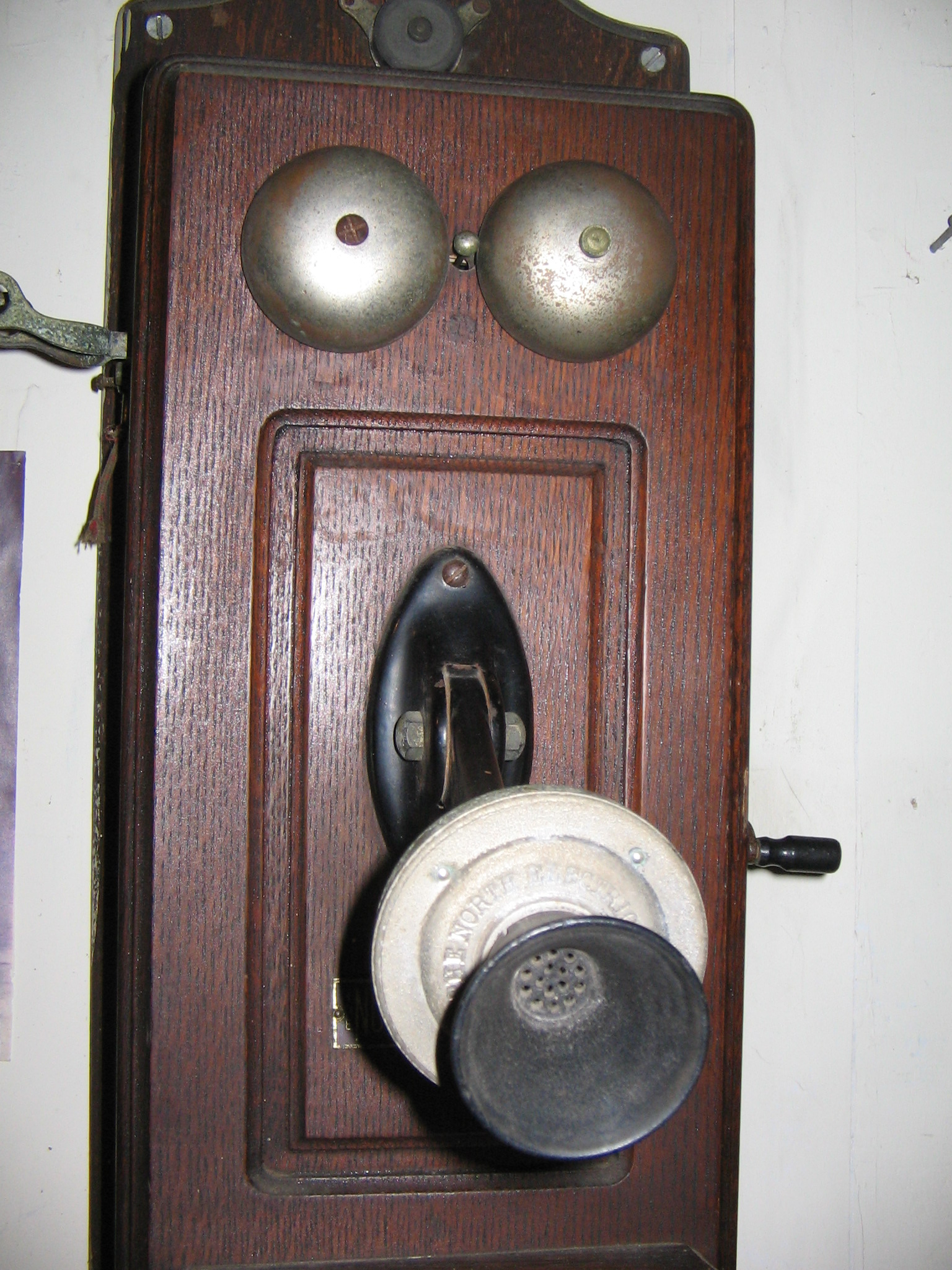
This isn’t a permanent thing.  Unless coronavirus is a permanent thing.  As I spoke with my clergy person about it, I wondered how many people would attend virtual services.  Sermons would need to be stellar.  Who would hear if I tried to sing hymns (this is not a pretty thing, take my word for it)?  My laptop doesn’t even have a disc slot into which I could insert my offering.  Churches, synagogues, mosques—they’re about community.  What does community feel like when you’re sitting there in your pajamas, at least on the part that the webcam doesn’t pick up?  Does the minister see you in virtual church?  Have I, like number 6, been reduced to a numeral?  I suspect the current crisis is going to be a real test for faith communities.  Meeting together would make us all feel like snake-handlers now.

The funny thing was, back in seminary it was a joke.  At Boston University School of Theology in the late 1980s we knew that churches weren’t really growing.  Some megas had started and we now see them following the mushroom cloud to its dissipation stage.  As little as we meant it, we could see devices creeping into the mix.  I did not use a computer until after seminary.  Funnily enough, thinking back to the pre-1990s, we survived without cell phones.  If you were going to church you were going. To. Church.  These days of pandemic in the pews will be a real test of the preacher’s power.  For Episcopalians the mediating of grace had to be done in person.  I remember watching worriedly as the priest, clearly with a sniffle, was the first one to take a sip from the community chalice before holding it out for others to drink.  We wondered about efficacy of ATMs dispensing consecrated hosts.  It was only a joke, then; really it was.


Merch

I recall the time I first heard the word “merch” used as a verb.  I was with some wonderful ladies on the second annual Women’s March, in New York City.  We had to leave fairly early to get there from Jersey and as we made our way to the march route, we saw the goods.  Vendors had all kinds of things on sale, from the ubiquitous tee-shirt to refrigerator magnets.  One of the women in the group said, “I guess you can merch anything.”  And so you can.  People will buy all kinds of identifying marks.  It’s a craze I personally don’t get into.  I buy plain clothes, having more of an Amish aesthetic.  Still, I was a little surprised to notice that the Society of Biblical Literature is now merching itself.

Now, who can blame a non-profit for trying to score a little on the side?  We all know what that’s like.  What I find myself most curious about is who would want to advertise that they’re working on a degree that will, in all likelihood, find them on the breadline when it’s all over?  I’ve known many who’re proud to be nerds—they’ve got employment to give them creds.  Those of us tormented by the meaning of it all, not so much.  My decision to go to grad school was accompanied by the blessed assurance that there’d be plenty of opportunities, but there was no merch.  Indeed, I was two years into my doctorate before  I even found out what the SBL was—the great connector whence came jobs.  At least in theory.  I found my post at Nashotah House because a friend told me about it.  I still have some of their merch.

Knowing what I do now, would I have done it any differently?  It’s difficult to say.  Who can recall the frame of mind of his younger self with such clarity as to know his choices?  Having studied Bible I was curious whence it came—to turn back even further the pages of history.  As I sit here in the early morning I have on my last two remaining pieces of Edinburgh merch.  My moth-eaten woolen divinity scarf and my blue alma mater sweatshirt.  I try hard not to think how close to three decades ago it was.  I was so sure I’d find a job with that rare Scottish degree, imprint of John Knox’s breeches still fresh upon my head.  Instead the merch of my current employer—a coffee mug—stands before me, reminding me that work alone awaits.


CBD

They found me.  I used to call them CBD, but because of the popularity of a certain hemp-based product, Christian Book Distributors changed its name.  Now I knew about them long before they had me on their mailing list when I taught at Nashotah House.  When I was a seminary student in Boston I made occasional trips to CBD’s Peabody warehouse for sales—this was quite a boon to students who never have enough money (little did I know!).  Books you’d heard about in class were there, for a fraction of the price.  At Nashotah I always looked over their bargain page, because, well, professors like books.  I recognized their catalogue in my mailbox instantly.  The name is now Christianbooks.com.  Grab some munchies and sit down.

Not only the name has changed.  Back in my student days I could find academic resources here.  As religion in America has become more and more polarized, what used to be CBD (if I use their current incarnation my computer insists on putting links in) has become radically conservative.  Page after page of study Bibles reveal no hint of the mainstream bestsellers in the genre.  It’s as if they don’t exist.  More than that, if you leave them out maybe people will come to believe they don’t exist.  Even the bargain books are nothing an erstwhile professor would buy.  Instead of academic titles there are all kinds of Barnes & Noble-type gimmicks to get shoppers to spend their money.  Like junk food for the soul.  I look at the books on my shelf.  Some of them were purchased, cash in hand on the ground in Peabody.  Not any more.

There will be those who claim (fake news is the only news now) that what has changed is me, not them.  The fact is places like CBD used to be more open minded.  They admitted the possibility of doubt.  Now your choices are Scofield or Ryrie.  That should be enough for any appetite.  Not only that, but many of the titles now sound militaristic.  Battlefields and all.  Thumbing through, I wonder where Jesus has gone.  The evangelicalism of my youth was clearly Prince of Peace centered.  Now it’s politicized to the point that I’m not sure what it represents beyond GOP values of greed, opportunism, and power.  Anyone who thinks differently need not apply.  How CBD found me after all these years, I do not know.  I wish they’d consider saving the environment rather than printing catalogues to send me.  The climate, despite what they would claim, has changed.


For the Squirrels

Our garage came with a house.  That’s one of the reasons we bought it.  You see, the one thing we don’t have is time.  (Well, that and money.)  When we were contemplating moving, we had no time off.  Vacation days for the remainder of the year had been allocated, and employers don’t like to encourage personal improvement.  Not on company time, anyway.  Which, of course, is as it should be.  We had to find a house with space enough to sort through things after we moved.  Ha!  As if there would be more time!  Still, the sorting would have to wait.  Our house has a detached garage with a second story.  It’s a converted barn, but I doubt its conversion story.  It still seems pretty heathen to me.  The neighborhood squirrels love it.

We store our unsorted stuff upstairs.  Shortly after we moved in, the squirrels had chewed through the stop-gap remediation the previous owners had put in place to satisfy our post-inspection demands.  It was pretty clear their solution wouldn’t keep out rodents, but our lease was about to expire and the market favored sellers, so we closed anyway.  Shortly after moving in I noticed styrofoam poking through the ceiling boards of the garage.  Then I began to find styrofoam chips in the yard nearly every morning.  I soon figured it out.  Squirrels raid the trash receptacles behind restaurants in town, and bring their carryout here.  No, seriously!  They haul styrofoam between the roof and ceiling, presumably licking off the scraps before tossing out the remaining foam.  I figure it’s a form of insulation, if nothing else.

Squirrel remediation is on our list of projects.  I’ve seen the squirrels run up the side when they spy me stepping outdoors.  When I reach the garage, they’ll stick their little heads out the hole they chewed and scold me.  This is their place, the garage.  They’ve insulated it, and the inside is a mess where the birds also get in and there are little animal parties every night.  I don’t have time to clean up after the squirrels.  It occurs to me that if we didn’t have a throw-away culture we wouldn’t have styrofoam containers for the poor beasts to plunder.  The food’s probably not healthy—the squirrels I see look plump and sassy.  They like the convenience of living in a shelter someone else built and on which someone else pays the taxes.  Perhaps I should start a zoo.  But first I’ve got some stuff to sort through, when I find the time.  If only I could teach the squirrels some other tricks beyond dining out. 


Officially Broken

Now that democracy is officially broken, it was with some poignancy that I stumbled upon a piece of ancient history.  Everyone has a box that contains their past life.  It used to be a physical box with papers in it, and in mine (which still has actual papers), I stumbled across a letter yellowed with age, dated 1980 from Conshohocken, Pennsylvania.  In an ill-fated career as a teenage journalist, I reported in the results of the presidential election from one of the polling places in Oil City, Pennsylvania.  The envelope held a serious letter from a state official letting me know how important my duty was.  As I looked at my teenage scrawl two things became clear: the Democrats had won in what is now a deeply red zone, and even when democracy worked it didn’t work well.  

You see, I had a number to call to report the results.  Since toll-free numbers hadn’t proliferated at that time in history, I was to make a collect call.  And since I lived in Rouseville, some three or four miles away, I couldn’t get the results in immediately.  On my way home, before making the collect call, it was announced that Reagan had won.  The ballot results, still tucked away in my envelope, hadn’t been reported, and obviously they weren’t important.  It was the first election in which I voted and I learned then that the system didn’t take all votes into account.  Now that Trump is firing those who managed to testify at his impeachment Republican senators reply, “Yes, that’s good, that’s right.  It’s as it should be.”  Democracy is dead.

These United Orwellian States displayed their predilections long ago.  I’d read 1984 about that time, before the eponymous year of the title.  I’d been deputized to report on an election whose results were declared before every vote was counted, and I lived in the Eastern Time Zone.  I didn’t vote in elections for several years after that.  When politically conscious friends asked why not, I said “what’s the point?”  You see, the reporting assignment was part of a current issues class in high school.  It was to teach us how government worked.  My teacher’s signature still graces the form inside.  As one political party has embodied massive dereliction of duty, we limp along toward November.  I don’t know if my vote will count or not, but I will be at the polls again.  Anyone who believes in democracy will have to be.  And perhaps, just perhaps, all the pre-planned cheating won’t work this time around.  Eric Arthur Blair, it is said, died a paranoid man.


Bookkeeping

I can’t express just how happy I was when I first read the word “bookkeeping,” and it wasn’t because it had three repeated letters in a row.  I was strangely joyful at learning there was such a profession.  That joy quickly plummeted when I found out what bookkeeping actually is.  This memory came back to me this tax season.  I realize the word “book” has a storied history and multiple meanings.  I’m one of those people who likes to read books about books.  In “keeping” books, of course, we mean ledgers that show assets, profits and losses, accounting.  These are among the most boring things on the planet for some of us.  My imagination dances around all over the place, but it seldom sways to the realm of business.  As a young person faced with what bookkeeping is, I was crestfallen.

The idea that you could keep books—not necessarily as a librarian or bookseller—and have that as your job, seemed like an almost Platonic utopia.  A world where it was recognized that reading books is a virtue.  Even being around them can make me happy.  I still live in the world suggested by that form of the word bookkeeping.  When I’m sad a trip to a bookstore can usually bring me out of it.  Although I have difficulty finding publishers interested in my own books, writing them is a form of therapy.  Even this little blog is a way of participating in the keeping of books.  At least in an ideal world.  Tax season looms when many of us will find out how much we owe to a government we no longer trust.  If only more people would read.

Books began, in their earliest forms, as receipts.  Marks on clay to prove what you owned.  Shortly, however, those mud tablets began to house myths and stories.  That’s when the mud became clay.  Stories are what conscious minds crave.  Even the word “Bible” means “book” (via the circuitous route of naming books after the papyrus reed, which along the northeastern Mediterranean coast was called “Byblos”).  These stories, books, came to represent what we hold sacred.  Writing is a divine act.  Many centuries later books became commodities that could be sold.  Ah, and when money enters the equation, bookkeeping soon follows.  Perhaps in some distant future utopia we’ll come to a place where words like bookkeeping mean something more than just numbers.  Maybe someday bookkeeping will be recognized as far more valuable than mere money.