Out There

Do you see them?

While recently re-watching an X-Files episode, I noticed something odd.  A quick online search revealed that I wasn’t the only one to notice this particular quirk, and, in fact, there had been considerable previous discussion on it.  What really struck me wasn’t the resolution of my question, but the fact that so much had already been written on a single episode of a single television program.  It’s one of the problems with trying to keep up with pop culture—there’s so much out there (besides just the truth!).  I’ve been exploring pop culture with the Bible for a number of years.  There’s plenty enough in the X-Files to warrant a larger project, but even without that, there’s just no way to keep up.  You could spend your life trying to unpack what several people wove into a single program.  Each episode took considerable thought, planning, and resources.  Once it was out there, reception history began.

So much of scholarship is analyzing what someone else has done.  Some monographs are more footnote than actual text.  What I’ve been suggesting regarding pop culture is that it is the way people understand religion.  The information people receive often comes from what modern authors and screenwriters compose.  A few X-Files later, during a religiously themed episode, something was implied to be in the Bible that’s not.  Again, I address this directly in Holy Horror, but every time I see an example, it catches me by surprise.  The average viewer doesn’t know to research what they’re being told and if it’s played straight, as it was in this episode, it becomes part of the truth that’s out there.

Those interested in how beliefs develop and change over time have recently begun to ask about the average person instead of “official religion.”  In antiquity this is difficult to gage since the average person was illiterate and poor.  Even in modern times with relatively high amounts of literacy and everyone writing on the internet, trying to understand religion is difficult.  Now it’s a matter of too much information.  Fan sites exist for popular media.  The canons of Harry Potter fandom alone would require a lifetime of study.  Limiting oneself to the X-Files might be a start.  My own publication history with pop culture and religion began with Sleepy Hollow.  It could have just as easily begun with the X-Files.  No matter where you choose to begin understanding religion, you’ve got your work cut out for you. And this post has just added to it.

The Slippery Slope

Maybe you store your data on an external drive.  Tech companies want you to put everything on the cloud, but I like to know where my data are.  The problem is devices are now slick.  I use a MacBook Air.  I do this because it was the only Mac I could afford at the time and it came with limited storage space.  The solution is to buy an external drive, just like the old days.  My external terabyte drive is a WD Elements drive.  The problem is both of these devices are so sleek they’re slippery.  Since my Mac’s not young any more each morning I connect my Elements drive to let it back up my data.  It takes a while and when I need to move and put the laptop down, the external drive slips across the laptop.  Then one time it fell.

The fall wasn’t far, maybe two inches.  It was enough, however, to lose hundred and hundreds of hours of work.  The disk failed.  Two slippery surfaces that looked so sleek led to the loss of so many hours of work that I want to weep.  There’s no way to get the disk recognized again.  Even the manufacturer seems to indicate that one such temporary slip is fatal to data.  Or at least to disk drives.  I think of all the futuristic shows I’ve watched where nothing has a square edge.  Everything is rounded and smooth.  I bet they store their data in a cloud, or maybe they call it a galaxy.  One thing’s for sure, they don’t try to stick a slippery disk drive on top of a slippery computer.  Otherwise this future would never happen.

Slippery slope?.

The problem here is when my computer began to complain of feeling too full, I transferred much of my data to this now failed drive.  That was the only place it existed since I can’t afford multiple drives.  Now I’m guessing I’ll need to pay a data recovery firm to recover all those files that represent most of my non-work life for the better part of nearly two decades.  Is it square to admit missing angular surfaces that could be stacked with impunity?  Think of that classic design known as a “book.”  Great data storage.  Fairly easy data retrieval.  If one falls off the stack, it doesn’t break.  So at work they wonder why editors don’t get behind ebooks.  I’m happier with my information right where I know I put it.  With right angles, and boxy looks, and data precisely where I left them.


Feeling Bookish

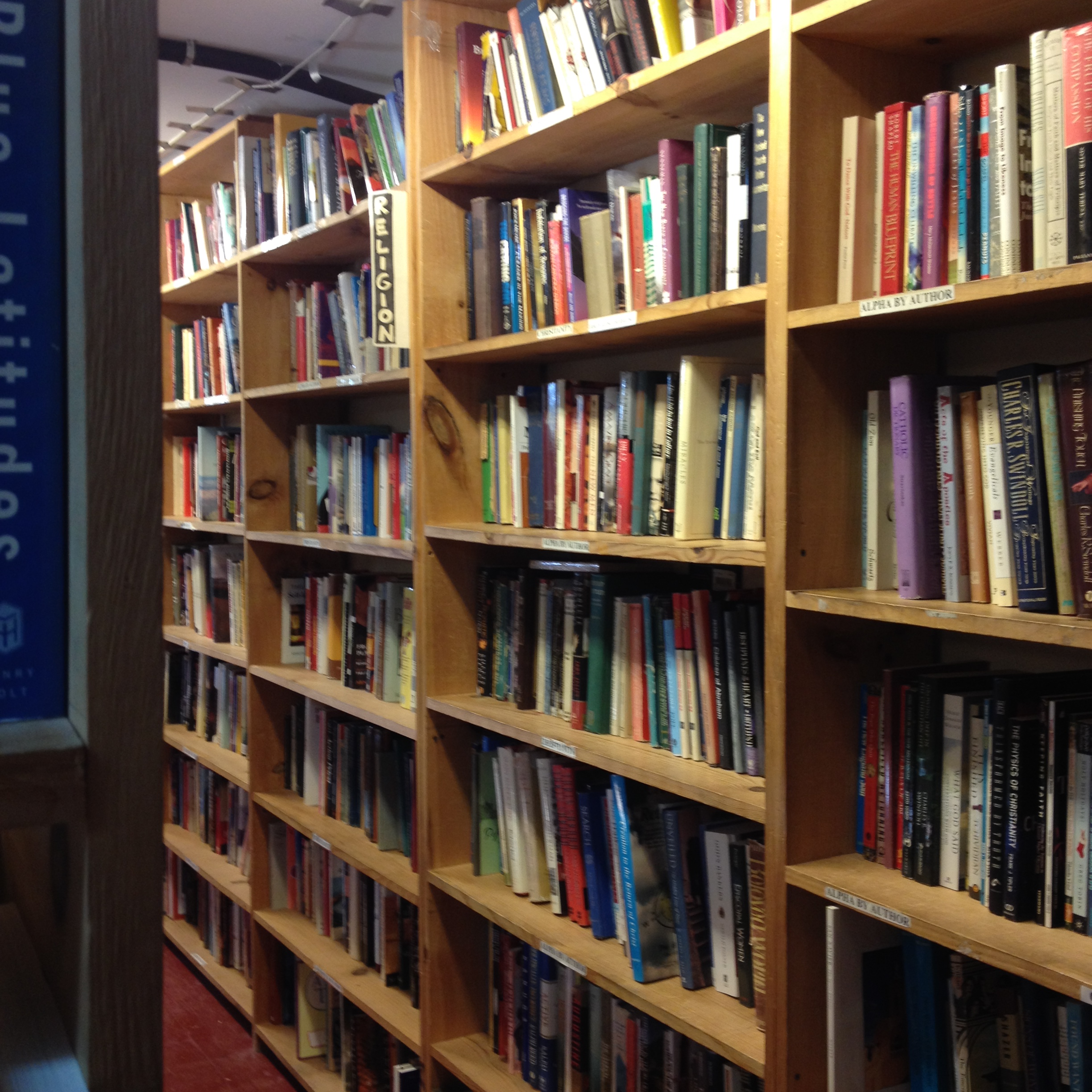
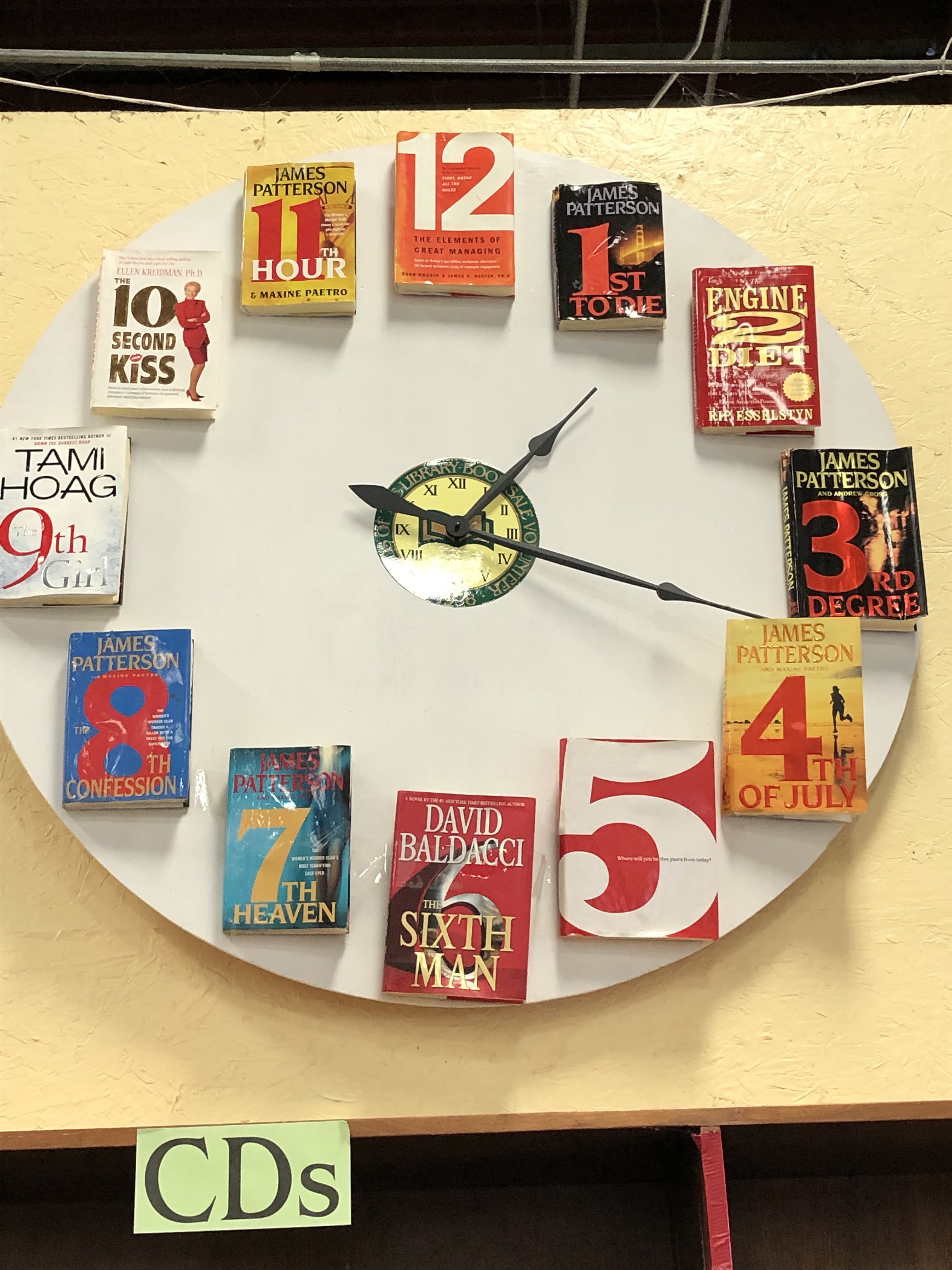
It does my soul good to attend a used book sale.  I recently attended one while on a visit to Ithaca.  Everyone was wearing a mask.  Even though it was May, it was quite cold and rainy, and due to the limited number of people permitted in the space, there was a line that took about half an hour to endure.  This did not deter people and it was this that most lifted my spirits—these people were devoted to books.  At times when the media gets me down, informing me that book culture is dying and that all people want are their devices and their distractions, seeing proof of the love of books is restorative.  The used book sale is a place of discovery.

Although it’s easy to nip over to Amazon (or better, Bookshop.org) and order your book, especially during a pandemic, there are things you only find by being where the books are.  I keep an extensive reading list with me.  Before I go into a sale venue I promise myself I’ll stick to my list.  But what a facile promise it turns out to be—how can you make such a vow without knowing what you might find?  Books you’ve never seen or imagined before?  That’s the discovery aspect that sweetens the in-person experience.  And although I still find crowds scary, I tend to trust people who like books.  Besides, the books I tend to read aren’t always in the most popular sections.

The Friends of the Tompkins County Public Library book sale has a dedicated building with permanent shelving.  While wandering is fine, maps are also available.  I’m occasionally ribbed for having too many books.  One of the reasons I dread any move is knowing the movers’ inevitable comments about the fact.  People who love books are made to feel somehow inferior for it.  Fans of Kindle or other such readers extol the virtues of having lots of books that take up no space.  Such books, however, are limited to those converted to electronic form.  The many thousands of books published before the invention of the ebook, many of them out of print and mostly forgotten, can only be found in libraries, used bookstores, and sales like this.  (Google books hasn’t found everything yet.)  It was cold and rainy outside.  In here there were silent companions that speak loudly.  Books, as my daughter said, are like snacks for the mind.  And sometimes you just don’t know what you’re in the mood for until you go to the kitchen and browse.  It can warm your soul.


You Have the Right to Remain

It’s strange sitting in a meeting where you’ve written a book on the topic under discussion and nobody knows about it.  This is one of the problems of publishing with an academic press.  Books get lost and buried.  Maybe the other way around.  A problem we academic editors frequently run into is that authors tend to think a book is a book.  Publishers recognize several different kinds of books, well represented among them those that are destined for the “library market.”  You can tell them by the way they’re priced.  Now I must confess that I’m behind the times in this regard.  I still tend to think twenty dollars is a lot to pay for a book.  I say this even though my job, day after day, includes pouring over book budgets to see how an academic book can be made not to lose money.

It costs a lot of money—most of it overhead—to produce a book.  In order not to run a publisher bankrupt, it needs to sell enough copies to cover its costs.  Library market books are priced that way because they are expected to sell only to libraries.  Certainly, if they were priced lower some academics would buy them, but the truth is not many academics do.  I realize I was an outlier when I was in the academy.  Without a research budget I would spend my own money on a book priced a hundred dollars if I really needed it for my research.  I was aware, even at that time, that others seldom did this.  As an academic colleague once told me, “I like to buy shoes.”  And let’s face it, there are just too many books out there to buy.  “Publish or perish” has more than one meaning.

So I’m sitting in a meeting where the topic of discussion is something on which I’ve written a book.  My opinion is not asked—my book is priced for the library market and I know it—so I don’t really expect it to be.  The question is whether general readers will find the subject compelling.  Speaking strictly for me I’m pretty sure they will.  I signed my contract for Nightmares with the Bible before I knew the series would be priced for the library market.  That designation also indicates minimal marketing.  What publisher is going to try to push a book that costs that much when they know individuals can’t afford it?  So I sit in the meeting and keep my mouth shut.


Looking In

There’s a real danger to the lifelong study of religion.  Learning to look at any tradition from the point of view of an observer will create a sense of being on the outside looking in.  I’m a member of a religious organization.  I occasionally consider pursuing ordination within it—this was my original sense of my calling in life—but I’m compelled to consider the phenomenon of being outside looking in.  When I was an Episcopalian (before the church showed its true colors in my particular case), I wrote a letter to my rector asking how I could get off of the church steps and be invited inside.  My rector wrote back with some insipid advice and was among those who voted, as a trustee, to oust me from my fourteen-year career at Nashotah House.  Outside again.

Studying the history of religions provides dangerous levels of insight.  Simple, mindless acceptance of teachings becomes impossible.  This isn’t arrogance, as any who know me can attest, but rather a form of hyper-awareness.  You can’t emerge from forty-plus years of reading about, and deeply pondering, religion unscathed.  Many, of course, dismiss any observations by those lacking the denominational seal of approval.  “If you knew what you were talking about,” so the reasoning goes, “you’d be a minister or a professor.”  So you speak from the sidelines at best.  Outside.  Even within my own group I have merely the role of “member,” lacking the official piece of paper from the seminary or other accrediting body that states I might know some things.

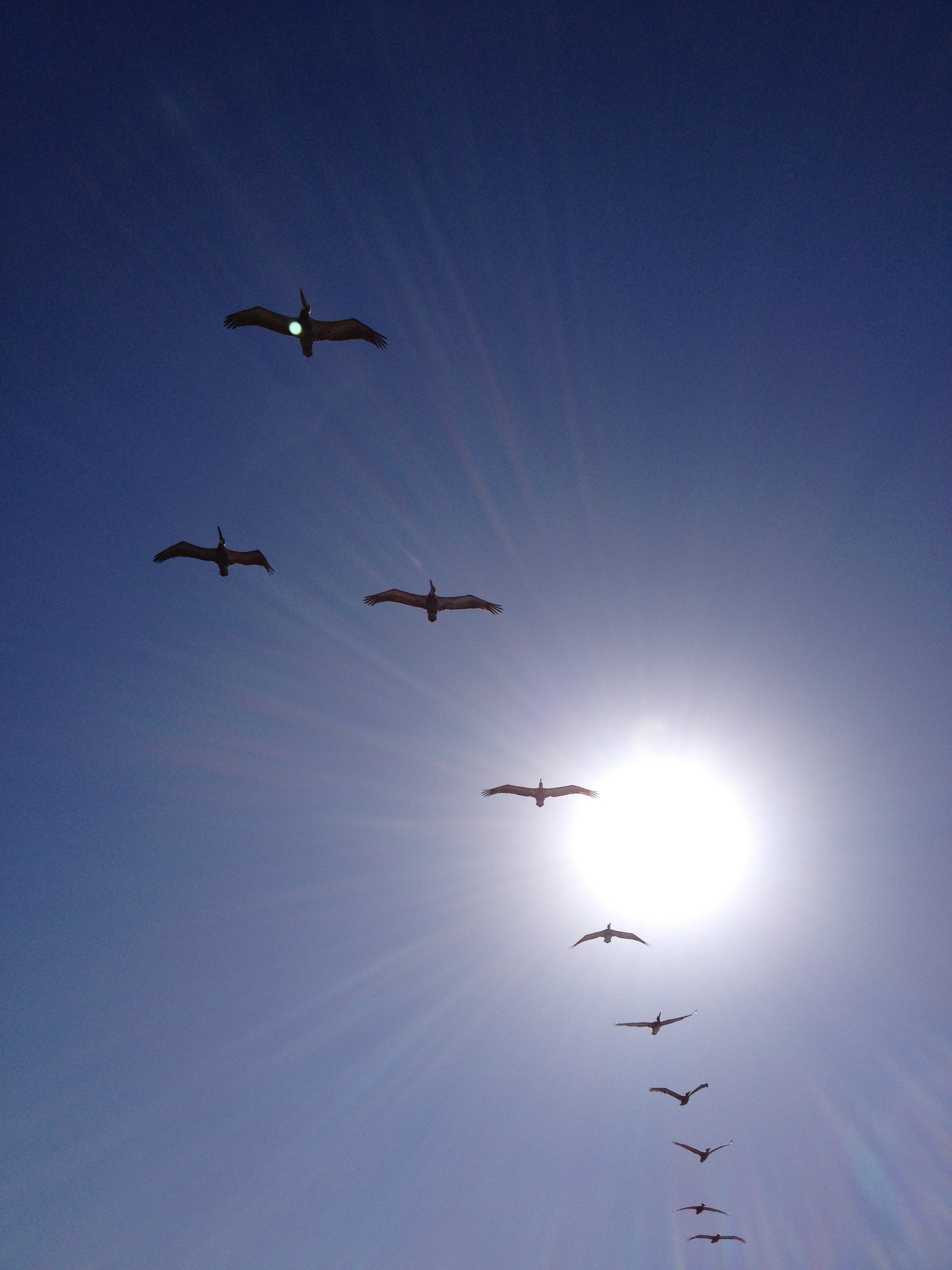
Of course, I have much yet to learn.  This religion thing is a tough nut to crack.  Were I younger and better paid I might consider undergoing college again to take a different path.  As it is, I’ve invested more than a half-century trying to get where I am, wherever that is.  I sit outside watching the birds.  They’re back pretty much in full force now.  They seem so certain about where they’re going.  How can you fly without a full level of commitment?  Earthbound, I muddle about with my head somewhere above the clouds I cannot reach.  I read about religious traditions unknown to me.  Often I find nuggets of great value in them.  Of course, I’m not clergy so you need not take my word for it.  I, after all, draw inspiration simply by sitting outside, always outside, and watching the birds. 


Our Stories

People’s stories are interesting.  The received wisdom is that if you wish to change a politician’s mind, tell her or him a story.  In fact, it seems that we’re hardwired to enjoy stories.  That’s why it’s so unfortunate that we seldom take the time to listen to other people’s stories.  We’re too busy.  For an organization to which I belong, I recently asked that five minutes of each agenda be set aside so that one member could tell her or his story at each meeting.  That way it’s possible to get to know who it is you’re working with, without the tired “one thing nobody knows about you” trope.  The idea was adopted and it seems a worthwhile use of agenda time.  I don’t know that I’ve ever heard someone’s account and found myself anything less than fascinated.

When we reflect back over our lives, we do it in narrative format.  We tell ourselves a story about our life.  And these stories intersect with other people’s stories.  Some of those people may be famous or wealthy or ordinary, but each is unique.  Considering that there are billions of us on this planet, that’s a lot of tales.  There’s not so much a lesson to be learned from this than there is a simple reminder—it is worthwhile to listen to others.  I’ve run into a few people who are household names in my time.  Some of them are routinely criticized in the media, by people who never met them.  Who don’t know them.  Who don’t know their stories.

Much of our time at “work” is really time trying to earn money for a company.  It may involve dealing with other people, but not closely enough to really know their story.  I think of this every time an author and I could engage in a conversation about our experience of the academic life only to have to keep the discussion to “the business at hand.”  The human element, it seems, is unimportant.  I would read other people’s stories all day, if I could.  We crave a narrative, but getting one’s not a paying position.  How have we come to this place where we have time for only disconnected memes and not the stories behind them?  Bookstore owners know a perennial selling genre is the biography.  We’ll pay to know a famous person’s story.  The fact is each of our lives is also a tale worth telling.  We would all benefit from listening to each other’s experiences.  Tell your story, I’m listening.


Artificial Priorities

Maybe it has happened to you.  Or perhaps it only affects ultra-early risers.  I’ll be in the middle of typing a blog post when a notice appears on my computer screen that my laptop will be shutting down in a few seconds for an upgrade.  Now, if you’re caught up in the strengthening chain of thinking that develops while you’re writing, you may take a little while to react to this new information.  If you don’t respond quickly enough, your computer simply quits and it will be several minutes—sometimes an hour or more—before you can pick up where you were interrupted, mid-sentence.  Long ago I decided that automatic updates were something I had to do.  Too many websites couldn’t run things properly with old systems.  It’s just that I wish artificial intelligence were a little more, well, intelligent.

Photo by Markus Spiske on Unsplash

I keep odd hours.  I already know that.  I’ve been trying for years to learn to sleep past the long-distance commuting hour of three a.m.  Some days I’m successful, but most days I’m not.  That means that I write these posts when computer programers assume everyone is asleep.  Doesn’t it notice that I’m typing even as it sends its ominous message?  Is there no way for automatic updates—which send you warnings the day before—can do their work at, say, midnight or one a.m., when I’m never using my computer?  Ah, but the rest of the world prefers to stay up late!  I need the uninterrupted time when few of us are stirring to come up with my creative writing, whether fictional or nonal.  So I have to tell my electronic conscience to be patient.  It can restart at ten p.m. when I’m asleep.

Wouldn’t it be easy enough to set active hours for your personal devices?  After all, they pretty much know where we are all the time.  They know the websites we visit and are able to target product advertising to try to get us to buy.  They data-mine constantly.  How is it that my laptop doesn’t know, after many years of this, that I’m always working at the same time every day?  Is there no way to convince it that yes, some people do not follow everyone else’s schedule?  What about individual service?  You know what brands I like.  You sell my information to the highest bidder.  You remember every website onto which I’ve strayed, sometimes by a poorly aimed click.  I could point out more, but I see that my computer has decided now is the time to resta


Welcome the Stranger

Welcome, sibling! Have you ever contributed to a genealogy online?  I know not everyone’s into their ancestry, but there’s enough of the treasure-hunt to it, and enough mystery to keep you turning the pages.  Some time ago—it was when I was a professor, because I actually had some leisure time—I posted a bit on WikiTree.  WikiTree is a free communal effort to map the world of relationships.  Just about every week there’s a newsletter emailed around, offering how many degrees of separation you are from someone famous.  Often this is tied into the news cycle, so recently Prince Philip was among those measured.  Then Carrie Fisher.  Without fail, over the past several weeks, the family member through whom I’m connected to the famous is a great uncle.  The same great uncle.

I usually lose interest when the relationship starts to get to siblings and spouses.  There are webs everywhere.  Still, this intrigued me.  I’d never knowingly heard of this great uncle (and certainly never met him) but he was under 20 degrees of separation from several famous people.  It made me consider how you never can tell what relationships might lead to connections.  My direct ancestors, as far as I know, were all humble, work-a-day sorts.  One branch of the family had an engineer a couple generations removed, but for the most part they were farmers, laborers, truck drivers, and such.  The web of human relationships includes everyone, of course.  At some point in our family trees, we share a common ancestor, be they Neanderthal or Cro-Magnon (or a blending of the two).  When we harm or hate another person we’re harming or hurting a sibling, distant or close.

Getting along with everyone may be too much for which to hope, but at least tolerating seems worth stretching for.  I once found a long-lost cousin.  This was accompanied by a wonderful feeling of having found a family I didn’t even know.  Genealogy made that particular reunion possible.  Before that I might have passed this cousin as a stranger on the street.  It made me stop and think.  Is that stranger actually someone related?  Traveling back to the areas my ancestors lived I occasionally glimpse a face that could be a distant uncle or aunt.  My mental calculus kicks in, but there’s really no way to know just how close they might be.  Now, if I were my unknown great uncle chances might be somewhat better that I’m only a degree or two removed.  Even so, I should try to treat the stranger as though that were the case.

We’re all interconnected.


He’s Dead, Jim

So there’s this thing called Spotify.  Like most modern contraptions, I approach it warily.  I’m not sure how it works.  Do the artists get paid?  What’s the catch?  Is it only having to listen to a commercial for Amazon every three or four songs, like the radio?  I don’t have a lot of time to listen to music, but when I do have time I like to discover something new.  Then there’s the oldies.  And I can’t help but feel a deep sense of loss at the death of Jim Steinman.  I discovered Steinman earlier than I realized it when “Total Eclipse of the Heart” came out the year my first romantic relationship ended.  That song can still reduce me to a quivering lump of emotion.  All I knew at the time was that it was a Bonnie Tyler song.

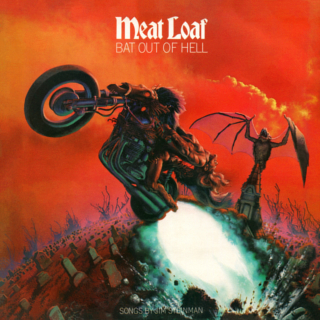
Growing up fundamentalist, even album titles like Bat out of Hell, Meatloaf’s Steinman breakthrough, were enough to scare said toponym right out of me.  I never knowingly listened to any of the songs on that album until after earning my doctorate.  When I did I was hooked.  My research skills had grown by that time to include finding out who the writer of a song was.  I discovered that “Wagnerian rock” really spoke to me.  And the only guy who seemed to know how to write it was Jim Steinman.  Most kids, I suppose, settle into their music tastes much younger, but in my thirties and forties I found Steinman a most compelling artist.  I listened to his older stuff, and his newer stuff.  I found out some surprising things, such as that even Air Supply’s “Making Love out of Nothing at All” was a Steinman song.

I seem to be hopeless at playing musical instruments.  I’ve studied piano and taken guitar lessons, leaving bewildered teachers in my wake.  My wife tried to teach me the recorder.  Despite my failure as a player, music means a lot to me.  I don’t listen to it unless I can pay attention to it.  For me it’s not background noise.  When I learned to identify operatic rock, I soon came to realize that it was the work of a singular genius who was covered by a wide variety of artists.  No one else, it seems, could capture the feeling of being young like Steinman could.  Now he’s gone.  In my noodling around with this thing called Spotify, I wonder if I can discover any more of his songs.  Meanwhile, I’m thankful that I found him when I did.


Learned Ghosts

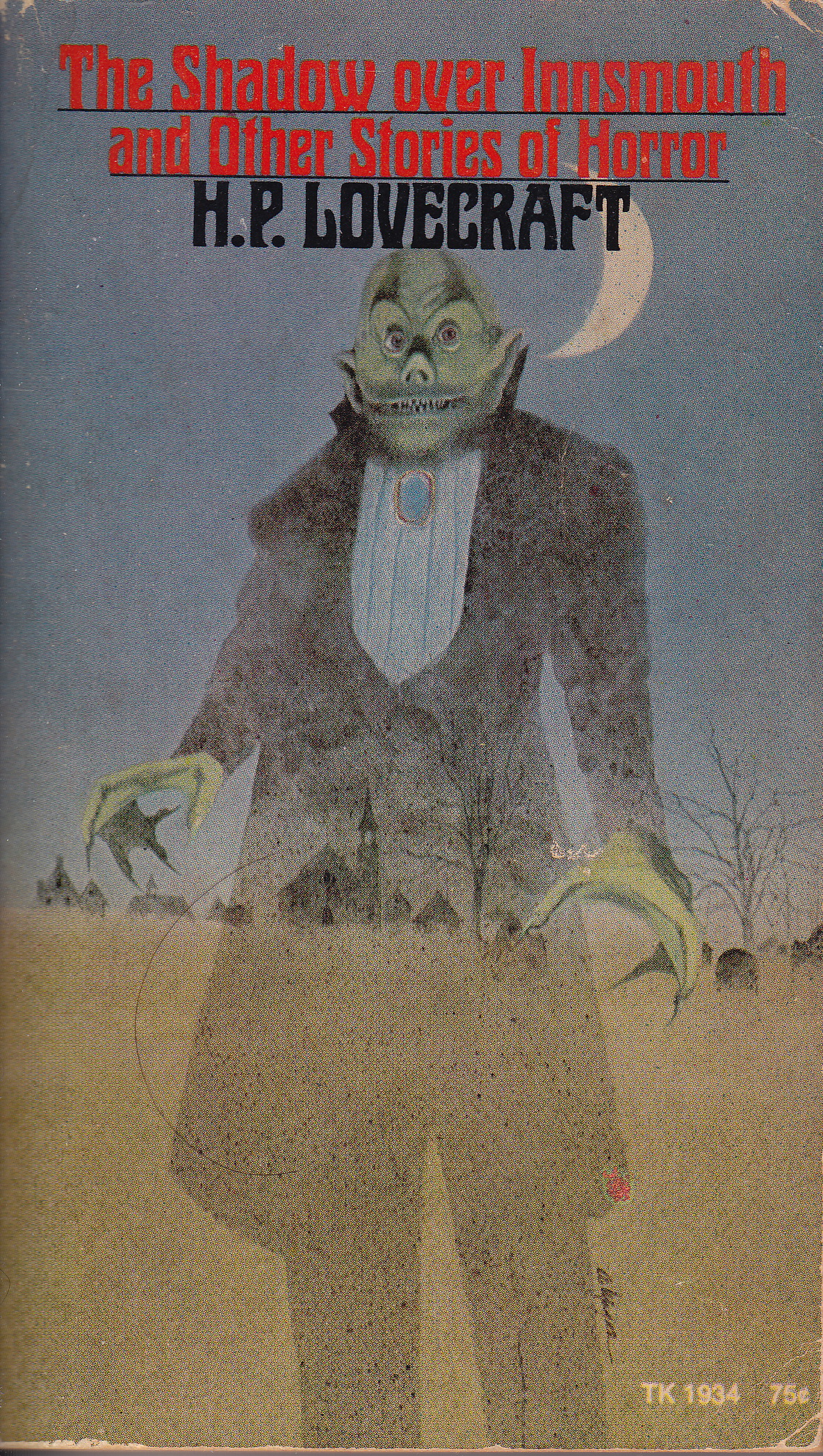
For one memorable year of what I call a career, I taught at the University of Wisconsin Oshkosh.  One in a series of near misses, this came close to becoming a full-time job.  Apart from a couple of rather humorless colleagues, the department was welcoming and an enjoyable place to be.  I even got to know the dean, now elsewhere, and planned on working on a project with him.  It was a memorable year in many respects.  One was its inherent strangeness.  I was living away from home while teaching there, and saw some odd things on my drives through the Wisconsin countryside.  It also happened to be at Oshkosh that I first discovered H. P. Lovecraft, so the weirdness was, in a word, enhanced.

Students like to tell ghost stories.  A recent article by Jocelyne LeBlanc on Mysterious Universe caught my eye because it tells of students in Oshkosh that live in a haunted dorm.  These kinds of stories are ubiquitous and Oshkosh is in no way singular here.  Students, whose brains haven’t yet ossified, are often open to new experiences.  Most of them, however, don’t possess the research skills to get behind the origins of some such tales.  Sometimes there’s an explanation.  Other times there’s not.  At Grove City College, when I was there, students told of a haunted playing field.  It was the site, it was said, of a former gymnasium.  What made it haunted was the death of a basketball player who’d smashed through a glass gymnasium door during a game and bled out before help could arrive.  It sounds improbable and I never had time to research it.

We all, I suspect, have a longing for the supernatural.  We want to believe that there’s more to this world than physics and earning money.  And strange things do happen.  I never saw any ghosts in Oshkosh, but the things I did see helped to make up for that particular lack.  Edinburgh, where I studied for my doctorate, is widely rumored to be among the most haunted cities in the world.  Although I saw no ghosts there, people flock to the ghost tours.  In fact, one stopped right below our first apartment’s window every night during the tourist season.  By the time we moved out we had every word memorized.  The haunted dorm story is a revered tradition.  Thinking about it makes me wish I could afford to be a student again.


Clippings

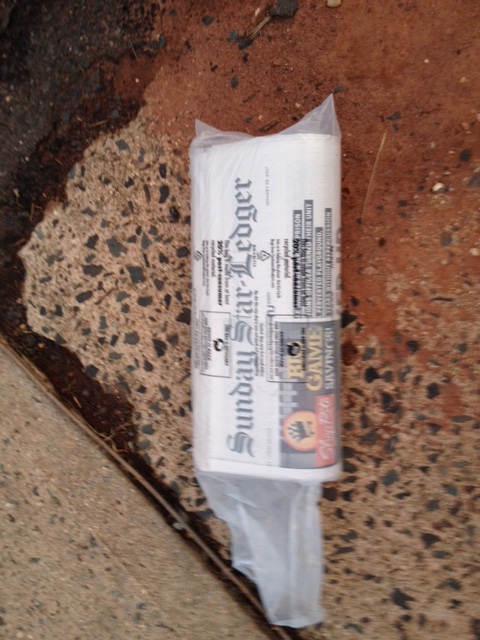
Weren’t newspaper clippings more fun than bookmarks?  For one thing, bookmarks are hidden away in your browser where they proliferate like bunnies in April.  Clippings were always limited in number, to the level of your interest.  Or physical storage capacity.  I once decided to organize all my bookmarks into “folders.”  I’m still not finished and some websites don’t seem to fit any category.  Still, the exercise is an eye-opening one.  I’ve been on thousands of webpages, hundreds of which I want to remember.  With newspaper clippings, there were a limited supply and they felt—let’s face it—real.  These words and images were printed on tangible paper.  Kept in a file (or in old movies, tacked to a bulletin board that inevitably contained clues), they were visible reminders of something that caught your attention.

I’ve seen movies made where research is being done on the internet.  They involve people who know they have to go beyond the top page of a Google search.  They may even go to the third page or further!  Such thrills.  Compare that to a scene where someone pulls open a desk drawer and finds a clipping.  Isn’t there real drama there?  No doubt the internet has made finding information easier.  It has also proliferated it so that we no longer have time to read it all.  I recall reading how Isaac Asimov read the entire encyclopedia when he grew up.  Who could read all of Wikipedia?  It changes every single day.  The clipping file, depending on the papers and magazines to which you had access, might be pretty slim but it helped to inform opinions and outlooks.  There were occasional hoaxes but nobody worried about fake news back then.  After all, reputations still meant something in those days.

There was a real thrill, growing up in a small town, to being mentioned in the newspaper.  In my case it was generally about being in the Cub Scouts, or, interestingly, being baptized in a river.  (This was a small town.)  Ironically I didn’t have a clipping of the baptism story; I found it online.  The Franklin News-Herald wasn’t a large circulation broadsheet, but it was paper closest to where the incident took place.  Perhaps it struck a locals as odd seeing a bunch of people wading into the river fully clothed, even though it was 1970.  It’s an event I remember well.  But most of my clippings have flowed away over time, like those sins that were washed downstream that day.  I must remember to bookmark that site.


Street Teaching

When I’m out on the street—not so often these days—I’m sometimes accosted with strange questions.  This has happened to me quite a few times over the years.  Recently, when I was taking the recycling out for my daughter on a weekend visit, I saw a couple guys in a car right by the receptacle.  I was wearing a mask, due to, you know,  Covid, so I wanted to keep social distance.  The one in the driver’s seat asked if I was going to dump the recycling and when I said I was his partner said “I’ll take care of that for you.”  They had a plastic bag full of cans and were loading glass bottles in their trunk.  I thanked them for their help and turned to go.  As I was walking away one of them called out.

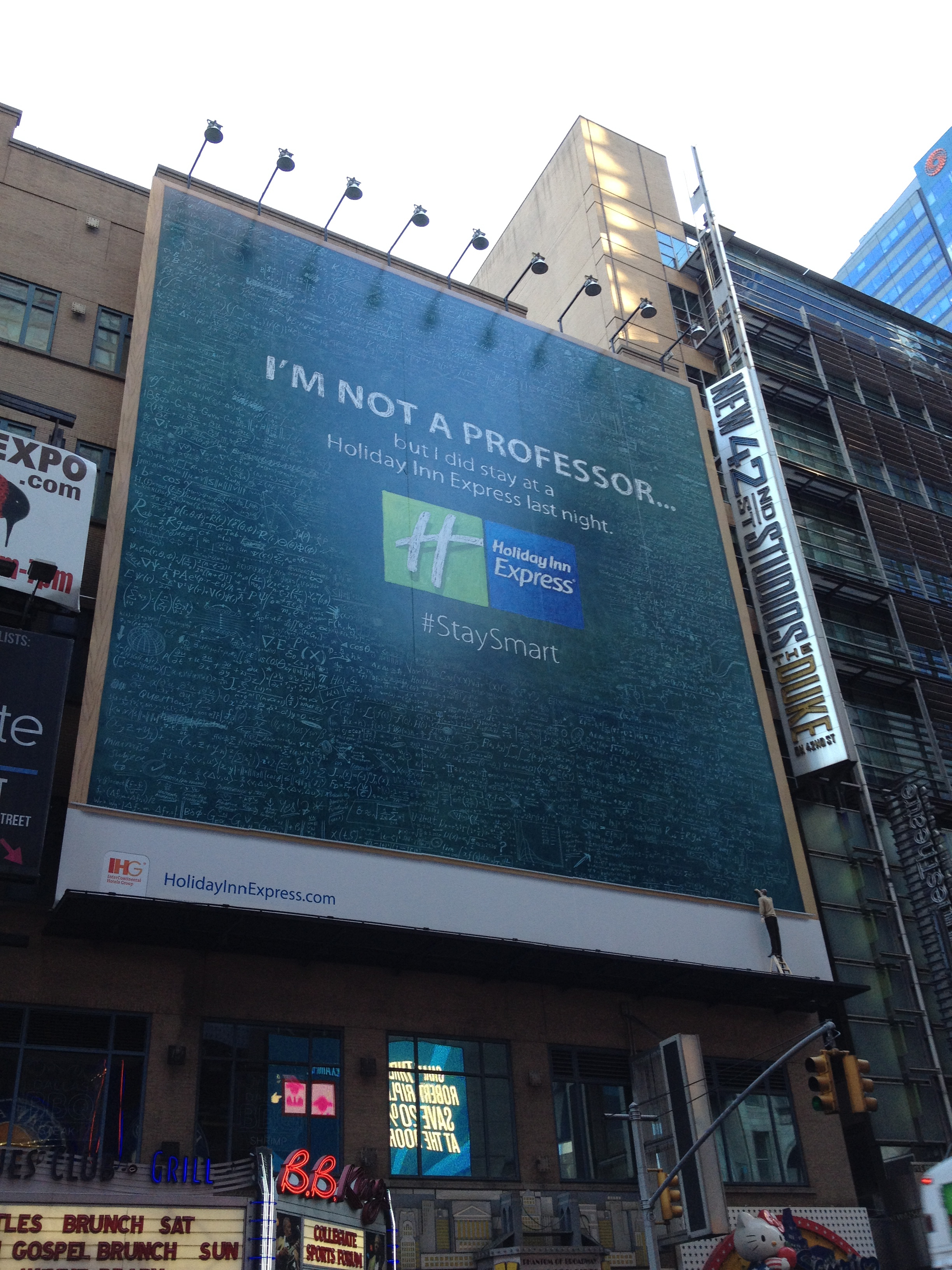
“Hey!  Are you a teacher?”  I get asked that a lot.  Only the academy refuses to recognize it.  I acknowledged that I used to be.  “What level?” they asked.  I allowed as I used to be a college professor.  “Where?” I told them most recently at Rutgers.  “What’d you teach?”  This is where it always gets interesting and I start to sweat a little.  I told them religious studies.  I also said that’s why I couldn’t find a teaching job.  “The best information we ever had on religion came from a six-year old.  You know what the F in faith stands for?”  I shook my head.  “Forgiveness.  Without that the rest of religion means nothing.”  I told them I could accept that.

Then as I was turning to go they called out, “You know the acronym for Love?  Living our values every day.”  I told them they were now the teachers and I was the student.  They responded by telling me that they’d just sold a song they co-wrote for a million and a half dollars.  I expressed surprise at that.  They told me the title and said it was recording in Nashville this week.  I congratulated them and finally was able to be on my way.  This made me reflect on the several such strange conversations I’ve had on the street.  They often begin with “Are you” and not infrequently end with “a professor.”  This is usually followed up with some kind of intelligent question.  People, it seems to me, are eager to learn.  Maybe not in the classroom, but in what is referred to as the “university of life.”  Perhaps that’s all the schooling we ever really need.


Not Out Loud

I’ve been thinking of funny things lately.  Literally.  You see, while many of us are waiting for vaccines or any sign of hope, it’s natural to try to cheer oneself up.  I try reading books with the reputation of being funny.  I try looking for movies that IMDb tells me will make me laugh.  One thing I’ve discovered is that what’s truly funny is a matter of taste.  Some comedians make me laugh.  Others, well, don’t.  Books that I’m told are LOL (“laugh out loud”) funny often turn out to give me a snicker or two as I wend my way through the pages.  The “out loud” part remains elusive.  But it’s the movies that get to me most.  I can’t remember the last time I saw a movie that made me laugh from beginning to end.  “Sophomoric” is the word my wife used to describe most of the movies on online comedy recommendation lists.

I suppose funny is a matter of buying into lowest common denominator culture.  Education, if we’re honest, can knock the sense of humor out of you.  Besides, most movies have a story to tell and few stories are funny every step along the way.  During a pandemic you might well need something like that.  Of course you couldn’t go to the theater to see it if it came out.  There’s some fun stuff on the internet.  People I know will sometimes send me things that make me chuckle, but I’m guessing I need to step away from horror movies for a while to reacquaint myself with what’s funny.  I got so desperate the other day that I sat down and tried to make a list of the funniest movies I ever saw.  Then I looked at the lists I found online and saw little overlap.  Where to go for a good laugh?

Our sense of humor must have roots in our youth.  I really got into religion then, and I became a very serious teen—we’re talking eternal consequences here.  So much so that I had a conscious epiphany one day that I no longer laughed.  I needed to rebuild my sense of humor.  I tried buying funny books (which wasn’t easy in a town with no bookstores).  I tried to catch up with the others in school who were always talking about this or that funny movie they’d seen.  Of course, anything crude scandalized me then, so it had to be clean fun.  Now it’s a matter of trying to see if anyone gets my sense of humor.  After a year in lockdown we could all use a good laugh.


Rabbit Years

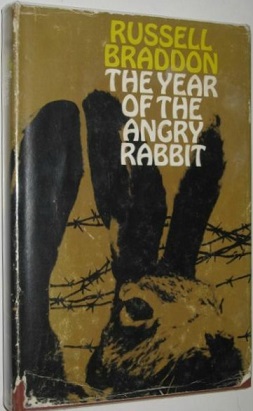
A childhood horror movie that I only recall in the most wispy of fringe memories is Night of the Lepus.  It’s one of those monster movies that involves mutated animals, in this case the unexpected rabbit.  I’m not sure why it’s been on my mind lately, but a little research indicated that it was based on the Russell Braddon novel, The Year of the Angry Rabbit.  This book is out of print and still under copyright, so finding a copy wasn’t easy.  Apart from vague images of giant rabbits, I had no idea what to expect.  The book turned out to be a comedy horror, in that order.  Remembering that the movie wasn’t funny (although it is consistently considered one of the worst cinematic efforts of the time), I wasn’t prepared for this.

You see, I don’t like to read about books before I read them.  I don’t read cover copy.  (I tend not to watch movie trailers either, unless it can’t be helped, like when you’re in a theater.)  I suppose knowing a genre of a book helps, but I just wanted the experience of reading the story behind a movie that won’t completely vacate my memory cells.  The Year of the Angry Rabbit is a satire on government, war, and capitalism.  If you’re not expecting a serious horror story it’s quite funny.  Russell Braddon never became a household name—he was from Australia and a person’s cultural impact tends to be greatest on their own continent—but if you knew this was a satire from the start you’d probably enjoy it as such.  Although written in the sixties, it’s climax takes place at the millennium, now two decades past.  It’s always interesting to see what people thought we might be up to by now.

Although there are elements of humor to our politics, Orwell seems to have been more on the money than Braddon.  Nevertheless it’s important to keep the old stories alive.  There are still people like me who will seek out rather obscure novels from many decades ago.  They might have to have sat on library shelves for years without having been checked out—this used to be the glory of the library, before “evidence-based usage” studies ruined them.  I search for things I want to read in my local small town library and find that my tastes are too obscure.  Besides, old stuff has to be cleared out to make room for the more recent books hoi polloi wish to consume.  I’m glad they’re still reading.  For me, however, I’ll need to stretch back to a time before I was old enough to read to satisfy an unrelenting memory. It was rabbit years ago.


one of many

It’s been some time since I’ve read about the Jehovah’s Witnesses.  There are so many religions that I need to refresh my study on them periodically.  So it was that I received a mailing from the local Kingdom Hall.  You see, the very last people at my front door before the pandemic was declared were bearing the Watchtower and telling me the end is nigh.  We knew about Covid-19 at that point and were being urged to keep social distance, although the authorities were still dithering about masks.  They knocked nevertheless and we stood several feet apart on the porch as they tried in vain to convince me of their truth.  So now, a year later, they’ve reached out by mail.

You’ve got to have a soft spot for a religion that has its origins in Pittsburgh.  Well, maybe that’s the case for those who grew up where it was the nearest big city.  And I do admire that pioneering spirit that says “established religions just aren’t doing it for me.”  The great swath of NRM—New Religious Movements—shows that you shouldn’t feel lonely if this applies to you.  Even today’s Christianities bear little resemblance to the teachings of the carpenter of Nazareth.  He who said even to look upon a woman lustfully was to commit adultery, but whose followers support a president who recommends grabbing them by the, well, where the originator said not to look….  Religions evolve.  The literalism many associate with Christian belief is really only about a century old.  We have no business castigating religions just because they’re recent.

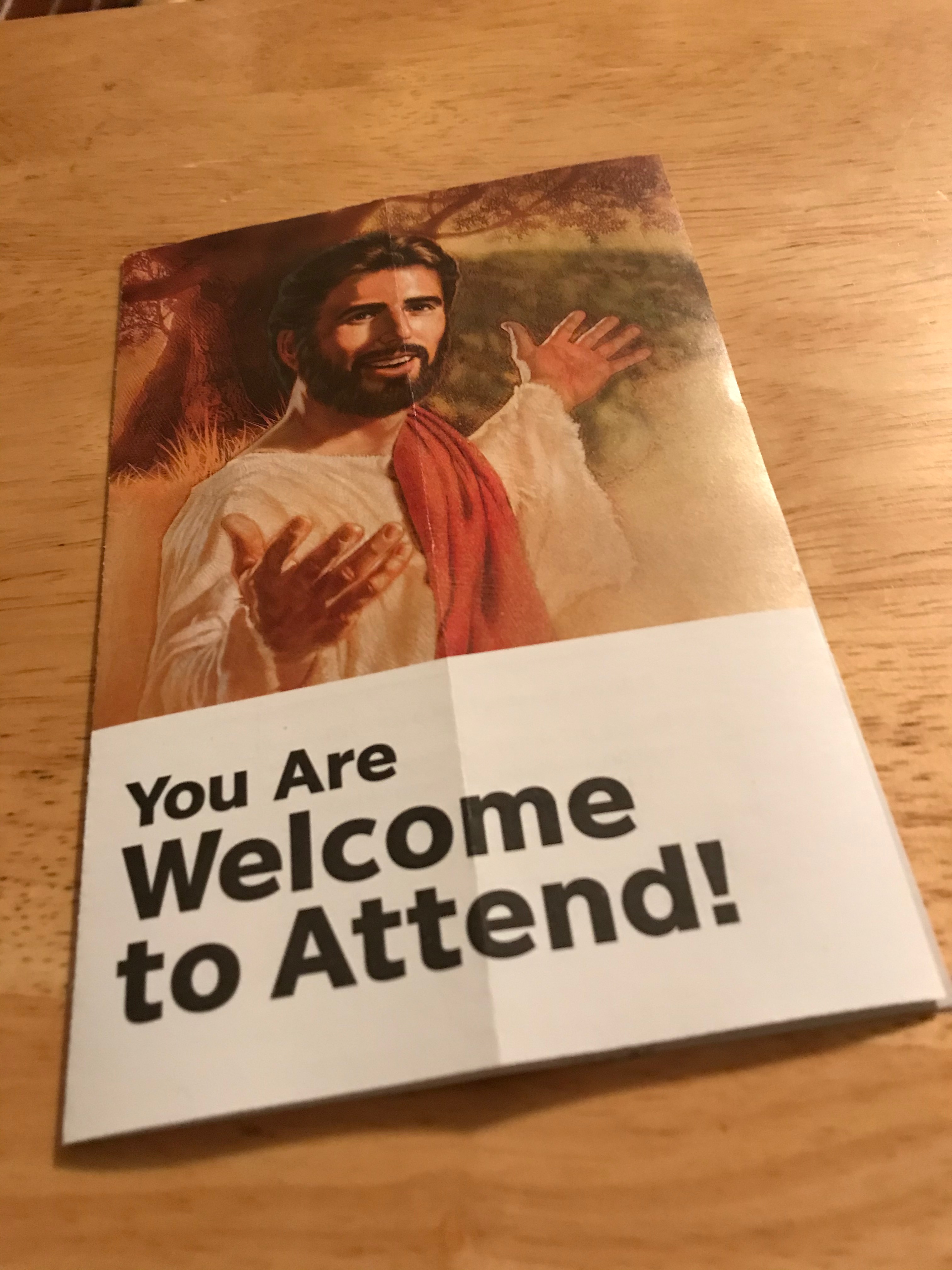
My mailing from the Witnesses included a personalized (somewhat) letter inviting me to a virtual commemoration of Jesus’ death.  Due to the pandemic it’ll be held on Zoom, of course.  The expected flyer with its Anglo-Jesus contains the details.  I did attend a Witness service back when I was in college.  Those days of heady explorations never really ended for me.  You have to settle into a tradition to get to know people, of course, but there’s a world full of ways of looking at our spiritual side and there’s more being propagated just about every year—even Jehovah’s Witnesses have splinter groups.  I suppose missionaries are something we’ll always have to put up with as long as people are convinced that their way is The Only Way.  Trust that others have perhaps quietly, perhaps deliberately, perhaps with a great deal of thought and reflection, have found their own way seems never to be good enough.  Still, an invitation is an invitation and those have been rare during a pandemic.