Ithaca Musings

Ithaca may be the ultimate hippie town. Open and accepting of diversity, it’s a place where anyone can speak out against what’s going on in the government and not worry about finding any objectors. Yesterday when I was in Buffalo Street Books, customers openly vented their frustrations with the way Washington’s handling things, and others joined in. There’s a sense of righteous anger here that hasn’t been fashionable since the days of the biblical prophets. You have heard it was said Watergate was a bad thing, but verily I say unto thee something much worse than Watergate is here. And although winter is still holding on in upstate New York, nobody doubts global warming is real.

From my first visit here, I knew that I wanted to live in Ithaca, but it is one of those places you can’t afford to live. Amazing how the liberal cities are the places people want to reside. Places where you can’t just turn off the realities of a diverse world just because some things make you uncomfortable. Places where if you notice that other people are different you are reminded that you, in their eyes, are the different one. There is no static, monochrome, cookie-cutter American. Why is this an idea so hard to sell? Capitalism leads to and fuels the desire to own. And owning leads to the desire to own more. I’ve often noticed this since being out of higher education—even within your own company others want what you have. The basic civility of the socialist is missing. That’s where the “me first” attitude leads.

In upstate New York, as in many parts of the nation, the very names remind us that others “owned” the land before Europeans arrived. Native American concepts of ownership were so different from the capitalist ones that forcefully landed on these shores that those views were forced, under firearms and steel, to assimilate to the foreigners’ ways. Capitalism takes no prisoners. Turnabout, they used to say, is fair play. We no longer feel that way as a nation. The interlopers have taken over. We’ve made the country in our own image. And it certainly isn’t any more noble for it. Being in a place like Ithaca always makes my spirits ebullient. The very concept of ownership is an odd one, I realize. Mere mortals can never really own anything. We can pretend to, or perhaps we can take a more enlightened view. We are all borrowing things here. And I would love to borrow a piece of real estate here in Ithaca.


Power in the Bus

“You’re not in control on a bus” my friend Marvin once wrote, in his short story “O Driver.” The commuter is the consummate captive. I don’t like to beat dead horses—we might need all the horses we can get before this is all done—but some commuters need to learn silence is golden. I take a very early bus with some hope that we might beat the inevitable traffic jams coming into New York in the morning. Every minute counts. Some people, however, feel compelled to comment when they think the bus is early. They’re already sitting on the bus, so what’s the problem? There’s another coming in 30 minutes and those of us concerned with getting in before the traffic make a point of being at the bus stop, well, early. The other day a guy got in at the stop after mine. He told the driver that the bus was running early (it actually wasn’t) but the driver obligingly sat for several minutes. The commuter’s always right, right? We got into the Port Authority late that morning. All because of one man’s mouth and his inability to keep it shut. I wonder why they even have that sign saying not to talk to the driver. That only applies when the bus is in motion. So…

The very next day the driver on the route was new. She was on time. Until. To understand this, you need to know my route is an express—it is entirely highway except for one short jog into another town about 10 miles down the road. My driver was doing great. “You missed the turn,” another passenger said. The driver apologized. A three-point-turn in a bus just isn’t possible on the highway, so she had to drive to an exit, wait for the light, and turn around. We were now speeding west, heading to New York City. The passenger, now acting as GPS, didn’t know this area very well. “Take the next exit,” she instructed. The driver dutifully did. It was a ramp with no reentry to the highway. We were touring rural New Jersey for some time before the driver found a place to make another U-turn. “Missing the turn,” the passenger now said, “That turn’s inconsequential. There’s another bus that comes just after this one.” She’s right. No less than three routes into New York follow that jog. But it was too late for us now. Finding our way to the highway, we again headed west. This time our driver took the correct exit, apologizing all the way. The next day we had a new driver.

Actions have consequences. For each and every action there’s an equal and opposite reaction. I learned the latter in physics class. The former is a life lesson that might properly be called the mother of morality. When you talk on the bus you’re taking charge of about fifty lives. It has become clear to me through my years of commuting that most people shouldn’t have that kind of power.


Americanism

I’m a bit too much of a contrarian to be a regular bestseller reader. I do occasionally bow to curiosity though, and I do have a lot of time on the bus. But that wasn’t the reason I turned to Michael Wolff’s Fire and Fury: Inside the Trump White House. Purchasing this book was a statement. Another in a long line of protests in which I’ve taken part since January of 2017 (and even before). You see, I mourn. I mourn what our country has become. My first indication that I should write (which I of course ignored) was the winning of a statewide essay contest my senior year in high school. The topic of the essay was “Americanism.” My piece was respectfully cynical; I was surprised I won. This was in the days before personal computers and I didn’t think to keep a typed, or even hand-written copy.

The essay was cynical not because I don’t believe in America, but because I do. I’ve been confronted on this issue concerning my blog occasionally. My jeremiads. You see, you only get this fed up with things when you love them deeply. I sometimes rail about higher education, for example, because I care about it. Fire and Fury created in me a—to borrow from the book’s vocabulary—Kafkaesque bewilderment about how a nation based on high principles could possibly sink so low. Politicians are perhaps the most self-serving of human beings, but at least they try to make sure the country doesn’t go off the rails. This train leapt the tracks months ago, and our elected officials refuse to do anything about it, each playing their own angle, hoping personally to come out of it ahead. Worth a jeremiad, I’d say.

I was a Republican in high school. I wasn’t old enough to vote, so that party affliction was never official. When I did register at 18 it was as an independent (remember, contrarian). As a Fundamentalist I was ahead of the Tea Party, at the time. Even with this level of patriotism I wrote an essay taking my country to task. I was raised in a poor family. Told an education would improve my chances, I found myself facing predatory loan officers and others eager to wring my blue collar until it was possible to twist no further. If I had no money, my future money would do. I’d already had a taste of that as a high schooler. That was three-and-a-half decades ago now. I kinda hoped the country might improve in all that time. And I kinda wish I’d kept a copy of that essay as a memento of more optimistic days. Fire and Fury sells so well, I suspect, because I’m not really alone in feeling this way.


Urban Evolution

They say ten city blocks are a mile. They also say the internet is fast. Putting these two theorems to the text, I’ve logged several foot-miles in Manhattan to find things that aren’t there. I don’t mind the exercise, but apparently the web can’t keep up with Midtown. I’ve been working in Manhattan for going on seven years now. I very seldom leave the office during the day, eating at my desk and trying to give the man his due. Once in a great while there’s something I’m either compelled to see, or that I must find for various reasons. Almost without fail, such lunchtime expeditions lead to frustration. I recently had to visit a business that shall remain nameless (conflict of interests, you see). According to Google Maps it was a mere ten blocks—a mile—from my office. At a brisk pace I could make it there, transact my business, and return to my cube all well within an hour. As I grew close, I got that sinking feeling I recognize now as internet ghosting. Nothing remotely like my goal was at this location.

I walked in and smiled at the man at the security desk. He was even older than me. “Ah, they used to be here,” he said, “but they left a long time ago. Long time ago.” Apologizing in advance, I asked if he had any idea where they might’ve gone. “I heard they moved across from Bryant Park, on 6th Avenue. But I heard they moved from there, too. You might try it, though.” Since this was roughly in the direction of my office from where I was, I decided to swing by. When I worked for Routledge I went by here every day, and I didn’t recall ever seeing this particular business there. Their security guard was equally as friendly. “I’m afraid there’s nothing like that here.” I had to return to work. When I got back to my office and googled their store locator, the website froze. This was truly unobtainable via the internet.

Some times you’ve just got to let your feet do the walking. Things aren’t always where the internet says they will be. I’ve come to realize that New York City is constantly changing. Buildings now stand where mere holes in the ground used to be when I began working here. Commuting in daily all these years is like time-lapse photography of a plant growing. Buildings emerge behind the green plywood walls, and next thing you know what used to be a synagogue is a new retail opportunity. It may not, however, be the business you’re looking for. Before spending your lunch hour walking a mile to get there, you might try calling first.


Good Company

It’s a matter of scale. If you read this blog chances are you like books. If you like books you probably know about remainders. When you walk into a bookstore and see a shelf or section of really cheap new books, you’ve found the remainders. This happens when a publisher overprints and, instead of pulping books (that hurts even to type!) the remaining stock is sold at just above cost so that retailers can add a small markup and make a marginal profit. Most authors don’t like to see their books remaindered, since it means demand wasn’t as high as the publisher anticipated. Expectation was that the book would do better than it did, now the publisher and bookseller just want to recoup some of their losses. Often there’s a marker stroke across the bottom pages of the book so you can’t return it for the retail price.

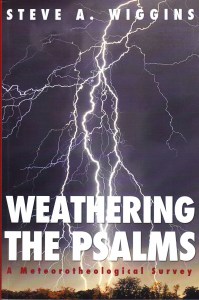
For those of us whose books sell in the double digits, seeing yourself on a remainder list would be kind of a thrill. The other day I looked at Wipf & Stock’s 50 percent off sale to find a copy of Weathering the Psalms listed. Probably it was overprinted for the AAR/SBL annual meeting, since I saw that they did have copies there again last November. If they hadn’t bothered to print out a bunch, I would never be on the remainder shelf in Eugene. I don’t mind because I’m in good company. Looking at the list I feel like I belong in some kind of academic crowd in the reduced bin. There’s a sense of community among the overprinted.

Turnabout, they say, is fair play. I’ve bought plenty of remaindered books in my life. Lately I buy used academic books because the new editions are out of the reach of an independent scholar who isn’t independently wealthy and who doesn’t have access to a university library. If I buy others cheaply, I turn the other page and expect the same back. Most of us who write academic books aren’t in it for the money. We want to be remembered for our contributions to the discussion. We took the many months and years it takes to research, write, and polish a book, and we want others to take an interest in what we have to say. It’s all about the dialogue. It’s all about the community. For those of us who never really found a home among the established academy, publication can mean a lot. It doesn’t matter that the books are sold cheaply—in fact, that’s good, because it means somebody might just read what you wrote. It’s all a matter of scale.


Two Cities

Augustine of Hippo wrote that there were two cities. If you’re reading this blog you probably know what they are. Today, according to some, is Easter. For others it’s not quite there yet. Call that one city. It’s also very near that other national holiday—tax day. That’d definitely be the other city. Now, I’m not going to go into any detail here, but I’ve always done my own taxes. If you’re old enough to remember going to the public library to pick up two or three copies of the paper forms, sitting at home with a pencil, eraser, pen, and TI-30, and spending an entire Saturday reading through the instructions and scribbling, you know what I’m talking about. These days everything’s online.

I can’t recall how many years I’ve used TurboTax. It was free, easy, and generally led to a refund. I miss those days. This year when I sat down with Intuit’s child, it started asking questions I didn’t understand. Perhaps you’ve run into some industries that do this—they make up their own vocabulary and if they use the words in a way the dictionary doesn’t, well, it’s the dictionary’s fault for not keeping up. TurboTax started doing that. And unless you want to pay even more than they’ve already sold you up for, there’s no way to ask questions. The answers online use the same obscure lexicon. So this year I had to do probably the most adult thing I’ve ever done. I got an accountant.

Setting up the appointment for after work, it was a matter of looking at dates both my wife and I, and more importantly, the accountant, had free. It was only as judgment day dawned that I realized it was Good Friday (for some). Arranging to work from home that day so I could get to the office before the buses rumble out of New York, I ran into a traffic jam. No doubt people out to do their last minute Good Friday shopping. We were meeting the accountant for the first time, and I wanted to make a good impression. Be punctual. I had neglected to coordinate the two cities on my calendar. The accountant was understanding. He commented on how easy our taxes were, compared to many. Turns out TurboTax had been closing off many perfectly legal options and charging us for the privilege. So now it’s Easter. Taxes are due in a couple of weeks. There are two cities, and if either is neglected there’ll be Hell to pay in the end.


Books and Editing

My life has been about books. It was only as I became what is now known as a tween that the passion took hold, but since that time I’ve been addicted to them. As some readers know, I have a Goodreads account. Each year I try to take out a Goodreads challenge on how many books to read. That recently got me thinking; as an editor you read lots of embryonic books, but they don’t count. Being an editor’s a funny job. Not ha-ha funny, but the other kind. When I was having trouble breaking back into higher education, I ran across a quote that went something like this: What’s an editor? A writer who actually has a job. (Rimshot.) I have a tendency to take things literally, so I thought I’d discover lots of writers among professionals in the publishing world. I haven’t.

It could be that other writers keep it well hidden. I publish my fiction under a pseudonym and it may be that the other editors I know live hidden lives too. Somehow I doubt it. They check their email at midnight and all day long on weekends. One thing I know about writers is that we need time to write. If your workday is already eight hours and your commute is three-plus hours more, you won’t be checking work emails on weekends if you want to get any writing done at all. But what about the reading? Does it count when you read books that aren’t even born yet?

On Goodreads I enter my books by the ISBN. The International Standard Book Number (for which you have to pay, I’ve learned) is a tool used so that booksellers can keep track of titles with a unique identifier. The system is fairly recent (at least according to some of the books I read), and not all books have one. For those of us who read ancient documents, those can’t count either. Ilimilku didn’t think to stamp 13-digits on the bottom of his clay tablets. There’s no way to trace just how much s person reads in an actual year. I measure myself by my books. I get a profound sense of fulfillment when I finish one. That’s why I so often post about them on this blog. Books mean something. Call it a bad habit if you will. We’re outgrowing our apartment because I find it hard to part with books. There are those who spend their lives building arsenals. Then there are those who spend theirs building libraries. I know which I prefer.


Here Before

Déjà vu can be quite disorienting. Déjà vu can be quite disorienting. One of the categories for my 2018 reading challenge is a book you can read in a day. Maybe it’s just me, or creeping middle age, but books seem to be getting fatter these days. Despite the amount of time I spend reading, I’m slow at it and it’s a real struggle to find something I can actually finish on a three-hour bus ride. That’s why I thought of a play. Plays are meant to be performed in one sitting, so you should, in theory, be able to read one in a few hours. My first thought was Shakespeare, but the books of Shakespeare you can find these days all have added pages of commentary and interpretative material and the books seem to have put on weight since the Bard’s day.

So I settled on Rosencrantz and Guildenstern Are Dead by Tom Stoppard. My wife had a used copy from college days and I’d been wanting to read it for some years. Here was my excuse. Then the bus ride began. Starting Act One I was sure I had read this before. It wasn’t just an inkling, like déjà vu often is, but an overpowering sensation. Of course I could tell what was going to happen—I’ve read Hamlet a time or two—but it was more than that. The sense that I had not long ago read this very sequence of words was nothing shy of overpowering. Uncanny even. As I moved into the latter part of the act, the feeling went away. This was new territory after all.

Consciousness is mysterious. Even with all our instruments and equations and theories, we still don’t know what it is. Materialists insist it must be simply a function of the brain, but that’s certainly not what it feels like. One of the hazards of reading a lot in middle age is that some things do start to blend together in your gray matter. Research, for example, means reading many books on the same subject with repeated ideas common among them. For fiction, however, we often hold a higher standard. Uniqueness and creativity are highly valued, even if the play you’re writing is a riff off the old Bard. In the end, I was able to finish the play in a day’s reading on the bus. Staring out the window after I’d finished, I was thinking how déjà vu can be quite disorienting.


Refillable Ideas

Maybe I’m too slow of thumb, but this ought to be simple. For many years I kept a small slip of paper in my pocket, along with a pen. Eventually I upgraded the paper slips to Moleskine notebooks since they’re harder to lose and the covers mostly prevent the smudging of my ideas. When something strikes me I don’t reach for my phone—by the time I enter the passcode, select the app, and try to type with fat thumbs, the idea’s gone. Instead I pull out my Moleskine, battered and frayed by the final pages, and my pen. The problem is I’m still enough of a working-class guy to lose pens. If a cord comes disconnected beneath my desk, I’m down there on my back fixing it rather than calling IT. Pens fall out of my shirt pocket on planes, trains, and automobiles.

A lost pen shouldn’t be a problem, but finding a pen that writes right away is. Like most people I have scores of throw-away plastic pens handed out by vendors with their company name on them. I prefer a good quality pen—the kind a family member gives you for your birthday—but they hurt when you lose them. I finally settled on a happy medium. One of my kin gave me a heavy-weight, refillable pen that has a robust clasp so it doesn’t slip out of my pocket, down between the seats of public transit vehicles. Refills, however, are another story. Who would’ve thought that I’d spend my time reading reviews on Amazon just to find pen refills that write the moment inspiration strikes? Well, I do.

Unlike those who whip out their phones to write things down, I still pull out my notebook. Nothing is more frustrating that feeling an idea evaporate while waiting for the ink to flow. My most recent refill is on strike most of the time, while that cheap pen from the health fair at work never seems to have a problem until it runs out of ink and has to be tossed into the landfill. I wonder if the Bible would’ve ever been written had Moses to rely on the poor quality of pen refills available before the common era. Maybe he had less commuting time, although I’d say 40 years in the wilderness qualifies. His stone tablets may have been heavier than my Moleskine, but his chisel was sure and his words still adorn courthouse lawns everywhere. Perhaps I’m too modern after all.


Hope for the Future

I’m standing in a haunted place. There was an act of violence here this week. Gun violence. A man died in this restaurant where I sat with my wife and had lunch just a couple of months ago. I’m in Princeton for a rally organized by a teenager. We’re here to tell the government we the people want sensible gun control laws. The website said they were expecting 500. Five thousand turned out instead. Princeton’s not the kind of town where you expect gun violence. Affluent and privileged, it’s the kind of place many of us go to get away from real life for a while—they’ve got the best bookstore around and you can still find DVDs at the Princeton Record Exchange. You don’t expect people to be shot dead here.

America’s perverse affair with firearms goes hand-in-hand with its refusal to ensure adequate treatment for the mentally ill. We give them firearms and wonder what could possibly go wrong. We elect the mentally deficient to highest office in the land and instead of reining him in, the GOP reigns with terror. They have shown time and again that they prefer NRA money to our children. They have sold out. And the word appropriately used to describe such a party good manners prevent me from inscribing on this blog. Republicans, true republicans, need a new party. Instead they refuse to call this aberration in Washington what it truly is. Thousands took to the streets yet again this weekend. This was my fourth rally or march since January of last year, and hey, government—they keep getting bigger.

“Woe to the inhabiters of the earth and of the sea! for the devil is come down unto you, having great wrath, because he knoweth that he hath but a short time.” So saith the Good Book. It’s a book the Republican Party has forgotten how to read. Especially the “evangelicals” who’ve betrayed their saintly name. While I’m here in Princeton, a few hours away in the sullied capitol of this once reasonable nation, half a million are on the march. And just as women led the way last January we’re being shown the truth that anyone can lead better then old white men. And the fact that the organizers of these protests are high schoolers, I am inclined to leave the last words to the prophet Isaiah, whom, for any Republicans who might be reading, is in the Bible: “The wolf also shall dwell with the lamb, and the leopard shall lie down with the kid; and the calf and the young lion and the fatling together; and a little child shall lead them.”


Kids These Days

I couldn’t have been an easy kid to raise. As a teen, while other kids were experimenting with drugs and sex, I started an unexpected habit. I can’t remember why or how it happened. I was the son of a professional drunk and a high school dropout. (Step dad worked in a sewage plant, so that likely wasn’t it either.) Somehow I’d discovered classical music. It wasn’t through records we had at home. If the artist didn’t have Cash or Twitty in their name you were probably tuned into the wrong station, buddy. Since this was before the internet it must’ve been something I heard on television. On Saturdays I’d beg to go to the Oil City Public Library where you could borrow LPs. I’d check out five at a time, and listen to them with headphones on at home. The general opinion in my neighborhood was that this was snob music and other people didn’t want to hear it.

One of the pieces I discovered was Tchaikovsky’s 1812 Overture, (officially The Year 1812). This particular recording began with a chorus singing the Russian hymn, in English (hey, I was just learning!). Although I loved the bombastic ending (what boy wouldn’t?) I was haunted by that hymn. I paid no attention to the conductor—I couldn’t tell a Stravinsky from a Stokowski—so I memorized the albums I liked by their cover art. As a teen I had no idea things would ever change and that one day I’d be downloading music instead of carefully, lovingly pulling it out of a colorful sleeve, breathing in the experience.

Russia’s been on a lot of people’s minds lately. I have a great deal of respect for the Russian people. There’s a stolidity and pathos there that is rarely captured in any national music. I longed to hear that recording again. It took the better part of a day searching the internet to find it—I could walk right up to it in the Oil City Public Library four decades ago and put my hand on it. Those days are gone. When I finally located it on YouTube (Eugene Ormandy, Philadelphia Orchestra, in case you’re interested) I couldn’t stop listening. Not only did it take me back to my fractured childhood, it also made me feel a deep connection for a nation that probably looks at my own with great and earned distrust. We all need to learn to look at ourselves from the outside. That hymn! Listen to the words. I could imagine myself being oppressed by people I didn’t know and who had no reason to hate me. Unto our land bring peace. Amen.


The Power of Literature

Among the uber-wealthy families that America has produced were the Dukes. Most famous for the university that bears the family name, they made their money in tobacco and then electricity. And what a lot of money it was! Although many people can point to North Carolina as the home of Duke University, many don’t realize that they liked to vacation in New Jersey. A large property, regally landscaped, rests just outside the unlikely town of Hillsborough. When the last Duke heir died, the foundation opened the property to the public, taking Green initiatives to heart. It’s good to see money with a conscience once in a while. Since we’re not far from Hillsborough, when cabin fever sets in and there’s actually sunshine on a late winter weekend, Duke Farms is a convenient getaway for a few hours.

Surrounded by a rock wall, the main property once housed luxury that most people will never experience. Ancient sycamores line one avenue that leads to a coach barn far nicer than the houses hoi polloi live in. Although we’ve visited the grounds many times, we haven’t seen all of it by a long stretch. Over the weekend we came across a gravel trail we’d never taken. The main avenues are wide, blacktop, pedestrianized boulevards that lead past aging structures, fountains, ponds, statues, and quaint bridges. The gravel trail meanders back and forth through small hills and glens, and it’s easy to believe you’re in the middle of the woods from time to time. At the top of one of these hills we came to the pet cemetery, amid the leafless trees.

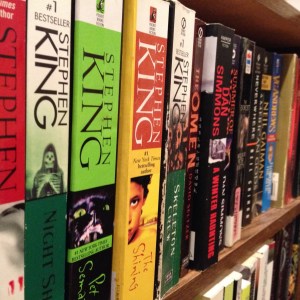
We can all understand the emotional attachment to pets. Even the wealthy feel it. The cemetery was large for non-humans, with stones going back to 1953. Even a pair of camels were buried there. I can’t visit a pet cemetery, however, without thinking of Stephen King. It was a blustery, chilly day. We were alone on this remote trail we’d just discovered, and thoughts of resurrection didn’t seem that far fetched. The rich, after all, can do anything they please. Nevertheless, there was a pathos here. We were being given a glimpse into private lives. The names of other people’s pets, and sometimes their species. The things that had touched the monied class deeply. I’ve buried a few pets in my time, and it is always a solemn activity. One from which not even wealth can protect anyone. And here was another testament to the power of literature. Groping for a way to understand this place, a favorite horror novel seemed just about right.


Odd One Out

The older I get, the more I realize I’m the one that’s weird. Go ahead and say it, “You’re just now figuring this out?!” This epiphany came to me on a stiff breeze. To understand you have to get the idea of commuting on New Jersey Transit. Although twice in one week my route was blessed with a brand new bus, the general operating procedure is to use the oldest, least reliable buses on my route. It is one of the longest routes the company runs into New York City, which means that it is one of the most expensive. You’d think they’d use their best buses, but then you’d be thinking like me. Breakdowns aren’t as frequent as they had been for a while, but other discomforts are fairly common. Just this past week, for instance the heat was stuck on high. Add about 50 bodies to an enclosed, overheated space, and well, let your imagination go.

Now interstate buses aren’t like the school species. The windows don’t open. There are, however, two escape hatches in the ceiling. When I got on board I noticed immediately that it was a sauna bus. The last time this happened (and yes, this wasn’t a unique situation in my experience) passengers opened the escape hatches to create a breeze. Problem was, it was winter this time. The day was struggling to reach 40 degrees outside. As we hit the highway the wind was blowing full against those in my row and I learned what wind chill really can be. There wasn’t much traffic, so the bus was tooling along at about 65. I could feel my left eye beginning to freeze up. My book pages were flapping wildly in my blue-tipped fingers. The personal nor’easter cut right through my winter coat. In my row we were lined up like eskimos, all bundled up. There were no free seats to which we might move. I couldn’t reach the hatch to close it. Nobody said anything.

Here’s where the weirdness comes in. As I child I was raised being taught that true believers think of others first. Other people may not see it, but I consciously try very hard in subtle ways to make sure others get what they need before me. I’m learning not everyone necessarily thinks that way. If I had a degree in fluid dynamics I might be able to describe airflow on a speeding bus. Instead, let me put it this way: the guy who opened the hatch was sitting in the row in front of it, out of harm’s way. The icy blast didn’t hit him, but it did everyone behind him. Passengers tend to think of themselves first. I’m sure I do, too. Just trying to get home after a trying day of work is, well, trying. It’s just that some folks try not to do things that cause others pneumonia, no matter how warm they feel. But then, I’m the odd one, I know.


Experimental Truth

Only the truly naive suppose that the government doesn’t lie. I just miss the days when they lied for what could be construed as good reasons. Now you can tell if the president’s lying simply by observing if he’s talking. In nostalgia for the days of defensible lies, and also my own youth, I picked up The Philadelphia Experiment by William L. Moore and Charles Berlitz. Before you roll your eyes too much, please bear with me. I was aware of this book when it first came out, but I never read it. My brother did and his interest has stayed with me all these decades until I finally got around to a bit of guilty pleasure reading myself. In case you don’t know the story, it goes like this:

In 1943 the U.S. Navy was experimenting with invisibility. At or near a naval yard around Philadelphia, the U. S. S. Eldridge was subjected to intense electro-magnetic fields that made it vanish. It showed up moments later in Chesapeake Bay, and then reappeared in Philadelphia. The crew aboard the ship went mad, although the experiment had been successful. Now, of course the story was denied, and still is, by the military. Moore and Berlitz track down enough clues in this book to make the event plausible. Nothing can be proven, and according to physics, this kind of thing can’t happen. Reading the account is a spot of fun amid the daily lies spewing from Pennsylvania Avenue.

There is a personal element involved in this story as well. One of the characters (at least one) uses a pseudonym. (Although the event was decades earlier than the book was written, the military has a long memory.) The pseudonym stuck out because it was Reno Franklin. The name was gleaned from a road sign from Oil City, where I went to high school. It gives the mileage to Reno, and then, Franklin (the town where I was born). Seeing my little town in a book that was a bestseller in it’s day was a strange kind of validation. Did the Eldridge really disappear one fine day in 1943? Most of us will never know. In the name of national security the truth, if there is anything actually to hide, has been classified. But that’s where guilty pleasures come in. Books like this, although they can’t be considered unvarnished truth, are enjoyable to read and vanish into a haze of a world where the Nazis ruled on the other side of the Atlantic, not over here.


Spoiler Alert

I work in a cubicle. That’s just one word shy of the famed “six word novel” challenges. I’m wondering what qualifier I should add. To understand this dilemma you have to realize a few things. My first professional job (professor) included a three-room office to myself. Also, I am a middle-aged man amid a work-pool of mostly twenty-somethings (everyone else my age has their own office). My cubicle has walls six feet high, so I can’t see, but can hear my just-out-of-college neighbors. Very few people talk to me at work. In fact, I can go an entire week without anyone saying anything to me, right here in the largest city in the country. The office is generally very quiet. You can hear everything. This leads to my concern with a very specific peril regarding work in a cubicle.

Much of the meaning in my life comes from what I read. In addition to all the books I review here on this blog, I have quite a few fiction projects going at any one time. I happen to be reading a book just now that was recently made into a movie. The reason I know it’s been made into a movie? My unseen, 20-something colleagues began talking about it yesterday morning. Complete with spoilers. Now, they couldn’t see the contortions on my face, hidden in my cubicle. The people who sit next to me work in a different department than mine and I have no reason to speak to them—they don’t even know who I am. Should I, like the voice of God, thunder unseen from my cube, “No spoilers!”? Or should I just continue to sit here with my fingers jammed firmly into my ears and hope that when I pull them out I don’t learn anything more about what I haven’t read yet?

I know it’s just me. I don’t read the blurbs on a book before reading the book itself. I don’t read reviews of movies before seeing the film. Guys my age appreciate the craft of story, building up to the reveal, not getting it in Monday morning water-cooler talk. I finally got up and walked away from my desk. There’s nowhere private to go on my floor, so I went to the stairwell and pointlessly climbed to the top floor and back down again. I returned to my desk and they were still talking about it. Not only was it Monday morning in a New York City where nobody had spoken to me in the three hours since I arrived in town, but there wasn’t even a spoiler warning for one of my favorite pastimes. Such are the perils of cubicle life.