October Weekend

img_2973

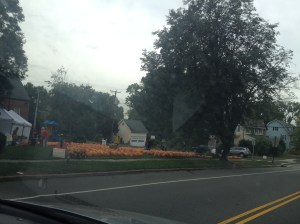
Bright orange pumpkins under a cloudy gray sky. October is surely here. But this is an urban area of the kind in which northeast New Jersey specializes. As I approach I see that it’s a church. A church that has made a truce with Halloween. Judging from the number of people here, it’s a cordial detente. So much of American society lies mired in contradiction that I have to ponder this. Halloween in an age of nones may be simply fun. An opportunity to spend money on pumpkins that won’t be eaten and gourds that can’t be. Decorations for a mildly scary night that somehow makes us feel comfortable and snug at home. October is like that.

Churches have been struggling to maintain active memberships. And although the antagonism has been overblown, Halloween has been an uneasy part of the church calendar. It has, however, become a major commercial opportunity. Depending on the commodity, only Christmas or Easter will draw more lucre from people. The devils and demons and ghosts of Halloween sit awkwardly in the pew next to the victory over death that is the main draw to traditional Christianity. But people will predictably spend their cash for the privilege of carving a pumpkin. Just the memory of the scent, the feel, the contentment of creating a jack-o-lantern makes me want to stop and support whatever denomination this might be.

It is a weekend, however, and I have many errands yet to do. I content myself knowing there are happy people in this temporary pumpkin-patch. The faith of Linus is a powerful thing. To get ready for the week ahead in which I’ll have time only for working, commuting, and sleeping, I keep moving. The orange fades from sight. The cheerful memories of childhood pass. I go on to my next stop. My first errand began at 6 a.m.this morning. Noon is fast approaching. I need a tiny piece of hardware that can only be found in a big box store. I prefer to support the local economy but that shop is all the way across town. Inside the Depot plastic Christmas trees of every description fill the front of the store with winter dreams of even more spending. I forget what I came in here for.
Dead Sea, Live See

501px-1qisa_b

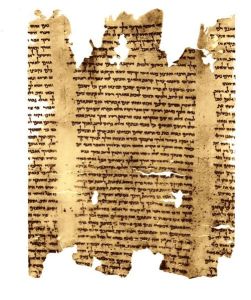
Nothing fascinates quite like the Dead Sea Scrolls. That is, unless you’re a disgruntled Ugaritologist. Mention the Dead Sea Scrolls and the journalists will form a queue. Never mind the relative importance of Ugarit. But I digress. There is something quite dramatic about the discovery and recovery of the scrolls. It involves science and sculduggery and that utterly captivating name “Dead Sea.” This past week the scrolls were in the news again as a new technology was used to read an illegible roll. The New York Times story by Nicholas Wade describes how something like a CT scan can be used to find the ink on an unrolled scroll and software can be devised that associates the ink to its nearest surface. A little virtual unrolling and you have a legible document that has no visible letters that the naked eye can see. Turns out this one happens to come from Leviticus. Figures.

You might think this would lead to joyful leaping on the part of someone who used to make a living reading ancient documents, but such are the times in which we live that even silver linings turn to lead. Years ago I learned about Van Eck phreaking from Neal Stephenson. I thought it was sci-fi, but in fact it is a legitimate—or illegitimate—method of reading a person’s electronic device without being able to see the screen. Since so few people are eager to read my blog, I can’t think anyone would be wanting to spy on my laptop. Nevertheless, with the advent of new technology that can—think about it—read a closed book, I have to wonder about the implications. Reading some dead scribe’s Dead Sea Scroll is one thing. Your sister’s locked diary can be quite another.

Being more of a clay-and-stick man, I was pleased when it was discovered that rapid flashes of light around the circumference of a clay tablet could lead to a virtual computer model that could be rotated 360 degrees with illumination from any angle. The technology had other applications as well, of course. (It certainly wasn’t developed to read forgettable texts.) With a clay tablet we can be reasonably certain that nothing too private was being impressed. But then that’s what you’d expect an Ugaritologist to say. It seems that my days of reading ancient documents are a closed book anyway. But that’s just the problem. Not even a closed book is safe any more. If I were in any danger, I’m sure it would show in my stats before anyone bothered to park a nondescript van outside my door and scan through all the countless tomes with which I surround myself daily. But I do wonder.


Two Thoughts

I recently read that efforts are underway, by some parties, to teach Arabic to Israelis. My limited experience of Israel led me to believe that most people were already bilingual, judging by the roadsigns. Like our progressive neighbor to the north, I supposed people were expected to know both languages passably well. Having forgotten more languages than I care to remember, I am a believer in language education. There’s no better way to get to know how people think than learning their language. In my hometown, which was small and not especially prosperous, there was only one language taught in schools. I suppose that was “practical” since we had no hispanic population and not even one ethnic restaurant.

Israel, in the modern sense, is a state formed where other people (Palestinians) had been living. I wonder if the conflict might’ve been somewhat ameliorated had the new neighbors spoken the same language as the residents. Thinking over the long and sad history of colonialism, I suspect that many of the world’s woes would have been less deleterious if those invading stopped to learn to speak to the locals. What would it have been like if, instead of taking their land and forcing them to assimilate, early American colonists learned to speak Indian languages? What if local schools were required to have been bilingual with the local nations? I can’t help but believe that things would’ve turned out much better for everyone involved. I can’t listen to the rhetoric of the right supremacists without seeking a safe place to throw up. Nobody is better than anybody else by virtue of their race. As they might say in Canada, “vive la différence!”

I’m not naive enough to believe that simply learning languages would solve the Arab-Israeli conflict. Nor do I think it would’ve stopped European imperialists with too much gold on their minds from taking the land that belonged to Native Americans. I do think that if people took the time to learn what their neighbors were saying, in their own words, we be less inclined to suggest that our program is the only way. Or to build walls. Or shoot unarmed citizens. We’ve lost the interest in learning to talk to one another. Language is more than just a bunch of words. Let the linguists argue about syntax. The rest of us might benefit simply from learning to listen, and to understand.

img_2969


What Did You Say?

inpraiseofprofanityThis driver and this passenger had interacted before. Unpleasantly. You could feel the tension mount when the passenger watched carefully to see who the driver was as the bus pulled up to Door 1. Although bus routes change drivers somewhat frequently, there is a regular driver to my route and this passenger, like a cat sensing the visit of a nasty relative, wanted to see if it was safe to come out. It was the driver he didn’t like. He got on anyway. An argument started, since he always sits in the front seat, just across from the driver. A profanity worked its way into the conversation. “No blasphemy on my bus!” the driver warned loudly. I couldn’t help but smile. I’ve sent author contracts from respectable academic presses where the author has to sign that nothing libelous, blasphemous, or obscene will be included in her/his book. Blasphemy still sets some people off.

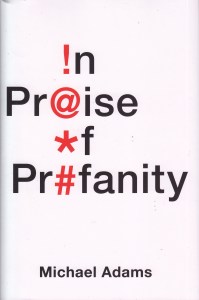
Michael Adams’ In Praise of Profanity isn’t an easy book to read on the bus. The dust jacket can be removed, and that’s a plus, but the guy who sat next to me on last night’s commute took a good, long leisurely look at the page I was on. Bad bus etiquette, but then so is falling asleep leaning on the stranger next to you (which he also did). Speaking of bad things, In Praise of Profanity makes the reasonable case that there are no “bad words.” Bad intentions, to be sure. Bad choice of when to utilize certain vocabulary, certainly. Bad words inherently, no. And the book will take you into some strange places to demonstrate this. The section on bathroom graffiti makes the point nicely.

Adams does discuss, briefly, the religious objections to classical profanity—taking God’s name in vain. Having grown up with all kinds of circumlocutions (more technically, I learned, euphemisms) for interjections one must not say, it was interesting to note that nearly all our pseudo-swears go back to violating this prohibition. Even “Jiminy Cricket” was a not so subtle riff on the name of the carpenter from Nazareth. Gosh, golly gee. All three disguised blasphemies. Being a linguist Adams takes this particular analysis with a healthy dose of fun, but there are many people I know who would be quite offended by this study of the vulgar way vulgar people speak. At the same time, looking at what words like “profanity,” “obscene,” and “vulgar” mean, we might need to head back to the lexicon to learn just what species of blasphemy it is to which my driver objects.


Banned Books

I feel short-changed. Cheated, if you will. This is Banned Book Week, and a story in Publishers Weekly over the summer touted the benefits of the local independent bookstore. Owners of indies know that these stores are centers of community. Gathering places for those who love literature. I feel cheated because my local town has no independent bookstore. Neither did any of the towns where I grew up. For a year when money was almost as scarce as it is now, I lived in Ann Arbor, Michigan. There were bookstores there. For a couple happy years before that I dwelt in Boston—a city in which books are never difficult to locate. Edinburgh is known as one of the literary capitals of Europe and my days in that magical city were inundated with books. Even Nashotah House, with its somewhat backward facing eyes, had a little bookstore. And there was another indie over in nearby Oconomowoc. I now live in the desert.

Oh, there are bookstores nearby. Independent ones, I mean. When’s the last time you saw a chummy conversation among locals at Barnes and Noble? Princeton has the Labyrinth. Bernardsville has the Bookworm. New Hope (while across the river in Pennsylvania) has Farley’s. There’s an indie in New Brunswick and I discovered Watchung Booksellers in Montclair just a couple of weekends ago. Clinton has a tiny little shop where my daughter once met a children’s author doing a book signing and I picked up some Ray Bradbury. These are my happy places. All of them require a drive of at least half-an-hour. I’m not a local. I don’t see anyone I know, except some of the clerks.

Analysts have been saying for decades now that we live in unhealthy isolation from our neighbors. I get up and jump on a bus before most houses show any lights in the morning. I stumble off and fall into bed after eating supper following the return trip. I’m not alone in my attempt to survive in this late capitalist purgatory. One thing that would help, I believe, is a local bookshop. There used to be a used bookstore in my town, called Chapter Two. I used to walk there of a Saturday morning, just to browse. Rent grew too high and it moved to the next town over and its name changed to chapter eleven. My local town is affluent. There are signs for Trump everywhere. What’s obviously missing is a local independent bookstore. I, for one, would be a regular patron.

img_2968


A Dusty Return

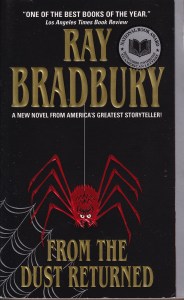
dustreturnedThe fiction author who had the most influence over my formative years was Ray Bradbury. Wait—let me qualify that a bit. I read of number of series aimed at juvenile, male interest (Doc Savage, Dark Shadows, and such) but these weren’t really intended as “literature.” I also read quite a bit of Poe, and his influence may certainly have rivaled Bradbury. The thing was the latter was still alive and producing books, mostly of short stories that tickled my imagination. Despite my reluctance to let books go, there have been several periods in my life where I’ve had to sell off my collection (this is the mindset of the non-affluent) and all of these childhood collections went, except for Poe. Now that I’m a more reflective adult, so I’m told, I have found a renewed interest in some childhood classics, and Ray Bradbury books are seldom expensive. When I found From the Dust Returned in a used book shop for a steal, I said “why not?”

This particular book came from long after I’d sold my Bradbury collection. I had never seen nor heard of it before. As an adult, interestingly, Bradbury doesn’t seem scary at all. From the Dust Returned, like many other Bradbury collections, is a somewhat novelized set of stories. This one is set in a haunted house where, in his usual descriptive style the storyteller offers artful prose and painterly writing, but no real scares. As we are coming upon Banned Book Week, however, I did note one of Bradbury’s common themes—the lack of belief leads to the death of characters. I’d read some of his stories where this took place before. Still, this time he goes a bit further. Tapping into things just ahead of the rest of us, as he had a talent for doing, one of his characters laments the loss of belief in religion as well as creepy, Addams-esque characters. People are no longer believing and it causes ghosts pain.

Part of Bradbury’s appeal is clearly to the young imagination. I’ve promiscuously read hundreds of authors since my last Bradbury book. My tastes have evolved. I find the same is true when I go back to the Dark Shadows books that were so cheaply had at my neighborhood Goodwill. I still go back to these early writers, however, and there is a kind of innocence about them. These were stories I’d read before I’d learned that Poe was certainly not as macabre as real life could be. “Marilyn Ross,” “Kenneth Robeson,” Edgar Allan Poe, and Ray Bradbury may not feature of lists of banned authors. Some of them aren’t even whom they seem to be. They did instill a childlike belief in reading, in my case. Even if they’re now on the bargain shelf they will still receive my admiration for starting a lifetime of reading.


On Practicalities

In a world where a metaphorical ton of money may be made by corralling electrons into specific shapes on an LCD screen, it may be easy to think of learning dead languages as a kind of autoerotic mental enterprise. Who has the time for clay-writing anymore? We have “money” (that we never see) to “make” at the click of a mouse. Although honestly, who uses a mouse anymore? So it was strangely gratifying to see Aviya Kushner’s article “Why Dead Languages Like Akkadian Still Matter” on Forward. Unlike Kushner, I didn’t grow up with exotic dead languages. Not even Hebrew. We took our Holy Bible neat. King James, of course. In English, just like God meant it to be. When I’d read every English translation available in my small town, I began to wonder about the original languages. I taught myself the Greek alphabet before going to college, but even at Grove City I couldn’t find any faculty willing to teach Hebrew. There was obviously something mysterious here.

Hebrew, generally printed in a calligraphic font, is difficult to teach oneself. Once I began, however, I had to learn what came before. That alien, runic Phoenician script fascinated me. Cuneiform even more so. I spent my graduate years pondering over Ugaritic, learning as much Akkadian as I could along the way. Then I realized Sumerian might take me even further back in history, but it was time to get a job. Earn a living. Make some money. Or at least some electrons.

img_2965

As Kushner shows, however, these ancient languages tell us how we got here. Those who earned their own day’s equivalents of millions of electrons used to spend their excess wealth on ancient clay tablets. I’ve seen them in private collections in various parts of the world—they seem to validate those who can’t even read them. Artifacts can be status symbols. Having spent years learning the finer nuances of Ugaritic, I eventually had to put my interest into my own personal museum. Universities—the only places that can afford to offer doctoral programs in impracticalities for the unwary—are the sole bastions of employment where cuneiform might come in handy. The irony is that many scholars have to travel to private collections to examine a tablet that some entrepreneur has purchased, but can’t read. Its meaning is lost to the world, but it is valued for it’s power to confer status on its owner. Those who might be able to read the thing, unless they are very lucky, will be out chasing electrons in the hopes of paying the rent. What could be more practical than that?


Enter the Labyrinth

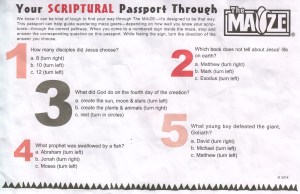
Trying not to think too much about Children of the Corn, I visited a corn maze over the weekend. This particular autumnal activity highlights just how much detail a human mind can pick out in a mass of sameness. You can tell if you’ve been to this particular juncture before—that oddly shaped leaf, or that peculiar stone, or that specific ear with the missing teeth will give you the clues. This particular maze, however, also uses printed clues. Before you enter the labyrinth, you may choose your species of guidance. There were 4-H clues, Girl Scout clues, history clues, and more. One of my companions handed me the scriptural clues. Although it may have been an obvious connection, I thought about it in terms of salvation. A corn maze is not unlike life in the real world; confusion, false leads, and aimless wandering. Having a guide—in my case, knowing the Bible—will lead you out.

corn-maze

Of course, the point of a corn maze is the fun of getting lost. This particular farm had eight acres dedicated to fall fun, and our party did get hopelessly mired in one location and had to ask for help from the corn cop who wanders like a friendly minotaur, or maybe a personal Daedalus or helpful Ariadne, directing those who’ve lost their way. The idea is that once you enter the maze, you look for numbered clues at various junctures—only a few crossroads have them—and answer the question for instructions about which way to go next. Even with the Bible in hand, or in head, we managed to lose our way. Baptized by a sudden cloudburst, we sought shelter in an open field. The only way ahead was to press on.

Those who’ve been with this blog for any length of time know that it is intentionally kind of a labyrinth, often using metaphor. In the case of the literal corn maze and its clues, minimal biblical knowledge was required to figure out the correct way to turn. The trick was even after getting all the hints, there was still some distance to go. Wet, confused, and having only our wits to go on, by trial and error we made it through. Our instructions—for we each had a different set of questions—only got us so far. My biblical guide was damp and see-through with the soaking we received. Metaphors were falling as fast as the rain. After all, the point of a corn maze is that you don’t get your money’s worth unless you get well and truly lost.


Reflecting Ourselves

There once was an old man from New Hampshire. No, this isn’t a limerick. He was famous enough to get his face on the state quarter, back when they were doing that state quarter thing. Then he fell. The Old Man of the Mountain was no more. We like to see ourselves in stone. On a trip with my wife and a couple of friends in my post-grad days in Edinburgh, we were driving around the Isle of Skye. The largest of the Inner Hebrides, the island has a mysterious natural beauty. One of the most famous monuments on Skye is the Old Man of Storr. Postcards always show it to be a rock pillar jutting up by itself at the base of a mountain. As we approached the old man from the north, I got the joke. My friends still dispute it, but if you look at the mountain crest above the pillar, it forms a perfect profile of an old man’s face. Then what is the rock pillar? It’s just the right distance from the old man’s face to be, well, you get the picture. I’m convinced that those from Skye laugh at all the tourists taking a picture of the old man’s naughty parts.

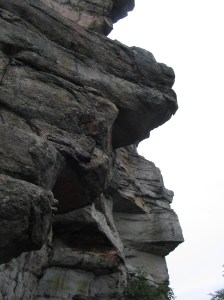
The technical term, as I’ve discussed before, for seeing that which isn’t really there is pareidolia. Some people call it matrixing. Our brains, wired to see other people, often see them where they don’t exist. The Old Man of the Mountain formed a passable human face before the rock face collapsed in 2003. This past week I read an article in the Washington Post of the collapse of Duckbill, a rock formation in Oregon’s Cape Kiwanda State Natural Area. Like many cases of pareidolia, this rock pillar was only seen as a duck by those whose brains make the connection. People like to go see that sort of thing. It makes us feel less alone.

Do you see it?

Do you see it?

The article by Cleve R. Wootson Jr., however, points out that Duckbill didn’t jump. He was pushed. A group of eight guys, caught on video, rocked the pillar until it toppled. This is why we can’t have nice things. The deliberate destruction of monuments is a crime, and the culprits are being sought. Make Way for Ducklings, the Robert McCloskey children’s classic, was cast in bronze in Boston’s Public Garden. In 2009 vandals stole one of the ducklings, which was quickly replaced. It’s difficult to understand the mentality of those who wish to destroy our duckbilled friends. Yes, Duckbill was only rock. No, I never had the chance to see it. As long as the Old Man of Storr lies recumbent in the Scottish highlands, however, we will have grounds to wonder.


Hi Ho, Hi Ho

I’ve been writing about reading. No surprises there, I suppose. My wife recently introduced me to BookRiot, and I wish I had more time to spend there. A recent post by Aisling Twomey describes how reading on her Tube commute helps keep her sane. Here is a good case of convergent evolution—I came to the same conclusion after about a week of what turns out to be about three hours a day commuting to New York City. We didn’t move to my current location to work in Manhattan. My job was in nearby Piscataway. It was only when a headhunter found me a job at Routledge that I began the daily trip. The problem is I get terribly car sick. To this day I can’t read in a car. Some days I can’t read on the bus either. Gradually, however, I trained myself to do it, and the results have been worth it. Ms. Twomey has read over fifty books this year on her London commute. I suspect my commute is a bit longer since I’ve read a few more than that. Still, we tilt against the same windmill, so we need to appreciate the dedication it takes.

I was talking to someone the other day who was complaining about cell phones. She said, “I used to read a lot. I worked in a book store. It was great.” Her cell, she said, gave her a stiff neck from constantly looking down. And a sore thumb from swiping and texting. And yet, she lamented, she just couldn’t stop. Books may well be a vice. I’m as bad as any addict. I have no idea how many books I’ve read in my life: the number is in the thousands rather than the hundreds, I know. And even the books I regret, I don’t really regret. Reading is a coping mechanism.

img_0670

One of the things that the traditional ancient religions all have in common is books. Not all of them treat sacred texts the same way, but they all have some form of sacred writing. There was an implicit sense, I believe, from the first stylus on clay, that something truly special was going on here. Holy, even. Writing is one of the great joys of life. Reading is another. Both are sacred professions. In a way it seems a shame to have to be forced into a commute in order to find time to read books. Still, the constant flow of new material has a life-saving quality to it. I can’t imagine spending fifteen concentrated hours a week texting. I don’t know that many people to text. The ones I do know I know through their books. And they’re very good company on a long ride.


Lingering Memories

Visiting northwest Pennsylvania always makes me think of oil. I suppose the fact that I attended high school in Oil City has something to do with the fact. Many people suppose that the oil industry began in Texas, but Pennzoil and Quaker State have earlier roots back to the days when people flooded to Oil City and Titusville to get rich from the petroleum underground. I grew up in a refinery town that is becoming a ghost town, like Pithole City and Petroleum Centre before it. And when I returned home to New Jersey I wanted to find my Oil City book. Yes, there is a book. I first saw it in junior high school and I coveted it. Hardbound and large format, it was a book about my town. I had no idea where to get one, however. There were no bookstores in Oil City, or nearby Franklin. Any further afield than that and nobody cared.

I used to work as a janitor in my junior high school. It was my summer job for several years. One day our task was to haul out the garbage bins. I saw my opportunity. The library was discarding several copies of the book. They were in the trash. I dumpster-dived for the first (but not last) time in my life. I had the prized book. It had been locally printed. There is no publisher listed. It bears no ISBN. Nothing like a book to validate where you’re from. You see, I’ve always wanted to write a history of the area where I grew up. No major publisher would touch it—it can’t possibly sell enough books to cover its costs. It would be a labor of love.

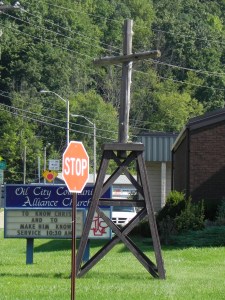
Not that I’m a fan of Big Oil. Quite the opposite, in fact. I don’t appreciate their proprietary arrogance toward ownership of the planet. Of their pollution of the world to gain more money for themselves. I support alternate energy. But still. This is where I’m from. Not that anybody’s making much money off of oil there these days. The shallow wells ran dry long ago. The local oil companies were bought out by larger corporations but they kept the local names. Once in a while I pull out my old, salvaged Oil City book and scan the pages with wonder. Many of these towns wouldn’t be here if it weren’t for the prehistoric sludge that flowed under the rocks and stones. It’s easy to believe that the town would stay the same forever. Heading out of Oil City there is a church. A crude cross stands atop a truncated oil derrick. I stare at it and the irony is only half complete.

dscn6574


Pay Attention

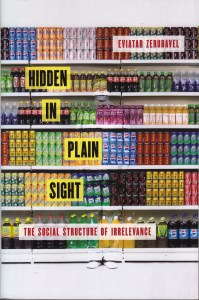
hiddenplainsightIt happened in seventh grade, but I remember it vividly. It was music class. I’ve always enjoyed music but have never been able to make it without the assistance of a device that plays recordings. This particular day, however, Mr. Butler gave us the assignment to write down whatever we heard for about ten minutes. He told us to start and I began listening. Hard. I didn’t want to miss a thing. When time was up he asked some people for their answers. The first person said the sound of Mr. Butler’s footsteps as he walked to his desk after saying “start.” I was utterly shocked. How had I missed that? More answers emerged and my sense grew that I was completely inept at hearing things—well nigh deaf—since I had only heard the sounds that I was listening for. Hidden in Plain Sight: The Social Structure of Irrelevance, by Eviatar Zerubavel, makes me feel a little better.

A lot has happened since seventh grade. I have now realized that I’ve missed most of it. We filter out stimuli constantly. What is really interesting about a sociologist’s look at what we fail to notice is that we often miss important things in life by assuming that figure is more important than background. Or that space between things is less important than the objects themselves. Or that we can indeed listen for silence instead of sounds. It is a matter of how we perceive things. There are millions of stimuli bombarding you right now. I’m flattered that you’re even bothering to pay attention to my musings here. Are you also feeling the clothes you’re wearing? The shoes on your feet? The taste of either your last meal or the toothpaste that might have followed it? We shove things into the “background” all the time, including other people. We can’t pay attention to everything.

Interestingly, Zerubavel raises the issue of moral inattention. We do sometimes consider things outside the realm of moral consideration. But should we? What are morals if not an indication of what society has taught us to value? Indeed, social attention, or inattention, teaches us from our earliest days what is safe to ignore and to what we must pay attention. It helps us survive. Reading this little book, however, has left me wondering about all the things I have habitually missed through the years. Some of them may have been important. Sitting in a silent room, after all, I failed to notice the sounds of my own pencil scratching on paper, writing down all the sounds I was hearing.


Paper or Plastic?

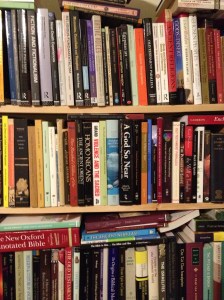
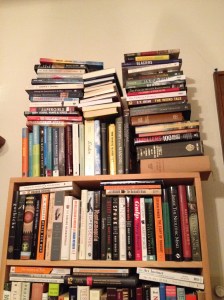
Perhaps the most frequent topic on this blog is books. I don’t discuss every book I read, but most end up here. I can’t help but be pleased then, that recent polls show the number of people reading books is rising. Not only that, but that paper is back. We all appreciate new things. In fact, our economy would grind to a dead stop if it weren’t for new things that keep us buying. Ebooks were a new thing. Sometimes they’re even convenient things. If you’re going on a trip and you tend to travel with lots of books, like I do (who knows what mood you’ll be in when you get there? You’ve got to be prepared!) then an ebook reader can save stress on your back and luggage capacity. But I still prefer to zip open my bag and see four or five books smiling up at me. Visitors (rare, but not completely fictional) sometimes ask why I keep them all. I must restrain myself from retorting “why do you keep all your children?”

img_2945

Books—print books—represent so many things. Yes, they often contain knowledge. But they also contain memories. The contain emotions too. I remember that book that I saw in the library window at the University of Wisconsin Oshkosh book sale display. I was only at Oshkosh one year, but I recall seeing the book that my advisor had recommended a decade and a half earlier. I was so excited I called the librarian to ask if it could be put on hold. He allowed as it couldn’t but if I were to pay in advance perhaps another book could be substituted in the display. I remember having my worldview torn open by books—that January that I read three books that changed my outlook on life almost completely over Christmas break. How can I bear to let any of them go?

I suspect ebooks were a fad. They are still useful and they still sell. But is there any feeling like taking a book, closing the back cover, setting it on your lap, and thinking about what you’ve just seen? I know nothing like it. Of the many books I’ve written, only two have been published. In some sense, those two are the only two I’ve done. I keep trying with the others, but meanwhile out there in a few select libraries people can find bricks of paper with my name on the outside. It wouldn’t been the same if the publishers had said, “it will only be an ebook.” I know that it shouldn’t make a difference if its paper or plastic, but it does. It makes all the difference in the world. No matter if it means having to build more bookshelves. They make excellent insulation.


Becoming the Past

Back home for a flying visit over the final dregs of the summer, I find myself in a hotel in my hometown. It’s an odd place to be. As I’ve often remarked to those who know me, I remember living in three houses in this area and all three have been torn down. Looking over the vacant lot where my elementary school once stood, I have a feeling of being erased. Just up the hill from my hotel is a blank space, like when a molar has been removed, where my junior high school once stood. Even the seedy shops I remember from childhood are gone, an entire block of buildings torn down. Wal-Mart opened up just a couple miles away outside of town, and all small businesses got down on their knees and prayed before dying. Being from somewhere is more than just a matter of going away. It’s also coming back.

IMG_2930

Standing outside in the misty morning sipping my coffee, I watch the river flow. There’s a fog rising over the Allegheny this morning and it makes this place look mysteriously beautiful. I think back to New Jersey, where I was at this time the day before, and how I can’t step outside without seeing other people. I go jogging at 4:30 in the morning sometimes. I’m never alone. On this balcony over the river I see no one. That person down by the river is really just a statue. Maybe I am too. What is left of a person when their hometown disappears? My fascination with ghost towns is catching up with me. Once someone said they thought I disliked small towns from the way I talked. Quite the opposite, the statue whispers. Quite the opposite.

If it weren’t for the people I know, would I ever come back here, I wonder. The warm coffee through the styrofoam cup reminds me of Judas. Even he knew how to kiss. This town, shrinking with age, gave me life. When I stamp the streets of Manhattan on my way to work, I know I’m a different man than I was back in this town. I would’ve found it difficult not to want to help anyone in need, back then. This homeless guy’s been sleeping in the same spot all week while millionaire wannabes look the other way. There’s a mist on the water this morning. The Allegheny flows on to the Ohio, and the Ohio on to the Mississippi. Down into the gulf that’s part of the ocean than encompasses us all.


Finite Gods

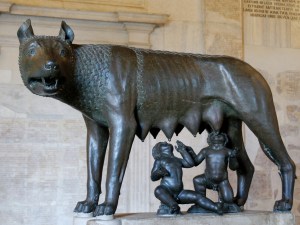
Just how many gods are there, anyway? Well, that’s not really a fair question. For one thing, do I mean “real gods” or gods that people believe in? Do I mean “believe in” or made up? Do I mean “made up” or intentionally fabricated? And the nesting questions could go on and on. Over the years in my professional capacity as an erstwhile teacher, I accumulated books listing the deities of various cultures with brief descriptions. I once even argued that using “god/goddess of” (the divine-genitival construct) as a phrase distorted ancient concepts of divinity. The fact is people have believed in many gods in many different ways. As modern scholars of religion we’ve only begun to reach the heavens (or underworld, or anywhere in between, for deities may be found anywhere). This issue comes to mind because a friend recently shared a story from IFL Science about a new Etruscan goddess. The piece by Ben Taub mentions a stone recovered from Poggio Colla, a site in Italy, written in Etruscan. The stone seems to mention a new “fertility cult” goddess. And once again religion and science have met, but not quite kissed each other.

Photo credit: Jastrow (2006), Wikimedia Commons

Photo credit: Jastrow (2006), Wikimedia Commons

Let’s begin with the Etruscans. Before the Romans, Etruscans lived in Italy, giving Tuscany its name. We know very little about them, as their language (Etruscan) is rarely found and imperfectly understood. Some of the classical gods may go back to Etruscan originals, and the Etruscans seem to have known of at least some of the cultures of the ancient Near East, or ancient West Asia. We have no idea how many deities the Etruscans recognized. Polytheism, for all its heathenish exuberance, never had a problem with adding more gods. Interestingly, the “new” goddess mentioned here, Uni, is someone I used to talk about in my Rutgers classes on ancient Near Eastern religion some five-plus years ago. Pardon my crowing—I seldom get to suggest I was ahead of my time.

What really interests me here is that websites that advocate science still take an interest in religion. Although belief is relegated to inferior minds (generally) science does admit, from time to time, that it’s interesting. The study of religion, in at least some schools, is a scientific enterprise. No, we don’t put gods under microscopes (telescopes might be more useful) but we use the same techniques as empirical studies of nature use in order to try to draw some conclusions about religion. Despite the fact that the vast majority of humans on the planet are believers, higher education has consistently under-funded or disbanded departments who apply rational thought to religion. We suppose that someone else can pick it up and study it, coming to useful conclusions without putting in all the homework. Don’t mind me, though. I’m just basking in the light of having known about Uni years before she was discovered.