
I’m on vacation for a week. My job is such that taking vacation is becoming a rare commodity, what with precious few allotted days and move-in, move-out schedules of a collegiate child, and so on. And also company policy about keeping employees in the office between Christmas and New Year. Anyway, now that I’m here I should be kicking back and enjoying the beautiful lake and getting out to do the things inmates of the city seldom do. It has, however, rained every day that I’ve been here. Not all-day rains, of course, but just enough that plans have to be interrupted or changed at the last minute. I end up sitting in the cabin playing Solitaire when I should be out getting some fresh air. So it goes.
Ironically, I am staying in the drought-stricken west. The western United States, I learned when researching for Weathering the Psalms, has been ensconced in a decades’ long drought. In fact, prior to my family trip here it hadn’t rained in quite a while. Our arrival with the clouds was, after all, mere coincidence. Still, it’s hard not to take the weather personally. I know that the weather is larger than any one person’s needs or desires. I also know that water is a commodity even rarer than vacation days, largely because of our misuse of the limited supply that we have. California’s plight has been in the news. We have large cities in water-challenged environments and people treat water like there’s no end to its abundance while the opposite is the case. Just thinking about it makes me thirsty.
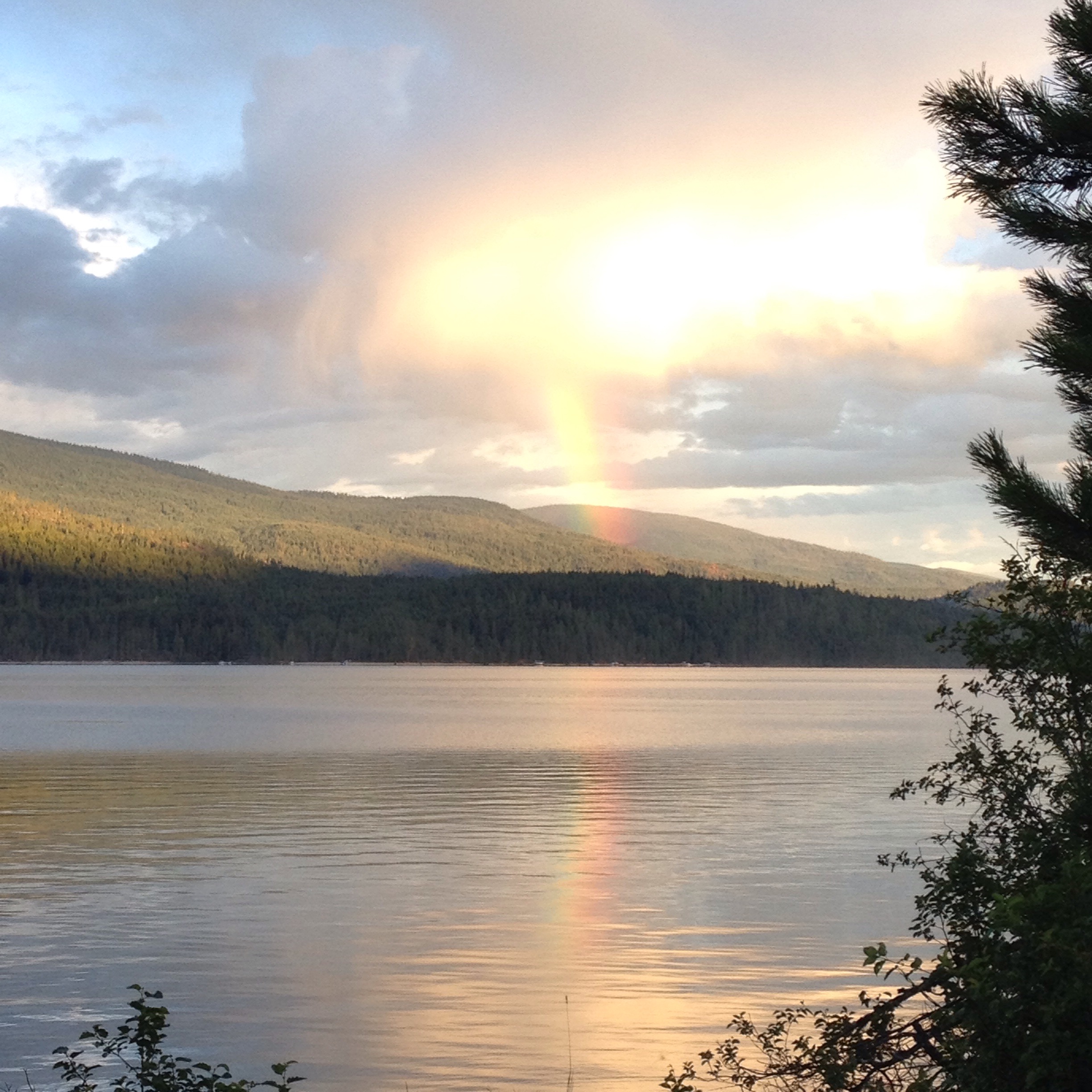
There are many things a person can go without, some of which feel absolutely essential at the time. Many vacations, I know, are extravagant. Fancy hotels, high-priced entertainment, exotic locations. Work can feel so crushing that vacation my become the one island of sanity in the midst of a hostile ocean of obligation. For me, vacation is time with family in a stripped-down, natural setting. Of course, we do indulge in some of the comforts of home, but having nothing in view outside the window beyond that which nature dictates is a transcendent experience. From where I sit, I can see nothing of human artifice. I do see clouds, however. I know that more rain is on the way. And I know that it is a gift, complain as we might, of the highest magnitude.
Ancient Tech
I feel like scraping Roman numerals on the wall of my cave with a sharp rock. One for each day I have to spend without my laptop. I’ve been working on this blog, born in this very cabin in which I sit, for six years now. With some exceptions, I’ve posted something new (and, I hope, thoughtful) every day. Even holidays and weekends. Most of those posts have been written on the deceased laptop that’s sitting in my carryon, electronic carrion. This has caused me to stop and consider that the most lasting words—the ones we all quote or at least recognize—tend to come from a far older form of communication technology: the pen and paper. Of course, there are older technologies yet. The Sumerians figured out that clay of the right consistency keeps marks made by a pointed reed pressed into it while it was still damp. Cuneiform writing lasted for millennia as the most advanced technology humanity had devised. The results, however, were bulky, heavy, and fragile. Few could learn the technique. It was an elite skill.
Nobody quotes the Sumerians anymore. Well, maybe the occasional quip from Gilgamesh will work its way to memory, but not much else readily does. The Bible, perhaps the most quoted book of all time, at least in western culture, wasn’t written on clay. By the time the earliest books of the Bible came along, scrolls had been developed. Probably suggesting itself from the way that papyrus naturally rolled up, this early form of paper—indeed, the word “papyrus” gives us our word “paper”—could be marked up with styluses or brushes and ink. Prepared animal skills, or parchment, sometimes called vellum, could also be used, but they were expensive. Pens at this period were sharpened objects dipped into ink, but the most famous words, well, penned by humankind were passed down in that medium. Copied, recopied, memorized. Electricity hadn’t even been discovered yet.

Printing presses and their children—typewriters and the consequent qwerty—have led the way since they were invented. Until, however, the 1980s at least, professors would accept only the old fashioned manuscript for papers. Indeed, the medium had given its name to the end result. We still write academic papers, although they are more often published and read electronically. So here I find myself in a cabin on a beautiful lake, surrounded by nature, worried about a communication device that can speak with the stars. There may not be workable clay here—the soil is far too sandy and I don’t have the patience to look up how to make clay on my phone—but there is paper. Pens are scattered everywhere. I am at home in the matrix that has given us the great ideas of humankind.
Death, Technically

Those of you who punish yourselves by reading my posts regularly may wonder at how different my last couple of posts have been. “Vacation” in and of itself is sufficient explanation for the out of the ordinary—different time zones, unreliable grammar, a certain dreaminess of topic (this is why we should all take plenty of time off work). In this case, however, there’s more to it. My wife injured herself the night before our early morning flight, and although she’s recovering well, another traveling companion is moribund. My faithful laptop that has traveled the country, indeed, crossed the ocean a hextad of times, died in its sleep on the flight over. I shut it down before climbing aboard the plane, and when I tried to boot up after that, nothing. Not friendly Apple starting tone, no wink from the camera, no sign of life from the screen.
I pulled out my phone as soon as I landed and asked Siri if there was a Genius Bar nearby. I was headed into remote parts, where shotguns are far more common than laptops. I had projects to accomplish in the rainy moments. I had a couple of readers to keep updated. Could the geniuses perform a miracle? Alas, the schedule was unforgiving. I hadn’t made an appointment and even though I’d been pouring money into Apple products while the genius before me was in still in diapers, I was up a proverbial (as well as literal) creek without an Apple. He halfheartedly gave my keyboard some kind of Vulcan finger combination pinch, but the look in his eye was definitely more Klingon.
I remember coming to this remote cabin before cell phones were invented. People were just beginning to whisper about this rumor called the Internet. People still wrote each other letters. And here I am in downtown Spokane, weeping over the dead device in my lap. It had its limits, in any case. I can’t take it into the lake with me. It needs, at its age, never to wander too far from a power outlet. And yet, it holds all my darkest secrets and most enlightened ideas. And my thumbs are too fat for typing on my phone. Looking out over the mist dancing wraith-like across the Saran-Wrap early morning surface of the lake, I see two bald eagles fly by. Surely I wouldn’t have seen them had I been behind the large screen of my departed friend. These are, after all, communications from the very edges of civilization, and technology may not, all things considered, save my soul.
Skewed Perspective
Mysterium tremendum is the term often applied to numinous experiences. The sense of being in the presence of something both terrifying and compelling. Used to describe theophanies and divine encounters, it can also apply to entirely natural phenomena. As a child I visited Niagara Falls since I had relatives in the region. I would watch the Maid of the Mist with a fascination bordering on paralyzing fear. The boats seemed so small compared to the roaring falls. Surely serious danger was involved. Stories of passengers returning soaked and wind swept from the thundering cataracts only added to the mystery. We were poor, however, and couldn’t afford the thrill.
Many years later I returned with my own child. It was time to make an impression. We boarded the boat and came so close to the Falls that the draw of the numinous was overwhelming. Naked power. This water, were we not safely on a boat, would obliterate us, snuffing our lives with no more effort than it takes to fall from a cliff. A mere human could stand none of it. I was simultaneously humbled and invigorated. This was like touching a source of ineffable vitality. This was no mere boat ride. I was in the presence of something undefined. Distilled force deadly and blessed.

On my flight across the country yesterday, we flew over the Great Lakes. Between Erie and Ontario, we spied Niagara Falls. Navigating by air is usually a matter of inspired guesswork with me, but this was unmistakable. A large river near two Great Lakes, and a large misty curtain of spray, visible even from this altitude. Any remaining doubt was dispelled by the captain’s announcement . Here was one of the wonders of the natural world, tiny and silent from a gods’ eye view. Perspective, it occurred to me, made all the difference. Standing on the rim of that watery canyon, although the river is dammed and reduced, encompasses a sense of awe. Riding the Maid of the Mist close enough to be baptized in this unruly Jordan even more so. From above it was but one among many tiny features of a miniature landscape that had been conquered by an unnatural technology. Which was really real?
All Relative
Among the most compelling questions raised by consciousness is “where am I from?” Humans are a species of widely traveled individuals and despite the fiction that we all derive from happily married couples, we often end up distant from our relatives. Over time we may forget who they were. Our descendants, however, may be very curious. I have spent some time, over the years, climbing my family tree. It’s endlessly fascinating because you find that the research is about people’s stories, not just who was coupling with whom. Those of us of non-American ancestry who live in America often wonder how we came to be here. Families preserve stories, and sometimes those stories are embellished over time. I’ve spent more than an afternoon or two in county clerks’ offices thumbing through records to try to push things back just one more generation. Who were these people who led to me?
The Mormons, among other aspects of their theology, have contributed greatly to genealogical research. It is an American religion indeed. My family recently gave me a DNA tracing kit, run by ancestry.com, as a gift. Although it wouldn’t answer all the questions about my background, I suspected it would either confirm or deny some of the stories. The results just came in, and, amazingly, family stories were right about on the mark. I’ve always called myself an “American mutt” but it would have been more accurate to say a “northern European mutt.” Mostly Germanic, English, and Irish, I fit into the typical early settler paradigm. There are minor traces in there that I’m not sure I understand, maybe less than one or two percent—some Asian, some African. All of this will take more research. You never really find out who you are. Completely.
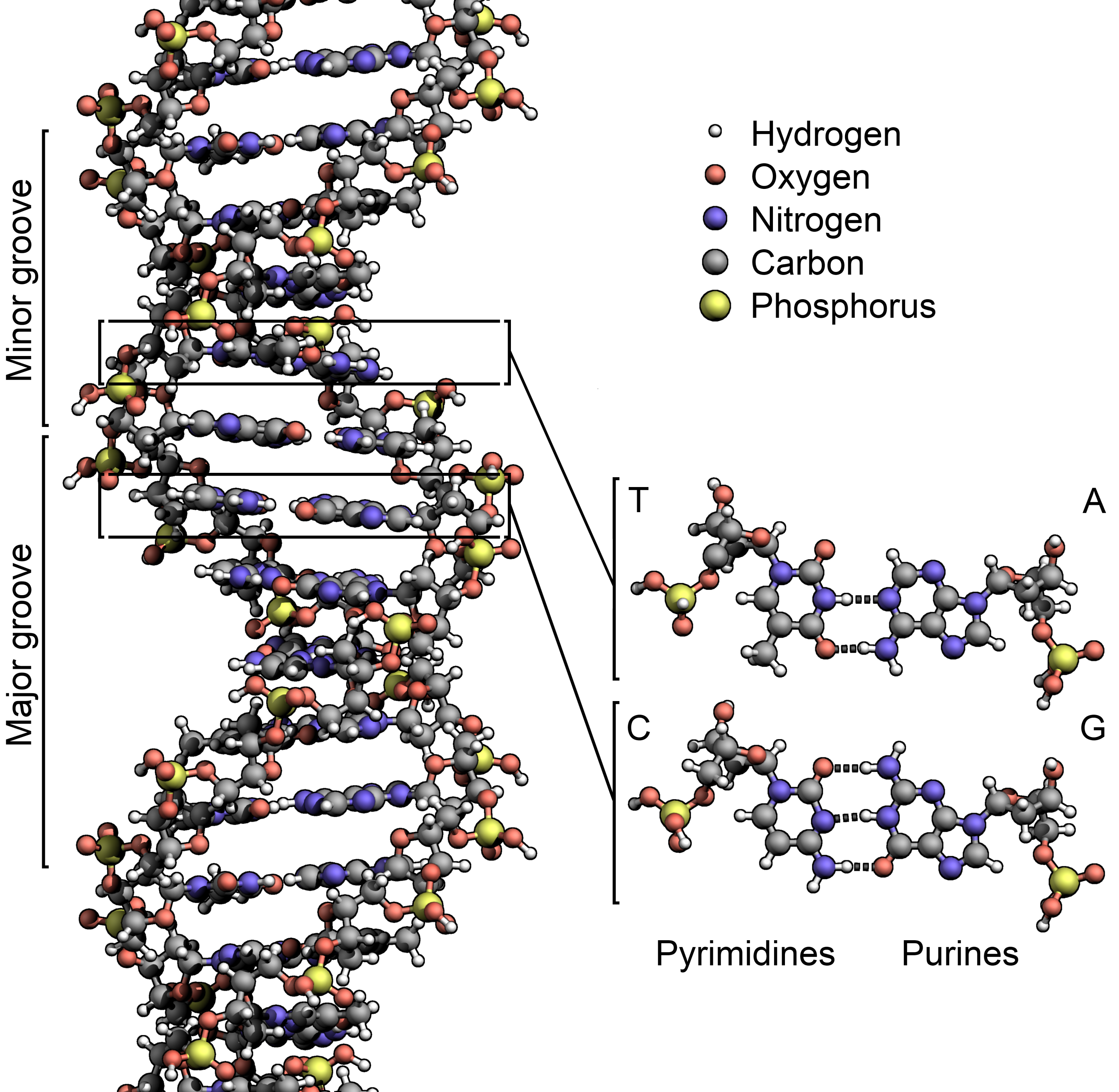
Image credit: Zephyris, Wikimedia Commons
DNA testing is the stuff of science. It isn’t a precise science in that it can’t tell the stories of those ancestors. It takes family tradition to do that. I know that one Irish ancestor stowed away on a ship and she arrived in America not as a paying passenger. I know another branch came as a German engineer and his wife, and that their son opened a bakery. Some of the branches have been here since the Revolutionary War, but they were also germanic—were we Hessians? I haven’t had time to read through all that the Mormons have discovered about me, but I’ve got a pretty good idea that family tradition hasn’t failed me here. While the stories can’t themselves be confirmed by the science, they are not inconsistent with the results. And when it comes to finding out who’s your daddy, the answer really depends on how far back you look.
Law of Rule
Anyone who believes in the rule of law has never been on a broken down NYC commuter bus. There’s a rare kind of tension among the early morning commuter crowd. To put this in context I should say that I awake at 4 a.m. to catch the first us through town, five days a week. I’m usually somewhere between four and six on the passenger count, but if lots of people need to be in New York before sun-up, I may be as far down as 10. I select my seat with care. I tend to sit two seats behind the driver. I prefer the right-hand side of the bus, but there’s a regular who sits there and, I’m given to understand, she’s been doing this for over a decade. So I sit left. It’s never a good portent when I end up having to go four or more rows back. You see, the buses usually unload in a fairly orderly way, the front rows get out first, and each row takes its turn. Since too early is never early enough to be at work, I sit near the front because in the back you can lose precious minutes waiting for those who are sleeping to rouse themselves enough to find their feet and stumble off. If it sounds like I’m overthinking this, it’s because I’ve been awake since before four and how you start your day sets the tone. Where’d I put my coffee? Arriving at the office frantic and sweating isn’t the best way to impress anyone.
There’s a kind of comfort at being at the end of the line of service. Of course, the commute home means you’re on the bus longer than people who can afford to live closer to the City. First on, last off. Although I easily fall prey to motion sickness, I have taught myself to read on the bus. An hour in and two hours out are goodly amounts of time to really get into a book. I hate to waste time.
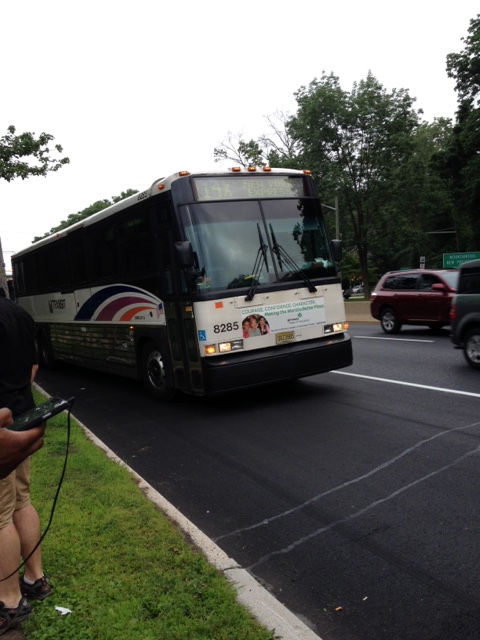
You can smell a bus breaking down. I always hope the driver doesn’t catch a whiff, because s/he’ll call the control center and lawyers will dictate that the bus be stopped. By definition, you’ll be late to work that day. So when I smelled something burning, I hoped I was the only one. Luck has never been my strong suit. The driver pulled over and announced, in a soft voice, that we’d have to wait for the next bus. That means I could’ve slept in for ten more minutes.
The next bus is an “express”—that is local compared to my bus. The driver said, “Just stay in your seats, and I’ll call you.” Of course, people started to get off to form a line, despite the captain’s words. In a universal display of self-importance, those who just got on immediately hurry to get off first. They’ll be first in line to get seats on the next bus. Those who obey the driver are penalized. When it became clear that I could hear crickets chirping on the bus, I decided to put away my book and join the line. After quite a wait, the local came. That would get us to the City in time for work tomorrow. Several minutes later the express came. Those at the back of the line behind me hurried over. By the time I’d gotten there, still trying to honor the most ancient of queuing honor codes—the line—all the seats were taken. Those in the front of the line, now the back, headed over to take first place again, since they had expected the rescue bus to pull in front of our smoking wreck instead of behind, where it did. They weren’t shy about elbowing their unrighteous way to the front when the next bus came. I’d been on the abandoned bus since before 6 a.m. I made the third bus. The guy in my row on the adopted bus tried hard not to make room for a new passenger next to him. I was headed to New York where, I know, all the rules are off.
Only Takes a Spark
Fireworks have been the main event for Independence Day celebrations ever since I was a child. The fourth of July is a day for playing with fire. As a child I remember spending the meager allowance I had on sparklers and snakes. I haven’t seen one of those ash snakes for decades now, but the impression they made remains strong. A plug of some kind of carbonish material—you’d light the top with a match and it would flame and hiss and start to grow into a long, twisting exoskeleton of ash. They left a blackened circle on the sidewalk, and when they were cool enough you could try to lift the fragile snake in your hand, but it almost always broke apart before blowing away in the breeze. We also wasted our money on smoke bombs with their multi-colored smoke, but we never had actual firecrackers. Given the trouble we could make with an ordinary roll of caps, that was probably a wise decision on our mother’s part. All of this, however, was just a prelude to the fireworks.
As I sat under a cloudy sky last night wondering why every July fourth seems to rain, it occurred to me that fireworks are a violent form of celebration. Indeed, they are designed to imitate the sounds of battle—before the nuclear age—and we all know the thrill of when the loud, bright burst of pure light sends a shock wave through you. It is like a canon rocking your soul. Like many stirring experiences, fireworks had religious overtones from the beginning. Invented in China, fireworks were used for religious festivals. They were believed to be effective at driving away evil spirits and bring good fortune. Pyrotechnics, however, clearly have military applications as well. It is this strange nexus between religion and violence that makes, I suspect, fireworks displays so compelling.

The local display here in Somerset County, New Jersey, was impressive for a region without large cities. I couldn’t help pondering the strange aesthetics of contained violence as the colorful explosions took place over my head. Illusions, I know. We always talk afterward about whether some of them are meant to represent anything. Did you see a smiley face, the United States, or even New Jersey? It depends on your angle of view. Is this a religious display or a celebration of violence? Looking around at the amazing diversity of peoples gathered here in this park with me, I feel strangely satisfied. I hear languages I don’t understand, and see people from all over the world here for a good show. Although thousands of us try to get to our cars at the same time, spirits are positive, for the most part, and all go home in a celebratory mood. Maybe the ancient Chinese were right and these pyrotechnics do drive away evil spirits after all.
Ethics for Rent
Ironically, the Bible is the basis for the western preoccupation with land ownership. What with commandments against stealing and coveting, the Israelites had a sense of being promised a land by God. It was their land and no human motivation—including imperial conquest—could trump the divine will. In the western world, so heavily influenced by the Bible, the concept of private property is itself considered sacred. If enough land to sustain yourself is good, even more land than you need must be better. That’s logic. Land-grabs by the powerful are nothing new. In America (land stolen from the original owners) no better symbol of affluence exists than property ownership. Like many things biblical, this is often a myth. Although I’m a white, Anglo-Saxon, straight, Protestant, I grew up among renters. My family couldn’t afford a house. When my mother remarried, my step-father owned his house and it was in such bad shape that as soon as he moved out to a rental property, it was immediately razed. On my own, I’ve always been a renter because I couldn’t ever afford to be anything else.
After Nashotah House, my wife and I considered buying. Wisconsin, apart from having no jobs, seemed like a nice place to settle. We researched. Your mortgage payments should be no more than 30 percent of your income, we learned. Living in suspended animation since those days, we’ve rented in a variety of places and the 30 percent figure has also turned out to be a myth. Affordable housing, in the United States, is set at that benchmark. A recent news byte in the Christian Century notes that in not one of the fifty united States is it possible to rent a one-bedroom apartment on 30 percent of minimum wage. 49 hours of work a week would be necessary to meet that benchmark in South Dakota, the state with most affordable housing. I know professors of Bible who own summer houses. That’s in addition to their regular houses. Meanwhile, many who would like to own something much more modest can’t afford even that.
The biblical worldview is an idealistic one. Recognizing that greed is inseparable from human will (even among a chosen people) the hope was that the poor would be taken care of by those who had more than their share. As the statistically inclined like to say, the numbers don’t lie. Housing, one of the most basic of all human needs, is exploitatively expensive. Many renters can never break out of the cycle of paying too much in rent so as not to be able to save up enough to make a down-payment on a place of their own. Yet prices go up while raises don’t keep pace with inflation. It’s all about ownership. Laws are in place to protect those who take (“legally”) for themselves. The rest pay into the system at three times a tithe. And even this, the numbers say, isn’t nearly enough.
Theological Cemeteries
There is a plague upon this nation. When in one week, let alone one day, I hear about two colleagues being let go from their academic posts for not meeting conservative theological standards, I believe it is time for higher education to take a good solid look at what it claims to do. Thomas Jay Oord, one of whose books I supported and saw through publication at Routledge, was dismissed from Northwest Nazarene University after, according to early reports, being considered for a heresy trial. Almost simultaneously Daniel Kirk, whom I don’t know, was let go from Fuller Seminary, apparently following questions of his belief in traditional marriage. Having been dismissed myself into an academic morass that has never passed for a satisfying career, I feel a sense of moral outrage here. No doubt, I am more liberal than either Oord or Kirk, but this is not the way educated adults treat one another. In fact, it is heinous.
While still teaching at Nashotah House, before I crossed some invisible line in the doctrinal sand, I often wondered about this. Conservative schools want the credibility of professors with bona fide doctorates, and then wonder why they can’t get educated people just to nod their heads at all the right places. Education should make people think. It should make us all question our assumptions. Any faith that can’t examine itself seriously and come back to thrive is no faith at all. I know all too well how difficult it is to get along with a doctorate in a socially unacceptable field where the higher education economy is far worse than that of our own national economy that keeps limping along. It is a crime to fire our brightest and best.
The unholy roll call could go on and on. A few years ago it was my colleague Christopher Rollston who fell under the axe. Although I’ve not met him, I understand the same thing happened to Peter Enns. These two recovered, at least as far as finding a position goes. Those of us who were successfully cast into the outer darkness—and I know I’m not the only one—have watched ourselves disappear from relevance as the academic world chugs blithely along. We are a nation that elects public officials on the basis of their supposed religious outlook while at the same time hamstringing efforts to educate ourselves about religion. I have a question for the administrators who feel they are defending the faith by taking someone’s livelihood: when is the last time you thought about your faith? Really thought? If your God can’t think then it’s not just those of us who are liberal that are destined for Hell.
Permian Record
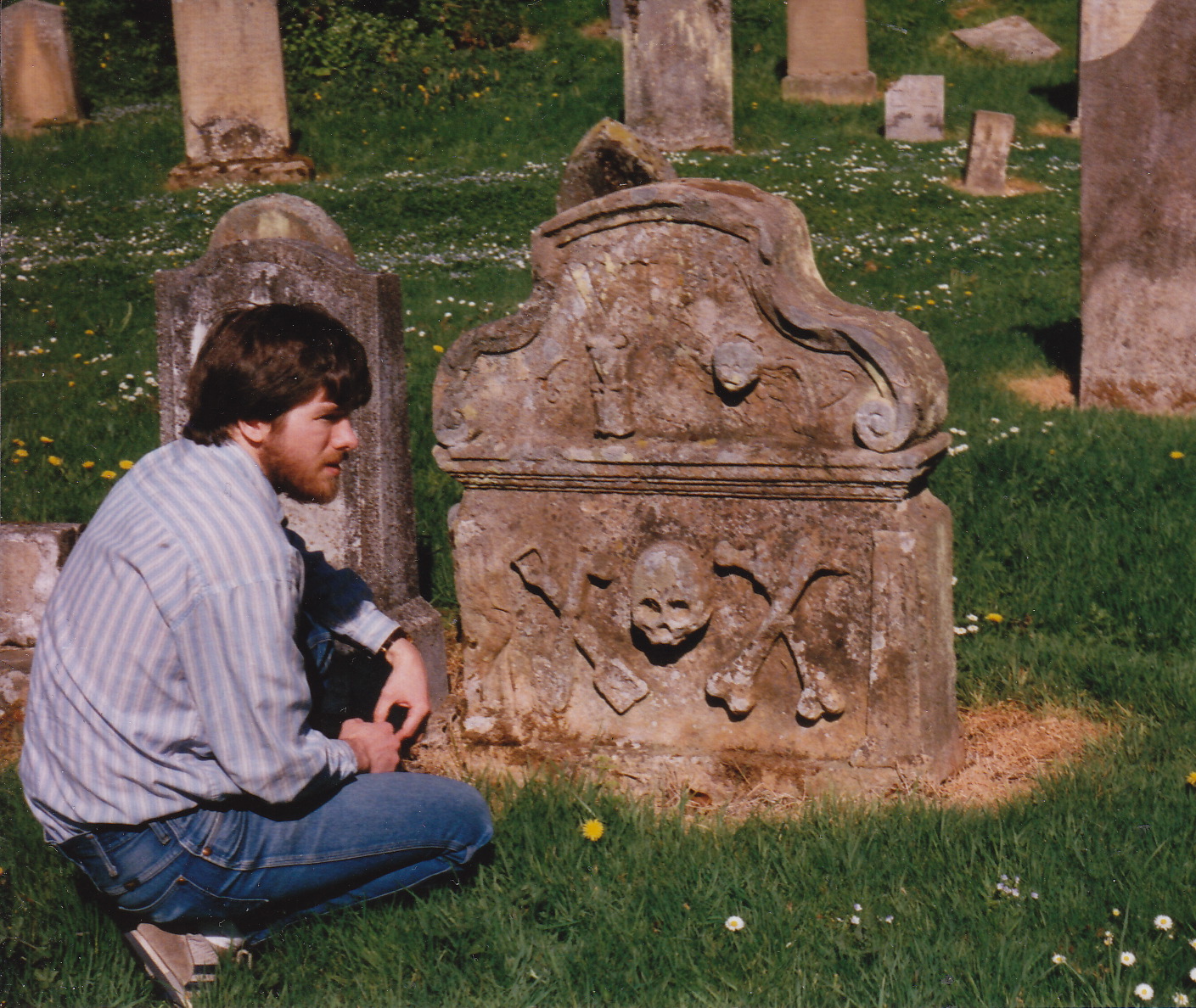
 It looked like an arm bone to me. Then again, I have no formal training in either anatomy or geology. The strata of Pennsylvania shale was littered with shell fossils from before the dinosaur era. Had I found a rare early animal? You see, I love fossils. In fact, I was so disappointed the first time I walked into a Fossil store that I’ve never had the heart to go back. Something about finding the remains of creatures millions of years old is inherently fascinating, and I was fortunate enough to grow up by a river that had plenty of fossils for the taking (a great pass-time for children of humble means). When I saw Peter D. Ward’s Gorgon at a local book sale, I had to get it. In addition to my love of fossils, I also have a special interest in Medusa, and the title grabbed two aspects of my attention at once.
The gorgon of the title is explained by the subtitle: The Monsters That Ruled the Planet Before Dinosaurs and How They Died in the Greatest Catastrophe in Earth’s History. As Ward explains, many in the media express surprise that there was anything before the dinosaurs. Perhaps I grew up with too much Genesis on the mind, but I knew about the Permian Extinction—the most deadly episode in Earth’s biological history. Over 90 percent of life forms died out, including some of the cooler species of mammal-like reptiles like the dimetrodon. I have to confess, however, that I don’t recall ever hearing about gorgons before. They are a South African species. Well, they were, long before apartheid and other ridiculous human foibles. Indeed, one of the charms of Ward’s account is that he doesn’t separate the human element from the paleontological. His visits to South Africa often demonstrated how the current dominant species of the planet participates in its own extinction. Valuing personal gain over social justice cannot have long-term payoffs.
This is a compelling story of people committed to finding answers in a barren land. To an inveterate fossil-hunter like me, it was a dreamy sort of read. I had my fossil “arm bone” assessed by a geologist. It was actually a trilobite trail. A trace fossil. Sometimes things aren’t what they seem. The answer of why of the Permian Extinction transpired turned out to be the most distressing aspect of the tale. Climate change, Ward demonstrates, can easily lead to mass extinction through the very act of breathing. Our evolution has favored the current atmospheric makeup of our planet. Dinosaurs, who appeared after the Permian Extinction, had evolved lungs for processing air with less oxygen than we’re used to. Greenhouse gases can shift subtle, invisible balances that are necessary for taking a breath. And I could extrapolate to a future where technology will again come to the rescue, but only of those who can afford it. And I wonder what far distant evolved intelligent species will make of a civilization where financial gain was considered the greater good than survival of an entire species? Humanity itself will have become a fossil by then. But a well-dressed one.
The Ethics of Deception
In New Jersey you can’t pump your own gas. If you pull into a station with a line, you have to wait your turn. Once, on my way to an adjunct job, I pulled up to the next available pump. It was the only one free, and a car pulled up behind me to wait. Meanwhile the car at the pump in front of me pulled out. The attendant signaled the car behind me to the vacant pump and then walked back to tell me that my pump was out of order, I’d have to wait my turn. I left that gas station and have never gone back. I think about that a lot. I don’t mind pumping my own gas, and I certainly don’t mind waiting my turn. If someone is given preferential treatment, however, my primate blood starts bubbling.

Although I’m middle-aged, I keep starting my career out again at entry level. I’m sure I’m not the only highly trained professional in this boat. In fact, I keep an eye on LinkedIn so I know that it’s not at all rare. As I sit and watch the available jobs go to those younger than me, I wonder about the ethics of it all. After all, I’m very nearly the same age as the President, and that makes me shudder. Here’s the ethical quandary:
When I was a student in the late 1980s and early 1990s, those of us in doctoral programs enrolled because we were encouraged to do so by the academy. No one can see the future, of course, but in academia it seemed if it was status quo ante from here (then) to eternity. There would be lots of jobs, and those of us with the talent were actively recruited to enter doctoral programs and—here’s the ethics part—help meet the need that was about to come! Did we want to see university positions vacant? Of course not! So we gamely stepped up, read our brains out, defended theses (far more than 95 of them) and found ourselves in a world with no room for us. I managed to get a job, unlike many of my colleagues. When I was let go, however, I discovered that the viable jobs were being snapped up by younger candidates. These were students who’d entered the fray after we already knew it was a dying market. They had the virtue of being younger, and therefore cheaper, and so the academy blithely moved on to forget those of us who’d gone through when everything short of a promise told us there would be jobs. There’s an ethical issue here. If you know there are no jobs, should you be giving first shot at the few there are to those who entered the system when there was a future? We used to call it paying our dues. Now, it seems, those who’ve paid into the system all their lives will get nothing from it. I’ll be the guy at the gas station ready to fill your car. If you pull in behind somebody else, you’ll have to wait your turn, however. I’ll insist on it.
Father’s Day
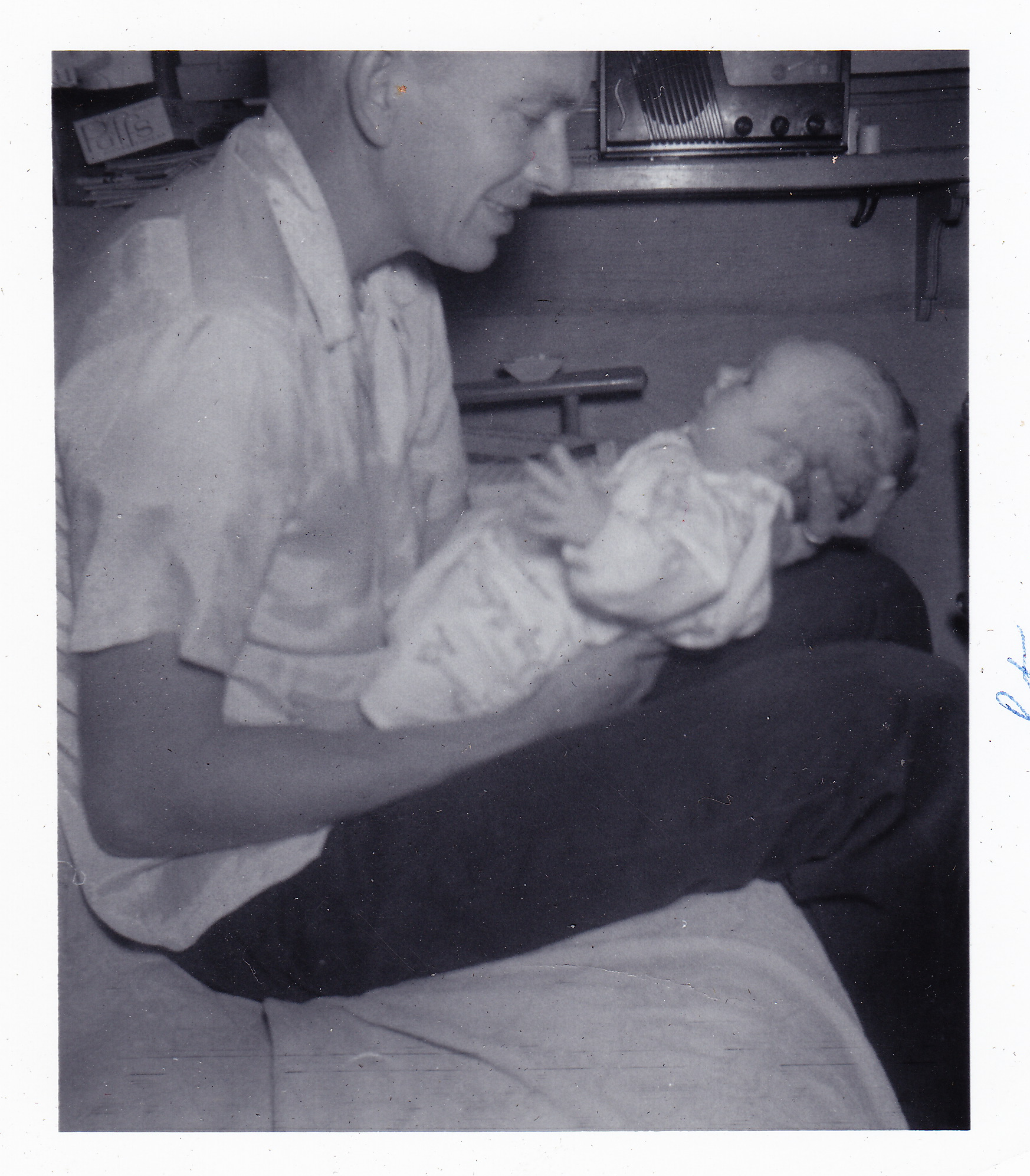 I’m not completely stupid. I know that the Father’s Day ads with which I’ve been peppered all month are nothing personal. They’re intended to tug at the sentimental heartstrings and get me to spend some money on dear old Dad. As one of the generation for whom computers were a new household commodity well after college was over, I know that I’m part of a fairly large demographic of middle-age users. I do wonder, when I see these ads, how many other readers ponder the fact that their fathers have died and that Father’s Day is an occasion as much of mourning as it is of celebrating. While I know, dear reader, that you’re not my therapist, my father died many years ago after a lifetime of separation from my brothers and me. I can’t claim to have known him, except in unguarded moments looking into the mirror at the blue eyes he contributed to my genetic code, along with other aspects I can only imagine.
Father’s Day can, of course, be a day to honor the memory of, as well as buy things for, dad. Holidays, however, aren’t really holidays without the changing of hands of lucre. Although I never tried to think much about it, I never spent a Father’s Day with my father. I know I’m not alone in this, but many are the days when I believe I would have benefited from a bit more instruction than I received on that front. “Majoring in religion is not the best career choice,” might have been one of those nuggets I could’ve done with hearing. The women in my family seemed to think it was okay. Even one of my dad’s ancestors was a clergyman. I like to think that fathers might be able, in some cases, to see farther than their sons. Call it male bonding. Call it being a man in a post-patriarchal world. Call it confusion.
I’m all for honoring parents. I also tend to think people are basically good and that by far the majority of people try to do what they think is right. They may not have much with which to work, but they try. I can also think of better ways of honoring them than spending money. Maybe we could try restructuring society so that those who start out with little might have resources available to move ahead. If some father’s child has obvious gifts, might we not offer a way for that child to use them and thrive? As a father myself, I can think of nothing that would make me happier than to see my child have better prospects than I’ve had. Instead I see a society of one-percenters encouraging us to spend a bit more since, after all, fathers measure their worth in stuff. The stuff that really matters, at least for this father, include those no longer here as well as those who are yet to inherit.
Shepherds and Sheep
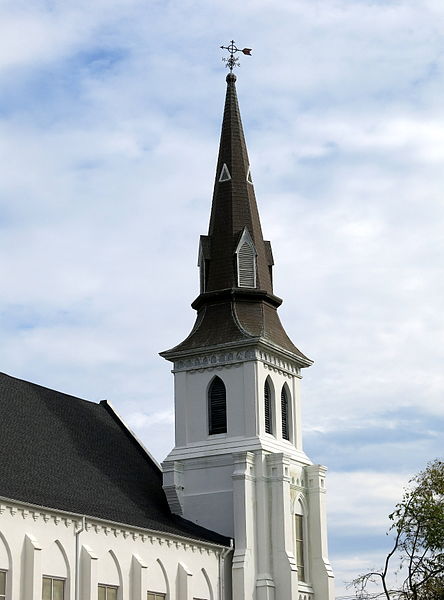
Photo credit: Spencer Means, Wikimedia Commons
The murders in Charleston this week are part of an epidemic. The members of Emanuel African Methodist Episcopal Church join, unfortunately, a growing list of victims of hate. Not only hate, but that subspecies of hatred that calls the unstable to attack in a church, or synagogue, or mosque, as if to defy the very gods with their misanthropy. Growing up we used to be taught that any place of worship is sacred. Then we believed it was because God had made it so, but now it is clear that sacred space is made so by the intent of those who worship. We find places where we believe we’re safe from the trials of the everyday world. A place where God will look over us. A place, dare we call it, of sanctuary. Sanctuary is a concept that has gone extinct. As children we all knew of the concept of “home” in chasing games—the place where you were free and need not worry about someone coming after you. Amnesty was granted at the cry of “olly olly oxen free.”
In the biblical world, we’re told, those in danger could flee to the temple and grasp the horns of the altar and be safe. It wasn’t that someone couldn’t be pulled off, but it was that an inherent respect attended sacred places. No place is sacred any more. Hatred has a way of overriding what we all recognize as civilization. Well-armed youth and a culture of hatred have never led to peace. Xenophobia may be natural, but it can be disarmed through education. Unfortunately, in this country at least, education is not valued. In fact, in the culture wars, those who have the most sympathy for those who commit hate crimes will be among the first to cut education spending. It’s a luxury we can’t live without. We need to teach the meaning of sanctuary again. We need to teach the meaning of love.
Human beings shouldn’t have to rely on sanctuary to be safe. No matter what our racial heritage or gender or orientation, we are all simply people trying to make our way in the world. As a child I knew “olly olly oxen free” meant that nobody would try to tag me if I came out from hiding. I was also taught that the word “hate” was as bad as any swear and that it should not be said. While my mother was teaching me the virtue of love, we were sending young men to kill foreigners in Vietnam. I grew up with no doubts as to which was the superior way. One way leads to life and peace, the other to constant fear and death. The people of Emanuel African Methodist Episcopal Church have told Dylann Roof that they have forgiven him. They are offering sanctuary to one who has done nothing to earn or claim it. They, like children, lead us.
Vox Humana
You know how it is when you get a song stuck in your head? This is one of the few scenarios that will actually lead me to buy music. I have very specific (some would say “odd”) tastes in music. I love the originals. Long ago I ceased listening to “Christian Rock.” It was a thing when I was attending a Christian college, of course. Many who feared the terrors of the drugs and sex part felt they could be slightly rebellious with the rock-n-roll side of things by listening to various groups that pounded out evangelistic messages with electric guitars and overheated amps. There were, however, amid those groups pretending they were a saved Metallica, some real artists. Somehow some of the songs of Daniel Amos came to my mind. I had all four albums of the ¡Alarma! Chronicles—still do up in the attic somewhere—but we left most of our sound system in Wisconsin. I hadn’t bothered to buy a new needle for my turntable, and I’m not sure I still have the patch cables to connect it if I did. It’s been at least a decade since I heard Vox Humana. The internet made it too easy.
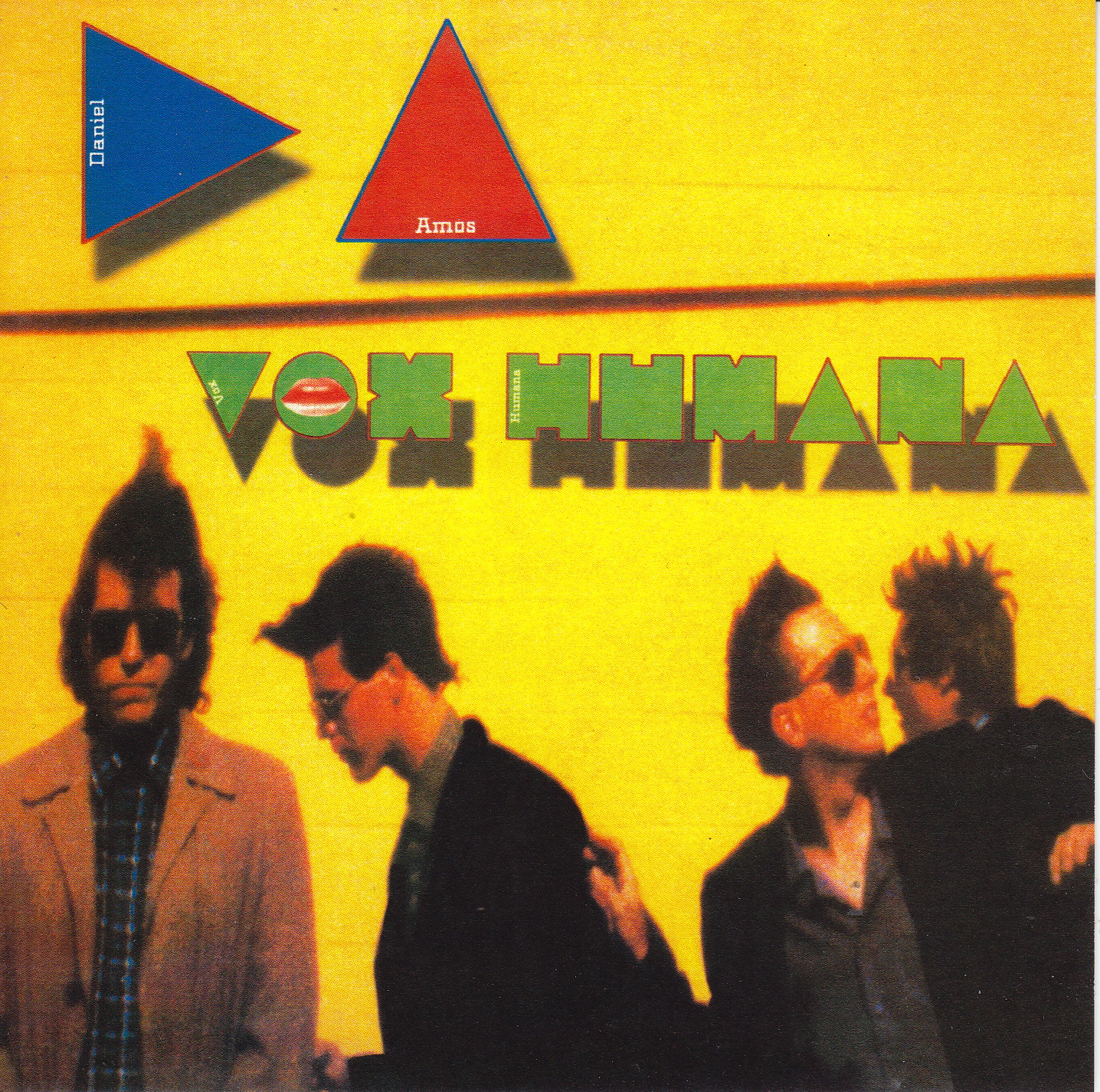
To understand my quest, you have to imagine the context. It was 1984. I was a rising senior in college and I hadn’t seen much of the world. Having grown up in humble circumstances, I didn’t have money for travel or many material things. When my roommate took me to visit his house and he introduced me to a friend who had a room dedicated to sound equipment and albums, I felt as though I was on another planet. Daniel Amos’s Vox Humana had just been released. Our host slipped it from its yellow cover and played it with all the blinking green and red equalizer lights flashing and I was completely blown away. It was Christian music unlike I’d ever heard. In fact, it was ahead of much of the pop music of the time. As soon as I got back to campus I ordered it from the Christian bookstore. The songs still come back to me when I least expect them to.
Call it a guilty pleasure. My theological outlook is lightyears away from what it was when I was an undergraduate. I still haven’t seen much of the world, but what I have seen of it has changed me in ways that there’s no means of reversing. Although I really can’t afford to be buying music—we’re only paying for electrons any more—I just couldn’t help myself this one time. It’s no longer the ‘80s, and the 1950s sci fi movies DA references in the lyrics are closer in time to the album’s initial release than that release is to me now, but still large swaths of the lyrics are imprinted in my mind, taking me back over the decades. It’s the music of my youth. And it was edgy then. It sounds more conventional, perhaps even old fashioned now. Still, when you get a song stuck in your head, pagan or Christian, there’s really only one thing you can do about it.
Christian Horrorshow
Books & Culture is the review organ of Christianity Today. Christianity Today is the evangelical answer to the more liberal Christian Century. Working in publishing, particularly in the field of religion, it is important to keep an eye on what the popular magazines are saying about our books. Well, neither is as popular as it used to be, but still. I’ll grown used to Books & Culture taking a rather wholesome reaction to books that challenge worldviews. In fact, it’s not unusual to find a fairly mild tome castigated as somewhat insidious. Negative reviews tend to sell books as well as positive reviews. Sometimes better.
I was a bit surprised to see a two-page spread in a recent edition of Books & Culture focusing on horror stories. Horror and evangelical generally don’t play well together. Well, maybe I should temper that a little bit. The first article was actually on Shirley Jackson, best known for her excellently moody The Haunting of Hill House. That particular book has spawned or inspired at least five scary movies, two of them versions of the book itself. I have to confess that this is the only Shirley Jackson novel I’ve read. The article, somewhat strangely for an evangelical magazine, had made me want to explore some of her other offerings. Horror doesn’t have to be splatter to be effective.

The second review in this issue was for an Oxford anthology called Horror Stories. The reviewer, Victor LeValle, also comes out with a positive review of the collection. All of this makes me wonder if I missed something growing up as a conservative Christian who felt distinctively unsavory because his love of monsters and the macabre. I can’t remember ever not liking mild horror stories. They manage to evoke parts of my psyche that most other literature bypasses. I discovered Poe at an early age. That’s not to say that I like being afraid. Fear is not what I’m seeking here. It is a kind of strange redemption. In college many of my evangelical friends couldn’t understand my fascination. “Why don’t you watch something more uplifting?” I’d be asked. I was as surprised as anyone when one of my very few Grove City dates agreed to see Nightmare on Elm Street with me. Not even Shirley Jackson could’ve seen that one coming. I wonder how she’d respond to being written up as an evangelical inspiration?

