Becoming an Icon

A kid among the Monster Boomers can’t let the death of Christopher Lee go by without comment. How many hours of my childhood were spent watching movies on Saturday afternoon TV with his many personae arresting my attention? And, of course, his prolific output just kept on coming. The Wicker Man, for instance, would never have been among my childhood fare, but his performance as Lord Summerisle is still captivating and sends shivers down my spine. Of course, he wasn’t always a horror movie star. His voice nevertheless conditioned us to be on our guard, for we knew something untoward was about to happen.
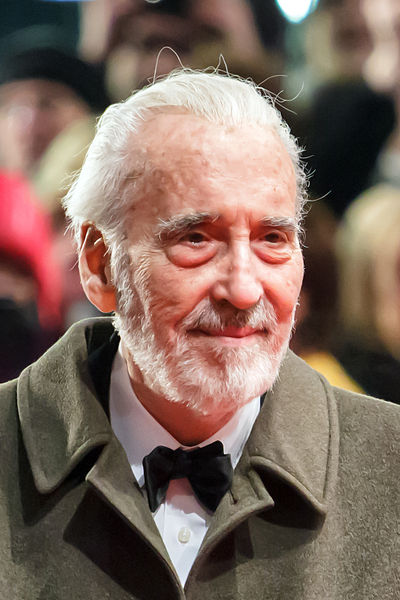
Photo credit: Avda, Wikimedia Commons

Photo credit: Avda, Wikimedia Commons

I often ponder the lure of monster movies. As a young boy, I couldn’t get enough of them. I tried to grow out of this stage, and managed pretty well through my doctoral work, but then when I found myself in a Gothic seminary where my life would be shredded and discarded, I suddenly found myself sitting up late to watch movies my family would not care to see. There was a catharsis happening here. Some would claim that it is puerile and immature—they would be the same people who’ve not been forced from careers and faced with unemployment and been dealt a failing hand by an institution that received full commitment during the formative years of an aborted career. No, those who’ve faced monsters cannot easily leave them alone.

Of course, Christopher Lee was only playing monsters. Now many people around the world can instantly recognize his name, face, or voice. We all face monsters. Our society teaches us to deny that they exist, much to our own peril. Little children, bewildered by this insanely complex world that adults have constructed, may be the ones to see most clearly. We watch the monsters on the screen so that we might figure out how to deal with them on the playground or in the boardroom. Christopher Lee was more than an actor. He was a teacher. And his best students learned something of human nature from him.
God on the Brain

HowGodChangesBrainThose of us with scientifically oriented minds, but with affinity for the less quantifiable aspects of life, tend toward academic study of the humanities. It is not unusual for someone with a background in the hard sciences to dismiss such “softer” fields as less rigorous at best, or, at worst, a sheer waste of time. Many people in the humanities cower under this cloud of being considered somehow inferior for not being able to put numbers to everything. I suspect that’s why I find neuroscience so fascinating. While still teaching at Nashotah House, I would prompt students to think that whatever decisions they made about ancient texts, those decisions were mediated, in a very real way, by their brains. We don’t understand brains completely, but I’m amazed at what we have discovered so far. Years ago I read the book, Why God Won’t Go Away. It was an eye-opening study of what brain mapping reveals during states of religious inspiration, or at least, intense meditation or prayer. We can, to an extent, see inside someone’s head while they are communing with the other.

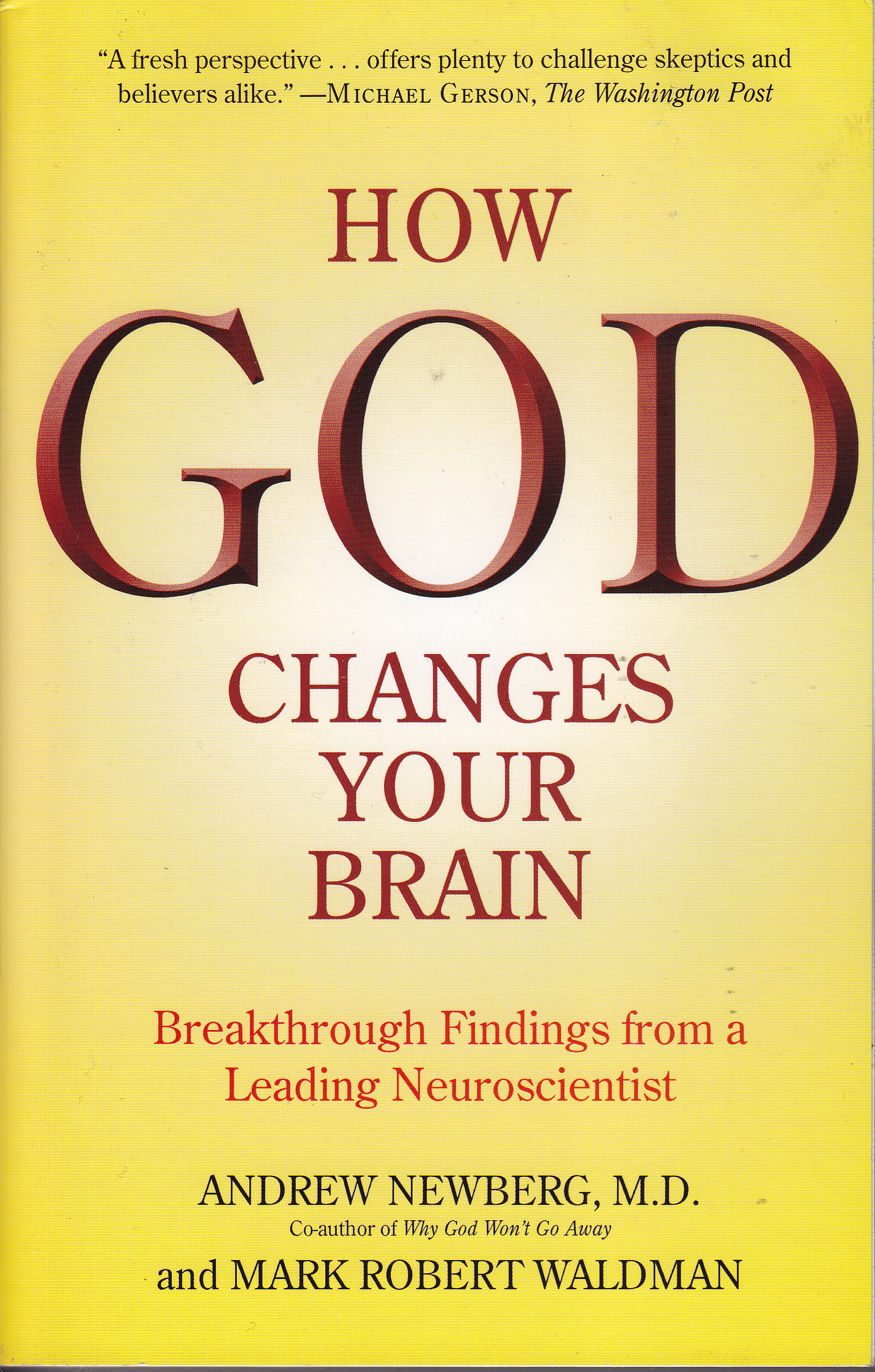
I recently became aware of the new book by Andrew Newberg (lead author on Why God Won’t Go Away) and Mark Robert Waldman, How God Changes Your Brain: Breakthrough Findings from a Leading Neuroscientist. I was a bit nervous at first, since I couldn’t recall how reductionistic Newberg was in his initial book on the subject. Neuroscientists sometimes perceive the world as being, in a sense, as all in our heads. I was pleased to see that Newberg and Waldman recognize that the “God question” is an open one. They address it right up front. I was drawn to the book because of one of their conclusions that had leaked into the footnote of something else I’d been reading: the brain changes as soon as it is introduced to the concept of God. Brain wiring is continually changing, but the takeaway here is that as soon as we introduce our children to the God concept, their brains will not unlearn it. It stays with us for life. Changing concepts about God is therefore quite difficult. Few even try.

This book, however, doesn’t see this as necessarily negative. In fact, the authors challenge the horsemen of atheism in that all studies seem to indicate that religion is actually good for you. Particularly meditation. In a world that is increasingly run on stress (just ask any business-person) this is an important reminder that prayer, or meditation, can actually heal some of the brain damage caused by life in a stressful environment. The nice thing about this is that the empirical evidence seems to be pretty strong. Our brains seem to be telling us to relax, step back, and not take all of this so seriously. Those are layman’s terms, of course, filtered through my brain. Even reading this book made me feel much more relaxed. It reminded me why, for much of my life, monastic living has seemed so very appealing. Instead, I live in the secular world with its many rewards and stresses. If I learned anything from this wonderful little book, I will be spending a bit more quiet time each day, and won’t be feeling guilty about it at all.


Science v. Evil

Can we eliminate evil? More than a question of metaphysics, this is also the title of an episode of the third season of Through the Wormhole. I’ve noted before that this particular season has been delving more profoundly into areas once reserved for religious thought. Evil is perhaps the most religious of topics, as distinguishing good from evil is at the heart of many religious traditions. Fast forward from the founding of your favorite religion to today. In order to answer the question of whether or not we can eliminate evil, we turn to neuroscience rather than any sacred book. Looking at brain scans, the scientists of Through the Wormhole have isolated areas that indicate who might be a sociopath—a convenient measure of evil—and also who might be less empathetic than whom. Perhaps drugs could be developed to inhibit sociopathic behavior and tendencies. As always, these episodes leave me somewhat distressed.

800px-Planisphæri_cœleste

Losing my long-term position in higher education “without cause” threw me into mental turmoil. Never one to use medications for a long term, I was shattered when my doctor suggested anti-depressants. Would this chemical, designed to “correct” my brain chemistry change who I was? The morning the treatment began, I hesitated to take the first pill, staring long at it and wondering if the person I’d been would be lost forever. I hated being on the prescription. Worse, it was a medication that you couldn’t simply stop. The drop in anti-depressants could bring me dangerously low. Although my employment situation hasn’t radically improved since then, I eventually weaned myself from the prescription. Looking back now, I see that time as an interlude in who I was, depression and all. Mine was, thankfully, a mild case. It has, nevertheless, left me wondering about the nature of evil.

Extremely empathetic, I have never had sociopathic tendencies. I care for insects and amphibians, as well as my fellow humans. I react to the emotions of others. Yet, like all people, I suspect, I know that I’ve got my own personal evils with which to struggle. I wonder if it is a matter of degree. Religions often suggest that the solution to evil is repentance and taking the decision to live a new life. What if one’s brain, however, prevents that? Would the administration of a drug amount to a kind of salvation? And what of those theologies based on concepts of human depravity—can neuroscience prove them wrong? When the moral questions are raised, the physical solutions offer answers. Can we ever reconcile belief and biology? The jury may never come back with a verdict on that one.


Asherah’s Ashes

Academics are often poor communicators. The stunning irrelevance of most research should stand as a rather obvious clue to that. Of course, I’m old school in my approach to research. When afforded the opportunity to do so, I produced at least one scholarly article per year, and these were based on extensive research. One of the misconceptions about research is that it involves only that which supports your theory. My first article and first book, both on Asherah, demonstrated that rather clearly, I hope. A kind of scholarly orthodoxy had grown up around the goddess, originating largely in Frank Moore Cross’s work, but also in that of a few other scholars. Nobody challenged these results although they were clearly built on shaky ground. Before I finished my dissertation it had been decided that Yahweh was married to Asherah, and the two merrily danced together on a pathos graffito from Kuntillet Ajrud. After my work was published, I was surprised to see how completely it was ignored. I, like John Mellencamp, had challenged authority. And we know who always wins.

I recently read an article entitled “Iconism and Aniconism in the Period of the Monarchy: Was There an Image of the Deity in the Jerusalem Temple?” by Garth Gilmour, in a Routledge volume entitled Visualizing Jews Through the Ages. Gilmour uses a crudely incised sherd originally found in 1920 in Jerusalem, to build a turret on the house of cards of conjecture. The incised stick figures which, if you squint just right, may be a male and female, it is suggested, are none other than Yahweh and Asherah. Probably grooving together in the temple. Now don’t get me wrong—I’ve always found the idea of Yahweh having a consort conceptually satisfying. We know that other deities in the ancient world often paired off, and that Asherah was generally the main consort of the high god. The proof, however, was in the pithos. Seeing what you want to see is a constant danger to researchers. That’s why my bibliographies tended to be encyclopedic. Gilmour’s article does not mention any of my several works on Asherah, or even my articles on Baal. Apparently my work harshes the easy conclusions already drawn. Or is insignificant. Caution often is.

Consigned to while away my time in publishing, I’m aware that there’s far too much out there for anybody to be able to read it all. Indeed, when I have rare moments to engage in research during my busy, commuting lifestyle, I find myself increasing aware of obsolesce. New results are published before the proofs get to the author. Still, the number of books out there on Asherah are fairly small. Those supporting the unofficial scholarly consensus are many and top the rankings on Amazon. Nobody likes to be reminded that the dissenting view has logic firmly on its side. We see what we want to see. Research should, in the opinion of this disregarded scholar, involving searching again, even as its name implies. The foundations should be reexamined now and again to make sure the tower’s not about to topple. That’s old school. And old school is now, apparently, understood as merely old fashioned.

DSCN4422


Book Ideas

Call it sour grapes. When I was a young scholar, I used to wonder how to develop book ideas. You see, at a young age—twenties or thirties—even a doctorate means your understanding of the world is limited. I’d written a substantial dissertation on Asherah, and I was faced with developing several new courses from scratch at Nashotah House. My mind was focused on the immediate concerns. I did continue my research, however, into ancient Near Eastern deities, with an eye toward writing an account of celestial gods and goddesses. A substantial piece on Shapshu ended up being snatched up by a Festschrift, and colleagues began to tell me that to get hired away from Nashotah I had to write something biblical. Thus Weathering the Psalms was born. The research and writing took a few years because I never had a sabbatical, or reduced teaching load. In fact, administrative duties as registrar and academic dean were added to my remit. Still I scribbled away in the early hours and finished a draft. Then I was cast into the outer darkness.

Publishing was never my first choice of career. I’m more a writer than an editor. In publishing, however, you are not encouraged to write your own content. I can’t help myself. As I rounded the corner from my forties, I had finally read enough material—both relevant and extraneous—to have book ideas. In fact, too many. Held back by the lack of publication, I didn’t know how to channel this energy. One of the benefits of working for publishers is you learn how to come up with a viable book idea. I’ve got a backlog now. I’m currently working on a few books, but one is in the forefront of my mind and eclipses all other projects at the moment. Having watched what sells, I think this one has a real chance. Time to write, alas, barely exists. The writer, you must understand, has to build a platform. Get a fan base. Welcome to my platform.

Daily I receive the first books of young scholars. In this publish or perish—strike that—publish and perish atmosphere, even the mediocre is encouraged by dissertation advisors. Young scholars, maybe thirty, think they have something profound to say. Call it sour grapes, but I’m not getting any younger and I don’t have an institution to support me while I write what should be written. The face looking back at me in the morning has more gray hairs than I remember growing, and has wrinkles that my mind doesn’t recognize. It’s too full of books to write to pause long. The bus is coming soon and I have younger scholars’ careers to build with premiere branding. My own ideas ferment unseen in the basement. What some call sour grapes others call fine wine.

Photo credit: Dragonflyir, Wikimedia Commons

Photo credit: Dragonflyir, Wikimedia Commons


Fresh Thinking

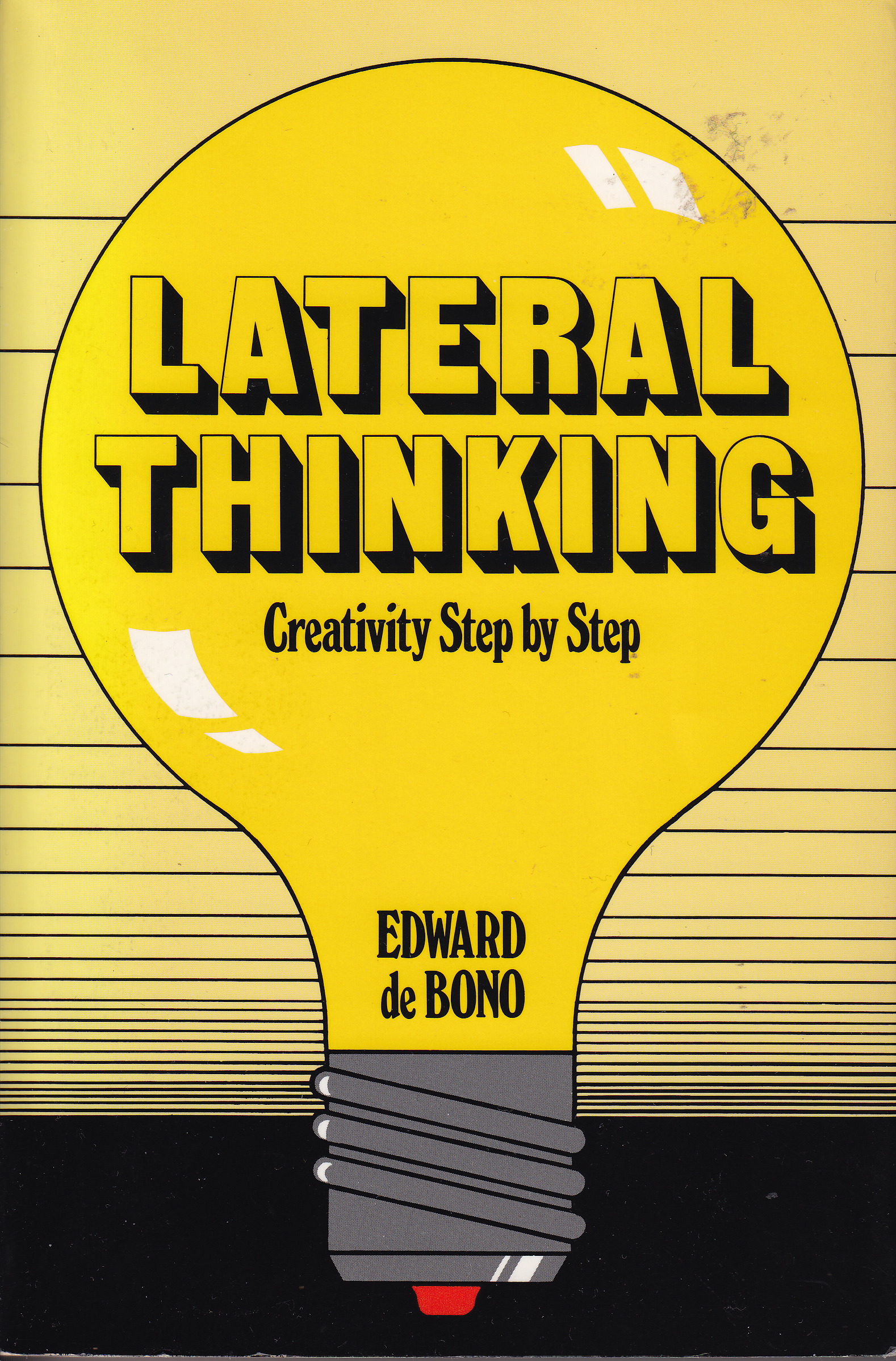
Lateral Thinking_0001Creativity receives an immense amount of lip service. Too bad that doesn’t correlate to actual appreciation. I’ve been working since I was 14. In all the jobs I’ve had, the first was the one that used my creativity most fully. I was a teenage assistant-janitor, doing manual labor. Laborers have great incentive to be creative since it can reduce the amount of work you have to do. Of course, at other times it can create more work. While I was teaching (the second-most creative job I’ve held), I picked up Edward de Bono’s classic, Lateral Thinking: Creativity Step by Step. Shortly after purchasing it I lost my teaching job with a change of administration and I’ve been involved in the least creative phase of my career ever since—publishing. I hope that I’m still a lateral thinker, and I read de Bono wishing to verify that I might be.

Lateral thinking, simply put, is the ability to see things differently. Logical thinking, with which we’re all familiar, is linear, or what de Bono calls “vertical.” Each step is based on the previous step and each step has to be right all the time. My mind, however, finds avenues out to wander among the daisies during the whole process. My interior dialogue is often a long stream of “what ifs” and questioning why things are done the way they are. I guess it’s no wonder that the church was leery of me. Lateral thinking, de Bono notes, does not sit well with dogmatism, nor with the arrogance of presuming you’re already right. If you’ve already got the answers, you need not ask any more questions. You go to seminary to learn to shore up the party line. Individual thinking is unwanted, and what’s more, it’s even dangerous.

So I have moved into the realm of business which, it would seem, stands to gain the most from creativity. Instead, standard business practices hamper, if not actively discourage, creativity. Having people sit in cubicles and maintaining rigid, often long, hours, and performing tasks that a lemur could be trained to handle. This is hardly the breeding ground of new ideas. I’ve attended “brainstorming” sessions in the industry where the leader shoots down immediately any idea that doesn’t lock-step with where s/he believes the company should be going. That’s not brainstorming, it’s brainwashing. Creativity may indeed lead to a temporary loss of profits. The truly creative business mogul will know, however, that it will lead to great leaps ahead further down the road. If you want to find the truly creative among the company, I suggest one place to go. Ask the janitors. Their ideas are likely the most creative of all.


The Land of Who?

“Parochial” is a name we small-town types dread. Growing up with television, which gave us a magical view into New York and California, as well as other cosmopolitan locales, we could easily feel the accusations of being small-minded and unsophisticated. Although I never wanted to move to the New York City area, I did decide to get away to Boston, then Europe, to be educated. I didn’t want anyone accusing me of being an intellectually challenged rustic, just because of where I happen to have been born. People around my home town, however, aren’t as closed minded as portrayed. Well, not always. You see, apart from conferences where some institution or corporation foots the bills for hotels, I tend to stay in more reasonably priced places when I travel. Even on the road I can’t sleep in, so I find myself chomping at the bit for the breakfast area to open in the morning. Sometimes I’m the first one there.

On a visit to my hometown in the not too distant past, I happened into a breakfast conversation in media res. A local back in town for a holiday weekend was vociferating his views in stentorian tones that could be heard down the hall. The television in the breakfast room, as always, was on. Apparently a story had been shown that teed this old-timer off. His daddy had been a local policeman and he just couldn’t understand why blacks were rioting about unfair treatment at the hands of the police. I cringed as I filled my coffee cup. “They ought to be gassing them and reading their rights later,” he lamented. An older couple, also returning to the area from their home in Baltimore, seemed to agree. I tried to find a corner out of earshot. Unsuccessfully. I could barely hold in my indignation. We were all Caucasian here—what did any of us know of racial profiling, deep-seated prejudice, or being prisoner in our own country? “Why don’t they just stay home?” he said. Home, ironically, of the free.

DSCN4676

I could see that he was elderly and afraid. The media—likely Fox news—had instilled a kind of terror in him that could only be assuaged by reliance on force. The world his daddy knew. I was also reared here. It was pretty much a white town, but some of my best friends growing up were the few African-American kids in my school. My small-town mother taught me not to judge anyone by the color of their skin. The hotel I’m staying in is run by an Indian family. The local stores now reveal a healthier mix than that in which I grew up. I wanted to tell this fellow parochial patron that we need not be afraid if we only seek justice. The region in which I grew up has become more homogenized, and I believe we’re all healthier for it. Until, however, civil rights are truly rights for all, we need to stand with those who’ve been clearly wronged, even if at personal cost. That’s something I learned growing up in this small town.


Peak Oil

Having no control over where we’re born, people nevertheless often feel a connection with their native region. My family had no roots in western Pennsylvania, and the consensus on why we ended up here focuses around jobs. My grandparents settled here because of a job. While working here on a job my father, from the south, met my mother. My brothers and I all consider ourselves Pennsylvanians. One of the places we liked to visit as children was Drake Well. We knew that the oil industry began in western Pennsylvania, and we knew that famous people like George Washington had traveled through the region during the various wars of the nation’s early years. The towns where I grew up are not exactly affluent, and one of them seems in danger of becoming a ghost town. Drake Well, however, the birthplace of commercial oil, still draws visitors from the region and from around the country. On a recent visit to the site, I was interested to see how religion interplayed with petroleum in Victorian Era western Pennsylvania.

thumb_DSCN5064_1024

Among the displays was one showing the various means used to find oil. In the days before geological surveys, finding something hidden underground required more than just technical knowledge. More precisely, it often utilized different forms of technology—some scientific, some not. Dowsing was popular, and spirits were consulted. Access to the supernatural world was not uncommon. The oil industry really took off during the same era that spiritualism began to become popular. Religion and science co-existed in a way that is difficult to imagine today. Indeed, Drake Well was established in 1859, the same year Darwin’s Origin of Species was published. The means used to reach the oil were, however, unabashedly scientific and technical. Nitroglycerin fatalities were just another fact of life.

Looking over the triumphal displays about fracking, it became clear that in the realm of petroleum production the spirit has made way for a technology with unknown consequences. The museum at Drake Well is pretty straightforward that other energy forms pose a threat to an industry that was, and currently remains, massive. We have technologies that can utilize cleaner forms of energy, but powerful oil interests have maintained the focus on more and more invasive ways to keep things going the way they are, pulling in more profits while the limited supply lasts. We know petroleum will run out. We’ve deeply integrated it into our way of life and instead of looking ahead to the next step, we’ve been reaching back to pad our fat pockets. Gone are the dowsers and spiritualists and in have charged the corporate executives. And in western Pennsylvania, the towns where the industry began struggle to stay alive as thinking that allowed for spirits has acquiesced to that which has loyalty to Mammon alone.


Finding a Vein

Travel broadens the mind. I always find that it’s a form of education. Sometimes what I learn is disturbing. While driving across Pennsylvania on I-80 recently, I had a chance to study some contrasts. I’ve made this trip many times, but this particular journey revealed two Amish farmers out plowing their fields behind teams of horses. It’s easy to romanticize this view—there is a majesty about it. Once, while driving back to Wisconsin from an interview at Luther College, I saw an Amish farmer and his team in the rain, the horses’ breath could be seen billowing out, but the farmer, implacable in his conviction of what had to be done, stood rigidly behind them, keeping the animals at their task. When you don’t eat if the crops don’t grow, a new kind of urgency is added to this picture. All around us on the highway hi-tech vehicles whizzed, and, gathering from the behavior of the drivers, I couldn’t help but wonder if any of them were very happy.

Then we sped past a billboard. It was facing the opposite direction from our travel, but the words went something like this: “The wind dies, the sun sets, but coal lasts forever.” In much of Pennsylvania, with its spine of Appalachian Mountains, coal is abundant. Growing up some of the highways we drove had exposed coal seams in the road cuts. It’s pretty much everywhere. Coal, however, is a dirty, non-renewable, polluting source of energy that exacts a severe cost on the planet through mining. No doubt it is abundant, but the amount is certainly finite and it makes the world less inhabitable when we use it. The wind blows where it wills. The sun rises on the righteous and wicked alike. Coal is decay left from the life forms that helped ensure that we’d show up here. One of those circle of death kinds of things.

IMG_2176

Then a car went by with a communique in paint on its back window. “Pray to end hatred” it read. This is a sentiment with which I could surely live. I recalled driving this same interstate many years ago when I was old enough to read but not enough to comprehend. The pylons of the overpasses on 80 frequently have spray-painted messages reading “Trust Jesus.” Some of them are still visible at highway speeds, faded though they are. The elements seem to have left a negative of the original work of what is technically vandalism. I think back to the Amish farmer. He’s watching, I’m sure, the never-ending flow of sinful vehicles on a highway as he plows. He’s been raised to trust Jesus and to believe in the old way of doing things. I’m behind the wheel praying that the hatred I see played out in these metal coffins will stay far from me until I can exit to some quieter backroads where the pace of life is more to my liking. And I wonder if that sunset I see is influenced by the coal that we’re burning and hoping the wind will simply blow it away.


Too Much Stuff

The informal name for economics, rightly, is “the dismal science.” When I recently learned about The Story of Stuff (storyofstuff.org), I found myself again shaking my head in dismay. I have no problem admitting that I’m a liberal pretty much through and through. I believe what I believe is right. Statistics show that the older we grow the more conservative we become, but in my case the opposite trend seems to be in effect. I grew up in a conservative backwater and I saw first-hand what it did to those who adhere to it most religiously. Rouseville, the town where I spent my teens, was an industrial armpit, dominated by a large Pennzoil refinery, now derelict. The town smelled bad despite the pristine woods that surrounded it, and pollution was everywhere evident. People didn’t move away because they couldn’t. Drugs were a rampant problem and I never felt safe going out at night, even though it was a town of less than a thousand souls.

Growing up I often wondered about this. When you live close to the edge, you hang on. The existence of the working class is precarious. Living in a cancer factory like that, you needed your job more than you needed food. If you were to survive, you had to work. Pennzoil was the only game in town. Local pride at being near the fountain head of the oil industry helped only a little. I turned to spirituality to cope. I’m now told that’s naive. I’m told that meaning is found in consuming. The most disheartening part of The Story of Stuff was learning that this was all intentional. Victor Lebow’s 1955 assessment of where our dismal science must go chills me:

“Our enormously productive economy demands that we make consumption our way of life, that we convert the buying and use of goods into rituals, that we seek our spiritual satisfactions, our ego satisfactions, in consumption. The measure of social status, of social acceptance, of prestige, is now to be found in our consumptive patterns. The very meaning and significance of our lives today expressed in consumptive terms.”

Our spiritual satisfaction in buying? And what is more, this advice has been heeded as gospel by the government. Is it any wonder that one percent tell the rest of us what to do? It is time for civilization to grow up. Our infantile need for more stuff has poisoned the very well from which we drink. It may cost you some sleep, but take a look at the Story of Stuff. What you lose in sleep you may gain in peace of mind. And soul.

thumb_IMG_2169_1024


Truly Educated

Binghamton University looms large in my consciousness, for rather obvious reasons. Although it sits in a small corner of upstate New York not particularly near anything famous, it has its own culture. Having taught at several schools, and having studied at many along the way, I’ve always been particularly struck by the genuine nature of Binghamton. For example, it is the only school—apart from a hazily recalled “Bible Study” led by the then president of Grove City College—at which the president has made himself available to be met and chatted with by hoi polloi. I’ve met and talked with him twice, and although I taught a phenomenal number of courses at Rutgers, and conveniently solved a crisis in the religion department for a year at the University of Wisconsin Oshkosh, I never found a time or place when the president was available to the likes of mere mortals. Not only that, but at a time when other universities are cutting whatever faculty they can to make more administrative posts, Binghamton is actually hiring faculty and expanding. I feel renewed when I visit the campus. You can tell they care about people.

A story in the Washington Post underscores this. One of the graduation speakers at the Watson School of Engineering is an Orthodox Jew. His commencement ceremony fell on Saturday—the sabbath. According to the dictates of his faith, speaking through a microphone system that passes through a soundboard is considered work, and could not be done on the sabbath. In today’s climate, I would expect most universities to say, “too bad.” Religion is not to be taken seriously, right? So just get over it. Here’s where Binghamton, however, shines. They taped the address beforehand, allowing the speaker to take the stage and have someone else broadcast his speech. This isn’t about picking apart the logicality of anyone’s personal Torah, it’s about recognizing the human.

DSCN4915

Our very religious society has a way of compartmentalizing religion so that we can still get away with what we want to do. We can be religious when our clergy so dictate, but otherwise we’re pretty much free to look out for number one. This story is one that makes me proud to have once been a part of a system that includes a school that can truly lay claim to the designation “higher education.” We learn about the world to become, ideally, better citizens of it. Any university that is able to take what might seem to be a petty problem and recognize its human dimension deserves to have our admiration. It restores my faith in the future. At least in a small corner of upstate New York.


Recycle This

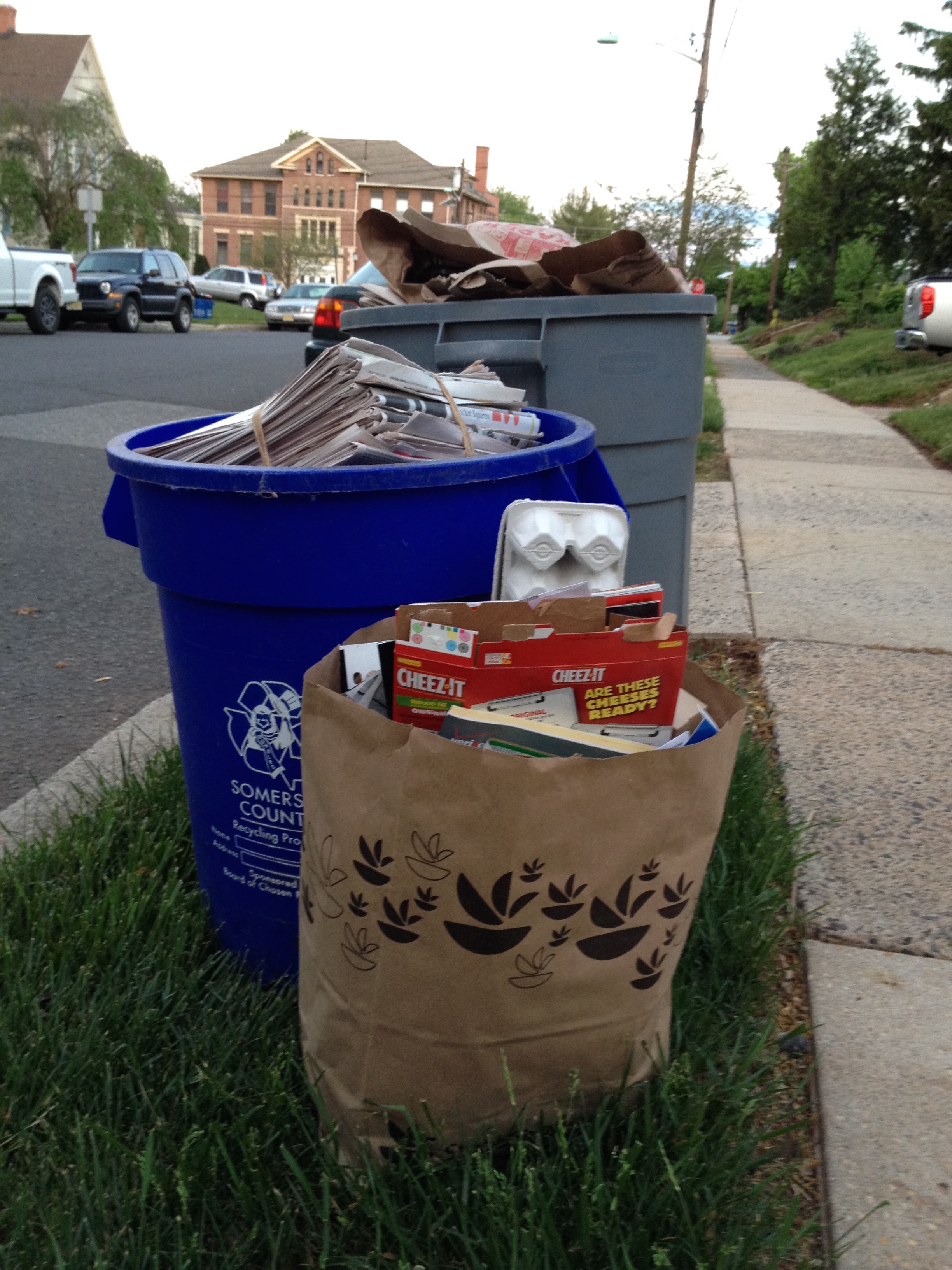
Like nearly all unfortunate white collar workers, the computer provided for me at my job is a PC. I don’t know the brand—that’s not important. When I want to delete a document, I’m asked if I want to move it to the “recycle bin.” Okay, I’ve been an environmentalist since I was a teenager. Growing up in a small town, recycling was a foreign concept, vaguely communistic even, but I could understand that limited resources would run out. Living paycheck to paycheck, that was perfectly clear. The town where I grew up still doesn’t offer recycling, but having a recycling bin on a computer screen? Are the electrons from my documents indeed being recycled, or is this just a way to make me feel good about throwing away something somebody spent hours putting together? It seems such a tautology to me.

This recycled world can be a scary place. I was a victim of identity theft once. Thankfully I hardly have enough to steal that the thief got away with very little before the credit card company found him. It meant having to go a few weeks without purchasing power, and a possible stain on my ratings. One merchant didn’t want to refund the charges, although it was clear that they were illegally made. So we recycle our sensitive material with the greatest care. It has to be shredded first. We had one of those home shredders that took hours of time to feed in “up to six sheets” at a time (two was the actual limit), and before you knew it the weekend was over and you had bags full of bird nesting and you still had to take them to the recycling place. So our local community, we learned, participates in a shredding drive. My wife and I went a few weekends ago and it was so popular that we were turned away at the gate. The line was too long and the trucks were almost full.

This past weekend I tried again. I had to drive to a new location where, I kid you not, the traffic pattern had to be changed to accommodate all the shredders. I was kind of glad in an impatient sort of way. I’d brought a book to read, anticipating such a wait. I was a bit anxious, however, with a police officer watching. I mean I had a book to my face in traffic, after all. At least it wasn’t a cell phone. The line crept along until I was finally admitted. I had six bags of confidential stuff in the trunk, and I was glad to have the chance to have my personal life obliterated by the huge, roaring trucks. As I inched to the front of the line, the check-in lady asked me what town I was from, and in response gave me a handful of papers that I would only have to recycle. I thought of my recycle bin on my desktop at work. There seems to be no end to disposing of the information that defines our lives. Some would call it a tautology.

C58E576D-BA75-4991-AA88-B095BBED4E1C copy


Original Research

“But are you able to continue your research?” they ask. Academics can be so hopelessly naive sometimes. I recently had a notice on academia.edu that I was in the 30-day top 5 percent of page views. So I’m feeling like the Bruce Springsteen of academics for a few seconds. Meanwhile institutions who look at my record wonder why I haven’t produced anything lately. It’s really quite simple. Take a 40-hour work week (a foreign environment to most academics), add a daily commute of 3 hours, and subtract access to an academic library. As the old computers in sci-fi movies used to say, “does not compute.” My research these days is limited to material that is actually able to keep me awake on the bus (thus excluding most academic monographs) and those that I can afford to buy on an editor’s salary. My research has slowed considerably, in other words, due to circumstances beyond my control.

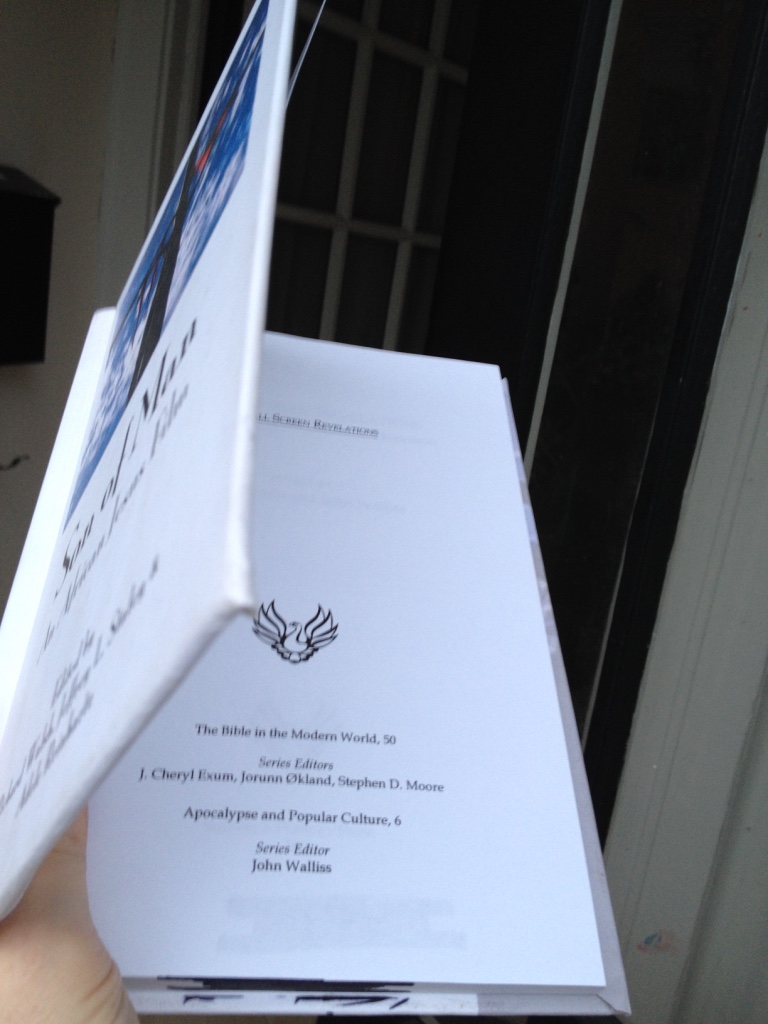
thumb_IMG_2163_1024That’s why I’m sitting here perplexed. Despite it all, I have had a paper accepted for presentation at the Society of Biblical Literature Annual Meeting this year. My project is on the Bible in Sleepy Hollow (thus the recent spate of books on Washington Irving and his hometown). Still, I had to challenge the budget and purchase a couple of things. The cover of my book has me confused. Son of Man, it says. Inside, however, is the text I need—Small Screen Revelations. (If you wonder why, watch Sleepy Hollow, or, if possible, come hear my paper.) The reason for the mismatch between the cover and content of my book is the price. A tome from the appropriately named Sheffield Phoenix Press, even used the volume costs almost $100. It’s just 200 pages. I managed to find a copy misbound for the bargain price of half that. Only an academic would pay $50 for a defective book just to get at the content. Am I able to continue my research? Reach for your wallets and see.

A large part of my job is spending time on university faculty webpages. Many of those I find haven’t published nearly as much as I have, but have comfy, tenured positions. Often it is because they’re the right brand. Catholics like Catholics, Presbyterians like Presbyterians, Baptists like Baptists. State universities hate them all. And once in a while I pull my doctoral robe out of my closet, press it to my face, and weep. I don’t know what a blue collar kid might have been thinking. Earn a challenging doctorate in an obscure field overseas and hope for a modest teaching position somewhere in the land of the most abundant colleges in the world? My race and gender should’ve come to mind long before I got that far. In some ways, I too am a misbound book. Am I able to continue my research? You be the judge.


Always with You

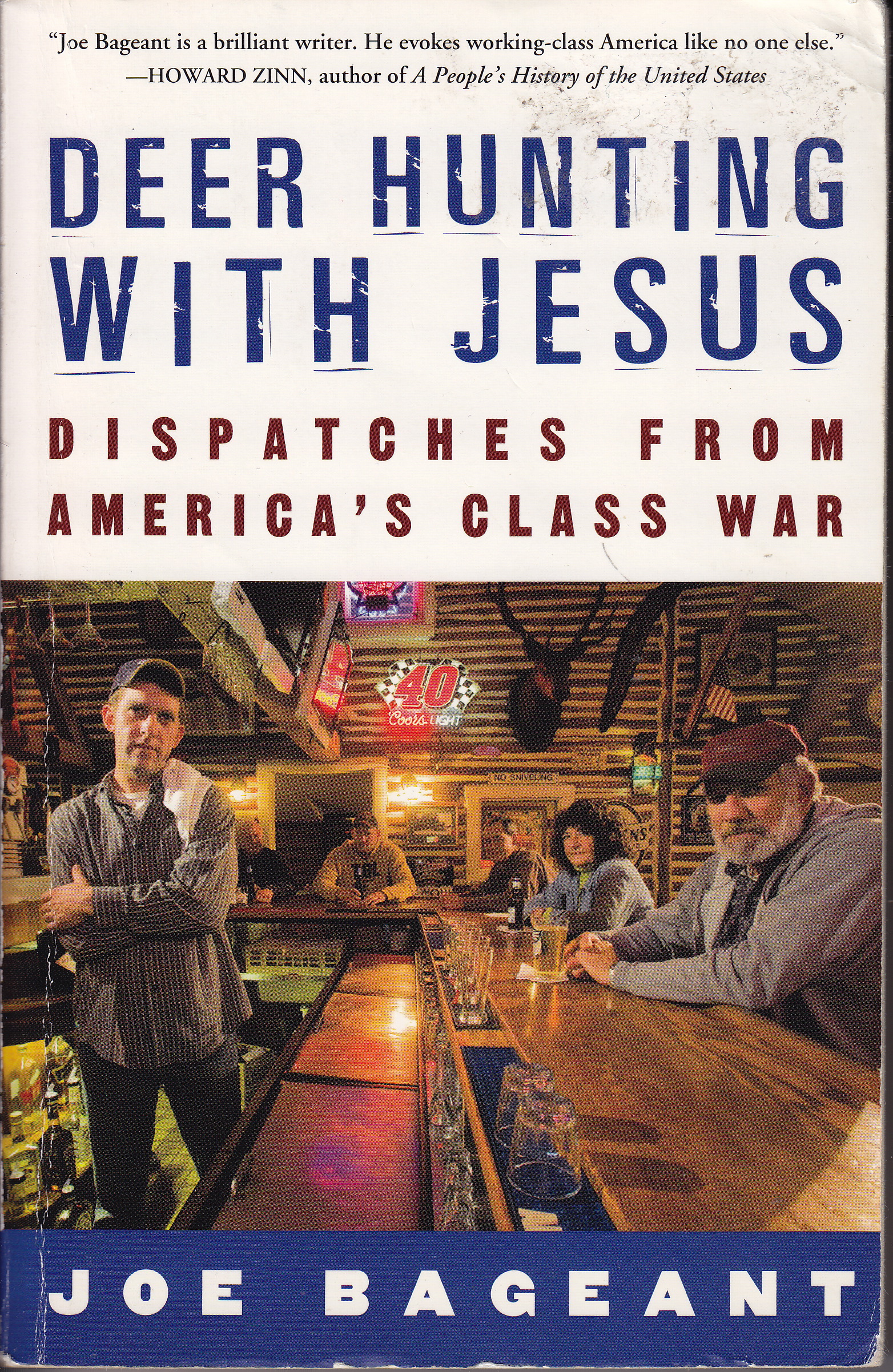
DeerHuntingIf you read only one book this year, let it be this one. I picked up Joe Bageant’s Deer Hunting with Jesus at a used book sale because of the title alone. The blurbs on the back suggested it would be hilarious, and even the subtitle, Dispatches from America’s Class War, didn’t sink in until I began reading. Written during the dark ages of the Bush administration, the contents are a bit dated, yet timeless. Although there’s humor here, I, like Bageant, was born and raised in a working class environment. My father was a house painter (before it became chic) and my stepfather was a blue-collar Joe who did the kinds of jobs nobody else wanted to do. Life was coarse and rough at times, but the people I knew were fiercely patriotic and staunchly Republican. Most adults I knew had never read a book since they’d managed to escape from high school. Deer hunting was nearly as religious as church, and anything you heard in either venue was to be taken absolutely literally. And yet government programs to help them get along were merely shams that politicians knew they couldn’t see.

Like Bageant, I feel at home among the working class. I am one of them. My job may be in Manhattan, but the sensibilities that got me this far are from the backwoods of Pennsylvania. Those who know me outside the office still occasionally call me a redneck. Perhaps it’s an affectation, but it is an affectation born of deep appreciation of the honesty of the worker. They’re no saints, the working class. They will get away with what they can (what bobble-head wagging above a white collar can honestly claim that it doesn’t as well?), they will laugh at the crudest jokes, and they will be mean and turn on each other if provoked. They are, however, good people caught in a system that won’t let them improve. The only possibility is education, the one service governments slash at every opportunity. The system, as Bageant shows, was built just to do that. Like Moses, throughout the book, he calls them “my people.” I know exactly what he means.

When I visit my hometown, it’s like a Bruce Springsteen song. Windows are boarded up and the streets seem even meaner than they were when I was a kid. These are people in ill health with a government that would rather not spend the money on them—we’re used to it, and Uncle Sam knows that—so it assures that the only businesses that thrive are fast food and liquor stores. You can also find a television and rifles, but not much else. The liberals, as Bageant states, don’t know how to relate to the common man. In my own experience, the redneck who earns a doctorate won’t have a chance of getting a job. The university liberals have their own agendas, too busy trying to save the planet to worry about the real people who make their lifestyle possible. I picked up Deer Hunting with Jesus as a joke, but found it the most important book that I’ve read in many years. Please read it and try to understand.


Post Script to Art

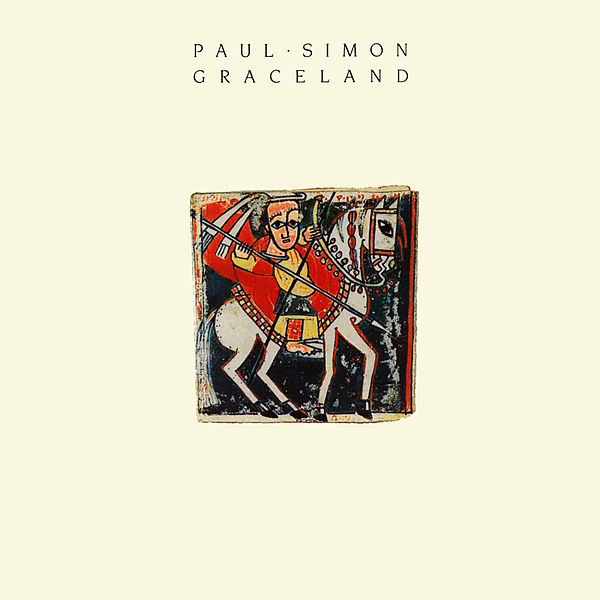
At work Christian Century is a magazine that sometimes lands on my desk. I suspect the book reviews are the main reason for this, but I like to skim the headlines to see what the more progressive, popular periodical has to say about the world. I always glimpse the news in brief section, and quite often the quotes of the week are poignant. This past week I read one from Paul Simon, who was speaking at Princeton University. The quote ran, “We are living in an anti-art age. The world is now a brutal place and obsessed with speed and wealth.” I found my head nodding as I read that sentiment. While I was a little too young to be aware of Paul Simon’s considerable contribution to popular music while it was happening (although I was old enough to appreciate Graceland when it came out), I nevertheless listened to Simon and Garfunkel during college and beyond, amazed at the depth and accuracy of Simon’s poetry. Here was a true artist.

What a difference half a century can make. I find myself not recognizing the world that I took for an assured thing as a child. Drawing back to get some perspective—which is something I think Paul Simon would appreciate—I think about the world without technology. Other species, for example. The behavior of, say, deer is the same today as it was when Europeans first invaded these shores. While deer still wander out onto roads in their natural quest for food, we race at them in heavy machines that leave them dead and twisted grotesquely at the roadside. Deer may not have the mental capacity to think, “hey, there’s fewer predators than there used to be,” but they are frequently brought into contact with a technology that is so nineteenth century, and the result is fatal. Where has the artistry gone? The deer remain the same.

I read a lot of older stuff. When I see the literature that was clearly published for its beauty of language and artistry, it brings a tear to my eye. We don’t publish work like that any more, unless it can make money. Everything has become a calculated capital venture. If you can’t make money off it, it’s not worth doing. When I was stressing out in college over exams, I would sometimes put on my old Simon and Garfunkel records and listen to the deep and complex lyrics to “Mrs. Robinson,” or “Bridge over Troubled Waters,” or “The Sound of Silence.” Despite the angst, this was a world that had a place for beauty for its own sake. It’s not just the music that’s changed since then, because I knew that I was listening to the words of a prophet. And prophets only appear when there’s trouble ahead.

Graceland