Saving Face

Although it has been commented upon in Rate My Professor, my beard is not intended to be impressive. In fact, it’s not really. Since I was quite young I dreamed of being a bearded man. I don’t know why. My father and my step-father were clean-shaven. The pictures of Jesus with which I grew up, however, seemed to suggest that a kindly man must be a bearded one. Nature deemed, however, that my facial hair would be less impressive than that of many boys I knew in high school who were already contending with five o’clock shadow. I never liked shaving. To me, nature dictated that men should be bearded, and who was I to combat nature? Except for a brief stint when I had to make a living in retail, I’ve worn a beard since I’ve been able to do so. I don’t fuss with it, trying to make it something it’s not. It is simply who I am.

339px-Epicteti_Enchiridion_Latinis_versibus_adumbratum_(Oxford_1715)_frontispiece

So when my wife sent me an infographic from the Washington Post about religious beards, my curiosity was piqued. It actually makes me a little self-conscious, I have to admit. I vehemently dislike anyone commenting on my appearance. There’s also something vaguely sexual about facial hair, coming as it does with the onset of puberty (a few years later in my case). Looking at the ways various religious groups condone facial sculpting, I couldn’t help but think that traditionally religions have said, to borrow a phrase from Frozen, “let it go.” Or let it grow. God and nature are one here. Genetics may determine what kind of beard may grow, but it takes religions to say it is God’s plan. For me, standing before a mirror before dawn, scraping my face with a very sharp piece of metal while I’m still yawning hardly seems civilized. Wash and go seems much more natural to me.

In the biblical world, the beard was a symbol of experience. Lifespans in those days were precarious. Guys surviving to my level of whiteness were revered. Today we are considered scruffy and lazy and unwilling to play by the rules society has set. I suppose it’s no accident that I was always a fan of John the Baptist with his unkempt appearance. Like Elijah before him he was a man of the wilderness. As nature made him. I last shaved in 1988. Were I to do so again, I fear what I might find underneath. Harrell Beck, before he died, once said to me, “you’ll never shave it off.” Although once I did, he has proved himself among the prophets. Just don’t say anything about it to me since, like religion, to me it is a very private thing.


The Friar’s Tale

Being a fan of Gothic fiction, I recently read an anonymous story from 1792 entitled, “The Friar’s Tale.” Those who linger among Gothic conventions know that the monastery is a common trope in the genre, often with debased clerics who use their authority to make their charges miserable. (Hmm. I wonder why I keep coming back to this kind of fiction?) Literary scholars tend to point to the late eighteenth century as the origin point of Gothic sensibilities which coincide with the Romantic movement. This then, is an early example of what people feared as industrialism and modernity encroached on a world once natural and full of mystery. The tale contains nothing to frighten a modern reader, but it does offer compelling commentary on the one organization that would seem most to benefit from retaining a pre-scientific worldview—the church.

IMG_2009_1024

The story involves lovers separated by a cad who is after the lass’s money and who connives with the mother superior of a convent to lock the girl away from both her money and her lover. She comes to the realization that religion has ruined her prospects. The friar narrating the tale refers to religion as “that constant comfort of the good, and powerful weapon of the wicked.” Of course we had already experienced Reformation vitriol by this point in history, and rage against the use of religion as a means for personal gain had been thrown out for any who would care to utilize it. Clearly the author of “The Friar’s Tale” found it essential to the plot.

The truly interesting aspect of all this is how, in the intervening centuries, religion has continued to present this opportunity to the greedy and corrupt. Not all religion succumbs, of course, but when it becomes a hierarchy of any description there will follow those who find it a means of personal gain. The Prosperity Gospel movement comes immediately to mind. Those who putatively follow a man who is recorded as having said to give away all that you have in order to be his disciple have somehow missed the message and keep their treasure where moth and rust pose constant dangers. We think ourselves advanced since then, but the words of a fictional friar from centuries ago may still hold some wisdom for Gothic readers in the present.


Dis-Connected

One of the more bemusing academic exercises is the analysis of the working class. Sometimes sociologists or scholars of religion take it upon themselves to present the view of the underprivileged. While they certainly seem to get some aspects right, in truth, they frequently don’t have a clue. Growing up in a working class household is the only way to have the authentic experience. I am one of a few, and I should I say I know many, many academics, who grew up in an authentic blue collar environment. When I read my fellow religionists discussing what it must be like to be underprivileged, I think, why don’t they just ask? Oh yeah. That’s right, I don’t have a teaching position. Why not? I have no connections. I have no connections because a kid who grew up in small town in a poor family doesn’t know to go to Harvard. I applied to transfer to Harvard from Boston University and was accepted. I decided not to go. A guy with connections would’ve known better.

Those of my colleagues with university or seminary posts tell me that the authentic blue collar academic is a hot commodity. In my blue collar frankness, I would equate that statement with what one might find behind the hindquarters of a male bovine. When a rare academic job opens up, the connections circuit begin to whir. Those of us who are unconnected (and I know I’m not the only one) will be passed up for one-year replacement positions as well as non-tenure track positions. They’ll gladly hire us as adjuncts—the blue collar workers of the academic world. I have been an inside candidate before. Although I knew entire departments I was not hired. I guess I don’t know the right people, dang-nabbit. (Imagine a thigh slap in there, in case you want to visualize your narrator.)

Blue collar workers are hard workers. As everyone, friend and foe, knew at Nashotah House, I worked hard. I obey the foreman. It’s a skill I learned before I finished middle school when I took my first blue collar job. Don’t bother telling me the excuses since I’ve heard them all before. We had to hire a (fill in the blank). So-and-so was already in our mind when we advertised the job. Once a seminary trustee complained to me that he had to get up at 4 a.m. to catch his flight. I get up at 4 every day, sometimes earlier. He was also well known for having an expensive, frivolous, and vain collection. He was the rector of a large and very influential parish. No worries; the poor you’ll always have with you, but be careful not to let them join the conversation. They might interfere with your connections.

Tell, don't ask.

Tell, don’t ask.


Oxford Haunts

IMG_2007

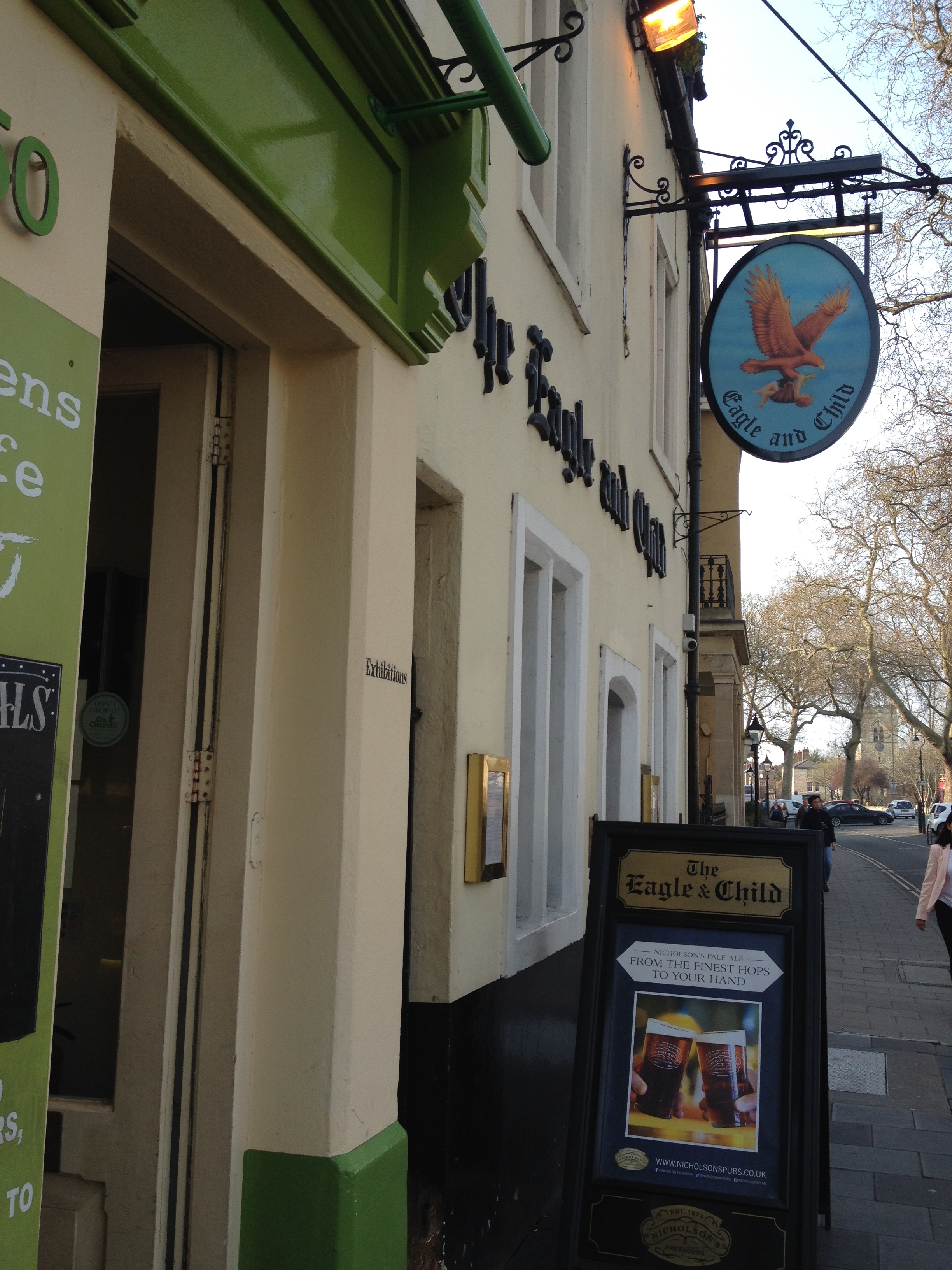
When I travel, when I have time to plan, I like to visit the haunts of literary figures. It would be difficult to think of two more influential (or abbreviation-ridden) English writers than J. R. R. Tolkien and C. S. Lewis. Both Oxford men, they liked to drink, I believe, at the Lamb and Flag. I stopped by to see, but just in case it was actually the Eagle and Child, I back-tracked to see it as well. Post-war Oxford was a place for an academic to write, and C. S. Lewis has influenced an entire generation of evangelical fans who overlook his penchant for drinking, and J. R. R. Tolkien seems to have invented the perfect fodder for CGI animators. Perhaps there was something in the air. Although no less of a literary talent, it may be less common to hear Thomas Hardy’s name. He is rumored to have written Jude the Obscure, appropriately, mostly in this pub. Good to know there’s someone else so obscure, by definition. It’s hard not to feel scholarly in Oxford.

IMG_2038

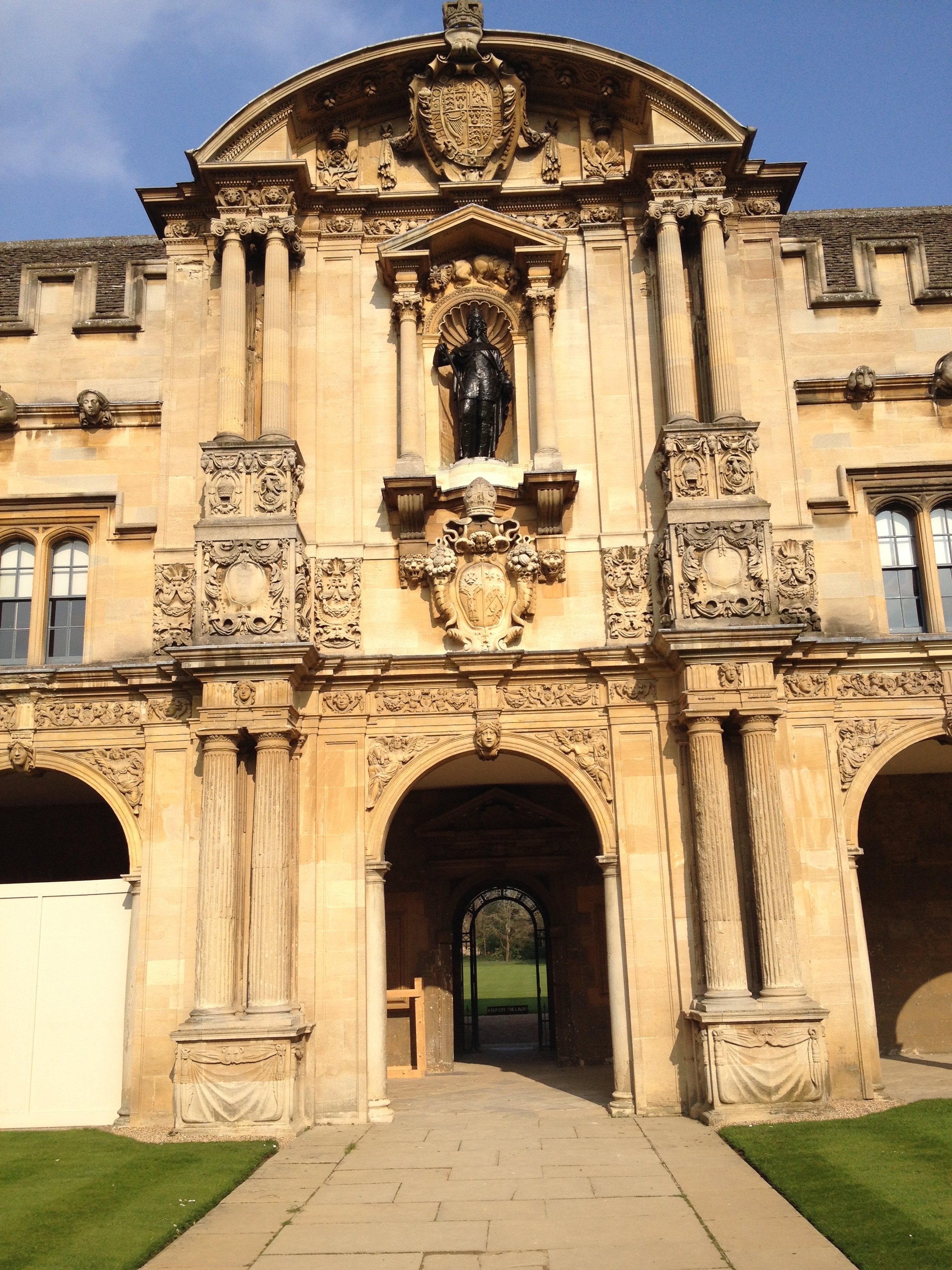
I have to confess, I dressed the part. I wore my Harris Tweed jacket and my Edinburgh school tie. It was a beautiful spring day, the like of which were extremely rare in Scotland some two decades ago. Not knowing that my business trip would offer the opportunities to explore the city a little, I hadn’t done much homework. A colleague suggested I stop into St. John’s College to look at the gardens. They’re only open from 1 to 5, and I timed it right to get there shortly before closing. Students wandering out in jeans, staring at their smartphones, could have been students at any number of universities I’ve known. The setting was, however, quite beautiful. There seems to be evidence that they don’t walk on the lawn. Tradition is treated with considerable respect here. Although, upon closer look, graffiti does make an appearance now and again.

IMG_2010

As I was stepping out the door of St. John’s, a family from eastern Asia was coming in. It was near closing time. The father asked me if this was Oxford University. I explained that it was part of Oxford University, but that the university was quite large and was all around the town. As he pressed me for more information, I wondered why he was asking an American who’d only been to Oxford once before about the place; I hadn’t done my homework, after all. Then it occurred to me. I was dressed rather like a prototypical professor. The tweed, the beard, the glasses, the consistently confused look on my face—I’d been mistaken for an university professor. I stepped outside and looked around. In a different time, perhaps it would have been true. And maybe Tolkien and Lewis would have lifted a warm pint in a cold pub and we all might have learned something.


Paper Oxford

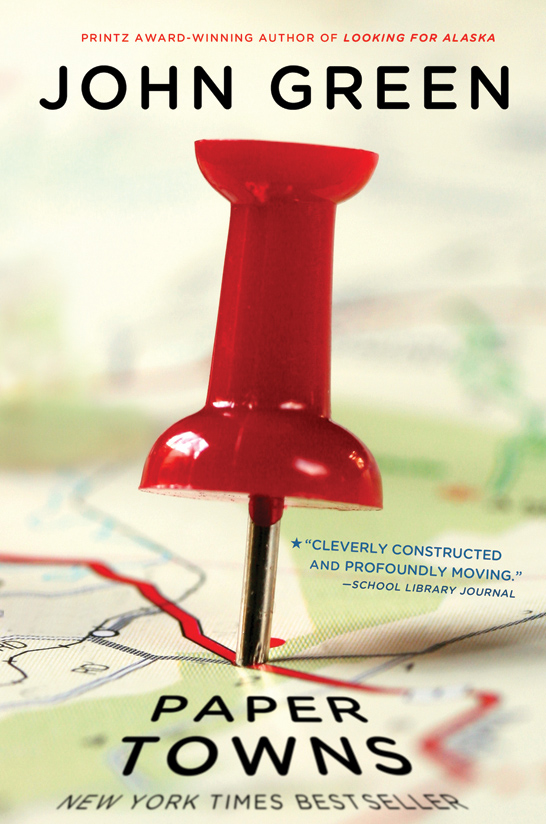
PaperTownsIt looks like a brilliant blue morning here in Oxford, yet my body is telling me that it’s the middle of the night. And that’s saying something, since I normally get up around 3:30 anyway. Routine is kind of a religious thing. In fact, it seems to be the root of ritualistic behavior. The passing of time is a matter that affects us all in some way. Jet lag is one of those ways. I’ve got an important meeting to attend in an hour—that’s why I’ve come all this way—and yet my mind will be telling me I should be elsewhere. Perhaps back over the north Atlantic, looking down at icebergs from the air, wondering if climate change is really that far advanced. Are there any polar caps left at all? Didn’t the Titanic hit an iceberg at this time of year, and wasn’t it a great surprise? At least on a ship you don’t get jet lag. There’s nothing like travel to shake you out of the ordinary.

I suppose that’s part of the draw to John Green’s Paper Towns, which I read on the flight over. Although it’s young adult literature, Green has a way of capturing what it was like to be a teen on the cusp of adulthood, and the need to become who we are meant to be. It is a story of leaving home, and of living on the edge. Once a friend said to me that he couldn’t understand someone wanting to leave the place they grew up. I, on the other hand, was only too eager to leave a verbally abusive situation in an industrial town that was slowly dying with no prospects for the young. Needless to say, Paper Towns resonated with me. I can’t remember the last time I read a novel in a single sitting. Although I’ve been an adult for decades, I can still remember the feeling of being young, of falling in love, and wondering what this was all about. High above the north Atlantic, I was sure I still hadn’t figured it out.

There’s nothing religious about Paper Towns. The characters in it assume God to exist, as most Americans do. We make a lot of assumptions. My body is assuming it’s only two in the morning. My clock is telling me that it’s seven. Time is relative, but only one of those placeholders will determine if I am late to work in this place I find myself waking up. I remember being young, and although Oxford has its usual charm, I also know what it feels like to have to leave. The clock tells me that I have to go. The novel in my head tells me the same thing. I’m not sure what time it is. For the moment my paper town is Oxford, and it seems very real indeed.


United We Fly

IMG_0563

I’m on a flight from New York to London. This wasn’t a trip I particularly wanted to take (what business trip ever is?). I don’t like flying, and changing time zones takes days off my life. Bowing to the inevitable, I dutifully checked in yesterday. However, that didn’t go quite as planned. I’m flying United. I generally take United since they offer many destinations out of Newark, and who wants to cross Manhattan to get to JFK or Laguardia? I’ve actually become rather fond of United’s snack boxes. Since I’m so 1990s, I decided to check in on their website. Two or three pages in, they stopped me and suggested I should use my cell phone. This is much preferred, I’m told. Well, I do have a cell phone, but I’m not sure if I’ll be able to access it in the UK. Still, this is the way things are done these days. I had United’s app on my phone from a previous flight, so I happily typed in my confirmation number, to fly the friendly skies. Since this is an international flight, I have to scan in my passport. That’s a bit worrisome, but the app says to do it and who can argue with an app? Click. My passport is being encrypted and verified. I’m free to go. Then the message pops up. I can’t check in.

I’m old enough to know how to use a landline. I called United. The agent was very friendly, just like the skies, but clearly couldn’t comprehend the complexity of my issue. One, I couldn’t check in. Two, my passport had been sent to somebody, but who was it? United? Some foreign government? James Bond? I didn’t mean to make the guy nervous, but this is my passport we’re talking about! He said he would transfer me to tech support. The call was transferred. The cheery female robot asked me if I wanted a $100 Wal-Mart card. I should press one. I don’t support Wal-Mart so I didn’t press one. She cheerfully insisted. I resisted. She came back on and said that I could press any button for a Wal-Mart card. When I didn’t comply, she hung up on me. I called United again.

This time the agent assured me I would have a human response at tech support. I heard the two tones connecting me with a guy who sounded surprised to hear a voice from the outside world. It was like he was speaking from a dank basement somewhere. He had no idea where my passport scan went either. He suggested deleting the app and then downloading it again. Start the process over. Reboot, as it were. I know the reboot drill, but I was worried about my passport scan. Where had it gone? If his solution worked, at least one problem would be solved. I could check in and reserve my place on the flight (ironically, buying a ticket isn’t enough to do that). I confirmed the instructions with my light-deprived docent. I asked, in parting, what I should do about my missing passport scan. His advice was the very image of an ouroboros. “You might try calling customer service,” he said. I don’t like flying.


Unconventional Resurrection

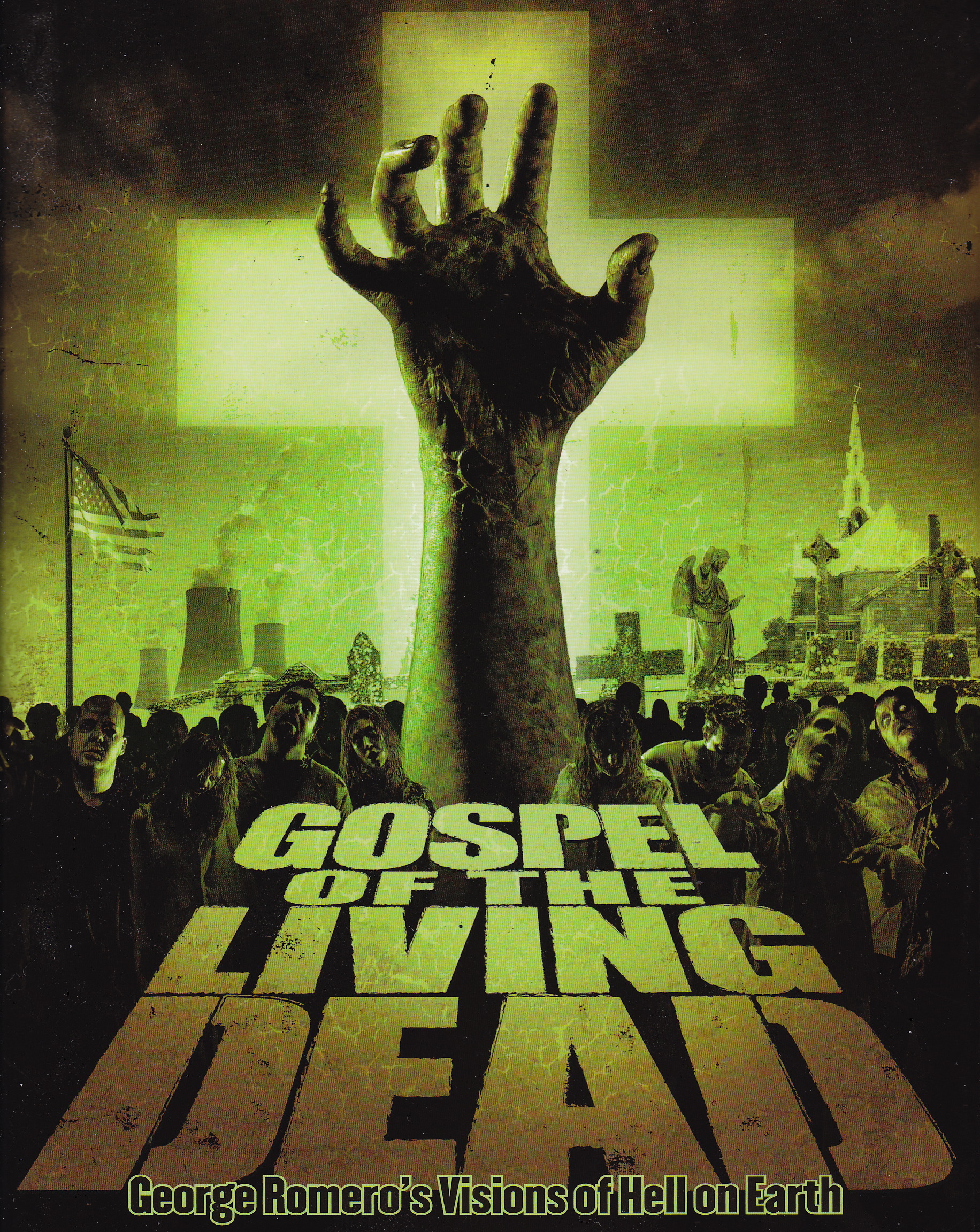
GospelLivingDeadWith talk of resurrection in the air, it seems natural to turn to zombies. In this internet age the monster of choice seems to change from day to day, but since the turn of the millennium zombies have been a contender for popular favorites. In a world where many of us feel zombified by our work, this is no surprise. Late capitalist power structures drain the life, leaving only the shell. In a situation where zombies appear so frequently, it is difficult to keep current. I bought Kim Paffenroth’s Gospel of the Living Dead shortly after it was published. Subtitled George Romero’s Visions of Hell on Earth, it saves itself from too my obsolescence by taking the narrative from Romero’s movies, and one remake, thus leaving room for the many other zombie movies to come and go. While it does make reference to 28 Days Later and Shaun of the Dead, most of the discussion stays pretty close to Romero, taking the reader through his quaternity of movies in the genre.

Roughly paralleling Romero’s oeuvre with Dante’s Inferno, Paffenroth treats the movies theologically. Not surprisingly, sin and ethics play a large part in his analysis. The undead, after all, are not un-spiritual. As I read along, however, I often thought how a western Pennsylvania connection gives some insight into what Romero is trying to do. Perhaps we are in danger of over-reading without the context (what biblical scholars call isogesis, but which post-modernists call simply reading). For example, some of the place names are given a theological significance in Gospel of the Living Dead that some of us who grew up in the area recognize as just another town. This always comes home to me when watching Night of the Living Dead. The posse out to hunt zombies always reminds me of people I knew in high school. After all, the first day of buck season was a local holiday.

Still, I have trouble seeing Romero agreeing with the dialogue revolving around sin. Yes, his first two movies were as much social criticism as they were horror. The Vietnam War and consumerism were true evils to be cast in parables and shown to the public. Zombies were prophets. Paffenroth suggests that zombies will never become mainstream commodities, but time has shown that even zombies can be bought out. World War Z was a Hollywood extravaganza. The Walking Dead is hardly the domain of outcasts and pariahs. Romero’s monsters were, alas, not more powerful than capitalism. Even zombies can be purchased. Zombies and vampires can indeed earn money, and resurrection itself comes with a price.


Music Alone

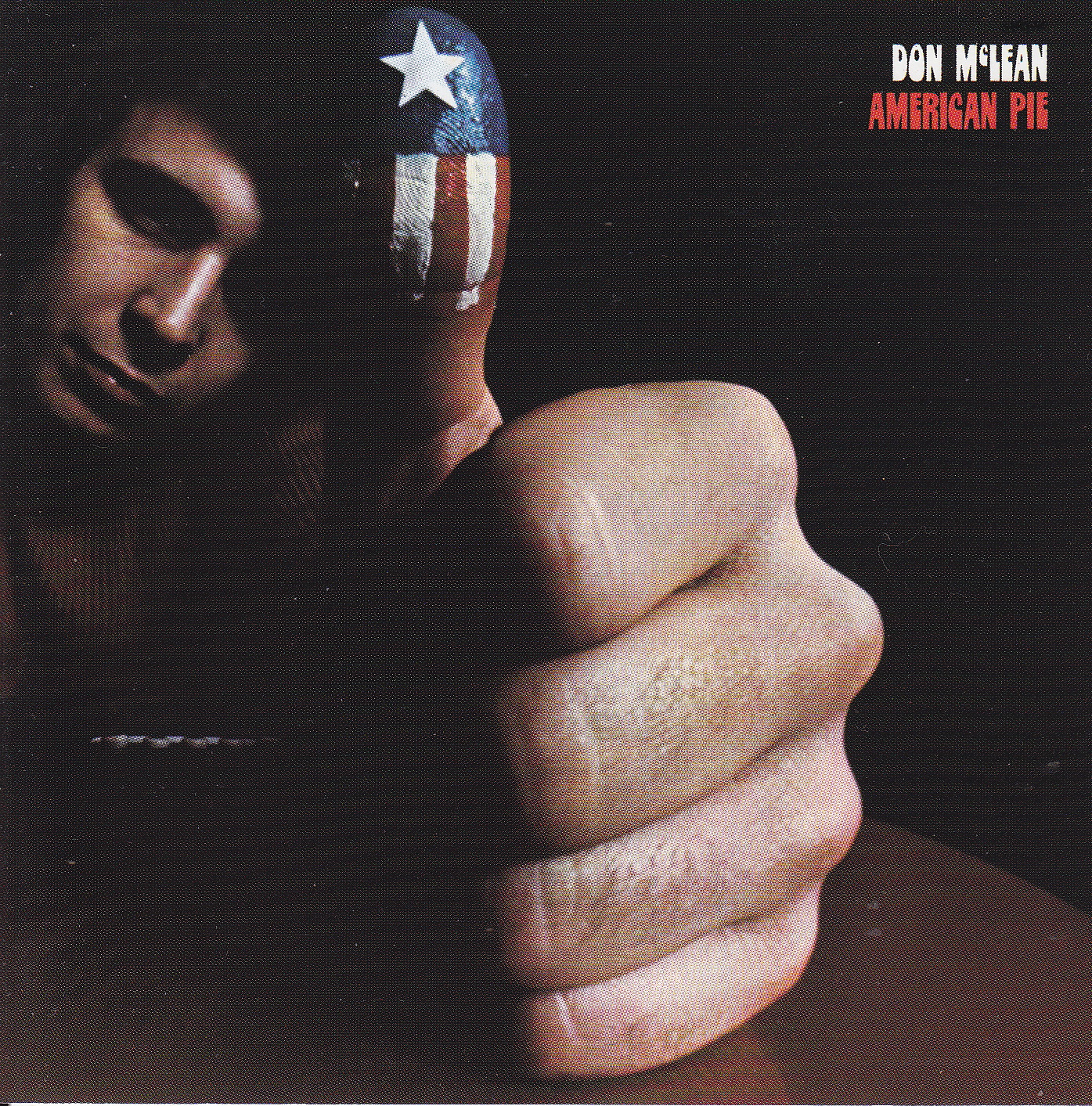
Thinking back to our days in Edinburgh, I had a song come to mind. I could remember only a word or two, but the tune and the cadence were still there. Not a singer, nor even a hummer, the best I could do was ask my wife if she remembered the song based on the two words I could recall. Amazingly, she did. When I went to download it on iTunes, I learned that it isn’t available in the US. Probably copyright laws—these can be quite bizarre. Music has a way of staying with you and one of the songs unforgettable to those of us growing up in the ‘60s is Don McLean’s “American Pie.” In a recent Bloomberg View piece, Stephen L. Carter, a professor at Yale, laments the fact that McLean’s original notes for the song are going up for bids and, after five decades of guessing, we may finally learn what the cryptic lyrics mean. Or will we?

AmericanPie

A colleague of mine used to say, “words don’t have meanings, they have usages.” In the literary technique known as reader-response criticism, it is the reader who has the final say in what a passage “means.” An author may intend one thing, but who is the author to control the meme once it’s out? (You can see why some biblical students get upset by such things since the same thing applies, even if the author is God.) While I’m not po-mo enough to accept this completely, it has introduced an edge of caution to my reading. After all, if an author is dead (ahem) we can’t question him or her to find out what they meant. Even if they remember. “American Pie” is notable for its lyrics with religious imagery which, fairly clearly, are not really religious. Or are they?

Carter laments the coming unveiling. The mystery will be gone. Don McLean, the ultimate one-hit wonder, will walk away with the goods yet again. I have no doubt that there will be analyses and hermeneutical disquisitions. The learned will claim that we finally have the answers. I’m not so sure. What if the “Father, Son, and Holy Ghost” turn out to be Buddy Holly, Big Bopper, and Richie Valens? What does that mean? Perhaps Don McLean, like any old prophet, was merely a vehicle for a message received from elsewhere. The questions go back in an endless regression, and no answer will ever be final. We all know the song is about “the day the music died.” As the old camp song says, “music alone shall live, never to die.” And as I sit here trying to remember how a song I last heard two decades ago goes, I’m pretty sure that the camp song is right, whatever it means.


No Beef

IMG_1932

Burger franchises aren’t always the best option for vegetarians. When you’re traveling, however, choices can be slim. My wife and I recently pulled into a Burger King. They do have a veggie burger, although it is clear that those who prepare them seldom eat them. They must be frozen because they inevitably have that tough edge that comes from microwaving them just a little too long. Anyway, we were sitting down to have a bite, or chew, when a group of three gentlemen in the corner booth caught our attention. They were arguing, in a friendly way, over Christianity. Among the topics of conversation was the age of the earth. (Ten thousand years, at the outside.) Overhearing the conversation, I started to get nervous. I noticed the guy at the table next to them glancing curiously their way.

I glanced around. Other people having conversations about mundane things. Perhaps this is what we’re taught to do. Speak of things that have little depth. We are in a public place. We don’t discuss religion or politics here. But then I reconsidered the situation. If I were to join their discussion I’m sure we would have found little in the way of common ground, but I realized that conversations around religion do have depth. These guys, despite the media’s incessant message that religion is for non-intellectuals, were thinking deeply about topics of ultimate concern. When’s the last time I talked with a colleague about what really matters over lunch?

A blurb in a recent Christian Century mentioned Bob Dylan. It suggested that in a recent interview that he’d intimated that if he hadn’t gone into music, he would likely have studied theology. Likewise, I recalled an interview many years ago with Bruce Springsteen that suggested he might have made a good priest. Listening to the lyrics of many of the songs of these two icons will reveal that depth and public religious discourse many not be so rare as this incident in Burger King seemed to suggest. Maybe the words aren’t always direct. Maybe we speak in metaphors and with guarded asides. Maybe we speak with our actions instead of our words. Many of the most profound conversations we have, when viewed in that light, are like those of three men in a Burger King.


Almost Heaven?

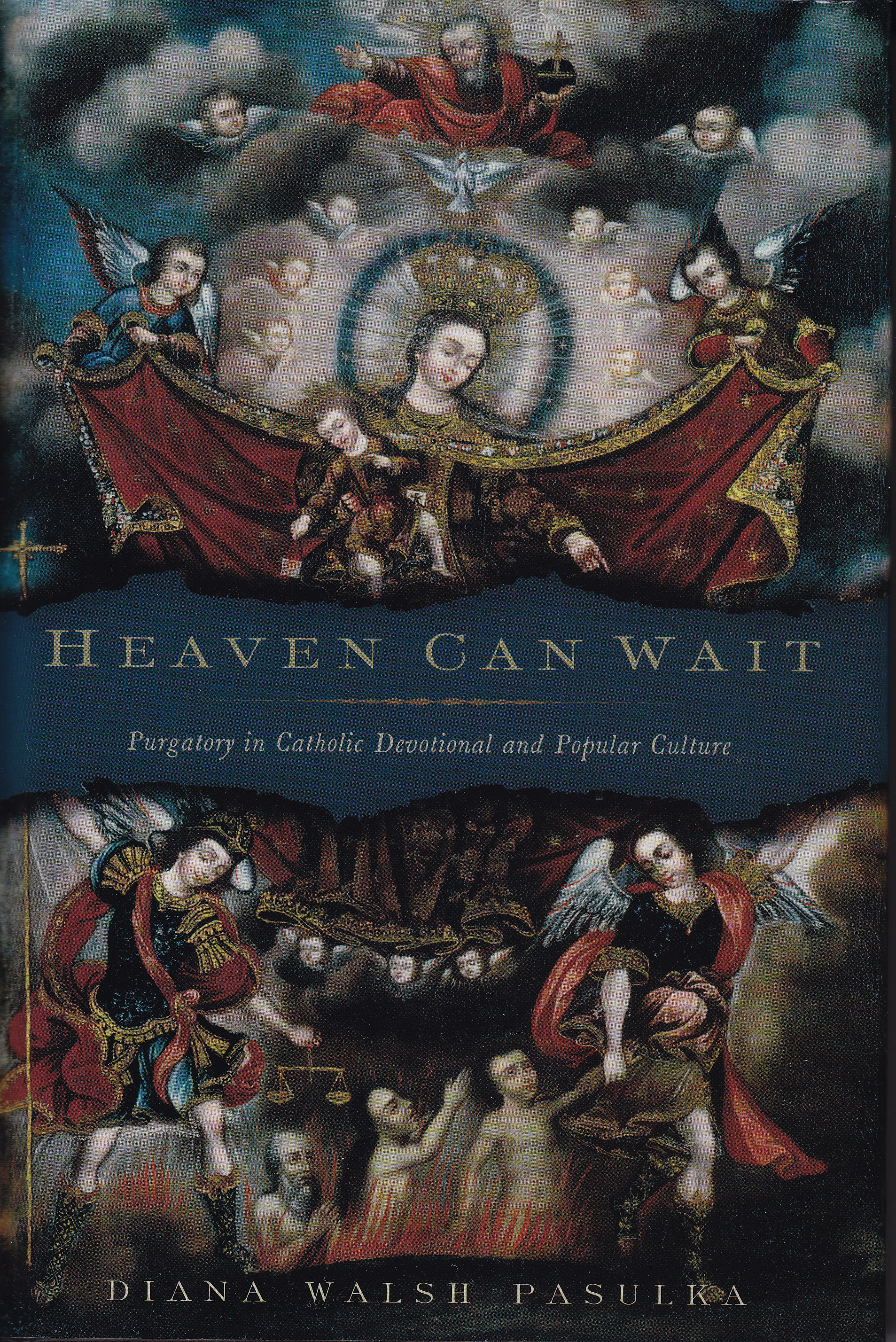
HeavenCanWaitLike most kids raised Protestant, I had little idea about the Catholic worldview.  Despite family wishes, I had Catholic friends, and topics such a Purgatory inevitably came up.  (Well, they did if you were me, with my insatiable interest in religion and its trappings.)  Purgatory was a concept both just and unjust at the same time. It seemed only fair to give people who’d made mistakes a chance at Heaven, yet, at the same time, to make them suffer when they already realized that they’d made mistakes seemed like, to put it bluntly, bad parenting.  The key was in the name: Purgatory.  A place to purge the evil.  Melvillian try pots. Given this background, I couldn’t wait to read Diana Walsh Pasulka’s Heaven Can Wait: Purgatory in Catholic Devotional and Popular Culture. The afterlife is the ultimate 64-dollar question. It pays to be informed.

This fascinating study demonstrates that the idea of purgatory has long roots into Christian history. The Bible does mention Heaven and Hell, concepts borrowed from Zoroastrianism, but it doesn’t directly mention Purgatory. For this reason most Protestants reject it out of hand as Popish and superstitious.  Heaven Can Wait, however, explores how the idea grew into an almost inevitable aspect of Catholic theology. Most intriguing to me was the concept that, like Belinda Carlisle’s Heaven, Purgatory is a place on earth. Specifically, in many Medieval minds, in Ireland. There a cave of torments, guarded by monks, on an island in Lough Derg provided those brave enough to enter the chance to purge their sins before death.  In short, those who braved this cave could bypass Hell by suffering in advance.  Heaven on an installment plan, crudely put.  As Walsh Pasulka describes the accounts of Lough Derg, archetypes begin to fly thick and fast, like proverbial bats out of Hell. This single location, sometimes venerated by, sometimes destroyed by the church, was a vortex of torment.

Over time, as the rationalism of the Enlightenment settled in, the idea of a state of being having a physical locality led to changes in the concept of Purgatory.  The kids I knew took it for granted that it existed, and, with tween angst, accepted that that’s probably where they’d end up.  At least for a while.  Protestant that I was, my choices were a bit more stark. If I messed up, as I well knew I did, my torment would be neverending. Heaven Can Wait is a rewarding exploration of how an idea, logical in its original context, survived long after the worldview of the church had begun to change. Indeed, it survives to this very day.  And like most doctrines of the church, it has a way of scaring even the most inoffensive souls straight.


British Libraries

Quintessentially intellectual, the mental image of the British goes, they are often the sophisticated, educated, literate, worldly individuals. I know I’m stereotyping, but play along a minute. Perhaps Americans and other colonials feel a sublimated respect for the nations that gave us our start, and even today the major academic publishers are British companies. Think about it. So when we ponder the United Kingdom, we conjure images of the pinnacle of urbane, cultured, society. Perhaps this is one reason that I decided to study in Edinburgh. One of my memories of being in that fantastic city is going to a library book sale. I’d never seen inoffensive old ladies throwing such hard elbows before. The hunger for books was palpable. So it is with dismay that I read John Harris’s Guardian piece, “In a country like Britain, obsessed with the now, libraries are a political battleground.” (Did I mention that Brits are also loquacious?) The article, however, has a disturbingly American feel to it. We live in the now, not in the past. Libraries (and museums) are the repositories of thousands of years of human wisdom and achievement. Who needs them?

Harris is concerned with the trend of libraries discarding books. After all, publishing is an industry, and if industry is anything it is about producing more. More books are now being published than have ever been since our human ancestors crawled from the primordial soup. Some are purely electronic, but as survey after survey shows, the majority of readers still appreciate a book in the hand. One might say that a book in the hand is worth two in the Kindle. But libraries, desperate for both funding and space, are resorting to throwing out books. They will be replaced with books, and who will miss them? I can’t help but think of Ray Bradbury. Do authors’ souls perish when their books are destroyed? Where will we go to find out, if our libraries have weeded their gardens too thoroughly? My biggest obstacle to continuing research as an independent scholar is the lack of a good university library. I agree with Harris, without our past, our now is but a passing fancy. When tomorrow becomes today, will we wake up and realize what we have discarded? Will we have to start from the beginning again?

Over the weekend I went to a local Barnes and Noble. I’ve never been a fan, but now that Borders is gone, B&N is the only show in town. (I visit the independent shops far more frequently, but this is winter and I don’t want to venture far.) I read about a newly released novel, still in hardback, and wanted to see if they had it. Amid the toys, videos, and puzzles, I stumbled upon a rack of books. New releases. The shelf of hardcovers wasn’t very large, so I stepped around back thinking there might be more. How naive I am. The store was nevertheless crowded. Those checking out weren’t buying books. The book bags, almost apologetically, bore quotes about how books change the world. I look down. I’ve got a puzzle in one hand and a game in the other. The world has only so much space. With what we choose to fill it says volumes about who we are. Our only hope is that our now contains those who, at least in the future, will live to read.

DSCN5025


Whack-A-Prof

My Ph.D. was conferred in 1992. Not by design, I’ve held several jobs since then. One thing I’ve noticed over and over is that supervisors enjoy knocking down the egghead. If you don’t know me you’ll have to take my word for the fact that I’m quiet, not self-promoting, and actually uncertain about many things most people seem to take for granted. Even in the classroom I never used my education to appear superior to students—education is about all of us learning together. At least ideally. I do know some people flaunt their doctorates. A friend told me of customers pulling into the gas station and insisting on being addressed as doctor. (It might help to know that in New Jersey you are not allowed to pump your own gas.) My friend wryly noted, then they don’t even fill the tank. I had my own similar experience working in a camera shop in a Boston suburb. A patron had “Ph.D.” printed on her checks after her name. Company policy was that the signature had to match the printed name exactly, including title. This particular customer, proud to have Ph.D. flashed before your eyes refused to sign it after her name. When the police had to be called, as per company policy, many of us stared sheepishly at our feet as she signed the cursed three initials and declared she would from then on take her custom elsewhere.

Some of us pursue advanced degrees because we have no talent for anything else. I’m a born teacher, and I have always found the classroom the most congenial environment in which to be. I have had several bosses, however, who seem to think that knocking the Ph.D. down shows just how clever they are. I don’t claim to be smart. I never have. I am a hard worker, I read a lot, and I try to make sense of what I read. Some of the smartest people I know have the least formal education. It’s rare that I don’t assume the janitor knows more than I do about any given topic. (Well, maybe Asherah is a place where I can claim some specialist knowledge.) Otherwise, I take your word for it.

Our culture, however, enjoys putting those in higher education in their place. I hear the conversations behind closed doors. While I don’t claim to know very much—in fact, the longer I’m alive the less I claim to know—I do know that America doesn’t value its educators. It’s not just the professorate. Teachers, those to whom we entrust the very future, have been perennial scapegoats for society’s ills. We don’t pay them well, and many of them have to take second jobs in the summer to make ends meet. I guess we showed them! Who’s the smart one now? I can’t claim to know much, but it seems to me that education is one of the pure goods in society. We can’t make progress without learning. Gifted teachers should be esteemed—not pampered, but appreciated. Of course, I can feel better about myself if I show that I know more than you do. The only cure for that, I suggest, is more education.

Photo credit: Anna Frodesiak

Photo credit: Anna Frodesiak


Live Long and Prosper

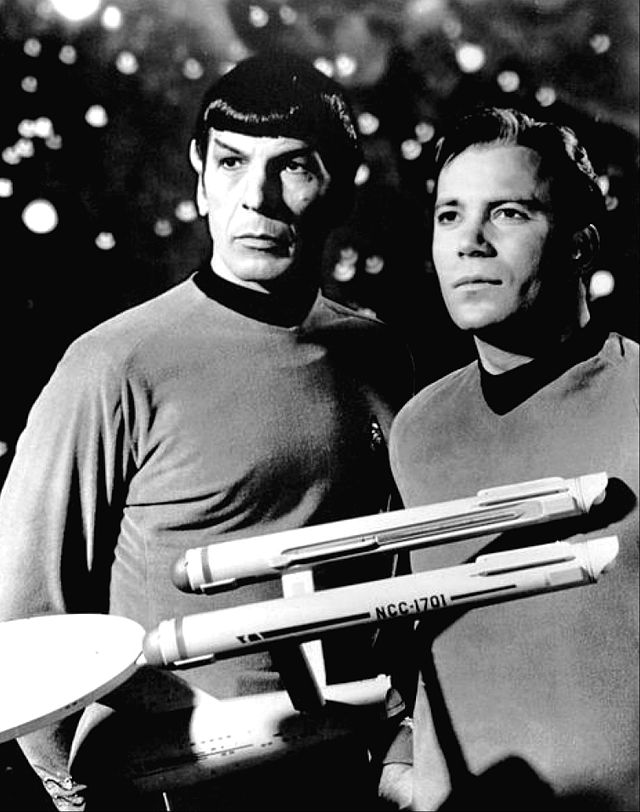
He lived long and prospered. Perhaps it’s a generational thing, but the icons of my youth have been dying. I have to confess to having sat far too many hours in front of the television as a young person, but fantasy of all sorts helped me cope with reality. Leonard Nimoy was a kind of father figure, in a way. Similar to Jonathan Frid, Russell Johnson, and Fred Rogers, all of whom stood in for an absentee parent and showed me different aspects of what it meant to be a man. Watching them die is like having someone tear pages from the book of my life—they made strong impressions, even though it was all make-believe. It’s difficult to say why Leonard Nimoy’s passing hit me so hard. I guess that the conceit of Spock living far longer than humans took hold at some level, and the rational, unflappable Vulcan seemed like a stable, if somewhat emotionally cold father to a child who was, in his own mind, conceived by the television itself.

I don’t really consider myself a nerd. I don’t have the tech to back me up. I’m more like a hermit who spends weekdays in Manhattan. Still, when anyone says Kirk or Picard, there is only one right answer. I watched Star Trek when it was new, still in original reruns. My mother decried it as “silly nonsense,” but along with other monster generation kids, I had my face pressed to the screen waiting to see what new and weird form of life might appear. It was the late sixties and all of this was fresh and untried. Star Trek became a vital part of my childhood. I think it might have been because this was a place with no limits. No limits beyond a shoestring budget, in any case. Space, as I was learning, was vast. There were endless possibilities out there.

Leonard_Nimoy_William_Shatner_Star_Trek_1968

As an adult, the possibilities seem somewhat severely effaced. I’ve tried to be rational and moral and conscientious, but I haven’t really held down a regular career. I don’t watch television any more, and instead read books and ask probing questions. Why does Spock resonate so much with me? Was it because he was apparently immune to emotion? Or maybe he was simply able to rise above it, since everyone knows he is half-human and even Vulcans have emotions, albeit deeply buried. Those of us who followed the original crew through the movies suffered through his death before. And his resurrection. This time, though, it’s not Spock who’s gone. Leonard Nimoy is one of those few people who, in their own lifetime, become a symbol. And symbols, if they are of any use, live long and prosper well after their creators pass on.


A Night at Culture

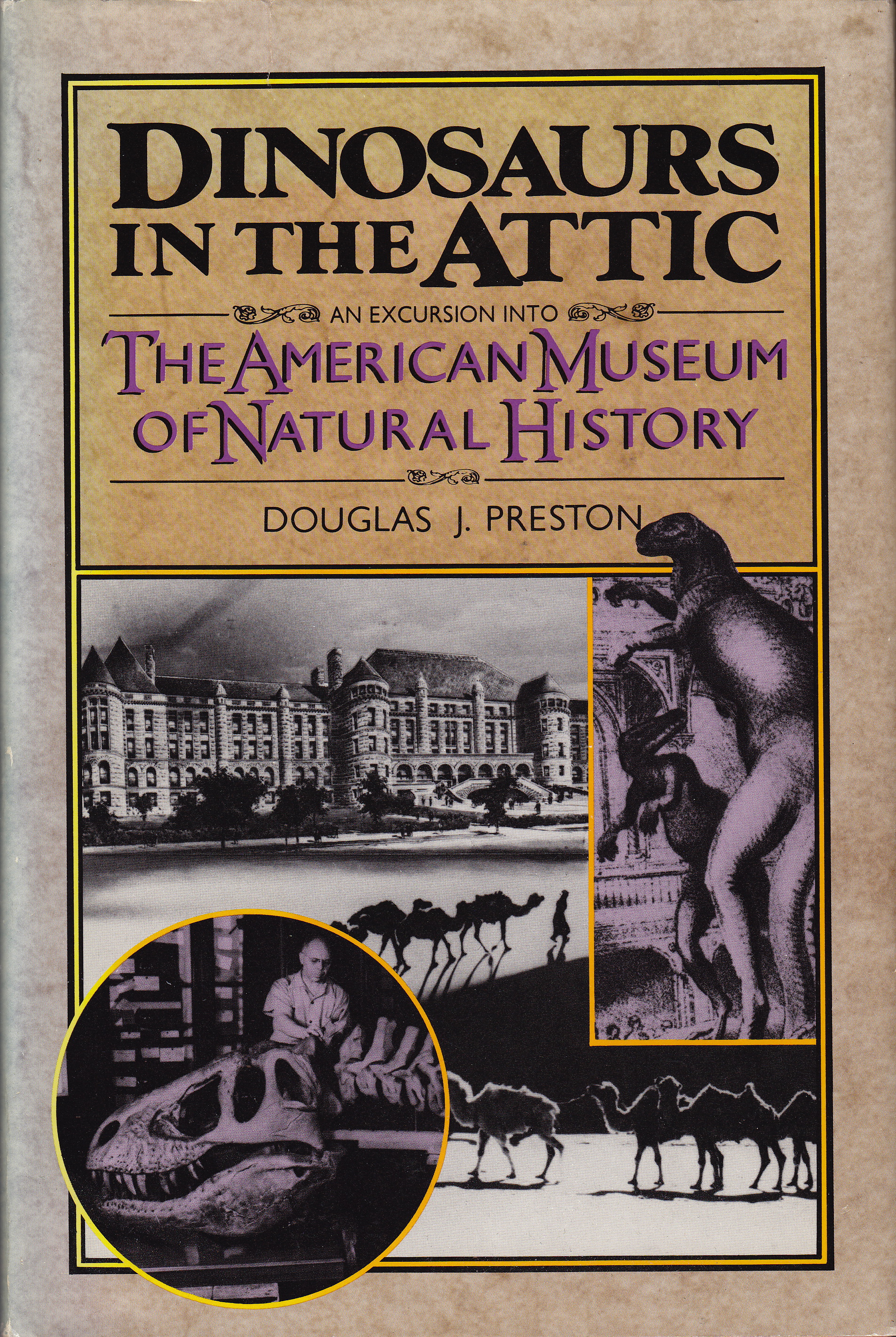
AmericanMuseumOne of the undisputed benefits of living in the greater New York City metropolitan area is the potential for culture. I know that culture exists everywhere, and that is precisely one of the points behind Douglas J. Preston’s Dinosaurs in the Attic. I picked this up at a used book sale because of my love of dinosaurs, but the subtitle provides more of a description: An Excursion into the American Museum of Natural History. Just when the first Night at the Museum movie came out, the American Museum of Natural History offered a program of nights to sleep in the museum, geared toward children. A generous family member bought us tickets and we got to sleep in the oceanarium under the giant whale dangling from the ceiling. We were allowed to explore galleries by flashlight, including the most famous collection of dinosaurs in the world. Who wouldn’t want to read about the backstory of such a museum after such an event?

As might be expected, with roots in the late nineteenth century, it was a different world in which this museum was conceived and built. Rare animals were shot to be part of exhibits, artifacts were acquired and shipped across national borders, and even world-class bird collections were bought to help an indiscrete baron avoid the humiliation of having an affair revealed by a blackmailer. Still, the religious element was clear. One of the founders for the museum, Albert Bickmore, went off in search of artifacts with his Bible tucked under his arm. Exotic places and peoples were still allowed to be called exotic, and the museum eventually became famous enough to star in a movie.

What struck me the most about this fascinating story, however, is when Preston points out that the most fragile, and valuable possession of the museum are the myths. Early ethnographers visited peoples that, even then it was already too clear would become extinct (culturally), and recorded their religious stories. This, and not the thundering Tyrannosaurus Rex, was the true purpose of the museum. Museums are about people. What we discover, what we make, and how we impact our planet. Myths, religious stories, are some of the most unique and delicate pieces of information that we can leave behind. Even materialists have beliefs. We all believe in something. Although nobody goes to a Night at the Museum to read dusty old stories, it is a source of comfort that they are there. Many of the cultures have indeed died out. Were it not for the foresight of those who could see where globalization would eventually lead, they would have been forever lost. And a world without myth is not a world worth living in.


Biblical Weather

On President’s Day, my wife pointed out an article in the New Jersey Star-Ledger headlined, “‘Biblical’ snowstorms battering New England.” She asked, reasonably enough, “What makes a snowstorm biblical?” Since I have written a book on the weather in the book of Psalms, I might be able to speak to that. First off, yes, there is snow in the Bible. It’s not mentioned often and it is a rarity, but the Israelites knew what snow was. In fact, one of the most difficult Psalm weather references is to snow, in Psalm 68. The man interviewed in the newspaper, however, was not being literal. “Biblical” has come to mean disastrous. I can exegete that a bit more: disastrous because of quantity. Too much of a good thing. Or bad thing. In Boston this year the weather just won’t quit. The topic that really has people talking, however, is the temperature. It has been very chilly. My daughter complained when her university didn’t cancel classes with the air temperature at about 9 below. Her note prompted my thoughts of a day to remember.

When I taught at Nashotah House, the weather did not stop us. Ever. It was a residential facility with both faculty and students living on campus. Everything was within walking distance. My close exposure to the weather was one of the reasons I wrote the book. One Lent, and this must have been in February, we had a quiet day. Quiet days were taken very seriously. On this particular occasion the day was to be used for a meditation in the Milwaukee Cathedral, some 35 miles away. The problem was the air temperature was -42 Fahrenheit. That isn’t wind chill, that’s how cold the air actually was. (For those of you reading in Europe, Fahrenheit and Celsius are the same at -40, then they begin to diverge again.) It did not stop us. We piled into the van and prayed earnestly that we’d get there safely. On the way home we manically recited Evensong from memory. When the wind blew the chill dropped to -70 (my Minnesota friends will believe me here). If ever weather was biblical, that day was.

I do wonder if overusing “biblical,” however, will wear it out. Where do we go after biblical? What is conceptually bigger than God? Anselm would panic. What if next year it’s even worse—how will we describe it? We’ve already used up the apocalypse. We’ve entered into a crisis of superlatives. Nothing is big enough any more. As I look at the early fading light of this President’s Day, the snow is beginning to fall again. When I was a child we had, I seem to recall, a simple word to describe it. We didn’t invoke the Almighty. We didn’t hear the galloping of distant hooves. We didn’t act as if a day out of the office were the end of the world. Our simple word for it was this: winter.

DSCN0099