Secret Life of Apples

Considering that the story of Eden fits the pattern of many an ancient myth, modern writers still occasionally argue about what the fruit on the tree of life might have been. The favorite with medieval theologians seems to have been the apple because of the similarity of its name in Latin and the presumed badness of the act. Apples, however, are nutritious and make up a large part of autumn’s outdoor appeal. While at a local orchard over the weekend, apple picking, my daughter pointed out a tree with what might be termed biblical properties. A tree full of ripe apples yet to all appearances the tree was dead or dying. Perhaps that is nature’s way with apples, but it also seemed like such a resurrection symbol that I just couldn’t let it go. Would the apples carry on the line of the dead parent tree? Was there life after death?
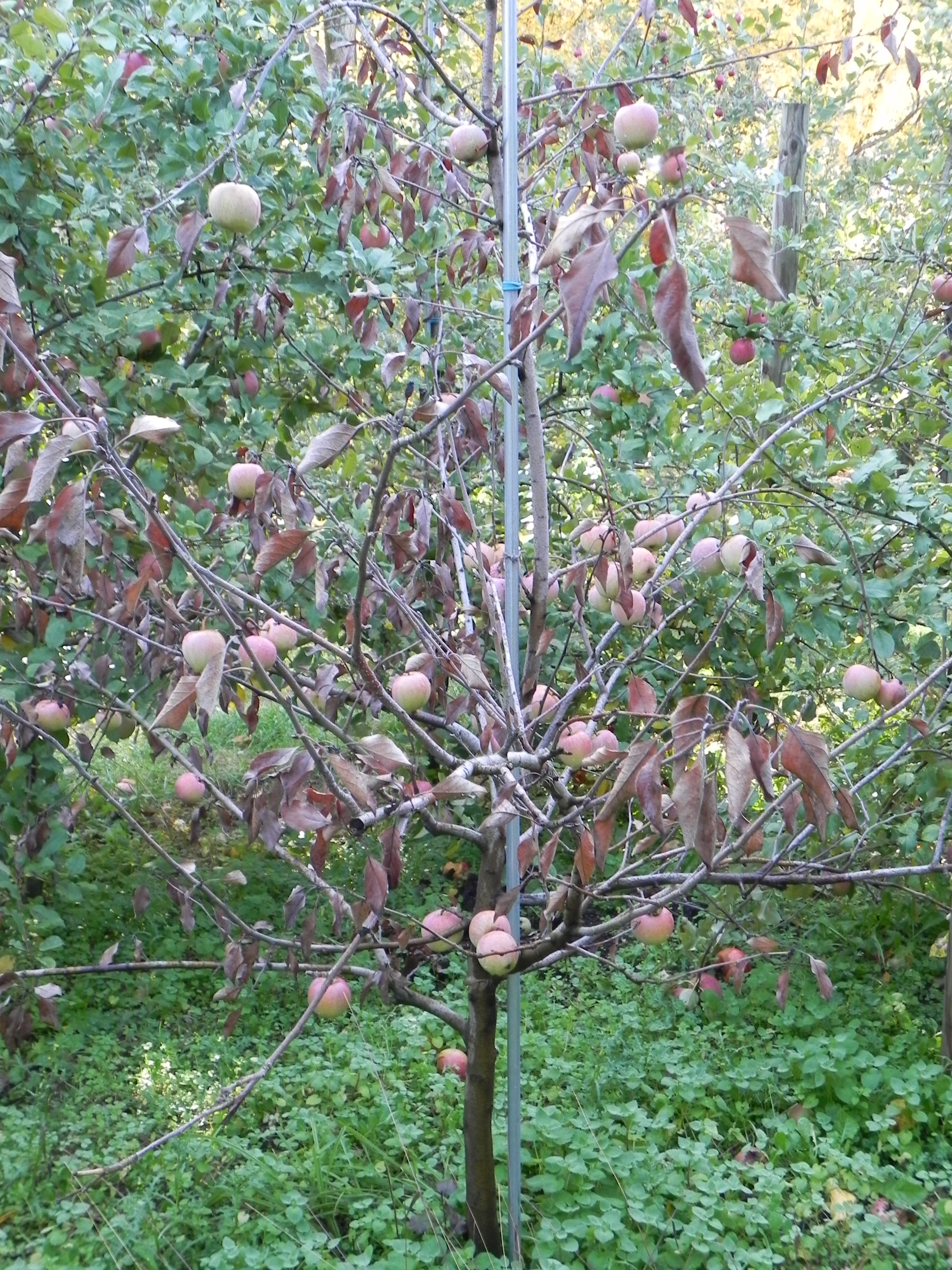
I’m not sure why I’ve associated apples with new life. Shortly after my father died, I planted an apple seed in a plant potter in our Wisconsin home. To my surprise, the seed germinated and began to grow. We did not own our house, but we lived on a wooded campus and two large shade trees had been blown over in the past few months, so when the young tree was large enough, I planted it outside. The lawns on campus were rather aggressively mown with students who sometimes had anger issues, so I put up a little fence around the young tree to keep it safe from accidental mulching. By the time I was asked to leave Nashotah House, the tree was taller than me (not such a feat, but the fact that it survived so well was pleasing). No apples had yet appeared, but the tree is a symbol of new life. No one on campus knew its meaning, and I doubt very much that anyone thought much about it one way or the other after I left.

I often wonder if that little tree is still alive, and, if so, whether or not anyone enjoys its apples. Every year when the trees begin their long journey into a winter’s sleep, the apple trees send forth the own message of resurrection. Some will associate the fruit with sin while others will find pleasant autumnal memories. And a very few, I should suppose, will always think of trees as a symbol of someone they wish they might have known a little better. Far from being a sign of sin, the apple can be a sign of forgiveness and self-giving. Whether it is a myth or not, the northern hemisphere has begun its inexorable turn away from the sun. I look at a tree that is dead and full of life at the same time, and to me it seems to be a very different kind of fall than some suggest the Bible intends.
Buyer Beware

Pain, it is said, has a wonderful way of focusing the mind. So when I woke up in what can best be described as a body position used for extras in the movie, Twister, I took a few aspirin and got on with my life. I had purchased non-refundable tickets for a campus visit, and capitalism is nothing if not unsympathetic. The lower back pain was fine when sitting, or standing. Try anything in between, however, and you’ll learn the real meaning of reading the riot act. Once off the train—slowly, slowly—I was fine again, until I had to sit down. The next morning, facing a day of meetings (why is everyone’s office on the fourth floor? Why do Brownstones still lack elevators?), I decided I’d better pop into CVS for some meds. It was with considerable irony and not a few groans that I noted all the products for back pain were on the bottom shelves. The condoms, in the same aisle, were right at eye-level. Sitting on the floor, pondering the relative merits of chemicals of which I’d never heard, I thought about what we take for granted.

Parents and guardians are our first teachers. Among those early lessons are often the religious ones. Recently speaking with both seminary professors and pastors, I have heard the common refrain that church membership is declining and the number of younger people listing themselves as religiously unaffiliated is growing. I noticed this in my teaching outside the seminary setting; quite apart from students of other religious traditions, many undergrads took my class knowing nothing at all of the cultural matrix of Christianity in which they’d been raised. It is also true in a consumer mentality that one shops for religious experiences just like one shops for backache medicine. You go with the one that works for you. Few bother to ask if they agree with the theology, after all, Methodist = Baptist = Presbyterian = Lutheran in many people’s minds. Doan’s or Bayer? Take your pick.

Now that Dark Shadows has been released for home viewing, another component may be added to the equation. We pass on what we value to those we love. While the writing for Dark Shadows leaves quite a lot to be desired, there are a few memorable lines. Angelique, you may recall, cursed Barnabas Collins for unrequited love, turning him into a vampire. When he laments to Elizabeth Stoddard that Angelique hates him, she replies, “No, if she had hated you she would have merely killed you. A curse takes devotion.” Passing on our beliefs, perhaps, somehow ties into all this. As believing creatures, perhaps we each need to find our own solutions. My only fear is that when I find the right remedy, it may very well be on the bottom shelf.

Read the caption


Hallowed Eve

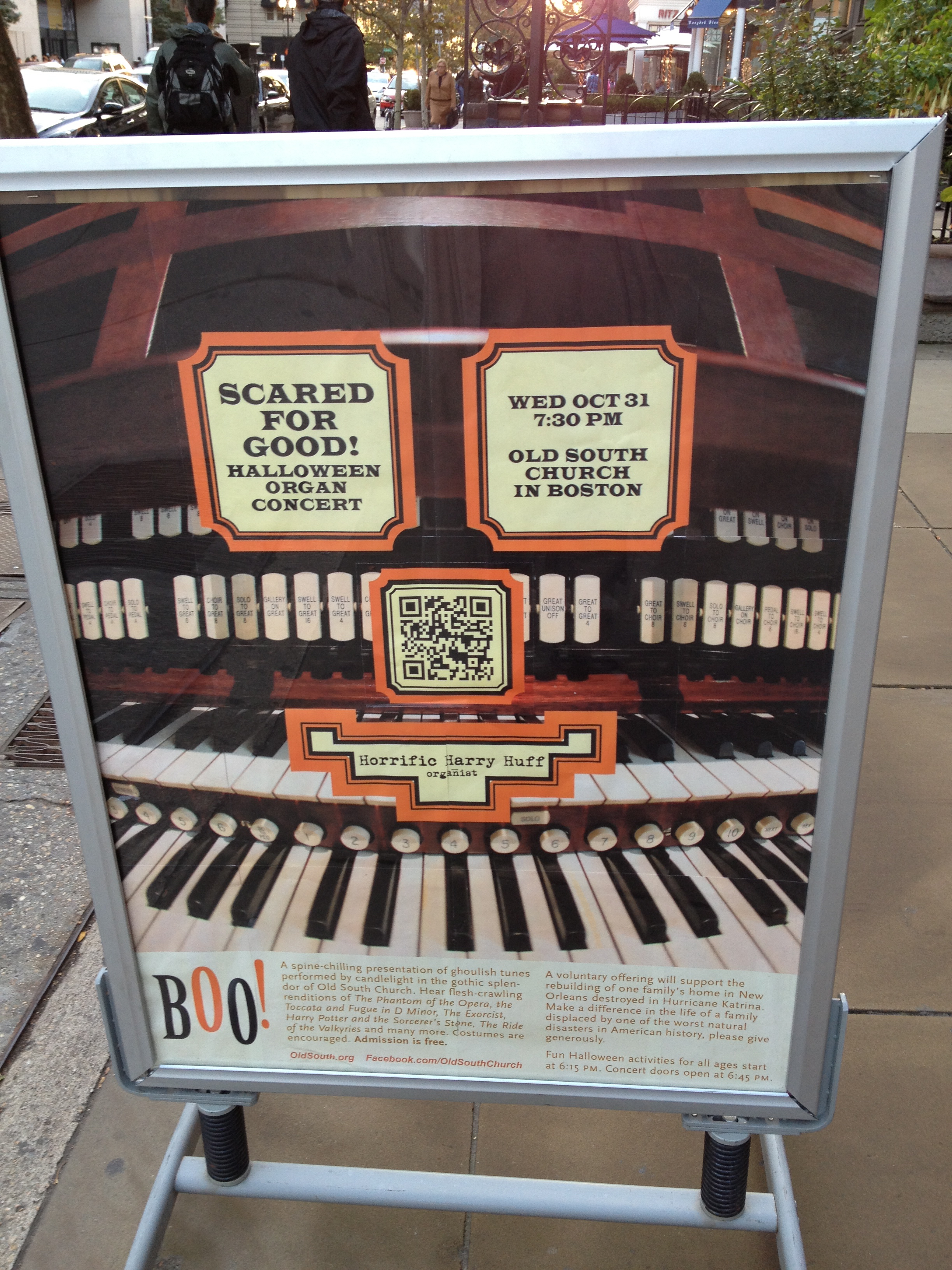
My last night in Boston found me in Copley Square. This has always been one of my iconic Boston locations; something in the juxtaposition of squat, solid, dual-toned Trinity Church with its wide, open plaza, the blue glass razor of the Hancock Tower, and the classical facade of the Boston Public Library where Sophia broods over the world, arrests my wondering gaze. Across Boylston Street stands the gothic Old South Church like a guardian for straying souls. As I walked through the square a local band of street musicians jammed and the first neons of an October evening were awaking. As I strolled past Old South I had to back up a step or two to see if I’d read the sign right.

Scared for Good, a Halloween organ concert featuring spooky music, will soon be on offer. Business-types have long noted that Halloween is a great potential selling holiday. With kids who want to dress up and parents stressed for time, the selling of costumes has grown into an increasingly substantial accessory item holiday. People want their houses to look scary, knocking down real cobwebs to make way for the artificial ones, hanging out orange and purple lights, and ordering pre-carved, artificial pumpkins. All the fear is, of course, a charade, and we laugh at ourselves for taking it too seriously. Some churches object vociferously to the very holiday itself, claiming it is devil worship and evil.

While Halloween does have some serious pagan influences, it is, in its present form, a good Catholic holiday. The night before All Saints, aka All Hallows, begins a period of reflection on mortality. I’ve celebrated “Protestant” Halloween from my youngest days and have never been in any way tempted toward devil worship. It is fun to be scared when you know it’s not real and it won’t last long. That’s why I applaud Old South Church’s Scared for Good concert. Reading the list of pieces included, it sounds like it should be a grand time. Too bad I won’t be in Boston for the occasion. As I walk back to my hotel in the chill of the evening,the only fear i feel is that moments like this evening come at insufferably long intervals for those who feel about the city as must the denizens of Copley Square.


The Future of Theological Education

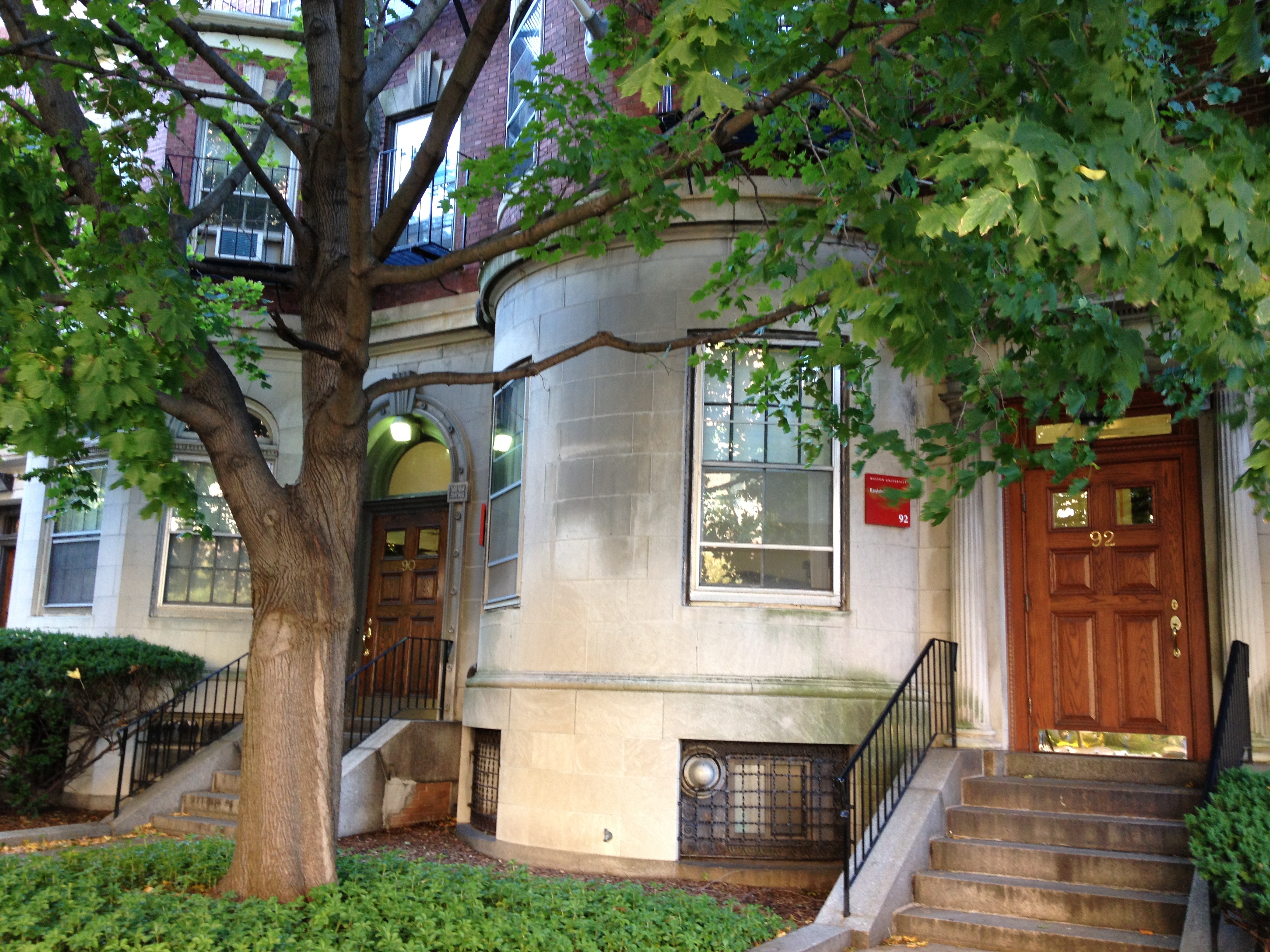
It is almost like stepping into a time warp. To be honest, it is difficult for me to admit that I graduated from Boston University School of Theology a quarter of a century ago. Standing here outside 90-92 Bay State Road, where I once lived, is like looking into a shattered mirror. Behind those doors much of what made me who I am took place. Perhaps I left some of myself there. I don’t even know if the property is still the single student “dorm” for the school of theology or not. Kenmore Square has transmogrified from an area that felt like Times Square in the ’80’s to an upscale dogtown. When I stepped into 745 Commonwealth Avenue, it was like being hit in the face with a combination of nerve gas and roses. The hallways look wider now then they did back then. The hallways where so many of my assumptions curled up and died. They still have chapel and community lunches. The Boston Book Annex is closed.

Boston University has sure poured a lot of money into the Back Bay redevelopment. Whence that sense of personal offense when I see a multimillion dollar new building there and recall the financial aid interviews where I was told, like in a Bruce Springsteen song, “we’d like to help you out, but we just can’t”? Has social justice come to live in these halls? In those days anyone who didn’t have an oppressed status was a minority. And I learned as much about hate as I did about love within these implacable walls. Is it ghosts that I feel rushing through me as i walk down Bay State Road, and stare out over Storrow Drive? I’m not sure of the future of theological education. Until schools of theology can lay down their swords and become truly ecumenical, can any change truly occur?

Theology is an exercise in the unknown. When I donned my red robe and graduated here, the world seemed to be full of possibilities. A lot of erosion can take place in twenty-five years, you know. I thought I was contributing to the future of theological education when I studied the Bible so minutely that no single letter existed that didn’t have a prehistory deep in the realm of pre-Israelite society. I assumed that truth was the end goal of theological inquiry. Problem is, for many, the end goal was written two millennia ago and we of the lost generations ever since have as our task simply to reinforce the crumbling foundations and assure our benefactors that we did have it right, we have had it right, all along. As I write this a very able colleague at another seminary is undergoing what can only be considered heresy trials for teaching the truth. Is theological truth so fragile? Maybe this is why it has taken a quarter century to return. Maybe this is the future of theological education. Those of us who still believe in theological education seem to be a dying breed, along with the ghosts of Bay State Road.


Year of Poe

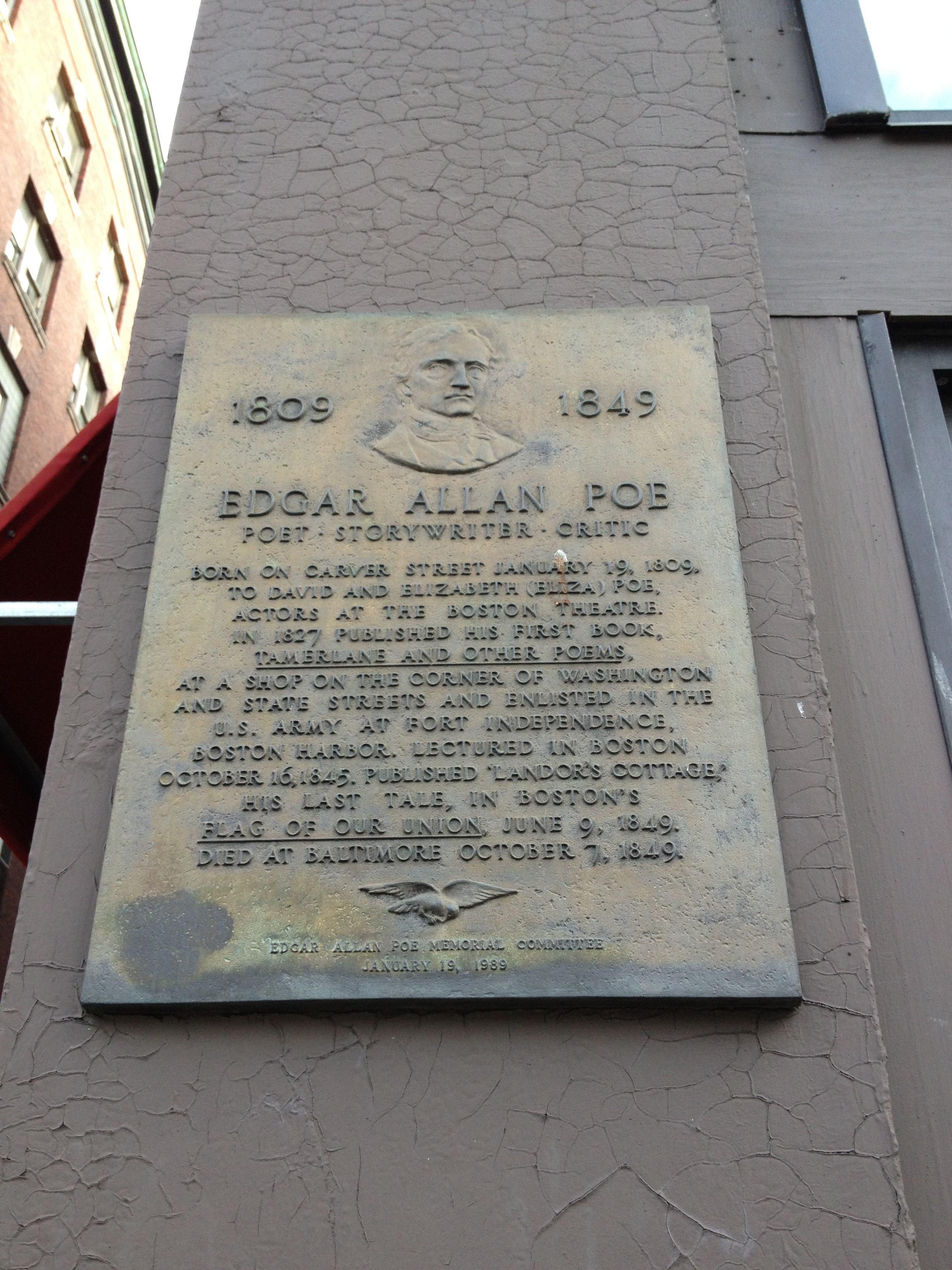
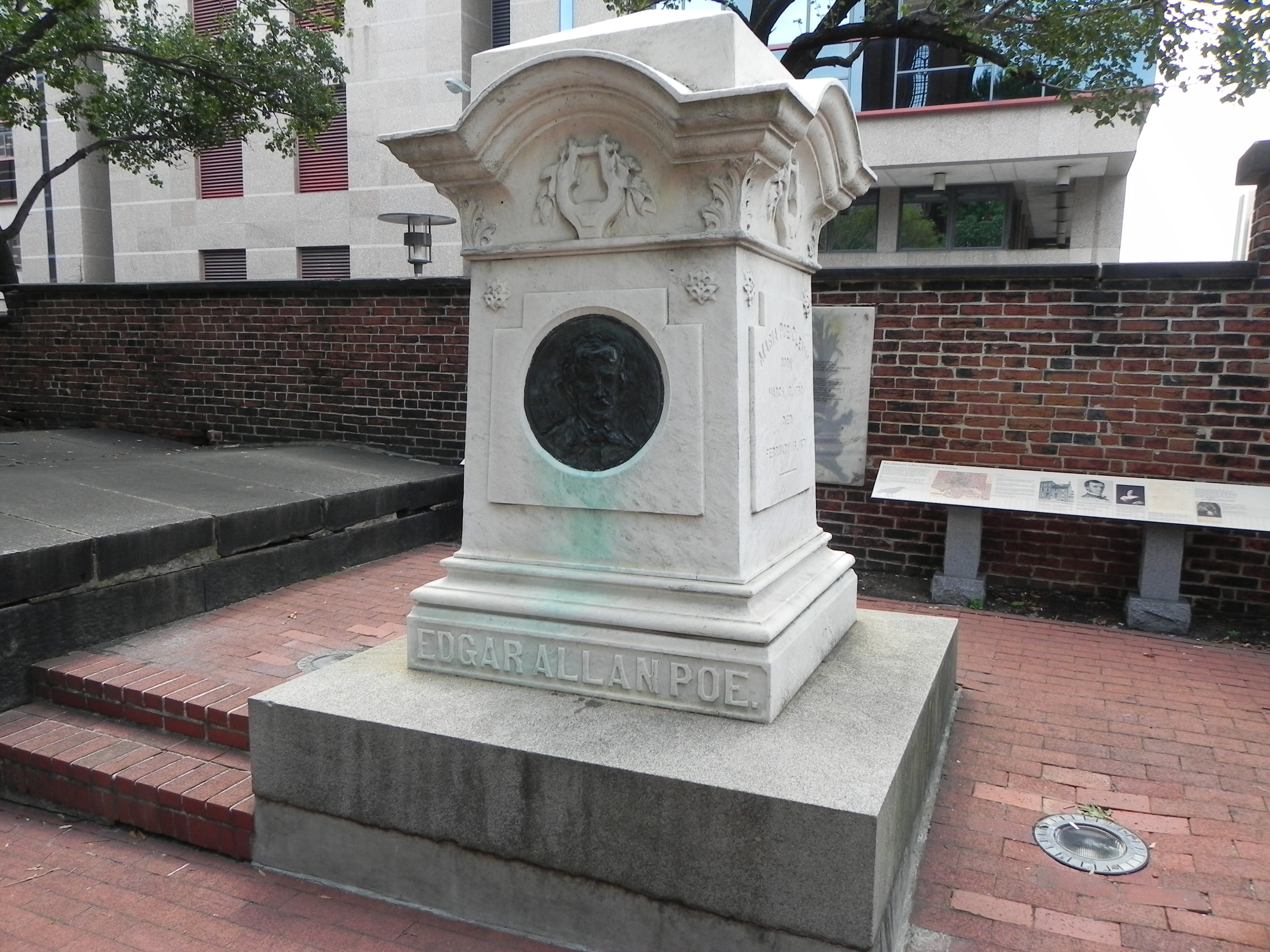
Apart from sharing a “middle” name, I would never dare compare myself to Edgar Allan Poe. Yes, I dabble in the literary arts, but every acolyte recognizes a true priest when he sees one. So as my train pulled into Boston, a city that has deep emotional resonances for me, I decided to stop and see where Edgar Allan Poe was born. The actual site is now a parking structure, an unexpected parallel between our emerging universes. All of my childhood homes, with one exception, are now parking lots. Standing at the foot of the memorial plaque near Emerson College, I reflected on my Poe year. I visited his college room at the University of Virginia in February, his one-time apartment in Philadelphia in March, his burial site in Baltimore in August, and now his birthplace. Not in any chronological order, but a voyage of discovery nevertheless.

This is the essence of pilgrimage. It is not rational and not really practical, but it is something people do. With religious intensity. I am in Boston as part of my secular job, but the city has sacred associations for me. I met my wife here, and that single event has changed my entire life. Boston will always be the place where something extraordinary happened to me. Poe did not like Boston, but for me it is the eternal city. Even the places with negative associations stake claims upon us. Over the weekend a friend posted a picture online taken before combat forced his evacuation from Vietnam many years ago. I kept coming back to that picture throughout the day. Lingering. Staring. Even though I’d never been there, it was like place had the ability to haunt those who’d even dared to look.

Poe and my friend are both writers who’ve drawn me into their worlds. What better way is there to learn that the universe is indeed infinite? Looking out my window at a Kenmore Square I recognize only by the giant Citgo sign that shed its garish light on many an evocative student night, I realize even eternal cities change. The last time I was in South Station I was saying goodbye to the woman I hoped, but did not know, would become my wife. Almost as if on cue, ” Lola” by the Kinks spills out of a local store as the Citgo sign flickers to life over the scene of my coming of age. In Boston I will always be twenty-three, wars will be long over, and Poe will remain alive forever.


Oil City Millionaires

Oil City Junior High School. Ninth grade. As a kid who grew up politically naive, Mr. Baker’s words felt like the Gospel. “People will never elect a president against their own economic interests,” he once said. Then came the Reagan years with “trickle down” bs, and, let’s be honest, the working class has been hurting ever since. Reading the political headlines, I’m frankly distressed that politicians no longer have any clear idea what working class life is like. Online I see working-class friends following, zombie-like, the richest man to ever run for President, daily proving Mr. Baker wrong. I’m not naive enough to think that most career politicians of either party know what it’s like to struggle for a living, but I have seen time and time again the Democratic Party trying to stretch out safety nets for those who receive no trickle down hand-outs. I do know what it is to struggle, and I do know that getting an education does not equate to getting a job. I also know that no Republican since Eisenhower has tried to be fair to the working class.

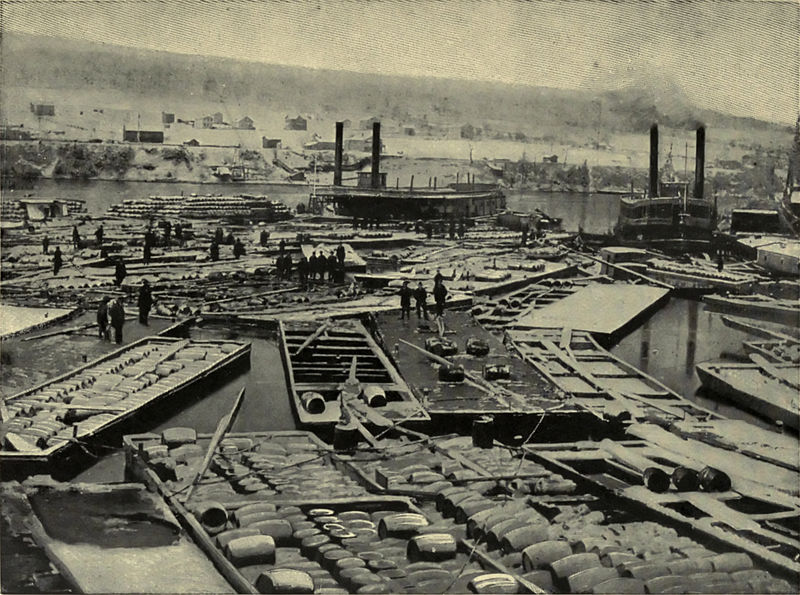
I grew up just outside Oil City, Pennsylvania. It was a town founded by potential millionaires because petroleum had been discovered in the region. Many get-rich-quick schemers settled these pleasant hills and valleys, but the oil pools were as shallow as a politician’s sympathy, and some of the towns in the region became ghost towns. The Oil City I knew was working class families, trying to get by; many grasping religion when politics never ceased to disappoint. We were children of Damocles. Somehow the message has morphed from when I was a child paying attention in school. The issue is now, “I’m not well off, but I sure as heck don’t want the government helping those worse off than me!” Trickle down indeed. To me it seems obvious why the wealthy skew “pro-life”—their schemes cannot succeed without a constant stream of desperate workers. Keep those kids coming!

Because as a child I read all the time, I knew there was a life outside Oil City. Paying my own way through college with crippling debts, I managed to get out and earn an advanced degree overseas, just to be fired by a Republican who thought my advocacy for fair treatment had no place in a seminary. Yes, I’ve felt the barbed lash of unemployment. I spent years wondering what might become of my small family as trickle-downs began defying gravity and wormed their way back up to the wealthy. I’ve never owned a house; none has ever trickled down to my income level. Those Oil City millionaires never gave me any handouts. But Oil City did give me an education. I learned to see through those who say they are protecting me and my future. The only thing they are protecting is securely tucked into their back pockets. I’ve seen their ads castigating Jimmy Carter, a president who is actually out there building houses for the poor. I’ve heard them blaming Obama for not filling in a trench that took Bush the Less eight years to dig. I say let’s just let trickle-down fill that hole. I’m sure the Oil City millionaires will be glad to kick in a greenback or two; after all no one ever votes against their own economic self-interest.

Trickle down.


Parsing God

Being married to a Girl Scout leads to many benefits beyond just the cookies. Not that cookies are unimportant, of course. Having been a Boy Scout briefly back in the 1970’s, I recall three-finger salutes, rambunctious meetings, and the occasional camping trip complete with the rabbit coming out of the hole, going around the tree and then something else. I’m sure there was a Boy Scout pledge, but I can’t remember it. Like most group activities, Boy Scout meetings served mainly to remind me of my own inferiority, and so my mind does not often enjoy visiting those places. Having attended a few Girl Scout meetings over the years as my daughter was growing up, I heard the Girl Scout promise a few times, and was a little surprised that the phrase, “To serve my God” has remained unaltered, even with the changing face of the population. When I attended an event hosted by the Elks, the civic organization, the presenter began by explaining the rules for who might join. It too, is limited to theists. The reason for such admission requirements has me pondering if there was a time God was an endangered entity in the United States. If not, why insist on this proviso?

I’ve been reading about religion’s role in society. Something that those who seek primarily the deep, personal and experiential aspect of religion may not realize is that religion is a form of social order. Scientific knowledge about God, if God be incorporeal, non-material, and beyond space and time, is impossible. Religions don’t prove God’s existence, but they serve to reinforce the sanction of the sacred for human society. They have an essential role in that drama. By limiting membership to believers organizations such as the Elks are merely asserting their belief in the working of the system. Of course, from the beginning those who do not believe risk little by claiming they do believe.

But what of the doubter, who may be the truest believer of all? Some Girl Scout literature has a footnote, parsing God: “The word ‘God’ can be interpreted in a number of ways, depending on one’s spiritual beliefs.” Belief is a form of commitment more than a mental certainty. In the Hebrew Bible belief was not as strong a suit as obedience; and thus it had been for the history of organized religion. Starting perhaps as early as Jeremiah, a shift began to take religion more toward a matter of internal commitment. In the face of utter loss, Jeremiah (or one of his fans) suggested that belief was more important that unthinking obedience. Belief is very subtle but vitally powerful. Lives are staked, and sometimes lost, on it. So while you’re enjoying another cookie, try parsing your belief. Me? I’m still trying to figure out when that rabbit goes back in the hole.


Dracula’s Dinosaur

It must be October when a dinosaur with a parrot’s head, porcupine quills, and fangs is announced. Yesterday’s issue of Time online featured a drawing of the creature and a nifty animation of reconstructing the aptly named Heterodontosaurus. Well, that’s actually the genus name. The species goes by the delightful name Pegomastax africanus. Last I checked, however, space on the ark was filling up. Dinosaurs create a unique embarrassment to Creationists. One suspects that if they didn’t have kids they’d dismiss dinosaurs all together, but the troublesome fossils just won’t go away. What’s more, although they’ve been extinct for 65 million years, they keep producing new species for us to recover, describe, and name. When I was growing up (and I have it on good authority that the argument is still used) Creationists told us that no transitional forms had ever been found. Therefore evolution simply could not have occurred. This was generally followed up by a reference to Genesis. Excuse me, a fanged porcupine-parrot? If that doesn’t count as a transition, what does?

Religion loses nothing by admitting to an ancient earth. Nothing but literalness. One of the joys of reading is the exploration of metaphors, similes, and hyperboles—writing delights us with its constant surprises. Even those who claim to read a text literally are engaging in a form of interpretation even earlier than the first wedge mark pushed into clay. Written texts give us something to ponder, to think about, and occasionally, to obey. Just when it looks like the cover has slammed shut on the black book we find a new set of dinosaur tracks running across our clay tablet. The literal-minded might not see these as being a message from God, but surely the endless variety of creatures that have walked this planet more than make up for it.

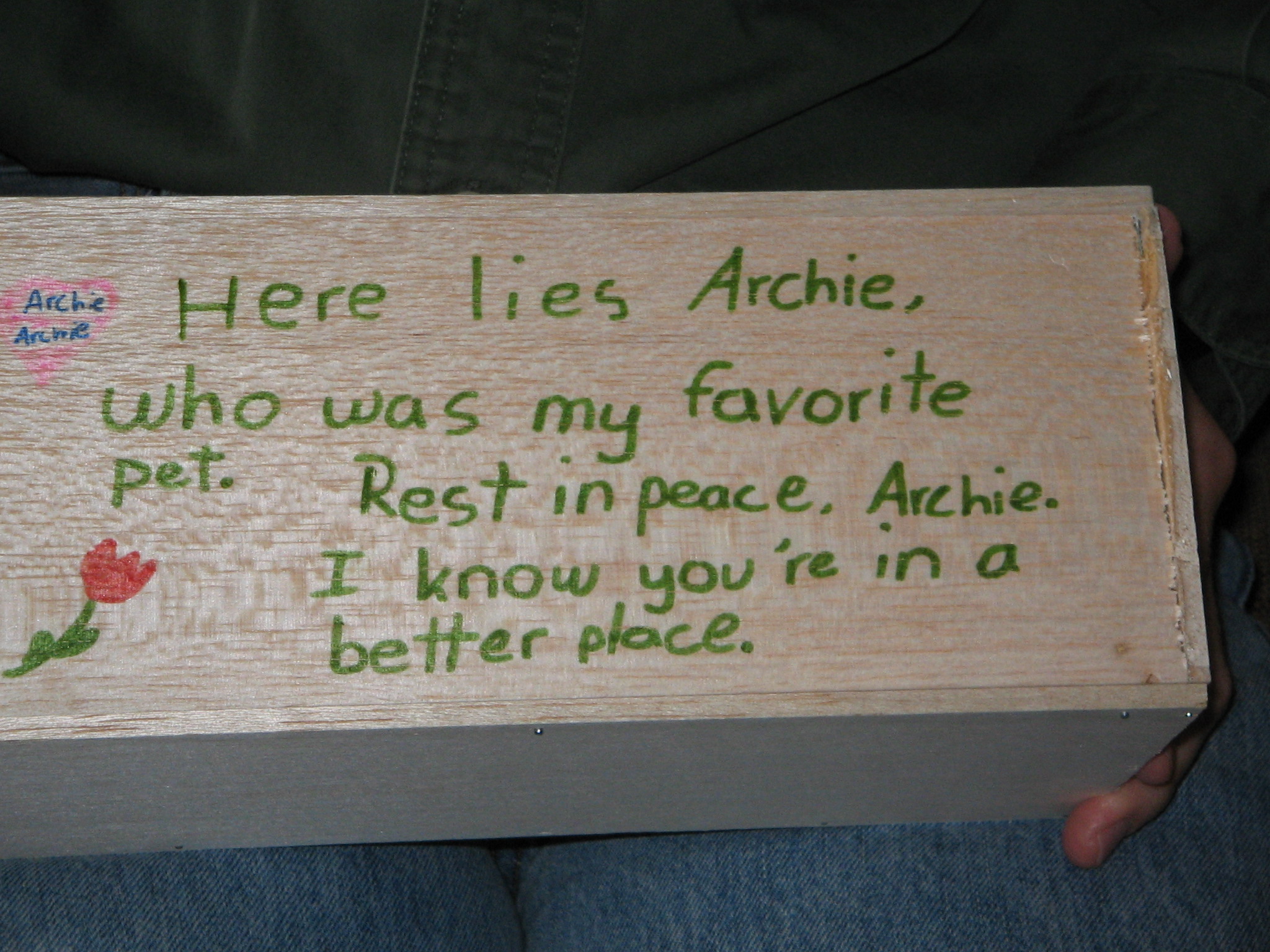
We used to have a pet parrot. His name was Archie, named after Archaeopteryx, the feathered dinosaur. Although Archie was cut off by disease in the prime of life, he was a curious bird and when I reached into his cage to try to get him on my finger he would dole out what he meant as a painful bite. I always took it as a sign of affection. Had our little friend had the fangs of Pegomastax africanus, I would’ve thought long and hard before risking the finger-perching trick. I like to think it would have reaffirmed my fascination with the amazing adaptability of nature. Evolution, unlike God, has no purpose. An endless tinkerer, it gives us thousands of differing dinosaurs that had been gone many, many millennia before Moses ever even thought of Noah. Pegomastax is safely extinct now, and the only ones who have to worry about this perfect Halloween dinosaur are those who think that one particular view of one particular book is the only way to find truth.

We still miss you, Archie.


Guide Me, O Thou Great

You are an apostate, or worse. Unless, that is, you belong to the relatively select religion known as Jehovah’s Witnesses. Having grown up in a town bereft of Witnesses, my first exposure came as the result of an American Religions course. Grove City, Pennsylvania was not an ideal locale to experience religious diversity, outside the Protestant Neapolitan flavor. When we had to visit a religious service outside that milieu, I joined some classmates for a trip to the local Kingdom Hall. There are few situations as uncomfortable as watching other people being religious. It is so intimate. When Watchtower study began, my classmates and I, good Christians all, were shocked to hear even a young child answer one of the questions put by the leader with “the Christian apostates!” She was quite enthusiastic. If you were not a Witness you were an apostate.

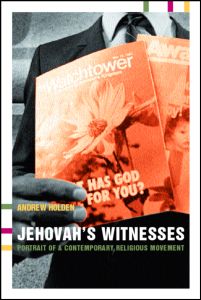
Since that time, Witnesses have been no strangers to my door, so I read Andrew Holden’s Jehovah’s Witnesses: Portrait of a Contemporary Religious Movement (Routledge, 2002) with interest. Holden is a sociologist who undertakes an analysis of the ascetic, millenarian group in a conflicted situation. Modern society proves quite difficult to reconcile with Witnesses’ authoritarian biblical literalism. The assertion, now quietly overlooked, that the world did not end on cue has proved an embarrassment more than once. Most recently Armageddon was scheduled for a 1975 time slot, but this stubborn, old world just keeps limping along. In many ways, it is a sad tale. Witnesses advocate clean living and fair dealing, but if you’re not part of the club you are a danger to those who are. Non-monastic, they nevertheless shut themselves off from much that the world has to offer.

Holden’s study is a model of fair-minded analysis. He is not out to humiliate or insult the Witnesses or their lifestyle. He remains true to the evidence (but not the doctrine) and offers a rare, objective look at a New Religious Movement. Distinguished as one of the few religions to have started in Pittsburgh (the city that also gave us the cinematic zombie), Witnesses are now a six-million strong, worldwide religion. While Holden gives only a cursory glimpse of their doctrine, he does offer a rare view into an exclusive faith struggling for the end of a pluralistic world. It is a study well worth reading. Especially for an apostate.


Private Property

I’m receiving a government-sponsored massage at Newark’s ironically named “Liberty Airport.” Like most federal freebies, this massage leaves me wanting. Now, I’ve had many pat-downs to protect me from people like myself, and each time I find myself feeling like so much meat for politicians’ pork-bellies in this culture of fear. I am afraid. It isn’t terrorists who worry me, but my own elected (sometimes) guardians. When being a citizen is considered the same thing as an enemy of the state, there is a problem. In the line next to me is an infant-in-arms being given a pat-down by a stranger. Yes, ma’am, my tax dollars help pay for that. Please, don’t bother to thank me. It will be only the first of many.

The last time I flew was from London to New York. In Heathrow US citizens aren’t sent through the humility of full-body scanners. Only a nation afraid of its own does that. I often ponder what this means. Frequently I hear, “these colors don’t run.” I wonder if it’s because they’re too busy sticking their hands down their own citizens’ pants. Home of the brave? Only if bravery means giving in to the intimidations of terrorists. I’ve fallen off a bicycle a time or two. One time it was with pretty messy results. I’ve even actually fallen off a cantering horse. (That may explain a thing or two.) As a child I was always told that you need to get right back on and try again. After 9/11, however, our country showed its naked fear in the overregulation of air security while continuing deregulation of the airlines. Money does not guarantee a secure future.

If our government has a desire to see its citizens naked, what more need they do? They know every penny we earn or exchange, taking a cut each time, and the only way to get on a plane without hassle is to let them view everything. It’s not good for my Constitution. Our Constitution. Moral outrage, however, is apparently a thing of the past. Full-body scanners may be science, but I still believe in the humanities. And when a babe in arms is considered a threat to national security, I have to wonder what we’re truly afraid of. And next time do you think you could use a little more pressure on my neck? I feel like I’m coming down with a wicked headache.

Read the sign


Kermit’s Secret

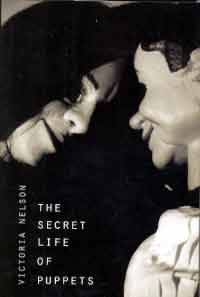
When I was a post-graduate student in that Gothic city of Edinburgh, I decided to spend some time reading Umberto Eco’s Foucault’s Pendulum. It was intended as harmless entertainment, but as anyone who has read it knows, the story soon unravels into an unbelievable world of dark religions that haunt a naive protagonist. While I was reading it, a packet, hand-addressed to me, with no return address, came to my student mailbox. The contents consisted of several tracts, in German, warming of the dangers of Satanism. No letter, no explanation. Foucault’ s Pendulum had me paranoid already, and this strange package completely unnerved me. Well, I’m still here to tell the tale. While reading Victoria Nelson’s brilliant The Secret Life of Puppets, I learned that she had a strange episode while reading the same novel. It was an apt synchronicity.

Nelson is a scholar who should be more widely known. I found her because her recent Gothicka was prominently displayed in the Brown University bookstore in May. I saw it after taking a personal walking tour of H. P. Lovecraft sites. Synchronicity. I had read, in a completely unrelated selection just a couple of months ago, Jeffrey Kripal’s Authors of the Impossible. Synchronicity. For many years I have honed my Aristotelean sensibilities, following devotedly in the footsteps of science. Problem is, I have an open mind. It seems to me that to discount that which defies conventional explanation is dirty pool in the lounge of reality seekers. I have always been haunted by reality.

I’m not ready to give up on science. Not by a long shot. Like Nelson, however, I believe that there may be more than material in this vast universe we inhabit. Indeed, if the universe is infinite it is the ultimate unquantifiable. The Secret Life of Puppets is alive with possibility and anyone who has ever wondered how we’ve come to be such monolithic thinkers should indulge a little. For me it was a journey of discovery as aspects of my academic and personal interest, strictly compartmentalized, were brought together by an adept, literary mind. Religion and its development play key roles in the uncanny world of puppets. Those who wish to traverse the realms they inhabit would do well to take along a guide like Nelson who has spent some time getting into the puppets’ heads.


Premature Transportation

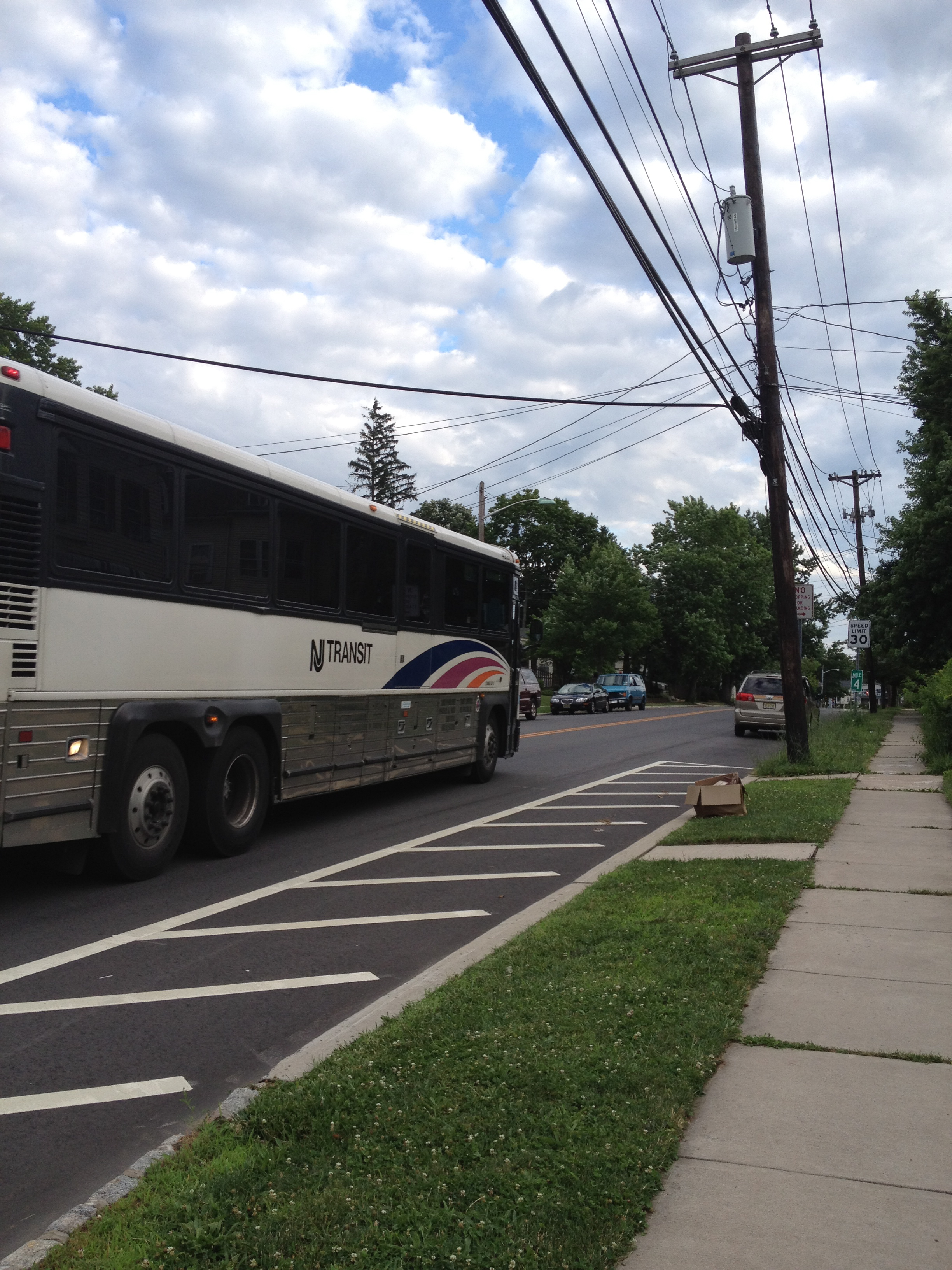
Few experiences encapsulate one’s lack of control like commuting by bus.  As my first year of a daily commute to Manhattan draws to a close, I have experienced many mornings of standing in cold or hot air while a bus leisurely makes its way toward my appointed stop twenty, thirty minutes late.  The commuter can’t head back home for a moment’s warmth/coolness, because the bus could come at any time.  The sense of utter helplessness as you know that you’ll be late for work, and that you got up at 3:30 a.m. for this, settles like an iron blanket over what might have begun as an optimistic day.  Then there are those who sit beside you, totally beyond your control.  I’m a small guy and I sit scrunched next to the window to get as much light for my reading as I can.  Very large people find the extra space next to me attractive, although sometimes they insist I squish even more against the window so they might fit.  Overall, however, the exchange of comfort for reading time makes the arrangement palatable.  It’s the loss of time that bothers me.
 
Without traffic, my bus can be at the Port Authority Bus Terminal in an hour. To manage this feat, it has to reach my stop before 6 a.m.  On rare occasions it comes perhaps five minutes early.  When you take a bus, subject to the vagaries of traffic, the only wise course of action is plan on being a few minutes early.  Drivers who watch the clock are dangerous.  So it always annoys me when passengers down the line complain if a bus is one minute early.  On those exceptional mornings I hear strident voices raised, “you’re two minutes early—I had to run!” or “I was sitting in my car; you came too early!”  The driver is scolded and the next day we’re all half an hour late for work.  It is the problem of premature transportation.  Time, to the best of our knowledge, is something you never get back.  I would rather be early rather than late.
 
I first conceived of wasted time as a religious problem when I was in seminary. There was always so much to do, and relinquishing time to pointless activities such as standing in line, or waiting for the subway, grew acute.  Now that I’m an adult anxious about holding down a job that requires a lengthy commute, the issue has arisen again. Clearly part of the difficulty lies in that time is frequently taken from us.  The nine-to-five feels like shackles to a former academic.  I had classes anywhere from 8 a.m. to 10:30 p.m. without considering the drain on my time.  It was largely, I believe, because pointless waiting was not very often involved. Time, like any limited resource, must be parceled out wisely. Time to bring my morning meditation to an end and get ready for the bus. And if it’s early I will consider it as a divine gift.


Searching for God (Rock)

The last time I visited my native western Pennsylvania I went on a quest to find the “Indian God Rock.” This is a local landmark that contains a rare set of Native American petroglyphs from around 1200 C.E., and which I have never seen. Having heard of the stone since my earliest days in the local school system, I was curious to see it. The moniker “God Rock” is complete speculation, based on early assumptions that the Algonquin wouldn’t have inscribed the stone without religious motivation. Since that time, however, the site itself has been deemed a numinous place by some by dint of having authentic petroglyphs. What makes any site sacred is the experience of the visitor. I had lived in this area for the first two decades of my life and never found it. Of course, there was no Internet in those days and its location was remote. Sacred places should be difficult to reach. It was about time.

The Indian God Rock is located on a bicycle trail. For me that now translates into bicycle trial. I used to take epic bike trips with my brother, but although they say you never forget how to ride a bike I am agnostic on the point. I have ridden a bicycle a few times in the last decade or two, and always with unusual aches when it’s over. I still like to jog, but perhaps having my feet in contact with the ground is a kind of sacred behavior in itself. In any case, when I went after the God Rock, I was on foot. Although I’m motivated in a fairly serious way when I’m on a quest, I also know what it is to be outvoted (unlike some politicians). Without a map, perhaps on the wrong trail, in the rain, after a couple hours of walking, I had to bow to the wishes of the majority and give up.

On the way back to the car, I found a newt. In my younger days in this region I used to find them in our yard following a good rain. They are delicate creatures. When you pick them up, they try to scrabble out of your hands, supposing, as nature informs them, that to encounter a larger force is to risk being consumed. I think that this must be similar to human religious motivation. In the presence of something larger than ourselves, something that boggles the mind, we assume it is a god. The reality of the matter, however, is that the life within us is the closest we get to the divine. The newt in my hands is the true wonder. Somewhere not far from here is an Indian God Rock that I have never found, but right now life is in my hands. I later discovered I had been on the wrong trail all along.


Isaiah Thwarted

Back in January, out of a sense of curiosity on a number of points, I began tweeting the Bible. I wondered how long it would take, at 140 characters a day, to type the King James Bible into Twitter. Since that time, I have not missed a day. Until this week. International travel and business travel with uncertain Internet access have been overcome as I flew with Bible in hand to keep it going. On Monday I was just wrapping up the flood story. Clearly this was going to take a long-term commitment. Then early this week a message popped up on my Twitter account stating, “You cannot send messages to users who are not following you. Learn more,” so naturally, I learned more. Unfortunately I am not now, nor have I ever been, a techie. Just a sentence in and words I don’t understand begin to flummox me, building confusion on confusion. What it appears to be telling me, in layman’s language, is that I can no longer post to Twitter.

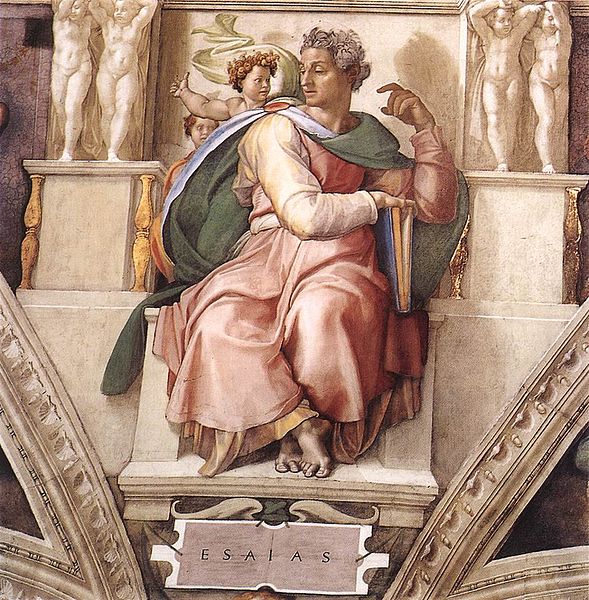
Apart from the personal rejection such impersonal messages inevitably engender, this development brought to mind the famous verse from Isaiah 40.8, “The grass withereth, the flower fadeth: but the word of our God shall stand for ever.” Hath the Lord been stopped by Twitter? Technology changes rapidly, and those of us who’ve never had any formal training in it sometimes feel like we’re driving a car on a dark country road at night with no headlights. I’m not really sure how this all works, but I try to send daily thoughts out into cyberspace and, yes, what you say can and will be used against you. And I wonder about old Deutero-Isaiah sitting there in Babylon peering into an indefinite future.

Our abject dependence on the Internet has changed us as a species. I’ve recently read about how technological innovations have become the evolution of the human species. This collective brain we refer to as the Internet has revolutionized the way we do business, but it has also introduced a component of fragility into the equation. Electronic information is untested in the long term. Some of my earliest writing projects now exist only on three-and-a-half inch floppies, most of which are tucked away in some musty corner of the attic. And what if the earth passes through a comet’s tail or a nasty solar flare jets out our way? Doomsday scenarios have been based on such things (just remember Y2K and smile). So maybe Second Isaiah was onto something after all. Printed books have been known to survive for at least half a millennium, and in rare instances, a couple thousand years. And the pagan sources on which parts of the Bible are based, written in clay, last even longer. And one of the earliest stories recorded was that of a worldwide flood.


Traces in Between

I first discovered Edgar Allan Poe as an adolescent who believed monster movies actually represented physical malefactors. By the time I was writing high school term papers, Poe had become my favorite author, and I delved a bit into his sad life story. It has taken a few decades for me to realize that no lives really fit into the prepackaged paradigms that we’re sold. We think of Poe as a writer, but he was also a man who wandered from place to place, dying in Baltimore and nobody really knows why he was even there at the time. Sure, he had lived in Baltimore fourteen years earlier, but his fractured career had taken him many places in between. Having nothing but his published writings and gut feelings to go on, it seems to me that Poe was a man who felt unconnected to any single place. His view of the world made others uncomfortable, as even a cursory reading of his obituary demonstrates. He may have been attempting to find a place to belong. Maybe that’s why I’m standing here in Baltimore next to his burial place.

In a world characterized by xenophobia, having a sense of place can be a matter of life and death. I often wondered, as a child, at the fact that I was born in a different state than either of my parents, and that my mother was born in a different state than either of hers. Where was my place? I really didn’t start to travel until attending seminary, and since then I’ve lived in many places. At times I think of Poe and his peregrinations—not that I would dare compare myself to him; Poe was a genius in a world that couldn’t understand him. I am merely a disciple.

On a recent college-visiting trip, I found myself in Charlottesville, Virginia, where Poe spent a few weeks as a student before being forced out by his debts. Later that day I was in Baltimore, and I could not neglect a stop to pay my profound respects. Throughout my life I have felt a connection with writers whose work I admire. Perhaps as an erstwhile dabbler in the literary arts I feel as though I might somehow connect to the guild. The sense of knowing, I realize rationally, is entirely one-sided. Standing here in Westminster Cemetery, however, feels like being in the presence of a friend. Even had I lived in the nineteenth century I would unlikely have ever met Poe, just as I am unlikely to meet most of the authors I read who still walk among us. Maybe I just feel no fear of rejection—call it a sense of place—among the deceased, unquiet spirit who is Edgar Allan Poe.