Vital Statistics

While going through a folder looking for some vital record recently I ran across my baptism certificate. The more I pondered this piece of paper the more reflective I became. In this electronic age when you can pay your bills online, keep all your bank records online, apply for and (perhaps) be offered a job online, we still hold stock in simple pieces of paper. Even without a pre-nup, couples are given a piece of paper to prove that they are married. When we’re born the first gift of the government is a birth certificate. Most of us don’t get to see our own death certificates, which, I suppose, is mostly a good thing. With the exception of the latter, we often have occasion to show these official papers to prove we are who we say we are. But what of the baptism certificate? Who do we show it to? Is it for God’s eyes only?

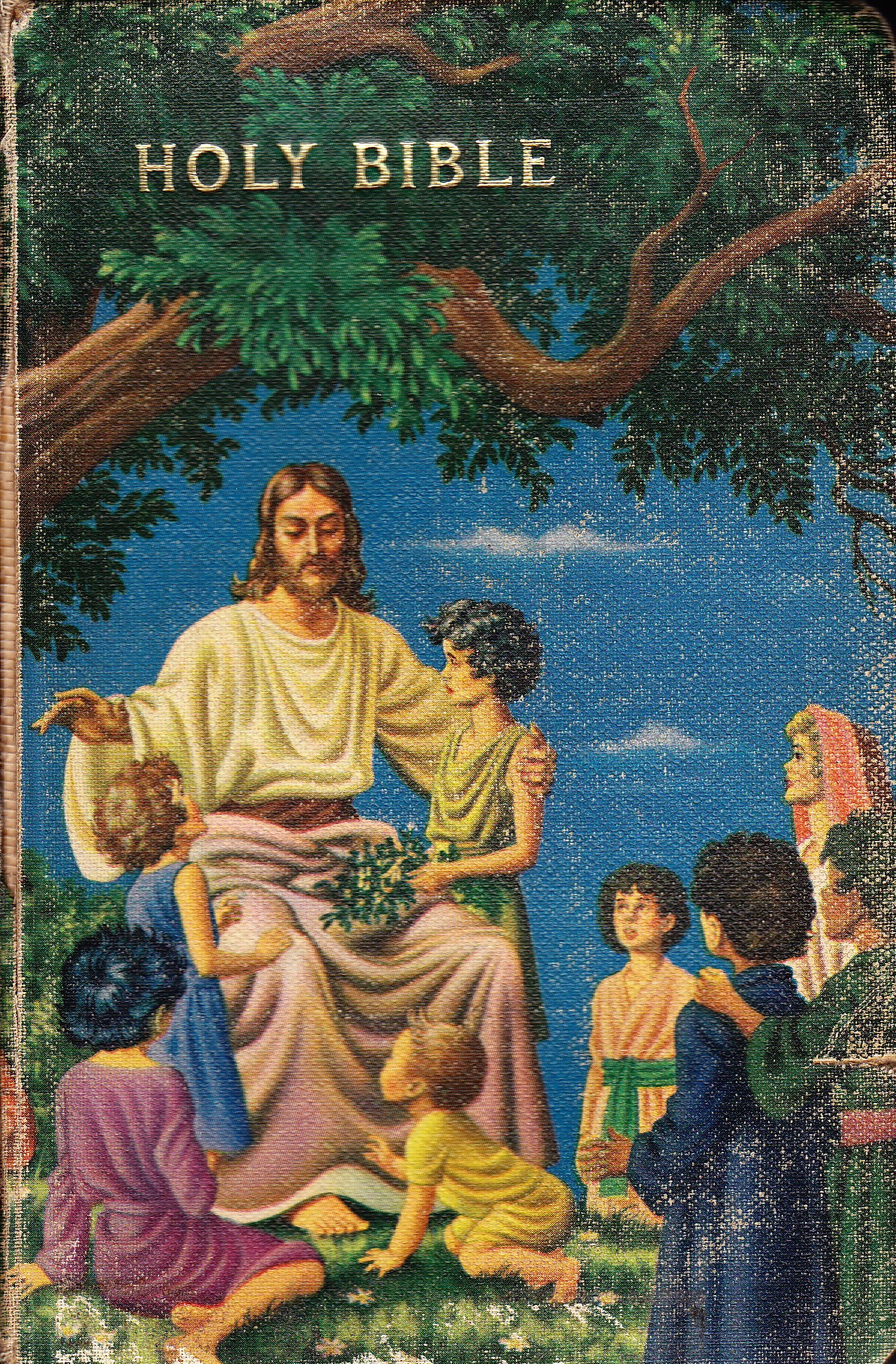
As an occasional dabbler in genealogy I have come to know the value of the family Bible. Sometimes the family tree recorded therein contains records that even the government may lack, often tucked away between the testaments as if we were all Maccabees. It might seem a curious place to keep personal records, but the practice dates back to the time when, if families could not afford to surround themselves with books, they would at least have a Bible. That Bible was a logical place for vital records since many people believed their own lives were recorded in God’s great book and having your name in a Bible was a species of insurance: after all, if God wrote it surely it was good to have your name there.

Like much of commerce, genealogy has now shifted to the Internet. The Church of Jesus Christ of Latter Day Saints has extensive online databases available (for a fee). We are all curious about where we’ve come from—how this spark of consciousness got inside this body. We can look at our birth certificate and learn some of the vital statistics, but we know that we are somehow more than the simple blending of gametes to form a zygote. At thresholds along the way we are given papers by which we might later prove ourselves. My box full of diplomas lies moldering away in some mildew-infested closet while on my bookshelf rests a Bible with the record of how it all began. At each major junction some form of religion is there, and more often than not, when it is all over we’ll end up with a piece of paper to prove who we’ve been.
A bureau of vital statistics


Religious Raven

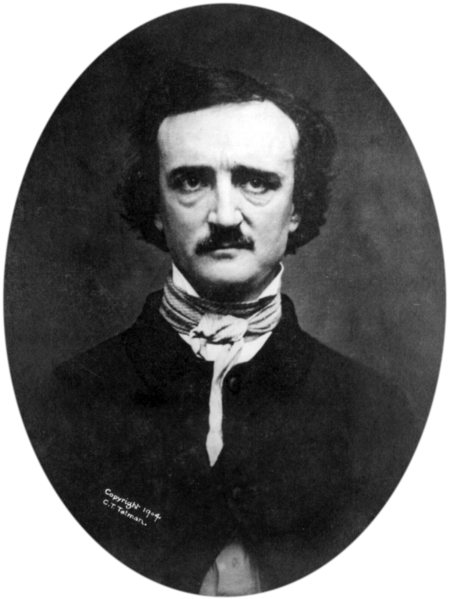
Having seldom achieved any sort of public recognition in my youth, I have been gratified to observe the approbation my daughter frequently earns. One such instance occurred yesterday as she won an Outstanding Presenter award at the state level of 4-H. For her presentation she introduced and recited Edgar Allan Poe’s “The Raven” from memory. As much as I like to take credit for some of her taste in literature, her remarkable memorizing ability that has impressed several judges and parents along the way is the result of her own determination. “The Raven” has always been among my favorite poems. As I listened to my daughter’s recitation yesterday, once again the wealth of religious and biblical images stood out.

Starting subtly with the perching of the raven on a bust of Pallas, Athena, the protective goddess of Athens itself, Poe adds the supernatural to his lamentation on the death of his wife. The bird’s origins on “the night’s Plutonian shore” also point the reader to the classical underworld toward which the poem inevitably points. The last five stanzas, where Poe’s verse turns directly toward his black thoughts at the decline of his wife, introduce the presence of seraphim—the turning point in the poem—angelic beings mentioned as attendants to God’s throne in Isaiah. The divine presence, however, offers Poe no comfort as the raven refuses to relinquish his memories of his love. Asking with Jeremiah (and citing the bird as prophet) if there is balm in Gilead, the poet is informed no such comfort exists. Calling God in Heaven as witness the bereaved asks if in Eden (Aidenn) he will be reunited with his bride, only to be informed such will not be the case. The raven, compared to devil, thing of evil, and a demon, represents for Poe the ultimate reality.

“The Raven” is a dark poem, tinged with religious imagery that was freely drawn upon in the nineteenth century. Having heard it recited many times over the past few months, I have come to believe that Poe would have been in accord with my belief that religion and fear are close siblings. When the climax of the author’s pain and sorrow is reached, the religious imagery predominates. This is a paradigm of many human lives. How many non-religious folk seek to make their peace with the supernatural when death is imminent? “Eleventh hour conversion” may be a trite trope, but it does point to something that Edgar Allan Poe recognized long before me—when we find ourselves most afraid religious impulses are frequently at hand.


A Tribute

Judith Mills Gray, 2009

The death of a friend always covers life with a hazy gauze of disbelief for some time. In my fitful career I’ve taught several hundred students, and of those several hundred a handful have become friends. When the painful debacle of Nashotah House took place and I was reduced to a weeping mound of incoherent impulses, those who were friends tried to console me. Some had fortunately moved on by that point. Judith Mills Gray was one of those who had become a friend although she had made it to safety before me. Readers of this blog will likely not recognize her name—she never earned lots of money, the measure we use assess a person’s importance these days—but she was an artist, a deeply spiritual woman, and one of the kindest people I have ever known. In a day when the seminary actively discriminated against women, she managed to hang onto a place among the boys and did so with good humor. After my short stint as Registrar, she came along to lift that burden from my shoulders. When she left the seminary, my tiny family sat in her tiny house and wished her the joy that Nashotah could never offer.

Just two years ago we went to visit her in her native West Virginia. She was proof to me at that point that recovery from institutional abuse is possible, but I could see there were still scars. Many of those who suffered through years at the seminary left very bitter—I count myself among them—but Judith rose above it all. She was not perfect—none of us are—but she was a person determined to leave this world a better place than she found it. That is a tall order when the church, the putative bastion of good, turns all its guns on you. As Judith and I shared what would become our final reminiscences together, I sensed that ultimately she had come out the winner.

We are all born into a life with far more questions than answers. Jesus seemed to have had the idea that it was good to console those in difficulty, heal wounds, and try to make your fellow sojourners happy. Judith followed that path without the benefit of having the answers. Along the way we shared many laughs and quite a few tears. We both had experienced the face that the church carefully hides from the wider public, the face that finds Jesus a little too idealistic and hate and revenge a simpler and more effective option. Judith never returned hate for hate. She continued trying to find a path where, although not ordained, she could still minister to others. For those few of us fortunate enough to know her, she was an example of how to make gold out of lead. In my case, I know that there will be lead in my life for quite some time now that she is gone. I also know that lead can, and sometimes does, turn to gold.


Lesson of Salem

I married a witch. I suppose I ought to clarify that a bit. My wife is descended from Rebecca Nurse’s brother Jacob. Rebecca Nurse was one of those unfortunately hanged as a witch in Salem, Massachusetts in 1692. My family has been spending the last couple of days touring Salem, seeking to get in touch with our heritage. Yesterday we had the rare opportunity to tour the home of Rebecca Nurse which, remarkably, still stands over 300 years after the tortured events of the late seventeenth century. Our tour guide was impressively knowledgeable about the witch hysteria. She noted that in the Puritan (Reformed) mindset, with no science to speak of, evil could only be explained by the Devil. If misfortune came, the Devil was to blame. Even after the “witches” were exonerated (too late to save 20 lives), it was understood that the Devil incited the girls to make their false claims against their ultimately and penultimately righteous neighbors. Without the Devil none of this made sense.

The Rebecca Nurse homestead

Salem was founded as a utopian community free to live out its Puritan religion. It was named after Jerusalem, a city of peace (!). As our guide noted, religious freedom was not the same as tolerance; the Puritans wanted the freedom to celebrate their own religion, but were extremely suspicious of all others. One of those hanged as a witch, George Jacobs, had nearly beaten a neighbor to death simply because he was a Quaker. Rebecca Nurse, however, at 72 years old, was no threat to anybody. She was a member of a Christian community that turned on her. Condemned for charges the nearly deaf woman could not even hear properly, she was hanged for consorting with a mythical Devil.

Rev. Parris's house, where the witch hysteria began

No doubt the religion of the Puritans was a harsh religion with a God nearly as unforgiving as that of Sweeny Todd. The problems occurred, however, when the law came into the hands of religious leaders. There is an allegory and a moral to this story. Today many of the tourist attractions in Salem focus on the need for true tolerance. They no doubt come closer to the spirit of the founder of Christianity than the Puritans ever did. As I stood looking over the hole in the ground that is all that remains of Rev. Parris’ parsonage—the very location the witch hysteria began as his daughter Betty started to act odd after hearing the stories of the slave Tituba—a profound sadness afflicted me. Twenty people died and many lost all their worldly possessions because of an uncontrolled mythology of a church convinced of its own righteousness. An allegory and moral for the twenty-first century indeed. Have we yet learned the lesson of Salem?


Agnostic Gnostic

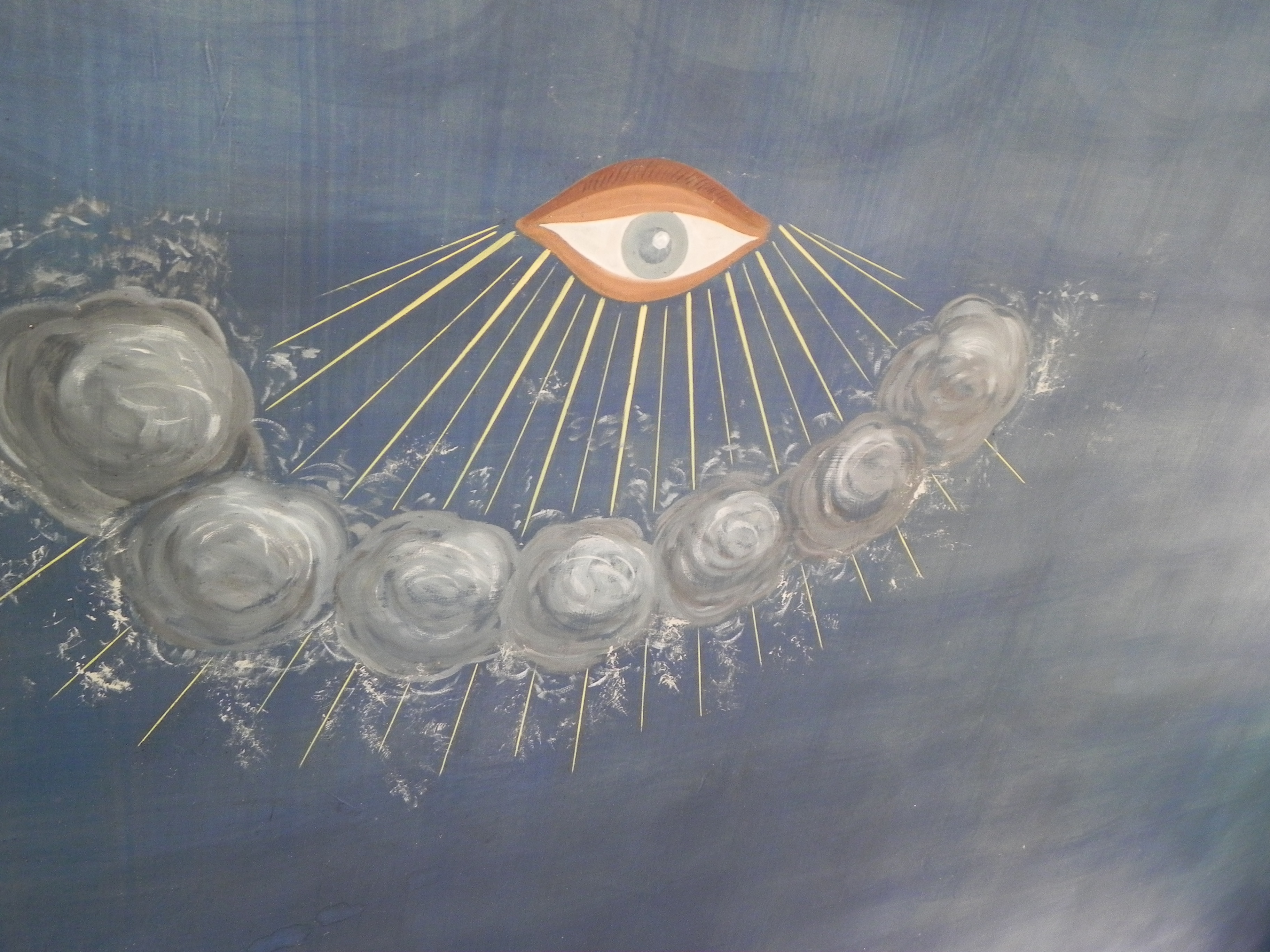
Ever have the feeling that you’re being watched? While touring the Salem Towne House in Old Sturbridge Village in Massachusetts, that fact that Mr. Towne was a Mason became abundantly clear. In the ballroom of his historic house the “eye of God” was looking down from the ceiling, and those who are astute observers could find other Masonic symbols in the house. Indeed, the ballroom walls were painted with cedars of Lebanon, the very trees Solomon was said to have utilized in the construction of the first temple in Jerusalem. Historically nothing is known of Solomon and the tradition of the Masons originating with that event can be nothing more than folklore, yet the connection is taken very seriously by some Masons.

Cedars of Lebanon

My grandfather was a Mason, but the desire to join the secret society never blossomed in me. I’d read Holy Blood, Holy Grail long before The Da Vinci Code ever drew attention to it, but being of a somewhat skeptical bent, I found most of it unbelievable. There is no doubt that the Masons had a very influential, if secretive impact on early modern history. I never seriously researched the group, but it is clear that their origin myths are very religious indeed. I looked right into God’s eye yesterday—how was I to question it? I was standing amid the cedars of Lebanon, after all.

Somebody's eye is watching you.

The desire to possess secret knowledge runs profoundly throughout history. Those who possess knowledge possess power. The Gnostic tradition is based on this very idea; God has revealed secret knowledge to some while the rest of us grope in the dark. Best to keep that knowledge clandestine. The Masons, wittingly or un, are part of this tradition. They are the putative guardians of esoteric knowledge, hidden amid the shadows of cedars and behind the clouds in the sky. In this day of abundant, free knowledge—it is given away every day on the Internet, for those who know how to discern—it may be difficult to comprehend that much can be hidden. As I stood looking God in the eye yesterday, however, I realized that there is far too much for any one scholar ever to learn.


Metamorphoses

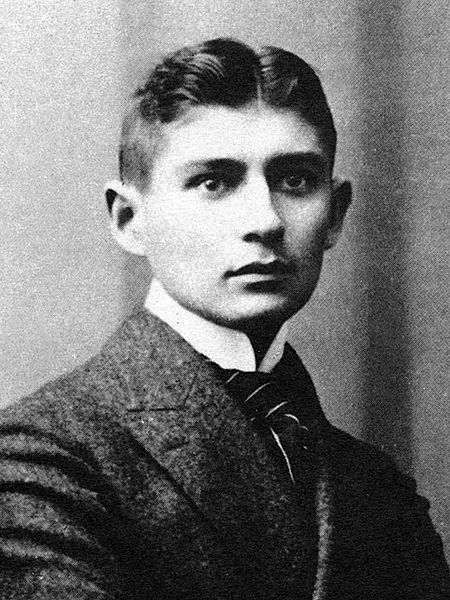
“When Gregor Samsa woke up one morning from unsettling dreams, he found himself changed in his bed into a monstrous vermin.” I borrow the opening words from Franz Kafka’s The Metamorphosis since upon rereading it yesterday I found it consonant with much of mythology. Even the title chosen by Kafka resonates with Publius Ovidius Naso’s (Ovid’s) Metamorphoses. Transformation at the hands of the gods. The idea lives on in the concept of conversion, the religious experience of profound change at the behest of God; some claim a willful hand in their conversion while others simply give God the whole credit. Kafka, one of the great existentialist writers of the twentieth century, considers the transformation without the gods and the terrifying results.

Having discovered the existentialists in high school, I was immediately taken by their writings. Characters find themselves cast into a world devoid of meaning, a world that they can’t understand and in which they often suffer unusual consequences. Little did I know that I was in training for my own experience in the academic world. Academia involves a major metamorphosis, one from which the victim cannot return, and after which she or he will find him or herself ineligible for employment. Reading The Metamorphosis as an often displaced instructor who’s only ever received positive evaluations, I saw much in the novel this time that I could not appreciate last time I read it. In short, I had metamorphosized.

Gregor Samsa, discovering he is now a bug, immediately worries about how to get to work. The painful description of his financial worries and ultimate rejection resonated a little too clearly. Is conversion a positive phenomenon? It is difficult to evaluate. In my experience, those who’ve converted tended to have been pretty decent people in the first place. As Ovid notes over and over again in his lengthy epic poem, when the gods make you into something else a sadness will pervade this new existence. If you survive. As Gregor slowly starves to death (in a fate hauntingly similar to Kafka himself) he finds no divine consolation. The situation is absurd—best just come to terms with that. Kafka could have been a struggling academic in the century after his death and he would have found the same situation applies.


Fear Itself

Who you gonna call?

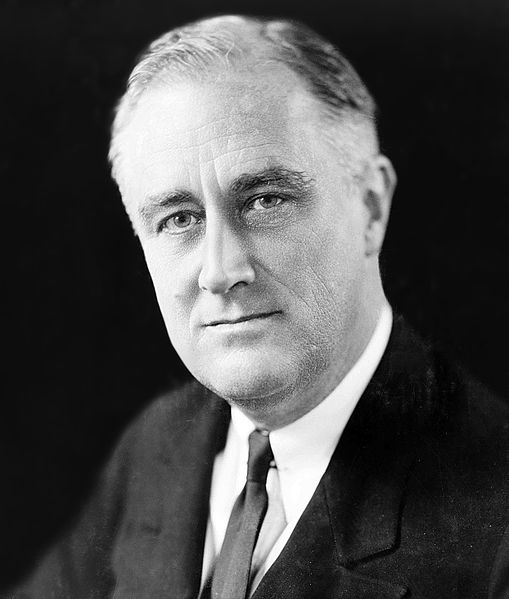
“The only thing we have to fear is fear itself—nameless, unreasoning, unjustified terror which paralyzes needed efforts to convert retreat into advance.” These bold words from Franklin D. Roosevelt’s first inaugural address could just as readily be applied to religion. Frequent readers of this blog will have no doubt noticed the recurring references to horror films and the occasional scary novel. Aside from everyday fears, (such as yesterday’s when I learned that my summer course, my only source of income for next month, had been cancelled) there are more deeply seated phobias that lurk in our subconscious minds. A reasonable conclusion might suggest that this undercurrent of fear is what buoys up the horror movie industry—people really are afraid. Fear is, in the final analysis, the original basis for religion.

Along with the evolution of consciousness, humanity has also acquired the knowledge of uncertainties and troubles ahead. We project to the next day and realize tomorrow is never secure. In desperate hope we beg the higher power for protection. If we were in control of our own destinies, we would not need the gods. Over the course of civilization, there have been luminaries who’ve tried to wrestle religion from the realm of fear into a more pleasing sphere. Jesus, for example, tried to stand religion on the basis of love. Within a couple of decades, however, Paul came along and managed to twist it back into the domain of fear once again. Fear of Roman persecution, fear of Hell, fear of life itself.

Religion is an embodiment of our fears. Many today choose to place their trust in reason and technological development. No doubt these arenas of human endeavor have improved life for many people. Yet, even with our growing global awareness, fear creeps in and we use our technology for weapons to keep us safe. We don’t call it religion any more, but national security, or the defense industry. Or, God help us, the TSA. The end result is the same: we fear more than fear itself. We place our trust in something we can’t fully comprehend. No matter how rational (or unemployed) we become, religion will never go away.


Thor’s Day

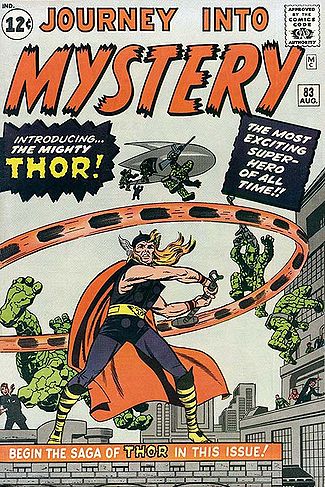
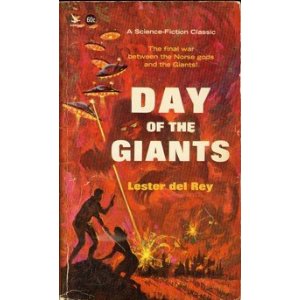
Mythology has visited the big screen in many guises, but among the current spate of superhero films a god may rival mere mortals and mutants. Thor opens in theaters today, bringing a Norse god back into the public eye. Like many young boys I owe my early reading predilection to comic books. One of my favorite heroes was Thor (our birthdays were very close) but I couldn’t quite make out how he was a superhero with the unfair advantage of being a god. Why weren’t other gods down here with us? At some level I sensed Thor’s rage, and perhaps even his estrangement from his father. Was there a sadness to this mighty wielder of thunder? When I was a little older Lester del Rey’s Day of the Giants became one of my favorite books. Norse mythology is plaintive compared to the world of the jovial Greek gods. Even the beloved Balder dies.

Thor is the embodiment of one of the most ancient principles of divinity: control of the storm. A generation after Odin, Thor also experiences that generational divide that all ancient people felt marked the lives of the gods. Zeus likely developed as a more civilized form of Hadad (Baal). In Ugaritic mythology Baal is the lord of the storm; he bears a mace where Thor will grasp a hammer. Baal, however, is often described as the son of Dagan, likely an early Mesopotamian storm god. Back to the earliest levels of civilization miniscule humans have quaked in wonder at the power of storm gods. Making Thor into a superhero humanized him a bit, and with classic comic-book biceps he was sure to be a hit among scrawny boys with dreams of grandeur. We would never have been allowed to read comic books featuring Baal.

The salient point, I suppose, is what makes a god a god? In the mythological mindset, deities are quite human except for their immortality and their strength. The might of gods clashes with the might of other gods. Omnipotence takes the fun out of the equation, for a truly all-powerful deity has orchestrated this whole cosmos and we are just pathetic players on the stage. Thor rages against the machine. If a god cannot be defeated, there is no story to tell. It may be difficult to predict how well Thor will perform on the big screen, but if I am not alone in my fascination of watching gods struggle against even greater gods, this may be like the Day of the Giants for grownups and kids alike.


Dukes and Serfs

Once upon a time in a land far away, a man and woman worked a fertile garden, blessed by God. That garden was in the incredibly rich, black soil of Savoy, Illinois. The zucchinis harvested were of biblical proportions. Some of them miraculously grew to the size of my calves seemingly overnight. The broccoli and carrots my wife and I grew had so much flavor that we couldn’t believe just how much leeched out while vegetables sat in the back of a truck or on a grocery-store refrigerated shelf. Even with their periodic mistings. It was as if Bunnicula had visited them at night. So long ago, the garden. It seemed obvious in those days why the writers of Genesis compared paradise to a garden. Ours was no Eden – it was hard work – but my wife and I had a lot of fun with it.

James Buchanan Duke, namesake of Duke University, owned a considerable estate outside Hillsborough, New Jersey. Having established both a tobacco monopoly and an electric company, Duke was enormously wealthy. He left his Hillsborough farm (not the tobacco farms which were in his native North Carolina) to his daughter Doris, making her one of the wealthiest women in the world. Her estate now consists of a socially conscious Duke Farms Foundation that has offered gardening plots to the plebeians of the region. So yesterday I found myself once again back in the garden. Sharing a plot with a friend, we arrived for opening day and were greeted by one of the organizers of the garden. Her name, of course, is Eve.

New Jersey planting requires more manure than the black earth of the Midwest. Yesterday I found myself shoveling horse manure, not for the first time in my professional life, while Eve supervised the garden. It seemed strangely biblical. Dodging between my summer classes this year, I will be emulating the first profession of our mythic father Adam. In the afternoon, after cleaning up, we headed to Rutgers Day, the university public-relations festival that shows off the tremendous wealth that cannot afford to hire full-time faculty any more. As I kept a weather eye on the clouds, worried about the seeds I’d just planted, the future continued to look stormy to me, even on the campus that has at times been my only source of barely sustainable income. Perhaps I should have changed my shoes, because it seemed to me that the smell of horse manure still hung heavily in the air.

I wonder if this is how Adam got started


Aftermath of Easter

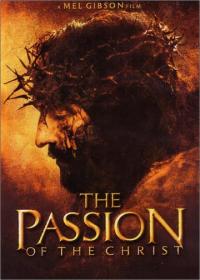
Holidays, it seems, are increasingly overloading themselves with baggage. Not only are many of them thinly veiled celebrations of materialism, but many are now being tied to “issues.” As I survey the aftermath of Easter as I saw it this year, it becomes plain that even the message of self-sacrifice and hope springing eternal can be co-opted. The Fellowship of Catholic University Students at Montclair State University hosted a screening of Mel Gibson’s The Passion of the Christ last week. An outcry of biblical proportions flooded university discussion groups over what was deemed cultural insensitivity. Gibson’s version of the gospel failed to impress me when I saw it, stressing as it did Gibson’s sadomasochistic torture scenes in an effort to raise a few welts over “Christ-killers.” Back at Nashotah House I was regularly on the preaching rota. (I’m not now nor have I ever been ordained in any denomination. I have, however had preaching experience going back to my high school years.) My final sermon asked whether we should accept theological truths from a loose cannon of an actor. These physical accidents may have had more than a little in common.

Conversely, my first sermon at the seminary – the very year I was hired, and several years since my last pulpit performance – featured Abraham Lincoln. Nashotah House was a bastion for disgruntled southerners at the time; they were often the only ones conservative enough to fit the seminary’s profile. My admiration of Lincoln was expressed in an innocent expostulation on the merits of freedom. Afterwards I was drawn aside and admonished, being informed, “not everyone here believes Lincoln was a hero.” Lincoln was assassinated on Good Friday, a point that has not escaped those who note that the Civil War began 150 years ago this month. Those at Nashotah who disliked my words felt that I was disparaging the south. With roots in South Carolina, I indeed was not. Slavery is wrong in any ethical system that will stand up to scrutiny. Those who believe in equality, however, often pay the ultimate price.

Holidays do not always bring out the best in us. We need the respite, and we have the Jewish community to thank for coming up with the Sabbath that has led to our weekend lifestyle. Each weekend rival churches fill up with those who believe others to be wrong. Religion seems to have failed in its quest to unite. A colleague at Montclair cited the quotation of uncertain attribution: “having a war about religion is like having a fight over who’s got the best imaginary friend” – this was in the context of the screening of Mel’s Passion. The fact is, when it comes to religion nobody knows the correct answer. The humble response one would like to imagine is the mutual encouragement to continue to strive for the truth. More likely than not, the response is someone will select their weapon of choice and try to prove their point of view the old fashioned way.


Kings and Lions

Most parents come to know the Disney Empire intimately. Apart from cheap knock-offs, it is the main entertainment industry for children in a world of leisure. When weighed in the scales of intellectual achievement, Disney productions often end up in the lighter pan. Even some of the more serious stories, such as The Lion King, strive for a gravitas that eludes them. That doesn’t mean they can’t be fun to watch, however. Yesterday, in a celebration of two closely spaced birthdays, we went to see The Lion King on Broadway. Being in Times Square reminded me that New York City is where many adults go to play, the Disneyland for grown-ups. Even with the rain for which this April has been an overachiever, hundreds of tourists were about, flocking to the famous chapels of the temple to American consumerism.

Having sat through many decent productions of high school, college, and touring company musicals and plays, I never really appreciated how a long-term professional show could raise the standards to a nearly unattainable level. The Lion King story-line has many mythological – Christian, even – themes, but the immediate sense of awe in being in a Broadway theater was underscored mostly by the professionalism of the actors and singers. The play does try to raise the level of awareness of African culture, a heritage nearly wiped out in many locations by overzealous missionaries, albeit in Disney-approved fashion. It is very easy to comprehend why those who frequent Broadway find other productions lacking. In short, the show was spectacular.

As today is the official start of Holy Week, and as Easter is about self-sacrifice and rebirth, The Lion King was an appropriate choice to experience (it was selected by my daughter). The death of Mufasa in the salvation of Simba is played out in a resurrection of sorts when Simba realizes that his father still lives in him. The character of Rafiki also makes for an excellent example of a shaman. Glancing through the playbill, it was evident that many Broadway shows are keyed to religious culture: Jerusalem, Sister Act, Rock of Ages, The Book of Mormon, and even Mary Poppins has a magical being descending from the skies to set a minor injustice to right. Now as millions lift their palms on this Sunday the drama will carry on and art will continue to draw its inspiration from religion.

Broadway 1986


Waiting on a Miracle

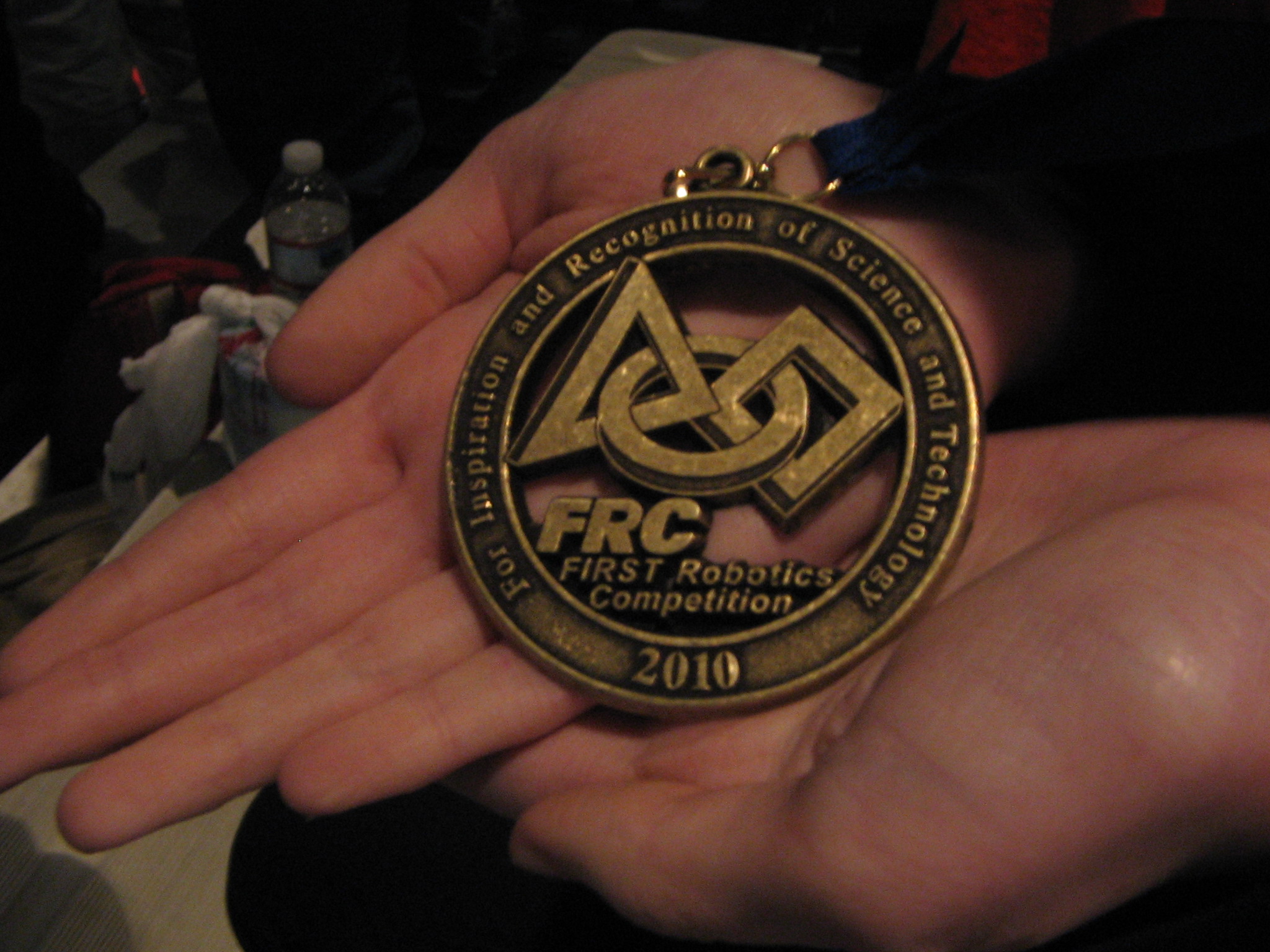
A Google search for Morgan Freeman and FIRST Robotics will bring up an online invitation to the FIRST Robotics national championship in St Louis. After having spent yesterday at the Philadelphia FIRST Robotics regional competition I was once again struck at how emotional such events can be. I reflect on how emotion often drives religion and it is obvious that humans crave this kind of fulfillment. We look for something to believe in. Science and technology fields of inquiry are offering answers to age-old questions and present-day problems. God has been removed from the machine, but a divine residue remains. Whenever I attend these competitions I am alert for how religion manages to cling on to this highly humanistic art of robot building. I’m never disappointed.

The Dean of Temple University’s College of Engineering (which was hosting the event) spoke of the emotional rescue of the Chilean miners last year and how the press hailed the feat as 75 percent engineering and 25 percent miracle. The Dean espoused that the goal of engineering is to bring the engineering factor up to 100 percent. A world where we no longer rely on miracles. Any of us who’ve every waited on a miracle know that the outcomes are chancy at best. And yet the religious language was not over. DuPont, one of the corporate sponsors for FIRST Robotics, had a promotional slide on the projection system reading “The Miracles of Science.” Of course, that is one of their corporate logos, but the question left lingering in the air is: does the miracle come from God or human engineering?

Teams from a wide variety of high schools participate in the FIRST Robotics Competition. The founder of FIRST, Dean Kamen, was present yesterday to celebrate the final regional event. Several parochial schools compete in the competitions, and religious language is evident in team names, logos, and mascots. One of the winning alliance members yesterday was the Miracle Workerz (I didn’t catch what high school they were from) making a hat-trick of miracle references. Another team mentor was caught on the camera making the sign of the cross as he left the robot to make its way into the finals. Even though my team did not make it out of the elimination rounds this time, I left feeling inspired. Dean Kamen revealed new ways that FIRST is promoting technology to better the future while the headlines remind us how dangerous religious extremists can be. At the same time, even in this future that our engineers are designing, God is still hidden in the machine.

A gift of the gods or human innovation?


Scooped!

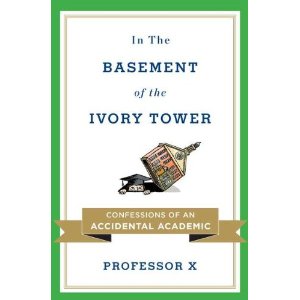
A book by a disgruntled adjunct instructor revealing the seedy underside of academia. This was a book project I had planned to write for some time; in fact I have over a chapter already written. My wife brought home a New York Times on Wednesday and I saw that I’d been scooped. Professor X’s book In the Basement of the Ivory Tower is reviewed in the Times. Curiously, his subtitle – Confessions of an Accidental Academic – was suspiciously close to my own proposed title. I guess I was just a little too busy teaching 11 courses this year to get around to writing the tome. In any case, I wish Professor X well. He has managed, however, to capture the attention of Viking so my insignificant wishes likely matter little.

Misery loves company, as the saying goes, and it is a strange and profound comfort to know I am not the only one consistently suffering at the hands of academe. University life has become a caste system of privileged professors and administrators and their minions while those of us who’ve had to try to earn our own respectability end up wallowing in it. Well-meaning professors suggested a doctorate from Edinburgh would make my resume stand out. I’m sure it is one of the more exotic ones in the waste-can. Meanwhile I have students coming to me asking questions about the department because none of the full-timers are ever in their offices.

I raise a glass to Professor X. Somebody needs to tell it like it is. Those who are heavily invested in the system cannot be expected to speak out against it. Courage is not the hallmark of the average academic. Those of us who dare challenge the abuses we see above us will most definitely live to pay for it; I know others who’ve shared my fate in this regard. It is the paradigm of education in the United States: we promote it until somebody has to pay. At that point those who’ve spent years after high school becoming specialists are asked not to crowd the others in the bread-line. Professor X, I salute you.


Tuesday Mourning

A mourning dove sat on my front steps today. I weep for Shaunakaye Williams, although I never met her. The death of the young is tragedy defined. I did not know Shaunakaye, but I know that she was a young woman of great potential. She had discovered FIRST Robotics in Newark and died while in California at a FIRST competition. If it weren’t for the FIRST connection, her death might of remained unknown to me, but it would have been a grave loss nevertheless. Becoming a parent has been the most wonderful and terrifying event in my insignificant life. Since it has happened, I have mourned every death of a child of which I’ve heard. The words of comfort fail. FIRST is the most optimistic group with which I’ve ever been affiliated, recognizing and rewarding the potential of bright young minds. Shaunakaye was part of that family, and her loss is deeply felt.

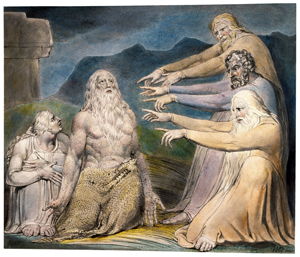
In the field of religious studies, those who would justify the actions of God in a world full of suffering are faced with a daunting task. Theodicy is the most unenviable and unsatisfying aspect of the theological endeavor. Even the stalwart author of the book of Job dared not ask the great unanswerable “why?” – there is no justification for the death of the young. Often the answer is there is no answer. Job’s friends cannot accept this truth and fabricate excuses to show that God is just. God himself affirms, however, that life is just not fair.

As a race, as a species, our children are our greatest assets. Bully governors and pedophiles notwithstanding, any society that does not promote or encourage its children has already cut off its entire future. I mourn for Shaunakaye Williams, and for all those who have not been given the chance to reach their full potential. I mourn for all parents who have had to face this most terrible of afflictions. And I will never be counted among the friends of Job.


Time Isn’t Holding Us

Ancient is much more recent than it used to be. Perhaps it has something to do with the two massive earthquakes over the last couple of years that have together sped the earth’s rotation by almost three microseconds. Perhaps. A more likely explanation is that excessive technology makes us soft. We expect new toys, new tech solutions on nearly a daily basis, and with the communications revolution, we are rarely disappointed. I wonder if we’ve forgotten how to help ourselves. This is especially evident in the lack of initiative I sense among many students. Of course, I am ancient.

When exam time rolls around, the present-day student requires a study guide. When I was a student, after dodging all the dinosaurs running around the campus, I never received a study guide for a test. If a test is coming, read, re-read, i.e., study, your notes. Maybe read a textbook? Nowadays a study guide is required for that message to be sent home. And then there’s the emails. Once the study guide is distributed (electronically, of course) the emails gush in asking what exactly I mean by this or that. Since I reiterated the point endlessly in class, accompanied by a PowerPoint slide with the answer writ large, verily, I roll my eyes and drop to my three-legged stool in dismay. Can it really be that college students require detailed answers in advance for a multiple-choice test of only 40 questions? Back in my day, a multiple-choice test was a gift that felt like sixth grade had rolled around again.

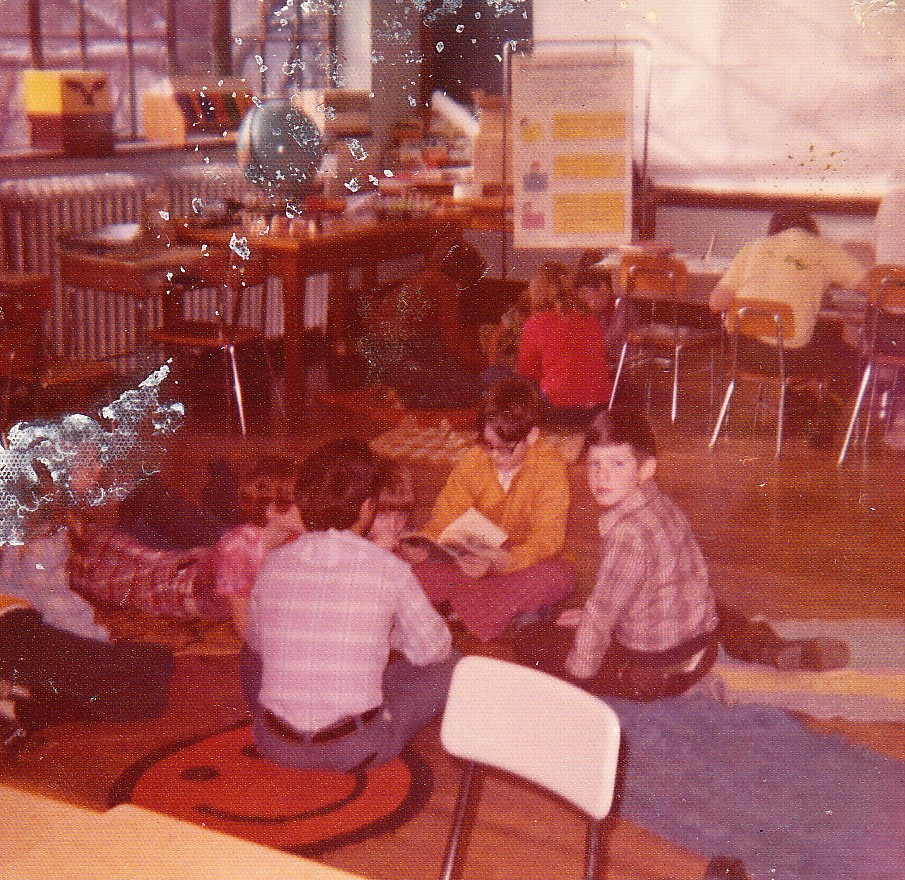
Sixth grade: what's he got in his hands?

Time, since Einstein, has been relative. And since I am an antiquity, I can perhaps be forgiven for citing Supertramp’s “The Logical Song.” As a studious young man, religious from epidermis to viscera, I was sent off to get an education. Years later, kicked out of the academy for good behavior, I see the wisdom of the lackluster 70’s band: “But at night, when all the world’s asleep, the questions run so deep for such a simple man.” The lyrics are easily found on the Internet. It is simpler than walking over to the CD rack to check manually. Back in my day, I would never have even imagined skipping an exam and then asking the professor what he was going to do about it in the next class period. Email, in this instance, is easily forgotten. I’ll get back to you once I engage the electronic lock to keep out this velociraptor (if anyone can remember back to 1993).