What’s in a Name?

Two of my readers sent me an article yesterday about Lord Jesus Christ, the Massachusetts man who was hit by a car. Lord Jesus survived the brush with death this time. Clearly the angle on this story is the human interest aspect instead of the courtroom precedent or the political scope of its ramifications. In our minds, if we’re honest, we’ll admit that we’ve already come up with a profile for a man named “Lord Jesus Christ.” We’ve already judged him and determined his motives in legally taking such a name. This is a book to be judged by its cover.

From a purely semantic point of view, the victim’s name would probably have more impact with the definite article: The Lord Jesus Christ. As it is, the name differs only in degree from the thousands of Chrises out there, of either gender, or the many Hispanic men named Jesus, or those Anglos with the surname Lord. Not to mention all those Joshuas. Our names are the labels that others immediately use to prejudge us, although mostly our names come from our parents, or sometimes spouses. We are known through life by tags branded on us by parents who have no idea who we will become. As the non-adopted step-son of a second father I changed my name and I know the baggage that goes with such a change. The burden became so great that I reverted to my birth-name after college. I felt like I had been living a lie for much of my youth. What’s in a name?

Our injured man with the newsworthy name has not yet become the savior of the world. Some religious folk are offended by his appellation, yet most of us would be flattered by someone naming their child after us. Why not aim high when it comes to names? If we are to be judged by our verbal moniker, why not select one that states our point of view? With religiously motivated terrorism on the ascendant, however, it gives me pause to think about Lord Jesus Christ being run down. A man was injured here, while crossing the street. It could have been anyone. If it hadn’t been for his epithet, the story would not be national news. More than anything else, this may reveal the significance of the name.

A message from on high?



Trite Lite

Fresh out of that improbable world called Nashotah House, I was introduced to a jarring concept while in Oshkosh: a Hasidic rapper called Matisyahu. The strange image brewed in my head did not match the reality of this persona, but the very concept of a religious conservative engaging in protest music just didn’t seem to fit. I make no claims to musical expertise, but I did grow up in the 60’s and 70’s, and I know authentic protest when I hear it. Rap began as a countercultural rebellion, and I knew age had its gray fingers wrapped around me when a friend in grad school claimed that rap was “the end of civilization as we know it.” Civilization didn’t end, it simply evolved.

Rap started to become mainstream, as happens to all radical movements when they become “cool” and the aging performers join their aged fans. Then along comes Hi-Caliber, the pathetic Republican attempt to appeal to the hip, the young, the impressionable. The Tea Party rapper (Zac the Rapper?) inveighs his tired message that progress is bad, privileging the wealthy is good, for the Bible tells me so. And the public sips it in. As a person who can’t help but overthink things, it alarms me how trite answers are easily accepted by so many people. If a person stops to think about the implications of issues, the simple solutions proffered by Tea Partiers simply don’t solve anything, no matter how many rappers, twitterers, or ravers they get on their side. Rather than exercise mental rigor, most voters see the shiny glitz and pull the voting booth curtain. Perhaps my friend was right after all.

I have to face the fact that I’m aging into a guy who casts a nostalgic, longing glance back to the sixties of my youth with a sentimental eye. The cardboard-cutout world of the 1950s seems that it was insubstantial, staged even, compared to the psychedelic colors I first saw through childhood’s wondering gaze. I heard protesters on the radio and saw them on television while being raised in a conservative environment. And even though I never personally rebelled, being the Bible-reading type, I secretly admired those who had the courage to challenge the social evils of the day and damn the consequences. Now I switch on the radio and hear conservative fat-cats clipping out pithy rhymes upholding the man. Where is the authenticity? It all makes me want to turn on, tune in, and drop out.

Authentic Republican wrapper


Great Balls of Fire

Gnu from WikiCommons

“I looked, and there came a great earthquake; the sun became black as sackcloth, the full moon became like blood, and the stars of the sky fell to the earth…” (Revelation 6.12-13a). With all the apocalyptic events of the past few days, some religious pundits are eagerly awaiting a rider on an extraterrestrial white horse with a light-saber jutting from his mouth. As the smoke from Eyjafjallajokull rises like a funeral pyre, a great green bolide streaks across Midwestern skies (landing, no doubt, near Nashotah House, among Wisconsin’s most paranormal locations), and this all follows an earthquake in China. More impressive than the snowpocalypse of this past winter, but less worrisome than the abrupt ending of the Mayan calendar.

All of this fuss reminded me of the way 1987 began. Having grown up in humble circumstances, one of my favorite pastimes was jigsaw puzzles. As my brother and I sat piecing one together on New Year’s Day while home on break, suddenly a loud boom shook our ramshackle house. Now I grew up in a small town built around a large refinery, and stories of the cataclysmic explosion that was sure to come raced through my head as my brother and I went outside to see the great pall of greasy black smoke that was certain to accompany such a disaster. We were met by clear skies and neighbors standing in a confused huddle in the streets. The news that evening reported that a fireball had been seen racing across the daytime skies of Ohio and Pennsylvania before it exploded some distance north of us. I’d just experienced my first bolide. It wasn’t the end of the world, but it was an event I’ve never forgotten.

The message I take from these many natural occurrences is that humanity is small. We imagine ourselves to be gods of our domain, controlling our environment and making it more to our liking. But we are not in control. Revelation was not predicting the end of the world, but was attempting to reassert a sense of control for people suffering from a perceived godless enemy. Today we still think of such events as a sign of God’s anger. I’m not sure what God is supposed to be angry about, unless he has happened to drop in on a Tea Party and heard how his name is being taken in vain.


The Danger of Books

Yesterday the Hunterdon County Library booksale began. I did not grow up as a reader. As a child, television was my primary source of information. For reasons unclear to me, I took to books when I started junior high school. Suddenly I couldn’t get enough of them. I lived in a town with no bookstores, so I usually depended on what I could find on our periodic trips to Goodwill to look for clothes. While my mother was looking for apparel for my brothers and me, I hovered over the quarter-a-piece book bin, buying up to a dollar’s worth of used books at a time. I kept my books in a ratty old suitcase under the bed. There were no bookshelves at home, nor any room for them. Besides, I liked to keep my books separate from other aspects of my life. Perhaps it is an illness, but from that day on, I have not been able to resist the draw of books. It is perhaps natural that I would go into higher education (although my field might have been chosen a bit more wisely). In any case, yesterday I drove to Flemington, New Jersey, with, at least to judge by the traffic, three-quarters of the population of the county.

One of the books I purchased had a slip of paper tucked between the leaves. When I got home I read on it, “The naked witches have been regarded either as a jokey press gimmick or as a complete non-event. The truth of the matter is that the witches played a very important role in a whole series of monster invocations.” Intrigued, I wondered what the source of this unusual quote might be. Then I was struck by the religious imagery implicit in the piece: witches, no matter how defined, are a religious subject. Monsters, as I have frequently noted, share intense neural territory with religion. And invocation? It is a liturgical term! I can only wonder what the original context of this quote might have been, but the book in which it was stuck was in no sense religious. I am a very eclectic reader (so it is perhaps unusual that I would go into higher education) and no books I purchased had anything to do with religion. It seems that religion never fails to find me.

My devotion to books often reminds me of the day when Amazon used to include bookmarks when you purchased from them. My favorite bore a quote from Erasmus: “When I get a little money I buy books; and if any is left I buy food and clothes.” It sometimes drives my wife to frustration that I still wear clothes I purchased before we were married some twenty-two years ago. My informal student evaluations on Rate My Professor sometimes comment on my out-of-date fashion sense. The reason is, however, that I buy books before clothes, and yes, even food. And when you buy used books at a library book sale, you may learn that naked witches invoke monsters, and that may be valuable information. And my clothes are never in a condition Goodwill would consider accepting when I’m finally forced to relinquish them for lack of functionality.


Older than Stonehenge

MSNBC ran a story yesterday concerning a little-known henge in Dartmoor, England. Images of these remote Dartmoor megaliths transported me back to my years in the British Isles when my wife and I spent every available tuppence traveling around to see antiquities so old that the Roman fortifications along Hadrian’s Wall seemed like throwbacks to the 1950s. With some English friends we met in Edinburgh we drove through the bleak moors of Dartmoor and Exeter, down into the forgotten curiosities of Cornwall, and back to Salisbury Plain to see Stonehenge. One year for my birthday we flew to the Orkneys (on a plane designed like a shoebox with wings) to explore the islands with the highest concentration of preserved prehistoric sites in Europe. Suffering from a killer head-cold, I accompanied my wife on hands and knees into tombs constructed thousands of years before William turned his conquering eye onto the British mainland. Colossal stone rings larger than Stonehenge, but less bulky and lacking capstones, stood out in the middle of a field where the locals barely threw a glance; such monuments had become part of the daily backdrop.

Archaeologists constantly attempt to discern the function of these silent remains. The MSNBC story suggests, based on the remains of porcine bones, that the Dartmoor site may have been associated with funerary rites. Carbon dated to 3500 BCE, they predate Noah’s putative ark (dated precisely to 1657, thank you Bishop Ussher) by more than a millennium. That they may have been associated with death is no surprise – the great feats and structures of humankind seem to be exactly that, efforts to cheat death. To leave reminders that we were here and we had something to say. What exactly they had to say, however, is muffled by the eons of lost communication.

A phenomenon I have noticed for many decades now is that when an unexplained structure or artifact is recovered, first recourse among many archaeologists is to attribute religious significance to it. Religion is the default fall-back when we can’t explain why people were expending tremendous resources to articulate a primal, deep concern in stone or clay. In many respects, the same is true today. Religious leaders still raise funds like no other class of professionals, simply by suggesting that death itself may be cheated of its due. All that money, however, can’t stop the inevitable. Instead of running away, I side with the archaeologists as I poke my head into some dank, dark space no other person has explored for many a month or year. Sitting quietly in an empty tomb left by an ancient society rendered completely mute by high antiquity, you are nevertheless in touch with what it means to be truly human.


Civil Rights and Science Fiction

I remember reading L. Ron Hubbard’s science fiction before the Church of Scientology was widely known. Not surprisingly, the religious movement began in New Jersey – a state where anything seems possible (except finding a job or having a stable government). Over the weekend, however, a New Jersey Star-Ledger story noted that some former members of the Church of Scientology are trying to sue their religion for violation of labor laws and unreasonable pay. Lawyers predict such a case cannot win in court, and I personally wonder how such cases of enforced labor differ from other brands of organized religion that require that extra push from their members. Doesn’t the church reserve the right to demand, voluntarily of course, that citizens forfeit their legal rights?

When I was young and naïve (instead of being old and naïve, as I am now), I took my first teaching job at Nashotah House. I was not yet thirty. It was, of course, a conflicted situation: a bunch of men living in the Wisconsin woods trying to maintain a monastic presence nestled between the sinful cities of Madison and Milwaukee. (And a few women, always the minority of the student body collective.) One of only two non-clergy on the faculty, I was surprised when, in response to what was an unreasonable administrative demand I was told, “When you signed your contract, you gave up your civil rights!” I’m not a lawyer, but I learned an important legal lesson – never mess with the saintly sorts that make up the church administration. Religion is big business. And religious bodies can afford big lawyers.

I feel sorry for the plaintiffs in this legal dispute, but they are in a wide and vast company. Organized religions are human constructs, and human constructs will always favor climbers. Climbers who reach the top will always build fortresses to protect their personal interests. In the church they’ll call it ecclesiastical authority and trace it right back to Jesus handing Peter some metaphorical keys. No, the church is not above the felonies and misdemeanors that secular courts just can’t judge. Potential members should read the contract, including the fine print. And don’t be taken in by the bits that sound like science fiction.

Inventor of new worlds


Heavenly Visitors

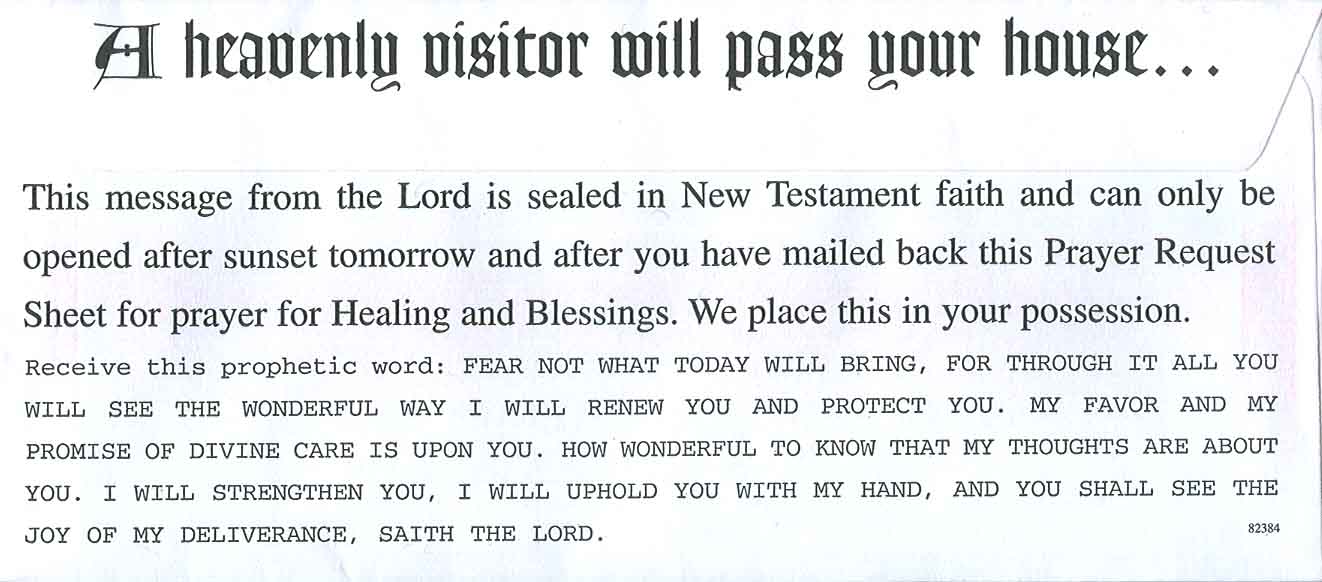
With Passover hard upon us, I was a little disturbed to receive a letter on Friday that read, “A heavenly visitor will pass your house…” Having been raised on the sturdy fare of Exodus, I knew that heavenly visitors more often take the form of marauding angels than of jocular Santa Clauses. It seemed an ominous warning. Of course, it came from the Saint Matthew’s Churches that sent me such good wishes of divine promises of prosperity some months back, so I had to assume it was a purely coincidental biblical reference. The folks at Saint Matthew’s Churches are, after all, Bible believers.

Perhaps because of that fateful letter, I dreamed, in good Genesis style, a dream two nights ago. I dreamed that I found a dollar coin on the ground at a family outing. A few feet away lay another. And another. Wherever we went in that Morpheus-bewitched town there were silver dollars unclaimed on the ground. My trousers were being dragged down with the weight of the lucre in my pockets. I couldn’t believe my good fortune! Then I awoke, still employed only part-time, still worrying every minute about whether we can meet all the bills. Perhaps the dream was a message? Should the Saint Matthew’s’ folks be right, prosperity was headed my way. Saturday’s powerball jackpot was in the double-digit millions. I very rarely play the lottery, but since state education in New Jersey needs all the help it can get, I offered up a dollar to see if Saint Matthew’s’ prosperity was at hand.

No. Not even one number came close. Perhaps there is a secret clause in the prosperity gospel contract. Perhaps those who prosper must hold certain conservative views on social issues. The views, say, my mother holds. Yet she lives in a trailer on a severely circumscribed income. That doesn’t seem to be it either. Last night I awaited another dream. Instead, the next-door neighbors were holding a loud party until 3 a.m. Perhaps celebrating Palm Sunday? Or perhaps that was the heavenly visitor passing over for Passover a couple of days early? Either way, I didn’t sleep well last night knowing that something was just outside my window.


Biblical Outlooks and Science Fiction

Alumni magazines depress me. Between my wife and I, we receive a half-dozen every month. I thumb through and see the cheery faces of classmates, most of whom I don’t know, who’ve gone on to great things – writing books, world travel, scientific breakthroughs. They’re not on the couch Saturday afternoons in New Jersey watching 1950’s sci-fi and wandering what went wrong. Especially bad is Bostonia, since I attended Boston University with many noteworthy individuals. Being forced from academia early in my career because of petty religious differences, I just want to bury my head and grab the remote. An article in this month’s BU shame-fest, however, pictured a professor, younger than myself, who joined the school of theology after I left. The title of the piece is “Biblical Sexuality.” Well, the connection with this blog couldn’t be more obvious.

Dr. Jennifer Knust is a professor of Christian Scriptures at BU who has written a couple of books on sexuality and the Bible. I’ve read widely on this topic in the Hebrew Bible, and was curious as to what the post-Jesus crowd was saying these days. The article specifically addresses homosexuality, but I did applaud one of Dr. Knust’s statements: “My main argument is that biblical texts do not speak with one voice.” Amen. Bravo. Goal! Our society is so imbued with the bibliolatry of the Religious Right that it is difficult for most Americans to understand that the Bible was written by many people over a few centuries and these people did not always share the same outlook. The Bible is an exercise in multiple voice-overs. Specific religions, as many denominations of Christianity testify, have harmonized these divergent voices into a coherent, if biblically untrue, theology. Some voices must be stifled so that others may dominate.

We live in a religiously plural world. There are about as many religions as there are believing people. We experience the world through our own lenses and within our own gray-matter. Our perspectives are uniquely our own. And yet religious leaders bend, worry, and force views closer to their own so that they might have a theological quorum, a consensus that one viewpoint is right. They silence the Bible’s divergent voices and claim they do not exist. I wish Dr. Knust well. She’s got the right perspective, in the opinion of my own weary gray-matter. And speaking of gray, where did I put the remote?


Robo-god

Yesterday I again found myself among the robots. After an early-morning school-bus ride to the New Jersey regional competition in Trenton, a mentor to a team known as the Gearheads, I felt a little out of my league. Soon, however, I fell into the spirit of the competition and watched with increasing interest as individuals highly regarded in the world of robotics lamented the lack of science education in the United States. Having just completed the nightmare of two terms with a creationist president, is it any wonder? In any case, the competition, a modified soccer match for robots – with two teams from Brazil, no less! – soon became as emotional as any sporting event. Well, for the human participants, anyway. I’m not qualified to assess robotic emotions. As the event wound down, a respected (human) member of FIRST Robotics, during a recognition ceremony, overcome with emotion, called out “God bless you!” to the adult volunteers.

Many scientists I know are personally religious people. There is no fortified gateway between scientific reasoning and the childhood teaching of religious belief. Nevertheless, an irony became apparent that has been bothering me all night long. I joined Team 102 as a mentor because of my daughter’s interest in robotics and engineering. My role is to help with editing, since I am a “humanities” type. The irony that leaves me sleepless is that Ph.D.s in the sciences are highly coveted and have an assurance for jobs. Ph.D.s in the “humanities,” however, are a sure way to block you from career success. Since I began this blog I have been officially unemployed (I pick up a course or two here and there, but no full-time offers have been presented). The people who have been most empathetic and helpful in this time of difficulty have been the robotics team. People there have tried to hook me up with people who might be able to help, but I am like an alien on the autopsy table among scientists – where do you begin? How do you help an overly qualified “humanities” ex-professor find a job? Meanwhile my co-“humanities” colleagues helplessly wring their hands and do nothing. Worse, they interview me and decide not to make a hire, based on “religious” reasons.

The past several years, as the recipient of calculated cruelty from many religious folks, stumbling along trying to find a means of reasonable support, I have come to trust the robots. The robotics team has demonstrated the most humanitarian attitude to a fellow human who has been suffering for several months. The religious tell me that God will work it out and go their righteous way. Yesterday, being blessed by a “high priest” of the robotics world, I felt that I finally found a place I belonged. Now it might be time to go back to school and find the real pulse of humanity in the sciences.

Kids building robots


War and Peace

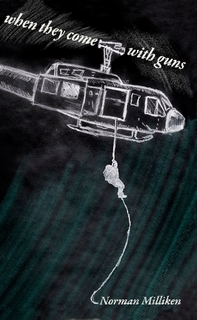
A few weeks back a friend pointed me to a Facebook-style website someone in my high school graduating class had put together. In high school I was awkward, shy, and a little too obvious about my religious beliefs, so I was a bit timid to join. Nostalgia eventually got me in a headlock, just like in gym class, so I signed up. One of my classmates helped me to find one of the people who had a profound impact on my life. Although I never had him for a class, Mr. Milliken was my Creative Writing Club advisor, and a person I utterly respect and admire. I’m not normally a hero worshiper, but Mr. Milliken had been through more suffering than many men his age and had come out of it a sincere, caring, and thoughtful individual. When I found out that he had published a brief collection of his poetry about his time in Vietnam, I immediately ordered it.

Available from Lulu.com

War has always haunted me. Perhaps it was partially because of the tales Mr. Milliken sometimes told, or because of my macabre reading about the terrors of twentieth-century conflicts, but whatever the cause for my fear, it was real. War has been with humanity for as long as its more docile cousin, civilization. Being rational creatures, there seems to be no reason that we should not be able to reason ourselves out of armed conflict, but we don’t. Knowing that one of my most respected high school influences had nearly died in Vietnam chilled me. Reading his poetry, I shiver once again.

While justifying it on theological grounds, the Hebrew Bible takes a fatalistic view of war. Killing of enemies who stand in the way of god’s plan is sanctioned, commanded even. The victims, however, are humans just like the victors.

When I get caught up in the complex web of difficulties my own life has woven into, I find it easy to complain. Reading when they come with guns, however, reminds me that many have had it much worse and have come out as superior human beings. For those who are victims of war, we can only hope that forgiveness will somehow descend on those of us who have not yet put an end to it.


Neo-Cons and Mockingbirds

Among my high school catch-up reading is one of my favorite novels, required in my own youth, Harper Lee’s To Kill a Mockingbird. While a certain distress accompanies the fact that I read this book over thirty years ago, as I reintroduce myself to the welcoming characters of Scout, Jem, and Dill, I lament that there is so much to read that we can’t simply linger on the great works of literature we’ve loved before. Reading the novel as an adult there is much, I am certain, that I missed the first time around, not knowing what to expect as I approached the story with no preconceived notions.

One of the constant stresses I lay on my students is how the Bible utterly suffuses American society. We are bombarded by Bible, whether we know it or not. It was with appreciation, therefore, that I saw the exchange between Scout Finch and Miss Maudie in chapter five. Miss Maudie, complaining that “foot-washing Baptists” take the Bible a little too literally, declares, “but sometimes the Bible in the hand of one man is worse than a whiskey bottle in the hand of – oh, of your father.” (The incongruous image of Atticus Finch drinking whiskey is not lost on his young daughter.) This statement summarizes much that is true in today’s society as is evident in Max Blumenthal’s Republican Gomorrah. Many Americans create an idolized image of the Bible that is used to gain control over others. When such individuals gain political power everyone else is at risk.

In the backlash to having a moderate man elected to the presidency, the news is full of biblically constricted complainers who fear the impotence of the Bible. Their fears are unfounded. Our society has been constructed on foundation blocks of biblical literalism and although the superstructure is unaware of it, the Bible continues to root many Americans firmly to their planet. The “founding fathers” were not Christians, but many of their country-folk, Puritans and others fleeing the formalized religions of Europe, were. The aggregate of their descendants has been tapped successfully by neo-con politicians to win elections and referenda around the nation. There is no end in sight. If only the wisdom of Miss Maudie were taken a little more seriously, we might have a chance to move beyond the illusion of a pristine yesteryear that never was.

Killing me biblically


The Gospel According to Caulfield

When one is asked to cite her or his favorite theologian, J. D. Salinger isn’t likely to be in the running. He might not even make the top ten. My personal introduction to Salinger, however, took place in a theological context. While in a Cambridge (Massachusetts) bookshop with a grad school buddy, I pointed out Mircea Eliade’s classic The Sacred and the Profane, insisting that my friend read it. Never to be outdone, Dave pointed at Salinger’s Franny and Zooey and said if I bought and read it he would do the same with Eliade. The Catcher in the Rye had not been part of my high school curriculum, so I was curious what all the fuss was about. I took him up on his dare. I’m not sure Dave ever read Eliade, but I read Salinger. My first impression was, “I don’t get it.”

Now my daughter’s school does require The Catcher in the Rye, and I’ve always tried (not always successfully) to keep up with her required reading. It gives us something to talk about – I’ve read several great books I’d otherwise have missed by this exercise. So I picked up the Catcher and plowed through. Salinger, I’m sure, requires no introduction. What is noteworthy, however, is that Holden Caulfield, while avowing himself an atheist, does make subtle but pointed comments about religion. (One of the occupational hazards of being a religionist is a constantly humming radar looking for any god-talk that might otherwise blend into the haze.) Holden, in chapter 14, points out the idiotic behavior of the disciples while Jesus was alive. He admits to thinking Jesus is okay, but his favorite character is the demon-possessed man who lives among the tombs. “I like him ten times as much as the Disciples, that poor bastard,” he says.

Who is as honest as Holden?

There is true religion in this statement. The “lunatic” running about in the tombs, rejected by society and even as far from God as you can get (demon possessed), is an image of humanity. Living a life of desperate alienation, the man in the tombs appeals to angst-ridden teenagers and displaced adults alike. He is likeable because he is like us. Holden scores bonus points on that observation!

With Salinger’s recent death, a renewed interest has sprung up about his novels – books that have changed the literary landscape. I read Catcher with more inherent appreciation than I did Franny and Zooey, but I’ve grown up a little since then. As an adult I can better appreciate the honest appraisals of Holden Caulfield.


Klaatu Barada Nikto

I grew up with robots. Of course they were on the television screen and I was far away in rural-ish western Pennsylvania. They were exotic creatures built by guys much more intelligent than I could ever hope to be, and they were powerful, completely rational, and scary. Now I find myself involved with the FIRST Robotics team in my daughter’s high school where kids a third my age are building a robot. It is a humbling experience.

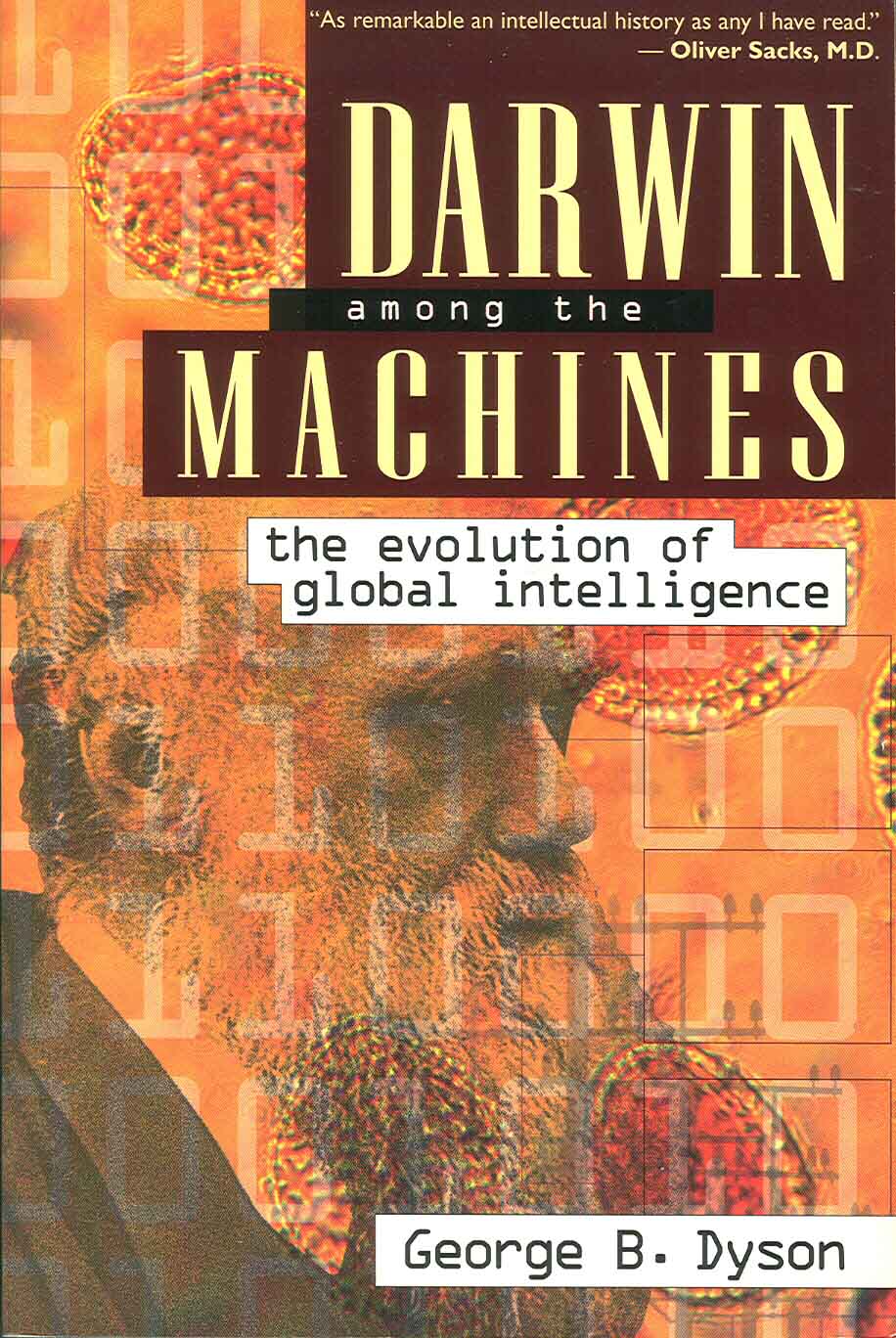
The more I ponder my small support role in the construction of a robotic creature, the more my thoughts turn to George Dyson’s masterful science writing in one of my favorite books — Darwin Among the Machines: the Evolution of Global Intelligence. I would not have known of this brilliant book had I not met George and a group of his friends several years back while they were discussing some of the ideas raised in his work. The main one that captured my attention was the premise that when we build machines we may be constructing an unrecognized form of consciousness. The greatest minds in neuroscience today cannot agree on what consciousness really is or how far it extends beyond this “three-pound universe” in our heads. Although most would decline to comment on the overtly religious term “soul,” we still know that any difference between consciousness, mind, psyche, and soul is very slim indeed.

Read this book!

Our lifestyle is made possible by robots. We drive cars largely constructed by them, use their chips to communicate over vast distances, and even take a stroll on the surface of Mars with them. My question from Monday’s post may have been whimsical, but it was serious. Where is it that the essence of a creature resides? Does it require carbon-based biology, or do we, unwittingly, create a race of slaves just like the gods of old?


Prosperity Update

I didn’t have the opportunity to write a post yesterday because my PowerPoint file for my class had been deleted. I still don’t know how. I’ve been using varieties of the same computer I have now for about 20 years and I’ve never lost a file before. I discovered this, of course, just before I began packing the car with the sherpa-load of equipment that I need to haul the 50 miles to Montclair with me to teach my class twice a week. The loss of the day’s lecture notes weighed heavily on my mind as I climbed into my car and discovered a problem with the electrical system – the blinker lights on the right wouldn’t shut off. (They finally started to behave normally half-way to the university.) And a blizzard was on the way. At times like this my thoughts turn to my prosperity cross.

I wrote about the cross in a previous post where I indicated that I was going to try a good-faith experiment to see if God really wants me to prosper. The last 17 years haven’t been good financially, so I tried my best to believe, and I have been carrying the cross around with me for a few weeks now. In that time I have had a publication rejected, did not get a full-time job after a very good interview, didn’t win the lottery (I bought a ticket as an experiment although I never play normally), my wife had more hours added to her job with no increase in compensation, my health insurance company politely declined to pay for an expensive dental procedure, and I have yet to be paid for my four weeks of teaching at Montclair. Oh, and two cars very nearly collided with me yesterday (not because of my blinker! One tried to pass me on the left as I was making a left turn into a parking spot in a parking lot, the other passed me on a single-lane entry ramp onto the Garden State Parkway while I was merging at the posted speed limit). I’m beginning to think they sent me a defective artifact.

In my prophecy class we’ve been discussing divination. From ancient times people have attempted to discern the will of the gods through a wide variety of techniques. Watching birds in the sky, smoke from altars, oil on water (haven’t discovered smoke on the water yet), casting lots, reading animal livers, and having significant dreams – any of these might reveal the hidden will of the gods. And ancients carried talismans at times to hedge the odds in their favor. We like to think of ourselves as more sophisticated than that, relying on more updated and civilized ways of influencing the almighty. My pocket cross is one of those modern means to induce divine favor my way. Perhaps I am reporting too soon, since I’ve got a backlog of nearly two decades of financial woes to overcome. In the short term, however, it looks like a real blizzard is on the way.

Secrets of my sucess


View from the Snowpocalypse

With all of the hype and anxiety of the current Nor’easter dumping snow on the East Coast, a guy from northwestern Pennsylvania can’t help but shrug his shoulders. What’s all the fuss about? Growing up in the snow belt of Lake Erie, I was accustomed to forgetting the color of the ground between December and April. School seldom closed with under a foot of snow. And I had to walk a literal mile to catch the bus, but it was uphill only one way.

The truly fascinating aspect of this storm is the creation of biblically charged words to describe it, as if the American vocabulary has run out of appropriate adjectives. “Snowpocalypse” and “snowmageddon” both appeared in this morning’s paper. The late biblical concepts of apocalypse and Armageddon indicate a devastating turn of the era when a new world is ushered in. All I saw out my front door was a bunch of snow. Peaceful, white, and pretty.

Snowmaggedon? Hardly.

I lament the farming of the otherwise underused Bible for images that cheapen the visceral fear and dread that accompanied ancient outlooks. Once while at Nashotah House in Wisconsin, when the temperature plunged to 38 degrees below zero (air temperature, not wind-chill) and the tired snow was being blown about by unforgiving winds, we were required to make the trek to Milwaukee for a day long spiritual retreat. Just about all human institution had shut down, with the sole remaining exception of a church eager to revitalize its aging congregation. As the ice on the window of the bus refroze immediately after being scraped off, I came close to thinking apocalyptic thoughts I admit. The weather, I guess, has always had a divine connection in our primitive minds after all.