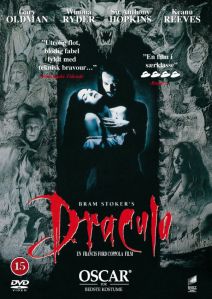
Long-term readers of this blog (both of you – you know who you are!) are aware of my interest in monsters. Constant companions of my childhood, I spent lazy days and sleepless nights both curious and fearful of these imaginary creatures. Like the concept of the holy, they both repel and attract simultaneously. Back in October, when I first heard of Stephen Asma’s book, On Monsters, I knew I would have to read it. I have commented occasionally during the progress of my time spent on the book, but having finished it I stand in a better position to consider the whole.
Not a monsterologist, I have nevertheless been fascinated by the juncture of monsters and religion, a point that Asma repeatedly emphasizes. His book is a masterful treatment of the subject from many angles, working through a roughly chronological treatment of the changing faces of the monstrous. Although monsters first appear with the earliest civilizations, they have persisted even in the strong light of scientific thinking and rationalism. As we comprehend our world, the monsters appear in deeper and darker corners, in the very folds of our throbbing gray matter, in the microbial world that floats invisibly around us, and in the smiling beneficence of technology. At many points in his historical presentation Asma is difficult to read; human brutality and emotional distancing have made for the most horrific of real-life monsters he cites.
Particularly useful in Asma’s treatment of the subject is his contention that monsters still have a place in our society. The word itself retains its usefulness in describing human, all-too-inhuman treatment of others. Unfortunately, the motivation for such treatment can often be traced to bad religious education. We may not be so fearful of the werewolf or the (supernatural) vampire, but we still fear those who treat others without empathy or human concern. Anyone with the parallel interests in religion and its aberrations owe it to her/himself to take a careful look at On Monsters and consider its implications.
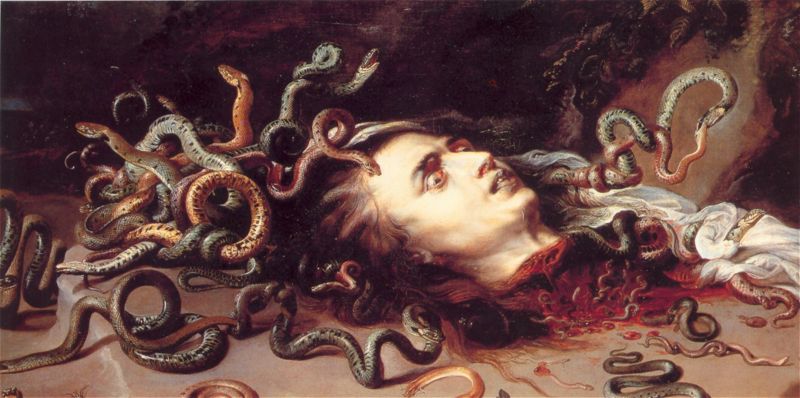
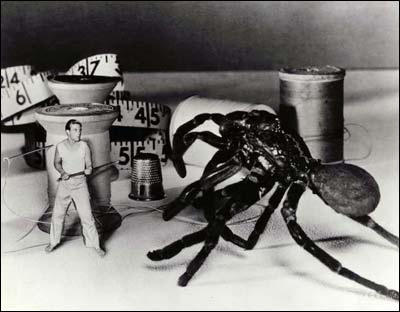
A classic monster

 The specific form of penny offerings seems to go back to Benjamin Franklin’s burial, at least in America. A few years back while in Philadelphia, I saw for myself that people still leave pennies on Franklin’s grave in Christ Church Cemetery.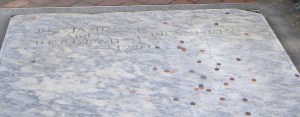
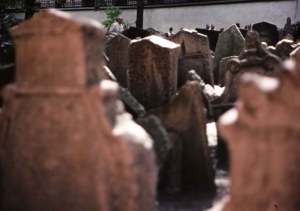 I recalled having seen stones on tombs outside Jerusalem some years back, and I even had a student bring me a stone from Israel to keep as long as I promised to put it on her grave after she died. This practice in its recent form is associated with Judaism, but again, it has ancient roots. The building of cairns, or piles of stones, is often associated with the Celts or the pre-Celtic inhabitants of the British Isles. On our many wandering through the highlands and islands we saw several Neolithic examples in Scotland, particularly in the Orkney Islands. The practice of putting stones atop the dead also goes back to ancient times. One plausible suggestion is that it was intended to keep the dead in their graves. A more prosaic conclusion is that digging deep holes takes more work than hauling over a pile of rocks.


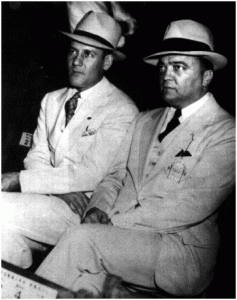
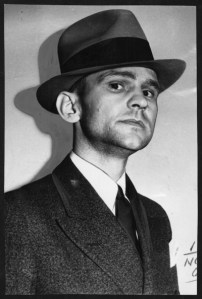 How far back does this go? It’s hard to say. I am related to Melvin Purvis, J. Edgar Hoover’s “Little Mel,” probably the most famous FBI operative in history. Purvis was responsible for tracking down such characters as Baby Face Nelson, Pretty Boy Floyd, and John Dillinger. Less famously, he married my father’s aunt. My cousins who saw his house before he died (apparently shot himself accidentally while cleaning a gun) tell me that it had a grand entrance hall lined with guns. Well, I’m related by marriage, and as much as I’d like to blame my short stature on him, it just won’t wash.