Rabbit Holes

Rabbit holes are my favorite part of the internet.  They can be used for heavy-duty research, but in my case they’re mostly just fun.  I’ve written about Dark Shadows many, many times on this blog.  Although I did watch many episodes of the original run with my brothers, my memories of the story line tend to come from the concurrent series of pulp fiction books by Marilyn Ross.  These books, which I have only ever seen used, were distinguished by their olive green covers and an oval cutout on the front where an image from the television series, sometimes apparently selected at random, was shown.  There were a total of 32 of them and, as an adult I collected them all.  Some months ago I wrote about my delight at finding several of them, in very good condition, at an antique and curio shop not far from us.  Recently in that shop again, I looked over the titles and discovered one that wasn’t in the series but was in the larger series, Paperback Library Gothic.
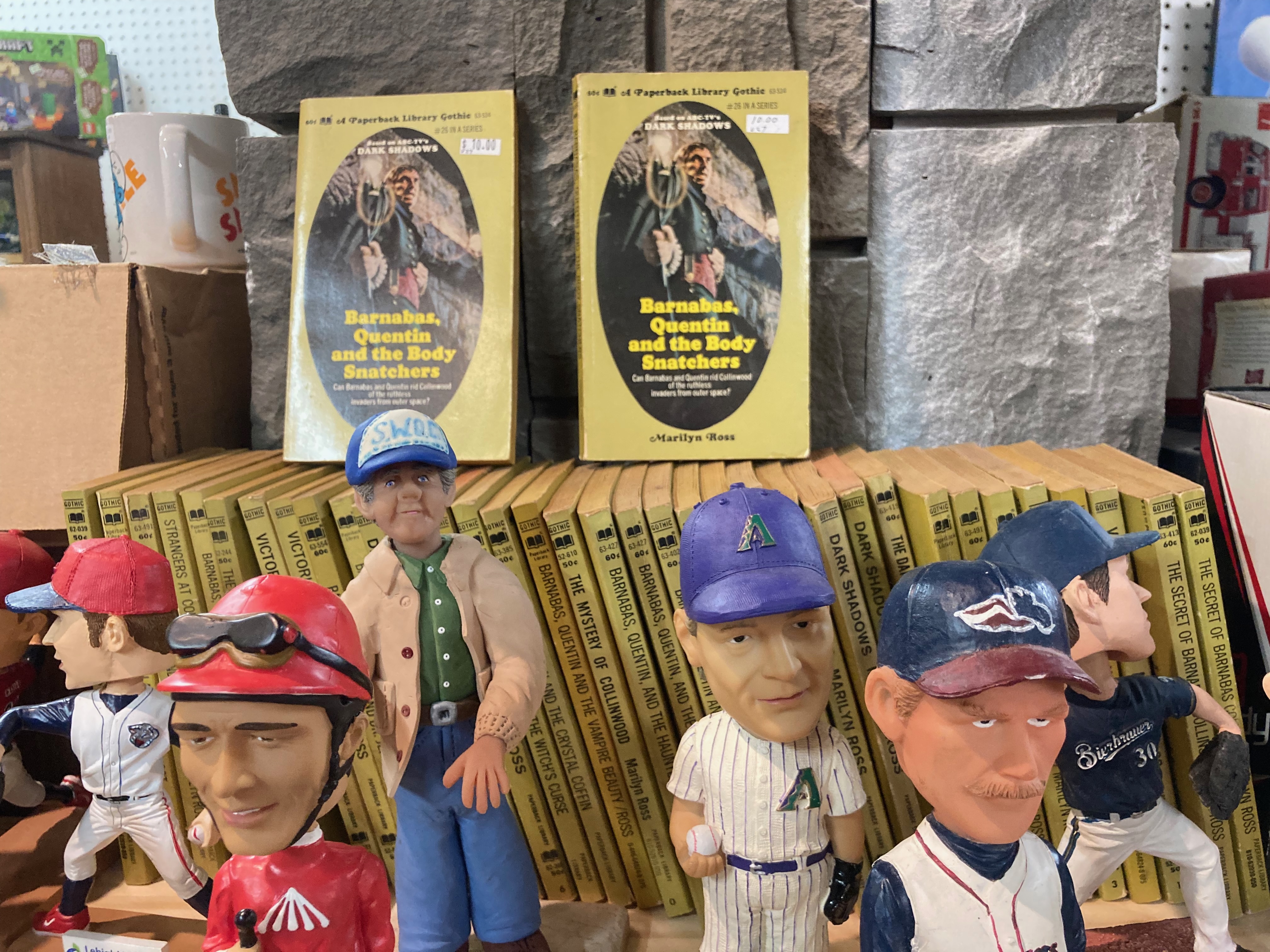
I’d never really given much thought to it, but the book was in great shape and was riffing off the Dark Shadows series.  It was reasonably priced, so how could I not?  Excited as a schoolboy coming home in time to catch the series on TV, I looked up the series online and fell down a rabbit hole.  There was an entire series in the mass market paperback format that I adore, from the sixties and seventies.  Shy of writing a bestseller myself, I’d never be able to afford them all.  The series included some classic titles out of copyright by such authors as Ann Radcliffe, Jane Austin, Bram Stoker, and Wilkie Collins (no relationship to Barnabas).  To these they added contemporary gothic titles including several by W. E. D. Ross, writing under the pseudonym Marilyn.  These were pre-Dark Shadows books.  There were well over a hundred of them.

Paperback Library was an independent New York City publisher founded either in 1960 or 1961, capitalizing on the pulp fiction and mass market paperback models.  They were bought out by Warner in 1970.  Warner eventually became Grand Central Publishing—still in New York.  In the large conglomerations that brought us down to only five major publishing houses in English, Grand Central was acquired by Hachette, one of said big five.  Recently the main distributor of mass market paperbacks decided it would no longer handle that format, essentially dooming it.  And with it a piece of my childhood.  Thankfully there are still some rabbit holes to fall down.

Dr. P.

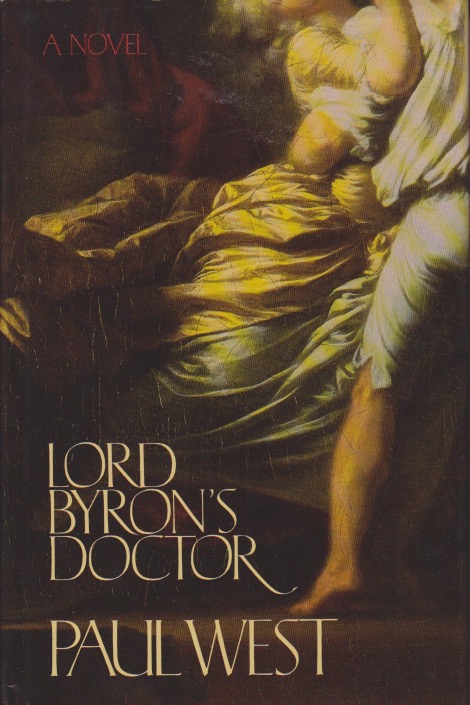
My recent fascination with the meeting of Lord Byron with Percy Shelley’s party in 1816 led me to read Paul West’s novel Lord Byron’s Doctor.  In case this meeting isn’t familiar to you, it involved five English travelers gathering for a few months outside Geneva.  Those present, beyond the two already named, were Mary Godwin, soon to be Mary Shelley, Claire Clairmont (her step-sister), and John William Polidori, who was, well, Lord Byron’s doctor.  Polidori, when not being completely overlooked, is a bit of an enigma.  He aspired to literary renown and produced a few works.  His most notable piece, “The Vampyre,” was initially attributed to Byron.  He wrote at least two plays and a novella, as well as some nonfiction.  He had been hired by Byron’s publisher to keep a diary of their travels, which, it turns out, leaves Byron out most of the time.

It’s clear from the historical sources that Polidori was quite jealous, both of Lord Byron and Percy Shelley.  They were both aristocratic and had achieved fame through their writing, but Polidori not so much.  He also seems to have been jealous that Shelley received Byron’s attention unstintingly.  Byron was a lord and Shelley the scion of an aristocratic family.  Polidori, while not exactly what we’d call “middle class” today, did not have nobility in his family and, perhaps worse  among the English in the period, he was half Italian.  Paul West takes the story of Polidori and tries to flesh it out.  I haven’t read any other of West’s works, but given this novel I’m unlikely to.  He does do a good job of probing the inner feelings of being left out and excluded from what one really wants to do with one’s life.  (Some of us know this firsthand.)  He overdraws, however, just about everything.

For anyone with an idea of what happened among the English party that summer, and the fact that Byron dismissed Polidori when the summer was over, the basic shape of this narrative will be familiar.  As an extended character study it seems to do passably well.  Some of us, however, find trying to think like someone else might have a bit of a fatuous fictional folly.  My mental image of Polidori, apart from the feeling left out part, is quite different.  In other words, attempting this kind of novel is sure to put some readers off from the start.  I gave it a good faith effort.  Some parts of it I enjoyed.  The whole, however, felt tedious and too long.  It may, however, give some readers a sense of who Polidori might have been.


Spring Halloween

Being a lifelong fan of Halloween, it’s only dawning on me now that Walpurgis is almost precisely half-a-year from its October sibling.  This occurred to me this year for a couple of reasons.  Someone from Sweden emailed me on April 30, noting that Walpurgis was still celebrated there.  (In an amazing, almost superhuman, show of restraint I did not mention Midsommar).  I tucked that away.  Then one of the very few Facebook groups I follow (Halloween Madness) had lots of posts over the next day or so noting that Halloween is only half-a-year away.  The penny finally dropped.  Walpurgis is Halloween in April.  Well, not exactly, but it could be.  The idea of the autumn being a spooky time of year may trace its roots back to “The Legend of Sleepy Hollow,” as I point out elsewhere.  Traditionally, the scary season was around the winter solstice, now known as Christmastime.

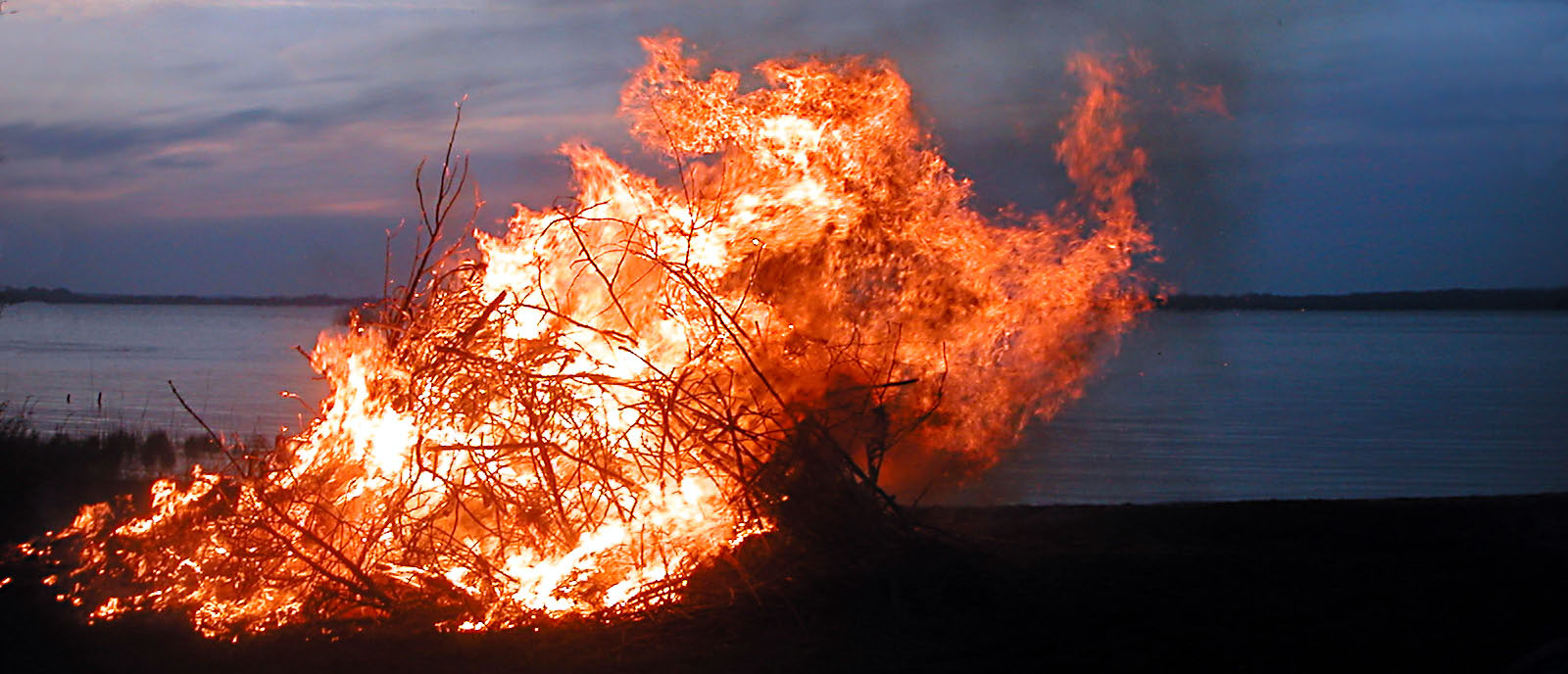
Walpurgis Night in Sweden; image credit: David Castor, public domain via Wikimedia Commons

Now, I enjoy Christmas a lot.  It is family time.  It is time off work.  It is hunkering down cozy time.  I read a lot and watch movies without having to interrupt everything to stare at the computer for eight or more hours every day.  I also take a bit of horror with my holiday.  There are Christmas ghost stories from before when Christmas became a capitalistic enterprise, giving the warm glow of childhood memories of gifts and such.  I try to keep that tradition alive, without spoiling things for my family.  But things can also be spooky in the spring.

My strange schedule of awaking around 3 a.m. to do my writing means that I always wake up in the dark.  I jog when it is just light enough to see.  Yes, it can be spooky in April.  And the weather, which is still far from certain—the Germans have a saying, “April does what it wants”—can be downright scary.  And there is an extant tradition of a scary spring holiday.  Walpurgis Night (Walpurga was actually a saint) was the commemoration not only of Walpurga, but the driving out of pestilence, various diseases, and witchcraft.  Its spooky potential was realized by Disney in its first Fantasia, but it hasn’t really taken off here in the States as the second Halloween.  It is celebrated in some European countries and it seems to me that it could make a useful addition to paid holidays where Christmas is fueled by the lucre we labor to give to others all year.  If I can remember, I will try to post more about Walpurgis Night in a more timely way next year.


Eh Aye Jesus

Have you ever wondered just how bizarre it can get?  At work I’ve been receiving push notifications for AI Jesus.  This is a software platform for exploring “the Bible,” “life questions,” and “guided reflection or therapy.”  No Jesus required.  Apparently tech has evolved to the point of addressing spiritual questions.  This is ironic since one thing AI simply doesn’t, and can’t, understand is religion.  Religion is not exactly a rational response to the world.  Often emotion is deeply, deeply involved.  Emotion is something AI knows nothing about.  I recently sat through a webinar promoting AI with the presenter listing problem after serious problem that AI poses.  The presenter optimistically saw no problem with continuing to use a flawed tool.  I would never advise crowdsourcing spiritual guidance.  Those of us who’ve spent lifetimes exploring it hesitate to put ourselves out there as experts.

The problem with AI is that we’re no longer being given a choice about it.  If you buy a new device, AI is there waiting for you.  If you do a web search, AI will offer the first answer, even if it’s often wrong.  Some of us with very human jobs are being told that we should be exploring how to use AI for efficiencies.  As if none of us were really doing a good job before.  I’m personally insulted.  What can AI know about how Jesus thought?  We have four gospels with sometimes contradictory sayings.  And it seems likely that the Gospel of Thomas has legitimate sayings as well.  Even so, that’s not enough data for an LLM (large language model, which is what generative AI tends to be).  They need massive amounts of information.

The human mind conjures its own image of Jesus.  Some think of a mild and meek shepherd of souls while others see a political firebrand with hopes of breaking the Roman hold on Judea.  Some think of Trump.  And everything in-between.   And how we think of Jesus informs the way that we interpret the sayings attributed to him.  I studied Bible in college for just this reason.  In seminary, aware of what textual criticism could do, I focused on the Hebrew Bible instead.  I grew up with the Doobie Brothers telling me that “Jesus is just alright with me.”  I’ve lived long enough to see a sitting president present himself as the parousia (look it up).  And now I’m being told that AI can subvert the carpenter from Galilee.  Just how strange can it get?

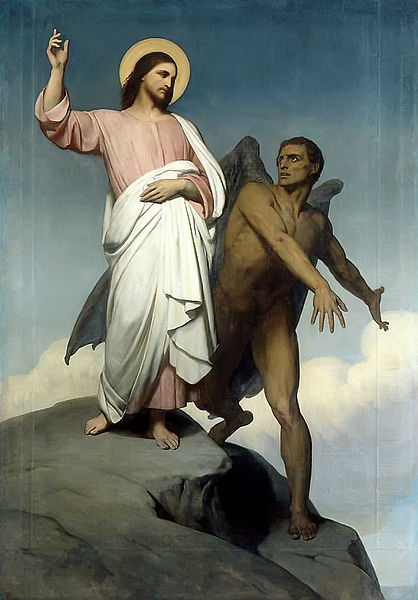
The tempter urges Jesus to use AI; image credit: Ary Scheffer, The Temptation of Christ (public domain via Wikimedia Commons)

May’s Cool Start

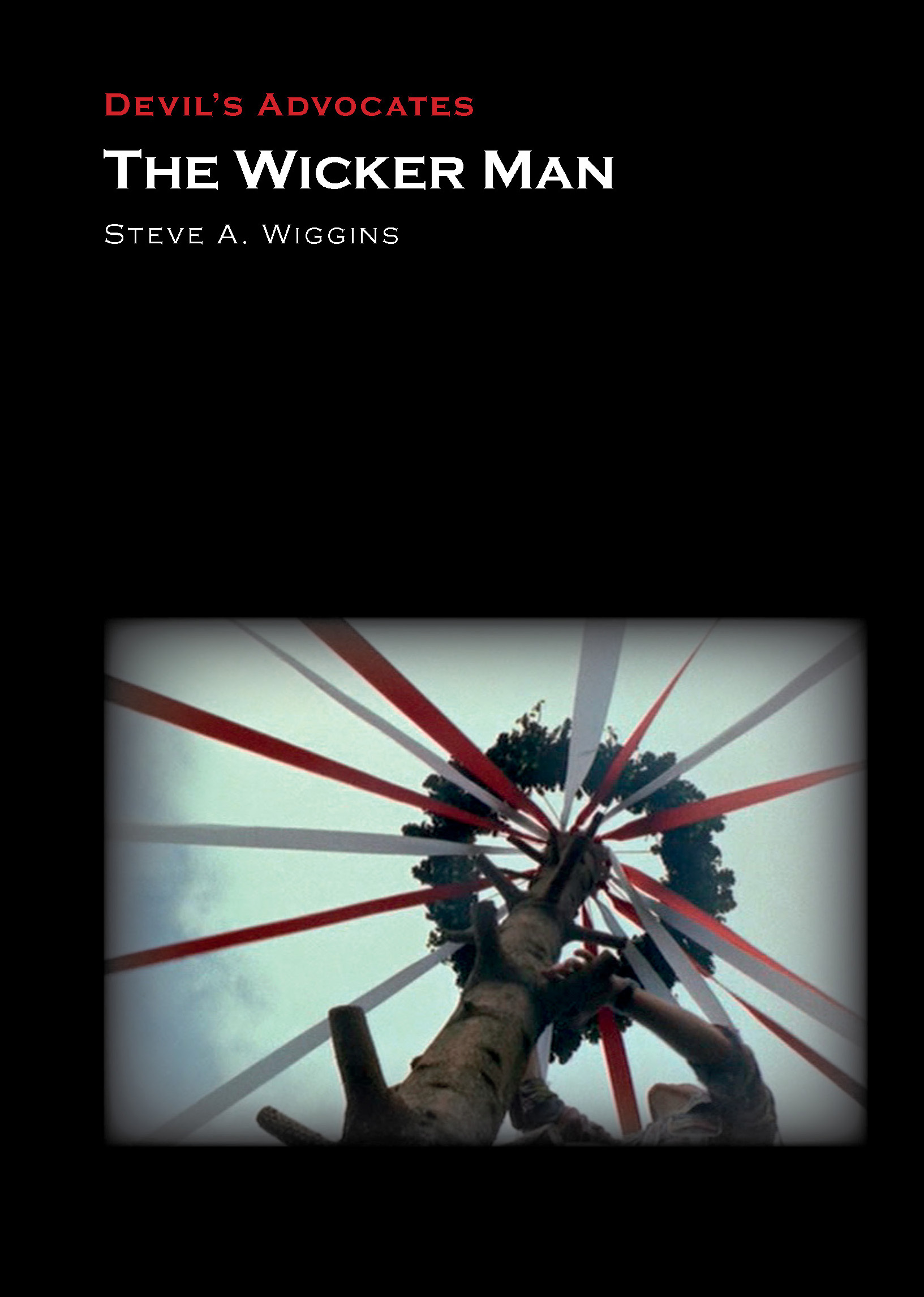
Beltane always makes me think of The Wicker Man, for some reason.  I recently got a royalty notice telling me sixteen copies had sold since the last statement.  (I never received that actual statement, but Worldcat shows that 419 libraries have a copy, making it my second best-selling book (maybe the best-selling; most royalty statements don’t include the total number sold, as much as authors would like to know that).  In any case, today is Beltane so I tip my hat to Sergeant Howie of the West Highland Constabulary and confess that I have two more books on the movie that have come out since I wrote mine that I haven’t read yet.  The reason is that I’m currently researching for a new book and Sleepy Hollow intervened.  But back to Summerisle.

The Wicker Man was a movie before its time.  The last of the three famous British films that spawned the sub-genre “folk horror,” it helped launch a new interest in ancient religions.  A friend pointed me to Children of the Stones (there will be a post on it in coming days), which was a British children’s television series with distinct folk horror undertones.  Maybe overtones.  It made me think of Wicker Man again.  And the way that folk horror has taken off in the past decade or two.  I’ve lost track of how many folk horror movies I’ve watched.  While discussing Christopher Lee with a friend lately, I was reminded how he once said that of the many movies he was in, The Wicker Man was the best.  It’s certainly a literate film.  Folk horror often tends to be.  Delving deep into what people (the folk) really believe can dredge up some very interesting possibilities.  I try to use them in my own horror writing.

Just because my book doesn’t explore the folk horror angle doesn’t mean I don’t think it’s not there.  (Sorry for the four-negative disclaimer.)  Devils Advocates at the time was looking for an approach that didn’t foreground folk horror.  Scholars tend to typecast Wicker Man.  I was working on a larger holiday horror project at the time—I may come back to it some day—and was surprised that nobody had approached the film from that angle.  The genre “horror” itself is a bit of a misnomer, and many of the sub-genres aren’t clearly defined.  For many people “horror” equates to “slasher,” but there’s a great deal more out there than that.  The Wicker Man stands witness to that on this somewhat cool May Day decades later.


Hopeful Reading

Although I prefer independent bookstores, I happened to find myself in a Barnes & Noble between other activities on a recent weekend.  This ended up being good for my spirits, although I didn’t buy anything.  The reason was, perhaps, ageist of me, that I was buoyed up by seeing so many young adults there buying books.  Granted, it was a cold, gray Sunday afternoon, but I read so much about the death of reading that this particular trip gave a bit of balance to all the doomsayers.  There is still a reading public.  And many of them are a good bit younger than yours truly.  I do wish more people my age would spend time in bookstores as well, but the future is with those who know to put down their devices and pick up actual books.

I’ve had more than one academic tell me that they do not assign e-reading for their classes.  One of them was a decade or two younger than me.  The reason?  Students don’t retain well what they read on a screen.  I tend to agree with this.  The context of setting aside time to open a book with no interruptions from texts, emails, or social media, is sacred.  You shut out the world and concentrate.  I try to do this for an hour each day (most days more than an hour) and it has to be done with print books.  I have no great love of electronic “books.”  The experience is sterile.  Devoid of true engagement.  And I’ve even been forced to read ebooks with other people’s highlights left behind.  When I buy a used book I try to make certain it’s an unmarked copy (although some sellers don’t look very carefully).  Why would I want an ebook with somebody else’s notes?

The visit to a bookstore is a restorative one.  In the rare instance where I know the proprietor, it becomes a social visit as well as a financial transaction.  Books are a kind of currency among some of us.  Although I know none of the names of the young people that I saw at Barnes & Noble, I do know something about them.  They enjoy books.  That is one of the most hopeful thoughts I can have.  As long as we manage to survive as a species, there is hope for the future if young people are interested in books.  Reading is a mind-expanding exercise.  Our life together is so much more enriching when we invite others in.  And some of them we meet between the covers of books.


A Sense of Scale

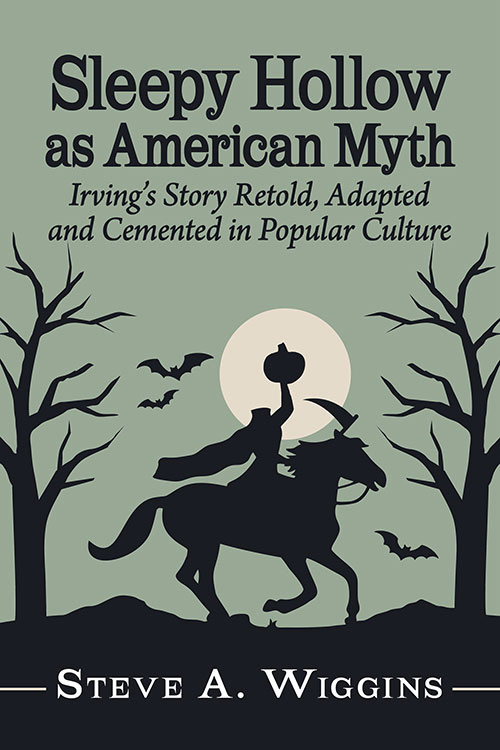
Most people have trouble imagining very large numbers.  The things we count, in daily life, seldom top the thousands.  To the human mind, a million is an almost impossibly large number to visualize.  This came to mind the other day when looking over a list of bestselling books of all time.  I glanced through one of Guinness’ lists, remarking some titles that I was surprised to find on the high millions list.  What really strikes me, however, is those on the other end of the scale.  Publishers Weekly estimates that four million new books were published in 2025.  Sleepy Hollow as American Myth was one of those.  Sales figures I’ve seen suggest it has sold less than a hundred copies.  I’d feel bad, but I’m in very good company.  Many books sell very few copies.  Unlike many that are simply churned out, mine take a lot of time and research to write, and, interestingly, those kinds of books just don’t sell.

I lack a sense of scale.  For example, Frankenstein (which was what I was curious about), sells about 40,000 copies a year.  That doesn’t make it one of the best selling books of all time.  Most authors today dream of selling 40,000 copies.  Successful books often sell about a quarter of that.  Authors need a sense of scale.  The few people who’ve read my Sleepy Hollow book have said good things about it.  It really seems to have caught the attention of AI only.  I advertised it with the Horror Writers’ Association, taught a class on it at the Miskatonic Institute, and contacted bookstores and libraries in Sleepy Hollow itself about the book.  Scale.  

Perhaps I’m odd in that I find books a treasure.  They really don’t appreciate in value until after some kind of apocalypse, or if centuries pass and only one or two survive.  Or, rarely, a first edition of a book that later becomes famous.  Such as Frankenstein, which had an initial printing of only 500 copies.  If you own one of those copies today (I don’t, just for the record), you must be quite well off.  Some of us write because we have ideas that boil over out of our heads and spill onto paper.  We do it although it doesn’t mean more money for us.  But we also do it because we want to share those ideas.  My timing was apparently off with Sleepy Hollow.  I wanted it to be out in time for a movie that was announced some three years or more ago.  I need a sense of the time scale for movies too.


Academic Reading

There is an art to writing biographies.  In the course of my training myself to write on literary horror, I’ve read a number of them.  Those written by literary scholars tend to veer into literary analysis, derailing the narrative.  Academic writing encourages such things, whereas the reader simply itches with boredom until the author gets back to more interesting things, like who the subject met, or what s/he did.  This is a shame, really, since I’ve read many books that could’ve been made much better by leaving the academese out of it.  Scholars far more brilliant than me have argued this for years.  I find it particularly ironic among English professors.  When they write biographies of literary figures, look out.  Obfuscation being mistaken for erudition is the order of the day.  Why do we teach those who study literary expression to make their own writing so turgid?

I know!  I know!  “If you can do better, you’re welcome to try.”  But I’m only after information.  If I’m reading a biography of a writer I don’t want her or his literary output analyzed.  I want to know about their life.  What made them tick.  Chances are, I can read what they wrote for myself and I don’t need anyone to tell me how to do that.  As an editor, I see a lot of academese.  My face falls when I do.  This stuff is so dull that only a true specialist would appreciate it.  Of course, I grew up in an uneducated family and I valued teachers who were good at explaining things.  There’s plenty I don’t understand (i.e., I can’t do it better myself), and I read to try to comprehend.  It reminds me of that witty academic bumper sticker I see from time to time in university towns: eschew obfuscation.

Is it really so difficult to write well?  I suspect some of the less accomplished biographies I read are in reality revised dissertations.  Dissertations are written for a committee, and rare are those that can be read by general readers with any appreciation.  But then, there are so many interesting people in the world who deserve biographies who’ve never been discovered.  The one who realizes this is often the doctoral student and when they begin to write up their findings, they bury this interesting person again under so much unnecessary verbiage that they continue to remain obscure.  Perhaps there’s a reason I was never really welcomed into the academy.  I am, perhaps, too easy to understand.


Still Sleepy

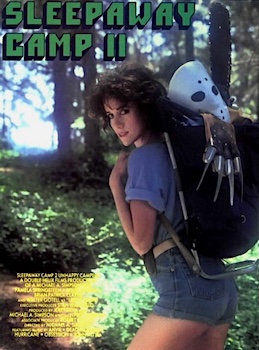
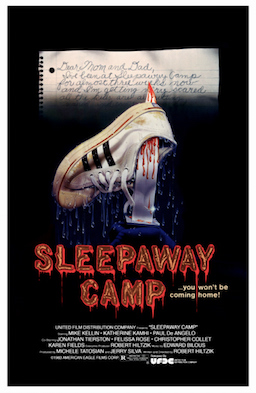
Being outside in the cold for several hours makes it difficult to think clearly.  That’s my official excuse for watching Sleepaway Camp 2: Unhappy Campers.  I’d just come home from the Lehigh Valley Book Festival and was having trouble warming up.  I threw on the blankets and figured I’d watch a horror movie—I’d just been talking to people about horror films for a few hours, and I don’t want to be untrue to my calling.  When I opened my streaming app the first movie suggested was the sequel to the truly bad Sleepaway Camp.  My mind was too muddled to make a critical decision, so I clicked play.  Now, not all sequels are created equal.  This one has a different director, different actors, and a different direction.  And also, Bruce Springsteen’s younger sister Pamela is the lead.  Okay, so time to sleep away again.

The plot is pretty straightforward.  Angela, the killer from the first movie, has been rehabilitated and has changed her name.  She’s a camp counselor again.  And she has a fervor for high moral standards.  She’s also insane.  By the way, this straight-to-video, low-budget release was shot as a comedy without really trying to be scary.  It is still very campy, but it is handled more ably than the first film.  Angela, who kills only bad kids, at least at first, is a kind of “angel of death,” according to lore that has grown about her since the first film.  Her methods for killing are both derivative and somewhat inventive.  Just the kind of film to watch when your brain is frozen from being outside in unseasonably cold weather all day.

It did make me wonder about a few things.  Those who make movies like this earn, presumably, at least some money off of them.  At this stage in my life, anyway, the opposite has been true of the books I write.  Maybe I’ve found my tribe—those who put their creative efforts out there without big corporate backing, hoping someone will understand what they’re trying to do.  Some of us do.  I can’t recall how I first learned about this franchise (maybe my head hasn’t thawed out enough yet to remember; we’re having yet another unseasonably cold Saturday) but it did step in as an easy choice when I needed one.  This isn’t a scary movie, but if you’ve ever been a camp counselor (I was for three of my college summers) it may bring some nostalgia with it.  And it’s no Friday the 13th part two.


Dreamers

Dreams are strange things.  I’m talking literal dreams—what your mind comes up with when sleeping.  Some dreams come out remarkably clumsily, like they were made DIY instead of by a professional.  Not to brag, but most of my dreams feel like they have professional production values.  They’re hard to tell from waking reality except that the rules in the dream world are quite different.  I’ve always struggled with nightmares, but they’re well made.  The other night I had what seemed to me amateurish dreams.  Even in my sleep I remember thinking that they were low-budget.  Normally I dream better than that.  And I woke up not really feeling ready for work.  They should give you “bad dream days” to take off.  Bad dreams can really put you out of sorts and can distort your thinking until the next sleep period comes around.

Recently I was talking dreams with one of my brothers.  When you’re a kid you naturally talk about dreams with your siblings.  At least we did.  I hadn’t realized this brother kept a dream journal.  I’ve had other people recommend doing that.  Like many people I have trouble remembering my dreams.  Often I do for a few moments after waking, but I don’t put on a light for fear of waking my wife and also I have to dash to the restroom and after that they’re gone.  But impressions of those amateur dreams stayed with me for a while.  The feeling of disappointment.  That I could’ve had something better to see me through the night.

Some of the more quality dreams survive long enough to get written into my fiction that doesn’t get published.  Some people experiment with lucid dreaming, where you invoke your waking consciousness to interfere with the untethered unconscious.  Other dreams are pure, elated fantasy.  And we still really don’t understand them.  When asleep those thoughts are just as real as the more mundane ones that get you through the working day.  And they can influence, sometimes powerfully, how well you navigate that 9-2-5 world.  Ideally you spend as much time sleeping as you do working.  They should perhaps balance each other out.  In my experience anyway, neither is really predictable.  If I had it all to do over again, I sometimes think I’d have been a psychologist (really, it was the medical part that put me off) where I could study dreams.  At least then I wouldn’t have to worry about having bargain basement dreams, would I?  It’s a strange thought.


Not Crystal Lake

I’d heard just enough about Sleepaway Camp to wonder if it was so bad it was good.  I really knew nothing else going into it.  I won’t spoil the ending, but you might not thank me for that.  Two kids and their father are involved in a boating accident that leaves two of them dead.  Years later, an eccentric woman doctor is getting her son and his “cousin” ready for the summer at Camp Arawak.  Friday the 13th vibes begin immediately, but the tone and acting are way off.  This is camp in every sense of the word.  The cousins, Ricky and Angela, arrive, but Angela doesn’t talk and doesn’t join in any camp activities.  The other kids tease her, naturally.  Ricky defends her whenever he can, but some of the other girls are the worst tormenters.  Then the murders start.  A drowning that could be accidental.  Bees in a bathroom stall with a guy who’s allergic.  Is this accidental?

Then a stabbing in the shower, definitely not an accident.  Meanwhile clueless adults can’t seem to find any connections.  They’re concerned with adult matters like keeping the camp open (it’s a business, after all.)  They don’t pay much attention to the campers.  Nor do they seem to notice when all the guys sneak out to go skinny-dipping at night.  Or that the tormenting that Angela is undergoing could be called out.  Finally, after the camp’s owner is killed—in the one impressive special effect—the police are called in and the killer is found.  The movie is known for its twist ending, and although the movie was excoriated originally, critics have come around to appreciate at least some aspects of it.  I was curious enough to give it a try, but the performances, perhaps except for Angela’s, make taking it at all seriously impossible.

That having been said, the movie is strangely effective.  Perhaps it’s because even people my age can remember what it felt like to be an adolescent, along with all the confusion and vulnerability of that age.  On a rainy weekend afternoon a little escapism can go a long way.  And formulas, just like in math class, tend to work.  There’s a reason movies like Friday the 13th spin into so many sequels.  Even Sleepaway Camp ended up with four.  Although this was a groaner, I can’t be sure that in a moment of weakness, if I don’t have to pay for it, I might be tempted to go back to sleep-away camp with a sequel.


A Day for Earth

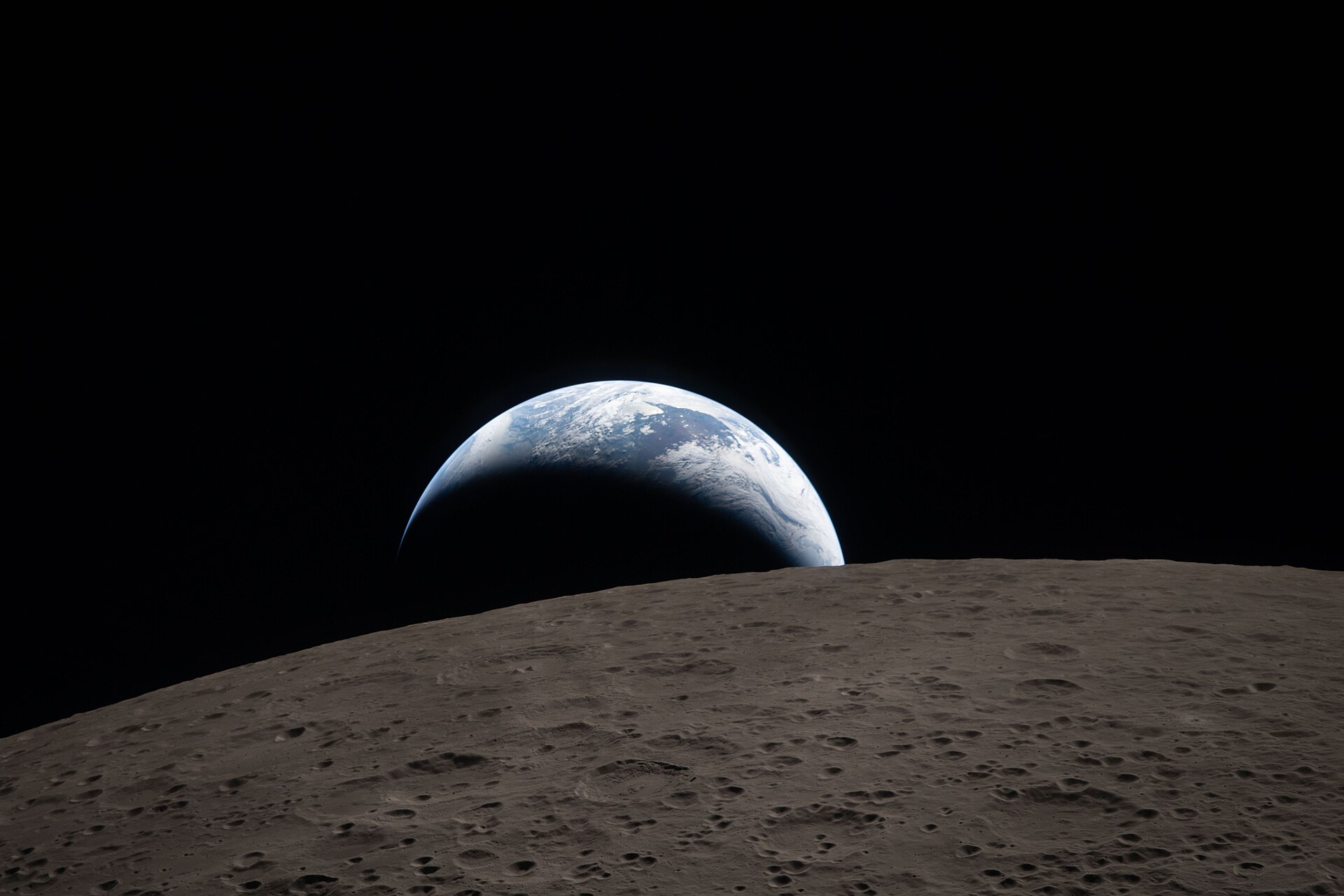
Sometimes things come just when they’re needed.  Although it was earlier this month, the Artemis II mission was a celebration of Earth Day.  It was also a much needed shot in the arm during difficult times for the environment.  Human arrogance is quite often checked by nature.  The series of very hot April days followed by extraordinarily cold April days reminded us around here that nature is firmly in charge.  Our comfort, or expectations, are secondary to the vast world around us.  And we love our world for it.  We are guests here and we couldn’t survive without it.  We may set up a base on the moon or Mars, but such places will still rely on our home.  It helps that those who’ve ventured further away than humans have ever gone sent back photos to remind us of how small we are on a fairly small planet.  Pictures of home.

Photo credit: NASA, public domain, FD06_high priority pao

From our daily perspective it’s difficult to believe that outer space surrounds us.  We’re so caught up with our own little problems, generally of our own making.  I write this after a day of shivering in a chilly house as electricians replaced the breaker box and the conduit, from service head to basement mounting.  It was a sunny day but temperatures hadn’t really recovered after a nighttime low in the twenties.  I reflected on how much we’ve come to rely on being able to shut nature out.  How difficult it would be to survive without shelter, and a little heat.  With the electricity off the furnace didn’t know to kick on, and windows had to be open to snake wires through.  For all the wonders of a household electrical system, the Earth itself is so complex we are still only beginning to understand how it works.  We love it.  We fear it.

Our dependence on things we’ve constructed makes me feel fragile sometimes.  When we first noticed our electrical issues I walked to a local shop run by an Earth-loving owner to see if their power was out too.  “Water and electricity,” she said, “are the two things we can’t do without at home.”  She was correct.  We rely on the grid.  Nature could take us with both hands behind its back.  As the replacement process stretched beyond the scheduled finish time, I had visions of a cold night without power.  No way to cook dinner, no way to keep food safe in the fridge.  I thought of astronauts a quarter-million miles from home, protected by a shell made here on Earth.  And looking back to lovingly snap a photo for Earth Day.


Just Handle It

It happened again.  A few days ago I loaded my blog post and forgot to click “publish.”  The reason for this is probably silly.  Although I get out of bed between 2 and 4 a.m., I’m afraid that if I post that early other notices will get on top of anything I share and the post will be overlooked.  Well, more overlooked than my posts already are.  So I wait until 6 a.m. to click.  And some days, particularly on weekends, I’ll have the post loaded but I’ll get distracted and will forget.  I discover it the next morning, stare at it in confusion for a while and then think, “I forgot to post this.”  I have this conversation with one of my brothers, near my age, who insists he needs a handler.  You forget to do things.  Most of the time I’m pretty good at remembering—this blog is the center-point of my online existence, and I post every day.  If I don’t forget.

Weekends are very busy.  Almost as busy as work days with their shorted human hours.  And last week was particularly intense.  Two unexpected house repairs that required financing.  Two birthdays.  And grass that loved the high summer weather we had in April.  (Our neighbor is trying to sell his house and I want to try to attract a new neighbor who appreciates those who make an effort.)  As soon as I stepped outside, however, I was overwhelmed.  During the week of summer weather I’d lost the long-term battle I’ve been waging against ivy that claims both fence and garage.  And sapling trees that somehow thrive in the shaded north end of the garage that hardly ever see the sun.  And I’m trying to teach, manually, a vine how to grow up a pergola that receives too much love from carpenter bees.  Why can’t it learn from the ivy just over there?  You get the picture.  (Right now it is just 29 degrees outside.)

By the time I came back inside, I was exhausted and forgot that I hadn’t clicked “publish.”  These days it gets light around six, and on work days I get delayed by jogging.  Still, I know the click before I start work for the day.  Weekends are the danger zone.  I could use a handler.  Or maybe I should just accept the 24/7 reality of the internet and publish as soon as I load the post.  Does it make any difference?  I don’t know.  Please direct all questions to my handler.


Substitutes

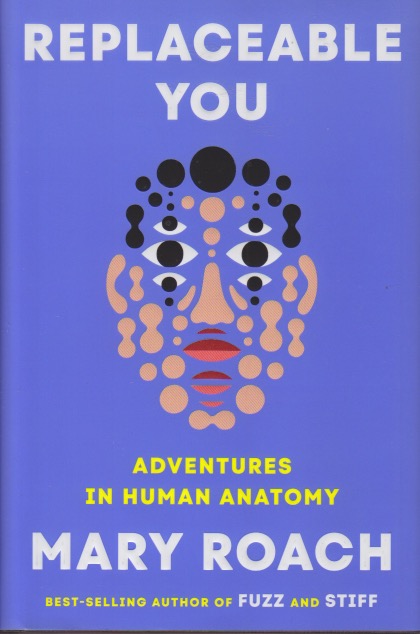
I discovered Mary Roach in a Borders store in Somerville, New Jersey.  Well, it might’ve been Raritan, technically, but it was right off the infamous Somerville Circle.  We were fairly new in town and I was looking for reading material.  I found Spook, her second book.  I enjoyed it so much I went back for her first book.  I introduced my wife to her third book and, starting with book number four, we’ve been reading them together.  (All of her books are at least mentioned on this blog; I rarely follow an author like that.) That brings us to Replaceable You, which published last year.  The subtitle, Adventures in Human Anatomy, gives you an idea of the content.  Roach is a charming science writer.  The two traits don’t often meet.  She peers at things that most of us shy away from, which, in a way, makes her a good potential horror writer.  Instead, she looks at her subjects with humor, often self-deprecating, and a sense of wonder.

Replaceable You isn’t my favorite of her books, but it’s not her fault.  Roach is about four years older than me and she too is facing aging.  This book is about parts of bodies that can be replaced, printed, or engineered.  Some of it is surprising and much of it almost incredible.  The reason that it isn’t my favorite is that it hits pretty close to home.  Two of my immediate family members have chronic health conditions.  (Life, of course, is a chronic health condition.)  I often think about the implications, but reading about them makes me uncomfortable.  As one reviewer once indicated, though, reading Mary Roach on any subject is enjoyable.

We are embodied creatures.  This is one reason that “artificial intelligence” will always retain the emphasis on the first word.  One of the surprising things I learned from this book was that organs/tissues are now starting to be 3-D printed.  Last time I looked, 3-D printing involved plastic, but in some places biological components are being used.  The tech isn’t far enough along to print actual organs yet, but there is incredible work being done.  It’s quite possible, and this is me, not Roach, that people born in a couple of decades (depending on whether we can get Republicans out of the White House, and science funding can be restored) may well be able to have biologically personalized health care that includes new organs made from their own cells.  That gets too close to eternity for my liking.  I enjoy living, but wouldn’t want to do it forever.  I’ll be okay along the way, however, as long as there are Mary Roach books to read.


Intensity

It was the biggest excuse for breaking up with me.  “You’re too intense.”  I lost track of the number of times college coeds told me that.  At the same time, the same adjective was whispered in awe when applied to professors in class.  You wanted intense professors, but not intense boyfriends.  Was “intense” bad or good?  I don’t deny being intense.  Some of us are just that way.  In personal relationships I’ve often managed to keep it under control.  It was one of the reasons, however, that I was such a good professor.  Students seem to have responded well, even if academia had no permanent home for me.  Thus, dark academia.  Which tends to be intense.  When I throw all my energy at something, it can become intense.  But it’s also true that I’m on the receiving end of it.  My mental mapping, especially in the fallow times, means that I must try to make sense of it all.

Some periods in life are intense.  I’m sure that’s true for everybody.  Or most people.  A concentration of events when time itself seems to have collapsed on top of you and you still have a 9-2-5 for five long days before you can start to deal with the residue.   So far, since the end of November many months ago, I’ve been in an intense zone.  So much is happening that I have trouble keeping up.  Unlike a dating relationship, I can’t beg off with intensity as an excuse.  A big part of it has been the calendar.  Thanksgiving fell late and January with its cold felt like it would last forever.  Both Trump and AI simmered in the background.  And, of course, 9-2-5.

Two major snowstorms were separated by only a few weeks.  As the second was tuning up, a death in the family.  The third in three years.  A novel was finished.  As was a nonfiction draft.  Two orders from Amazon went awry.  Who has time for returns?  Because of the storms, things became double-booked.  Preparations for the 2026 Lehigh Valley Book Festival.  With my expensive books.  I really didn’t think they’d select me as a participant, but was committed.  Or should be.  My wife’s 9-2-5 also hit an intense period.  We had to deal with two major household repairs simultaneously.  An unexpected auto repair.  I checked another website (No Kill Switch) to help define intensity.  What he has to say makes a lot of sense, but the question remains.  Is intensity good or bad?  It does seem to be the opposite of boredom, when you get time to deal with things, after work.