Troubled Trilogy

The quest for the truth is never-ending.  New information keeps emerging and our poor brains have evolved to survive the perils of weather and wild animals, not to receive all available information.  It’s the fear that I might’ve missed something that has me going back to a place I’d rather not go.  Andrea Perron’s account of what happened in Harrisville, Rhode Island is the only real published source by eyewitnesses that’s readily available.  Her three-book account, however, is a deeply personal ramble that isn’t easy for the fact-finder to follow.  A couple of months ago I posted on volume one, intimating that I would probably have to go back and read two and three.  There’s a compunction about completion that humans have.  An economist once told me not to measure a venture by sunk funds.  The same applies to books, I guess.

In my ongoing research into demons, and particularly the work of Ed and Lorraine Warren, I felt I had to continue with the troubled trilogy.  Volume one barely mentioned the Warrens.  Volume two finally revealed some of the story.  It took 260 pages to get there, but finally, an eyewitness account!  It has plenty of gaps, of course, but it is, as they say, different from the movie.  You have to understand that a certain sector of the internet was buzzing like flies in January over The Conjuring.  Based on a true story, it was a sympathetic treatment of the Warrens’ work that it was hoped would give credibility to the demon-hunting duo.

House of Darkness, House of Light in total is well over a thousand pages long.  I know, I know—“caveat emptor.”  Nevertheless, I’ve always felt that long books owe it to their readers to deliver on the promises.  I want my haunted house books to be scary.  Or at least moody with a gothic sensibility.  I do understand the desire—the compunction—to approach life philosophically.  Were I ever to put my life out there on display, beyond the occasional forays on this blog, I would hope to do it in a way that left readers wanting more, not less.  Biography is a dicey subject.  Autobiography even more so.  The traditional publisher steps in with an editor firmly in hand.  I know because I’ve been doing this for about a decade now.  The writer and the editor, like the farmer and the cowman, should be friends.  It’s tough, painful even, when someone takes a pen to what you’ve carefully crafted.  The results, when they work, give the reader what s/he wants.  The quest may indeed be never-ending.  At least trilogies have only three parts.

Quiet on the Winter Front

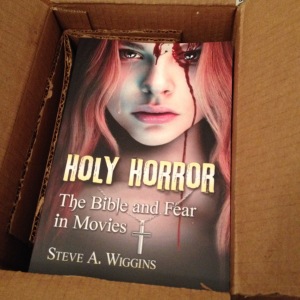
There’s a weird silent time, after a book is published, when you start wondering how it’s doing.  Holy Horror was apparently released November 29, and published December 29, if done according to standard publishing practice.  The release date is when stock is received in the warehouse.  The book is printed and technically available, but not yet published.  Publication is about a month later when the sellers, distributors, etc., have received their orders and can begin sending them out.  Publishing, as I’ve noted before, is a slow business.  Somewhere around this point you start wondering how your book is doing.  Reviews take some time to appear.  The publisher falls silent (I know this from the editorial perspective as well).  You start thinking, did it really happen?

This is the internet syndrome.  We’ve become used to instant results and it’s difficult to believe that can get by without minute-by-minute updates.  The problem is publishing is slow.  Reading a book takes time.  Not all readers review.  It’s perhaps the kind of malaise you expect in late winter.  In my case, however, my book was an autumn book that missed its release date by a few months.  Yes, hardcore horror fans are still chomping at the bit for upcoming features like Us, but the public in general is well on its way to Valentines Day and what comes after.  We are pretty much a holiday-driven culture and Holy Horror was a Halloween book released after Christmas.  That, and the combination of Bible and horror is unexpected, with many, I’m guessing, thinking the book is something it isn’t.

Often at work I ponder how publishing has changed, even if it runs like sap in January.  Professional writers—those who lived from their books alone—used to be rare.  Most authors were otherwise employed, and many of them worked in publishing.  It stands to reason when you think about it.  I’ve worked for three publishers and finding other writers is, and has been, a rarity.  Instead editorial boards consist of people who largely don’t have the experience of writing a book of their own talking about author expectations.  A disconnect has emerged where writers find employment in other industries and find themselves wondering why publishers do things the way they do.  Even with that background knowledge, I do wonder how my little book is doing.  It’s only natural.  And now that we’ve progressed to February, it’s only eight months more until October.


Desert Demons

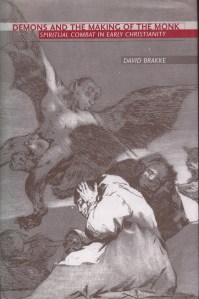
After reading many popular books, coming to a scholarly tome can be a shock to the system.  This is especially the case when said academic volume contains lots of information (not all do, believe me!).  David Brakke’s Demons and the Making of the Monk: Spiritual Combat in Early Christianity has been on my reading list for quite some time.  One of the perils of being a renegade academic is that you have no university library at hand and I’m not sure I want to reveal this side of myself to the local public librarian yet.  In any case, it would be difficult to summarize all that Brakke covers in this insightful treatment.  One of the elements that struck this reader, however, is the protean nature of the demons with which the eponymous monks wrestled.

Keep in mind that although demons appear throughout the Bible in various forms there is no single definition of what they are.  They appear to be spiritual monsters, in short.  Some passages seem to suggest they are fallen angels.  Others that they are foreign (primarily pre-Christian) gods.  Later ideas add the possibility that they are children of the Watchers, or even, as Brakke explains, evil thoughts.  The desert monks didn’t dwell on trying to discern their origin myth—they were out there to purify their souls, not to do academic research.  The Hebrew Bible does suggest that demons were creatures of the desert.  As monasticism began, appropriately in Egypt, one natural resource found in abundance was wilderness real estate.  The mortgage, however, was a constant struggle with demons.

Many of these demons developed into the seven deadly sins.  Not surprisingly, men living alone in the desert found themselves the victims of sexual temptation.  This led to, in some cases, the demonizing of women.  We’d call this classic blaming the victim, but this is theology, not common sense.  Anything that stood between a monk and his (sometimes her) direct experience of God could, in some sense, be considered demonic.  Brakke presents a description of several of these early desert-dwellers and their warfare with their demons.  Much of their characterization of evil would be considered racist and sexist today.  Brakke does make the point that during the Roman Empire—the period of the earliest monks—race wasn’t perceived the same way that it is in modern times.  Nevertheless, some of this book can make the reader uncomfortable, and not just because of demons.  Or, perhaps, that’s what they really are after all. 


Poe et Tree

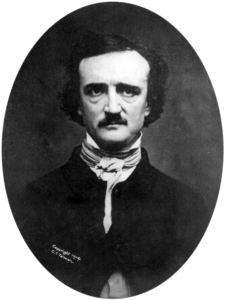
When winter gets a little dreary with its constant chill and perpetually gray skies, I often think of Edgar Allan Poe.  There’s been so much going on lately, however, that I overlooked that today is his birthday until my friend over at Verbomania reminded me of the fact.  I’ve posted on Poe many times, but this morning I had an email concerning my work on Nightmares with the Bible stating that my use of Poe in that book was a nice touch.  Sometimes I need to be hit over the head with things, though, to make them sink in.  It seems impossible that it was 210 years ago that Poe was born.  Our Januaries have become remarkably crueler since those times, what with inaugurations and all.

I have often mused that we’ve lived beyond the era where one person can have the widespread impact (for good, that is) that influences an era.  In the area of my doctorate, for example, like him or not William Foxwell Albright rearranged the field of Bible and Ancient Near Eastern Studies.  Nobody has been able to do it since because, well, Albright already did it.  Poe gave us many things—the struggling writer determined to make a living by his pen, the scary short story, detective fiction, the Raven.  Those of us who dabble in fiction do so in his shadow.  (I know Poe wasn’t the only writer of his era, but it’s his birthday, so let’s celebrate him!)  Other writers like H. P. Lovecraft, now a hot commodity, would draw their inspiration from Poe.  And from Poe and Lovecraft came the early work of Stephen King.

A winter storm advisory is in effect.  Outside it looks bleak and the clouds appear as if they wish to weep.  A nation founded by immigrants (my apologies, first nations) has come to believe that it was here first in a world full of need and suffering.  Building a silly, expensive, and utterly pointless wall is a telltale sign that the heart has ceased to beat.  Two centuries and a decade ago a writer was born.  He had penetrating insight into what makes people behave wickedly toward their fellows.  Just when things seemed to be making progress we find ourselves prematurely buried under masonry and rubble.  How could I have forgotten Poe’s birthday?  Too much has been crowding my January, I’m afraid.  I don’t take the time I should to gaze out at the winter and wonder.


Turnabout

Fair play, so the adage dictates, includes turnabout.  Well, that may be overstating it a bit, but after reading Joe Nickell I decided to give the other side a shot.  Guy Lyon Playfair’s account, This House Is Haunted: The Amazing Inside Story of the Enfield Poltergeist, was originally written in the aftermath of the truly bizarre happenings at that location in the late 1970s.  My reason for reading the book, as maybe you’ve guessed, is that Ed and Lorraine Warren had a hand in the story.  Or at least a finger.  The movie The Conjuring 2 was based on the Enfield case and it placed the Warrens front and center in its resolution.  This is Hollywood, however, and since I’m working on a book on demons I need to try to dig beneath the surface a bit, into regions where tenure-seeking academics often fear to tread.

Interestingly, the Warrens are not even mentioned in Playfair’s book.  The edition I read was updated in 2011.  Playfair himself was one of the two primary investigators from the Society for Psychical Research.  The other was Maurice Grosse (who features in the movie).  Before eyeballs start rolling, it’s worth noting that the Society for Psychical Research is actually a respectable academic association.  As Playfair makes clear in his book, many of the members are skeptical and few believed that the evidence gathered by Grosse and Playfair indicated anything paranormal at all.  The book isn’t shy about dropping the names of the many investigators who dropped in—some uninvited—to either study or debunk the infamous poltergeist.  The incident, however, went on to inspire the movie Poltergeist by giving it free license to change almost all of the details.  Of the many investigators the Warrens remain unmentioned.

On this blog I’ve been chronicling the on-going struggle of trying to figure out what Ed and Lorraine Warren were up to.  Those who met and interviewed them invariably state that they were/are sincere.  They didn’t accept payment for their investigations, and often seem to have been genuinely interested in helping the people plagued by what mainstream science claims simply can’t exist.  Nevertheless, they had and have detractors even amid the parapsychology crowd.  Playfair’s account is quite interesting.  Called in early after the onset of strangeness on Wood Lane, Playfair recorded and recounted what he saw.  He caught some trickery and wasn’t shy about pointing it out.  At the end of the episode, however, he remained convinced that something unexplained had happened there.  Nickell dismisses it all with a sentence or two.  In the interest of fair play it would seem only right to hear the other side of the story.


Fun with Skeptics

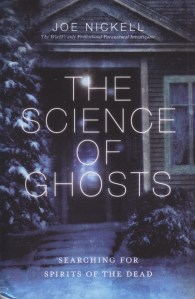
You have to love skeptics.  Really.  Like most people who’ve spent many years attaining a doctorate, I’m naturally skeptical about many things.  One thing that I only temporarily lost (between about 1991 and ’99, if I recall) was an open mind.  That is to say, I discounted many things out of hand because people with doctorates don’t countenance such things.  I eventually realized the folly of academic arrogance and went back to considering things by actual evidence.  The results were interesting.  In order to help with my Ed and Lorraine Warren dilemma, I decided to read The Science of Ghosts by Joe Nickell.  It’s hard not to like Nickell.  He was a stage magician and eventually earned a doctorate in folklore.  He then made a career out of being a paranormal investigator.

He begins his book by claiming to have an open mind about ghosts.  Very quickly, however, a skeptical reader with an open mind notices his magician’s tricks.  He’s very good at misdirection.  While putatively not debunking (but actually debunking) ghostly encounters, he time and again comes to the states of consciousness when individual super-impose images from the  unconscious mind onto what they’re seeing: when falling asleep, in the middle of the night, when waking up, when doing routine chores, when concentrating, when working.  That about covers over 90 percent of human time.  During these periods we’re likely to mistake what’s not really there for what is.  It could explain much of the driving I’ve witnessed in New Jersey, if not ghosts.  And he also picks straw men (and women) to knock over (pardon the violent metaphor).  Accounts by the credulous are his favorites to explain away.

What we really need is a middle ground between credulousness and a skepticism that can’t be convinced even by evidence.  Yes, ghost hunters use ridiculous methods for claiming “proof.”  Yes, some credible people legitimately see incredible things.  Nickell never deviates from his definition of ghosts as a form of energy left by the departed.  Nobody knows for sure what ghosts are, of course.  If they did there’d be little mystery about them.  Although Nickell claims openmindedness, he states at several points that at death brain activity ceases therefore nothing can think, walk, or talk afterward.  As any experimentalist knows, the results reflect the way an experiment is set up.  If the assumption is that there can’t be ghosts, there won’t be ghosts.  To get to the truth of the matter something between credulousness and biased skepticism must be brought to the table to see if it really tips.  Skeptics are fun, but an actual conversation might be more fruitful.


Now Hiring?

In keeping with my recent theme of jobs you never knew you could have, I recently read a story a friend sent me from The Vintage News.  The story concerns a spiritual counselor who is planning to marry a ghost.  I didn’t know that spiritual counselor was an available job.  You see, I had taken enough psychology courses in college that I could’ve had it as a minor, but I didn’t declare it.  At the time I was destined, or so I thought, for a career in ministry and psychology seemed a good subject to assist with that.  Also, I naturally tend to try to figure out what motivates people.  Like most career options, not having a science background prevented me from pursuing psychology as a fall-back career.  But spiritual counselor?

The woman in the story lives in the United Kingdom.  Here in the United States, where unhappy people seek any opportunity they can find to sue someone, having a job as a spiritual counselor probably involves ordination.  Even if you’re ordained, as I learned from long years both attending and teaching in seminaries, you always refer those who come to you to a licensed psychologist.  Clergy can easily be sued for providing bad advice.  That’s why the counselor part of this job seems so odd to me.  That, and the woman the story features is only 27.  I suppose that’s time enough to finish a doctorate, for the truly ambitious, but apparently she doesn’t have a terminal degree.  Just a post-terminal lover.

Also, I learned that spectrophilia is a condition with a name.  The idea of intimacy with spirits is nothing new, of course.  The ancient idea of incubi and succubi reflect this concept, and a number of the stories in the Ed and Lorraine Warren oeuvre include sexual attacks by demons or ghosts.  What’s different here is that the young woman wants to marry a spirit she can’t see.  Unlike most such reputed cases of spectrophilia, she claims spirits are superior to physical lovers.  Despite the oddities that make such a story newsworthy (in a sense) a potentially important point could emerge from all of this.  Love is not a physical phenomenon.  We all know it when we feel it.  I suspect that other such feelings, like finding the perfect job that matches your skills and interests, are likewise intangible.  The problem is finding out that such jobs even exist.


Mephistopheles

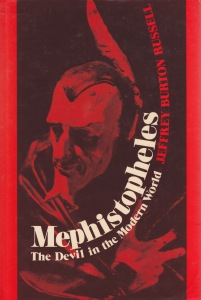
Jeffrey Burton Russell is one of the clearest thinkers I’ve ever read.  I first encountered him in my background reading for Holy Horror, and have subsequently tracked down his books on the history of evil.  In what is a dangerous move for a scholar, Russell admits in The Devil that he believes in some kind of personified evil.  Except for religion scholars employed in seminaries, such thoughts are generally kept carefully guarded as academia has followed the materialist paradigm since it boldly declared that there’s no other way to know the world.  Russell’s intellect penetrates through that posturing and logically lays out what can or can’t be known based on empirical evidence.  And in Mephistopheles: The Devil in the Modern World, he concludes his historical sweep of an idea as old as civilization itself.

This is a wide-ranging book.  The previous three covered long periods as well: antiquity through the Hebrew Bible, New Testament through late antiquity, and the Medieval Period.  Mephistopheles has to cover from the Reformation through the present of the latter 20th century (when it was written).  Finding evil in the modern world is arguably way too easy.  Since 2016 it has become more fashionable to the point that an entire political party can laud it.  Russell writes with the strong conviction that love and the will to goodness can overcome the tendencies of humans to allow hatred, fear, and prejudice to rule.  What seems to be lacking, some three decades on, is the will.  We have given in to our cynicism and elected the worst of our inclinations.

In William Friedkin’s documentary The Devil and Father Amorth, Russell, looking depressed, is interviewed about the reality of demons.  His advice is to look for the good instead.  Nevertheless, having spent years of his life researching how evil appears and reappears, his own fascination demonstrates why we return to the subject time and again.  The world hasn’t righted itself.  His books indicate that there is a way, but we continue to ignore that way, preferring instead to follow the loudest of mouths rather than the warmest of hearts.  Some would personify this into Mephistopheles, the modern, entertaining aspect of the Devil.  Others would claim it’s merely a metaphor.  No matter which may be the case there’s no denying that evil exists.  And if it exists it behooves us to know about it.  And once we learn its identity we must name it.


Slight Reading

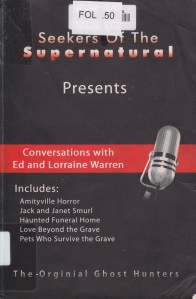
It will soon be time to turn to holiday-oriented posts, but if you’re like me you’ve been seeing the decorations and hearing the music for some time now already.  Given that, at least in name, Christmas is a religious holiday it fits naturally into this blog.  So does the supernatural in itself.  This year I have read most—there’s one book unavailable—of the book-length work of/about Ed and Lorraine Warren.  The latest, some five years after Ed died, was Conversations with Ed and Lorrain Warren by T. Sealyham.  My copy, which came used from a library, has all the marks of self-publication.  It really needed an editor to go over it.  The transcribed radio interviews with Tony Spera, the Warrens’ son-in-law, the accounts told are familiar to those who know the Warrens’ other work, with a few new ones thrown in.

What is immediately striking here, apart from the factual errors (the Isle of Skye is not in the North Sea and Loch Ness is not between Edinburgh and Jedburgh) is the strong desire for credibility.  Personal anecdotes are offered as proof.  Even on the radio claims are made to having photographs (which can’t be seen in that medium) that aren’t shown because of various restrictions.  There’s no doubt that Ed and Lorraine were completely sincere in that they believed in the reality of the phenomena they studied.  They have to be credited with taking seriously what mainstream science simply cannot study.  I often found myself wondering why there can’t be any middle ground here.  The truth only appears when all the hands are face-up on the table.

Volumes like this, that preserve misstatements of a clearly aging Ed, do not help the cause of credibility.  Yes, people get forgetful with age.  Yes, people sometimes misspeak.  Credulity, however, doesn’t lead to credibility.  Many times Tony, after receiving an intriguing answer to a question, would immediately switch the subject instead of following up with a probing request for more detail.  The interview becomes a pastiche of friends remembering old times and claiming this is the truth because they all agree that it is.  Perhaps my negative response comes from the fact that truth itself is under attack by the United States government even as I write.  The world has lost the ability to judge objective evidence and come out with a reasoned assessment.  Are there ghosts?  Perhaps so, but to get to the truth of the matter will require more than the insistence that we believe “because I told you so.”


Reading Lights

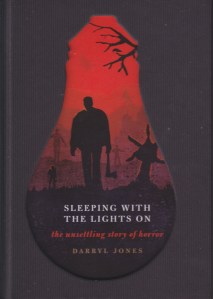
Late one night in Wisconsin—I had just come off the train from Champaign-Urbana—one of the students from Nashotah House was driving me to my spooky apartment on campus as part of his work-study job.  He mentioned what seemed an obscure topic to me, and I asked him why he liked it.  “Who can say,” he responded, “why they like anything?”  He had a point.  Work on Nightmares requires reading current studies of horror, and one that came out just before Halloween was Darryl Jones’ Sleeping with the Lights on: The Unsettling Story of Horror.  I don’t know why I like such things, but when the book was first announced I knew I’d need to read it, and soon.  It had to wait until the Warren books were finished, however.

This little gift book (with a novelty cover, even) contains quite a bit of insight.  In fact, while reading it I discerned that Jones had spotted something that I’d begun to write down independently.  Horror does that to people.  The book is divided up into chapters addressing different genres of monsters and analyzing why they have proven so popular with both horror authors and auteurs.  The discussion is lively and even witty at times, as befits a topic that most people really misunderstand.  I myself used to misunderstand it—I went through a terrible period of repudiating the things I liked when growing up (who could say why?).  I jettisoned my interest in the Gothic even as I visited ruined castles in the Scottish highlands, and thought that horror was something best left to the uneducated.

One of the realities of my own life—perhaps some of my readers will find it true as well—is that once you’ve been put through the mill once or twice your mind starts going back to childhood in what may be a vain effort to start all over again.  The likes of your youth come flooding back—this is why I began reacquiring Dark Shadows novels.  They aren’t fine literature, but they were one of the guilty pleasures with which I grew up.  As Jones notes, vampires are one of the most enduring of monsters.  He suggests that Bram Stoker’s Dracula was among the notably influential books of Victorian English literature.  As Jones points out, there are people who back away from him when he tells them he studies horror.  He also makes a clear case for its enduring connection with religion.  I might add as a coda here, that telling people you study religion often gets the same response as telling them you study horror.


Solstice Musings

Should my posts of late be castigated as against the Christmas spirit I would rely on Andy Williams’ song, “The Most Wonderful Time of the Year” in my defense.  “There’ll be scary ghost stories,” the crooner sings amid images of cheer and celebration.  What may not be appreciated by my less sober celebrants is that the long nights of winter have as close an association with ghosts as they do with the numerous religious holidays that fervently pray for the return of the light at this time of year.  In merry old England, which along with Germany developed the modern concept of Christmas, the holiday was observed with evening ghost stories as is well represented by Charles Dickens’ A Christmas Carol (likely the source behind Williams’ lyric reference).

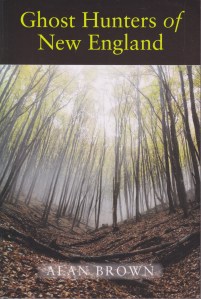
So I read about ghosts when the light begins to fail.  Or at least that’s my excuse.  When Ghost Hunters took to the air in 2004 the world became aware that electronic devices can pick up anomalies and other ghost-hunting groups began to appear.  Alan Brown, apparently curious about this development, wrote Ghost Hunters of New England as a field guide of sorts to paranormal investigators.  The book divides the region by states and includes the answers to survey questions asked to each of them.  The result isn’t especially inspirational, however, as these groups share in common the obvious absence of scientists.  It may be that professional scientists fear the career impact of such associations, but as is the case in many academic disciplines, their lack of participation simply erodes the credibility of science in the eyes of many.

Human investigation of the world has reached a point where many academic specialists can no longer communicate effectively with the average person.  I work in academic publishing and it is clear that many specialists simply do not recollect the level at which those without advanced training read.  We therefore see the rise of hoi polloi as self-appointed experts.  If scientists won’t investigate ghosts, plumbers will.  And since, no matter what science declares, many people experience ghosts, they will listen to those who at least seek answers.  The problem with books like Brown’s, of course, is that if a fad fades the groups disappear leaving the information outdated.  A couple of the groups were interesting enough to send me to the websites listed only to find the domain name for sale and the ghost hunting shingle removed from the door.  Still, the book had some useful information for those willing to consider the possibilities.  After all, the nights can be awfully long in December.  And there’ll be scary ghost stories…


Deliverance

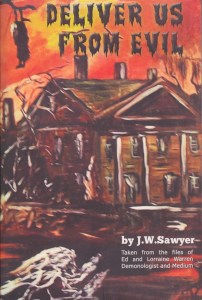
Ed Warren died in 2006, effectively ending the cooperative ghost-hunting venture with his widow Lorraine.  The Warrens rose to prominence after being among the first to investigate what is now known as the “Amityville horror.”  Not being writers, the Warrens hired those more talented in the literary arts to recount some of their more famous adventures.  Their books were a hot commodity in the 1980s, selling well through commercial publishing houses.  These accounts then went the way of out-of-print books, settling into used bookstores and attic corners.  With the release of the horror movie The Conjuring, these titles came back into demand and enterprising publishers licensed the content in order to resurrect the books.  The latest effort was Deliver Us from Evil, written by J. F. Sawyer and published after Ed’s death.

Now, if you’ve been following the thread of my posts on these books you’ll know they were never belles lettres to begin with.  Many of them are disturbing to read, regardless of whether you believe in the supernatural or not.  Deliver Us from Evil, which is subtitled True Cases of Haunted Houses and Demonic Attacks, reads like a collection of juvenile ghost stories.  Unlike many of the other books in this informal series, it doesn’t go into detail of how the Warrens investigated the cases.  Although it doesn’t state this directly, it seems that since Ed couldn’t narrate the procedures and outcomes, the stories are simply left to stand on their own.  There isn’t much glue between them and the accounts themselves, which occasionally eerie, lack the conviction that a self-convinced Ed apparently gave to the other exemplars.

Since my follow-up to Holy Horror (which just arrived on my doorstep) deals with movies about demons, I have been eager to read the entire Warren oeuvre.  There are two remaining books, as far as I’m able to determine, and one has become a collectors’ item and is priced that way.  This is, it seems to me, an odd but working-class way to do research.  Books, even if not by academic publishers, are part of the public record, and as such, deserve consideration of some kind.  Yes, many books can simply be dismissed.  Nobody has time to read them all.  Nevertheless, it’s true that to be informed a researcher should put aside prejudice and see what the public record states.  Deliver Us from Evil was a quick read from that record with no real plot and a kind of haunting ending.  I wonder what Ed would’ve thought.


Better Late Than

It seems that Holy Horror is now available, although I haven’t seen it yet.  According to the McFarland website it’s in stock just in time for the holidays.  Those of you who know me (few, admittedly) know that I dabble in other social media.  One of my connections on Goodreads (friend requests are welcome) recently noted that he does not like or watch horror.  Indeed, many people fall into that category.  His follow-up comments, however, led me to a reverie.  He mentioned that reading the lives of the saints and martyrs was horrific enough.  One of the claims I make in Holy Horror is that Mel Gibson’s Passion of the Christ is a horror film.  My friend’s comment about martyrs got me to thinking more about this and my own revisionist history.

Traditionally horror is traced to the gothic novel of the Romantic Period.  Late in the eighteenth century authors began to experiment with tales of weirdly horrific events often set in lonely castles and monasteries.  From there grew the more conventional horror of vampire and revenant tales up into the modern slasher and splatter genres.  I contest, however, that horror goes back much further and that it has its origins in religious writing.  Modern historians doubt that the mass martyrdoms of early Christianity were as widespread as reported.  Yes, horrible things did happen, but it wasn’t as prevalent as many of us were taught.  The stories, nevertheless, were written.  Often with gruesome details.  The purpose of these stories was roughly the same as the modern horror film—to advocate for what might be called conservative social values.  The connection is there, if you can sit through the screening.

Holy Horror focuses on movies from 1960 onward.  It isn’t comprehensive, but rather it is exploratory.  I’ve read a great number of histories of the horror genre—a new one is on my reading stack even as I type—and few have traced this phenomenon back to its religious roots.  Funnily, like horror religion will quickly get you tagged as a weirdo.  Perhaps it’s no coincidence that both goths and priests wear black.  As I’ve noted before on this blog, Stephen King’s horror novels often involve religious elements.  This isn’t something King made up; the connection has been there from the beginning.  We may have moved into lives largely insulated from the horrors of the world.  Protestants may have taken the corpus from the crucifix for theological reasons, but for those who’ve taken a moment to ponder the implications, what I’m saying should make sense.  Holy and horror go severed hand in bloody glove.


Straining Credulity

Ed and Lorraine Warren aren’t easy to figure out.  I realize that for someone who holds an actual doctorate from a bona fide, internationally recognized research university this might be something strange to say.  That’s because the standard academic response is simple dismissal.  Ed, at least, was known to have stretched the truth from time to time, but that’s not the same as never having reported weird things that actually happened.  This is why I’ve long advocated academics at least looking at the evidence—rare though it may be—before the simple hand-waving dismissal.  Part of the problem is that the Warrens’ books were written by credulous followers who don’t question things nearly enough.  Ghost Tracks, by Cheryl A. Wicks, may be the last of this strange genre of hortatory, biographical accounts “by” the Warrens written while Ed was still alive.

Skepticism is very important.  But so is listening to people.  What I find compelling is that similar weirdness—frequently dismissed out of hand—has been recorded throughout the length and breadth of history and across the entire globe.  The problem is that many of these things fall outside current scientific means of testing.  While perhaps not widely known, very reputable universities quietly explore these possibilities with actual science.  Part of the problem of the Warrens, as well as various other “ghost hunters” is that they use scientific equipment and think that makes them scientists.  It doesn’t.  Science requires deep engagement and many years of strenuous study.  And yes, skepticism has to be part of it.  The thing the Warrens have to offer is that they realize(d) that when science does engage the supernatural interesting things emerge.

Sensationalism, however, is the slave of capitalism.  Books sell better when they make extraordinary claims and declare they’re based on true events.  Trying to make a living investigating the paranormal led the Warrens, it seems, to tip the balance a little too far in the way of credulity.  Some of the stories in Ghost Tracks are more believable than others.  Some are just plain frustrating.  Ed’s interview with George Lutz (of Amityville fame), for example, is full of dropped balls.  A good question receives an intriguing answer only to have the subject immediately switched by the interviewer.  Even just a little skepticism and a follow-up question would have done scads to improve the believability of the story.  This is something a scientist would have known.  Someone as smart as Sir Arthur Conan Doyle, although his Sherlock Holmes generally found  ratiocination led to physical explanations, believed in the supernatural.  If only his Holmes might’ve been brought to this discussion we might possibly have learned something.


Long Nights

Before I really knew who Ed and Lorraine Warren were, I watched a made-for-television movie called, I think, A Haunting in Connecticut.  Unlike many television movies, it was actually quite scary.  Fast forward several years and I find myself writing a book that involves the Warrens.  I felt obligated to read all the books they “wrote”—all of them ghostwritten—and I’d been holding off on the one titled In a Dark Place, which is the story behind this television movie which was subsequently made into a theatrical movie.  The book is by Ray Garton and the parents of the family involved (Carmen Reed and Al Snedeker) are also credited.  The story is indeed a dreary one, not something I expected would bring any holiday cheer.  About that I was correct.

Why do I do it, then?  A concern with veracity drives me.  Throughout history enough people have told stories like this that either we have to lump our species together as a bunch of lying attention-grubbers, or there might be something to what they say.  The academic and official responses have long been to state that such things can’t happen, so they don’t.  When compared with how we come to know other things about life, we quickly realize that it involves experience.  In cases where experience is anomalous we tend to dismiss it.  We are great conformers.  What if there really was a demon in the Snedeker house?  Others have told similar tales.  If there’s any reality to it, shouldn’t we know?

As a former academic, I always thought that if we really wish to learn the truth, no subject should be off-limits.  That’s not the same thing as credulousness.  We don’t have to believe everything overwrought people say, but the subject should be worth consideration.  Of course, those who ghostwrote for the Warrens claim that they were given liberty to stretch the truth to make a better story.  They also tend to claim that the basic elements of the story are true.  When someone’s writing a book, there’s likely some hope of remuneration involved.  And sometimes the truth isn’t quite flashy enough for major presses with the bottom line in sight.  Still, the question of what really happened is left open.  The internet is a place where credulity reigns.  We can seek truth there only with great caution.  Maybe that is the lesson to apply to books like this as well.  Although In a Dark Place is scary, there was money at stake, and as the wise say, money changes everything.