Things Seen

I disagree with the critics on this one.  Things Heard & Seen is a remarkable horror film.  That’s not to say it’s without its flaws, but it is quite engrossing for the right kind of viewer.  It has elements of dark academia, as well as ghosts and a respectful treatment of Swedenborg.  And it takes place in the Hudson Valley (the headless horseman is even mentioned once).  The Bible appears both visually and is quoted.  In short, it encapsulates many of my personal interests.  And it’s not badly made.  There will be spoilers here, but it’s difficult to discuss religion and horror without them.  George Claire married Catherine because he got her pregnant.  He has, however, finished his doctorate and been offered a post at Saginaw College, in the Hudson Valley.  It quickly becomes clear that George is an entitled, self-centered liar (sounds familiar).

As the story unfolds, both Catherine and their daughter Franny see ghosts.  George dismisses them but even at the college the head of his department is a Swedenborgian and tells him not to dismiss the spiritual world.  George’s true character starts showing through.  He cheats on his wife.  He forged his letter of support from his Columbia doctoral advisor because his work was substandard.  When a fellow faculty member finds out, he runs her off the road, putting her into a coma.  He drowns his department head while boating on the Hudson because he also learned the truth.  He even claims to have painted pictures done by his brother.  In other words, he’s a real piece of work.  The ghosts aren’t able to save his wife when he murders her, but his colleague comes out of her coma and spills the beans.

In the end, George sails away into a Thomas Cole painting where a Swendenborgian ending overtakes him.  The use of Swedenborg adds an etherial element to the film, figuring thoughtfulness to what otherwise might be just another story about an unhinged academic.  The department head’s advice about seeing death in a Swedenborgian way was also strangely affecting.  In other words, this is thoughtful horror.  And once again it demonstrates that religion can be crucial to understanding what we really fear.  I suppose some critics dislike the unambiguous use of ghosts and the supernatural breaking into “reality,” but that seems to be precisely the point.  I only learned of this movie because Netflix recommended it, but they hit on several major themes in my work over the past several years.  I would watch this one again.


Missed Movie

It has been years since I read H. P. Lovecraft’s “The Dunwich Horror.”  I’d never seen this original movie made from it, often cited as being a reasonable adaptation of a Lovecraft story to film.  The visuals are sometimes impressive, but it is a slow moving, plodding movie.  It does, as far as I can recall, follow Lovecraft in general terms.  This is one of those movies that would’ve fit into Holy Horror for two basic reasons: it begins with a quote from the Bible and it has its own alternative sacred book, the Necronomicon.  In one scene the latter is explicitly compared to the Good Book.  Since religion didn’t enter horror in any kind of direct way until about 1968, this movie is an early example of how the two interact.  It came before The Exorcist.

The point is made at several junctures that the religion of the Whateleys is the antithesis of Christianity.  Indeed, the point of all Wilbur Whateley’s shenanigans is to raise the old gods.  Lovecraft, famously an atheist, used gods to set up his cosmic horror.  He’s also notoriously difficult to capture in movie form.  While Roger Corman was the executive producer he was not the director, and that may answer for the pacing.  Daniel Haller, the director, had worked with Corman before on some of his Poe Cycle films and had directed Die, Monster, Die, also a Lovecraft adaptation.  Lovecraft wasn’t a terribly cinematic writer.  His stories contain ideas that feel like they might fit on film, but executing them well is difficult.

For this movie, the house used for the Whateley residence is fitting.  It helps create a sense of dread.  The basic idea of the flick is that Wilbur needs a virginal victim to help summon the old gods.  He lures Nancy Wagner to his house where she falls under the influence of drugged tea.  There’s an intriguing glass sculpture that is never fully explained.  As Nancy begins to lose her will, her friends come to find her, and one of them is killed by Wilbur’s inhuman twin that had also killed their mother during birth.  Once released, this monstrous progeny begins killing locals (the locals hate the Whateleys) and is poised to take Nancy until a guest lecturer at Miskatonic University bests Wilbur in spells recited from the Necronomicon, saving the girl and dooming the last Whateley.  The family line ends.  Until it is rather heavy-handedly shown that Nancy is pregnant by Wilbur, so the unwholesome Whateley genealogy continues.  The visuals aren’t bad, but the story is lacking.  Still, it’s part of the canon, so I needed to see it and it used religion to intrigue me.


Coming for You

Skimming through the freebies on a streaming service I came to Serpent’s Lair.  Having written a book about demons, I try to keep an eye out for possession movies I might’ve missed and that may add something new to the discussion.  This one turned out to borrow quite a lot from other films, most noticeably, The Omen.  Tom Bennett and his wife Alex buy a unit in a house that could’ve stepped from Rosemary’s Baby.  I kept wondering what the unnamed city was where they worked.  It turns out that the entire film was shot in Romania, so that’s why identifiable landmarks were missing.  In any case, their unit had been inhabited by a college professor who’d been dabbling in the dark arts.  Some of his stuff was left behind.  By the way, there is a lot of religious imagery in this film—maybe not directly Bible (so not Holy Sequel material), but plenty of religion.

Their kindly next door neighbor is a doctor who smokes a lot for his profession.  The couple adopts a stray cat in the courtyard.  The cat turns out to be a kind of conduit for a succubus.  Naturally, the cat takes a dislike to Alex, finally causing her to fall down the stairs and end up in the hospital.  When she’s out of the house the former resident’s sister comes to close his estate.  I don’t think I’m spoiling anything if I say she is the succubus.  While Alex is away, she coaxes the faithful Tom into a torrid affair.  Tom really loves Alex and is reluctant, but succubi can be very persuasive.  Meanwhile more cats move into the building.  When an archaeological colleague of the former tenant arrives, he notes that said tenant had no sister.  Research indicates Tom is dealing with a Bast succubus.  Of course, the colleague is killed.  Spoiler alert:

It turns out the the doctor next door is Satan himself.  The only way to get rid of a succubus is to set it on fire.  Alex has already left Tom, so the next time the demon shows up, he lights her up.  Satan, next door, sees the whole thing and laughs.  Roll credits.  While a low budget film for its time (1995), it isn’t a cheap movie.  Serpent’s Lair at least tries.  The story is a touch weak because much of this has been done before.  It takes advantage of something that had been discovered a couple of decades earlier—religion is a great setting and source for horror.  Even if the explanation doesn’t really satisfy.


Check for

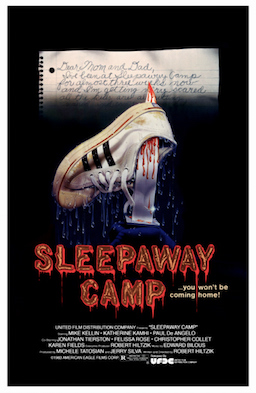
If after Sleepaway Camp you’re still willing to go into the woods, beware of Ticks.  Actually, for a direct to video movie, Ticks isn’t bad.  It has some production values and a story that, although very far fetched, keeps you watching.  It all begins with a group of inner-city kids going on a wilderness enrichment project.  They don’t know that some cash croppers growing marijuana have been using steroids to enhance the growth of the plants nearby the cabin.  The steroids leak onto some ticks who grow supersized and are out for blood.  The kids and their chaperones know none of this as they try to get into nature and away from their unhealthy urban lives with its crime and entitled situations.  The local sleazy drug lord, however, doesn’t like them too near his operation, and keeps an eye on them.  One of the drug growers is the first to be attacked.

The mutated ticks start out about the size of a hand.  They first attack the dog of  one of the kids, draining it of blood and killing it.  Then they go for people.  Although there’s nothing really new here, other than using ticks as the monsters, it’s a somewhat fast-paced film that satisfies the monster itch.  Only one of the kids actually dies, although several are bitten.  In keeping with the tropes of many American films, though, the one Black kid is the sole victim.  This could’ve been thought through a bit more carefully.  The only other deaths are, however, three white men—all of them associated with the drug growing operation.  A bit of humor keeps things from getting too heavy, but the fact is that ticks can be scary and it turns out that making them bigger, as tenacious as they are, can work to make them scarier.

If you’ve ever been bitten by a tick (only once, that I know of, in my case) you know they can be frightening in that they carry diseases.  In the movie, instead of Lyme their bite is, or can be, hallucinogenic.  This isn’t applied evenly, however, sometimes the bites do this, and that is used to build some tension and to resolve some issues.  In the end, though, it turns out like many of the young-people-in-a-cabin-in-the-woods movies.  I won’t tell you how it ends since you may decide to see it, if you’ve cheap like me, and have been hankering for another excuse not to spend a week in the woods.  You’re generally fine if you do rent a cabin, but it is always best to check for ticks.


Jurassic Horror

We recently decided to watch Jurassic Park again.  When I was younger, I often wondered why Stephen Spielberg was passed over for academy awards.  His movies always seem to be popular and they’re well made.  I think now that I’m starting to get a better sense of the subtleties that award juries use.  In any case, Jurassic Park still holds up remarkably well.  The reason I raise it here, however, is that I was wondering if it could be considered a horror movie.  Casting about for weekend viewing, I see that various streaming services list the available Jurassic franchise films as horror.  And there are certainly horror elements to the original.  Dinosaurs in a modern setting have been used as a horror formula before, and a PG rating isn’t sufficient to disqualify a film as horror.  Is Jurassic Park horror?

It certainly has the Frankensteinian mad scientist element.  The decision to clone dinosaurs without sufficient consideration of how they might interact with/destroy modern humans and ecosystems has horror undertones.  More directly, a t-rex, and in the movie, velociraptors, are portrayed as monsters.  Don’t dinosaurs qualify as monsters, almost by definition?  The scenes of them stalking and pursuing kids, as well as adults, and the fear reaction shots suggest we’re going for the horror aspect of movies.  The film includes dismemberment, dark corners, and screams.  Typically it’s considered an adventure film, or science fiction.  The science in it, however, isn’t too far advanced from where things stood in the nineties.  Horror is a genre with indistinct borders.  Even as an adult who’s seen it several times, Jurassic Park still scares me.

The point of horror need not be to scare, of course.  I keep coming back to Edgar Allan Poe’s idea of effect.  It’s mood that makes horror, in my opinion.  One of those moods may be fear, but it isn’t necessarily the main, or even primary effect sought.  Believability is another of the moods.  I’m sure we’ve all seen movies that we simply can’t accept and that makes them less of whatever genre they happen to be.  Jurassic Park, apart from the usual leaps in any speculative story, is believable.  People do try to game the system.  As both the internet and AI teach us, people do release untested inventions on the public, sometimes with tragic results.  And while cloning remains controversial, is it difficult to believe that there might be scientists somewhere who wouldn’t love to clone dinosaurs, if they could actually get viable DNA?  To me this all says horror.


Old Passion

Something I find inherently fascinating revolves around used books.  I buy used books and I always examine the overlooked scraps of paper that get left between the pages.  Mostly it’s random ephemera, but it is the window into a stranger’s life.  They had this bit of paper lying around to mark their place.  Had I the time I’d piece together the puzzle.  Recently, while preparing to donate some books to the local AAUW book sale, I found a scrap of paper in one of my own books.  This was from the Milwaukee Journal-Sentinel, based on the date in my wife’s handwriting: 3-19-04.  It’s an Associated Press story from Statesboro, Georgia, involving a dust-up between a married couple after watching The Passion of the Christ.  That makes it interesting in its own right, but what’s especially striking is the couple battled, including a pair of scissors, over whether “God the Father in the Holy Trinity was human or symbolic.”  Things got out of hand.

For context, I was still teaching at Nashotah House at the time.  Theological debates, sometimes heated, took place there on a regular basis.  People get very fired up over what they believe.  This may set our species apart from other thinking animals, or perhaps it’s part of the price we pay for abstract thought.  You almost want to step between the warring spouses and say, “let us handle this, we’re professionals.”  Of course, the species of specialist that has studied theology is dying out.  Universities are cutting religious studies departments.  Churches are losing members.  Better hide the scissors.

“Passion” is the operative word here.  We get quite attached to our views.  So much so that no amount of logic or rational discourse can dislodge them.  We see this with the utter devotion to political leaders and on-screen personalities as well as to religious beliefs.  Some of us were curious enough to study where these ideas came from and how we know that they’re “true.”  This is not for the faint of heart.  Testing your core assumptions can lead you into some very unfamiliar, unmapped territories.  And since religion deals with ultimate concerns, the stakes couldn’t be higher.  Our couple felt silly after the police had been called and the bail paid.  Passion is very much what drives our species, and perhaps others as well.  We feel we need what we believe to be true, and we’re willing to fight for it.  Even if it means, as the chief sheriff’s deputy remarked, they seem to have missed the point of religion in the first place.


Failed Horror

In general I’m not one for stopping a movie, even if it makes me uncomfortable.  I have what is perhaps a bad habit of not reading about movies before watching them, and occasionally that leads to problems.  Combined with my interest in watching films that I don’t have to pay for (i.e. they stream on services I use, or commercial sites like Tubi) this sometimes leads to bad choices.  I started watching Maniac (2012—more than one movie has this title), but stopped about halfway through.  It wasn’t because I was too scared, but rather what I was watching simply wasn’t what I watch horror for.  I’ve long preferred supernatural themes to mere slashers.  Some slashers with that supernatural element (the biggies: Halloween, Friday the 13th, and Nightmare on Elm Street) still have an appeal, but for the most part more recent bloodbaths don’t really do much for me.

A few weeks after I attempted Maniac, I tried to watch Freaks.  This is an early film that I’d read about many times and didn’t really want to watch, but it was “free.”  In this case, part of a collection of movies I’d purchased on DVD some years back.  It turned out that the disc was damaged and got stuck in my player.  Now, weekends are a precious commodity.  I hate wasting time.  My wife was still asleep so I tried watching High Tension (2003).  I stopped about halfway.  One of the more extreme slashers, it also is a home invasion story, which I dislike.  It was predictable up to the point where I left off.  Then I decided to read a synopsis and learned it has a twist ending that may have made it worth finishing.  I’m no fan of torture porn, however.

By this point it was too late to start yet another movie.  It was light already and we had to go get groceries soon.  Finding time to watch horror movies, even on weekends, has been really tricky.  And I’m getting to the point where I may have to start reading about films before I invest time in starting them.  The problem is I prefer for movies to reveal themselves.  It doesn’t take a genius to know that “free” movies are often free for a reason.  Perhaps it’s time to start specifying “monster movies” for what I want to see.  Horror has wrongly been associated with mainly slashers for many years now.  Some of us prefer monsters, and preferably ones that won’t cost us an arm and a leg.

Photo by Stefano Pollio on Unsplash

Still Early

I’ve been thinking quite a bit about the history of horror movies of late.  Although they began being labelled “horror” in the early 1930s, the idea had been around for some time.  When I learned that the problematic director D. W. Griffith presented an early horror film based on Edgar Allan Poe in 1914, I had to see it.  Fortunately it’s easily found.  Long in the public domain, this silent film can be watched in its entirety on YouTube.  The Avenging Conscience is an adaptation of “The Tell-Tale Heart.”  The set-up is quite different, and it has a happy ending.  The characters aren’t named, apart from the sweetheart, who is called Annabel.  She’s taken from Poe’s poem “Annabel Lee,” which is also used in the film.  A young man owes his good fortune to his uncle, who raised him as an orphan.  When he falls in love with Annabel, the uncle objects.  The lad owes him loyalty.

The young couple decide to break up, so as not to upset the uncle.  The young man has been reading “The Tell-Tale Heart,” and thinks about killing his uncle.  He falls asleep in a chair and when he awakes decides to do the murder.  He is witnessed, however, by a passer-by.  He has to pay him off, but he is now free to pursue his love.  He walls the body up next to the fireplace.  A detective, alerted by the uncle’s friend, interviews the young man and the tapping of his pencil reminds the nephew of a beating heart.  He begins to see the ghost of his uncle.  His guilt eventually comes out and he begins a shoot-out with the detectives.  When he can’t win, he hangs himself, which causes Annabel to leap off a cliff in despair.  Then he wakes up.  The uncle is still alive, and has had a change of heart about the young lovers.  The couple marries and a weird coda involving Pan and some strangely dressed children, apparently a book the nephew wrote, winds things up.

The ghosts, insanity, and the murder mark this as early horror.  Although the actual deaths, except the uncle’s, take place off screen, they are still horror territory.  And, of course, horror properly didn’t quite exist.  Although The Avenging Conscience can’t really take credit as the first horror film, it is certainly an early one.  And it is based on Poe.  Silent, black-and-white, and not really scary at all, this movie has a place in the history of what we now recognize as horror. Watching it is to watch a bit of history.


Early Horror

The origins of the horror film are hazy.  Although solidified as a genre name in the early 1930s, the ideas that eventually led to horror movies probably began with the 1896 George Méliès offering “The House of the Devil” (“Le Manoir du diable”).  This trick film features many of the macabre elements that would later become horror.  The Devil enters an old castle in the form of a bat.  We see him conjuring all kinds of magic—an Igor-like assistant, a cauldron, a skeleton, ghosts, and witches.  So much of what would feature as the genre developed is here already.  Others have pointed out that Méliès didn’t produce this film with the intention to scare.  It was a three-minute set of trick photography with typical exaggerated gestures and stage-magician tricks.  Still, there’s something there for horror fans.  Especially those of us pressed for time. 
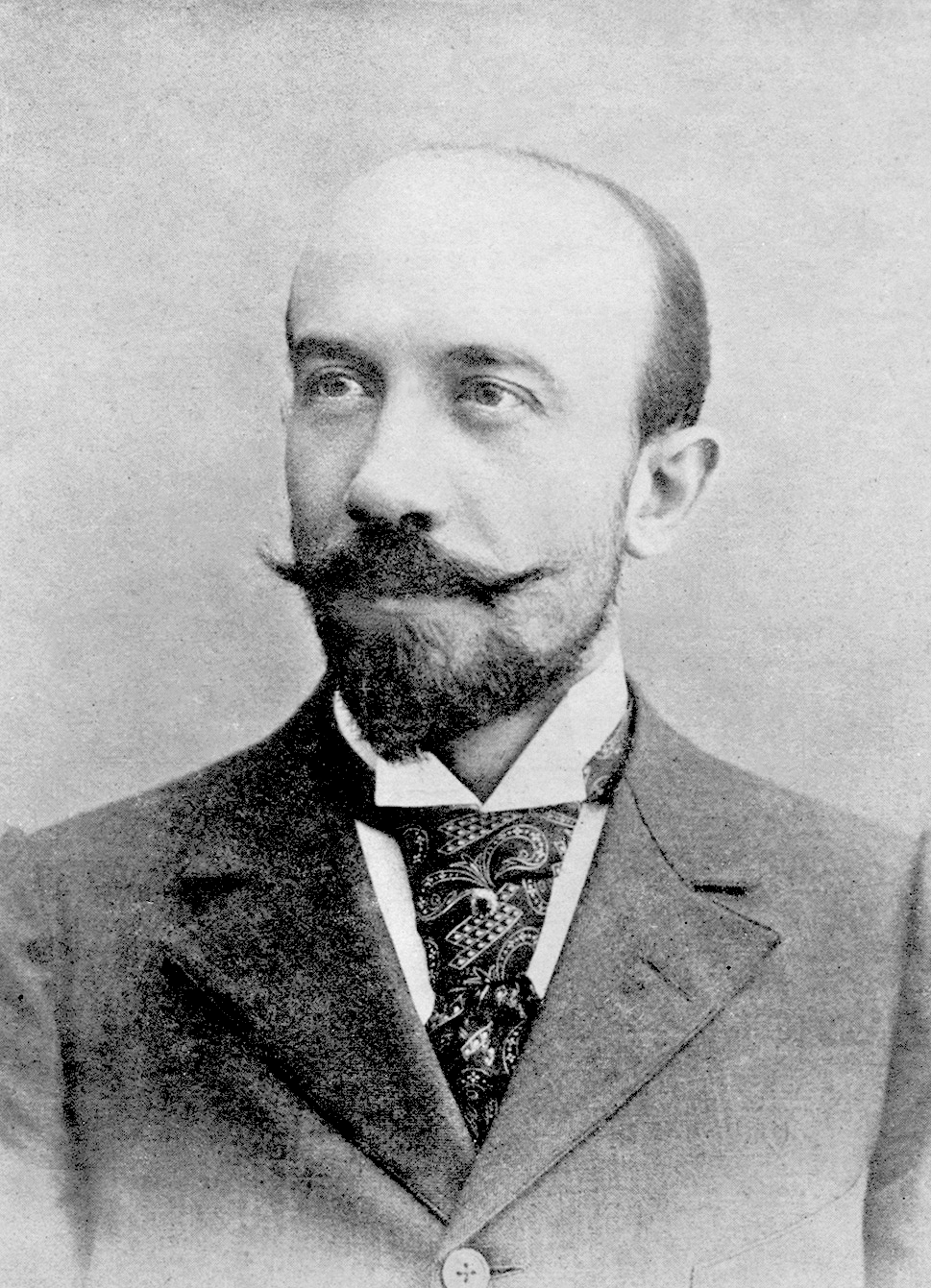
Image credit: George Méliès, public domain via Wikimedia Commons

The film itself is easily and freely found on the internet.  It is sometimes mistaken with “The Haunted Castle,” which was a remake lasting only 45 seconds, that came out the next year.  George Méliès was a visionary in many ways and his techniques in this film would pave the way for both independent producers and Hollywood studios as the early forms of the genre appeared.  “House of the Devil” also shows several tropes that will become standard vampire fare.  The Devil transforms from a bat,  he wears a cape, and is frightened off by a cross held aloft.  This was a year before Bram Stoker’s Dracula was published.  The idea of making films scary in their own right would be a later development, but these early pieces of cinema contain many of the elements we would later associate with horror.

It’s difficult to imagine these days, but in the 1920s the Disney short “Skeleton Dance” was considered too macabre for children.  (I discuss this in my book, Sleepy Hollow as American Myth.)  There was furor after the release of Dracula in 1931 with some critics finding no redeeming value in it.  Horror films had a difficult road to acceptance, which is still true today.  They weren’t regularly called horror films until the early thirties, although they existed before that.  Some are for lighter entertainment, like Méliès’ work.  Comedy horrors are a popular sub-genre.  Even today they continue to be made and are more funny than scary.  Think Scary Movie,  Shaun of the Dead, Jesus Christ: Vampire Hunter.  And many, many others.  George Méliès showed what film could do.  And he inadvertently created the first horror movie.

Lights On

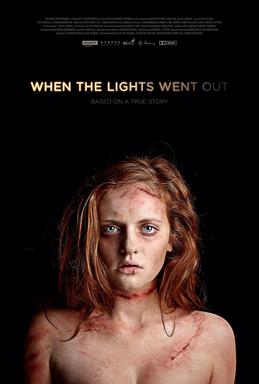
Poltergeist horror movies are a touch difficult to make convincingly.  Part of that, I suppose, is because the actual phenomenon is already scary and dramatizing it often ameliorates rather than increases the fear factor.  When the Lights Went Out is a “based on a true story” movie about a poltergeist in Yorkshire in the 1970s.  One of the problems is that none of the adults are really sympathetic enough to care about, with the exceptions of Rita and Mr. Price, the teacher.  All of the other “grown ups” are so mired in their own problems that you just can’t empathize.  Part of that is probably an attempt to show the life of the poor—it isn’t easy, I know from experience—but there are a lot of good people of humble means.  Not all of them are mean, self-centered, and unsympathetic.

In any case, an elaborate backstory is built to set up the plot.  A monk, from before Henry VIII’s dissolution of the monasteries, rapes and nearly murders a young girl.  He cuts out her tongue so she can’t tell what he did.  She is educated enough to write, however, and the monastery collectively hangs the monk to preserve the honor of the church.  We’ve got religion and horror here, obviously, but a very poorly understood Catholicism.  In the nineteen-seventies the Maynards move into a council house haunted by both the girl and the monk.  The poltergeist activity begins but nobody will believe Sally, the young daughter.  Instead they blame her.  Until the activity happens to her parents as well.  They try to get a Catholic priest to help, but he’s too busy banging his cleaning woman (and besides, he needs the bishop’s permission for an exorcism).  The Maynards call in a medium who is, predictably, attacked.  The priest is blackmailed into an anticlimactic exorcism.

But the evil monk isn’t gone.  After life returns to normal, he attacks again but is driven off by the girl he murdered, or almost murdered.  In real life, apparently, the poltergeist was much more low key.  The dramatization makes it very much like other horror films we’ve all seen.  I do find the lack of research on how the church operates of interest.  Unfortunately, sexual abuse of the young is, and has been a problem with enforced celibacy from pretty much the beginning.  The priest from the seventies is much more concerned with his reputation than plight of the family.  The movie does do a good job of isolating poor Sally, and you can’t help but to feel sorry for her and her friend Lucy, who just don’t fit in.  That’s where the real horror lies.


Stay

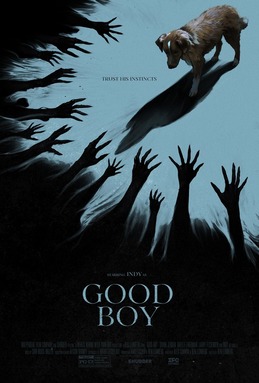
One of the string of low-budget, but well-made horror films of recent years, Good Boy is most memorable for the performance of Indy.  If you somehow missed the hype, Indy is a dog who can see ghosts while the humans around him (very few for most of the film) cannot.  Indy, by the way, has his own Wikipedia page as an actor—that’s how impressive his performance is.  No doubt, he is a photogenic dog.  Credit has to go to the photographers as well, for catching the Nova Scotia Duck Tolling Retriever displaying love, anger, sadness, concern, and, most impressively, fear.  The dog received a Best Performance in Horror award normally reserved for humans.  What makes this especially impressive is that, if you think about it, Indy wasn’t aware that he was acting.  He was being a dog and has no idea what human fiction is.  Impressive.

Spoilers follow.  The story itself is a little thin: Indy’s owner, Todd, has an incurable lung disease.  He decides to move to his grandfather’s house in the woods, alone with Indy.  His grandfather died in the house of a similar disease, living there alone with his dog.  Indy begins to sense the ghosts as they drive onto the property.  Todd, whose health is failing, doesn’t notice them and begins to start shoving Indy away, even chaining him outside in the rainy autumnal weather.  Indy, ever loyal, breaks free and returns after having close encounters with the ghost.  Todd is glad to see his pet but finds his own dead body in the bed before the ghost catches up with him.  Todd’s sister finally visits and finds her dead brother and the dog abandoned in the basement.  (Since I saw this on a streaming service that cuts off credits in its eagerness to get you to watch the next film, I missed the cheering scenes of Indy with his head out the window of the sister’s car.)

Throughout the movie the human actor’s faces are never shown clearly.  This keeps the focus squarely on Indy.  It’s astounding how the dog’s range of emotional expression is slotted into the story, which is probably one reason that it’s a little thin.  You can’t explain to the star, “Now you’re seeing a ghost that your owner can’t and react like this…”.  Like The Blair Witch Project and Paranormal Activity, this low budget film performed well at the box office and has become a cultural touch stone among the horror community.  At least among those of us who can’t resist cute pets.


Thorough

It was a warm summer’s day, sometime in the mid-eighties.  I was living in Boston and some friends asked if I’d like to go to Walden Pond, outside Concord.  I’d read Henry David Thoreau’s Walden, so yes, please.  I knew Thoreau was an early Massachusetts Transcendentalist, mystic, and nature lover.  That particular day we were the only ones at the site where his cabin in the woods once stood.  I suspect that, being there with friends, it wasn’t as contemplative a trip as it would’ve been had I made it alone.  Still, here we were, nearing a century-and-a-half after his death, remembering him.  My wife and I recently watched the PBS three-part documentary on Thoreau, and I learned a lot about him.  He was admirable in a way that few public figures are today.  What’s more, it’s clear that he’s widely appreciated as a visionary and believer in freedom.

Image credit: Benjamin D. Maxham, public domain (via Wikimedia Commons)

Writing in the nineteenth century, it seems, got you noticed much more than it does now.  Thoreau had profound things to say.  He had strong convictions about abolition and being shuffled into an existence of work, forced from being free.  He was able to live the way he did largely because he didn’t need many things.  He also had famous friends, Ralph Waldo Emerson, for one, who gave him a place to stay when he had none of his own.  The documentary makes the point that, despite being a hero to many, we’ve gone ahead and built the world Thoreau most feared.  Few, or at least a few of us, find that work doesn’t define us.  Writing, it seems, still helps with that.  Those of us born to write do so, and long days “in the office” must be endured to come to life when writing is again possible.

If you think deeply about it you start to realize that we’ve allowed ourselves to be hoodwinked by economics.  If you have a mortgage you know this to be true.  Or if you have a medical condition—you can’t afford not to have a job without insurance.  Thoreau, it seems, lived with the tuberculosis that ultimately killed him pretty much all of his life.  And he died too young, we feel, because he had so much to say.  So much to say that was worth listening to.  Such writers are rare today because, like everything else, writing has become a business and some readers even prefer things “written” by AI.  And yet I remember that warm summer’s day and think of a placid time still earlier when one might’ve met Henry David Thoreau in the woods.


Walking Sleep

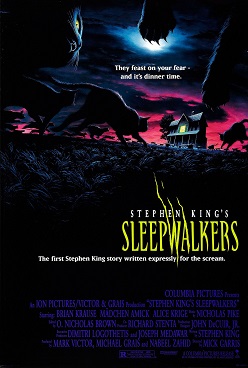
It has been suggested to me that I might try screenwriting.  I’ve always resisted this, even though some of my fiction may be movie-worthy (one editor told me it was, but then I have a huge stack of rejections from others).  In any case, I had high hopes for Sleepwalkers.  I’d never heard of it before, but I saw that it was Stephen King’s screenwriting debut.  Not all novelists can, or should be screenwriters.  I like King’s novels.  The only one that really didn’t wow me was The Tommyknockers, and even it was well written.  This movie struggles.  Part of the reason is, undoubtedly, that directors depart from the script sometimes.  And the budget doesn’t seem to pay off its estimated 15 million.  For one thing, it’s set in Indiana but the scenery is clearly, clearly California.  They didn’t even try to make this look like the Midwest.  And the acting isn’t great.  The little jokes fall flat.  Something’s wrong in Kansas.

The story seems promising enough.  Sleepwalkers are shapeshifting cat people.  They’re also psychic vampires, drawing their energy from virginal girls.  So far so good.  Then it gets weird.  They transfer energy to each other through incest.  And they can turn invisible.  And turn cars invisible, even at a distance.  They’re super strong and can survive gunshots.  You can kill one by poking its eyes out, however.  And cats are their natural enemies, setting them on fire if they scratch them.  Slow down—there’s too much going on!  And there’s a quasi-comedic tone that prevents this movie from ever really feeling like a Stephen King novel.

A couple of things: those of us who write horror often find humor in our stories.  Sometimes we just can’t avoid it.  And the other thing is writers are often typecast.  For example, we think of Edgar Allan Poe as a horror writer because his best known stories are the scary ones.  Poe wrote funny, however.  And what we’d call, for lack of a better word, literary fiction.  Writers write.  Other people categorize.  In the case of Sleepwalkers, however, it does seem that it was intended as (it was certainly advertised as) horror.  And it has horror moments.  It also has quite a bit of sympathy for the monsters, which isn’t a bad thing.  Predators have to feed—that’s the way of nature.  The sleepwalkers are, to all outward appearances, human.  And they have human emotions.  Stephen King’s first screenplay wasn’t his best work, but we all have to start somewhere.


Simple Gifts

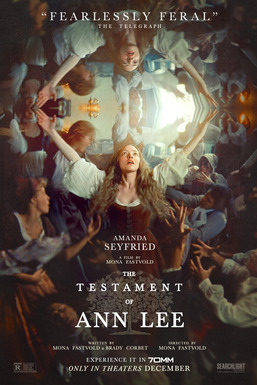
During my many years of studying religion I learned about the Shakers.  It was many years ago and my knowledge isn’t extensive.  I was caught off guard when my wife suggested we see The Testament of Ann Lee.  I hadn’t heard of it and knew nothing about it, but she had me at “Shakers.”  This is a most unusual and engaging movie.  I didn’t realize it was a musical until after it was over.  (It had been a long day and I did, a time or two, think, “hey, this is like a musical, the way characters break into song.”)  The thing is the songs are all diegetic; they fit into the plot and the Shakers were known for their music as well as for their furniture.  The movie follows, in broad outlines, the life of Mother Ann Lee, the founder of the sect.  It made me curious to learn more.  

The Shakers emerged during that period of intense religious foment in the eighteenth and nineteenth centuries.  They settled in upstate New York where numerous other sects came into the world, such as the Mormons and the Millerites.  The Shakers had their origins among the Quakers, but it is unclear if Ann Lee’s family were members of the latter denomination.  In the movie an encounter with George Whitefield awakens Lee’s spiritual curiosity.  Historically, Whitefield was one of the first trans-Atlantic superstars, drawing rock-concert-sized crowds to hear his outdoor preaching.  In my head much of this was muddled during the film—it had been a long and disappointing day and I was totally unprepared for it.  I’m glad to have watched it, however; it rekindled my interest in American sects.

I have on my shelf an unread history of the Shakers.  It has consequently been moved to my “to read” pile.  I read, a few years ago, a history of the Oneida community in Upstate, and also a biography of William Miller.  The Oneida community practiced open marriage and eventually became known as the producers of flatware—Oneida silverware is still easily found.  Shakers, on the other hand, believed in celibacy, meaning that they could only grow through conversion.  The many Shaker communities founded by Mother Ann Lee dwindled and now appear to be down to three members.  The movie, which is quite good, is unlikely to lead to a resurgence of celibacy and revival of the Shakers.  They did have an outsized influence, not only for their furniture (think Oneida) but also for their music.  Add to that now, a musical.


Ghoulish

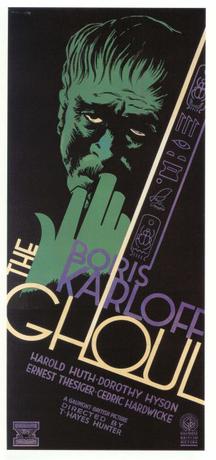
Frankenstein made Boris Karloff a wanted man.  In horror, that is.  In need of a fix without spending anything, I took Amazon Prime’s offer of The Ghoul.  (You had to pay for Sleepaway Camp III.)  A 1933 black-and-white horror film, it followed two years after Karloff’s signature role.  I hadn’t heard of The Ghoul before, and, it turns out, there’s nothing supernatural about it.  Still, it’s creepy and it has the right atmosphere.  And instead of the mummy Karloff played the year before, he’s now a dying Egyptologist.  Just before he dies, he purchases, with nearly his entire fortune, “the eternal light,” a jewel that will bring him into an Egyptian afterlife.  An Egyptian Sheikh, however, wants the jewel back because he believes in Egyptian religion, just as Karloff’s Professor Morlant does.  An unscrupulous servant steals the jewel once Morlant dies, although the professor warned him that if he tried anything, he (the professor) would rise from his grave and kill him.  The heirs find out that their uncle has died and his shifty lawyer, who wants the jewel for himself, races to the house before they can arrive.  Add in a vicar who believes paganism in Britain is disgraceful, and you have a full house on the night Morlant rises from the dead.

The servant, now believing that his master has indeed arisen, confesses to where he put the jewel, which leads to Morlant stalking the party in the house until he finds it.  The heirs dismiss the vicar, who keeps saying the clash of religions is important.  The Sheikh tries to find Morlant, aware that he has recaptured the jewel.  The heirs go to the tomb to sort out what is going on, and Morlant, cutting an ankh into his chest with a knife, offers the jewel to a statue of Anubis, who takes it.  It turns out “Anubis” is really the “vicar” who was really a thief who’d planned the heist some time before.  The police, whom the heirs called, arrive before the Sheikh, who took the jewel and locked the rest of them in the tomb, can get away.  A bit complicated, I know.

The movie makes heavy use of religion and dialogue about religion for an early horror film.  It ends sadly for Morlant, who dies believing he is entering the eternal light, but, as a scene of the doctor makes clear, Morlant was buried alive because of catalepsy; he never arose from the dead in the first place.  The Sheikh, subdued, England is Christian again, and all is well.  Except for Morlant, the duped professor who believed what he’d studied was true.  The ghoul (the term before zombie caught on) wasn’t real after all.

I’m glad to have happened upon this one.  If I ever get around to writing my book on how horror and religion interact, The Ghoul will surely be among the early films that must be discussed.