Empty Pews

An insightful op-ed piece by Robert D. Putnam and David E. Campbell in yesterday’s paper asked the question “why youths are losing their religion.” The authors, professors at Harvard and Notre Dame, respectively, answer with the suggestion that religion and politics just don’t mix. The truism that religion and politics are taboo subjects of polite conversation was widely accepted in my younger years. During the Reagan campaigning era, however, it became clear that some unprincipled louts were drawing religion into the political mix to garner votes. Those who actually research Reagan’s religious convictions are often surprised to find that they are not as “George W. Bush” as everyone thought. It was a ploy, and a vastly successful one at that. A new avenue had been paved, however, for hotly contested elections: use the Bible. The fawning attitudes of many Americans toward the Bible they seldom read is a powerful political tool.

Putnam and Campbell note that adults coming of age in the 1990s and later have been alienated by this paring of religion and politics. The results have tended to be the rejection of organized religion that is seen as hypocritical and intolerant. The interesting factor is that it is the political agenda that is hypocritical and intolerant, but organized religion is paying the price for going along with the Ralph Reeds, Jerry Falwells, and Pat Robertsons of the early religious right. One guy from an old book once said something like “what you sow you also shall reap.” The political use (abuse) of religion has only and always been about power.

The authors are able to provide statistics to back up their models, but their reasoning is clear enough on its own. Some of us have experienced first hand the ugly, hideous agenda behind the angelically smiling evangelistic face. Those who hold to it may be naïve enough to believe that it is actually religion that they are serving, but the sad truth is their positions are cravings for power. There are those who actually relish the days of imperial Christianity when, despite its Roman Catholicism, the church made Europe tremble. They forget that pilgrims and colonists moved to this land to flee such tyranny. Americans, reluctant to elect Roman Catholics to the presidency because of the latent fear of a hierarchical religion — so close to kingship — now bow down before political rulers in religious garb. Decidedly Protestant. And the Tea Party continues to crank out candidates who do not even realize that the separation of church and state is a founding principle of this nation. If there is a backlash coming, it is a well deserved one indeed.

The Power of Hope

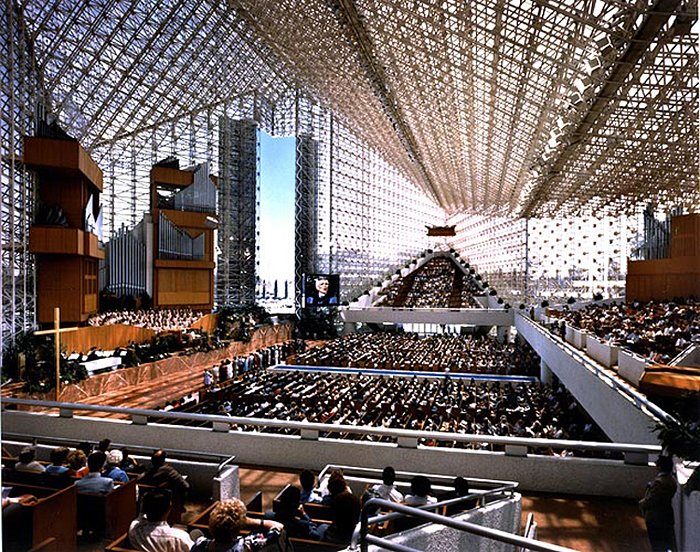
My wife pointed out at article on MSNBC yesterday that stated Robert H. Schuller’s Crystal Cathedral is filing for bankruptcy. Internet reaction has been predictably hostile, clawing at the craven, money-driven industry of television ministry. There is no question that many television ministries quickly grow corrupt under the lure of immense wealth. The average American citizen is glad to part with some money if it can buy favor with the man upstairs. When a minister is able to construct such edifices as the Crystal Cathedral with the good-will offerings of the faithful, well, s/he’s an entrepreneur, the kind of people God likes, according to the Tea Party. Schuller was famous for his positive thinking and insistence that God will do great things for you. When recession hits, however, not even God remains solvent.

According to the article, various corporate sponsors of the Cathedral are having difficulty holding up their end of the contract. Positive thinking extends only as far as the goodwill of the banks. Is there any question who the real god is here? Americans love the non-biblical concept that God helps those who help themselves. Making more money than a humble clergy-person ought to make may improve the sense of optimism, but it loses touch with where the average citizen lives. It is easy to be optimistic when you have a heavenly bankroll on your side.

Yes, but can it keep birds from flying over your head?

Over the weekend my family looked at slides from our years in Europe. The great cathedrals, even if in ruins, convey a sense of stoic strength, genuine commitment. Built with the hard-won resources, if not the actual physical labor of the local populace, these cathedrals were made of stone. I recall standing in the nave of Salisbury Cathedral while the tour guide pointed out that the very stone pillars supporting its huge steeple were bowed under the weight of all that stone above. Some day it may collapse under its own pressure, but it will have always survived longer than the Crystal Cathedral. Religion, if I may use a metaphor, is more authentic when it deals with stone rather than glass. The religion that struggles with the intractable realities of daily life will inevitably last longer than the feel-good, glass-plated, Tea Party serving “religion” of feel-good Christianity. It is too bad about the Crystal Cathedral, but maybe the entrepreneurs should be asking serious questions right now about which god they truly serve.


Wasps

I just finished reading Iain Banks’ The Wasp Factory. It is a disturbing novel on many levels; even the back-cover comments warn against reading it. The reason for mentioning it on this blog, however, is that it is so full of religious ideas that it would be a shame not to address them here. I won’t put in any spoilers for those who might, even with adequate warning, want to read the book.

The wasp factory of the title is a divination device. The narrator, Frank, does not believe in God because of the unfairness and cruelty in the world, although he is also a frequent perpetrator of cruelty. As he seeks revenge on animals other children, Frank views their suffering as a form of punishment from the God he disbelieves. At one point, after his brother Paul dies, Frank compares him to his old dog Saul, also unfortunately deceased. At this point he reveals, “Paul, of course, was Saul.” Death is the Damascus Road experience in this world devoid of a deity, but one where death is considered far more certain than life. At one point Frank declares the sea to be a mythological enemy, a point of view shared by the Bible and many ancient societies.

Frank is a neurotically ritual-bound individual. No matter how gruesome, his tasks are part of an elaborate system that must be repeated in order to maintain its efficacy. At one stage Frank declares, “this is like intellectuals in a country sneering at religion while not being able to deny the effect it has on the mass of people.” This statement is more insightful than it first appears – it is the dilemma of many who attempt to understand religion who are considered a luxury not to be afforded by society. Frank is a paradigm: people are religious, even in heterodox belief systems. The Religious Right has understood this for decades: talk religious talk and they’ll vote for you. Most people have no way of checking out what form this religion might take. It makes me almost as nervous as The Wasp Factory itself.


Movie by Faith

Yesterday’s New Jersey Star-Ledger carried an article by film critic Stephen Whitty entitled, “Where script meets scripture: Recent films take a leap of faith.” The phenomenon he observes is that mainstream, big studio-backed film-makers are more and more turning to plots and scripts that emphasize faith. It is not always standard, revealed religion-type faith, but a belief that there is something else. Something beyond that with which our daily lives presents us. People are seeking, but traditional religions are having a hard time convincing them that they have the answers.

In a striking contrast, films that present a spiritual danger frequently revert to the stock image of a Catholic priest as the means of deliverance. When is the last time a Protestant exorcist took on a demon on the big screen? Torn though it is with its long and checkered history of imperialism, exploitation, and scandal, the Catholic Church with its obscure rituals is effective where the machinations of the Protestants are not. This too is a leap of faith, one that believes in the efficacy of ritual despite its origin or lack of scientific theory. Science provides a way of understanding the world that many people experience as cold and comfortless. Even many scientists choose simply to trust in what their spiritual guides teach them.

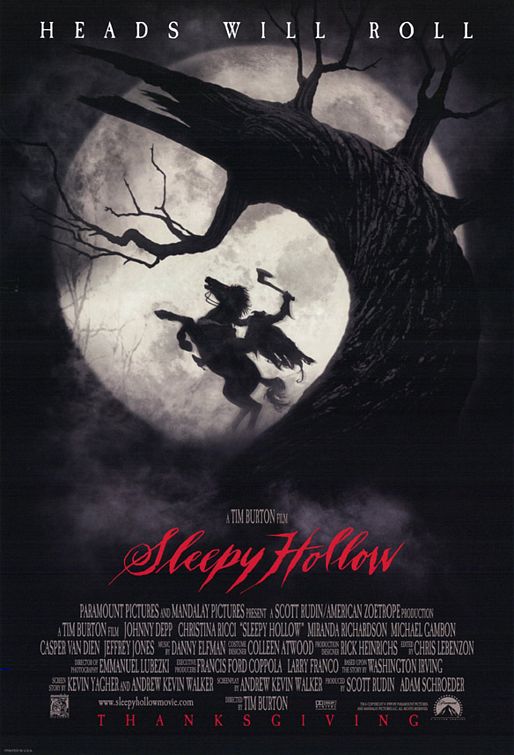
Over the weekend my wife and I watched Sleepy Hollow. It is an annual tradition; it is our October movie. In this film Tim Burton plays off the superstition of Sleepy Hollow – in fact real, in the movie – against the science of Ichabod Crane. In the end, Ichabod has to face the supernatural on its own terms in order to bring the world back to science. Having sent the headless horseman back to perdition, Crane once again returns to a New York City at the start of a new millennium, full of the optimism of science. It is the dilemma of the modern western world. People are tugged, torn even, in two diametrically opposed directions. Our experience leads us to believe in a “demon haunted world” while science placidly informs us that all can be explained. Movies do reflect the human outlook in many respects, and the end sequence has yet to be shot.


Eve’s Orchard

One of the innocent pleasures of autumn is apple picking. Not living in the country, many of us rely on the local orchards that open their trees and furrows to the public during the fall so we can feel once again in touch with nature. It may be only temporary, but this farm life is authentic and revitalizing – especially under a cerulean blue October sky. So it was that we joined our anonymous friends to pluck fruit and feel a part of the organic world away from laptops, palms, and cells. Picking apples always brings Eden to mind. In fact, no matter how secular the class I teach, if I ask students what picking fruit from a tree – usually I have to throw in the snake as well – represents, invariably most guess Adam and Eve. Of course, in the patriarchal world of the Bible, Eve gets the rap for taking the first bite, but a more sensitive reading reveals maybe this was what God intended all along.

Tasty fruit of knowledge

Within a generation of the origins of Christianity, a negative spin had been placed on that fateful fruit. This was the willful disobedience of sin rearing its ugly head in Eden. Of course, Genesis does not refer to the act as a “sin” – the word first occurs in the story of Cain and Abel. The human striving for knowledge, for the prerogative of the divine, the sadder but more informed life, was now a matter of blame. In the Greco-Roman cultural milieu where men set the standards, woman became the harbinger of sin and decay. Adam stood chastely by, happily clueless until Eve insisted he try this brand of iniquity. Pure fiction. And yet it is this version that has retained cultural currency in the western world. Blame it on Eve.

The patriarchal version


So much of our reading of the Bible is based on prior expectations. Even Bible translators know that they can’t go too far a field from the standard that the KJV set. When western Bible readers first cut their teeth on English prose, it was the dulcet tones of Elizabethan English that captured their attention. And the mores of Shakespearean England combined with the harsh repressions of a simmering Calvinism led to a Bible choked with sin to the point that a little fruit enraged the creator as much as fratricide just a chapter later. The fruit had rotted on the tree, and women were to blame. Perhaps it is time that we recognize the filters before our eyes when we approach the Bible. If we can understand that the patriarchalism is not the point, but merely the cultural shading of the time, we can release the message that the fruit is good. The temptation was not to become evil, but simply to become human.


Fearsome Fish

It must be October. As I was looking up a word on Dictionary.com, I noted one of their “the hot word” features entitled, “Scientists discover a fish they name ‘dracula.’” The fish, which is native to the eastern part of Asia, was discovered in 2009 but is just now starting to draw attention. The name apparently derives from its fangs. Vampires, however, have their ancient origins in creatures that draw the life force from humans. In the ancient world the “life force” could take different forms: blood, breath, and even semen. Soon a whole array of life snatchers populated the ancient mind – incubi, succubae, Lilith, demons, and any of a number of other contenders for the human essence. The fear of being drained is a very ancient one indeed.

While in my adjunct office at Montclair yesterday I met a colleague. We discussed the visit of the exorcist to campus that I missed but he attended, and while discussing the mythology class we both teach he mentioned how vampire movies make use of mythic themes. I have been using this information from the beginning for my class, but I was fascinated that another part-time instructor would latch onto the same film motif as I did to illustrate modern myth. The vampire is such a part of our culture that people often forget its religious origins.

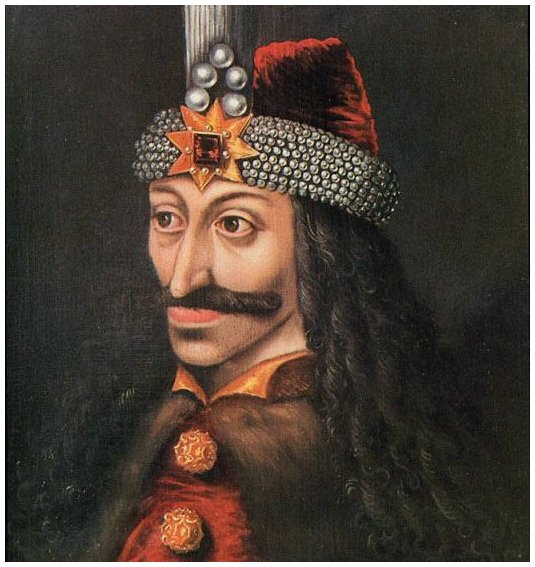
I attended a public performance of a two-man play at a local library this week. The play was a conversation between Edgar Allan Poe and Bram Stoker. Naturally, vampirism played a strong element in the single-act show. While Poe and Stoker were not contemporaries, they did both share an awareness of how religion tied in with the macabre. The Frank Ford Coppola movie Bram Stoker’s Dracula makes this connection explicit as an enraged Vlad Tepes stabs a cross in his chapel with his sword, starting a flow of blood that he greedily drinks.

Vlad Tepes on a good day

We’ve just crossed into mid-October and I already find myself surrounded with vampires. It is characteristic of religion to deal with our deepest anxieties, and the more we reflect on vampires the deeper we find they reside in the religious sensibilities of both fish and phantom.


Jersey Devils

My trips to the DMV always seem to involve the paranormal. Admittedly, this is sometimes partially my own fault. Against my wife’s advice, I took The Lure of the Dark Side – a book I was reviewing – with its Satanic cover, when I went to renew my driver’s license a few weeks ago. Back when we first moved to New Jersey, and I had to sit for an excessive part of the day in that waiting room, I was reading a book on the Jersey Devil. I first heard of this exotic New World beastie when I was a ghost-story fixated teenager reading some Scholastic October special. Since I lived a state over, in the western end of Pennsylvania, I figured I didn’t have too much to worry about.

The Jersey Devil is an anomaly that involves two distinct aspects. One side of the story is pure folklore; Mrs. Leeds gave birth to a devil in south Jersey and the monstrous thing has been haunting the state ever since. The other side involves the sightings of an allegedly physical cryptid by reputable individuals, especially since the early twentieth century. An unlikely combination of horse-head, wings (often bat-like), and hooves make this one odd-looking creature, based on eyewitness accounts. I have to thank my friend Susan for pointing out the suggestion that this could be a hammerhead fruit bat, although how even a small population of the African rain-forest dwellers could survive in New Jersey without producing a single road-kill specimen would itself be beyond belief. The shape and size of the bats accounts for quite a bit, but the hooves just don’t fit. That, and the Jersey Devil seems to prefer chickens, ducks, and small dogs to the eponymous fruit of the hammerhead bat.

Whatever, if-ever, the real Jersey Devil might be, the story has all the makings of a Halloweenish blend of religion and monsters. There are several versions of the story, but the one most commonly told is that Mrs. Leeds, in labor with her thirteenth child, declared that this one had better be a devil. She got her wish. The child emerged, sprouted wings and flew up the chimney to terrorize south Jersey and Philadelphia over the next several decades. The beast gives the state’s hockey league an instant identity and even led to the breakdown of a priest in the sixth season of Seinfeld. The first season of the X-Files featured a Jersey Devil episode (although it turned out to be a very humanish kind of Bigfoot), and Bruce Springsteen recorded “A Night with the Jersey Devil” for his home-state fans back in October of 2008. Only the gullible take stories of cross-species (cross-metaphysical beings?) seriously, but the story, like the Jersey Devil itself, seems to be immortal.


Gods and Demons

In ancient times people were sometimes possessed by gods. They were called “prophets” and they gained a breed of knowledge hidden from most other people. Demons were believed to exist, but they did not possess people. Instead, demons were used as explanations for misfortune, whether malevolently premeditated or not. Demons reflect, in today’s society, the concept of pure evil. Fr. Vincent Lampert, one of America’s 24 official exorcists, visited Montclair State last night to discuss evil, and according to the New Jersey Star-Ledger, he believes evil is a reflex of how people treat one another more often than a “figure with the hooves and horns.” No doubt there is a public fascination with demons, but few people understand their religious pedigree or what other explanations may be used to categorize them. According to the paper, Italy claims 300 exorcists – demonstrating that demons show culturally determined characteristics.

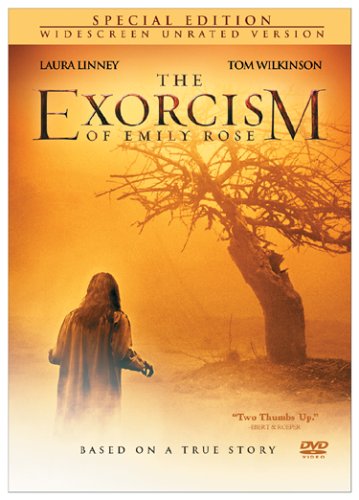
The 2005 movie The Exorcism of Emily Rose, lays out how science and religion differ on the issue of the demonic. Anneliese Michel, a young German woman, died in 1976 after being subjected to a prolonged treatment of exorcism. Her story was the “inspiration” for the film, and it raises the question of the reality of the demonic in the physical world. Fr. Lampert is more circumspect, noting that real life exorcisms are not as dramatic as those shown in the movies. He does, however, recall having seen a person levitate, but not during an exorcism. The human behavior he’s seen while on duty may all be readily explained by mundane physical and mental phenomena.

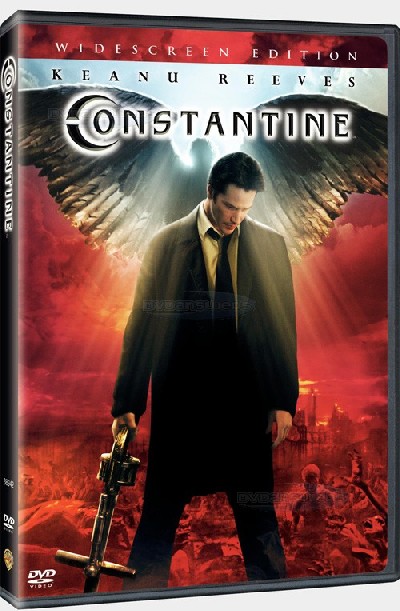
What does seem certain in all of this is that demons are not the behooved and behorned antagonists of films like Constantine or countless other graphic-novelesque portrayals of evil. Their Pan-based characteristics hearken back to the days when Christianity had to make plain its dismissal of foreign gods. In the ancient world hooves and horns were symbols of strength generally associated with powerful, if sometimes capricious, deities. In other words, what were one culture’s gods have become another culture’s demons. Movie makers understand the simultaneous revulsion and draw of the demonic character, but it seems that Fr. Lampert strives for a more balanced perspective. Evil has many faces, and most of them do not conform to Hollywood standards. Perhaps if all religions were respected demons would lose their power to torment and people would learn to get along with each other.


Where Wolves Dare

It’s the fall of the year when an old man’s thoughts turn to werewolves. Not that I’ve ever believed there were such creatures, but they do have a pedigree in ancient religious ideas, and even today skin-walkers play a role in some Native American traditions. While I lived in Wisconsin I found out about the Beast of Bray Road, a cryptid that is seen on occasion south of Nashotah, where I lived. Unfortunately I learned about the beastie too late to make any attempts to see it, but the documentation of the creature is in good hands with local author Linda Godfrey.

When I moved to New Jersey, scrabbling for a living tended to outweigh concerns about werewolves. Nevertheless, I did hear of an odd account in a south Jersey newspaper from 1925. According to the Woodbury Daily Times (now defunct), a farmer in Greenwich, south of Camden, shot an up-right hopping, dog-like creature that had twice raided his chicken coop early on a December morning in 1925. According to the paper, hundred of people went to view the unidentified animal and some even photographed it. Now, 85 years later, the story is barely remembered. Was this just another gun-toting Philadelphia suburbanite shooting an annoying dog, or had a “werewolf” passed through New Jersey all those many years ago? Periodically accounts of dogs running on hind legs are posted by late-night drivers in the Garden State, but no photographs or other evidence ever seems to be forthcoming.

Werewolves are less about monsters than they are about struggling with inner conflict, according to many psychologists. Our animal nature, deeply sublimated, sometimes makes a ferocious bid for freedom and otherwise sane individuals believe themselves to have turned into wolves. When I look at my crazy employment history, somehow I can relate. Some day I hope to transform into a fully employed academic or editor who has a steady income and an appreciative employer. My chances of seeing a werewolf, however, may be slightly better. I think I’ll head to Greenwich to poke around a bit, but I’m going to wait for a full moon, Friday the 13th, or a full-time job – whichever comes first.

Read Linda Godfrey's new book


Father Abraham

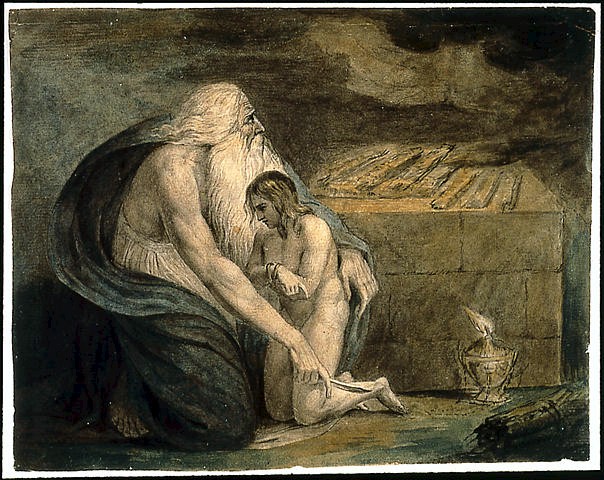
“Father Abraham had seven sons; seven sons had Father Abraham.” So began a camp song that I learned many years ago. The song always confused me because, no matter how I did the math, Abraham did not have seven sons. Abraham has a way of causing confusion. The story of Abraham contained in Genesis is complex and perplexing. He is presented as a man who experiences extraordinary occasions and then doubts what he learns from them. He is wealthy and timid, yet leads troops against an alliance of five armies. God speaks directly to him, and he remains in self-doubt. He always does what he is told, although he takes initiative once in a while as well. As Genesis tells it, he is the father of Ishmael and Isaac (and six others).

Historians have a somewhat different assessment. The only evidence we have for the historical existence of Abraham is Genesis. Although other ancient documents mention Abraham they clearly received their information from either Genesis itself or its oral sources. A prince powerful enough to route five kings might merit a reference in some clay annals somewhere, one might expect. Yet history is silent. Most historians require either multiple-source attestations or official, non-literary documents to support the historicity of ancient characters. Abraham simply doesn’t qualify. Those Genesis stories are foundation myths just like those common to all cultures. They represent self-understanding, not necessarily actual origins.

Nevertheless, religiously minded debates continue to flair around him. Abraham, through Isaac, is considered father of the Jews. Christians, courtesy of Paul, consider themselves adopted children who inherit over the natural born. Muslims sometimes trace their ancestry to Abraham’s first-born, according to Genesis, Ishmael. Abraham does not exit the stage as a single man, however. He bears in his person the promise of land, a very real commodity, granted by God himself. So the story goes. We have little trouble declaring other ancient (or not-so-ancient) characters legends or myths when they have no direct bearing on the historical origins of religion. Wars are not fought over Heracles or Theseus, after all. Because of Abraham’s inheritance, however, as the singly chosen ancestor receiving the divine favor, all major monotheistic religions wish to claim him. They are often willing to kill to make that claim real. Myths do have serious real-world applications. And I still haven’t figured out that bit about seven sons. Three seem to be far more than enough.

Abraham at sixes and sevens


Demo C. Rats

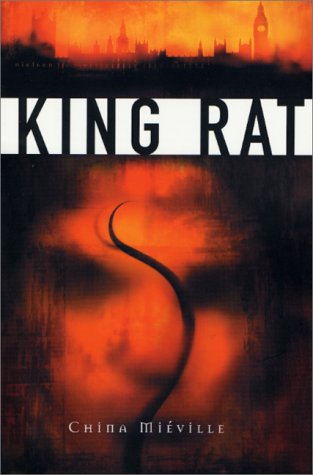
I just finished China Miéville’s novel King Rat. I’ve been thinking a lot about rats lately. This retelling of the tale of the Pied Piper of Hamelin has a strong Marxist flavor that intrigues the reader into greater possibilities. Each week as I drive the many miles required as a professional adjunct, I think about the bourgeoisie of academia. Many university programs are simply not possible without the many adjuncts willing to be exploited in order to keep them going. While the adjunct is kept below a certain number of courses so that costly benefits do not need to be paid, full-time faculty are kept below a certain number of courses so that they are free to build the university superstructure. Some teach no courses, do no research, and conduct no administration. It is a fair guess whether they even bother to breathe or not. Yet they are paid full salaries and benefits. Academic fossils paid simply to exist.

Saul, the rat-man who would be king, has a conscience. He was raised by his human father to appreciate the sense of what Karl Marx wrote. As the novel progresses, the rats congregate around him, wanting him to be their king. I have been an adjunct instructor for five years now. As I have watched my prospects grow slimmer, my work load has increased for less and less payback. I frequently chat with full-time colleagues who appreciate everything I’m doing. This academic year I am scheduled to teach eleven courses, strictly part-time, of course. Otherwise someone might have to pay benefits. This week one of the schools I teach at actually expanded parking privileges for adjuncts. Not to be nice, but because they had to.

Saul, the would-be king. So biblical. So human. At the end of the story he lives up to his idealism, granting rats autonomy without being sure how it will play out in the real world. There was a time when academics were idealists. Universities are now, like all other aspects of “modern life,” businesses. I’m sure that full-time instructors devote very little thought to those who work for table-scraps to support the system that underwrites their comfortable lifestyles. Certainly a university president or dean would loose nary a wink of sleep over those who’ve given themselves over to the task of Atlas, holding up their sky. It is business as usual. And as the bourgeoisie know, every aspect of life is business. What happens when the rats go free? The end of the story has not yet been written.


The Problem with Demons

One of the perks to life among a university community is the special programs that come to campus. As an adjunct instructor with a schedule so confusing that even Escher would get lost, however, I do not often have the opportunity to take advantage of such programs. More’s the pity since next week Montclair State University is hosting an event called “The Real Exorcist.” One of the very few authorized exorcists of the Catholic Church will be speaking on campus. The event overlaps with a previously scheduled class at Rutgers.

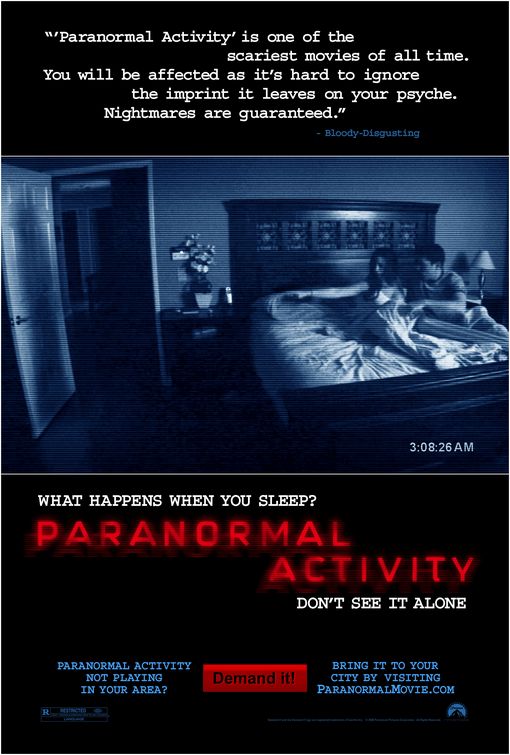
A little disappointed, last night I sat down to watch Paranormal Activity, the indie movie that made such a splash last year. Assuming it was a ghost story, I wasn’t too concerned about watching it alone on an October night. When I discovered it was a demon story, however, I wasn’t sure watching it alone was such a good idea. You see, in the hands of paranormal investigators the demon has undergone a transformation. Ancient Mesopotamians believed in a set of lesser gods who caused misfortune, although they don’t seem to have been pure evil and they didn’t call them demons. By the time we reach nascent Christianity, demons are cohorts of the Devil and are utterly malign and capable of possessing a person making them do the bidding of their dark lord. That’s where they remained on the divinity scale until modern day investigators using scientific equipment found them. I confess to having watched Ghost Hunters a time or two. Here the demon has morphed into a non-human disembodied entity – the very antagonist of Paranormal Activity.

Being aware of the origin of concepts is often a comforting place to be. When I realize that no special revelation has suddenly validated the existence of a baleful creature set to do me serious harm, a relief encompasses me. The problem with demons is that they don’t evaporate so easily. “Invented” by the Mesopotamians to explain misfortune, by the change of the era they had evolved into (largely) an explanation for epilepsy and mental illness. Now today they are back as haunting entities that have no human sympathy since they were never human. Paranormal investigators take them very seriously, despite their checkered theological pedigree. I guess I side with Shakespeare on this one: “there are more things in heaven and earth, Horatio…” After all, it is October and the nights are growing noticeably long.


The Chosen Peoples

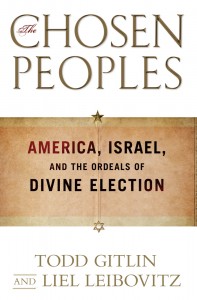
My thanks go to Simon & Schuster for sending me a review copy of Todd Gitlin and Liel Leibovitz’s new book, The Chosen Peoples: America, Israel, and the Ordeals of Divine Election (2010). Briefly, the book traces the origins of the concept of being a chosen people in both Israel and the United States. This concept is then shown in relief with those who are “unchosen.” The authors conclude by highlighting the national sense of mutual goodwill between Israel and the United States. The full text of this review is on the Full Essays page of this blog.

I read this book wearing multiple hats. Since the first chapter traces Israel’s sense of chosenness from Biblical times to the present, I began by wearing my Biblical Scholar hat. Many of the questions asked and raised about the Bible reveal a naivety about traditional claims of biblical authorship. Although certainty cannot be achieved, biblical scholars have applied textual and literary techniques to the text for well over a century now, and many of the claims simply accepted by Gitlin and Leibovitz simply do not stand up. This may seem a minor flaw, but since Abraham is foundational to this outlook, it is essential to at least consider his lack of historical attestation. Gitlin and Leibovitz assume that Genesis, with its stories of Abraham, predates the books that follow. This is not a safe assumption to make, and using this background as a foundation for further analysis might well lead to structural problems with the argument later on.

Wearing the hat of an historian, I noticed how much of the force of the argument of the book is interwoven with the idea that God has actually chosen Israel. I have told my students for many years now that historians do not make claims on God or God’s alleged activities. Texts that narrate God’s actions tend to be classified as myths rather than history. The concept of chosenness, which Gitlin and Leibovitz are reluctant to relinquish, is based on the premise that God has indeed done the choosing. An historian would be extremely reticent to make such a claim. Having noted this concern, the authors do a fine job of providing a brief, readable history of the founding of modern Israel without recourse to what God was doing in the twentieth century. When the authority of the Bible is needed, it is quoted here in King James English, hardly the most accurate translation available.

Gitlin and Leibovitz suggest that chosenness is more a curse, at times, than a blessing. The reasoning seems to be that the concept of chosenness leads inexorably to Zionism. The ideas interact on a much more subtle level than that, although certainly the Zionist movement has owed and continues to owe quite a heavy debt to the concept. The generalizations here are a bit broad – political motivations may not receive their full due. Toward the end of the chapter the ideology of messianism is engaged and brought into the discussion. It is not clear that messianism is the same as chosenness; the two ideas both emerge in Judaism, but do not always overlap. When the authors state that Zionism has always been messianic at heart (p. 57), that may be correct, but it does not necessarily reflect chosenness. Gitlin and Leibovitz are very good at pointing out the inconsistent application of the idea of messianism in the formative stages of the modern state of Israel.

Please see the Full Essays page for the remainder of this review.


Noah’s Newest Neighbor

This week paleontologists announced the newest dinosaur discovery: Kosmoceratops, a plant-eating, three-ton beast with an improbable arrangement of fifteen horns on its head. Any beast arising from the sea would be jealous. As Kosmoceratops jostles its way onto the ark, scientists debate the utility of all those horns – placed incorrectly for defensive purposes, they seem to have functioned to attract mates. Isolated on a fairly compact land mass, these Cretaceous ceratopsids bloomed into a distinctive species as showy as any other so far discovered. As evolution continues to stir debate in this country, its evidence keeps marching along.

Every semester, four terms per year, I have students work on a project that includes (in part) evolution and the Hebrew Bible. Every semester as I overhear discussion, I realize just how deeply the anti-evolutionary front has its claws in the American psyche. Otherwise intelligent undergraduates studying a variety of subjects: science, business, engineering, psychology, express their doubts about evolution. The reason: the Bible doesn’t affirm it. Nor does the Bible affirm atomic theory, free market economics, or microchips. Evolution hits, perhaps, a little too close to home.

The dinosaurs stomp in the face of Creationism. As much as the fundies try to embrace them, dinosaurs are just too outlandish to fit in any world other than evolution. The God of the Bible doesn’t seem to have a surfeit of humor to have wasted so much creativity on dinosaurs that no human ever got to see. We reconstruct, with amazement, species after flamboyant species, and yet the foes of science keep a finger firmly tucked in Genesis. Serious Bible scholars seldom have difficulties with letting science do its job, including evolution. The agitation arises from another quarter. And with all those horns in front of us, that quarter might be the apocalyptic sea after all.


Exorcists, Serpents, and Rainbows

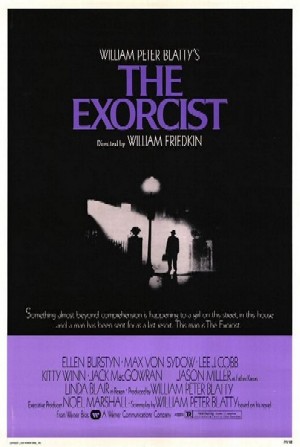
Tuesdays are release days for many new media products. I’m not sure why, but I accept it. This past Sunday’s paper ran a couple of stories by Stephen Whitty concerning the Blu-ray release of The Exorcist, counted by some critics as the scariest movie of all time. The press around the original release of the film in the early 1970s was enough to prevent me from seeing it until I was in my forties. I’m done using the word “release.” In an interview with Linda Blair, the iconic Regan MacNeil of the film, Whitty quotes her as noting that the rumors of “curses” on the filming of the movie were without basis. “But other people seemed to be trying to find something that didn’t exist,” she said. That sage statement could refer to considerable aspects of a society hungry for religious answers, but ill-educated on the religious facts-of-life.

Although sorely critiqued at the time by those whose religious sensibilities had been offended (Blatty is no theologian), Whitty nevertheless notes, “It may be a film full of gross obscenity. But in the end, ‘The Exorcist’ is a recruiting poster for that old-time religion.” He correctly observes that beliefs in possessing demons and that challenged social conventions will lead to evil permeate the movie. Traditional Catholicism wins out over that foreign Pazuzu every time. Even for those with more progressive beliefs, the film is difficult to watch. Religion, in addition to criticizing films, also provides some of the best plots.

Not to be counted among those best, but illustrative of the point, is Wes Craven’s The Serpent and the Rainbow. Ever since my days at the University of Wisconsin Oshkosh students have been after me to watch this film. Confused, dream-like, and at times difficult to follow, the movie opens with a claim to have been based on a true story. It isn’t the typical zombie movie either, although it features zombies. More of an attempted scientific thriller, the film explores the dangers of tetrodotoxin, “the zombie drug” when in the wrong hands. Understated in the movie, however, is the religious nature of Voodou. This is perhaps the most obvious failing point in the story. If the movie were to be really scary, the viewer has to believe that this is possible. The skepticism of science blocks the potential for unbridled religious expression. That is perhaps why The Exorcist has retained its power over all the years. Unlike more rational explorations of the world, it allows the audience to believe in personified evil that only old-time religion can cure.