Connecting Connecticut

One of the many lessons of the current pandemic has been that my appreciation of horror is not misplaced.  Horror Homeroom has just published my piece “Demons or Ghosts?  Hauntings in Connecticut,” available here.  I’ve noticed that Horror Homeroom has had a surge of pieces since all of this began, which seems tacit evidence that horror is a coping mechanism.  It’s no wonder, really.  Horror often deals with “worst case scenarios” and specializes in isolating victims.  Now that we’re all practicing social distancing we’ve entered into one of the main framing plots of the horror movie.  Contagion isn’t an unusual trope either.  My article is about neither of these, but I still maintain that watching horror is therapeutic.  As with most therapy there’s good and bad varieties.
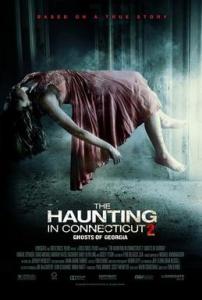
The films I write about in this instance aren’t good movies.  The Haunting in Connecticut franchise misses on so many levels that it doesn’t seem bound for classic status.  Yes, there are classics in the genre.  When the outbreak started many people referred to The Shining as how they felt being cooped up all the time.  There are those who vehemently deny that The Shining is horror, but given the association with Stephen King it seems difficult to deny.  Horror doesn’t have to involve slashers or bug-eyed monsters.  It isolates.  It imagines worst case scenarios.  All Jack Torrence needed was an inept national administration to put us all in the Overlook, one at a time.  

The pandemic has slowed down the release of new movies, of course.  The much anticipated A Quiet Place Part II has been pushed out to September.   Sitting here in isolation I wonder if that’s long enough.  Politicians with money in mind over their human constituents are chomping at the bit to get us mingling again.  Exposing one another.  Horror, however, knows all about aftershocks.  I don’t like jump startles.  I prefer my movies to built thoughtful, moody situations.  Despite their many sins, the Connecticut haunting movies do that correctly.  While they have other problems, they do throw us into a world where things aren’t quite right and we know it.  Elaborate plots really aren’t necessary, though.  The mind is pretty adept at filling in the story.  Like children asking to have the same book read over and over, we know how it goes.  We just like someone else to show us exactly how.  Isolation should continue for some time.  And horror provides a reasonable narrative to help.

Reading Connections

It’s flattering to have someone notice your work.  The other day I had the very first email from someone who’d read Holy Horror and wanted to discuss it.  It was from an undergraduate, no less, who was doing a report on religion and horror.  She’d read my book (and yes, it’s undergrad friendly) and wondered if I’d be willing to talk about it.  I can’t express how surprised I was (and still am).  You see, I have emailed authors after reading their books.  Many of them show no interest in carrying on a conversation with someone they’ve “met” through email.  I’ve had so many single-sentence responses with no enthusiasm whatsoever that I’ve begun to think of those employed in academia as hopelessly stuck in tunnel vision.  If you write a book you’re wanting conversation with those who read it, I should think.  At least I am.

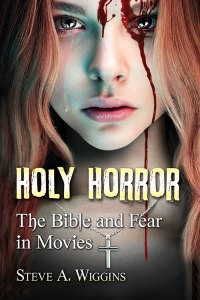
Those of us outside academe don’t have tenure committees to please or effectiveness committees to placate.  We write books to try to engage readers.  Unfortunately Holy Horror is priced for the library market.  During our phone interview, my interlocutor asked about the cover.  She said something publishers should hear: when walking around with Holy Horror her friends asked what the book was about because the cover is intriguing.  (It’s actually based on Chloë Grace Moretz from the reboot of Carrie, discussed in the book.)  In the midst of a pandemic, this first show of interest made my day, like seeing the first crocuses after a long, hard winter.  I do welcome conversation about my book.  I don’t have a classroom of students to force to buy and read it.  It’s out there for discussion.

Nightmares with the Bible is nearly finished.  Of course, publishers have hit a bit of a slow patch with many of their business partners shutting down.  Some publishers have gone into hibernation during the pandemic.  Books, though, will get us through.  A colleague of mine said the industry reports are showing that novels continue to sell while nonfiction is suffering.  Well, I’m no expert, but I do wonder if nonfiction might do better if authors would be willing to respond to this who express an interest in their work.  I know it’s a radical idea.  I also know that my books reach nowhere near what most publishers consider a viable readership.  What people are looking for during enforced isolation is a sense of connection.  Reaching out to find someone reaching back.  Books can do this, even if we never physically meet.


Haunted States

I’ve been going through a spate of watching “The Haunting” movies.  Just to be clear, I don’t mean The Haunting, by Robert Wise (1963), which is excellent.  Instead I mean movies spun off of the Discovery Channel’s series A Haunting.  Several years ago, between jobs and too near an FYE store, I picked up a cheap two-fer.  This set contained the television movies A Haunting in Connecticut and A Haunting in Georgia.  I watched them once and then traded them in to get something else.  The first one really bothered me.  The Connecticut story deals with a childhood cancer victim, and that alone is scary enough.  It had the limitations of a television movie and left me thinking it wasn’t too satisfying.  The Georgia haunting was more of a documentary, but it was also open-ended.

Then someone got the idea to make a movie out of the two.  The Haunting in Connecticut blows the plot over the top.  I kept thinking as I watched it, isn’t it in bad taste to make a horror movie based on the true life horror of tragic disease?  The protagonist of the story, Philip Snedecker, died about three years after the movie came out.  Although the plot generally followed the first movie an entire subplot was added to pad it out.  A nineteenth-century funeral director has enslaved a young man to be his medium.  The undertaker steals and marks dead bodies to enhance the boy’s powers.  These completely fictional characters intermingle with the real life tragic Snedeckers.  As you might expect, chaos ensues.

The oddly named The Haunting in Connecticut 2: Ghosts of Georgia also had to add an entire fabricated story to the troubles of the Wyrick family.  In real life the Wyricks moved into a house where their daughter started seeing things, including a kindly ghost named Mr. Gordy.  She also saw some sinister spirits.  So much so that her family invited a parapsychologist to investigate.  The theatrical version adds in a stationmaster on the underground railroad who was also a taxidermist.  Instead of helping all the slaves to freedom, he saved some for stuffing later.  No real motivation is given, beyond his enjoyment of sawdust and thread and death.  

While these two movies really didn’t help much, I generally find watching horror during a pandemic therapeutic.  Horror films sometimes help viewers envision worst-case scenarios and figure out how they might deal with them, learning from the victims’ mistakes.  I suspect that’s why, a few years back, the CDC posted instructions on what to do in case of a zombie apocalypse.  It was all about disaster preparedness.  Of course, in those days we had no idea what was really coming to Connecticut, and Georgia, and to every state of the union.


A-changin’

The other day, while engaged in a mindless task, I had Bob Dylan playing in the background.  When I say Bob Dylan I mean the Bob Dylan of the 1960s.  I was an infant when he was singing songs like “The Times They Are a-Changin’” and “Blowin’ in the Wind.”  As much as I cast the 1960s in a rosy glow, I was in fact a naive child through my portion of them.  I knew about the Vietnam War, but I couldn’t point to the country on a map.  Likewise, I knew about the assassinations of John and Robert Kennedy and Martin Luther King, Jr.  I also knew that we had walked on the moon.  My family at this stage didn’t listen to popular music.  I grew up with hymns in my ears and the culture in which I was swimming slowing becoming absorbed through my pores.  Dylan was part of the latter.

One of the reasons I don’t often listen to music is that I really listen to it.  It is so significant to me that I don’t like to relegate it to the background.  While I work from home, for example, I don’t put music on.  I find it difficult to concentrate because, truth be told, I’d rather listen to the music.  As I had Bob Dylan on, I was doing a task where I could listen as the rest of my body went into autopilot.  The angry white men who are running things now, it struck me, were alive in the sixties as well.  As much as they seem like aliens who were beamed down after the expansion of human consciousness, they were lurking in the shadows all along.  If they sing along to Bob Dylan they’re hypocrites.  We need another Dylan.

Photo credit: Rowland Scherman, public domain, via Wikimedia Commons

That’s putting quite a burden on an artist, I know.  But Dylan captured the spirit of the times.  Even as scientism was growing the reality of the Zeitgeist was obvious.  I grew up in the chaotic seventies.  The eighties were bland with the Reaganism reaction—angry white men wanted to get rich at others’ expense, and we let them.  Not enough time has passed for history to decide on the spirit of the fin de siècle, I don’t think.  You see, we seem stuck in a feedback loop.  Dylan’s lyrics are as necessary now as they were more than half a century ago.  I’m growing weary of angry white men and their petty concerns.  Maybe I need to listen to music more often. 


Green Dilemma

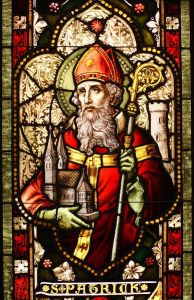
It’s a dilemma.  I face it every year.  I don’t have green to wear and it’s St. Patrick’s Day.  For your average run-of-the-mill citizen, this might not be an issue—but I do have an Irish heritage (in part), and so it’s a heartfelt concern.  The reason I don’t have green has less to do with fashion (consider the source!) than with my clothing purchasing practices.  First of all, I like to make my clothes last.  Fabrics can be quite durable.  They aren’t mechanical and therefore don’t break down often.  I don’t live a rough-and-tumble life, so tears aren’t really a problem.  The end result is that I keep my clothes as long as they’re functional.  When they begin to wear out I go to the store and examine the clearance racks until I find something in my size.  That means color selection is often a matter of very limited options.

Once in a great while I have landed something green.  I still remember a green shirt I had in college.  It served me well for more than four St. Patrick’s Days.  It long ago succumbed to overuse, however, because I wore it on other days as well.  And let’s face it, when I make one of those infrequent trips to the clothiers’ shops, this particular holiday’s not on my mind.  Unless, of course, I go shopping in March.  Back when I lived in Boston it was easy to get your Irish on.  I bought a bright green silky (I don’t know if it was real silk) tie with white shamrocks on it.  It was probably down at Faneuil Hall.  It had been a bit outlandish to wear to work in New York City, though.  Indeed, at work staid dress was by far the most common code.  Consequently it hung unused in my closet for years.

When we moved a couple summers back, I noticed my green tie had faded to bronze.  I thought it went the other way around.  In any case, my last truly green clothing article was no longer green.  Yes, it still has shamrocks, but I’d feel even more ridiculous trying to rock a bronze tie and pass myself off as Irish.  It won’t even pass for gold.  Of course, I work from home.  I’ve practiced social distancing long before it was a trend or a government mandate, whichever it is.  The only people to see my lack of green would be my wife and daughter, and perhaps a Jehovah’s Witnesses that might stop by.  But still, even minor celebrations are anticipated at times such as this.  Although I won’t be going out today I’ll probably be spending some time in my closet and reflecting on the true heritage of my Irish forebears.

Perhaps St. Pat shops like I do?


Coincidentally

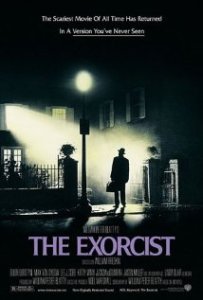
I hope I never become too sensible not to pay attention to coincidences.  With the death of Max von Sydow falling the same week as the time change, the full moon, and Friday the thirteenth, I’m left feeling a little vulnerable.  I mean, what do we do now that the Exorcist is gone?  A couple days ago, when the moon was full—the last full moon before the vernal equinox—I awoke before 3:00 a.m.  Thinking Daylight Saving Time would have me groping for a few extra minutes abed, instead I found myself wide awake at the hour when monsters are thought to be afoot.  As I put my feet to the floor I saw the brilliant lunar light beating through the blinds like midday.  It was remarkable how very light it was.

A bipartisan bill has been introduced in congress to make Daylight Saving Time permanent.  Of course, getting any law passed without numerous riders and bickering is unlikely, but I do wish they’d get on with it.  That having been written, the time shift has been remarkably easy on me so far this year.  Perhaps those of us regularly awake in the dead of night adjust a little more quickly.  Keeping out of New York with the coronavirus lurking, I’d rather deal with my own monsters anyway.  I remember my amazement at seeing Max von Sydow unchanged from Fr. Merrin to Dr. Naehring.  Then I looked up just how much makeup the Exorcist had to have to age himself several decades.  He was a young man when The Exorcist was filmed.  At this time of day anything is believable.

Friday the thirteenth is a bit of lore grown from Christianity.  Friday was inauspicious because of Good Friday and the thirteenth lot fell on Judas, who, along with the others, made thirteen.  It was as if some demon were afoot on such Fridays.  These bits of Christian lore made their way into popular culture and then crept into horror films.  A good deal of Nightmares with the Bible revolves around The Exorcist.  So I sit here before sunrise with a bit of just-past full moon shining in, not too tired from losing an hour on Sunday.  It’s not difficult to think of scary things at this time of night.  Of course, demons traditionally come out around 3:00 a.m.  This week has been like that.  And without Max von Sydow, we want to be very cautious around demons.


Classic Monsters

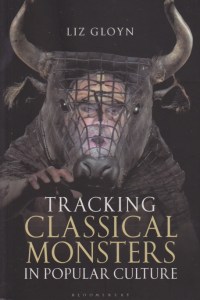
Convergent evolution is a term that’s used for when two unrelated species, separated by some gulf, develop a smilier trait independently.  I began studying monsters in biblical reception history before I really knew others were doing so.  After I’d written Holy Horror I discovered an article by another scholar who was doing similar things, even looking at some of the same movies.  Liz Gloyn, it turns out, was also doing something quite similar with classical monsters.  Her Tracking Classical Monsters in Popular Culture just came out a couple months ago.  Having taught classical mythology for a few semesters at Montclair State University, I have retained an interest in the subject and I was delighted to find a scholar who suggested that to get at the real substance you sometimes have to look beyond the heroes to the monsters they fight.  It’s the monsters who often prove more human.

Covering both cinema and television, Gloyn considers how classical monsters are represented in modern reception.  She looks at their appearance in literary forms as well.  Obviously not all of these reception avenues can be examined, but those she chooses are entertaining and informative.  In the case of biblical studies, I long ago came to the conclusion that biblical scholars pretty much just speak to each other.  The average person doesn’t read their books and the average pastor doesn’t either.  Laity, for the most part, get their interpretation of the Good Book from pop culture.  There’s a very good case to be made that, shy of sitting down and reading through a very big book, people would have little access to the Bible, or classics, if it weren’t for media representations.

Concurrent with my teaching classical mythology, the release of the reboot of Clash of the Titans transpired. (Gloyn covers both the original and the remake in her book.)  Students were really excited, anticipating the film.  It was one of the rare times (The Book of Eli was another) when I felt compelled to watch a movie as an adjunct professor, simply to share the experience with my pupils.  Clash of the Titans had made an impact on me in high school but the reboot failed to take me to the same place.  Still, here be monsters.  Those who’d never read Hesiod, Ovid, Pseudo-Apollodorus, or Homer, may have thought they were getting the straight dope from the silver screen.  That’s what reception history is all about.  Gloyn’s treatment kept me riveted, and I used to teach the subject.  Monsters have a way of doing that to you.


Remarkably Green

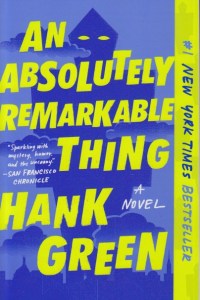
Fame is something most of us never experience.  In a world of billions we imagine what it would be like to have others pay attention to us.  Care what we think.  Admire us.  I can’t help but suppose that a large part of our political crisis is based on this concept.  It’s one of the reasons Hank Green’s An Absolutely Remarkable Thing is such a timely novel.  I’ve read a couple of Hank’s brother John’s novels, mostly in the Young Adult category, and I’ve been curious about this one for some time.  April May, the protagonist, isn’t seeking fame.  In an almost parable-like way it happens to her and she becomes addicted to it.  Safety and human relationships fall aside as she follows what seems to be the next logical step in order to secure more fans, more followers.  (There may be some spoilers below.)

There’s more than that, however, going on in the story.  Tales of “first contact” with alien intelligence often pose the question of humanity’s readiness for such an encounter.  The Defenders, a group that looks an awful lot like the right wing, are afraid.  They’re afraid of what humans might face once a superior power arrives.  Their response is to attack April, who, for some reason has been chosen as the first contactee.  Her fame isn’t accidental.  I’ve watched enough of Hank Green’s excellent YouTube videos to suspect he’s not exactly looking for a Christian parallel here, but April is a kind of messiah.  The book, in many ways, could be read as a recasting of Christianity’s foundation myth.  This isn’t a book with which most Sunday School teachers would be happy—there are adult situations and adult language.  They don’t cancel out the message of the book, however; I’ve known evangelists to use these techniques as well.  They help capture attention.

With all the books I read I have to admit that many are forgettable.  I sometimes read an old post on this blog, or a review on Goodreads, and find myself having forgotten a novel completely.  Something Hank shares with his novelist brother is the ability to make an impression.  It’s too soon to tell for sure right now, but this has all the marks of a story that’s going to be my mental companion from now on.  There’s wisdom and humor in it.  There’s a touch of Qohelet as well.  Whether intentional or not, An Absolutely Remarkable Thing follows the line of a classical story arc.  And the reason that stories have become classics is that they make us think.  I’ll be thinking about this for quite some time.  Fortunately, I don’t have to deal with fame—that would only be a distraction.


Speaking of X

The project that ultimately led to Holy Horror and Nightmares with the Bible was an article.  Intrigued that the quasi-horror Fox series Sleepy Hollow was so solidly based on the “iconic Bible” in its first season, I wrote an article on how the Bible functioned in it.  After that was published I realized that there was plenty of material for a book on how the Good Book appears in horror films.  That book, of course, appeared late in 2018.  Nightmares with the Bible was a kind of sequel, but moving in a different direction.  It looks specifically at how ideas about biblical monsters (demons) are mediated through horror films.  This post isn’t all an introspective about past projects; in fact, it’s about present watching.

At one point in my research I noted that the X-Files wasn’t as biblically based as Sleepy Hollow.  I stand by that assertion, but my wife and I’ve been rewatching the X-Files on weekends for several months now.  Nearing the end of season two I’ve noticed just how often the Bible appears in it.  Unlike Sleepy Hollow, where the entire story was premised on (largely) the book of Revelation, the X-Files has multiple episodes that focus on religion.  What we might call New Religious Movements feature in some of the vignettes while others posit older, hidden religions.  The Good Book appears visually many times, or, and it’s often quoted, even if not shown.  Although some of the episodes are lighthearted, many of them are played as straight horror and address the question of the reality of evil.  I hadn’t been alerted by Sleepy Hollow the first time we made our way through the X-Files, but if I had more time, and if anyone were still interested, there’s a book in this.

Ironically, even in the light of a political party that takes its energy from a religious base, universities are no longer interested in the study of the subject.  I have no reason to believe that these two television series are isolated instances that I’ve just stumbled across.  American culture is biblically based, no matter how secular it may be.  To my way of thinking, when something like the Good Book has such a strong influence, the response of the rational should be to try to understand it.  I know what biblical scholars do all day; I used to be one.  Only in recent years have some of them begun to turn toward the concept of the iconic Bible and to consider how it influences American thinking.  I can only do this on a small scale, in my free time.  What I see, however, like a good X-File, defies explanation.


Horror Homework

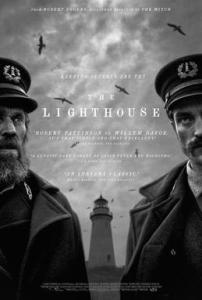
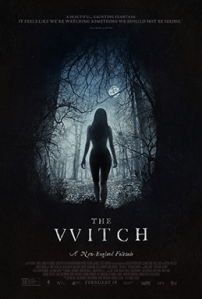
Although I haven’t been writing much on horror here lately, I’ve been doing my homework.  At least for homeroom.  Horror Homeroom, that is.  I’ve published on Horror Homeroom before, and, surprisingly, they’ve let me do it again.  This piece is on the films of Robert Eggers.  It’s pretty unusual for me to get in on the ground floor with a director’s oeuvre, but my wife has a tolerance for what is being called “smart horror” or “intelligent horror,” or even “transcendent horror,” and so we can get to the theater to see movies like The Witch and The Lighthouse before they go to DVDs or Amazon Prime.  In order to write up my thoughts about these two films I had to rewatch them a few times.  There’s so much going on here that both stories are difficult to summarize.

Holy Horror treated The Witch in the context of its biblical worldview.  The Calvinistic religion of William, and by extension, his family, is pretty scary stuff.  In The Lighthouse we find two men each grasping for their own ideas of the divine, as found atop the eponymous structure they inhabit.  Both films explore the psychology of isolated individuals, and, perhaps not surprisingly, finds frightening things.  We are social creatures, even those introverts among us.  When deprived of the interaction of those who think differently (hear this, o Republicans!) we soon begin to wilt.  We need not agree with all we hear, but conversation cannot be had without being open to at least the possibility that one might be wrong.  Nobody wants to think they are incorrect, but unless they can admit that possibility, there will be no discussion, by definition.

Horror quite frequently thrives on separating people from their fellows.  One of the fascinating aspects of the genre is the way in which it does this.  Groups, even, that separate themselves from the rest of humanity soon begin to behave in odd ways.  Checks and balances are necessary for any health in a society.  Those who claim absolute positions often can’t admit this.  Do I hear the violins of Psycho coming to life?  I suppose community is why I try to publish once in a while in wider venues like Horror Homeroom.  Even people who like to watch horror prefer not to do so alone.  Maybe having seen The Witch and The Lighthouse in theaters was a crucial part of their impact upon me.  And what is a good shudder without someone with whom to share it?


Stickiness

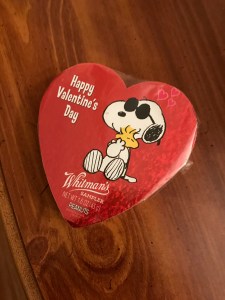
As a concept, it’s what web designers call “sticky.”  Valentine’s Day, I mean.  And “sticky” has nothing to do with the expected chocolates or anything physical at all.  Stickiness, as I hear it used in these antiseptic clean-room days, refers to text, or an object, that stays in the same place as you change web pages.  Now, I’m no techie, in fact I’m probably a neo-Luddite, but this kind of stickiness is useful in thinking about St. Valentine’s Day.  We hardly need a reminder that humans are sexual beings.  Biology does quite well in that department, thank you.  Every year around this time, however, when the weather has been bleak for weeks on end, Valentine’s Day rolls in to give us hope.  I’ve noticed this as I’ve been out jogging.  The past couple of weeks the birds have been singing.  Me, I’ve mostly been shivering indoors as yet more cold rain falls.

Every year, I suspect (I haven’t stopped to look) I write about St. Valentine’s Day.  Valentine was an obscure saint associated, in the popular mind, with something saints shunned.  Such an embarrassment is this sexy saint that he was never mentioned in the liturgy of February 14th at Nashotah House in the days I was there.  (Given that most of the student body was male, there may have been a wisdom in that, but that’s a story for another time.)  Religions, as I used to tell my students in later settings, all have something to say about sex.  The two ideas, like monsters and religion, are tied closely together.  Scholars tend to blush rather than explore this.

There are so many things going on in the world that I could write about.  There are new scholarly developments every day.  Still, I keep coming back to this minor holiday.  Well, it’s not actually minor in the realm of economics.  Anything to get people to spend money in the middle of February!  Valentine’s Day is the embarrassing child of the celibate church.  Without somebody named Valentine, who may or may not have been martyred,  we wouldn’t have this uneasy reminder of winter’s impending end.  Instead of embracing him, however, many branches of Christianity second him to punch-out cards sold to school kids as teachers remind them that everyone gets a valentine.  What a sticky concept!  I’d been intending to write something about the state of the world.  I guess that can wait for another day.  Right now, as the sun begins to awake, I’ll sit hear and listen for the birds to start their sticky springtime song.


Religion, He Wrote

A friend recently sent me the New York Times obituary for Carol Serling, the wife of one of my heroes, Rod Serling.  Perhaps it’s a personal weakness, but I often wonder about the religion of my favorite writers.  More often than not I discover that they’re affiliated with tolerant faiths, sometimes unattached to any specific tradition.  Rod Serling grew up Jewish but became a Unitarian-Universalist by marriage, and—it doesn’t stretch the imagination—remained one by conviction.  I’ve read a bit about the UU tradition, and it is based primarily on values rather than beliefs.  In fact, the idea that religion is a matter of what you believe is only one way of defining it.  Historically one’s religion was a matter of what one did, not necessarily what she or he believed.

Authors that I read often deal with religious issues.  It’s important to confess that I don’t select fiction based on its having religious themes.  Anyone who’s read more than one or two of my posts will know my reading is eclectic and many of the books represented here have shown up because of wildly different circumstances.  Reading challenges, friends’ recommendations, and preparations for educational presentations are often driving forces.  In the fictional realm I’m drawn to the speculative, but also often to the catch-all category called “literary.”  Stories that feel authentic in either category have an element of religion in them.  Life portrayed without it doesn’t seem believable.  I’ve been re-reading some Ray Bradbury.  There’s often suggestive material there.

Raised a Baptist, Bradbury is often also claimed as a Unitarian-Universalist.  Apparently he didn’t like the label, but his behavior was more a selection of tenets that he found compelling from various religions.  All of this may sound strange in a context where “religion” is increasingly a dirty word.  (To be honest, it has been doing much to earn such a reputation.)  Still, it is a very deep part of being human.  Rod Serling’s stories advocated fair treatment of all people and often his sense of justice landed him in trouble with advertisers for The Twilight Zone.  Religions comfortable with maintaining prejudice, or turning a blind eye to lawbreaking in the name of false virtue would certainly not understand refusing to take money from questionable sources.  I suppose there’s a reason I enjoy the stories from the days when America still had a conscience.  The legacies of such writers, it is to be hoped, will outlast what passes for religion these days. 

Any other gods before me…


Dancing

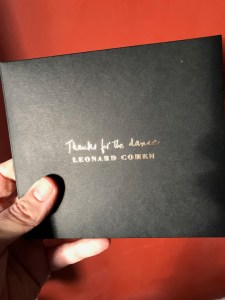
An artist is never really gone.  I have been listening to Leonard Cohen’s posthumous Thanks for the Dance.  Haunting in the way of Bowie’s Blackstar, there’s a poignancy to listening hard to the dead.  Especially when they saw it coming.  Artists are never really gone, and we can forgive them because they’re oh so very human.  Cohen was an exceptional poet and this album captures a man who knows the end is near.  Still he sings of girls and sins and God.  There’s an eternal soul there, and Cohen captures longing better than just about anyone.  The artist knows longing and understands not knowing for what.  The album struggles with religion and depression, a remarkably common combination.  Memories of glories that linger even as the body ages.

Listening to someone else’s music is taking a stroll through her or his head.  Someone once gave me a disc of songs built around a theme.  Although the theme came through I feared a little of what I heard here.  Some who know me primarily from my overly pious upbringing would be shocked to find Cohen on my favorites list.  For me he has no pretense.  Instead of ignoring religion, sexuality, or politics, he tried to make sense of them through song.  For me—and listening to music is a very personal thing—I think I understand when I’m drawn into his lyrics.  His experience of life was vastly different from what mine has been, yet he’d accurately mapped the direction my mind might wander, if given free rein.  Religion will hold your imagination captive, if left to its own devices.

Those who reduce Leonard Cohen to his over-used “Hallelujah” catch only glimpses of this complex man.  I once read an article about Bruce Springsteen in which a friend of his said that if he hadn’t succeeded in music he might’ve become a priest.  There’s an authenticity to these artists who write probing songs that have deep spirituality yet allow themselves to be human.  Cohen’s songs revealed he could see death with some ambivalence from afar.  Even in albums recorded thirty years ago the hints were there.  Instead of running and attempting to hide, Cohen’s lyrics, at least, indicated that he’d continue to try to live.  Maybe these are just the reflections of a middle-aged man who’s only glimpsed a fleeting connection between an artist in perpetual motion and a one-time scholar sitting up alone at 3:00 a.m., seemingly stuck in one place.  Whatever else they may be, such quiet moments will ones be haunted by Thanks for the Dance.


Falling

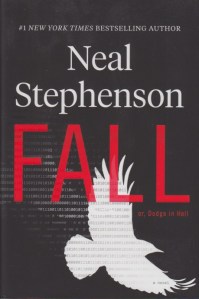
Time.   It’s a resource of which I’ve become acutely aware.  If I probe this I find that among the assorted reasons is the fact that I’ve finished my fourth book and I realized I’m much further behind that I’d hoped to be at this point.  It took me a decade to get Weathering the Psalms published and Holy Horror seems never to have gotten off the ground.  I’ve pretty much decided to try to move on to writing that people might actually read, and academic publishing clearly is not the means of reaching actual readers.  I can’t help compare myself with prolific writers like Neal Stephenson.  (It helps that he’s a relative.)  I just finished Fall, Or Dodge in Hell, and was wowed by the impact of both the Bible and mythology on the story.  I’ve always admired the way that writers like Neal can not only comprehend technology, but also can project directions into which it seems to go. 

Not to put lots of spoilers here, but the story of one generation of gods being conquered by another is the stuff of classic mythology.  Many assume it was the Greeks who came up with the idea, what with their Titans and Olympians and all.  In actual fact, these stories go back to the earliest recorded mythologies in what is now called western Asia.  For whatever reason, people have always thought that there was a generation of older gods that had been overcome by a younger generation.  Even some of the archaic names shine through here.  Like many of Neal’s books, Fall takes some time to read.  It’s long, but it also is the kind of story you like to mull over and not rush through.  Life, it seems, is just too busy.

There’s a lot of theological nuance in Fall, and the title clearly has resonance with what many in the Christian tradition categorize as the “Fall.”  (Yes, there are Adam and Eve characters.)  Those who are inclined to take a less Pauline view of things suggest that said “fall” wasn’t really the introduction of sin into the world.  Anyone who reads Genesis closely will see that the word “sin” doesn’t occur in this account at all.  One might wonder what the point of the story is, then.  I would posit that it is similar to the point of reading books like Fall.  To gain wisdom.  Reading is an opportunity to do just that.  And if readers decide to look into matters they will find a lot of homework awaits them.  And those who do it will be rewarded.


Sci-Fi Culture

I’ve recently taken up rereading Ray Bradbury stories from my childhood.  Bradbury’s difficult to classify, but he’s often genrefied as science fiction, but many of his stories are horror and fantasy related, or just plain stories.  One aspect upon which future readers, I believe, may pick up—and this isn’t just a Bradbury thing—is how people were projected into the future with the culture of the past remaining intact.  Things like characters smoking in the most unlikely of places.  I picked up on that the first time I watched Alien.  In space, where no-one can hear you scream, air has got to be a precious commodity.  And yet there they are, smoking in space.  Same thing with Bradbury.  The culture of the 1940s and ‘50s when he was writing such stories simply couldn’t see beyond the time when culture was what everyone did.  It seems weird in 2019.  How much weirder it will look in 2050 (presuming we make it that far).

There’s almost a “gee-whiz” quality to such stories of the past.  People in the future, and in space, drink coffee and wear blue jeans.  They may have more technological homes, but their home lives reflect the forties and fifties as well.  The women are housewives and the husbands go to the office, or outer space, to work.  I suppose cultural verisimilitude was a different thing back then.  Did nobody really consider that patriarchy might be a problem?  Did everyone think clothing would never really change?  And not a hint that vegetarianism might catch on.  What makes the future the future in these stories is tech.

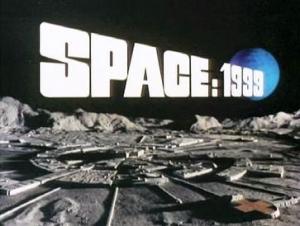
These days we’re loaded with tech.  In some ways we have more of it on our person at any given moment than all of Bradbury’s space-workers ever had.  In one of his stories a character was born in the impossibly far year of 1993.  I used to watch a show called Space 1999.  We haven’t colonized the moon yet (we may be working on it, but considering how long things like an obvious impeachment take, I wouldn’t hold my breath).  Speaking of holding breath, I’m pretty sure some of the characters were smoking on Moonbase Alpha.  Or my memory is cloudy.  (The earlier, and more lasting series Star Trek pretty much avoided several earth-bound habits, although Captain Kirk was pretty fearless when it came to the possibilities of space-spread STDs.)  I read Bradbury as a throwback to my childhood.  His stories have both an prescience and naivity that make them compelling period pieces.  From our current standpoint, one wonders if there will be any culture left at all in the future.  Perhaps we should enjoy what we have, while we still can.