Pre-Soul

Streaming seems to be the way of the future.  I’m reluctant to trust corporations (does anyone remember Ultra Violet?) keeping content I’ve paid for, but the pandemic makes movie theaters scary places.  Some of the movies I’m eager to see aren’t even released on DVD or Blu-ray any longer, and your only choice, increasingly, is to subscribe to the death-by-a-thousand-cuts method of “buying” a subscription.  You’ve got to go where the content is.  All of this is a long way of saying I saw Disney/Pixar’s Soul very nearly on its release day.  It underscored a couple things for me.  One is that the idea of transmigration of souls is alive and well.  Second, and this is a point I make in Holy Horror, movies are often where people get their understanding of religious concepts.

In case, like me, you have to have movies pointed out to you by others more aware, Soul is about a jazz musician who dies the very day he gets his big break.  On his way into the great beyond, he tries to escape and ends up where souls are prepared for their embodiment on earth, “The Great Before.”  In order to make the leap, they must find their “spark”—the thing that makes them who they are.  Pixar may not be a theological seminary, but there are people who find meaning in many of their films, even to the point of  using them as coping mechanisms for real life.  When the internet didn’t exist and animated films required years of drawing or stop-motion animation to complete, people tended to go to religious/psychological professionals for such issues.  Now we have corporations.

The reason I find this of concern is that I have an idea of how content is created.  How those who come up with ideas have to pitch them to financial backers or publishers, and how those backers weight concepts in the scales of lucre.  In other words, money is frequently the deciding factor.  Those doing the pitching are seldom the same people with specialized training in the subject addressed, and yet they reach far larger viewerships than the classroom of such an expert does.  The financial implications are troublesome.  None of this is to suggest Soul is a flawed film.  I know many former seminary professors who’d quibble—or perhaps something stronger—with the way the afterlife/beforelife are presented here.  The movie itself is both fun and profound.  Don’t ask me, though.  I’m still trying to figure out this streaming thing.


Good Will

Social media can seem overwhelming.  There are so many sites and there’s so much to keep track of.  And that’s in addition to all these “super storms” we have dumping inordinate amounts of snow and rain on a house neglected by previous owners.  Given the circumstance, I joined Next Door.  I don’t have time to follow it, but each day I get notices of new posts.  On Christmas morning one from the previous day caught my eye.  A local mother could neither afford to decorate her tree nor buy her teenage sons presents.  She turned to Next Door and the comments and offers of help posted shortly thereafter revived my faith in the inherent goodness of people.  Holidays bring out the best in us, I believe.  We want others to be cared for.  It’s just too bad we have trouble enacting it in any political setting.

Next Door is about grassroots connections.  We are fairly new to our town.  Although it’s distinctly purple, the people are friendly to one another.  It saddens me that we’ve allowed the politics of hate to define us for four years.  Those unable to see through Trump’s self-serving tenure think it’s been business as usual as one man has torn the country apart to make himself feel good.  Out here among hoi polloi, people are reaching out to strangers, offering Christmas ornaments, gifts, and food.  I think that must be rain on my face.  Why else would my cheeks be damp?  Left to their own devices most people would behave well toward others.  Fear makes us act in destructive ways.  What if we all reached out helping hands when anyone was in need, and accepted handouts without shame when we needed them?

Christmas was rainy around here.  Just a week after receiving an early snow dump of over a foot, the rain gauge is overflowing.  Caring for our environment, it seems, would be the most obvious way of ensuring the greatest good for the greatest number.  I know that sounds utilitarian, but it certainly feels more moral than personal enrichment at the expense of others.  Too much water here while the west suffers drought and wildfires.  We know our actions contribute to the instability in our atmosphere.  No actual scientist denies it.  As these twelve days of Christmas play out, I see no sign of compassion from the swamp, yet there is a light shining through the gloom.  It’s a sign of human kindness.  And it is as close as next door.


Thoughts of Christmas

Christmas, in merry old England, used to be the day when bills were due.  There are vestiges of that still.  Just this past week, when my mind was on upcoming celebrations and family time, companies continue to email me their bills, reminding me that all celebrations are but temporary.  Money’s the real thing, and it takes no holidays.  While the holiday season may be subdued for some due to lack of travel, for me any day that I don’t need to leave the house is a good one.  We had a pretty nasty patch of weather on Christmas Eve, and one might be tempted to say that the atmospheric conditions outside are frightful.  There’s a coziness about staying indoors around the holidays.  Besides, there’s a pandemic out there too.

We’ve got a quiet day planned at home with our usual traditions.  We added a Yule log to our celebrations this year—much of what we now recognize as Christmas derived from the teutonic Yule.  Otherwise, we are quiet people with rather simple tastes.  Even if we can’t afford much, the holidays mean time off work.  Time for those close to us without constantly having to auto-correct back to earning money at work.  I frequently reflect on how distorted capitalism has made us.  Our European colleagues have far more time off work than Americans do.  They don’t seem to suffer for it.  There’s not much light outside anyway, so why not hunker down a while?  Reflect on what’s really important?

First thing this morning, after watering the tree, I fired up the computer to write a few words before the festivities began.  The first two emails in my inbox were, as if on cue, bills.  Computers have no idea this is a holiday, and our neighbor’s early morning car announcing its lock secured tells me that he’s just getting home from work.  The fiction that we all have today off, as time home with family, plays out every year.  Holidays are often the privilege of the affluent, which is why, I suppose, Saturnalia was marked by a reversal of roles for several days.  Rome wasn’t exactly a friendly empire, but it wasn’t a capitalist one either.  This Christmas I’m hoping that those who have to work today—healthcare workers, those who keep stores open for last-minute supplies, emergency workers of all kinds—will have adequate time for peace coming to them.  Even non-essential work can be wearying.  Let’s celebrate, thankful that we’ve survived these last few years at all.  The bills will wait until tomorrow.


Ghost Stories

Those of us who confess to watching horror are fond of noting that the Christmas season has long been associated with ghost stories.  Charles Dickens wasn’t the first to make use of the trope and certainly won’t be the last.  After reading about elevated horror movies, I decided to watch A Ghost Story (David Lowery, 2017).  Many wouldn’t classify the film as horror at all.  It is quiet, slow paced, and has no gore.  It is nevertheless a haunting film.  I suspect its poignancy comes from a situation we can all imagine and which many people face in life—being left alone after the death of a loved one.  The idea that the dead never really leave us can be both comforting and unnerving at the same time.  The film plays to those strengths.

The premise of the film is simple: the ghost of one of a couple finds his way home and tries to reconnect with his widow.  He ends up staying there until, many owners later, the house is demolished and a high-rise is built in its place.  It’s essentially a story from the point-of-view of the ghost.  There isn’t too much dialogue included, but one significant monologue comes when a party is being held.  One of the party goers, or perhaps the current owner of the house, explains that because of what we know of physics everything on our planet will eventually be destroyed.  His beer-fueled lament is that whatever we do is therefore in vain.  He brings God into the discussion.  The ghost listens intently, but seems to disagree with his conclusions.  For someone like me the introduction of religion into the story is a Venus fly-trap, since religion and horror can’t seem to keep away from each other.

Death is a dilemma, a point that I made in a recent Horror Homeroom article on Pet Sematary.  Horror, like religion demands that we confront it.  Science can only offer cold comfort regarding the cessation of life.  Religion (and horror) open the dialog into the unknown, the realm into which mere human instruments cannot reach.  Sad and reflective, A Ghost Story hits on an essential question in the nexus of religion and science.  If a spiritual world exists, there may be some survival even of the earth’s eventual heat death.  As time passes, the titular ghost continues to learn.  Life is a learning experience, and although many modern forms of religion join in the cultural denial of death, horror is always ready to remind us that confronting it may be the wisest course of action.  Ask the ghost.  He knows.


Udolpho’s Mysteries

The carousels on Google can provide a great deal of information.  Looking at them, along with trusted lists of gothic novels, it became clear that one of the few classics I’d not read was Ann Radcliffe’s The Mysteries of Udolpho.  It’s been on my shelf for many years, it’s shear bulk staring me down each time I turned in its direction.  Long books are, of course, fine if they keep you going.  Knowing this was published in 1794 (in four volumes) cast some doubt on the narrative earning the sobriquet of “page turner,” and thus it proved not to be.  I’m afraid my disposition meant that the gothicness of the novel (and it’s certainly there) didn’t speak to me as I hoped it might.  There are creepy castles and rumors of hauntings.  Lots of stormy nights and damsels in distress.  Still, it comes across as the problems of the wealthy and that has to be handled well in order to not turn off this poor reader.

Still, a novel of such fame being written by a woman in the eighteenth century is worthy of note.  More than that, Radcliffe was the most successful (in financial terms) professional writer in the decade that produced The Mysteries of Udolpho.  Her literary influence is undisputed.  The novel is, however, excessively long.  Descriptive prose style was common at the time and may seem excessive to modern readers.  This is, however, impressive for an author who never traveled to the regions about which she wrote.

About 600 pages in, in the edition I read, something caught my eye.  Much of the novel consists of descriptions of mountain ranges in France and Italy.  As one party is on its way up one of the inclines, one of the gentlemen mansplains some of the geological features.  Noting that sea shells are found at such elevations, and so far from any body of water, it is noted that this is evidence of the deluge.  What’s so astonishing about this is that even in the twenty-first century that explanation still has currency among biblical literalists.  The novel appeared before Charles Lyell, who would explain the ancient ages of rocks, was even born.  We have centuries of knowledge at our disposal that we still have a tendency to dismiss.  Interestingly, Radcliffe was famous for reviving gothic literature partially by explaining away any supernatural elements.  Of course, accepting standard religious teaching of the day would pretty much have been expected.  And yet the mysteries continue even over two centuries later.


Wooden Translation?

The summer got away from me, as it always seems to, leaving several boxes of things yet to be sorted.  Since these boxes are in the garage where there’s no heat, doing it during winter isn’t really feasible.  Still, I found myself in the garage storage area the other day and quickly tipped open a box or two to remind myself of what might be inside.  One of the treasures I found is actually from my wife’s family memorabilia.  Not exactly a family Bible, it’s a New Testament one of her grandfathers gave one of her grandmothers as a gift.  It’s a red-letter edition, but what makes it unusual is the binding.  It has olive wood covers from Jerusalem.  The front cover is embossed with a Jerusalem cross.

Bookbinding has long been an area of personal fascination.  Growing up when and how I did, most of my books are paperbacks.  The paperback was initially one of the responses to shortages introduced by wars.  Since they were cheaper to produce they could be priced down.  I have a few academic paperbacks from the twenties (I can’t make myself acknowledge that 1920 was a century ago) whose paper bindings are literally paper.  I fear to take them off the shelf, given the fragile nature of their bindings.  Prior to that books tended to be “hardbacks.”  A piece of cloth-covered cardboard was the preferred means of protecting the vulnerable leaves inside.  Before that leather was routinely used.  Those were the days when books were properly thought of as an investment.

I often think of how little I will leave behind, at least in terms of items of monetary value.  Books seldom maintain their cover price for long.  As someone who lurks on used book websites, however, I do know that the choice tome of either quirky fiction or nonfiction under-appreciated at the time can easily jump market values with predatory sellers.  Even for a paperback.  I am loath to confess how much I’ve paid for a book I really needed for research that mere public libraries simply can’t access.  (The university library is a place of wonder, and one of the resources I most often miss in having become secular.)  Just this past week I saw a sci-fi book from the sixties I wanted to read priced at over $500 on Amazon (used).  When I went to check on it this morning all copies were gone.  And to think the world considers books a poor investment.  The real key is to be obscure, no matter your binding material.


Winter Rebirth

It seems like 2020 has already had many longest nights.  The Trump administration has hurt so many people so badly (many of them his own supporters) that this feels like four years of night finally beginning to experience dawn.  It is finally the solstice!  This ancient seasonal holiday, coopted by Christianity for its own purposes, retains great symbolic value.  The story of Jesus’ birth is about light coming into the world.  So are the myths behind Saturnalia and Yule and even Hanukkah.  We tend to want to view things literally when the true meaning comes in the form of symbols that strike at the very heart of what it means to be human.  We fear the dark, and we’ve been living in it for so long now that perhaps the light hurts our eyes.

A friend pointed out the Winter Solstice Fest, put on by Shift.  It streamed (I almost wrote “aired”) over the past weekend.  Involving many indigenous, and even some new age practitioners, it was a celebration of light’s return.  Although I couldn’t watch all of it—weekends are so necessary when work becomes the only reality of five days per week—but what I did see inspired me.  The chauvinism of one religion asserting its superiority over other explorations of spirituality can contribute to the darkness.  When we take symbols literally we’re capable of great damage.  Being inclusive forces us to recognize that we are all seeking light while learning to walk in the dark.

One of the reasons I watch horror is because, on the balance, it is dark half the time.  Perhaps because I can’t seem to sleep until sunrise any more, I spend quite a lot of even summertime in the dark.  Since there’s much that can only be done in the light of day, I explore how darkness might contribute to our spiritual growth.  Although horror often receives a naughty reputation, it too is about exploring the dark for meaning.  Today, at this latitude, we’ll have only nine hours and sixteen minutes of light.  It’s easy to believe illumination might never return.  Humans have created rituals to assure ourselves, to encourage the courses of nature to continue as they have for countless eons before we ever evolved.  While we’re in the darkness, perhaps we should consider making friends with it.  It’s quiet.  And shy.  And if we don’t learn to live with it, half of our time may never blossom.


Religion Prof

Back in 2009, when Sects and Violence in the Ancient World started out, there was a fair bit of interest.  At one point I was listed among the top fifty “biblioblogs.”  Back in those days I got to know James McGrath, the curator of Religion Prof, a great blog now hosted on Patheos.  If you want a finger on the pulse of what’s happening in religious studies, you should read him.  With an energy I can’t conceive, he posts interesting stuff every day, even while being a professor.  And like me, he’s fascinated by religion and pop culture.  He also understands something—links and likes and shares are important.  People in my generation and beyond often don’t think that clicking that little thumbs up will do anything.  It does.  More so, that share button.

I was really pleased when James agreed to do a virtual interview with me about Holy Horror and Nightmares with the Bible.  You can find the interview here—and be sure to recommend and share it.  James has several interesting books of his own.  You should check them out.  The world of religious studies (and dare I claim it, biblical studies) is hardly moribund.  Underfunded, yes.  Socially devalued, certainly.  But alive nonetheless.  James’ blog is proof of that.  My regular readers will know my usual jeremiad about how higher education has been treating religious studies.  You see, I’m an historical thinker.  Where we come from is important.  Higher education began because of religion.  Its origins lie in monastic communities preserving learning—some of it secular—for the good of the world.  Now administrators looking for a department to cut know just where to turn. Shouldn’t we treat our ancestors with a little more respect?

I’m forcefully reminded of the many times analysts have declared that religion would fade away.  The claim has been made multiple times over the centuries.  At the same time scientists studying humankind conclude that religion is good for us, and that we’re naturally inclined to it.  Of course we should cease studying it!  Well, Sects and Violence in the Ancient World has also evolved over the years.  Not all of my posts are about religion anymore.  Most of them touch on it, however, because I’ve studied it my entire life.  Not only did religion make Homo sapiens what they are, it also formed some of us individually in ways so profound that we’ll never escape it.  Some of us even wear it proudly.  Great job with the blog, James, and thanks for the shout out!

Remember the early days?


Conflict Management

Conflict has come to dominate the twenty-first century in an unhealthy way.  No longer do religions, political parties, or even scholars of different disciplines want to try to see it from somebody else’s point of view.  Such “I’m rightism” is distressing, given that the greatest minds in history always left some room for doubt.  Einstein tried not to say too much about God, but his occasional references left some space for admitting he just didn’t know.  He was following closely in the footsteps of Sir Isaac Newton, who, ironically and iconically stands as one of the founding fathers of empiricism.  I say “ironically” because his real driving interests, as became clear only after his death, were religious.  With the science and religion conflict paradigm, it took a long time for many to admit that Isaac Newton was fascinated by religion.

A story in The Guardian recently noted that Newton’s unpublished notes on pyramidology have gone on auction.  These papers are even further indications of just how much religion mattered in the mind of the man who gave us a clockmaker God who wound up the universe and left it to run according to scientific principles.  My wish isn’t to cast any aspersions on Newton.  No, quite the opposite.  I wonder if we mightn’t use his wide-ranging interests to raise a relevant question: why do we see religion unworthy of attention while science, because it can be “proven,” is all we really need?  Especially since scientifically-based hypotheses about the origins of religion tell us that human beings need it.

Admittedly Newton was just as human as the rest of us.  Perhaps far more intelligent than most, but still human.  The humanities are the part of the human curriculum that has been under duress for many years at “universities.”  As business interests and money have taken on larger and larger roles in how schools conceptualize themselves, the humanities—which don’t make money—are undervalued and cut.  Capitalism takes no prisoners.  Education that has bought into that paradigm is bound to overlook certain facts.  Newton’s “arcane” interests were well hidden for a couple of centuries because who wants to think of the great rationalist as beholden to such a paltry thing as religion?  We’d rather keep our eyes firmly closed.  A conflict paradigm seems the better way to eradicate this troubling, so very human, aspect of even geniuses.  As long as there’s money to be made conflict will be the reigning model. 


Monster Guides

Reluctantly, almost begrudgingly, society seems to be accepting horror as a genre of more than cheap thrills, blood, and gore.  From childhood I was drawn to the gateway figure of vampires, but I’ve never been a fan of blood and gore, and not even cheap thrills.  You see, I saw something profound in horror.  A longing.  Experts might call it abjection, but to me there was a spiritual component to it, and I watch these kinds of movies to capture those moments of transcendence.  Adam Charles Hart seems to be aware of the draw horror has.  Monstrous Forms: Moving Image Horror across Media still shows its origins as a dissertation, but it has an appreciation for horror that doesn’t feel the need to make excuses for it.  Exploring the body-focus of horror, it delves into television, gaming, and other applications of the genre.

I have to admit that I don’t understand the cultural fascination with what we used to call video games.  I know they’re tremendously popular and the rights for gaming bring in even more royalties than sold movie rights do.  I just don’t get it.  Still, Hart explores how horror has become a very popular element in the gaming community.  Not only that but on the internet many young people like watching videos of other people playing games.  I’m sorry, but I’m just not that meta.  If I want to get lost in other worlds I read a book.  Or watch a movie.  And this is where Hart’s book shines.  His read on horror films is fresh and compelling.

Recently I had a conversation (virtual, of course) with some colleagues about the horror genre.  The topic of horror games came up.  I had to sit that part out.  I commended Hart’s book though.  For me time is too valuable to immerse myself into worlds where options are limited by some programmer’s imagination.  Movies will take a couple hours of your time.  If well done they’ll remain in your head for hours or days, interacting with other thoughts and experiences, and perhaps even inspiring the viewer.  If horror isn’t your thing, I get that.  I do have to say that the genre as grown up, and as Hart points out toward the end of his study, academy recognition of a couple of horror films in 2017 bodes well for the future of a genre that seems more and more applicable every day.  And when horror comes to town we’re going to need some able guides.


Bounce Back

Bounce-backs are when an author receives a rejection letter and immediately emails the publisher back.  They are some of the worse ways to ensure future prospects with a publisher.  Now, I’m more sensitive than most editors, but I know of none, absolutely none, who feel good about writing rejection letters.  We’ve all received them and we know how bad it feels.  In publishing in general the appropriate response to a rejection is silence on the part of the author.  Since I submit more fiction for publication than non, it is mostly in that realm that I experience rejection.  (I’ve had my fair share in the nonfiction realm as well.)  I know, however, that if I want a future chance with a publisher you simply walk away from a rejection.

Photo by Mel Elías on Unsplash

Bounce-backs are a bad idea for a number of reasons.  First of all, they don’t change anything.  Unless a rejection is conditional (it rarely is), all a bounce-back does is make an editor who probably already feels bad about it feel even worse.  Misery may love company, but it’s unprofessional to spread it around.  Secondly, bounce-backs hurt your future prospects.  Nobody wants to establish a professional relationship with someone who can’t take rejection.  A third reason is you’re asking someone who’s already considered your project and who’s moved on, to take more time with a book (or article, or story) to which they’ve already said “no thank you.”  A fourth reason is that a bounce-back announces loudly and clearly, “I didn’t take time to think about this; I’m reacting emotionally.”

One of the best things an aspiring writer can do—and this includes academics—is to learn about the publishing industry.  There are tons of resources out there.   The best information I personally have found on success in academic publishing is reading about how to submit fiction for publication.  I have a very long list of rejections to hold up against the twenty-something stories I’ve had published.  None of those rejections felt good.  Obviously, I thought my material was good, otherwise I wouldn’t have sent it in.  I try not to take it personally, but slowly learning those lessons has led to more frequent success.  You need to practice submission to get better at it.  I’m somewhat of an expert on aporripsophobia, so I can say with confidence that even a nice, polite, “thank you” in response to rejection is not favored.  Simply let it go.  That’s the professional thing to do.


Time for Golem

I don’t claim to understand how the film industry works.  My two books on horror and religion deal with interpreting the movies, not their native cinematic environment.  I say this because I limited my treatments in them to films with a theatrical release.  Mainly this was so that readers would have had easy access to them.  Some films, of course, never go to theaters and it seems that happened, in the United States, to the Israeli movie The Golem.  I saw a trailer for it last year and patiently waited for it to arrive.  I recently found it on an online streaming service and finally had a chance to watch it.  Golems, as original Jewish monsters, have shown up in a variety of popular media including The X-Files and Sleepy Hollow.  Film treatments have been rare, and this one makes for a fascinating monster movie.

What makes the golem so compelling is that it is an explicitly religious monster.  To create a golem (according to the film) the maker must use Kabbalah, Jewish mystical texts, to learn how to bring it to life.  Hanna (Hani Furstenberg), the female protagonist, is the only one in her seventeenth-century village willing to try.  The real hook, for me, is that the golem she creates is a little boy.  The role must’ve been fun to play.  Golems cannot speak, so there are no lines to learn.  Kirill Cernyakov nails the part with an ability to portray emotionless menace.  The problem with a golem, you see, is that it goes on rampages, killing even those it’s conjured to protect.  Since the movie is intended to be a retelling of the classic story (involving the golem of Prague), it doesn’t have too many surprises.  It is, however, a thoughtful movie.

Write-ups on it call it “the Jewish Frankenstein,” but scholars who research Frankenstein often go the other way, seeing Frankenstein’s monster as a form of golem.  The basic idea is taking something inert and bringing it to life.  Afterward the creator is unable to control it.  It’s too bad that The Golem didn’t get a wide theatrical release.  I’ve seen far worse horror films that did.  Perhaps the focus on religion was too blatant?  One of the points I make in Holy Horror and Nightmares with the Bible is that religion and horror belong together.  Some Jewish viewers will undoubtedly spot inaccuracies (even this goy did) but the movie isn’t a religious text.  It is an appropriate rebuff to Trumpian “politics” and even features a plague.  It is a movie for our time.


Home Alone

Due to circumstances beyond my control (and what other kind of circumstances are there, anyway?), I recently had to spend a few days alone.  Even as an introvert I’ve never enjoyed “batching it” for long, perhaps because my imagination is so untamed as to belong in a zoo.  Nevertheless, you learn things with time alone.  Particularly in a pandemic.  I’m not inclined to seek the company of strangers, and I don’t know many people here in town yet.  So I introspect.  Of course, Zoom and FaceTime keep me in touch with others, but I can’t help remembering a PBS special I saw about Admiral Richard Byrd.  Byrd famously self-isolated himself in a one-room shack in Antartica for five months when weather made travel impossible.  His contact with the outside world was limited to electronic communication.

Photo credit: US Navy, via Wikimedia Commons

Byrd had been seeking the ultimate isolation.  It turned out to be psychological torture.  Even those of us who are introverts are social creatures.  We just need smaller doses than most.  I can’t recall the name of the PBS series that Byrd was part of, but I do recall the profound impact it made on me.  I was teaching at the time and there was another series on PBS that I was discussing with my fellow professors and it was because of this other series that I had the television on at all.  The Byrd program came next and eclipsed the former.  (We essentially lived without television in our Nashotah House days.  Cable wasn’t available and trying to get reception with an inadequate aerial antenna led to frustratingly snowy, dizzying reception.)

We like to have other people around.  I grew up with siblings and time alone was a rare commodity.  I left home to live in a dorm with roommates for four years.  After that apartments in the Boston area often felt isolating, even with housemates.  It was a time for introspection.  By the time I moved to Edinburgh I was married and I’ve not really looked forward to my time alone since then.  November typically brings AAR/SBL with it’s five nights alone in a hotel room.  I get by because I’m so exhausted by the  event.  Nevertheless I often think of Admiral Byrd and how this mentally strong man began to break down under the strain of not seeing another person for five months.  We need each other.  The pandemic has been teaching us lessons of self-reliance, but hopefully it’s also teaching us to reach out to others.  Even America can feel like Antartica sometimes. 


Truly Exceptional?

Exceptionalism seems to be in the air these days.  Most recently it’s become a plank in the Republican platform—America is God’s own chosen nation (despite what the Bible actually says).  It’s also been a trait of nearly all human endeavors.  Human exceptionalism, that is.  The idea, whether admitted or not, is based on the Bible.  Even those bespectacled scientists who make no time for religion insist that humans are different from other animals.  Why?  The Bible tells them so.  Evolution certainly doesn’t.  And so we go about thinking how superior we are to other lifeforms.  And not only that, but to other humans in other geographical locations.  It seems Homo sapiens sapiens could use an ego check every now and again.

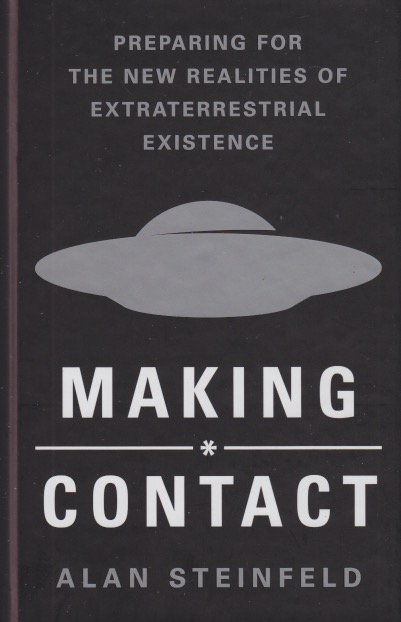
Not only does our sense of superiority go downward over the animals, it also reaches to the very boundaries of this infinite but expanding universe.  We are alone, scientists declare.  The only intelligent life in a universe far beyond the ability of the human brain to comprehend.  There can’t be any alien visitations with (laughably) superior beings crawling out of their flying saucers.  No, we were the best that evolution could do.  And we elected Donald Trump to be our president four years ago.  What’s that about an ego check?  Especially since we’ve learned that there is water on the moon.  Almost certainly there was once liquid water on Mars.  There may even be traces of life in the atmosphere of Venus (although the earthly jury is still out on that one).  Only humans can make that declaration.

Photo credit: NASA

I have to wonder at this arrogance that comes along with consciousness.  Do we believe we’re the best simply because we learned to apply the laws of rationality to our gray matter?  Back when I was a seminarian the word “pantheism” was rather like a swear.  To suggest a universal connectivity (literally) was an offense against the deity portrayed in the Bible.  (I would hope that a God that big would encourage us to understand the implications of a universe so large.)  We humans have our good points, of course.  I love people and their foibles.  Were we not so dangerous we might even look cute in the cosmic eyes above, as well as the inferior eyes of our pets.  Exceptionalism, it seems to me, ought to be the dirty word.  It seems far more human and humane to throw the gates open wide and consider the possibilities.  I love people, but if we’re the best there is, the universe is in serious trouble.


Believing Beyond

The closing line “I’ll come back to you—in the sunlight” is all I remembered from this little book.  Perhaps I hadn’t read it all the way through, but likely I did.  An unapologetic fan of science fiction as a kid, I must’ve picked up Beyond Belief at a fairly young age.  Although it’s a Scholastic book, it is appropriate for older readers as well.  I picked it up again because I start to get anxious when I can’t post about a book for a while.  My current reading projects are either very long or somewhat technical, meaning they take time to finish.  I’m running out of my ready stock of shorter books (mostly collections of stories from the time before book prices were hiked up and publishers felt the need to make them thicker so consumers wouldn’t feel so cheated.

I had put off reading this collection edited by Richard J. Hurley because of that one story I remembered.  As a kid I recognized the name of Isaac Asimov, but probably not that of Theodore Sturgeon, Richard Willey, or Richard Matheson.  These stories were masterpieces of sci-fi in its golden era.  Although they seem antiquated—perhaps even quaint—now, they are the kinds of stories that inspired young pioneers of space travel and may have contributed in some measure to this strange world in which we live.”Phoenix” by Clark Ashton Smith, has stayed with me for decades.  This tiny tome is old enough that I’m not going to worry about spoilers.  I’m only grasping for an emotional thread with childhood.

The sun has gone out.  Two young lovers talk on the eve of the earth mission to reignite the sun by a series of thermonuclear reactions.  The male, of course, is on the mission, but he assures his love that he will return to her in the sunshine.  Something goes wrong, of course.  The ship crashes into the sun, reigniting it, but annihilating the ship and crew.  As the future lady looks out on the newly illuminated world, she knows her love cannot have survived, yet he has returned to her in the sunlight.  That powerful story of self-sacrifice and love left unfulfilled stung my young psyche.  So much so that reading the other seven stories in this book was like reading tales I’d never heard before.  Beyond Belief was a quick read interjected in much more  complicated literary endeavors.  Like childhood, it didn’t fail to bring a warm glow after far too many years.