Seeking Knowledge

So, I’m doing some research into a seventeenth-eighteenth century alchemist named Johann Konrad Dippel.  He lived in what would become Germany, and had a bit of a reputation.  The first stop for information these days is Wikipedia.  Now, as any academic knows, you can’t rely on what you find on the site.  I use Wikipedia to help start my bibliography.  The references here are rather slim.  I see there’s an Encyclopedia Britannica article (1911 edition) available for free.  I check their references.  They wouldn’t have passed my 100-level courses.  They contain the initials of the authors, no titles for their books, years and cities of publication but not the publishers.  Okay, so I’ll google/ecosia the authors with just their initials.  And the years.  And the cities.  Nothing comes up.

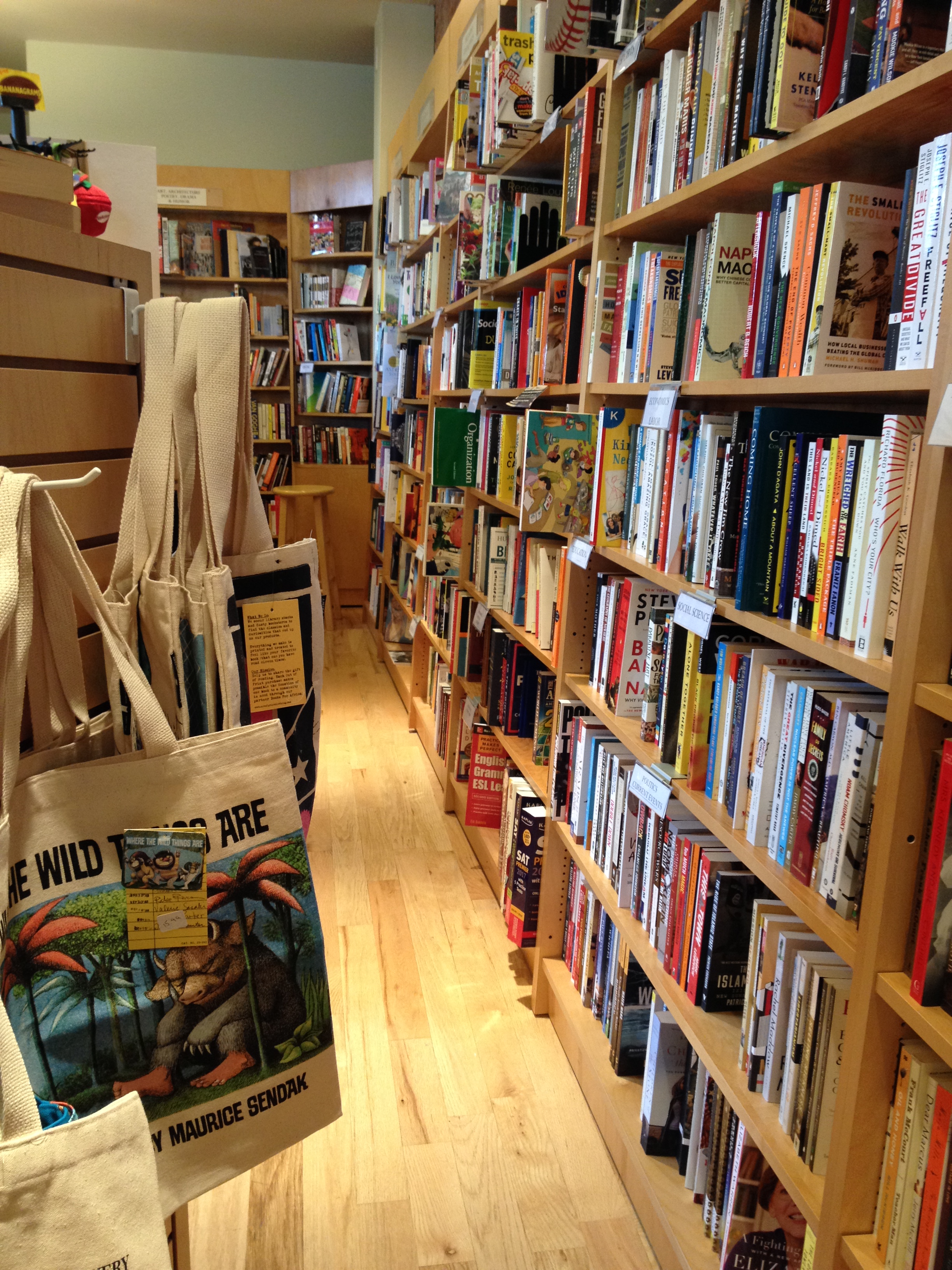
The next step is WorldCat.  It’s never let me down before.  Indeed, my first search brings up the bibliographic information on one of the mysterious, initialed authors.  (The WorldCat entry doesn’t even have a last name.)  The book is in German and the nearest copy is at Yale.  Looks like I’d better keep looking.  The next book doesn’t show up on WorldCat at all.  No combination of author (with only initials and surname), place, and date appears.  What was Encyclopedia Britannica 1911 thinking?  It’s at times like this that I miss paper research.  Although the privilege is no longer mine, roaming an academic library stack to stack, checking the card catalogue, breathing in the perfume of old books, acquiring new knowledge, these come back to me with the force of meeting an old friend after many years’ separation.

Less about the subject and more about the journey, seeking knowledge used to be an embodied thing.  I suspect somewhere in a bio-mechanical future with the internet coursing through our veins, it will seem quaint to think of oldsters like me tapping away at a keyboard and peering at a screen to find information about a nearly forgotten dead white man.  But even with all the knowledge of the web in intravenous electronic supply, will our future selves be able to put it all together?  Will they solve the problems of sexism, racism, capitalism, and dare we go any further than that?  Of will they elect leaders who care only for themselves and call on Christians to join them in deep corruption and fraud?  Or will, after some collapse, future Leibowitz stumble across a mysterious piece of melted plastic and wonder if there really was anything here before?


State of the Nation

It has been a long week.  With an incumbent who refuses to tell the truth, we’ve faced three days of knuckle-biting so far and each day stirs up the butterflies of election day.  How we could’ve become a nation that is so easily duped into following a man who’s told a record number of bald-faced lies in the West Wing (and anywhere he appears, in fact) is an inscrutable mystery.  I guess many people don’t read.  Or think critically.  This should’ve been barely a contest at all.  The Associated Press national map is seared into my eyeballs like a computer monitor left on the same page too long without a screen saver.  Going back every few minutes to check for a touch more blue.  A sign of hope.  Meanwhile, 45 is doing his best to prevent votes already cast from being counted.

We’re a nation under extreme stress.  Whoever wins will need to bring deeply divided people back together, but here’s the rub.  We know from four years of terrible first-hand experience that Trump can’t do it.  Won’t even try.  He’s already compared himself to the greatest leaders we’ve ever had.  He has no reason, and no capacity to change.  Joe Biden is about as mild a Democrat as they come.  In saner times he’d likely have been considered a closet Republican.  Still, 45’s supporters rail as if he’s some socialist seeking to overturn the American system.  Excuse me, but look at the past four years—what precisely do you think was overturned during them?  The coronavirus rages, hitting record numbers.  The response from the White House?  Absolutely nothing.

Even with this there’s uncertainty in the air.  I wonder what America’s collective blood pressure is right now?  I know my systolic doesn’t feel too good.  Any legitimate leader would never fear an honest election.  One who tries to tamper with the results has already shown his true character.  And priorities.  And so we wait.  Yesterday the lines from V kept going through my head—“Remember, remember, the fifth of November.”  I finished the poem somewhat differently but the word “treason” remained.  I could use a little fantasy just about now.  As I write this the counters are all asleep.  Biden leads in the popular vote by almost four million, a greater lead than Hillary had just four years ago.  And it is now November 6, but just barely.  At least it’s Friday.  We need to appreciate the small things as they come.


Looking to the Stars

American Indian culture fascinates me.  As my usual readers know, so does the unusual.  A few years back I read Ardy Sixkiller Clarke’s Encounters with Star People.  Clarke is an American Indian who holds a Ph.D. and had several years of university teaching and administration to her credit.  She has degrees in psychology and education.  In other words, she’s credible.  Being American Indian she’s also aware of the cultural belief in star people.  Those of European descent, often expressing their self-supposed superiority, deny such things exist.  Interestingly the mainstream media seems to have taken an interest in the subject of UFOs lately, and that is also the phenomenon that Clarke investigates in her books.  Her follow-up More Encounters with Star People: Urban American Indians Tell Their Stories is another compelling glimpse into a different way of looking at the world.

The book consists of contextualized interviews with people of American Indian ancestry, and, as Clarke points out, with nothing to gain by telling their stories.  They don’t want their names or locations to be revealed.  They don’t want money.  Many of them don’t even want to be mentioned in a book.  These stories will take you into very strange places.  Places without the filters most of Anglo culture puts before anything that might hint at the paranormal.  I’m intrigued by the nearly universal (outside a narrow European outlook) belief that the world is not as it seems.  Because European-based cultures developed the most sophisticated weaponry and an economic system that takes no prisoners, its view, by default is considered the accurate one.  Time may tell on that.

I read quite frequently about indigenous cultures.  Often widely separated and not in any direct contact, such groups often drew very similar conclusions about the world.  These views are actually shared by those of European stock, but only when carefully labeled as fiction: fantasy, science fiction, speculative stories of any sort.  All of these are widely consumed.  They are also safely considered “not real.”  I’ve been rewatching The X-Files over the past several months.  Its success and its continuing fan base show that as long as we can agree that we’re watching something not true, we enjoy monsters and aliens.  And besides, Halloween wasn’t that long ago.  Still, I wonder if we’re missing out on things we might learn if we’d be willing to consider what the original inhabitants of this continent have believed.  It would take us to some strange places, but we might just emerge wiser.


Strange Reading

The internet has changed things.  Perhaps forever.  I’m thinking particularly of the way we read.  Not just ebooks, either.  I’m primarily a book reader.  That is to say, I prefer long-format, print writing.  Since we’re fairly isolated (this applied to me even before Covid-19), one of the ways we discuss books is via social media.  There are any number of sites where this takes place such as Book Riot or Goodreads.  I tend toward the latter because that’s what publishers tend to pay attention to.  Each year I participate in a couple of reading challenges.  On Goodreads my goal is a set number of books.  But this has a hidden aspect as well.  What counts as a book?

As a matter of course I don’t count the odd Dr. Seuss book I pick up and read in a matter of minutes.  Nor do I count the many, many books I read as part of my job.  The ideal method of tracking reading on Goodreads is to use the ISBN.  Older books, especially, come in multiple editions, often with differing content.  One way that publishers make money on public domain books is by adding a new introduction or preface to which they own the copyright even though the majority of the text is in the public domain.  The first commandment of capitalism includes the phrase “what the market will bear.”  You can price up until people stop buying.  In order to get value for money, short books are often bound together with other material.  This especially applies to novellas.   Who’s going to pay ten bucks for a book of under 100 pages?

The problem is counting them on Goodreads.  In order for the ISBN to count, you really need to read all the stories in a book.  In steps Amazon.  Making it simple to self-publish, many individuals have rushed in and have saturated the market with public domain material bound and distributed by their own print-on-demand editions.  If I want to read Joseph Conrad’s Heart of Darkness, the older dilemma was you couldn’t buy it alone.  It was almost always bound with some stories I didn’t want to read.  Now, however, some savvy book smith can download an electronic copy, word-process it, format it and sell it to you at a nice markup.  And you can enter the ISBN and get credit for only what you actually did read.  This is a strange new way of reading.  Before I had challenges to complete I’d read a short story or novella and not worry about the rest of the book.  For now, anyway, my reading patterns have changed just to keep up with the challenge.


Please Vote

If you haven’t done so already, please vote.  This day has never felt so portentous before.  I’ve been voting since the 1980s and we’ve had some real unsavory choices in some past years.  Never had we had a monstrous incumbent set on destroying the very nation that made him what he is.  Those who don’t, or won’t read the facts haven’t learned what’s obvious even to lifelong Republicans I know—Trump cares only for himself.  His family confirms it.  His policies, such as they are, show it.  He provides lip service to anti-abortion while using stem cells from fetuses to cure his own case of Covid-19 that he caught only by ignoring the science that tells us masks and distancing are necessary.  Even as our infection rates pass what they’ve ever been before, he fiddles while America burns.

Some of us have noticed a profound quiet for the past week or so.  It’s like the country’s running a low-grade fever.  Republicans have been attempting to prevent people from voting, wanting a country more like them, mean and unforgiving, that they can call “Christian.”  To me this feels like 9-11 did, only we have known the plot all along and have been too stunned to do anything about it.  Democracies are founded on the principle of the choice of the electorate.  The only way that we can make that choice known is to vote.  It’s the only way left to be a patriot.

Dietrich Bonhoeffer was faced with a similar situation in his native Germany.  An evangelical Christian, he didn’t acquiesce to Hitler, glorying in the rush of power.  He wrote that when a madman is driving the wheel must be wrenched from his hands.  Bonhoeffer was hanged by the Nazis he tried to displace, but his spiritual eyesight was clear.  Faith can blind believers to the truth.  We’ve seen this happen time and time and time again.  Instead of condemning we need to help them since they cannot help themselves.  This is the truest form of what Jesus stood for.  Read the gospels if you doubt.  This year the decision isn’t for Democrat or Republican, it’s for clear-eyed assessment or self-adoring narcissism.  If a mirror’s held too close, we can’t see what’s truly reflected.  We must vote today to show what we want America to be.  The eyes of both the past and the future are upon us.  How will we want them to be remembered?


Dreamland

I don’t keep a dream journal, but with my odd sleeping habits I’m thinking maybe I should.  You see, waking in the middle of a dream is a good way to remember it.  Often I bolt awake in the middle of the action.  Well, I assume it’s the middle of the action, but how would I know?  Dreams are that way.  Whether in the middle or at the end, I wake up able to remember them in some detail for a few hours.  I have noticed a pattern over the past several months.  Not surprisingly, the characters in my dream worlds know about the pandemic.  It often plays a role in the story.  I have yet to remember a dream where the people are wearing masks, however.  They sometimes talk about it, but never do it.

The subconscious is a slippery place.  Although psychologists are often fascinated by dreams, nobody can say for sure what they mean.  One class of dream that I often have on an annual basis is the AAR/SBL anxiety dream.  The American Academy of Religion and Society of Biblical Literature annual meeting has been a fixture throughout my professional life.  Usually I have a dream where I’ve forgotten something important for the conference, such as forgetting to stop in the exhibit hall to see the new books.  I recently had my annual conference anxiety dream.  This year the conference is virtual so I’m not actually going anywhere.  In the dream I did.  And nobody was wearing masks.  The dream, however, was mainly about keeping my boss happy.  That’s simple enough to understand.

Most years I get several blog posts out of the conference (which takes place in November).  The virtual conference has been postponed until after Thanksgiving, and lengthened out by over a week.  Accommodating all those papers (thousands of them) via Zoom must be a logistical nightmare.  Since editors go to these for meeting people, there’s no reason for me to sign up.  Instead, I’ll be right here in eastern Pennsylvania, huddled down waiting for the pandemic to be over.  I’ll be wearing a mask whenever I venture off my own property.  It is my hope that others might do the same.  I read of covid-weary people burning their masks, putting themselves at risk as the number of infections continue to rise.  In my subconscious mind I’m somewhere else.  Perhaps I can convince them to wear masks in my imaginary world.  After all, anything is possible in dreams.


Is It Really Saving?

Daylight Saving Time has begun.  Or ended, I can never keep track of which.  All I know is that when I’m supposed to being enjoying another hour abed my mind wakes up at the usual time on a weekend only to find it’s even earlier than I’m accustomed to.  I ceased being able to sleep in when the commuting life began.  From where we lived in New Jersey I had to catch a bus well before 6 a.m. daily to get to New York.  Doing this for seven years set a pattern that I still find impossible to break and so I keep apologizing to my associates that no, I can’t attend evening meetings.  The morning after I can’t sleep in.  And then we change the clocks.

Many of us are creatures of habit.  Twice a year we needlessly disrupt our routines so we can “save daylight.”  What difference does it make when you’re staring at a screen all the time anyway?  Now it gets dark even earlier in the evening.  Well, that part I don’t mind so much.  I feel less abnormal when it’s dark as I get ready for bed.  An hour isn’t enough, however, to make it light when I awake.  The daylight will now last about as long as work does.  We’ve entered the darker half of the year.  Of course, yesterday was Halloween and we’re now facing All Saints and All Souls and el Día de los Muertos.  These are not all the same thing, for religion is very good at parsing things.  Still, who can help but suppress a yawn?

We’re supposed to be well rested but in reality we’re disoriented.  I’ve read that congress has been trying for years to make Daylight Saving Time permanent.  This has bipartisan support, but politicians, being what they are, keep on inserting riders that the other side doesn’t like so we continue the pointless ritual.  I know writers who stay up late to dedicate time to their craft.  Since I’m awake early I guess I’m simply picking up where they’re leaving off.  There are few interruptions at 2:00 a.m.  Soon, I know, I’ll get back into the swing of things and I’ll eventually be able to sleep in to three.  Then when March rolls around the gatekeeper will demand toll.  We’ll lose that hour we were so freely given last night.  But some of us will be tired all the time anyway.


The Halloween

Halloween seems especially portentous this year.  Some of us thrive in this introduction to what was a major set of Christian holidays that encompassed many pagan traditions.  The lynchpin was All Saints Day (All Hallows), which in good Christian fashion upheld its favorite sons (and a few daughters) to remind the rest of us what a sorry lot of humanity we are.  Followed by the more democratic All Souls Day where the vestments went from white to black, it was preceded by Halloween.  Through mostly Celtic additions from Samhain, the first of the three days became decidedly spooky and came to be a commercial holiday.  There’s more to it than that, of course, but we all know Halloween.

This year a number of other phenomena are converging on today.  Not only is it a full moon, but a famed blue moon—the second full moon this month.  It feel like something could happen.  And if that weren’t exciting enough the powers that be have decided to end Daylight Saving Time tonight (well, technically tomorrow morning).  And Tuesday is the most importation election day in the history of our nation, when we decide whether to retain democracy or become a monarchy.  Seems like a strange confluence of phenomena.  Meanwhile, outdoors a pandemic rages and some locations have had early snowfalls.  The last of what had been Hurricane Zeta blew through here yesterday.  Who needs Halloween to be scared?

For some years I’ve been contemplating the spirituality of Halloween.  We live in a death-denying culture while knowing full well we all die.  Halloween has become a holiday when we can think about it openly.  Pretend we’re someone/something we’re not.  Perhaps, if we’re lucky, we might learn something from it.  It has become a boon for horror films, but they’ve been successfully spread through the rest of the year as well.  There’s plenty to be frightened of in July and January too.  Still, there’s something about Halloween.  Some of my earliest memories are of this particular holiday.  Poor as we were, we always had costumes for the day.  I remember sitting on the school bus, wearing a mask, thinking that nobody knew who I was, and I could really be the hero or villain that my costume suggested that year.  Now we wear masks all the time and we’re frightened every day.  Halloween is coming along with a blue moon this year.  There must be some significance to that.


Wild God

Living with a Wild God, by Barbara Ehrenreich, is one of those books I wanted to put down gently after reading it, for fear that it might explode.  Or maybe it was my head I feared might combust.  Describing it is difficult because it is so wide-ranging.  On the one hand it is an atheist’s view of religion.  On the other hand it is a spiritual biography.  On a third hand it is coming to terms with having had a profound mystical experience.  It is one of those books where, knowing my life has been so very different, yet I feel that Ehrenreich and I have had so much in common that we’d be friends if we ever met.  It is also the work of a woman who is scary smart and whose teenage thoughts were so intense that my own seem puerile by comparison.

But that mystical experience!  I’ve had many of them in my life, but I don’t know you well enough to share them here.  They’ve been recorded in an unfinished book that I may or may not try to publish some day.  (Ehrenreich was smart and took a job as a journalist, which means others assume you know how to write.  Even those of us in publishing have trouble convincing agents and others who hold the keys to non-academic pricing that we understand the craft.)  Mysticism quickly becomes a staid discipline, not at all like the life-directing experiences such encounters themselves actually are.  It’s difficult to explain without sitting down and talking to you.  It’s something academics tend to avoid like Covid-19.

The books that mean most to me are like conversations with an absent author.  Drawn in by an openness, or perhaps by the fact that we’ve lived in a few of the same places over the years, perhaps passed one another unknowingly on the street, you feel that they’ve invited you into their very head.  What you find there has a strange similarity to what is in your own head, while being completely different at the same time.  We should all strive for such honesty in our writing.  In the end Ehrenreich, with a doctorate in science, suggests we need to be open.  That kind of validation is important for those of us who’ve poured our lives into the study of religion.  She was drawn in from atheism, and I have been trying to escape from literalism all my adult life.  We have ended up in places not dissimilar from each other and I’m glad to have met her through this profound book.


The Abbey

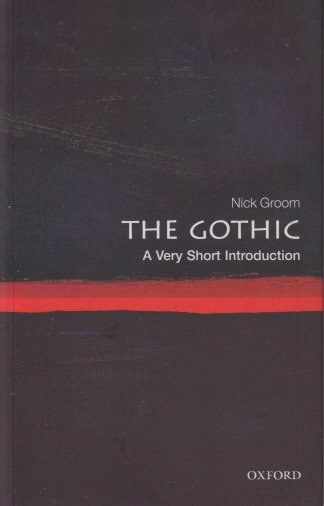
In my efforts to satisfy the Gothic longing of October—such a melancholy month—I’ve been reading Jane Austen’s classic, Northanger Abbey.  I avoided this particular title for many years because I knew that the Gothic frights were all rationally explained.  Austen was such an accomplished writer that she was able to poke fun at the Gothic genre while participating in it, at least somewhat.  I actually read this novel with no idea concerning the plot or characters.  Sometimes for works of the western canon these elements are so well known that you kind of know what to expect.  Northanger Abbey, although appreciated, isn’t often considered Austen’s finest work.  In fact, it was her first novel finished, but was only published posthumously.  As I writer I can understand that.

The story follows Catherine Morland in a satire of Gothic novels.  In fact, Catherine’s favorite book is Ann Radcliffe’s Mysteries of Udolpho, one of the Gothic standard-bearers.  The first half of the novel (pre-Gothic) sets the story up with two love triangles formed in the city of Bath.  Austen excels at making the reader uncomfortable with characters.  So much so that the second (Gothic) part of the novel ends up making one of the formerly noble Tilneys,  father of Catherine’s love interest Henry, look downright snobbish and petty.  O, the egos of the privileged!  The fact that she threw this in just about ten pages before the close (in my edition) made the ending all the more anxious.

There are no ghosts in Northanger Abbey.  No murders or poisonings took place there.  No secret manuscripts contained cryptic truths.  No secret passages led to hidden chambers.  Austen sets readers up for all of these, only to bring the conceit down in a showcase of her satirical ability.  The novel still frequently ends up on lists of Gothic classics.  I wonder if readers don’t get the satire.  I had put off reading it for many years because I knew it to be good-natured fun-poking at a genre I unaccountably enjoy.  At least I know I’m not alone in this.  I’m glad, in any case, to have finally read it.  Jane Austen was a most capable writer, a master of portraying human foibles particularly well.  The problems of the landed gentry, however, as I’ve noted before, aren’t really of interest unless there’s actually a ghost or monster lurking in the shadows somewhere.  Without monsters even an imposing abbey owned by a spoiled petty nobility is just an abbey devoid of purpose.


Dreams and Nightmares

Since posting just a few days back about the cover of Nightmares with the Bible it has now been posted on the Rowman & Littlefield website (more on that in a moment).  I’m pleased with the cover because it includes a photo I took.  It’s a little blurry, but that adds to the effect.  In the days before my commuting began, I could easily stay awake until regular hours and one autumn weekend we arrived home to find the spooky house next door all lit up, under a full moon.  I appreciated the eerie look of the situation and snapped this photo, which I’ve used a few times on this blog.  I’m not sure the house next door was haunted, but it sure looked like it.  More to the point, it reminds me of the poster for The Exorcist.  It has always been a dream of mine to have one of my photos appear on a book cover.

I also received the happy news that the book is with the printers.  That means it will soon be available.  It will be expensive, but I should be receiving a discount code that I will be glad to share.  “Library pricing” is something publishers unfortunately have to do to make books pay themselves off.  In the past several years so many books have been appearing that the bottom has fallen out of the academic library market.  Too much supply, to put it in capitalist terms.  Many publishers, however, will give discounts to individuals who want to buy a copy.  All you have to do is ask the author.  (I don’t have the discount code yet, but I will be glad to share it once I’ve received it.)

Nightmares with the Bible is being published by Fortress Academic.  A few years ago Fortress Press partnered with Lexington Books to handle their library market books, including those in the series Horror and Scripture, in which Nightmares appears.  Lexington Books is an imprint of Rowman & Littlefield.  It’s sometimes difficult to keep track of publishing houses since there has been a lot of consolidation over the centuries, accelerating in recent years.  Publishers don’t sell as many individual books as they used to and with Amazon’s arrival a new shift in the market took place.  It tends to favor trade publishers over academic ones.  In any case, that means even books written for trade readerships, like Nightmares, are priced for libraries.  If you have access to an academic library please recommend they buy a copy.  If the book succeeds in that venue a case can be made for a paperback edition.  In the meantime, the book should be, barring an apocalypse, out on schedule.


War of Egos

As an author you have to believe in your book.  Experience has taught me that if you don’t, nobody will.  Still, there are ways of believing in your book while keeping your ego in check.  Given the ego we’ve seen along Pennsylvania Avenue these last few years it may come as little surprise that even some wannabe authors can nearly match it.  The line, as professionals draw it, is balancing between the importance of your work with the realism that few books sell well.  Your best approach, as author, is humility.  Many people don’t read the professionals.  You quickly learn this if you’re in an editorial role.  It is normal to receive emails from authors telling you how important their work is, some even claiming it as an even on a cosmic scale (I am not joking).

I often consider how much pain authors could spare themselves with just a tiny bit of research.  If a publisher has turned your book down twice already, don’t submit it a third time.  (You already crossed the line the second time you sent it.)  And don’t send your proposal with a list of demands.  What I’ve noted both on this blog and elsewhere is that editors value professionalism.  We don’t like turning down books.  We don’t want to ruin a prospective author’s day.  There are, however, safeguards you can use to prevent the worst kinds of disappointment.  Rule number one is check your ego at the door.  Do you know how many books have been published?  Do you know just how difficult it will be for your book to get noticed?  Take a reality check.

Also, scale your expectations.  How many bestsellers have come from university presses?  If you’re after bestseller status you need to aim for a trade publisher.  This is pretty basic stuff.  Those of us who publish in the academic world do believe our books are important, but many of us also know that they start only small conversations.  Biblical studies isn’t exactly a growth field.  We talk amongst each other, a collegial little group for the most part.  And to keep things on the collegial level it is helpful to remember that we’re not publishing for ego.  We’re publishing to try to move knowledge ahead, even if just by a micron or two.  Good writing, I was once told, is simply clear thinking.  Getting that writing published is part of a conversation and conversation only works if  we are willing to keep our egos on their leashes.


Keep It Covered

I’ve seen it at last.  The cover concept for my book.  I’ve been manicly checking the Rowman and Littlefield (parent company of Lexington/Fortress Academic—a roadmap would be useful) webpage to see what it might look like.  I’ve “seen a sighting” at last.  Nightmares with the Bible seems to be actually happening.  As a writer there’s always some doubt involved with your book.  You wonder, will it really come out?  Will someone pull the plug at the last minute?  Is any of this real at all?  Those kinds of things.  I’ve mentioned before that waiting is a very large part of the process.  Publishing is a slow business and the world changes so fast.  I sincerely hope it doesn’t ever leave books behind.

My waiting hasn’t been idle, of course.  My next nonfiction book is well underway but I’m focusing on fiction at the moment.  I had two short stories published within the last month and I’m inclined to follow where some success shows itself.  Besides, fiction and nonfiction aren’t as far apart as is often claimed.  Seeing the cover of the book, however, nudges me back towards nonfiction a bit.  Since I’m no longer an academic it’s a toss-up.  A few colleagues like what I’m doing, but my fiction work is secret.  So the process continues, waffling back and forth.  It’s all in service of learning how the publishing industry works.  That’s one of the many things they don’t teach you in graduate school.

It’s October and I should be thinking about monsters.  Although I’ve gone through my closet of DVDs, there are many that bear watching again.  If only I could fabricate time!  One of the things I’ve noticed about this pandemic—and I know it’s not just me—is that time seems to have been swallowed up.  A simple walk down the local biking trail now requires masking up before and washing hands after.  Less than a minute of time, for sure, but it adds up.  And if you go after work there’s not enough light left to paint the porch by when you get back.  Such are the contradictions of this wonderful season.  You really can’t pin anything down.  The colorful trees put you into rapture then they’re bare.  The bright blue sky looms under relentless clouds.  You throw off your jacket one day and it snows the next.  And there might just be monsters lurking out there.  One of them, it’s said, will be released in November.  Given the nature of this season we’ll just have to wait and see.


October Reflections

The people are dressed in their finest.  The best food and drink available are spread on white tablecloths while rats scurry underfoot.  The feasters invite Lucy to join them.  “It’s the last supper,” they say, hoisting a glass, knowing that they will soon die of the plague.  This is one of the most powerful scenes in Werner Herzog’s Nosferatu the Vampyre.  It’s October and we’re in the midst of a plague.  The wealthy retain their fortunes while the poor die in the streets.  Do I really need to explain why someone so focused on religion and social justice finds horror films as able conversation partners?  My two books that relate to the topics don’t come outright and say it, but there are spiritual lessons to be learned here.

Genre is a convenient, perhaps even necessary, means of making sense of the vast creative output of humankind.  We write fiction, poems, and songs.  We film movies.  We produce these forms of entertainment at a stunning rate, especially when we consider the large number of pieces made that never find official publication.  Genre helps us sort through—this is like that, etc.  Still, some of my favorite pieces of literature, and movies, don’t really fit into neat genre divisions.  Take Herzog’s Nosferatu.  There are definitely horror elements here, but it is also an art film.  Some scenes, like that described above, are suffused with religious meaning.  When circumstances align correctly we can see it and say, “ah, now I understand.”  That was what came to me recently.  I haven’t seen the movie for years, but circumstances with Covid-19 brought it to mind.

October is a month of poetry and transitions.  We turned the furnace on only to find ourselves in the midst of a string of days reaching near 70.  The cerulean sky which looks so different this time of year suddenly disappeared with nearly a week of heavy cloud cover.  There’s beauty in the daytime and monsters in the night.  Outside lurks a plague.  Lacking the willpower to overcome it, people are growing weary of the restrictions.  We’re not used to being locked up.  The thing about the last supper is that life goes on even after it’s over.  Changed, yes, but October is all about change.  We’re anxious, wondering if it was indeed a vampire that bit us.  Meanwhile the leaves continue their journey from green to yellow, orange, and red, their litter becoming the food for next year’s growth.  Yes, there are spiritual lessons here.


Moral Imperative

It was a walk up a long, steep hill, but it was worth it.  Last Saturday my wife and I voted.  It had the feeling of accomplishment.  The long, steep hill was also a symbol.  Wearing masks, sucking breath in through fabric in the single nation hardest hit—this great rudderless ship—we went to say “enough.”  The clearest indication of evil in the present administration (and here we’re starved for choices) is the open attempt to sabotage voting.  Some GOPers are placing fake ballot boxes in public locations while the pretender-in-chief has encouraged his followers to vote twice and has tried to prevent his “fellow Americans” from having their legitimate say.  Sometimes you have to climb a high hill, but the view from the top may just be worth all that effort.

We are a suffering nation.  Not only have we become divided, that division has been stirred, and prodded, and poked by a man who knows the only way to win is to divide and conquer.  Untie what used to be the United States for personal aggrandizement.  Voting is more than a right, it’s an absolute duty.  All who do it are patriots.  In this we can be united.  Perhaps a bit winded, stop to take a look at the trees on the hills showing their true colors.  We woke up stuck in a nightmare four years ago.  We’ve lost four years of our lives.  We’ve climbed so many hills and sunk into dark, deep valleys.  Does that flag look a little tattered to you?

Back in high school we all wondered how autocrats like Hitler and Mussolini came to power.  We’ve watched it happen in a nation that was the avowed enemy of fascism within living memory.  And for what?  The right to wear red baseball caps that claim our nation wasn’t great to begin with?  Great is not the same as perfect, to be sure.  We were producing the technology (that is by definition “progressive”) that the world craved.  We were ensuring the rights of all people.  We were cleaning the environment.  What within all of this isn’t great?  How has it become better in these four misspent years of worry and weariness, bringing us to the brink of nuclear war without a thought of the incredible effort it took to build all of this.  Or the effort it took to walk up this long, steep hill.