Moral Imperative

It was a walk up a long, steep hill, but it was worth it.  Last Saturday my wife and I voted.  It had the feeling of accomplishment.  The long, steep hill was also a symbol.  Wearing masks, sucking breath in through fabric in the single nation hardest hit—this great rudderless ship—we went to say “enough.”  The clearest indication of evil in the present administration (and here we’re starved for choices) is the open attempt to sabotage voting.  Some GOPers are placing fake ballot boxes in public locations while the pretender-in-chief has encouraged his followers to vote twice and has tried to prevent his “fellow Americans” from having their legitimate say.  Sometimes you have to climb a high hill, but the view from the top may just be worth all that effort.

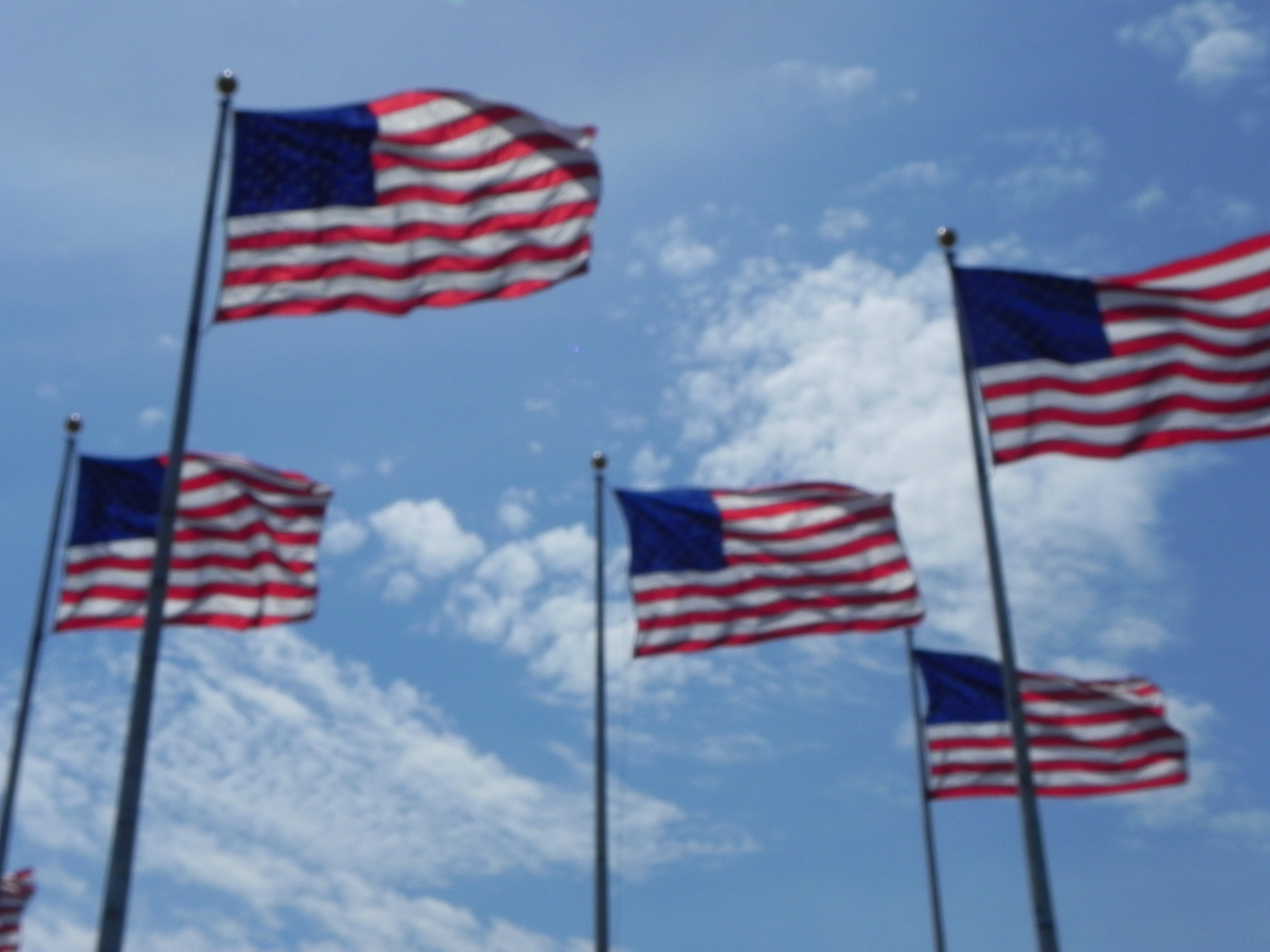
We are a suffering nation.  Not only have we become divided, that division has been stirred, and prodded, and poked by a man who knows the only way to win is to divide and conquer.  Untie what used to be the United States for personal aggrandizement.  Voting is more than a right, it’s an absolute duty.  All who do it are patriots.  In this we can be united.  Perhaps a bit winded, stop to take a look at the trees on the hills showing their true colors.  We woke up stuck in a nightmare four years ago.  We’ve lost four years of our lives.  We’ve climbed so many hills and sunk into dark, deep valleys.  Does that flag look a little tattered to you?

Back in high school we all wondered how autocrats like Hitler and Mussolini came to power.  We’ve watched it happen in a nation that was the avowed enemy of fascism within living memory.  And for what?  The right to wear red baseball caps that claim our nation wasn’t great to begin with?  Great is not the same as perfect, to be sure.  We were producing the technology (that is by definition “progressive”) that the world craved.  We were ensuring the rights of all people.  We were cleaning the environment.  What within all of this isn’t great?  How has it become better in these four misspent years of worry and weariness, bringing us to the brink of nuclear war without a thought of the incredible effort it took to build all of this.  Or the effort it took to walk up this long, steep hill.


Ode to Bookstores

The pandemic has changed everything.  You knew that, of course.  Like many people in fields of regular job uncertainty, we’ve curtailed spending as much as we can.  Never very securely established after Nashotah House, we’ve managed to get by by not thinking too far ahead.  I can’t imagine retirement (if there’s still a job left to report to).  Even more, I can’t imagine a life without books.  The only way I get through each day is by trying not to think about it.  Still, I miss bookstores.  Pre-pandemic, when jobs at least felt somewhat secure, we’d often nip into one of the many local independents of a weekend.  Missing browsing shelves sorely, we stopped into Book and Puppet over in Easton, when on a trip to buy produce at the outdoor farmer’s market.

It felt strange, the thought of going into a store that wasn’t dedicated to groceries or hardware.  Masked, of course, but would there be lots of people there, crowding the air with germs?  No.  There was maybe one other customer in the place.  I have to admit that I was a bit disoriented, trying to read over spines on a shelf, not wanting to touch anything.  I’ve tried hard to curb any spending during these highly uncertain times, but could I imagine a world with no bookstores?  Would I even want to?  Books, you see, give me hope.  My vision of heaven is October and a never-ending stack of books (and, of course, friends).  Books allow for escape and exploration.  Life will continue after the pandemic in books.

The fear has gripped many of us, I suspect.  I’m old enough to retire, but not well-off enough to do so.  Our house requires a two-person income at our level (highly educated, under-employed), and the pandemic rolls on.  I think of the Black Death—I’ve read about that too—and how history changed because of it.  In this pandemic we’re dying (all but the wealthiest) piece by piece.  The most vulnerable first, of course, but the middle class may well be in the sights.  The owner of the bookstore said he wasn’t sure how long he could hold out.  Just last year at this time I was participating in the Easton Book Festival that he’d organized.  I had a book-signing at the nearby Moravian Bookshop.  I can’t remember a time I felt so hopeful, knowing I had another book coming out, and if we survive long enough, another after that.  I really shouldn’t, but I’m in a bookstore.  I’ll buy one in hope that the future may just offer a place to keep it.


The End of Snow Days

It’s a chilling thought.  An article in the New York Times said it, but we were all thinking it.  Snow days may well have become another victim of Covid-19.  No, it’s not snowing yet (but give climate change a chance!), but New York City schools have figured out that if students can learn from home then one of the truly treasured memories of our youth may no longer be necessary.  In fact, snow days ended for me when I began working remotely.  My supervisor had suggested, even before that, that I take my company laptop home daily, in case of inclement weather.  The idea of awaking, wonder-eyed, at the world covered in white—that cozy feeling of knowing you had no obligations for the day but to enjoy the pristine world out your window—is a thing of the past.

Technology has changed our lives, and some of it is even for the better.  It hasn’t made work easier for some of us, but has made it longer.  We used to talk about kids and their continuous partial attention, but now work is always at home with you and that time signature on your email says something about your work habits.  As the days are now shorter than the nights, as they will be for six more months, finding the time to do what you must outdoors (it may be cooler, but lawns still insist on growing) is always a bit more of a challenge.  And when the snow does fall you’ll still have to shovel the walk.  All time has become company time for a truly linked-in world.

The real victim here, it seems to me, is childhood.  Snow days were a reminder that no matter how strict, how Calvinistic our administrators wanted to be, the weather could still give us a smile now and then.  A legitimate excuse not to have to go to school and, if parents couldn’t get you to daycare, a day off for everyone.  The strict number of limited holidays allotted by HR had limited power in those days.  Although we all know that well-rested, happy workers tend to do better jobs than those who are constantly stressed out and who have trouble sleeping, we’ve now got the means to make the sameness of pandemic life the ennui of everyday life, in saecula saeculorum.  Thanks, internet.  At least now we work where we have a window and can look out on nature and can see what we’re missing.


Hot Breakfast

Cooking in a pre-dawn kitchen has a certain appeal as the weather cools.  Knowing that something with warmth will set you right before the nighttime cold forces the furnace on for the next six-to-nine months.  After a recent tooth extraction I was told to keep on a soft diet until the wound healed.  A fan of crispy breakfast cereals, I faced a new dilemma—what to eat before work?  Being vegan means bacon and eggs won’t do (there is passable vegan bacon available, but so far the plant-based eggs haven’t managed not to taste like mung beans).  On a recent frenzy of nostalgia I had purchased a box of (now mostly empty) farina.  Often known by its commercial name “Cream of Wheat,” farina is more like flour and milk (many vegan options available) but with a better texture than paste.  It reminded me of childhood Saturdays.  Then the box was empty and grocery day was the better part of a week away.

Grits seemed a little more challenging.  The particle size is larger and might cause problems in the healing wound.  Still, I gave it a try.  Since my father was from South Carolina I grew up eating things like grits and black-eyed peas.  This makes for a hearty breakfast as long as you keep the grits on the other side of your mouth.  When the black-eyed peas were gone, I turned to oatmeal.  Bigger pieces yet, but still soft.  Oatmeal works best with some kind of sweet accompaniment.  Brown sugar and cinnamon is a standard. Sweets bother my teeth, however, so I need to be careful there.

The problem with all of these options is that one serving of these hot cereals was too little to keep me going.  I wake early and eat breakfast early, so I need about six hours of energy from this meal.  Two servings are too much.  Ratios are beyond me.  So I turn to my religious roots.  Whenever I think of breakfast I’m reminded that our cereal-eating culture (hot or cold) was largely influenced by Seventh-Day Adventist sensibilities.  Adventists are vegetarians, and some prominent among them by the name of Kellogg launched massive, religiously motivated campaigns to have the day begin with grains, back in the day.  It stuck.  I suspect Kellogg was good with numbers.  I wish I could figure out how third-cups and quarter-cups relate to one another.  Like most things in life, it’s falling midway between that is difficult.  It’s chilly in here and I too hungry to do math.  At least the religion part I partially understand.


Electricity

After the oven incident (see last Monday’s post), I took some time to examine the burned out bake element from the range.  Clearly a break in the piece led to some arcing like you might get in Frankenstein’s laboratory.  By the time I’d arrived on the scene (I always seem to be behind my time), the fire was snaking along the element itself and now that the piece is cooled and removed I was fascinated by the damage it caused.  I suspect this is why I leave any electrical repairs to experts.  This is dangerous stuff.  Interestingly, in the realm of monsters electricity is most frequently associated (in my mind, anyway) with Frankenstein’s creature.  Mary Shelley’s novel isn’t explicit about how galvanism resurrected the patchwork human, but it was clearly part of the tale.

Electricity retains a certain element of mystery for some of us.  If we stop and reflect on how recent our understanding and harnessing of it is, that further adds to the drama.  People have been thinking about and trying to understand religion for thousands of years.  Like early electricity, religion involves invisible forces.  Of course, lightning and sparks and arcing oven elements can be seen, but seeing isn’t the same as comprehending.  We are a curious species and we want to understand.  Being inside the situation, however, our understanding will never be complete.  We can get a pretty good grasp, a functional one even, but our brains will always limit just how much we can understand.

It should come as no surprise that those of us who chose to study religion are intrigued by mysteries.  The divine, the transcendent—no matter what you want to call it—can never be fully understood.  Thus the impatience with evangelicals and others who pretend they’ve got all the answers.  No, we’re all still attempting to get to the bottom (or top) of this mystery.  Like electricity, religion can do an enormous amount of damage.  Motivating those who have only a cursory understanding how it works has historically led to debacle after debacle.  It has generated wars and perpetuated human misery.  Like electricity, when used properly religion has done a tremendous amount of good in the world as well.  The thing is, as my bake element shows, we have all come to learn that electricity should be handled by those who know what they’re doing.  Ironically, religion has never gathered the same level of respect for the specialists.


The Good of Others

On a recent trip to visit family in upstate New York, the Sunday we had to leave (for work Monday is an implacable law), we decided to have lunch in a local park.  The weather was fine and there was plenty of social distancing, given the size of the grounds.  After a nice picnic and stroll, we realized it was getting late to start out in order to get home by my oddly early retiring time.  We headed back to our hosts’ car only to find it wouldn’t start.  They had a new battery and so we popped the hood and hoped to find something obviously wrong as we waited for the long response time for AAA in a rural area on a weekend.  We were a little concerned because we still had a long drive and no real way to get back to our own car, parked at our hosts’ residence.  A stranger came up and asked if we were having trouble.  Listening to the symptoms he said, “Do you mind?”  Putting his head under the hood, he said, “I’m a mechanic.”  He had our host try again and the car started right up.  He refused to take payment and wouldn’t even give his name.

Despite the fear the Republican Party tries so hard to spread, it has been my experience that good Samaritans abound.  When I’ve had car trouble far from home, I’ve never waited long beside the road before a stranger has stopped and asked if they could help.  Technology may make us feel more self-sufficient (we have smartphones and can call for our own help), but it doesn’t always work that way.  My wife had accidentally left her phone at our hosts’ place, and I’d forgotten to charge mine so the battery was depleted.  Uber would require an active, charged phone and our hosts were using theirs to communicate with AAA.  If the stranger hadn’t stopped by we would’ve been stuck, likely for hours.

I oftenconsider how Calvinistic GOP thinking can be—assuming the “total depravity” of everyone and declaring that we must be kept in check by laws that maintain outdated concepts of both humanity and justice.  To be sure, there are dangerous individuals out there.  Would you want Trump to stop by if you were having car trouble?  What selfless behavior could you expect from that quarter?  Sucker!  In general, however, people are good.  They are motivated by what they think is right.  We’re in a pandemic.  The mechanic didn’t know us (we outnumbered him), he had no obligation to help.  Good Samaritans exist, and they are frequently found outside the yellowed leaves of Scripture.

Balthasar van Cortbemde – The Good Samaritan, via Wikimedia Commons


No Way Out

Racism is evil.  The grading of the shading of humans degrades us all.  Robin DiAngelo knows much about the subject and as we watch Trump rally the openly racist, she gives us all pause for thought.  Our entire culture is one of white supremacy.  Progressives, determined to combat it, are also part of it.  White Fragility is not an easy book to read.  It allows no escape for anyone “white” to use.  We must confront our racist culture and admit that we benefit from it.  When we try to explain that we’re misunderstood, she anticipates.  She has heard it all before.  The only thing we can do is confess, interrupt, and try to break down the system that continues to support the systemic evil we’ve embraced.

One thought occurred to me as I was reading.  No doubt DiAngelo would suggest I’m deflecting, and it may be that I am, but those of us who struggle with a perpetually low self-image, even if “white,” may not participate in feeling superior to anyone.  There are individuals whose natural assumption is the superiority of others.  I’ve experienced it time and again in my professional and personal life.  I assume the other is more adept and worthy than me.  In such circumstances a bit more carrot and less stick might’ve been helpful.  I know many both at work and more voluntary activities, for whom a word of encouragement is rare.  For those of us who assume the superiority of others, such encouragement goes far.

Even as I was thinking this I saw a post on Nextdoor.com.  The app, intended to help you find contractors or dentists or whatever, receives many posts on all kinds of topics from identifying animal droppings to alerts regarding crime.  The post to which I refer was from a security camera showing a “prowler.”  The young man seemed more to be walking than prowling to me.  His skin tone and the time of night led to a string of assumptions built on assumptions.  Since I’m often awake just an hour after the alleged “prowling” took place, I knew that were I caught on a security camera I’d merely be considered an insomniac.  Add some melanin and some racism and suddenly a walker is a prowler.  The words I was reading in White Fragility hit me with incredible force.  We have a massive amount of work to do.  “White” people have to own their history.  Own it and overcome it.


Back to Tarrytown

The very name “Hollow” takes me there.  It’s a resonant geonym.  Near Franklin, Pennsylvania, my early hometown, runs a route called Deep Hollow Road.  For me, with its lush, thick trees and shadowed valley, it always exemplified what the term “Hollow” intended.  And of course, there was Sleepy Hollow.  Now that my article on various movies based on the Irving story has appeared in Horror Homeroom (it’s free), I’m again thinking about my dance with that particular story.  In fact, after I submitted the article I watched yet another version of the tale, Pierre Gang’s 1999 The Legend of Sleepy Hollow.  This film on Sci Fi (before it became SyFy) purports to follow the original closely.  It nevertheless has to pad out the story and does so with religion.

Religion—specifically the Bible—and the tale as represented in Fox’s four-season series Sleepy Hollow is what started me on the current leg of my journey.  I sent an article to the Journal of Religion and Popular Culture on the topic and when it was accepted I expanded the idea into the book Holy Horror.  So it is that I’ve tried to watch as many versions of the story as I can.  There have been many made-for-television renditions.  Some are available for free on the various services that draw from my pocket monthly.  Others cause me to debate whether I want to pay for seeing a sub-par effort for the sake of completeness.  The scholar’s heart still beats within me, I guess.  The Gang version expands the story with a church scene, not in the original tale.  To inculcate the Bible, however, Tim Burton’s film of the same year was necessary.

For me no story better encapsulates October.  Perhaps it’s the crucial role of the pumpkin.  Perhaps it’s the ambiguity of the headless horseman himself—is he a hoax or something more?  These kinds of questions are answered by various filmmakers but since the viewer ultimately decides the question is left up to us.  If I were still an academic my next book project would be clear.  Instead I’m trying to bask in the wonder that is October—the season of transition from bright blue skies and colorful leaves to long, chill nights and bare trees.  Our time outdoors becomes more focused so that we might get back to the warmth inside.  And if we’re looking for a tale to read that’s not really that scary, but which captures the ghosts of the American imagination, “The Legend of Sleepy Hollow” beckons.


Hypersensitivity

Tell people you’re hypersensitive and the first thing they’ll say is “I’m sorry.”  The way I use the term is, however, somewhat literal.  Some of us experience sensory input in especially intensive ways.  Psychologists say that those of us who do often stop and assess in new situations.  We can become overstimulated and sometimes “shut down” if too much is going on.  It doesn’t mean I’m going to burst into tears if you insult my haircut.  (It’s homemade, we’re in a pandemic, after all.)  The reason I bring hypersensitivity up at this point is two-fold.  The first fold has to do with the fact that I no longer get out much, which means much of the “ordinary” now seems new.  The second fold is that I wonder if hypersensitivity had a role in leading medieval people into monasteries and convents.

Back to point one.  If sensory stimuli can overwhelm one, going back into TMI territory can be almost traumatic.  I commuted into New York City for about seven years.  Manhattan is difficult for a hypersensitive person to take.  Over time I became accustomed to it, and familiar environments are more easily navigated.  The pandemic, however, has me spending about nine or ten hours a day in the same small room at home.  Actually, working remotely had already done that, but I used to get out on weekends.  We recently took a safe weekend trip, stopping only at places with few people and staying with family.  Less than 24-hours out from home I realized I was feeling overwhelmed.  Too much interaction.  We had stopped at a town I’d never visited before.  The trees were spectacular.  I soon regained my bearings, because no matter how late I stay up, I still awake early to write.

This leads to the second point.  I suspect things moved much more slowly in Late Antiquity and the Middle Ages, but I can see why certain individuals might like to cloister themselves.  While I disagreed with the theology, I taught for fourteen years at Nashotah House, a cloistered seminary.  You saw the same people day in and day out.  The campus was suspicious about this thing called “the internet” for quite a long time.  You ordered books through the mail and waited a month or more for it to arrive.  In some ways this was a comfortable existence.  Of course, it blocked me from much of what was happening in the wider world.  The pandemic has, in some measure, brought me back to that space.  I wonder if, historically, they might be connected.  But right now it’s time to get to my ten-hour room and work.


Gothic Tales

Each year when autumn worms its way into my consciousness, I begin looking for the ideal gothic book.  I can test this by looking at the Goodreads lists of best gothic novels and noting how many of them I’ve already read. The thing now, since I’ve already covered much of the canon, is to discover modern writers who can still evoke that feeling I seek.  This is all complicated by the subjective nature of what readers term “gothic.”  Many of the books on the lists don’t fit my own working connotation, so I keep looking.  One recommended title was Jennifer Giebrecht’s debut novel The Monster of Elendhaven.  I’m still trying to decide whether it is gothic or not.

It’s a little hard to classify, actually.  It certainly has some gothic elements, as well as some horror.  There are secrets and plagues and gruesome murders.  There is a monster from a polluted sea, but not quite your grandfather’s monster.  A human monster.  Or at least partially.  The tale is written with some tongue in some cheek.  There are funny elements and there are many serious moments.  There’s magic and mayhem.  If I were to try to characterize it the closest I might come would be a Tim Burton treatment of horror.  Like Burton, Giesbrecht creates a Halloween mood, but sometimes the humor undercuts it.  This makes it difficult to pin down the work as a whole and figure out if this is the gothic I’ve been seeking.

Set in a time difficult to define and in a fictional nation, it is the kind of novel that can be read without much consequence.  The references to the Allfather make comparison with Nordic regions natural, and there is perhaps a touch of Beowulf here.  In crafting the monster Giesbrecht has made a pretty unlikeable character.  He is a monster, after all.  But not a sympathetic one.  As in other modern treatments he is a stand-in for chaos.  There’s also an environmental sensitivity here.  The monster arises from a polluted sea that derives from, of all things, human greed.  So maybe there’s a parable here.  A short book, it doesn’t take too much of a time investment, but it may leave you wondering what exactly it is that you just read.  It is dark, and gritty, and fun.  A nice combination for an October night.  Is it gothic?  That one’s a little harder to answer.  It depends on how I’m defining it on any particular day.


Tooth Less

The words “difficult extraction” are not what you want to hear, seated in a dentist chair.  Fortunately mine was not difficult.  I’m squeamish about most things, and like many kids raised in humble circumstances, experienced dental care at the largess of various government programs.  I remember going home nearly every time in a state of shock regarding how much it hurt and what he had done to us.  It has taken a lifetime to get over the fear of the dentist.  Now I patronize a local female dentist who is gentle and caring—something that didn’t exist, and we couldn’t have afforded anyway, when I was a child.  Even so, she’s telling me a tooth has to come out.  I’m being stoic and starting my meditation mantra.

Health care in the United States, as Trump’s recent treatment for a virus to which he carelessly exposed himself shows, is horribly uneven.  Those who are systemically kept poor—especially those who are “of color”—often have few choices and die younger.  Yet supporters of 45 see no problem with this.  Now, I wish I weren’t in this dentist chair right now.  I’m not looking forward to the novocaine shots or the tugging on my jaw.  Or the hours of gauze in my mouth afterward.  But at least I can afford this.  It pains me even more that there are others who can’t.  And that those who claim to follow a man who healed for free are voting for a man who has pledged to keep inequality as “the American way.”

I grew up taking care of my teeth the way the poor often do—that is to say, not enough.  The solutions involve education and empathy, both of which our government has chosen to eject for jingoism and bravado.  I’m not so much worried about having one tooth less.  I am worried about a government that feels it has the right to oppress the poor so that the wealthy can continue to gain more money that can, in turn, be used to control the government.  This is wrong.  There’s no way that it can be made to be “Christian,” no matter what evangelicals may say.  I’m sitting here in the dentist chair and the needle’s getting closer.  I’ll have a mouth full of gauze for the next few hours and I’ll be on a soft food diet for a while.  I may be in some pain.  But still I know I’m one of the lucky ones.


Just Joking

I’m not sure when I’ll ever get back into a movie theater, given that our government plans to do nothing about Covid-19.  Still, I recently watched Joker for the first time.  In an eerily prescient move, Todd Phillips envisions the character as tapping into public dissatisfaction with the exploitative and unfeeling power of the rich, who often lead, through their greed, to outbreaks of public unrest.  The character of the vigilante clown coalesces the oppressed of Gotham and leads to riots in the streets.  I wasn’t quite sure what to expect of the film since I’d only briefly heard of it secondhand.  It is one of the most uninterrupted stretches of darkness that I can recall seeing in a movie, which, in some respects, makes it believable.

Comic book character films have taken on a life of their own.  Joker explore the backstory of mental illness in a culture that is bent on cutting care for those in need.  Not only that, the movie doesn’t let you think anyone is good.  All the heroes are flawed, and most of them fatally so.  Joaquin Phoenix’s acting, of course, solidifies the story and make the Joker sympathetic.  And there’s a fair amount of truth to the way that a capitalistic society is driven to hold down the many who need to be exploited for the system to work.  Although it is dark and gritty there’s a strong social commentary here.  It doesn’t surprise me that it was the highest grossing film of last year.  You don’t have to be a comic book fan to be drawn in.

Not too many other major films since One Flew over the Cuckoo’s Nest have attempted to stare unwaveringly at mental illness.  It is an extremely common condition, especially if we consider the number of people who require antidepressant, anti-psychotic and anti-anxiety drugs.  The culture we’ve created isn’t healthy for our mental development.  It’s often cruel and uncaring.  It never helps when people lie to us.  Joker addresses these  realities, exploring the “perfect storm” of factors that might lead to a psychopathic crime lord.  Of course, living through the Trump administration, led by an unfeeling, money-driven “president,” it’s obvious that we’ve set up a system that refuses to confront those who have no business making important decisions.  A system that could conceivably set up such pathological “leaders.”  None of the privileged people in the film cares for anyone beyond themselves.  And they wonder why violence erupts in the streets.  I think I have some recommended viewing to suggest to them.


Fire and Ice

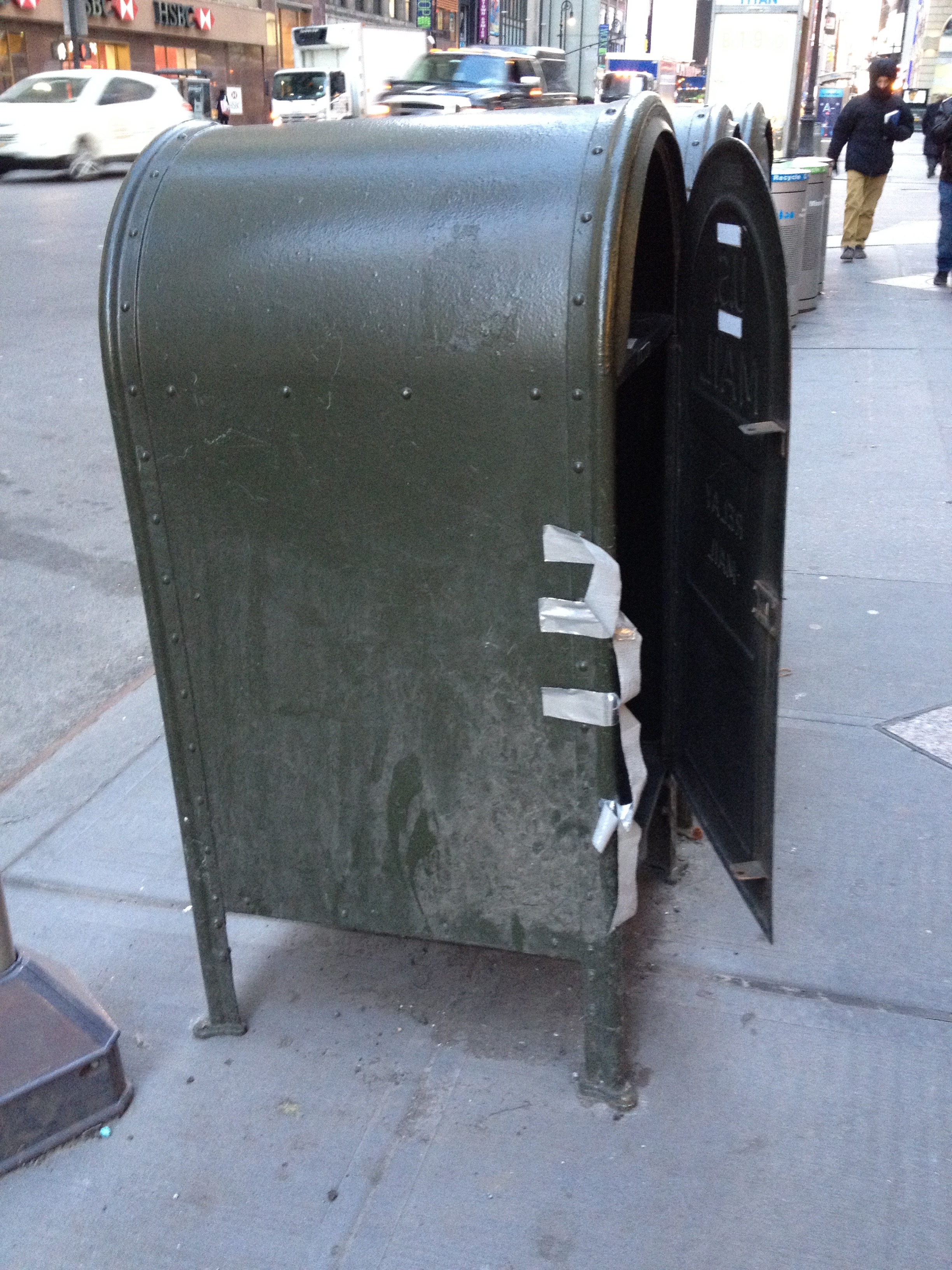
Most people in our modern world consider a cooking device an important part of a household.  Many of us are also over-committed.  These two elements came together last week when our kitchen stove (“range,” I’m finding out, is the correct term) burned out.  We could tell when we bought our house two years ago that the previous owners had likely not replaced any appliances.  The refrigerator died our first year.  Now, in our second, the stove—excuse me, range—went.  Given that it’s turned cooler around here, a good hot meal in the evening has been a welcome relief, but with no stove how do you cook it?  This happened on a Tuesday.  My wife and I compared calendars.  The closest evening we could both get out to look for replacements was Friday.  Of course, once you shell out the money you also have to wait for delivery and installation.  It looked like at least a week without home-cooked food.  Grocery shopping, of course, had been on Monday.

It occurred to me how utterly dependent we are on our big appliances.  The refrigerator died just before a holiday weekend in pre-covid days, so we were on our way out of town when it happened.  A lot of food had to be wasted.  It took about four days before a new one could be delivered, and we had to cut short our trip to be here in time for the installers.  Food.  Unless you’re living on granola bars and trail mix you need to keep it cold or keep it hot.  Our ranges and refrigerators do the heavy lifting for us.  Our ancestors stuck things in the cellar to keep cool and chopped wood to keep what is properly called a “stove” hot in the kitchen.  It was pretty much a full-time job just to survive.  Now nightly Zoom meetings make any interruption of online connectivity difficult.

Weekends, given the circumstances, are gems.  They are the only time we can get things done.  Days are eaten up by ever-expanding work by people desperate to keep their jobs in a tanking economy.  Supply chains, interrupted by the virus, meant that a delivery of a new range would only happen in January.  Going without food until the new year steered us toward a DIY appliance repair solution.  I never thought I’d be sticking my head in an oven, but here I was, with a new part ordered from Amazon and the confidence of the friendly people on YouTube telling me I could do it.  Taking days instead of months, we were cooking again by Sunday, and I just might’ve learned something along the way.


Watery

Having watched What the Bleep Do We Know? a few weeks ago, I became curious about Masaru Emoto’s The Hidden Messages in Water.  The book is highlighted in the film, and in a world where money decides truth, the fact that it was a New York Times bestseller must count for something, right?  I am of a skeptical bent, but I like to keep an open mind.  This itself is a delicate waltz at times since just about anybody can make truth claims and find a following.  Curiosity, as they say…  So instead of critiquing Emoto’s obviously slipshod methodology, I want to reflect on whether he really might have been onto something.  Many people around the world thought so, after all.

What it comes down to is water.  If you haven’t seen the movie or read the book, I owe you a brief explanation.  Emoto suggests that water crystals reflect the influences to which they’re subjected.  For example, water frozen as classical music plays forms beautiful crystals.  If heavy metal is played, it doesn’t.  Water frozen in beautiful surroundings forms beautiful crystals.  If that’s not controversial enough, Emoto suggested that emotionally freighted words typed on paper wrapped around the water bottle as it was frozen would reflect the emotions on the paper.  There are lots of problems here, but what I wonder is if water might not somehow be related to consciousness.  Emoto makes that claim, but since science can’t yet explain consciousness there’s no way to test it.  Could it be that water is a recording medium in some way?  Without raising the woo factor too far, some ghost hunters (it is October, after all) suggest moving water has something to do with “recording” spirits.

Like most critical readers, I left Emoto’s book not at all convinced.  I also left thinking that we shouldn’t throw the bath water out with the baby.  There are crazy ideas in the book, for sure.  But there may also be just a hint of insight as well.  That insight comes in the recognition of spirituality as an important aspect of human life.  The book was a bestseller.  Not all people are credulous.  We are, however, spiritual.  Many deny it.  Some violently rail against it but still have feelings along with their rationality.  Water can lift spirits.  The negative ions of breaking water tend to make people feel at ease.  We visit the coast where waves break against beach or rocks.  We visit waterfalls where cascades scatter water particles.  Even a fast-flowing stream will do.  Emoto clearly went too far with his ideas, but I think, deep down, he might’ve been onto something.


Twain Shall Meet

On a slightly hazy fall day, when the autumnal colors were alive, we stopped in Elmira.  To understand the significance of this stop, I should explain that from the time my daughter could appreciate it (and probably even before) we used to make fall literary trips.  We would take a long weekend and drive to where a famous author had lived.  Laura Ingalls Wilder in Pepin, Wisconsin, or Mark Twain in Hannibal, Missouri.  When we moved east we visited Edna St Vincent Millay at Austerlitz, New York, and Washington Irving in Sleepy Hollow.  More recently, in the spring, we went to see Rod Serling in Interlaken, New York.  So it was that we stopped in Elmira, New York, where Mark Twain rests.  I had always assumed Samuel Clemens was buried in Missouri, but his most productive literary period was his time in upstate New York, and it is here he remains.

His tombstone was covered with pennies and a few higher denomination coins, a rock or two, and a guitar pick.  People want to show their respects to the writers who’ve meant something to them.  I find this a moving tribute.  I suspect it happens at the tombstones of many famous people, but in Highgate Cemetery in London we found Douglas Adam’s small plot filled with pens stuck in the ground as mementos.  I travel through the world lightly, seldom carrying anything extra with me.  Somehow I never stop to think to bring a memory to the cemetery.  Fortuitously I had found a penny on the ground the morning we left for Elmira and I placed it among the others on Twain’s marker.  

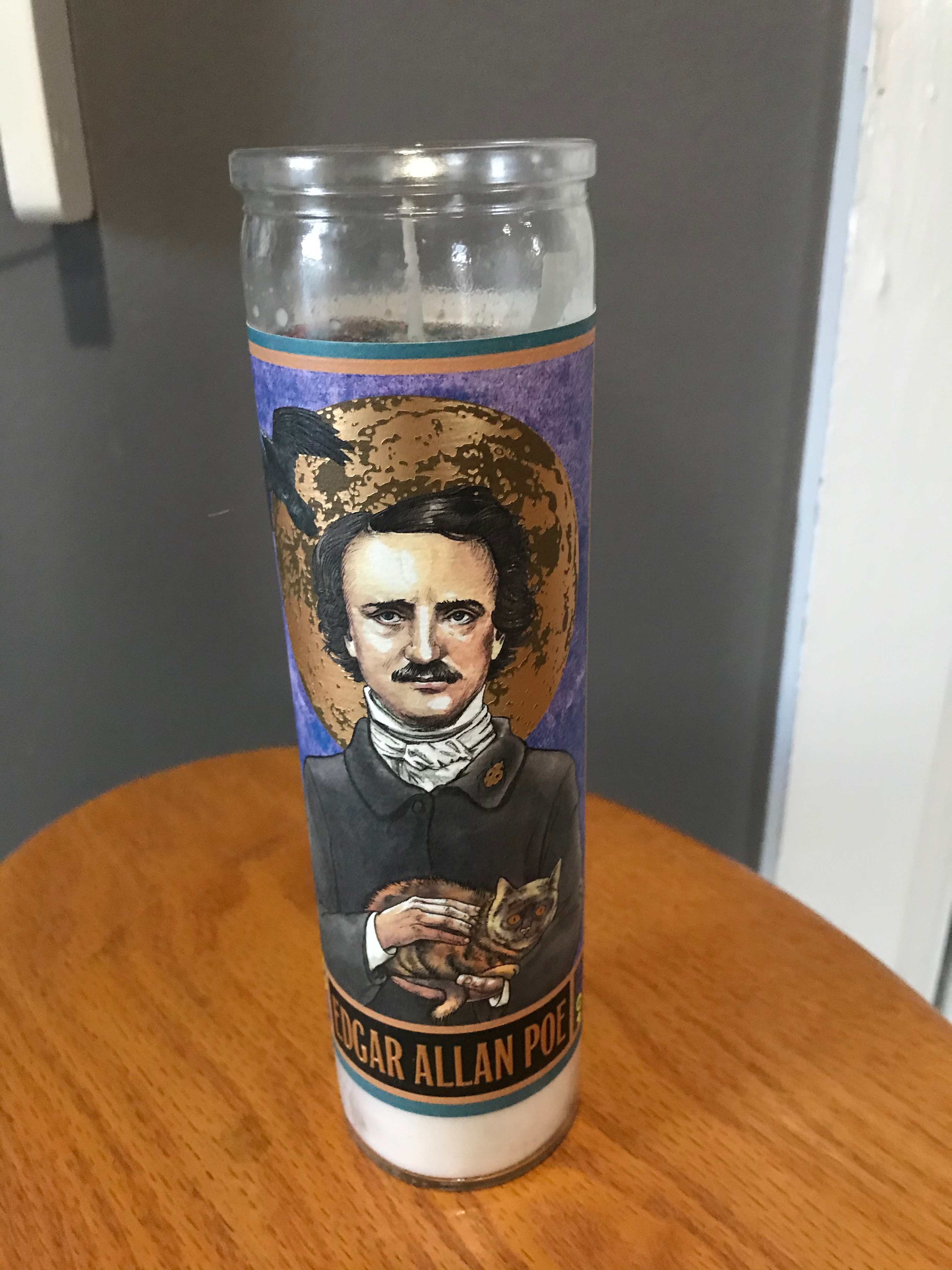
What would make the appropriate calling card to leave?  I often wonder that.  If I had such a token, I suspect I would feel the need to revisit the various cemeteries of years past to leave a sign of my respect.  There are lots of them.  Edgar Allan Poe in Baltimore.  George Orwell in Sutton Courtenay.  H. P. Lovecraft in Providence.  Is there anything that ties them all together?  Pens seem an obvious choice, but stones are far more traditional (especially in Jewish settings).  The tradition is traced back to building cairns in biblical times, and the idea survives in that stones are more permanent than flowers and are a sign of respect.  Writers often have more elaborate items left, but it’s clear that they are removed from time to time by the grounds keepers.  Before I visit my next literary grave, I’ll give some thoughts to symbols and tokens and the importance of celebrating writing.