Anneliese or Emily?

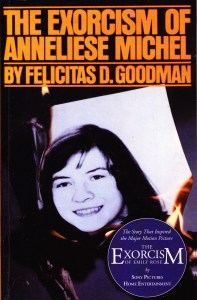
If it weren’t for the movie The Exorcism of Emily Rose, the name of Anneliese Michel would undoubtedly be less recognized than it is. Probably the first exorcism movie since The Exorcist to move the genre in a new direction, Emily Rose was based on the real life case of Anneliese Michel. There were significant differences between film and reality, however. Michel was from Bavaria, and she died at the age of 23 rather than being an American teenager like Emily. The story caught media attention because it was discovered that Michel had died after an extensive, months-long exorcism. Charges were made and the priests and Anneliese’s parents were found guilty of negligent homicide. The movie plays the whole thing out in the courtroom with flashbacks of the possession.

The book which led to the film was The Exorcism of Anneliese Michel, by Felicitas D. Goodman. Goodman, who died in 2005, was a rare academic who wasn’t afraid to address the supernatural. Trained as a linguist, she had years of anthropological fieldwork experience and a medical background. She was also not dismissive of religious experiences. Naturally, this makes her suspect among academics, but her treatment of Michel’s case is both sympathetic and masterful. After narrating events pieced together from court records, diaries, tapes of the exorcism, and information supplied by some of those involved, she offers her own hypothesis of what actually happened. Anneliese Michel was a religious girl caught up in a religious altered state of consciousness that was treated scientifically by drugs. The result was fatal.

Throughout history, and even today, shamanistic persons exist. Whereas in tribal cultures they tend to become prominent, in the “developed world” they are often quite hidden. They experience what Goodman calls religious states of altered consciousness, and are sometimes misdiagnosed as requiring chemical healing. There have been many thoroughly documented cases where such individuals do “impossible” things. The rationalistic world has no place for them, however, for like capitalism, materialism takes no prisoners. Religion is part of who we are. Human beings do have spiritual needs. Such needs can be placated by other means at times, and we can continue to believe that everything in this universe is made of atoms, or super-strings, or quarks. Or we can perhaps admit that theres’s much we do not know. Goodman admits that her solution is an educated guess, but it does put all the pieces together rather nicely. And she doesn’t declare unilaterally whether demons are physical or not. In the case of Anneliese Michel, however, they were undeniably real.


Dominus Flevit

I couldn’t believe I was actually there. Ever since I was a child I’d read about this place. The city conquered by David and visited by Jesus. The city around which most of the Bible rotated. Jerusalem the golden. One of the perks of working on an archaeological dig was the opportunity for weekend travel, and here I was, amid camels and cars and churches and synagogues and mosques, in Jerusalem. No amount of reading prepares you for such an experience. Suffused with the rich mythologies of three major religions, this city is like a dream. So much had happened here. The church I was attending at the time was only the latest in a long succession that informed me that God himself had actually been killed here and had risen again. The ultimate game-changer. The once in forever event of all time had taken place right here.

Gnu Jerusalem from WikiCommons

But this was not a city at peace, despite its name. There was a bombing the first weekend I was there. Young men and women in military garb carried scary looking weapons openly in public. Even civilian bus drivers wore pistols. Jerusalem had a long history of violence, but that didn’t justify it. If God had really been here—in either Jewish, Christian, or Muslim contexts didn’t matter—how could this city be so prone to terror? In the old city old men sat around hookahs, placidly smoking. Tourists, many bearing crosses, thronged. Jerusalem, however, was also a very political place. The fragile, Christmas bulb-thin peace of the region involved the city being divided up and not being claimed by Israel alone. Even that man driving his goats through these ancient streets knew that.

Trump, to the cheers of evangelicals who want nothing so fervently as the end of the world, has said he’ll recognize Jerusalem as the capital of Israel. This political move of weaponized ignorance will almost certainly lead to war in the Middle East. Another war. An illegitimate presidency leaving a frothing sea of corpses in its wake. Negotiating in this part of the world is like haggling with that street vendor for a pair of sandals. You go back and forth on the price. You act insulted and walk away. You come back and haggle some more. It’s a delicate dance. This is no place for egomaniacs who can’t understand such subtleties. Just ask the last Caligula who wanted his statue set up as a god in this city. Jerusalem is home to too many jealous gods, and those who are self-appointed divinities will only leave the city, the world, in tears.


Spiritual Education

The water was hot. Notoriously hot. Our Junior High School had been built in the days of the prison esthetic, with heavy, cinderblock walls painted in penitent colors. And the water was famously hot. One of our gym teachers, nameless here forevermore, challenged us to be men. It takes a kind of courage mostly illegal these days to lecture a room full of naked boys, but he once came in during mandatory shower time to tell us that anyone who could hold their hand under the hot tap for a full minute would get an A in gym. Since he was an ex-Marine nobody was foolish enough to take him up on this challenge. At least not in my class. It’s difficult to be courageous when you’re unclothed.

The incident I recall, however, occurred at the opposite end of the spectrum, in art class. You may remember those days when you wove reed baskets to take home to your mom. The thing about reeds is that they’re brittle unless soaked in hot water. That was the key to working with them. Make them supple with hot water and then when they dried, they’d be remarkably sturdy, if somewhat lopsided. We had been weaving reed baskets when someone, unbeknownst to the teacher, had filled the sink with water as hot as our old school could deliver. Thinking it funny, since even in those days educational budgets were under threat, somebody dropped one of the very limited number of heavy reed-cutters into the sink, now at the very bottom of a basin of very hot water. I was not the guilty party; I don’t know who was. The drain was plugged from the bottom. Very funny, no?

At the end of class. the teacher was not amused. “No one leaves this room until that cutter is out of the water,” she flatly said. The first bell rang. She stood in front of the door. We would be late for the next period. Perhaps it is the weakness of character my religion instilled in me, but I’ve always had a great fear of not doing what I was told. It lingers to this day, that Fundamental unworthiness. This body of mere flesh is weak and prone to sinfulness. The clock was ticking. Teacher wanted the guilty party to suffer the price of their prank. I pulled up my sleeve, plunged my hand into the scalding water, pulled out the reed-cutter, slapped it on the counter, and walked out the door. We were released to class and the searing pain didn’t last long physically, but spiritually it has never gone away.


Not So Gnostic

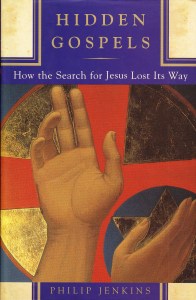
A certain, amorphous indignation comes over those of us trained in history when we encounter abuses of the same. In my case, some thought me conservative when I argued in my first book that Asherah as Yahweh’s wife wasn’t nearly the slam dunk some scholars were making it out to be. Don’t get me wrong, I wanted to see Yahweh as happily married as the next deity, but it was a matter of the evidence being weak and not thoughtfully examined. That is to say, I sympathize—maybe even empathize—with Philip Jenkins. His book, Hidden Gospels: How the Search for Jesus Lost Its Way, is an historical dressing down of many in the New Testament scholarly community who’ve perhaps let a bit of historical rigor slip in order to understand the world of early Christianity.

You see, once upon a time, scholars took the Gospels as, well, the gospel truth. Contradictions were simply harmonized or glossed over. When newer ancient material began to be discovered, however, adjustments had to be made. Perhaps the “orthodox” story of Christian origins wasn’t the only option available. In the twentieth century some spectacular manuscript finds were made, including the “library” of Nag Hammadi—largely Gnostic—and the Dead Sea Scrolls. New understandings of early Christianity were possible when these texts were considered. Some scholars engineered sweeping theories about revolutionary ideas concerning Jesus and his buds. Jenkins laments the lack of historical precision that many of these reconstructions demonstrate, and he comes across as somewhat annoyed.

Sensationalism, as we all know, sells publications and gets presidents elected. We all like a good story. In the case of Jesus, this means that the reconstructions of scholars often challenge traditional views, and popular publications love it. Jenkins finds it distasteful. Although this book is well written, as all of Jenkins’ material tends to be, it probably doesn’t do his arguments any favor to have retained the tired trope of heresy. Heresy means nothing without a supernatural bias, something that historians must avoid. Heresy, after all, assumes that one and only one version is correct (orthodox) and the four Gospels demonstrate that such a simple dichotomy is more difficult to sustain than it might appear to be. Yes, the Gnostic texts may not be as early as the traditional Gospels, but the ideas may have been circulating from near the beginning. We know surprisingly little about Jesus, so it’s not unexpected that rumors would’ve flown, even in antiquity. A solid source of information on some of the early “other gospels,” Jenkins’ book serves as a useful reminder that history is almost never as simple as it seems it should be.


Someone to Blame

There’s many ways to look at monsters. A friend recently sent me an Atlas Obscura article “The Modern Lives of Medieval Monster Scholars” by Cara Giaimo. It seems that some professors of medieval studies have taken to monsters to help explain societal problems. The Middle Ages in the western world, of course, were the days before the Enlightenment began. Belief in monsters was nearly universal. Much of the world was unexplored and inaccessible. In those unknown places, there were monsters. The article goes on to explain that monsters thus provide a natural way to deal with uncomfortable issues such as racism and religious discrimination. Monsters are those who don’t look like we do, or behave (therefore believe) like we do. It’s okay to kill monsters.

This is a mentality that we see reemerging in the twenty-first century. Despite the fact that you can easily reach nearly any part of the globe and enroll in university classes to learn what other religions actually believe, instead we prefer to see others as monsters. People see monsters because they’re afraid. They’re afraid because they’re not educated. And the political system in which many of us live is designed to keep the average person down while the wealthy reap the benefits. It serves the interests of such an unbalanced society to send people on monster hunts. The enemy is anyone who is different—not the one who owns the company that owns the company that you work for. The owner’s just like you, only he has so much money he doesn’t know what to do with it.

I once asked one of my students why he was interested in a certain topic. His answer has stayed with me all this years: “who can say why they’re interested in anything?” While I was in seminary—before the days of the J. R. R. Tolkien movies—I was very interested in medieval studies. My thought process, however, goes back to origins. The origins of medieval thought were the Bible, the ideas of the Bible (for Christians) come from the New Testament. The New Testament comes from the Hebrew Bible. Where did the Hebrew Bible come from? And that journey led me back to monsters. Like my student, I can’t say why I’m interested. It may be that I’m afraid. And in such times as these fears seem to be entirely justified. In the eyes of some future, truly enlightened society, ours will be the New Middle Ages with all its monsters.


After Dark

So many spooky things happen at night. If you’ve read much on this blog you’ll know I blushingly confess to a horror movie addiction. So much so that I wrote a book about it. Friends occasionally feed this fear by sending me stories of strange, nocturnal happenings that are frequently posted on the internet. All kinds of odd creatures roam the night: dog-men, goat-men, lizard-men (and they mostly seem to be male, for whatever reason). It’s enough to keep you inside once the sun sets. Of course, if you read this blog you know that I’m an extreme morning person. Sleeping in, for me, means getting out of bed at 4 a.m. instead of 3:00. Yes, it’s often dark at that time of day, and horror movies teach us that demons are particularly active around 3 o’clock. But then the sun comes up, and everything’s okay. Until the next twilight.

Now that December’s here, I find myself out in the dark more than usually occurs for a guy who gets up so early. After the time change—for which there exists no logical reason—it’s dark by the time I climb off the bus from my day job in New York City. The other day I was compelled to drive after dark. It was only just after 6 p.m., but that’s getting late for me. I scan the road looking for deer. A thought occurred to me—what if I see something weird cross the road? What would I do? A few moments later I was startled to see a woman and child beside the street. I was prepared to stop since—and this is apparently an unknown fact—it is the law in New Jersey to stop for pedestrians in a crosswalk. The young boy then made a dash in front of my car. The woman grabbed him and yelled. They weren’t crossing as they struggled at the roadside, so I slowed down but drove on. “That was weird,” my wife said, “that boy was in his bare feet.”

It was 40 degrees (Fahrenheit) outside. This wasn’t one of New Jersey’s famed haunted roads, even. It was a comfortably affluent suburban street. The image stayed in my mind. There’s only so much you can do when driving in traffic. Yes, it was night, but this is New Jersey—there’s always traffic. Did anybody else see what we saw? What was happening here? Why was I so afraid? Fear is the most honest of our emotions. Without it no organism could long survive in this hostile world. After nightfall even governments are at their worst.


Home of Cthulhu

Travel by train seems to be so much more civilized than flying. You don’t need to arrive at the airport two hours in advance for the privilege of standing in long lines to be practically strip-searched. You just hop on the train and find a seat. The wifi is free and you don’t have to set your phone on “train mode.” Amtrak isn’t perfect, of course, but it’s not bad. When I’m flying I often wonder where I am. I guess at each large town we fly over, although some natural features can’t be mistaken from the air. The Great Lakes, Grand Canyon, and even Niagara Falls are all pretty obvious. The names of many towns, however, remains unknown from above. On the way from New York City to Boston, each stop is announced, small towns and large. I noted that one of the later latter was Providence.

Providence is, of course, many things to many people. To me it will always be the home of Cthulhu. Yes, I know that Brown University and Providence College are both located there, but higher education doesn’t seem to have a room for me, so I revel in the imagined monsters of H. P. Lovecraft. You can’t help but experience a bit of Lovecraft’s New England on the train. Skirting not far inland, the tracks take you through swampy lowlands with grand houses and dilapidated hovels overlooking them. Miskatonic University, as is widely known, is based on Brown, which Lovecraft never attended. He was a writer keenly aware of place. These tracks take me through the world of his murky water gods on the way to Boston.

The train station in Providence turns out to be subterranean. Well, not really, but it is under the street level with no noticeable distinguishing features. Lots and lots of graffiti cover every concrete surface along the tracks coming into the city. It’s hard to tell from the train, but none seem to make reference to Cthulhu. I thought of Lovecraft’s gravestone with it’s famous epitaph, “I am Providence.” Idling in the shadowy station, unable to see anything of the enjoyable town I recall from my few visits here, it’s easy to suppose that this might be Cthulhu’s home after all. Caught somewhere between civilization and the sea, in the half-light of a late autumn day, buried under what we think is somehow progress, I think perhaps Lovecraft was right. Cthulhu may be dead, but he is dreaming still.


Museum Piece

So the Museum of the Bible is now open in Washington, DC. It actually opened while a quorum or more of biblical scholars were busy making their way to Boston for the annual meeting of the Society of Biblical Literature. Many of the guild realize that the museum’s a conservative, evangelical venture, but it brings some attention to the beleaguered field and so it’s strangely welcome. This shows itself in the rather surprising names on museum publications. Renowned scholars don’t seem to think through the implications of supporting such places with the star appeal of their names. Indeed, many in the professorate are starved for attention—I’m not judging; I implicate myself even by making such a suggestion. When such an institution opens, it validates those it implicitly condemns.

A Bible museum?

Scholars can be woefully naive. Visiting places such as the Museum of the Bible, or the Creation Museum, or the Ark Encounter, pumps money into the already very well-funded Christian right. Such believers are extremely political and seek to get candidates like Trump elected. By slaking our puerile curiosity, we’re funding those who’d have us stripped of our very freedom to believe as we do. The paper trail’s there for any who wish to follow it. Supporting such ventures in any way will lead to headaches in the future. Sure, I’d love to see dioramas of dinosaurs on the ark so that I could feel superior for a little while. There’s a price for such vanity, however, and that price is the loss of freedom itself. We see it at work in our government at this very moment.

Museums are places for artifacts that are outdated. This is an ironic statement to make concerning the Bible. Especially by those who believe it is the final word. Why put that word into a museum? The irony’s worth it if enough paying customers arrive. Scholars meanwhile try to find ways to analyze this. Articles and books are appearing, stating what we already essentially know. The Green family, motivated to repressive political action because of their Bible belief, have spent money to build an elaborate museum, money that could’ve been used to help the poor. The book that appears in that museum suggests that the poor should be our concern. And although it actually does say that idols shouldn’t be worshiped, it has the great potential to become one itself. All you have to do is pay the admission price to find out.


Popularity for Purchase

I only watch the Macy’s Thanksgiving Day Parade with one eye. Since my office is just two blocks from the store, it’s a little too much like work. Still, I can’t help but hear the music and announcements. Is it just me, or are most of these floats and balloons trying to sell me something? Okay, so it takes a while for the light to dawn—it is Macy’s parade, after all. This is the kickoff to the holiday shopping season. Santa Claus is the greatest shopper of them all. We are a nation that defines itself not by what it can produce, but what it can consume. Conspicuous wealth. Showing what you’ve got. I’m afraid I just don’t get it.

Those of us who grew up poor, so the thinking goes, should want to display our accomplishments like a peacock. We should want to show others that we’ve made it. That we can play the spending game just like everybody else. We’ll always have the poor with us, so why not demonstrate to them the vapidness to which they can aspire?

An old-fashioned guy, I check my email on a computer. Gmail divides my messages up into three tabs so that I can pay attention to people who actually want to contact me. The third tab is reserved for those seeking my money. Sitting in a waiting area, I decide to check my email on my phone. It says I have close to two-thousand messages. It’s that third tab. I tend to ignore it since I already know what everyone wants me to play. The messages in tab three build up to biblical proportions while I try to figure out how to handle all the other things I have to do.

Not only did I grow up poor, I was also a small guy. That meant when teams were being picked in gym class I was always among the last selected. I’m not aggressive. The indigent know their place. My religion taught me that this was about right. Seeking for one’s self instead of for others is wrong. Although I’ve been through advanced training since then, those early lessons remain with me. When those who have goods to offer discover my email address, they crowd it full, hoping that I’ll be one of many to spend the little I earn on them. Instead, I remember standing on the vacant lot while the neighborhood kids are dividing up into teams. The lines are getting small, and I’m awaiting someone to notice my potential. Of course, they’ll have to wait until I get through all of this email because, in reality, I’m obviously quite a popular guy.


More than Baptism

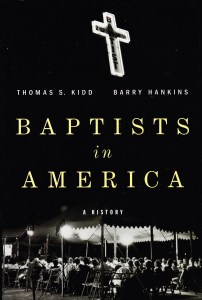
Few things distinguish American Christianity as much as its divisions. These aren’t precise, however, and often the borders are fuzzy and held more by cultural history than by theological outlook. One of the denominations—indeed, the umbrella for the single largest Protestant denomination in America—often faces the question of its identity. Who are the Baptists? Many Protestant groups can trace their histories to defining moments; consider Martin Luther and his hammer, according to the Lutheran origin myth. Baptists are a little tricker to pin down. Dissenters, yes, convinced that adult baptism should accompany conversation, yes, but beyond that widely divergent. Thomas S. Kidd and Barry Hankins have provided a service by writing Baptists in America: A History. Going back before America, they trace the origins of the sect and quickly bring it into the context in which it would thrive.

Persecuted early in American life, Baptists grew in numbers and recognition during the period commonly known as the Great Awakenings. Suited to frontier individualism, non-doctrinal, and advocating for freedom of conscience, the Baptists gained large sums of converts in this era. With their congregational polity, Baptist cultural influence really only took off when mass media gave its more aggressive preachers a venue not limited by church walls. As Kidd and Hankins point out, however, the denomination proved friable. Splitting apart over various issues, the number of Baptist denominations grew. Their political influence would also grow so that they would become a force with which to be reckoned even today. Few, however, really understand who the Baptists are.

The Southern Baptist Convention is the largest single Protestant denomination in the United States. It defines itself by a radical conservatism that masquerades as “orthodoxy.” Heavily biblical, many in the tradition have a strong preference for inerrancy. Social causes that appear outdated to most modern people are do-or-die issues for this sect within a sect. Baptists in America does a good job showing how contradictory Baptists can be. They were, after all, dissenters from the beginning. Their championing of religious freedom often doesn’t apply outside their own borders. The more political of the denomination know very well how to game a democratic system. Perhaps the lesson they’ve learned most acutely is that being unseen carries with it great advantages. They play the sport of legislative chess very well. In a culture that loudly and repeatedly claims that religion no longer matters, those with conviction have a natural hiding place. From there pieces are easily moved to positions of power.


Holiday Season

It was just after dark and the red and blue lights were shredding the night in Wallkill, New York. We’d driven past this mall just over an hour ago to take our daughter home after a too brief Thanksgiving break. Now there were police cars lined up along the length of the Orange Country Galleria Mall, and my wife said, “I hope it’s not a shooting.” Life in America’s that way. About two hours later we were home and yes, it had been a shooting incident. For reasons nobody knows, a man discharged a handgun into the floor at the crowded shopping center, injuring two. Police had not located the shooter, and no motive was known. The mall was evacuated and holiday shoppers feared for their lives.

Just a few months ago I was in Penn Station, New York when a similar panic ensued. Rail police had used a taser gun on a passenger who’d gotten out of hand. As we were entering the station to catch our train, scores of people were running out in a panic. It had sounded like a gunshot. Clothes and personal effects littered the floor of the station once we got inside. This is the world in which we live. A world enamored of weapons. A world where we hate and distrust the stranger. A world where our government receives support from gun lobbies and refuses to put controls on the sale and ownership of firearms. A world where a peaceful Sunday night on the busiest shopping weekend of the year ends in panic and tears.

Wallkill, New York, is not exactly a metropolitan area. Upstate, as we’ve been learning for the last several years, is pretty big. Small population centers dot an impressive landscape of Catskills, Finger Lakes, and beautifully wooded hills. The people are generally friendly, less brusk than they tend to be in New York City. It seems that where two or three are gathered together there’s a handgun in their midst, however. Trusting ourselves to be good people, we want to arm ourselves to shoot the “bad guy.” Meanwhile Congress still tries to pass legislation to reduce health care since, I guess, too many people are getting shot. It can be a real drain on the economy if the wealthy have to chip in. It’s upstate New York. We have about two hours to go before we can rest at home. Galleria Mall is in lockdown. The rest of the nation is too.


Inventing Breaks

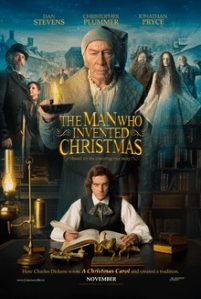
Breaks are good for many things. Time with family and friends. Hours of non-bus time for reading. Watching movies. So it was that we went to see The Man Who Invented Christmas. It really is a bit early for my taste, to think about Christmas, but the movie was quite welcome. Being a writer—I wouldn’t dare to call myself an author—one of my favorite things to do is talk about writing. Watching a movie about it, I learned, works well also. The conceit of the characters following Dickens around, and refusing to do what he wants them to should be familiar to anyone who’s tried their hand at fiction. My experience of writing is often that of being a receiver of signals. It is a transcendent exercise.

Not only that, but in this era of government hatred of all things creative and intellectual, it is wonderful to see a film about writing and books. The reminder about the importance of literacy and thought is one we constantly have to push. If we let it slip, as we’ve discovered, it may well take considerable time to recover. Getting lost in my fiction is one of my favorite avocations. Solutions to intractable problems come at most improbable times. Although publishers tend to disagree with me, I find the stories compelling. In the end, I suppose, that’s what really matters.

On an unrelated note, this is the second movie I’ve seen recently that attributes non-human actors their real names in the cast listing. What a welcome break from the blatant speciesism that pervades life! Animals have personalities and identities. Humans have often considered the privilege of being named to be theirs alone. True, animals can’t read and wouldn’t comprehend a human art form such as cinema. But when they communicate with each other, they may well have names for us. The beauty of a story such as A Christmas Carol is that it reminds of the importance of generosity. We should be generous to those who take advantage of our kindness. Our time. Our energy. We should also be generous to those who aren’t human but are nevertheless important parts of our lives. The movie may have come too early for my liking, but the holiday spirit should never be out of season. If we’ve made a world that only appreciates kindness because much of the rest of the year is misery, it means we’ve gone too far. Films can be learning experiences too, no matter the time of year.


Devolving Apes

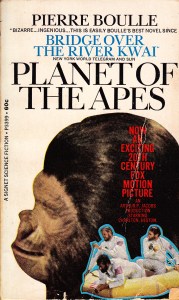
It would be difficult to overestimate the effect the movie Planet of the Apes had on me as a child. Raised a biblical literalist, evolution was, naturally enough, anathema to me. And yet here was a movie based on the idea that evolution had taken a different course. It was a transgressive film, but the screenplay had been written by Rod Serling, so well known for his trusted work on The Twilight Zone. I was utterly fascinated by it. Until the most recent iteration, I’d seen every sequel, spinoff, and reboot ever made. So important was this story line that as a child I found a copy of the book, in English, of course. Pierre Boulle told the story somewhat differently. Spying the book on my shelf after some four decades of my own evolution, I decided to read it again.

We all evolve. I noticed the improbabilities more this time through. The fact that, unlike the movie, humans wore no clothes at all must’ve scandalized my young eyes. I would’ve agreed, however, with Ulysse Mérou’s sentiments that humans were created in the image of God, not apes. In fact, there is an undercurrent of a somewhat conservative theological outlook here. Humans may experiment on animals, but when it’s reversed, it’s evil. In many ways, the cinematic version improves the story, but Boulle’s telling grows in intensity as the novel unfolds. Mérou develops a moral sense that includes the apes as well as human beings. The story, of course, is largely about prejudice and its evils. In that respect, it’s timeless.

As a child I realized that we lose something if we accept the fact of evolution. We lose that special feeling of having been intentionally created by a deity that made us God-shaped. Ironically, I also came to realize that those who rejected evolution often treated their fellow humans like animals. They held onto prejudices against other “races.” They castigated the poor for being lazy. They wish to remove healthcare from those made in the image of God. The contradictions and cruelties simply don’t comport with the Good Book they adore and ignore. Evolution, with the realities of nature impinging on our security, is far less dangerous than what biblical literalism has evolved to be. I can’t say why this book and its cinematic renditions became so deeply embedded in my young mind. But having read the book again, it’s pretty clear that the ideas have remained there, even as they have modified, with descent, over time.


Astronomers and Pirates

In an effort not to travel, the internet offers a great resource while it’s still free. If you don’t want to wander from home, it brings movies you might’ve missed right to your domicile. This year has been so busy that we’d missed completely Pirates of the Caribbean: Dead Men Tell No Tales. I know, as the Pirate movies spin on and on they become more special effects extravaganzas with insipid, if complex, plots. Still, we’ve been watching from the beginning, so last night we decided to see it through. The movies are fun, if less well written than they were at the beginning (and the movie began without a script). There are moments worth attention, however.

The story follows Carina Smyth as she attempts to discover her father through following his diary. This, of course, brings her path across that of Captain Jack Sparrow. Smyth is an astronomer and horologist. Because she’s female and this is the eighteenth century, she’s labeled a witch. Both the proximate and ultimate cause of the accusation is her gender. Although she proves to be the real hero of the film, the men can’t help thinking she’s a witch although she’s using science to find answers. In fact, if a male astronomer did the same things she did, there’d be no story here. This is a post-Galileo world. It’s also post-Salem. We don’t watch these films for history, of course, but it is true that although the witchcraft trials ended at the turn of that century, the accusations continued for some time after. The woman of science is a threat to the male establishment. She alone, however, discerns the truth.

Swashbuckler cinema was a male invention. Still, even in the twenty-first century too much of it comes at the expense of women. Jack Sparrow’s famous compass, for example, is passed on to him aboard a ship called the “Wicked Wench.” Surely this is meant to be funny, but at whose expense? The other women in the movie hardly come off better. Shansa actually is a witch, working for the establishment. Beatrice Kelly, in Jack Sparrow’s noose wedding, is portrayed as an undesirable bride, purely for laughs. Disney is famous for its princesses, but also for its wicked women. Even the strong female characters such as Mulan, Moana, and Anna find themselves being helped to success by male characters. Obviously the genders do interact in real life, and as recent history has shown us, men will demonize women if it helps them get ahead. You might think a movie of anti-heroes, however, would show the most intelligent character receiving a bit more respect. Especially since she’s a woman in a pirate’s world.


Predestined?

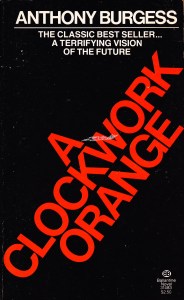
This particular doctrine struck me as evil. It violated every experience and thought I’d ever had, even raised as an unquestioning Christian as I was. Then, at Grove City College I was faced with it for the first time—predestination. If free will is an illusion, what crueler God can be conceived? I couldn’t avoid such thoughts upon re-reading Anthony Burgess’ A Clockwork Orange. A non-conforming non-conformist at the college assigned it in a science fiction class, so it has been decades since I’d read it. Now I found it perhaps more profound than before. Much has happened since my initial reading of the book, o my brothers. (And sisters.)

The framework of the story is well known. Alex and his friends are teenage punks who love ultra-violence. Alex is betrayed and imprisoned. Considered incorrigible, he’s reprogrammed to the point that he can’t even defend himself in a society that’s grown even worse during his time in jail. In the hospital after a suicide attempt, he awakes to find his old self restored, whether this is a good thing or not. The main point that’s behind this, it seems, is that without free will, repentance means nothing. In fact, in my edition of the book, an afterword by Stanley Edgar Hyman makes the point that some interpret A Clockwork Orange as a fictional defense of Christianity. Certainly the comparisons are there, from Judas through Jesus, healing, sin, and suffering. How much it actually meets that idyllic vision of God in Heaven directing the lives of individuals is, of course, an open question.

The idea that human beings are born as Hell-fodder posits a cruel and sadistic deity. Not only are the majority of human beings going to face eternal punishment for matters beyond their control, there is a divinity who planned it that way. We are all, literally, puppets in a universal morality play written by a being whose moral compass is horribly skewed. Indeed, even at Grove City some of the faculty would state that philosophically there could be no contest—free will was right. But, they would add, tapping the Bible, it’s not true because the Word of God says so. When I protested, it was declared, without irony, that even my protest had been predestined. In other words, in this clockwork universe I was clearly an Alex. Upon closer inspection, however, the truer analogy would be that we are all the victims of Alex and his droogs. But only if we have the freedom to make such an observation.