Same Old Story

Once upon a time fairy tales were considered appropriate only for children. Unlike myths, fairy tales are frequently oral (yes, there are oral myths but this is not the place to discuss technicalities) and have origins that are obscure. A friend recently sent me a story entitled “Phylogenetic analyses suggests fairy tales are much older than thought” by Bob Yirka on phys.org. Using phylogenetic analysis, researchers have traced some fairy tales back thousands of years, into the Bronze Age of the ancient Near East. This will no doubt surprise some analysts who supposed fairy tales were a more recent, European invention. The tales change with time and distance, no doubt, but the basic story is very deeply rooted in who people are. Fairy tales are adult fare, after all.

I tried to make this point in an academic article that was rudely rejected by the journal Folklore some years back. I mean “rudely” literally. I’ve had academic articles rejected before—many of us have—but the letter that came with this one was insulting. My “error”? Suggesting that the story of the musician who travels to the underworld came from ancient Sumer. The article had its origins in my wife’s reading of the Mabinogion. The story of Bran’s head being washed down the river still singing reminded me of an Edinburgh ghost story the tour guides used to tell right outside our window. You’ve probably heard similar: a tunnel is discovered, a musician (a bagpiper, since this was Scotland) is sent down while playing so that those above can follow the sound, but the musician never emerges. I traced the story through the Celtic tradition of Uamh ‘n Òir, the cave of gold, through Bran, Orpheus, and finally back to Ishtar’s descent into the underworld. It was a fun piece, but serious. It ended up published in a Festschrift to a scholar with a noted sense of humor.
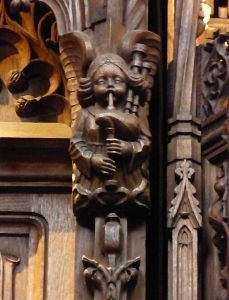
Photo credit: Kim Traynor, Wikimedia Commons

Photo credit: Kim Traynor, Wikimedia Commons

The fact is, traditional stories often go back very far in history. We haven’t the tools to trace many, nor can the results be taken for Gospel, but the implications can. People are storytellers by nature. We find meaning in what would today be called “fiction.” Too often I’ve had to hang my head in embarrassment when admitting to a fellow academic that I read (and sometimes write) fiction. It is something, however, that ancient mythographers and folklore singers would have understood. We can be academic some of the time, but we are human full-time. And telling stories is something that predates even the Bronze Age. Of that we can be completely certain. And they lived happily ever after.


Story of God

Synchronicities come at kinds of synchronaddresses. After I had written a recent post on human sacrifice, I watched the first episode of Morgan Freeman’s The Story of God. My wife actually figured out how to get it without the miracle of the triple play, and we watched the initial installment on death. I’ve stated repeatedly on this blog, as I used to in my lectures, that death is a universal concern of religion. I wasn’t really expecting to learn anything new from the show, but it is a good idea to keep up with what hoi polloi are being told about the field in which I’m supposed to be a specialist. In any case, The Story of God is very much like Through the Wormhole, only from the other side. Science and religion. Religion and science. Like chocolate and peanut butter, two great tastes that taste great together. Really, I mean that.

So after telling us that the Egyptians may have invented the afterlife (although it’s clear they didn’t), the show takes us through other religious expressions: Christian, Hindu, Aztec. The Aztec segment brought up human sacrifice again, in its particularly grisly expression, as a means of thinking about what happens after death. In the light of the article I’d read (see last Sunday’s post) I couldn’t help but think how this was an ideal form of social control. There’s no doubt who’s in power when you’re looking up at your still beating heart, strangely cooled. As I’m pondering that heart, I’m thinking it wasn’t the Egyptians who first had this idea at all.

DSCN6127

Neanderthals, it appears, may have buried their dead. Even if they didn’t other ancient, pre-historic people did. And with grave-goods which, if you think about it, are rather superfluous without any afterlife in which to use them. It stands to reason, even before reason, that as soon as people began to recognize death, they had to be wondering what happened next. It is a bit simplistic to suggest that religion began because of the fear of death. It is also equally simplistic to suggest that death had nothing to do with the beginnings of what we call religion. People have died as long as there have been people. And survivors have carried on after the passing of others. Maybe we are all grown up now, but it seems that we aren’t fully human unless we give some sort of thought to what comes next. Even if the answer is “nothing,” it’s some kind of religious statement, whether intentional or not.


Prayer before Meals

It was in Wisconsin. Oshkosh. I was teaching for a year in a replacement position, and my roster of classes at the university covered several aspects of religious studies. During the course of prepping a course, I first saw it. The Flying Spaghetti Monster. It was only a virtual Flying Spaghetti Monster sighting, but since Creationism was much in the news in those days, I boiled with curiosity. By now it would probably be a strain to explain the whole thing, since everyone knows about his noodly appendages and predilection for pirates. The short story is that the Flying Spaghetti Monster was an invented deity to demonstrate the ridiculousness of trying to get Creationism taught as science in public schools. For those who believed in other gods, such as the FSM, there should be equal time in the classroom, the argument went. Since that time Pastafarianism has taken on the semblance of a real religion with “believers” earning the right to have driver’s license photos taken with colanders on their heads, and even a book of scriptures being written.

An Associated Press story from Sunday’s paper tells of the world’s first known Pastafarian wedding. Bylined Akaroa, New Zealand, the blurb indicates that the Oceanic nation down under has decided that Pastafarians can officiate at weddings, and a couple was married with al dente accoutrements. The Church of the Flying Spaghetti Monster, it seems, is going the way of the somewhat more serious Jediism and Avatar religions in that people are deliberately electing fiction as their faith. Interestingly, this may not be a new phenomenon. We are told, for example, that Zarathustra deliberately outlined a new religion—one that may end up having had the greatest impact on humanity of all time, if roots are considered. In those days the strict division between fiction and fact may not have been a mental filter yet discovered. The “it really happened” test of religious veracity was still some distance in the future. Metaphor meant something then.

IMG_2753

The internet, it seems likely, has facilitated and accelerated the appearance of new religions. As with most things, the real issue comes down to money and power; if a government recognizes a New Religious Movement as legitimate, it may be granted tax exempt status. And how can it be proven that someone really does or does not believe what s/he says s/he does? If you’ve got a box of Barilla on your pantry shelf, who’s to say? It’s a short distance from that colander in the cupboard to the top of one’s head. And who doesn’t like pirates? And who’s to say that under that rotelle moon in a stelline-studded sky someone hasn’t indeed kissed their hand and swore the ultimate starchy allegiance? Keep watching the skies!


Ivory Towers

IMG_0481

I sometimes confuse “ivory tower” and “ivy tower.” It’s only a matter of or. In my mind the halls of academe are frequently covered with ivy, but the usual term for a rarified higher education is actually “ivory tower.” A pristine, white edifice unstained by the concerns of day-to-day life. It never occurred to me that the phrase might be biblical. According to tradition, King Solomon quoth, “Thy neck is as a tower of ivory” to his beloved (Song of Songs 7.4a). How the term moved from an obscure reference in a love poem to higher education involves the nature of the latter. Higher education was an enterprise of the church. These days we tend to think of religion as opposed to learning, but in fact, universities were natural outgrowths of cathedral schools where future clergy were trained. There was also a guild-consciousness about the Middle Ages that also played into this, but primarily what we think of as universities today were developed to educate clergy. Many of the Ivy League (again with the ivy!) had their origins as seminaries.

Ivory towers, however, are still remote from this. Eventually, probably due to the difficulty of interpreting the Song of Songs, ivory tower came to be an epithet of the Virgin Mary. Indeed, some interpreted Song as the love between Mary and the church. Rather than the erotic intent of Song, which quickly became an embarrassment to the chaste church, the ivory tower came to symbolize the purity of the Virgin. Untouchable, sparkling white. From the pre-Reformation church, universities sprang. Devotion to Mary ran high.

Although the origin of ivory towers as a metonym for universities is uncertain, it appears in literature by the nineteenth century. Possibly it reflects nothing more than the dignified life of the mind as opposed to the sullying of hands. Or perhaps it reflects a deeply buried knowledge that the university, as secular as it has grown, is a scion of the church with its devotion to a virgin who somehow commandeered the language of a love poem from antiquity. Today ivy is less common on campuses than it used to be. Our higher education is much too modern and chaste for that. The towers of ivory, however, remain. Now they refer almost exclusively to dreamers who’ve lost touch with the everyday world. And, as often as not, with the Bible that gave them their start.


As (Not) Seen on TV

Screen Shot 2016-04-04 at 4.16.28 AM

Last night, I fear, I did not see “The Story of God with Morgan Freeman.” Our “double play” service already rivals the cost effectiveness of a ballpark lunch, and a triple play is out of reach for as little time as we have for television. This may be one case, however, where I’d be inclined to sacrifice some Sunday evening sleep to watch. I’ve seen numerous episodes of Through the Wormhole. I’ve noticed that over time the topics have grown more and more metaphysical. Yes, there is an uneasy after-shave burn to Occam’s razor. We’ve been told for so long that reductionistic materialism can account for everything, even these unorthodox thoughts in my head of an early Monday morning, and that religion is what’s left over after cleansing a dirty pig. Yet still, yet still…

A few years back, when I was still active in FIRST Robotics, I noticed a few things. Many of the mentors to the teams were not opposed to religion. Far from it. Not only that, but the national (now international) finals of the competition were met with religious fervor. Then, my last year as a mentor it was announced that “God himself” (aka Morgan Freeman, a reference, of course, to Bruce Almighty) would be present for the event. Science and religion are met together; technology and spirit have kissed each other. Perhaps this one size fits all universe is a bit premature?

“The Story of God” will spend six weeks on the National Geographic Channel exploring the origins of religious belief. People who haven’t learned that this is all nonsense will watch and wonder. Universities will, however, continue to close departments where such things are explored. Just because something is interesting doesn’t mean it’s profitable. One must think of such things when one has a business to run. I’m no prophet, but I do have to wonder if this might not be a sign. Maybe Occam’s razor-burn is chaffing a bit more than we thought underneath this white collar. Maybe it’s time to let the beard grow a little and see what the face really looks like. Maybe it’s time to watch TV.


Cthulhu’s Tea Party

It was in the eldritch-sounding Oshkosh that I first came across H. P. Lovecraft. The web was still somewhat of a novelty then, and I’d run across a Dagon symbol that I couldn’t identify. My researches led me to the old gods of Lovecraft’s atheistic imagination. Even non-believers are haunted, it seems, by deities. Dagon, about whom I’d published an academic paper, always seemed to be a divinity to whom very few paid attention. Little did I know that in popular culture this god, along with others made up by Lovecraft, were slowly gathering an immense following. Now, about a decade later, Cthulhu is everywhere. I was reminded of this when I came across a website advertising Cthulhu tea cups. As you drink your tea, Cthulhu emerges. These novelty items, along with many, many others, are easily found. Cthulhu is running for president. The creature that Lovecraft described with such terror is now available in a cute, stuffed plush. Board and card games come in Cthulhu varieties.

IMG_1551

What I find so interesting about this is that the following of Cthulhu has taken on religious dimensions. Not that writers haven’t invented religions before—L. Ron Hubbard came up with Scientology after a career of science fiction writing, and Jediism is considered a religion by some—but Cthulhu represents the darker aspects of religious thought. As Lovecraft described him, he is a horror. Not the kind of thing you’d want to discover peering out of your teacup. I wonder if this is precisely why the fictional god has become so incredibly popular. In a time when some real presidential candidates are really scary, suggesting that an evil deity take on the job may only be natural. Cthulhu is, after all, really more an alien than a god, but to puny humans the point is moot.

Mainstream religion is not about to disappear any time soon. There is, believe it or not, a strong resistance to the materialistic reductionism that presses in on us from all sides. People are not becoming less religious—they’re becoming differently religious. The old sacred texts are being replaced by the fictional Necronomicon. Ethereal beings that have always been there are bowing before ancient aliens who aren’t really eternal or omnipotent, but who feel more real in our culture of might makes right. Whether a religion is factual or fictional has come to matter less than the feeling that there is something, anything, larger than humanity that demonstrates the vanity of our striving after material gain. That actually sounds quite biblical. Anything believed with adequate passion stands a chance, it seems, of becoming a religion.


Strange Chemistry

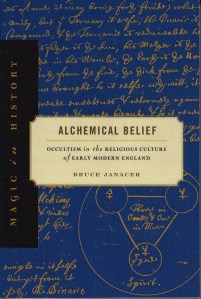
AlchemicalBeliefOne of the many antiquated beliefs that have been left behind over the centuries is alchemy. Today we tend to think that anyone who supposed natural substances could have been transmuted into others must have been naïve at best, or credulous at least. Bruce Janacek’s Alchemical Belief: Occultism in the Religious Culture of Early Modern England sheds light on the wider worldview of the alchemists. Some of them, anyway. Firstly, it is quite clear that many adepts of alchemy were very intelligent people. We easily forget that in addition to rewriting the laws of physics, Sir Isaac Newton practiced alchemy throughout his adult life. There’s something incredibly beguiling about the idea of an underlying unity of materials. Today atomic theory has answered that unity, perhaps a little too well. And that bring up the second important insight in Jancek’s book: alchemists often had an ulterior motive.

Early modern alchemists (think of those emerging from the wake of the Reformation, and you won’t be far wrong) often had a religious motivation for their work. Alchemy isn’t just turning base metals into gold—that’s just its most spectacular claim. Janacek points out that several alchemists were also attempting to prove the legitimacy of Christian theology through their explorations. Concepts as strange as the Trinity, or even the divisions of Christianity itself that were happening in the shadow of Luther, indicated to ordered minds that theological truth must be a unity. That unity, once found in alchemy, would naturally apply to the world of the church. The church, after all, can’t defy the very laws of the universe, can it? These early scientists accepted that there might also be a mystical element involved. Some rejected that aspect, but felt that the basic ideas of alchemy itself were sound.

Like dinosaurs, alchemy pretty much went extinct with the onset of the empirical method. Also like dinosaurs, it survived into the new age, transmuted in form. Alchemy was one of the ancestors of that bane of college students everywhere: chemistry. We tend to forget that astrology laid the groundwork for astronomy and creation (not quite an “ism” in those days) led to the study of biology. Religious ideas underlie much of what led to modern science. Religion, after all, indulges the curiosity of humankind. We are allowed (in the best instances) to let our minds range where they will. Later on theology, or some such device, will rein them in, but until such a time the psyche is free to explore. And build systems. And offer explanations. The alchemy comes when all of this is taken from the hands of natural philosophers and put into the laboratory only. And the rest of us await pronouncements from above of what might be real, or not.


Not Camelot

In the English imagination the Arthurian legend is deeply connected with the Christian myth of Britain’s founding. This may not be on the surface, of course, but the places associated with King Arthur (as well as the tales themselves, such as the Holy Grail) overlap with sacred locations. I was reminded of this by a recent Guardian article about Tintagel Castle. Back in the day when my wife and I visited Tintagel with friends, I was still shooting film. Slides, no less. Some wonderful images came out, the way that only Ektachrome delivers, but I haven’t been able to convert them to digital. I guess you’ll have to take my word for it. Tintagel is in the news because English Heritage, the owner of the property, is developing it to make it a larger tourist draw. According to Geoffrey of Monmouth King Arthur was conceived at Tintagel. Not in the castle—now in ruins—that was built centuries later, but on the island that is accessed by footbridge over a dramatic cove on the Atlantic Ocean. It’s enough to make you drop your pastie.

Our own little Merlin

Our own little Merlin

Locals, according to The Guardian, protest the dressing up of the historic site. A bas relief of Merlin has been carved into the living rock, and this is hoped to draw the Glastonbury crowd to the southeast. Glastonbury, upon our visit, was already the home of New Age vendors. It too has connections with Arthur. The staff of Joseph of Arimathea can be seen, still growing after all these centuries. The Holy Grail—likely from Celtic mythology of the cauldron—is also associated with Glastonbury. Oh yes, and also King Arthur’s grave. Even apart from Monty Python, the legendary king has captured the imagination of thousands across the centuries. There’s something about Arthur.

The historicity of the king, however, is vigorously debated. The same is true of many religious founders. Those around whom legends grow become more and more inaccessible with the passing of the years. England was Christianized in the seventh century as part of a political expansion. If Arthur ever lived, it was after that period, perhaps in the days before Beowulf. We just don’t know. It is clear, however, that his legend is intertwined with that of those early Christian days. There never was a Holy Grail—of that we can be fairly certain. In the service of myth-making, it is nevertheless indispensable. Staring out over the Ektachrome sea at the ruins of the island castle of Tintagel, it is only too easy to believe. If only I had the pictures to prove it.


Modern Vampires

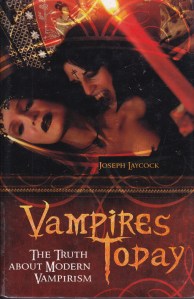
VampiresTodaySometimes I feel guilty. A grown man reading about vampires? Then I think of such puerile things as television and the stock market over which other adults waste their time and my pituitary gland releases endorphins and I carry on. I must say, however, after reading Joseph Laycock’s Vampires Today: The Truth about Modern Vampirism, that I’m not a vampire. Nor have I ever wanted to be. I am fascinated by the idea, however. The more I read—as is the case with most good academic books—the more I questioned definitions. Laycock does a good deal of that questioning himself in this book, and I came away wondering what indeed defines a vampire? As a child it seemed pretty clear. The vampire was a blood-sucker who came out at night. Fangs, a thirst for blood, and a faded aristocracy seemed to be the essential characteristics. But I was only a child.

Before you get the wrong idea about Laycock’s book, I need to say that his is a serious study of modern day vampires. Yes, they exist. No, they’re not easy to define. As an academically trained scholar of religion, Laycock is keenly aware that self-definition is crucial to categorization. Religious believers self-identify. We have no way of categorizing an adult (and some would say no way at all of children) without their own affirmation of what they believe. Vampires Today, however, raises the pointy question of whether those who self-identify as vampires constitute a religion. Or if vampire communities may be considered religious groups. In case you’re confused: many people identify themselves as vampires—sanguinarian and/or psychic. They believe they require the life energy of others to live and prevent illness. They sometimes drink blood—with permission—or siphon the life force of other people. Like all adults, they should be treated as self-identified. Probably not, as Laycock carefully spells out, a religion.

As in his other books, Laycock takes seriously groups that would, based on numbers alone, be considered fringe. Nevertheless, these groups are a part—sometimes an influential part—of larger society. We live in a world where we’re authoritatively told there is nothing but matter and energy, and as biological beings our purpose is reproductive success and then death. Is it any wonder that vampires and others are seeking something more? I’m no vampire. I read the occasional, thoroughly pulp, Dark Shadows novel to recapture a little of that after-school wonder I felt watching the waves pounding on the Maine cliffs while Barnabas Collins lurked inside. And he bore a strange truth that was perhaps instilled in those young years. Age is only partially a biological matter. Defining it any other way is, I have to believe, immature. So I read about vampires and wonder.


Spring Forward

I have to admit that spring snuck up on me this year. Weather is, of course, no reliable predictor of the Vernal Equinox, and since I depend on the lightness of the sky while waiting for the bus as an indicator of seasons, turning our clocks ahead last weekend blindsided me to the nearness of the light. Holy Week in Christianity is just one of a cluster of holy days long associated with the point of equilibrium: the day when light and darkness balance perfectly, only to tip from then on in the favor of light. The crocuses have been up for weeks and the robins are ubiquitous, so I really have no excuse. Spending too much of one’s days indoors, I suspect, will inure any soul to the wonder of changing seasons. Climate control, no windows, and constant business separate a person from what nature has evolved us to be.

Easter, understandably, can’t be a national holiday in a land of religious freedom. Not everyone recognizes Easter and even those who do don’t agree on the date. Having a moveable feast is a great inconvenience to employers who want to know everyone’s going to be at their desks. Besides, even though the date changes, it’s always on a Sunday. Many people already have that sop and so, we glide past the vernal equinox with nary a thought. Business as usual. Looking at the great monuments of the past, when ancients put great effort into marking the seasonal change days, I can’t help but think that we’ve lost touch with a basic element of our humanity when we let the equinoxes pass without notice. I hadn’t even realized it was spring until it had begun.

Stopping to recognize the significant days in the passing of the year may be inherently religious. We can be as secular as we like about the equality of light and darkness, but somewhere deep inside we’ll still be thankful that the days will be growing longer until there is more light than dark. We just don’t have to say so at the office. Holidays, it seems to me, offer us hope. We don’t have to buy stuff or give presents. Just having a day to stop and reflect makes us more human. The vernal equinox came silently on a Sunday this year. I awoke early to try to catch sunrise on a cloudy morning. I look to the east, and I dare to hope.

IMG_2725


Ethology Theology

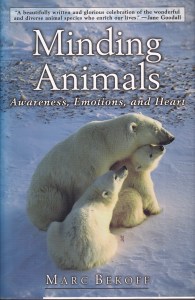
MindingAnimalsProminent public intellectuals, we’re used to hearing, often lament the survival of religion into a rationalist age. As an obscure private intellectual—if I may be so bold—I am always pleased to see when a credentialed scientist asks if we are being too hasty. No, but actually says we’re misguided to dismiss the evidence of our own observations. Marc Bekoff’s Minding Animals: Awareness, Emotions, and Heart is an encouraging study by a balanced individual. Bekoff, unlike many scientists, realizes that emotion does play into observation and reasoning. More than that, materialistic reductionism does not account for human or other animals’ experience of life. Historically motivated by religions to separate ourselves from animals, we have only come to know slowly—painfully slowly—that the distinctive markers of humanity are shared in degree by other animals. Bekoff is bold enough to give the lie to the belief that animals have no emotional life. Traditionally science has said that we cannot know what goes on in animal brains so it is best to take animal emotions off the table. Then scientists go home and love their dogs, who love them in return. When’s the last time I read a scientist writing about love?

Minding Animals is a manifesto. We have, in our arrogance, made unwarranted assumptions about both animals and our unique status on the earth. We drive other species of animals to extinction at a rate that required an asteroid collision or some other catastrophic event in the past. And we use animals as if they had no interests of their own, even such basic interests as avoiding pain and suffering. “They’re just animals,” we’re told. Bekoff is an ethologist—someone who studies non-human animal behavior. As common sense, both the sine qua non and bête noire of science, reveals, animals experience and express happiness, anger, and love. They can be depressed. They can be overjoyed. And we treat them as if they were objects to do with as we please.

Bekoff admits some of his fellow scientists treat him as if he’s gone soft. Like Diogenes, however, I search for an honest man and I think I have found him. Instead of castigating religion, Bekoff ends his book with a chapter on theology. Not to make fun of it, but to show that even scientists must integrate different kinds of knowledge. Not only is the science that Bekoff describes appealing to the emotions, it also makes sense. No scientist is completely objective. Even Mr. Spock breaks down once in a while. We all have perspectives. And that includes our fellow earthling animals. We evolved from the same ancestors and yet treat them as if we own them. Minding Animals will—or at least should—make us feel guilty about that. Being human and being humane, after all, are only a silent e apart.


Apes’ Asherah?

As a part of my class on Ancient Near Eastern Religions, since we were dealing with the earliest textually recorded religions, I explored origins. Specifically, the origins of religion. For years I told my students that biologists had observed behavior among chimpanzees that was proto-religious. Imagine my delight in seeing an article on New Scientist headlined “What do chimp ‘temples’ tell us about the evolution of religion?” The article, by Rowan Hooper, describes chimpanzees banging rocks before a “sacred tree” and storing the rocks in the tree in a ritualized fashion. That’s a long way from Episcopalians putting on their Sunday finery, but it is a fascinating piece of a larger puzzle. As the article points out, other symbolic action among chimps has been observed—some of it the basis for what I discussed with my students. The impulse to acknowledge the power of the Other runs deeply within animals, particularly mammals and birds.

This may seem an odd thing to suggest. We do know, however, that among the earliest attested behavior or Homo sapiens, along with hunting and seeking shelter, is religious behavior. It is part of who we are. Primatologists, such as Frans de Waal, have noted that the great apes engage in altruistic behavior. It is only when they become billionaires, apparently, that the urge dies. Again, other mammal species and some birds also show altruistic behavior. We are part of the natural world. Our religion, rather than being a collective insanity, is part of a continuity with that natural world. It is much a part of who we are as is seeking food or putting on clothing.

DSCN6152

The more rakish side of my imagination goes to the fact that this article begins with a sacred tree. Tree worship is part of early religions. Some scholars suggest it is part of Asherah’s cult in the ancient world. (I discussed this in technical terms in an article some years back; take a look at my Academia page if you can’t sleep without reading it.) Goddess or not, trees are essential for our survival—call them a godsend. Would it not make sense for religion to include reverence for trees? It seems that some great apes, at least, agree. Are these primates religious? We can’t say. One thing, however, is certain. Our fellow animals show more moderation in their use of the environment than our species does, and that in itself is both logical and religious.


Seminary History

Seminary is where you go to learn what they didn’t tell you growing up.  Many people have rather idealized views about clergy and somewhat untrained views about their church (the same may apply for religions outside Christianity, but I wouldn’t be so bold as to say so).  Since church membership is declining, albeit not drastically, seminaries are finding themselves less in demand.  Meanwhile all manner of political candidates can claim a biblical literacy they don’t rightly deserve, and who’s to challenge them?  It is sobering to read The Christian Century and see just how sickly theological education appears to be.  Seminaries closing, seminaries merging, seminaries not really appearing on anybody’s radar scope.  As the founding institutes for nearly all the Ivy League universities (which are not closing), it seems that few people appreciate just how much our seminaries have contributed to our culture.  Our culture, however, is focused on more material pursuits now.  Let history bury the dead.

IMG_2694

The days when clergy were a step away from royalty and political power are long gone.  Figures like Increase Mather could personally pull cords with the crown to select a governor for colonial Massachusetts.  Rev. Martin Luther King, Jr. could almost single-handedly lead to the beginnings of the demise of one of the greatest social injustices in a democracy.  Even Fred Rogers could daily assure us that it was a beautiful day in the neighborhood.  Seminary graduates all. None of that matters now, as long as my back pocket’s heavy with greenbacks and one of the rich elite inherits the White House.  The thing is, seminary helped many of our past leaders to mature.  Not just spiritually, but intellectually.  Obviously seminaries aren’t perfect.  They can leave you with PTSD just as easily as a PhD.  Still, I wonder at the loss.

I didn’t know about seminaries, growing up.  Those who attend fundamentalist, non-denominational churches seldom do.  When I learned that there were specialized schools to attend to become a minister, I was intrigued.  I guess the idea of a monastery was somewhere in the back of my head.  Little did I realize that seminary was about forcing you to think about things you’d always assumed.  Yes, seminaries have their casualties.  Some leave with as simplistic an outlook as when they entered.  For the majority, however, it is the opportunity to find out that the world of religious belief is much more complicated than people would ever, ever imagine.  Angels dancing on the head of a pin, this is not.  Any computer could calculate that with the right algorithm.  Those who think deeply about what they say they believe are rare.  They do a service to society in general, but only if we are willing to listen.  When the doors are closing, this will become increasingly difficult.  As long as the money flows, I guess it really doesn’t matter.


Bible Search

The Bible is, in many ways, not suited to internet study.  Let me explain: this artificial world of the internet is based on searchability.  To search for something, you need to have a distinctive word, a keyword, or catchphrase.  As perhaps the most successful book of all time, the Bible has undermined its own uniqueness.  How many books are titled The Gun Bible or the Dog Bible or substitute your favorite noun Bible?  Web searches for “the Bible” bring up a large number of relevant hits, but then quickly devolve into other Bibles.  Too many Bibles. Not only has the noun “Bible” been appropriated, so have many aspects of its story.  Particularly the Good Book’s penchant for using short, common words for titles of individual books.

Search for Mark, or John, for example.  Don’t bother adding the word “Gospel” since it too has become widely utilized to give any popular subject an air of authenticity.  Not only did the four evangelists write such books—the Gospel according to Biff, Trump, the Simpsons, or Bruce Springsteen will likely pop up ahead of the original fab four.  Or consider the books whose names became common nouns: genesis, exodus, numbers, judges, kings.  Then there are the ambiguous titles: Job, Proverbs, Song of Songs, Acts.  Sure, you can lengthen them out a bit: Acts of the Apostles, Song of Solomon, the Proverbs of Solomon, but the results you get tend to skew evangelical that way.  Job is just a non-starter. Do you mean employment or enlightenment? Do I need to get a job or to get Job? At least it’s not a popular name for kids.

The other area where the Bible’s success works against it in the computer age is its success at giving names to people.  In a culture so biblically based, the Bible has been treated as a name-list for newborns for centuries.  Even though the Anabaptist penchant for using prophetic names has faded from popular culture, there are plenty of Isaiahs, Jeremiahs, and  Ezekiels out there.  Even some minor prophets, too.  Amos, Micah, Zechariah.  (Habakkuk, Zephaniah, and Haggai haven’t particularly caught on.)  Daniel, David, Joseph, Abraham, Isaac, Jacob.  We live in a world of biblical nomenclature.  There’s even more than one Jesus running around.  (Jesus, is, of course, Greek for Joshua, so there may be even more than one might suspect.)  I spend a good bit of the day searching various biblical material online.  I wonder if anyone ever imagined, over two millennia ago, that a three-letter name was bound to cause problems in a world of billions? Were it submitted for publication today, the editor would’ve sent the Bible back to the author for a rewrite, along with a list of suitable keywords.

IMG_1364


Religious Monsters

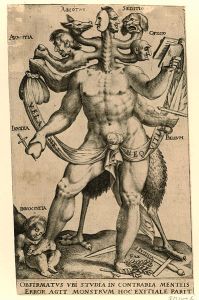
Some colleagues and I are working to meet a deadline. I suppose I use the word “colleague” rather grandly, since they both have teaching positions, nevertheless, we have a common goal. We are fascinated by monsters and we’d like to see the American Academy of Religion dedicate a small section of its large annual meeting to them. We’d do all the work. At first glance, this might seem an odd topic for the serious study of religion. The fact is, however, that monsters are a part of human experience—at least in our imagination—and the conceptual space overlaps considerably with religion. Many monsters have their origins in religious thought. Some theorists go further than that and suggest the very concept of “monsters” comes to us, courtesy of religious beliefs. We can see it time and again in popular culture; the movie or television show, or novel that features monsters ventures into the territory of religion.

The reason for suggesting that this relationship be formalized is the fact that, although this connection exists, it has not be given adequate study. Monsters are the denizens of childhood imagination. When we grow up we leave our monsters behind. But not really. We just stop talking about them. With our mouths. The film industry knows that a horror film will generally draw in the lucre. Halloween has become a major commercial holiday. Stephen King is a household name. I’m not sure why all of this is so, but I think it might have something to do with repression. When we grow up we are taught there’s no such thing as monsters. Those who refuse to relinquish those beliefs are ridiculed. We have more important things to do. Things like making money. Deep down, however, we may still believe.

The fantastic and belief are intimate companions. In fact, belief is at the root of much of our experience. That’s not to say there are really monsters in the night, but at some level we believe there are. And we also believe that infinite deities control this infinite universe that may be only one of many multiverses. It just seems likely. Evidence may point in the other direction. Empirical proof is lacking. And yet, we believe. I’ve discovered a number of colleagues over the years who share this academic fascination with monsters and religion. I don’t know if we’ll be approved by the powers that be, but at least we will have begun to raise the question. What lurks behind it is a matter of belief.

397px-Arminianism_as_five-headed_monster