This Year’s Apocalypse

Sundays are notoriously slow news days. The local paper, therefore, ran a whimsical headline: “Will the world end on May 21? Are you ready?” Nearly 40 billboards are asking Garden State commuters (as if they aren’t already stressed enough) if they are prepared to meet their doom. This year’s apocalypse is sponsored by Howard Camping, a California prognosticator with an history of calculating the world’s end. Given that our daily experience confirms uniformitarian processes on this planet have been in place for millennia – and even longer – the belief in a cataclysmic termination of billions of years’ work is rampant as ever. The end of the world, as touted in the media, is always based on religious precepts of some sort or another. Our scientifically scheduled apocalypse is about five billion years away when the sun becomes a red giant. (The biggest threat to capitalism since the collapse of the Soviet Union.)

Why do so many religions want to see it all burn? Life certainly has more than its fair share of misery and suffering. Apocalyptic scenarios abound in disadvantaged communities – the final leveler of all inequalities will put us all in the same place. Privilege creates as many problems as it does boondoggles. A truly evolved race would wish to share its good fortune to those without access to resources of the more fortunate. It is a severely effaced line between inequality and iniquity at the best of times. Those who don’t get a fair shake in this life look for a better lottery pick in Heaven’s jackpot.

But why do affluent people share this urge to watch it all explode to a theological fantasy-land? The local electrical engineer funding the billboards, is quoted by Star-Ledger staff as saying, “Seven billion people are facing their death! What else could I do?” My humble suggestion would be to put that money toward helping those who do not have enough. The underprivileged could be made to suffer considerably less with the obscene income of the Left Behind franchise. Instead that money is being funneled into questionable political causes. Maybe it is best that the world end next month after all. I’ve put it on my calendar, but I’m still expecting to be around for the 2012 apocalypse as well.
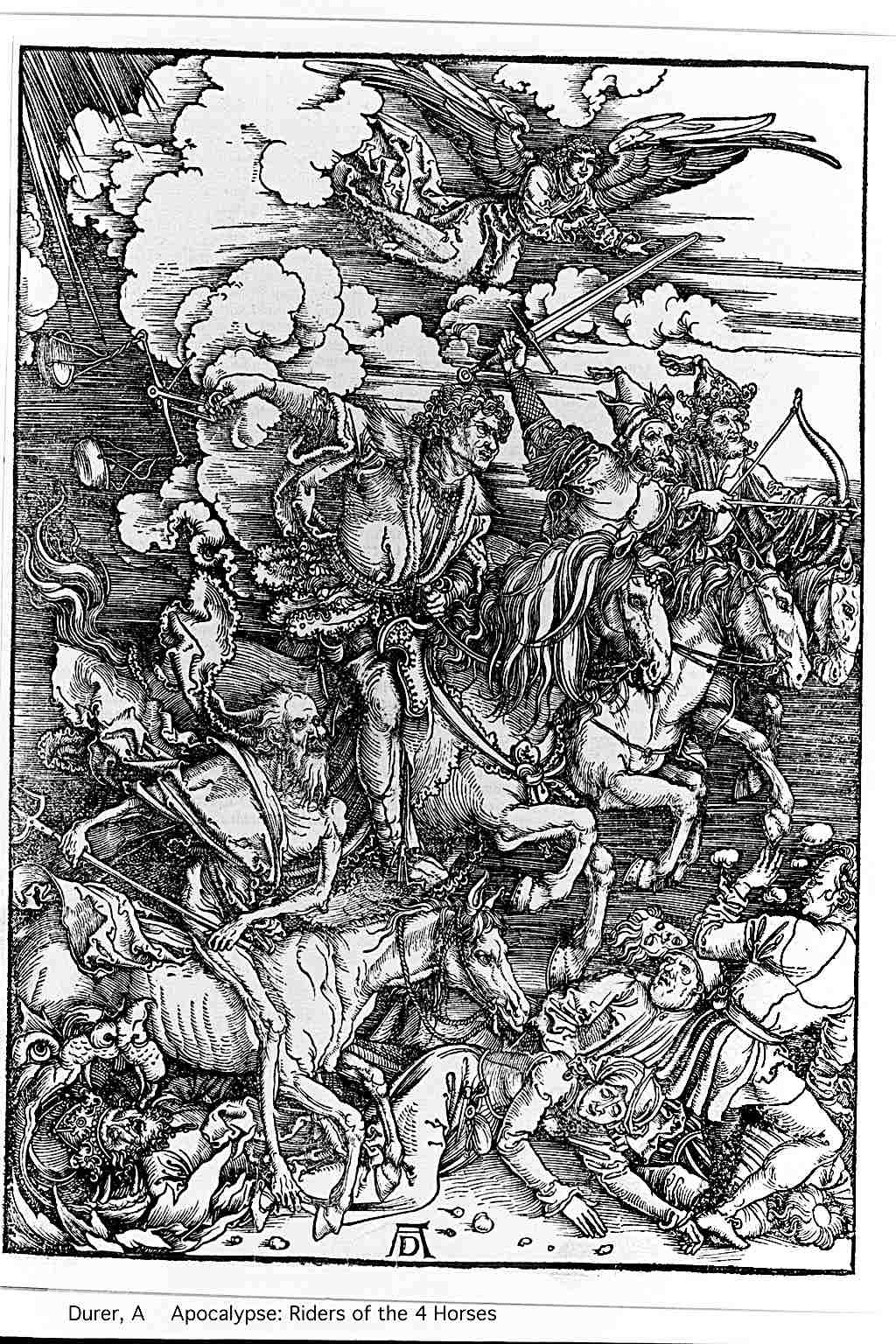
An apocalypse worth waiting for!

Cat Tales

Several years ago a cat named Rusty, aka, Firestar, came into our lives. Since my wife is allergic to cats Firestar is, of course, a fictional character. I’ve written about the Warrior series of tween books by Erin Hunter before, and last night I was reminded of the centrality of religion to the story. My daughter has been a fan of Warriors since fourth grade. One of the few luxuries we allow ourselves is the (now mandatory) purchase of the newest installment on the very day of its release. Waiting even one day cannot be tolerated. Although my daughter is among the more wizened readers of the series, her devotion is undying. She’s the kind of fan publishers (and some deities) covet. Last night I took a break from grading student papers to take her to see Erin Hunter at the kick-off book signing for the latest release in the series.

What a publisher loves to see

I have to admit feeling a bit out of my league waiting in a massive line where the average age is, on the whole, several decades below mine. There was even some question as to whether we would even be admitted since we had the dreaded B tickets rather than the highly prized A stubs. Having read the first twelve books as bedtime stories quite a few years back, I hadn’t expected the founder of the quaternity of Erin Hunters to be quite so witty. As she explained (mostly to the adults present, I believe) her interest in devising the series, she cited “religion” as the second of her interests. In the series, tribes of feral cats each have a shamanistic “medicine cat,” and the spirits of the departed cats play an influential role. Ms. Hunter also explained that the clans could be taken to represent different religions, all struggling to coexist.

Now I could understand that I was clearly in the world of fantasy. Religions, like all human institutions, are prone to corruption. Lofty ideals, inspiringly presented by insightful founders, soon come to be used as weapons and tools to win control over other people. Since religion is understood to be sacred, few suspect the insidious uses to which the various tenets of belief-systems may be put. Those of us who have toiled long among the religiosphere must become more circumspect about our surroundings or be consumed by them. Many of us know firsthand what darkness religions are capable of generating. In fact, it is something that even cats recognize, if Warriors be a reasonably reliable guide through this tangled forest. And like cats, many religious warriors can barely keep their claws sheathed.


Make Mine Myth

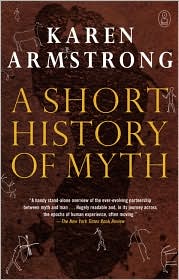
As a best-selling non-fiction author, Karen Armstrong needs no introduction. A recognized authority (some of us are mostly unrecognized) on religion in its broad sweep, she is an insightful writer and is worth paying attention to. I just finished reading her A Short History of Myth. The book does bear the marks of a religionist who hasn’t specialized in many of the materials she discusses, but when she reaches the time periods she knows, she comes alive. The book is a little unusual in that Armstrong believes myth began in the Paleolithic Period. I don’t doubt that early hominids who’d developed vocal skills probably told stories, but to be able to guess which ones in this first pre-literate period becomes rather speculative. The same applies to her treatment of the Neolithic. Still pre-literate, the people undoubtedly told religious stories but we will never know which ones.

Her discussion of the Axial Age considers mostly east Asian innovations, after acknowledging that distinct changes had also appeared in the Levant and Greece. It is, however, in her chapters on the Post-Axial Age and the Great Western Transformation that she demonstrates her craft fully. The western world, she argues, has lost something vital with the increasingly complete dismissal of myth. Those who see human history on an upward climb (mostly those who do not read or watch the news) are pleased to watch the demise of the non-rational. As Armstrong makes clear, however, pure reason comes with a very high price. The neurosis of the western world may be labeled “Exhibit 1.” Religions, institutions that evolved to improve the human lot in life, have turned destructive. Roping themselves in with a logic that doesn’t match their myth, they strike out at any who dare point out the inconsistency. Many of us have been on the receiving end of their lash personally.

Myth is where we seek meaning. Human beings are meaning-seeking creatures. While science and technology may see us safely to Mars and back, once the colonists start to arrive chapels will appear. We find ourselves lost in a meaningless world. Religions have tended to cast their uneasy lot with rationalism. What is left? Mythology. Mythology was never intended to be a literal account of “what actually happened,” but instead it was to explain what it all means. In these days when religious leaders are as likely to lob a high explosive in your direction – or engage in the Schadenfreude of watching you squirm before an overfed lawyer while being deprived of a livelihood – as they are to offer you a “hale and god-be-with-ye,” maybe what we all need is a stiff shot of mythology.


Dreams of Equality

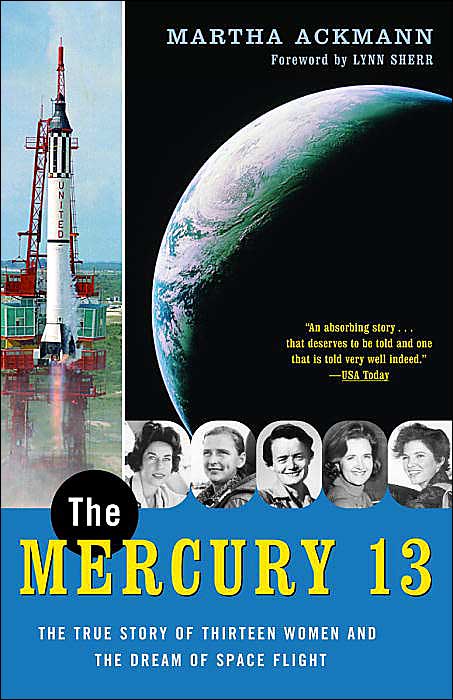
Shortly after my wife and I married, over twenty years ago, while living in Scotland we needed cheap entertainment. Growing up one of my chores had been washing the dishes. I continued this calling all through college, working in the dishroom to pay my way through. My wife was pleased with this trait and offered to read to me while I scrubbed away. This was our cheap entertainment, but now, after more than twenty years of the practice, we have read over 100 books together. Last night the book we finished was Martha Ackmann’s The Mercury 13. Most Americans do not realize that during the space race, thirteen women received non-official tests to qualify as astronauts, many of the tests more extreme than those undertaken by the Mercury 7 crew. Because of social prejudices of the 1950s and ‘60s, the women were never given the opportunity to actually achieve space flight.

Apart from the moving account of how these women strove for the stars, this account also chronicles a social prejudice that remains today. Ackmann reveals that during the ‘50s and ‘60s, scientists and physicians had never really taken an interest in women’s physiology. They were, in this McCarthyian era, considered to be an inferior version of males, the dominant social gender. Although the Mercury 13 were accomplished pilots – some with more flight hours than the chosen astronauts – many political and military decision-makers feared that social fabric would fray should women prove as adept as men. It wasn’t until 1983 that an American woman was allowed to enter space.

Here in the 21st century, many religions throughout the world still staunchly hold to the myth of female inferiority. In a monotheistic worldview where non-gendered deities need not apply, one sex will always be somehow less god-like than the other. In a world where men still pay women less, they are reminded daily that God is a white man and that the mythology declares man was created first. Religion is as often used to repress as it is to liberate. The women who sacrificed careers without personal reward to demonstrate that space belongs not only to men deserve our gratitude. And even that old white man, sitting up there beyond the dome that surrounds our flat earth, must be smiling.


Fire and Blood

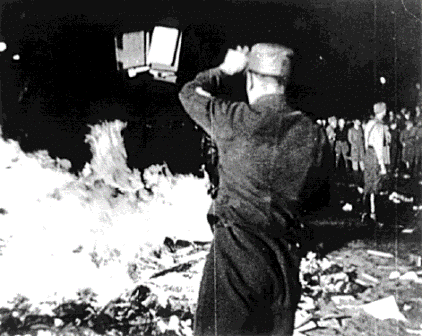
Religious intolerance again claims lives, and yet the self-righteous never flinch from their smug smiles. What insane pressure drives extremists like Terry Jones to desecrate the symbol of another religion? What did burning a Quran accomplish other than a feeling of personal satisfaction at a religious one-upmanship? Did he even stop to think that his own religion was once persecuted and that this nation that allows him the freedom to spit in the face of other faiths also welcomes his imaginary enemies? Now innocent people are dead in Afghanistan because of his intolerance. It may be that Terry Jones’ personal act of impropriety may soon blow over, but the damage has already been done. These dead will have died in vain.

Putting match to paper proves no superiority of intellect, spirituality, or especially, righteousness. The problem Terry Jones’ brand of Christianity faces is that Mohammed was born before the metaphorical return of Jones’ Christ. It is clear from the (unburned) Christian scriptures that early believers were convinced Jesus’ return was imminent, within their own lifetimes. For those who did not successfully transition to the meaning of the metaphor, it has been a weary two-millennium wait. The emergence of new religions in the meanwhile has become a threat to the superiority of their own. Apocalypticism claims many victims. Now people are dying because Terry Jones can’t cool his heels to see how this one comes out.

Religions that prove their point by trying to brutalize other religions have already shown their true character. Muslims do not burn the Christian scriptures because they accept the validity of Jesus’ teachings as well as those of Mohammed. Has Terry Jones damaged Islam by burning a book? No. Has he damaged the already languishing opinion on western supersessionism? Certainly he has. It is now incumbent on the rest of us to declare that we excoriate the acts of Terry Jones and his contemptuous version of Christianity. Islam need not try to give Christians a bad image; we are quite capable of helping ourselves.

Terry Jones' ideological companions


Freedom or Religion

Reform seems to be in the air. Its effectiveness varies from location to location, but what remains constant is the impact on religion. Or religions’ impacts on those dissatisfied with its application. As Syria begins to follow Egypt and Libya, a sense that the authoritarianism imposed by religious ideals is somehow flawed is sublimated in the news, yet clearly present. Regimes, be they Islamic, Christian, Hindu, or any other belief system, count on unquestioned authority to maintain control. Even the Catholic Church has been toying with reform – quietly, slowly – for any admission of change calls into question the authoritarian roots of power. Once that basis begins to crack, freedom has a chance to emerge.

In American society where freedom has perhaps blossomed most fully, there should be no surprise that a religious backlash is underway. In many ways liberty and religion stand at odds with each other. Religions make universal claims, drawing authority from none other than the One who started it all. Freedom begins at the ground and works its way up. Humans are natural followers, flock animals. Remember, Jesus said he was like a shepherd. When the shepherds apply the crook a little too liberally, even the sheep begin to plot. In many nations of the Middle East, the faithful have been kept in poverty and subservience. The Berlin Wall, however, was in the minds of the intimidated.

The United States has even backed the cause of the oppressed overseas, attempting to break up dictatorships that began before I was old enough to remember. And yet in our own backyard the Religious Right continues to make America like a western version of Syria or Libya. A nation of people under the rule of legislated morality that certain distorted versions of the Christian gospel advocate. Prevent equal rights to women and minorities by keeping the seat of power within the WASP community, although you may have to bring in some Catholics and Mormons to assist with the cause. The eyes of the world are on the Middle East, for any whiff of freedom, however faint, is cause for hope.


Corny Children

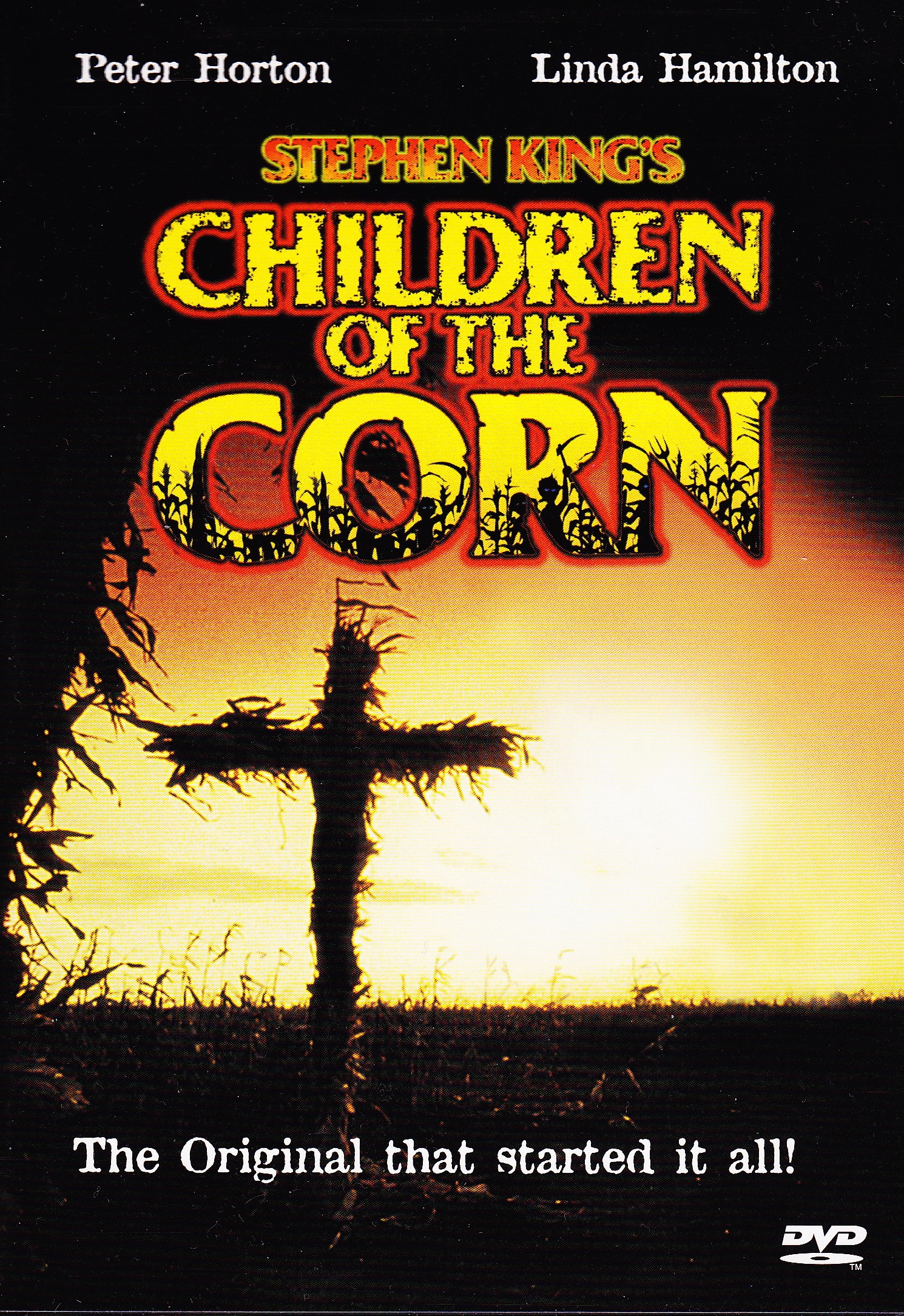
Once upon a time, if you wanted to see a movie you had to go to a theater or wait until it ran on television. This is stretching my memory back a long way, so indulge me if I only remember that four channels existed in those days, and you had to wait years for movies to appear at a time when you could actually be home to see them. Fast forward a few years and the VCR was invented. I remember being impressed that you could actually rent movies you’d always wanted to see, within reason. If you watched them too often they wore out. Then the electronic revolution came. This is all by way of excuse for why I’ve only just started to watch movies that came out in my younger years. Children of the Corn, although critically panned, was a financial success in my college days when I started watching horror movies. When I finally watched it yesterday, I realized it was a natural candidate for this blog’s running commentary on horror and religion.

What I had not fully appreciated is that the movie is a cautionary tale centering around a sacrificial cult. While the movie does have its problems, the concept of children taking the religion they hear from adults seriously runs throughout the film. Understanding gods as bloodthirsty demanders of sacrifice is a gruesome staple of all monotheistic religions. Someone’s got to die for the rest to be saved. While Fundamentalists take comfort in the substitutionary atonement of the “once for all” nature of sacrifice, in the film, the children erect crosses and sacrifice adults to “he who walks behind the rows” – a typical Stephen King kind of monster. Monster or not, the children believe he is a god.

Belief is the guy-wire for religion. The reality behind that belief is open to question, otherwise multiple religions would not exist. Children of the Corn confuses the issue by presenting “he who walks behind the rows” as a legitimate supernatural entity, one who is vanquished by a passage from Revelation. The truly disturbing aspect, however, is the complete, unquestioning devotion of the children. When children are raised in intolerant religions today, we are also planting corn that will lead to some unholy reaping in the future. Perhaps the message of the film was more trenchant than most critics were willing to admit back then. Today it is certainly more believable, given many religions’ demonstrations of their destructive powers.


Garden of Nede

Dystopias fit the Zeitgeist of the twenty-first century a little too well. The level of disillusionment has soared since the administration of Bush the Less when an unprecedented degree of ridiculousness tempered every political decision filtering out of a Washington that has become a little too religious. So it is that the genre of the dystopia is strangely therapeutic. I first became aware of Margaret Atwood because of an introduction to the Bible that pointed out the misuse of Holy Writ in her classic The Handmaid’s Tale. An allegory that demonstrates the power of religion to reduce women to mere reproductive objects is frightening enough in itself, let alone the post-optimistic view of a future of endless possibilities gone bad. Now that I’ve finished her more recent Oryx and Crake, I see that her outlook has grown more bleak, if more believable.

Like most dystopias, Oryx and Crake is filled with religious and biblical allusions. A society that does not know its Bible is easily manipulated by it. The book has been out long enough that I won’t worry about spoilers – does any dystopia end well? The basic idea is that the eponymous Crake of the title has tried to replicate Eden with genetically improved human beings. To prevent them from entering a world filled with human-inflicted suffering, he devises a way to wipe out the world’s population, leaving these innocents to carry on a genetically modified human gene pool. One survivor of the old days, Snowman (Jimmy), has to explain to these innocents what their world is about. He concocts a myth where Crake becomes a new god. Although Crake tried to modify the brains so that the “bundle of neurons” that make up God are gone, the new generation stubbornly develops a rudimentary religion.

Is it possible for humans to build a better future? I have never been swayed by the perverted notion of total depravity; people are quite capable of doing good. Our great ape cousins demonstrate that it is within our genes to produce a harmonious society. Although religions have motivated some extremely noble behavior in the past, they have also introduced heinous distortions of anything of which it might be said “behold, it was very good.” Atwood has offered us a world to ponder seriously. It is a world where humans play God and end up rotting under an unforgiving sun. Perhaps if politicians were more literate and less religious we might be able to counteract our partial, self-inflicted depravity.


Crossing Italy

“Poor men wanna be rich, rich men wanna be king, and a king ain’t satisfied ‘til he rules everything” – sage words of a young Bruce Springsteen. Of course, “man” may well apply to institutions as well as individuals. According to a recent story in the New Jersey Star-Ledger, the European high court has ruled that it is appropriate for public schools in Italy to decorate their classrooms with crucifixes. While this may not seem unusual for the heavily Roman Catholic nation, indeed, the homeland of the church itself; nevertheless it reveals much of the nature of religion. Religions, like Springsteen’s human characters, want to take charge of everything. Partial rule just isn’t good enough in a business that deals with absolutes.

Not every citizen in Italy is Roman Catholic. Some are not even Christian. State sponsored schools bearing the insignia of the church’s glory days send a message that can be heard from the highways to the backstreets: Christianity rules! If we wheel the world around a few degrees further we will find similar rhetoric in nations like Iran, only the specific brand of religion has changed. The message is distressingly familiar: Islam rules! There was a time when the church could likely be called the only true superpower in Europe. We remember that time now as the Dark Ages.

As campaigns for next year’s elections in the United States are pumping up, we are hearing quite a bit about candidates’ religious convictions. That which used to be a private affair has become an emblem emblazoned on a flamboyant flag declaring “Gott und Ich” to the world. Worse, the religions are being used to score votes. Once in office, that religion will return to its flaccid state and politics will be business as usual. The populace, however, has trouble seeing through this. Religion is injected with such emotional freight that leaving it out of elections – or classrooms – is like abandoning a helpless infant. As they nail their crucifixes to the walls of public schools in Italy, I’ll be over here with Bruce surveying these badlands.


Frippery or Faith?

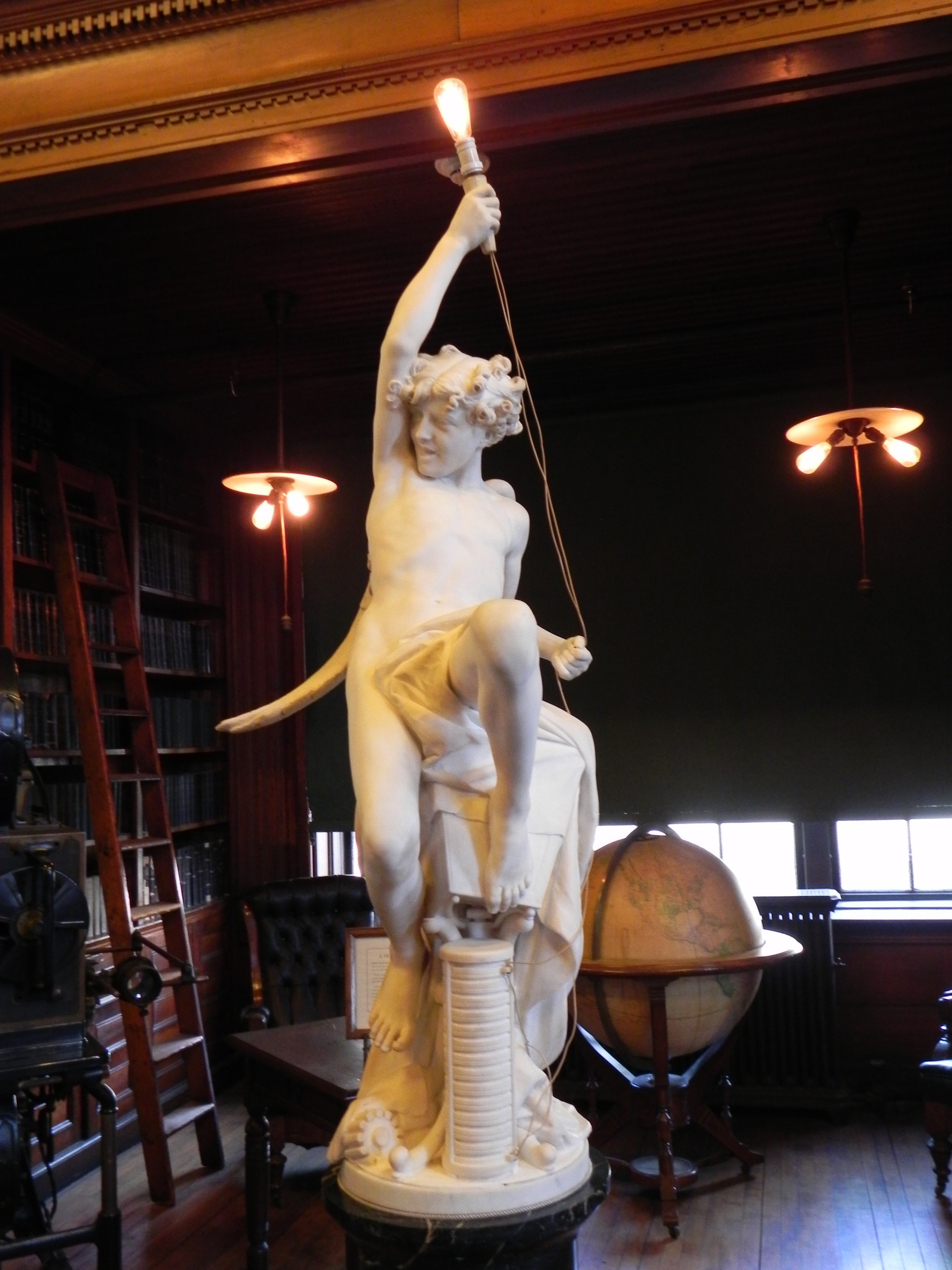
A lesson quickly learned in New Jersey is that the state has housed its fair share of geniuses and that inspiration takes many different forms. From Albert Einstein to Thomas Edison, these thinkers have changed the complexion of not only the state and country, but also of the entire world. While on a visit to Edison’s final factory and laboratory in West Orange yesterday, his devotion to thinking could not be overlooked. With little formal education, Thomas Edison taught himself what was necessary to become one of the most prolific inventors in the history of the world. The key to what he believed to be purpose of human existence is, sadly, under fire from politicians who’d rather keep the populace in the dark while they (the politicians) make the important decisions. “The man who doesn’t make up his mind to cultivate the habit of thinking misses the greatest pleasure in life.” So Edison said. Bully governors would rather turn out the lights.

As politics and conservative Christianity become even more intimate – if that is even possible – those who do not share their views are considered dangerous outsiders. As a religion specialist, it is difficult to gauge how sincerely such politicians take their religion. As their lifestyles clearly indicate, what they practice is as far from what they preach as the east is far from the west. Manipulating sincere, if misguided, believers into marks that will propel them into seats of power, they talk the talk. “Faith, as well intentioned as it may be, must be built on facts, not fiction – faith in fiction is a damnable false hope.” So said Edison.

If we measure the religion of the Religious Right in terms of action, it clear that their principles have far less to do with what Jesus said and did than with securing personal gain. Women are placed in subordinate positions; the poor, minorities, those who work to keep the economy afloat while the wealthy suck in more than they could possibly use, these people become targets rather than neighbors. Roman emperors knew the society was dissatisfied and provided bread and circuses. The Religious Right is perfectly capable of learning the more insidious lessons of history. If they had been around in Edison’s lifetime, no doubt they would have tried to turn off the lights so that we’d all remain in the dark. In such a situation it might be wise to leave the final words to Edison: “Religion is all bunk.”

Let there be light!


Third Mile Island

Sitting in the shadow of the cooling towers of Three Mile Island along the banks of the Susquehanna River the night before a friend’s wedding is one of the college memories that remains vividly in my mind. The accident had occurred some six years earlier, but seeing those ominous blinking red lights, no doubt to warn low-flying aircraft of the massive towers, left me with an irrational sense of danger. It will be a sad day when we have nothing left to fear. The next year, the Chernobyl disaster took place. This tragedy has results that are still playing out among the millions exposed to the radiation. Perhaps these events explain why Alan Parson Project’s Ammonia Avenue remains among my favorite albums.

While having my oil changed yesterday, the waiting room television was fixated on the story of the Fukushima Daiichi meltdown, settling it comfortably between Three Mile Island and Chernobyl. With anxiety about the year 2012 running amok, many people are looking for signs. Perhaps the most unfortunate meme the Bible has introduced to the world is the Apocalypse. In origin apocalyptic concepts emerged from the Zoroastrian idea that a dualistic change in ages was coming. Believing this world to be under the baleful influence of Angra Mainyu, a day was eventually going to arrive where all this would be turned around and Ahura Mazda would set things right. Christianity borrowed the idea, shrouded it in secrecy, and began an unhealthy interest in the end of all things.

Fukushima Daiichi may feel like the end of the world, but it is not. In fact, all that we know of our planet shows its great resilience. The late Stephen Jay Gould, in his popular book Bully for Brontosaurus, opined that the earth is not as fragile as is often supposed. He notes in the prologue, “Our planet is not fragile at its own time scale, and we, pitiful latecomers in the last microsecond of our planetary year, are stewards of nothing in the long run.” Not that we should not attempt to protect our environment – we do that to preserve ourselves and other species – but if we should fail, earth will carry on. Our globe is expected to support life for another 500 million years. Instead of following false positives, we might be better off reminding ourselves that Gaia still has a few tricks up her metaphorical sleeves.

One way or another


Zounds

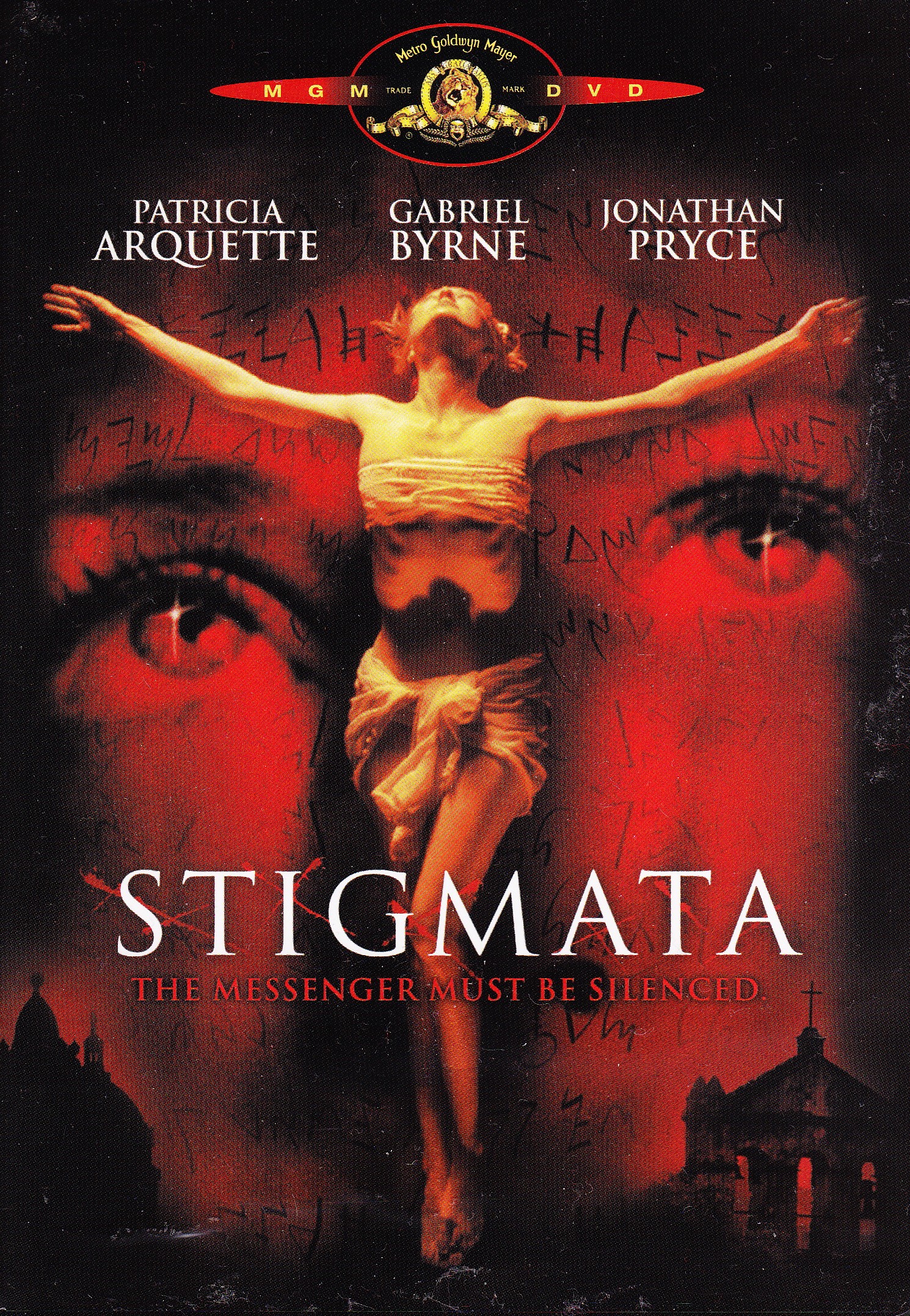
Back in my first exposure to state university life in Wisconsin, I frequently received eager guidance from students on religion in the media. After having taught in a seminary where interest in the world beyond ecclesiastical walls was rare, this exposure to wider interpretation was welcome. One of the movies suggested to me by helpful undergraduates was the then fairly contemporary Stigmata. My interest in horror films was burgeoning again after my nightmarish experience at Nashotah House, so I watched the movie with renewed appreciation for the abuses presented on the part of the established church. I rewatched Stigmata this past weekend and a number of features stood out as apposite for this blog.

As always in movies, liberties are taken with reality. Stigmata presents the Gospel of Thomas as a serious threat to Catholicism. Of course, even the Gospel of Judas made a public splash back in my Oshkosh days, but the great Titanic of the church remained steadily afloat. The contents of the Bible are secure and non-negotiable for the vast majority of Christianity. There is no more room within its black leather binding for further revelations. The movie also presents a woman – an atheist, no less – as being the vehicle for a truth she can’t understand. In the masculine citadel of the Catholic Church she must be silenced, in an overly dramatic way, of course. The message seems to be that religion is unwilling to learn from secular women, even if they bear the truth.

The critics were not kind to the movie, but I found it a strangely religious film. The premise behind it advocates the reality of Christianity, only the Jesus of history is occluded behind a great mask of human tradition. Enamored of power, the church decides what will be revealed to the masses since control is more important than truth. A woman cannot correct the false belief of men, since a masculine god has given manly instructions to a male institution. Underneath it all, however, is a virgin Mary weeping real human blood as half of humanity is simply disregarded by the half that retains its abusive strength. Perhaps the commentary was a little too close to home, even for the (mostly male) critics.


Thy King Dumb Come

Is it legal to be Muslim? It is against the law to be religious? What about an extremist? The Peter King Trials, under the auspices of the almighty House Homeland Security Committee, are attempting to put radical Islamists on trial. My question is: when was the last time they cleaned their own backyard? Religions make extreme claims. As long ago as Yahweh thundering from Mount Sinai, adherents to monotheistic religions have claimed that their interpretation of God demands many unsavory actions – genocide, infanticide, war-time rape – all permissible in the Holy Bible. When terrorists draw their inspiration from the Quran, however, it crosses that invisible line in the sand. During the deepest chill of the Cold War nobody thought to bring Russian Orthodox Christians to trial. After all, they are cut from the same monotheistic cloth.

The damage done by Christian extremists is less visible, or at least more forgivable, in American eyes. Innocent mistakes, people doing what they thought that God demanded. It could happen to anybody. As long as they are Christian. As we daily watch the infectious creeping of Fundamentalism and its subtle (or overt) violence against those who are different, in a great move of theatrical diversion, King and his minions try to focus blame on “pagans.” Right belief, the afterbirth of monotheism, has taken on a life of its own. It can brook no rivals. If it is Christian right belief it can support the sale of fellow human beings, the dehumanization of prisoners of war, the starvation of the young. They are, after all, not Christian. Not like us.

In the words of the King, “Too many of the leaders of the Muslim community… are not cooperative and are not willing to speak out and condemn this radicalization that’s going on.” Physician, heal thyself. Radicalization in the name of Christianity is acceptable, even laudable. It is just part of the frontier, pioneering spirit of this great nation. Other religions, however, need not apply for freedom. After all, what do they think this is – a democracy?

Just following the king of kings