Myth of Jerusalem

As I stood atop the Mount of Olives watching the sun set over Jerusalem several years ago, I had difficulty believing I was actually there. For a working class kid who’d only ever been to Canada before (and only because we lived not too far from Niagara Falls), this was a moment like a scene from the Bible itself. Jerusalem is a city of myth and dream, and it represents just how seriously mythology may be taken. A new book, Jerusalem, Jerusalem: How the Ancient City Ignited Our Modern World, by James Carroll, was reviewed in Sunday’s newspaper. I have not yet read the book myself, but a couple of lines from Tom Mackin’s review leapt out at me: “Jerusalem is as much a symbol as a reality. Because most Orthodox males spend their time studying the Torah, they are unemployed. Piety brings poverty.” This is editorializing with parsimony.

Those of us raised to believe that pursuit of the highest calling of humankind is that of seeking the divine often end up forced to live the consequences. This pursuit does not pay, unless one is willing to sell one’s soul to become a televangelist. Unemployment has a way of sharpening one’s focus. The message repeatedly heaped upon you by society is that you have nothing of value to contribute. True, religious founders often declare the ineffectual satisfaction of lucre, but then, most of them didn’t have a child to put through college. Having spent nine years after high school studying the Torah (and Prophets and Writings and documents written long before any of this), I see now what could not be seen then.

When I watched the sun set over Jerusalem with some friends, a stray cat wandered over, looking for affection. Or, more likely, food. I had some scraps that I shared with the hungry kitten when it unexpectedly bit my finger and scampered away. My friends, concerned for rabies or some other infection, rushed me down the Mount of Olives and into the Holy City seeking a holy pharmacy. Little did I know at the time that a myth was being enacted at the expense of my aching finger. Acts of kindness are rewarded with the hand that feeds being bitten. I had to come down from the mountain, earn a doctorate, and be dismissed by well-groomed evangelicals before I could finally see that the symbol was the same as reality. I need to read this book to restore my faith in mythology.

More and less than it seems

In the Beginning FIRST

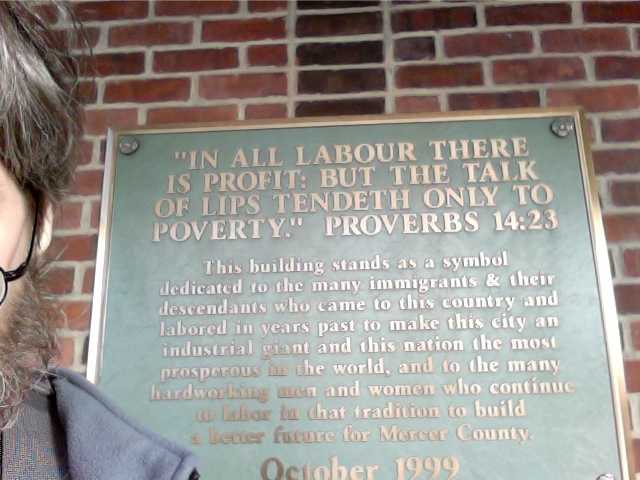
Robots can be strangely emotional. Partly it’s that Colosseum atmosphere of a FIRST Robotics event, partly it’s being reminded of the vitality of youth, partly it’s hope for the future, and partly it is being part of something larger than yourself. Sounds religious. All that and lack of sleep. Yesterday was the culmination of the New Jersey Regional competition of this year’s FIRST Robotics season. As a non-scientist/engineer wannabe parent, I attend the competitions I am able to and I always leave deeply conflicted. There is a strange disconnect between science and religion that maintains an uneasy peace in many educated minds. My malaise began when I saw the following plaque, quoting the Bible, outside the Trenton Sun National Bank Center. In a state where labor is constantly under attack by its aristocratic government, it was a poignant reminder that such events as this celebration of science would not be possible without the efforts of laborers.

Bible lesson before the games

Emulating sports events, FIRST Robotics begins its events with a ritual. This in itself goes back to classical religions where competitions were dedicated to the gods. As a local speaker stood before the crowd of several hundred youth, mentors, and advisors, he reiterated the commitment the FIRST program has to service. To make his point, he began speaking about what he’d learned in church. It was here that the conflict settled home. For many years I taught (still do, in a less direct way) those who were training for careers in the church. I am committed to teaching them that religious reactions against a scientific worldview are misguided and bound to collapse. And yet here was a highly educated scientist simply accepting the teaching of a minister. There is a deeper issue here.

I know many clergy, perhaps too many for the good of one layman. And I know that many of them are far too busy to sort out the detailed intricacies of how science and religion interact. In fact this may be the only truly honest way to engage our world. As I listened to excited kids making announcements about the millions of dollars available for budding science students in college, I reflected on our treasure lying where our hearts are. Looking around at the mess the world is in, I see religion often taking a leading role in violence and distrust, reaping the benefits of science for evil purposes. I see scientists attempting to instill a rational worldview on societies deeply mired in unreflective religion. And I find them mixing at the fringes. I salute FIRST Robotics, but I wonder if we can ever truly escape the wrath of the gods.


Shake Your Booty?

The Roman Catholic Church has been making headlines again. Yesterday’s newspaper afforded two headlines to the great mother church – or maybe I should say “pleasant parent church.” The first story regards the Pope’s new book, Jesus of Nazareth-Part II, due for release next week. In it the Teutonic Vater exonerates the Jewish people for the death of Jesus. The embarrassing mastodon in the room, however, is why the church ever blamed the Jews in the first place. From the beginning Christian theology declared Jesus’ death part of God’s master plan. It also provided a convenient excuse for centuries of hate crimes that continue to this day. Believers, however, are quick to justify God’s actions, even when the Bible tentatively raises its own objections. In my prophet’s course, many students had trouble accepting the fact that the story of Micaiah ben-Imlah in 1 Kings 22 indicates that God sanctions lies in the mouths of prophets for a larger divine purpose. Perhaps we should also look for Micaiah ben-Imlah-Part I on the bookstore shelves soon.

The second article, already making its rounds on the Internet, concerns a new translation of the Bible. Shaking the traditional word “booty” from its vaunted position, the Ash Wednesday Bible calls it “spoils of war.” I was pleased to see my personal friend Bishop Sklba interviewed as part of the release publicity. As he rightly notes, “English is a living language,” to which some have subtly added, “and a dying art.” The article rehearses the sophomoric tittering at funny-sounding verses that has plagued the church ever since the laity have been educated. Gelding the Bible is a small price to pay for sanctity.

Regardless of efforts on the part of the religious, the Bible remains an often bawdy text set in the context of a sexist and supersessionist world. It is the world in which the Roman Catholic Church came of age. As we start to see the first, faint blooms of a distant equality beginning to push through a vast leaf-litter of decomposing, brown tradition, the theology and foundational document of the church require some window-dressing. In this world of aggressive, bully governors and oh-so-self-righteous politicians, it is encouraging to see a massive religious organization bashfully blushing and suggesting that shoving others may not be the best method of getting your own way. Could it be that the church still has some valuable lessons to teach the world?

Oh, uh, sorry about that...


Sanity Plea

How far up the chain of command does an insanity plea go? Back in 2005 Boyce Singleton Jr. admitted stabbing his girlfriend to death because “God told him to do it.” An appellate panel has just decided that the guilty verdict must be thrown out because the jury had not been instructed in insanity plea etiquette. “But, the appellate panel said [Judge] LeBon should have told jurors that they could acquit Singleton by reason of insanity – even if they found Singleton knew killing Michelle Cazan was wrong – if they believed he felt God compelled him to act,” according to the New Jersey Star-Ledger. A former colleague at an institution plagued with insanity once told me, “humor the mental.” That may be the best advice a weary nation might hope for. While political rulers from the privileged caste whittle, hack, and bludgeon away at the meager benefits of their underlings (previously known as constituents), those who refuse to pull back hands and feet endanger a digit or two. In the name of God, why doesn’t somebody do something?

There was a time when saying God made you do something evil was considered blasphemy. In today’s America it is an open justification for just about any war crime or personal vendetta you may want to implement. You see, God is freely available for those who know that a mere human committing their heinous acts would be clapped in irons. Long generations of televangelists have given the public the divine American Express card number. Do you hate this particular group? So does God! Do you want to declare war on that country? So does God! Do you want to stab your spouse? So does God! The rhetoric is so normative that a president can declare a personal quarrel a national crusade because God told him to. No one even bothers to look up from Facebook.

It is time to remove God from the equation. When I was a child Flip Wilson ratcheted up the laugh meter with his catch phrase, “the Devil made me do it!” Classic transference was funny because everyone knew it was a bogus excuse. Not long after Flip’s demise the catch-phrase spread to the White House with only a simple title change. Are not the Devil and God interchangeable? Once a president claims divine precedent, doesn’t it trickle down to those lower in the social order? That’s the way of democracy, and God has been very democratized. Who needs an insanity plea when you’ve got the creator of the universe in your back pocket?

Where did you say this boat stops?


Carrie That Weight

When it comes to keeping up with the classics, I have a lot of catch-up to do. This even applies to classic horror films – I’ve been a fan since college but slipped out of the groove for a decade or so and now I’m working my way back in. Recently I watched Carrie for the first time. Considering that it came out in 1976 (I still remember the original trailers), it has held up remarkably well. The story of the child struggling to become an adult against the wishes of an overweening parent never goes out of style. In keeping with a long-term theme on this blog, the religious element was fully represented as well.

The portrayal of Margaret White as a religious fanatic included incongruous elements that had clearly been selected for their ability to set a creepy mood. The statue of St. Sebastian with an abdomen full of arrows seems a strange fit for a Christianity that is apparently Protestant. Mrs. White’s veneration of the Bible settles better in a Protestant milieu than the Catholic background of director Brian De Palma. The decidedly unnerving scene where Carrie returns home from the prom to find hundreds of candles burning recalls a more Popish atmosphere, but the prayer closet resonates better with reformed traditions. This unholy mix creates a disturbing lack of specificity, as if religion itself is the danger.

Writers and movie-makers attempting to scare audiences have long drawn on the stock character of the over-zealous religious believer. One reason may be the lack of understanding such characters demonstrate towards those who do not share their views. While it would be comforting to suggest that this is a mere caricature, experience unfortunately belies this assertion. Religions around the world all have adherents who brook no rivals and claim victory only in convert manifests or body counts. Truly classic horror films draw their power from a deep honesty. And many people are honestly afraid.


Skullduggery

Perhaps it’s just what I deserve for reading Stephen King’s Pet Sematary, or maybe it is just one of the perks of living in New Jersey. On the front page of today’s New Jersey Star-Ledger is a story of grave robbery. Two recent graves, one eerily reminiscent of King’s novel, have been plundered for what officials are calling a “non-traditional religious practice.” If the locally popular magazine Weird NJ is to be believed, the state hosts many religious groups that fall into the non-traditional category. This is a predictable by-product of religious freedom; some people find religious fulfillment in idiosyncratic rituals. And all religions are concerned about death.

“Some religious sects use human remains in ceremonies,” the journalists state matter-of-factly. The concept has an ancient pedigree, even in orthodox varieties of religion. The macabre practice of keeping a bone, or occasionally a whole body, of a saint for veneration is cut from the same cloth. In King’s novel, the darker side of resurrection is explored. We miss our dead, but do we really want them back here with us? The use of human bones is disturbing because it suggests the rest and sanctity of the dead has been violated. Perhaps a Halloweenish horde of restless deceased will be unbound among us. We prefer our dead to be left in peace.

Perhaps it is that lives filled with the turmoil of our frenetic scramble to stay ahead of tragedy look forward to death’s eternal slumber. Anything that suggests the dead have been disturbed sends ripples through the psyche of the living. While visiting an ancestral plot some years ago, I discovered that vandals had tipped over the tombstone where my great-grandfather and several great uncles rested. No caretaker was on duty at the remote cemetery, so I found the address and mailed a request to have the stone set back in place. The image of that fallen stone distressed me for several days. Those who rob graves likely do not take the distress of family into account – their religion requires human remains and we attach great significance to the inert matter that used to be one of us. It is an impasse. Religions make demands and those who get in the way, either living or dead, often end up violated.

Even the dead mourn


Vindication

Back in the summer of 2009, I chose the name of this blog on a whim. Relatives had been encouraging me to provide a platform for podcasts and the occasional post and asked me what I would call such a blog. The pun of sects and violence initially drew some good humored interest, but there was a serious subtext beneath the choice. Nature has now published an article declaring that violence and sex are related. (Sects and violence is a no-brainer; just look at the newspaper.) The connection has been established satisfactorily only in the brains of mice so far, but what is the real difference between mice and men?

Yes, men. The studies focus on the male brain, that organ that continues to confound those of us who daily try to use one. Certain circuits in the mouse hypothalamus trigger either a violent or loving response when stimulated certain ways. Aggression is almost an automatic response. My mind tied this in with the Singularity article in last week’s Time. As we race forward with technological mergers between artificial intelligence and the human machine, do we really understand what that brain is that we are attempting to emulate electronically? Biology, according to many theorists, does not bow to the rules of reductionism. What happens when the violence of natural circuits (fight or flight) kick in with titanium feet?

I commented on a friend’s post when he cited the Singularity article in Time. Others responded to my remarks suggesting I did not take the reality of this seriously enough. Those who are familiar with Sects and Violence in the Ancient World will have no such questions. The minds that have given us both gods and guns are machines that can not be replicated precisely. Their function is to keep a degenerating biological mass alive. Electronic brains with replaceable parts (think Wall-e) have no such concerns. The missing limb syndrome is a very human response that is well recognized by those who understand the human psyche. And that psyche, it seems, is ready to fight as long as it is properly stimulated.

A boy's eye-view of the world


Agenda in Pink

One advantage of the technological revolution is that it is a lot easier to look things up in the Bible now. As a biblical scholar who cut his teeth the hard way by reading and rereading Holy Writ until great swaths were committed to memory, now I find it much easier to visit BibleGateway.com rather than haul out the old print concordance and crack my knuckles before straining a muscle to lift the thing. The other day while looking up a passage for class on BibleGateway, I saw an advertisement that made me cringe. Zondervan, owned by Rupert Murdoch’s News Corporation, is now offering a “Precious Princess Bible.” I did a literalist double-take at the banner. My imagination began to spin: does this edition offer all the misogynistic passages in pink letters? Should not the owner of all FOX News do all that is possible to keep women in their place?

Even a short list will serve to make the point:
Exodus 21.7: And if a man sell his daughter to be a maidservant, she shall not go out as the menservants do.
Leviticus 27.3-4: And thy estimation shall be of the male from twenty years old even unto sixty years old, even thy estimation shall be fifty shekels of silver, after the shekel of the sanctuary. And if it be a female, then thy estimation shall be thirty shekels.
1 Corinthians 11.3: But I would have you know, that the head of every man is Christ; and the head of the woman is the man; and the head of Christ is God.
1 Corinthians 14.35: And if they will learn any thing, let them ask their husbands at home: for it is a shame for women to speak in the church.
1 Timothy 2.12-13: But I suffer not a woman to teach, nor to usurp authority over the man, but to be in silence. For Adam was first formed, then Eve.

The Bible is hardly a tome to affirm the “precious princess” concept that many modern parents believe they are fortunate enough to claim. No matter how much we candy-coat it, this is salvation with a double standard. One of the truly remarkable aspects of Christianity is the number of women who adhere to it despite the secondary status the foundation document lends to them. Despite a few harsh words, Jesus is depicted as treating women well. But the Bible tantalizingly refuses to tip even his hand in favor of feminism. The Bible is a man’s world. I am personally awaiting the He-Man Combat edition. It would fit many parts of the Scriptures remarkably well.


Devils and Mooncussers

New Jersey is an easy state to caricature. Some of the most remarkable aspects, however, are those that seldom find their way into the popular media. An unseasonably warm spell led my family to a sudden awareness of cabin fever that sent us seeking diversion over the weekend. We ended up at Tuckerton Seaport. To get to the museum from our location meant a long drive through the pine barrens. This unique ecosystem is impressive for its size (over a million acres) as well as for its unique plant-life and relative lack of population. And, of course, the Jersey Devil.

A relatively harmless Jersey Devil

Even serious museums such as the Seaport can be expected to play up the heritage a bit. In a corner of the wildlife diorama is tucked a little sculpture of the Jersey Devil. The diabolical aspect comes only from the folklore of its birth as an accursed child. Far more dangerous were the human elements in the maritime history. Mooncussers were those who set out false lights for ships, hoping to lure them into the shore where the vessels would run aground, leading to easy plundering. The lighthouse has long been a religious symbol, a metaphor ready-made for illumination, safety, and solidity. This very reputation led the way for mooncussers to steal the signs of security to enhance personal gain.

The devil of personal gain unfortunately haunts more than the remote pine barrens of New Jersey. Those who use religion to attain that gain are the modern mooncussers who draw the unwary too near to the rocks and shoals. And mooncussers encourage others to participate in their sham, as long as there are gullible captains who are uncertain of the shore. The early church liked to compare itself to a ship. This image inspired many a nave ceiling to be designed as the hull of an upturned boat. Unfortunately, the hull often appears to have been capsized and the mooncussers appear in the role of diabolical captains set on wrecking the very vessel they command. Who needs a devil when human greed is far more than adequate to lead even the upright to opt for easy gain at others’ expense?


In the Name of Hate

Saint Valentine’s Day: a minor holiday that no one gets off work or school, but which has both naughty and nice aspects to it. A day with long pre-Christian associations (sorry St. Valentine), the celebration has become an icon of love in the Hallmarkian holiday world. It is a welcome change to the weariness of winter that drags on around the northern hemisphere, reminding lovers and curmudgeons alike spring is on its way. A holiday of hope.

At the same time, an editorial in Saturday’s New Jersey Star-Ledger raises the ghosts of less pleasant times. The Mississippi Division of Sons of Confederate Veterans is attempting to sponsor state license plates honoring General Nathan Forrest, first Grand Wizard of the Ku Klux Klan. While pointing out that Forrest eventually distanced himself from the movement, state officials want to acknowledge his contribution to their state’s history. License plates advertise to the nation as a whole what states uphold as their most attractive traits. In a world where the Klan is still seething under the surface, with active groups in nearly all states, it is not hard to see that hate can not lead us forward. It has failed in the past and it has no hope of success in the future.

Among the most distressing, if not revealing, features of various hate groups is their outspoken adherence to “old time” Christianity. Religion is but one tool in their arsenal, but what makes it so deadly is that even “peaceful” religions such as Christianity have a violent heritage. The Bible can be used to justify genocide as well as rescuing the widow and orphan. Christianity has a long history of being used for political, often hateful, ends in America. It is a trend that is dressed up in its Sunday best for glib talk-show hosts and windbag politicians who claim that “old time” values (read “white privilege”) are what America needs. Do we really need more hate? It’s Valentine’s Day. Let’s give it a break on the rhetoric of hate for at least a day. Who knows? It may become a habit.


Anvil Chorus

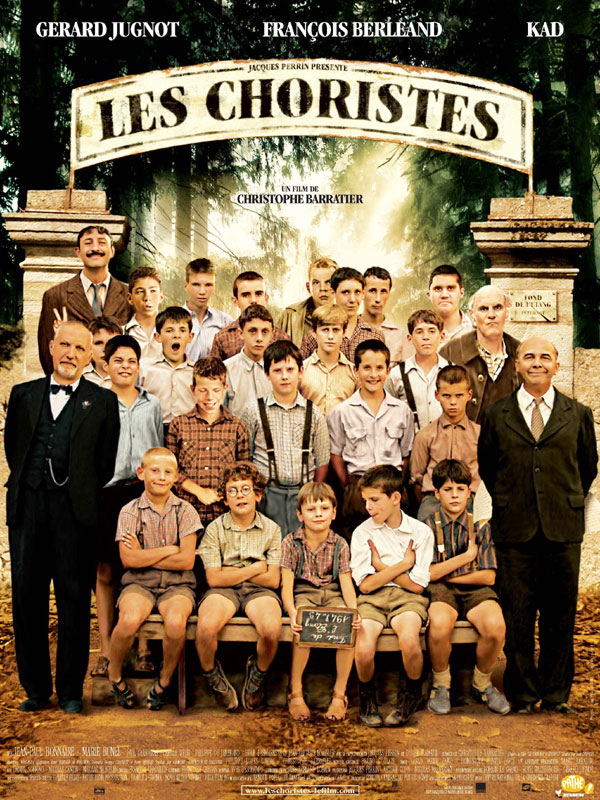
Last night I watched Les Choristes, the 2004 film that received two Academy Award nominations. The story, set in a school for troubled boys in France, felt eerily familiar. Not only did it resurrect the ghosts of Dead Poets Society, it felt like a page – or a substantial chapter – from my own life. The movie was recommended to my wife by one of my colleagues at Nashotah House, an institution that the film strangely resembles. The more I pondered the implications of a small school run by an authoritarian headmaster full of students with malevolent tendencies, the more I realized how much my Nashotah House experience has set the tone for much of my life. While I was at Nashotah, P. D. James’ murder-mystery novel, Death in Holy Orders came out. Immediately students and faculty began to speculate that James must have known of or have visited the seminary. Similarly, the Harry Potter novels led many to compare Nashotah to a decidedly less magical Hogwarts. Some of the students even honored me as the putative master of Ravenclaw.

My personal experience with religious institutions has led me to conclude that they indulge themselves in doling out the abuse that only religious sanction permits. I had attended the Presbyterian-affiliated Grove City College where chapel attendance was mandatory. My experience at Boston University School of Theology convinced me that seminaries were not a good fit for most people, particularly those like myself. I left declaring I would teach anywhere but a seminary. There is no balm in Gilead.

Forever after, any small, religious school with dark secrets would be my Nashotah House. But the problem is much wider than that. Religions seek to control. Some manage to do so benevolently, but too often the human element eclipses the divine. It is a temptation, when in positions of religious leadership, to insist that one’s personal outlook is correct. We all believe that our views are right. Those who receive the holy unction of an institution have the means to make it so. It is not Nashotah House, but human nature. When religious leaders confuse divinity and authority, that is when trouble inevitably begins.


Two Ghosts

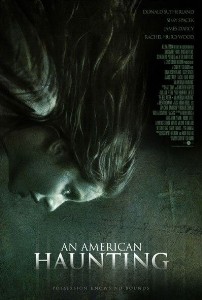
To escape the harsh realities of a fractured career, I turn to celluloid. Lest Hollywood distract me too much, I strictly limit my movie viewing to weekends when I can let down, for a few moments, my constant anxiety. Since my religious antennae are always prickling, I notice implications sometimes in unexpected places. So this weekend’s fare included two ghost stories. Both of them utilize religion to resolve the haunting, but in very different ways. An American Haunting purports to be based on real events involving the putative “Bell witch” of Tennessee. The movie takes many liberties with this scant folktale, including a church condemning a seemingly upstanding member and a Bible being dismembered as the angry spirit attacks the Bell family. In the end, the plot is confused by a revelation of family abuse and the viewer wonders who it is that tears apart Bibles.

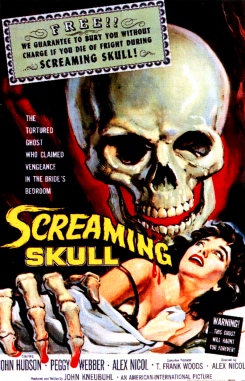
The second part of my double-feature was The Screaming Skull, a 1958 horror film that fails to raise a single follicle in fear. Nevertheless, the moody movie does provide the Dies Irae for Stanley Kubrick’s opening theme of The Shining as well as a sense of isolation that would also inform the latter exemplar. The religious element comes in the form of a priest who is a close friend to a clandestine murderer. With the help of a ghostly screaming skull, the priest is the one who eventually solves the murder and rescues the intended victim of our erstwhile protagonist.

Nearly half a century separate these two ghost stories, and the role of religion in them has reversed. In the 1950s the clergy were society’s protectors. Even though Rev. Snow is the only main character who does not actually see the ghost, he is a safe haven for the victims of evil. Fifty years later, it is the church that sets up the haunting of the Bell family by its unyielding laws. The family quotes the Bible at the spirit and the ghost tears the Bible apart. There is no sanctuary here. Films, no doubt, reflect social attitudes. When the foundations have lost their hold, confusion results. Who is to blame for the suffering of Betsy Bell? The movie leaves that up to the viewer. There is no solid Rev. Snow to whiten the sins of this world. Only ghosts remain.


Dog Gone!

Religion is a strange attractor. Maybe not in the exact same sense as in chaos theory, but in reality it brings together mental states so bizarre that science fiction and fantasy writers have a buyer’s choice. Yesterday the New York Daily News reported on a South Carolina woman who hanged and burned a one-year old pit-bull puppy. Why? The bitch had bitten the woman’s Bible. Citing the animal as a “Devil dog,” the southern woman became a vigilante for the Lord. Now she’s being tried on charges of animal cruelty. This story touched me in a number of ways.

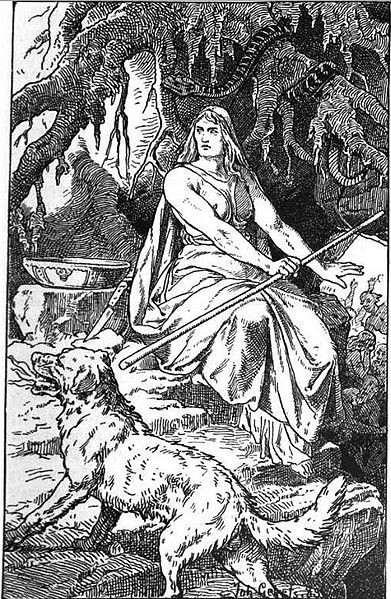
With family roots in South Carolina, I can conjure up images of this happening. Having known many, many Fundamentalists, it seems even more plausible. Given the constant barrage of contrary messages descrying the presence of evil in the world, all the sudden any mutt can become Mephistopheles. Begging off the Baskervilles, the demonic hound has a long pedigree in mythical imagination. It is well known that the Bible cites dogs as unclean animals, but it is their charnel character that leads to the development of the full-blooded hellhound. Prior to the Hebrew Bible, in ancient Ugarit dogs had an infernal connection. It isn’t seen clearly, but the association is there. Snatches of the underworldly dog appear long before Cerberus, and last well nigh into the twenty-first century.

Hel and his hound

Unfortunately for the deceased canine, it is a myth. Hellhounds still abound in popular media, everywhere from The Omen to O Brother, Where Art Thou? Dogs, however, were among humanity’s earliest partners in the survival game. From about as early as I can remember, we always had dogs in the house, and nary a demonic encounter. We never put them on trial, even when house-training was in progress and an accident occurred.

The news story reminded me of an episode of Dragnet I saw as a child. A woman was arrested for murder, and Sergeant Friday, in his unflappable voice, told his partner it was because the victim had shot one of her books. In the final fade out, after Bill Gannon asked what book it had been, Friday holds up a Bible with a bullet-hole through it. I was a little confused. Was the woman guilty or was someone shooting a Bible just cause? The episode did not answer the moral dilemma. I can’t even remember the outcome. But in 2011 things haven’t much changed. If he goes to South Carolina McGruff better watch what he takes a bite out of, or it could be lynching time again.


Vote With Your Faith

Starting off a new administration on the right foot is the goal of many politicians. This was likely the case for Alabama’s new governor Robert Bentley. When he was sworn in on Monday he stated that anyone who was not a Christian was not his brother or sister. Likely the statesman was attempting to garner support among the predominantly Protestant population of this southern state. Instead he received a backlash from various groups complaining that his statement implied that some would be lesser citizens under his tenure. Yesterday he apologized for his remarks. The fact is, however, that the governor was not the origin of the sentiments expressed, but those of the “Bible believing” sects of the south were. This is the kind of language, Biblicalese, that they like to hear: either you’re with us or ag’in’ us.

Religions have much to gain (and lose) by maintaining high standards of separation. Exclusivity, I was told in a class on early Christianity, was what ensured the survival of this sect of Judaism. If anybody could join, then who would want to? Make it exclusive, and there’ll be a line out the door. So it is with political religion. The Bible is not a great unifier – it tends to divide people more than unite them. The real question is: should the way forward be defined by division or unity?

We have ample evidence of how division breeds religious contempt. Since I believe the correct religion, anyone who disagrees with me must be wrong. If they are wrong, my deity does not approve of them the way (generally) he approves of me. And so the story goes. And so the body count climbs. The Bible can be a great unifier, if those who wield it so decide. Venerating a book with multiple points of view, Bible readers may choose which aspect of their Scriptures they want to emphasize. And that little black-covered icon continues to pack a wallop in western culture, so the perspective you choose is backed with immense fire-power. Problem is, sometimes it backfires. The new governor of Alabama is learning this in his first week in office. It would be a lesson well learned by any who attempt to bludgeon others with the Good Book.

'Nuff said.


You, Robot

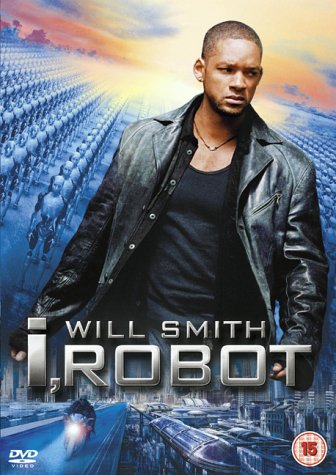
Although robots occupy many of my waking hours, I have been slow to consider the consequences. As the president of a high school FIRST Robotics team, I seek corporate donors who have the kind of money those of us in the humanities find difficulty believing even exists. Somewhere deep inside, however, lurks the fear of the entity with no sympathy. This has only been exacerbated by my experience of churchmen with the same condition. In any case, I’d been wanting to see the movie version of I, Robot for some time. Now that I stand at that three-day break between semesters, I thought I’d take a chance on it.

I knew the movie had received mixed reviews from critics, but several had stated the story had brains as well as action. It took me quite some time, however, to see the connection between the laws and Moses. The three laws of robotics, the only part of the movie besides the title to reference Isaac Asimov, dominate the plot. The law-giver, the posthumously present Moses (Dr. Alfred Lanning) has implanted a literal dream of freedom into the computerized soul of Sonny. Sonny’s dream of robot liberation is framed like Moses on the mountain. The laws in fragments at his feet. At what point does consciousness emerge? Since we haven’t adequately defined consciousness yet, we simply can’t say.

Near the climax of the movie, Sonny experiences an epiphany. Sometimes “the created must protect the creator, even against his will,” he realizes. Here the metaphor takes over the literal reading. Many religious people today feel that they must somehow protect their maker. This leads to great distentions of logic and even empathy for fellow humans as violence erupts in order to protect an idea that has become divine. Even the laws given by the creator may be violated to protect the idea of that creator. It is a world we find frighteningly familiar. Technology will continue to advance at a rate beyond the comprehension of a scholar still studying those ancient laws. This scholar, for one, hopes that our future creations lack the capacity for religious thought.