Misjudging Dinosaurs

Two dinosaurs diverged in the middle of evolution, and I’m not at all sorry that they both flourished. One became an herbivore, harming no one but plants, while the other grew into a carnivore, eating its siblings. That’s the way of this evolutionary universe. The Eodromaeus and Eoraptor split took place near the very inception of the dinosaur form, with the most basic of existential options: eat or be eaten. Noted paleontologist Paul Sereno has been excavating these Argentinean Lilliputian dinosaurs and has detected that the species, while similar, had irreconcilable food preferences.

Dinosaurs are often relegated to the age of children. When we grow up, we’re supposed to take interest in more modern developments and leave the dinosaurs in the dust. Their value, however, is often underappreciated. We learn about our world by examining theirs. Identification is subtle and sometimes wrong. Little Eoraptor is now thought to have been the plant-connoisseur, despite the terrifying, Jurassic Park-sounding name. We call them what we think they might be. Further discovery often changes the complexion of the picture.

When forced into a choice of more adult occupations, perhaps I unwittingly rebelled, choosing to study ancient religions. Like dinosaurs, religions evolve. As a child it was far easier to tell the preferences of dinosaurs since their morphology often gave them away. Religions are much more subtle. We are told that some dinosaurs survived in the form of birds. Many, many millennia of evolutionary pressure reduced their size and morphed their scales into feathers. Sometimes it’s hard to recognize a carnivore even when it’s just outside your window. That’s the way it works. Some follow the herbivore track, others prefer the way of the carnivore.

It's not the Eoraptor you think you know (from WikiCommons)



From Palin to Phelps

People get shot every day, but that does not take the sting from the January 8 shootings in Tucson, Arizona. We live in a nation filled with angry, violent people. Most of them hold their rage in check, but others act out their frustrations aided by the obscene ease of firearm ownership. Into this volatile brew, mix in the warped rhetoric of a politics of fear and who knows what might happen. Sarah Palin and other outspoken conservative ideologues hold up their pristine hands to demonstrate they have nothing to do with the hate-mongering that haunts our streets. She calls the jabs at conservatives “blood libel.” I say if you propagate the politics of fear you’re liable to get blood on those hands. Often in the bookstore I see titles like How to Talk to Liberals: If You Have to. The liberals I hear talking are only asking for dialogue and coexistence. One side wants a chance for everyone to be heard, the other wants to throw stones at those who are different.

Students do presentations in my classes. The assignment is to choose a social issue where the Bible is brought to bear on the topic and present to the class what you learn about the subject. Two groups last night presented on the Westboro Baptist Church and its outspoken pastor and founder, Fred Phelps. Both presentation groups showed videos of members of the Westboro Baptist Church speaking out about various and sundry liberal groups/causes/nations they hate. Plucking verses from the Bible like a chicken pecking at the ground, they cite only those passages that justify hating those who are different. They seem to have overlooked the part that says, “by their fruits you shall know them.”

On today’s schedule? According to the Westboro website: “WBC to picket the funeral of Christina Greene, the 9-year-old girl cut off in her youth for the rebellion of the parents, preachers, and leaders of this nation.” They’ll have a hard time finding any place in the Bible that condemns children, shy of sly old Elisha calling out she-bears to kill 42 of them. Having read the Bible for practically my whole life, I have a very difficult time reconciling those who use the Bible for conservative causes with their own sourcebook. What will it take for them to realize that “what I want” is only part of the picture? Whether presidential hopefuls or crazed curmudgeons, we would all sleep better if we took to heart that inequality is very easily transformed into iniquity.


The Selfish Meme

Although we may know deep down that one day is pretty much the same as another, people have always held profound reverence for the new year. Symbolic rather than empirical, hopes resonate around the concept that a good start presages better things ahead. That’s why tragedy early in the year sometimes possesses such solemnity; we had hoped that things might begin anew. The headlines today announce that a church bombing in Alexandria, Egypt, started a new year of violence in the southwest corner of the cradle of civilization. Muslim extremists are suspected as there has been some tension between the Coptic Christians of the city and their Islamic compatriots. Although details are not clear, one matter remains in focus: the violence is based on religion.

One of the more savage legacies of monotheism is the absolute truth claims that follow in its train. If truth be truth, there be only one. So the meme goes. Multiple mutually exclusive truths cannot coexist in a religious universe. Scientists might well claim that in this non-empirical universe, no testing may reveal the actual answer. Belief takes over where knowledge fails. And belief in a religion, like it or not, follows the dictates of survival of the fittest. Memes, like genes, can be quite selfish. If one is to stake eternal, unchanging consequences on a religion, the proposition is all-or-nothing. Even purgatory is not forever. The coin falls one way or the other. Religions fight for the memes of truth, and those with the highest survival rate win.

Lighthouse of Alexandria before the bushel

Alexandria has suffered its share of violence in the past. Its famed library, the center of learning in the ancient world, traditionally underwent four destructions, the final two religiously motivated. The books surviving antiquity fell under the Christian ban of paganism in 391. Arabic sources note the destruction of the institution after the Islamic conquest in 642. The end result is the same – the irreparable loss of centuries of knowledge. The lighthouse of Alexandria, one of the seven wonders of the ancient world, might well stand as a symbol for the influence of rationality. Tradition states the light could be seen 29 miles away, but earthquakes and the need for building material saw the extinguishing of the light so that by 1480 the darkness settled for good. A fort was built from its remains. Given a choice of light or fortification, it is clear which way the selfish meme will go.


Battling Billboards

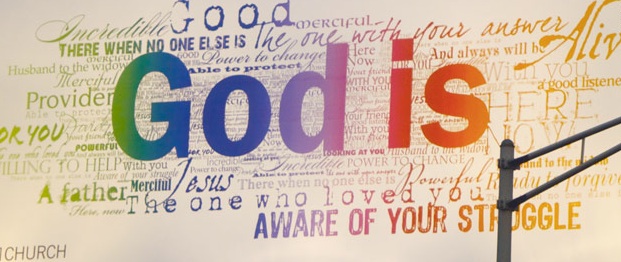
CNN’s Belief Blog carries the beleaguered story of the Lincoln Tunnel billboard battles. Last month a billboard proclaiming that the Christmas story is a myth had been sponsored by American Atheists to try to raise awareness that not all commuters are Christian. In response, the billboard has now been rented by the Times Square Church and newly proclaims “God is” with a number of devotional qualifiers. ‘Tis the season of wearing one’s passions on one’s red sleeves with white trim. Since this is America, it must be writ large.

The recriminations fly like childhood accusations: “but s/he started it!” Can’t mature adults agree to disagree? In a world constantly filled with inequality and strife, religion is used as a cudgel to enforce uniformity. The holiday season is much more than various religions marking their territories. The symbolism of the return of light after a long descent into darkness is archetypical, no matter whether it is the finding of oil to light lamps, the birth of Jesus, or the triumph of Sol Invictus or any of a plethora of other celebrations. It should be something that all people are able to share.

It is the “other” that is feared: the groups who do not share our religious outlooks. “He who is not for us is against us.” It is much safer to slap the other with a billboard barrage than to have to look into the eyes of another human being and say, “I respectfully differ.” Instead of welcoming in the light, we dig further into darkness. The Manichean sensibilities are undiminished after all these centuries. Some would argue that all must be brought into conformity for peace to prevail. To them I say, “I respectfully differ.”


West Texas Dead

A small item from the Star-Ledger wire services proclaims, “Former priest accused of trying to hire hit man.” Since the story was bylined Texas I started to wonder if the accused was someone I knew. Nashotah House boasted more Texans than any other statehood citizenship when I was there, so it was natural enough of a gut-level reaction. Fortunately, it was wrong. A former Catholic priest named John Fiala stands accused of trying to hire a neighbor to assassinate a teenager who’d accused him of sexual abuse. In a travesty of at least three of the ten commandments, a man of the cloth allegedly attempted to bare false witness (the error is intentional).

We hold clergy to a high standard in our society. The mystique of being “called” by God, secreted away in a provocatively named “seminary,” and emerging ontologically superior to other humans has a touch of whimsy that is difficult to dismiss. Having twice been a victim of seminary, once as a student and for even longer as a faculty member, I learned some important truths about those trained for ministry. They are merely human. In fact, my best students were those who recognized and embraced this fact. When I was informed that an ultra-pious candidate was about to “shed the shackles of the laity” and would return from his weekend ordination “ontologically transformed,” I rolled my non-ordained eyes. I had seen the test scores and intense faculty evaluations. Ontological change? We should be so lucky.

So, a man barred from any sexual outlet seeks a silent victim. We should not wonder. Attempting to get a neighbor to become an assassin is a bit over the top, even for most Texans. It does, however, illustrate my point that the laying on of Episcopal hands does nothing to change the essence of a person. Clergy are just as human as anyone they serve. It is when they think otherwise that problems arise. Secular students in the halls of Montclair State University are talking about the Vatican’s changing collective mind on condoms. Discussion and exegesis of the issue cover the front page of the New Advent website. Too bad the decision hadn’t been made a few months earlier. This situation might not have emerged at all. As the paper states, “the Sacred Heart of Mary Parish in the West Texas community of Rocksprings [is] a rural enclave known for sheep and goat herding.”

Don't let it get your goat


Condom Not?

Newspapers and the Internet have been abuzz with Pope Benedict XVI’s leaked proclamation that condoms may be useful for male prostitutes in preventing the spread of AIDS. Many are astonished, and not a few heads have been scratched at the declaration from the stalwart bastion of “sex is only for procreation” Christianity. The announcement, while humanitarian, is deeply troubling. From ancient times it was recognized that human sexual behavior had more than procreational importance. The matter has been investigated by psychologists since the nineteenth century and the same conclusion was drawn: people engage in sexual practices for a variety of reasons. Meanwhile, the church has been holding out with a Hebrew Bible viewpoint enhanced by the personal outlook of Paul.

In the ancient world, the microscopic world of reproduction was unknown. What was actually happening in conception was misunderstood. Judeo-Christian sexual mores were based on faulty information, from a biological point of view. In such a view, the all-potent male gamete (inappropriately called “seed,” as if a womb were just a place for pre-formed humans to grow) was capable of producing life on its own. Reading a handful of Greek myths will demonstrate this principle nicely (since the Bible has a more demure and blushing way of discussing the idea). The concomitant concept that seed should not be wasted led to the faulty idea that, in the unforgettable words of Monty Python, “every sperm is sacred.” That mental construct has been used by the church to make women subservient to their biology in a way that never applied to males. The Pope’s declaration underscores this double standard.

If male prostitutes may use condoms with the church’s blessing to prevent the spread of AIDS, the only motivation left for heterosexual birth control is female control. The “lost cause” of male reproductive potential in male prostitutes does not apply in heterosexual unions? God holds married couples to a different standard than male prostitutes – why? Is the sperm in these two cases unequal? The Pope is undoubtedly on the right track by endorsing the use of condoms, but the church still has a profound distance to go before it can look women in the eye and say, “we believe you are truly equal with men.” Oh yes, and not blink while saying it.

Remember, these guys lost to the Greeks...


Latest Temptation

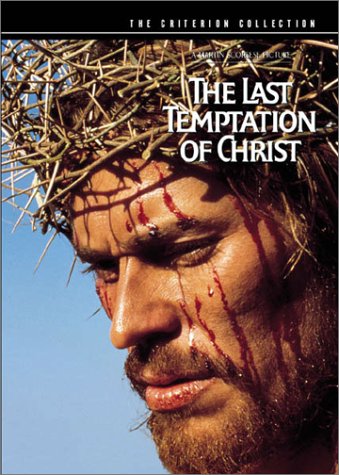
It would be a rare day indeed when I claimed to be the first to see, read, or watch something. Caught up between constant obligations (part-time jobs can be more demanding than their full-time facsimiles) I often find my mind awhirl for a semester at a time, only to discover that inter-term courses start just two or three days after the current term ends. If there’s a great movie out there that everyone’s commenting on, I am lucky to catch it before it leaves the theater. Sometimes I even miss the DVD version. So it was that yesterday I finally got around to watching The Last Temptation of Christ, the 1988 Martin Scorsese movie. This film came out right after I finished seminary, while I shared an apartment with a seminary friend who was an irrepressible movie buff. Together we missed it and, despite teaching in a seminary for a decade and a half, I still missed this one by twenty years and a few. At last I can feel caught up with the late eighties.

I’m not a big fan of Jesus movies. Movie makers shooting such films portray an eminently likeable guy getting beat up and tortured to death with such contempt that it is wrenching to watch. Yes, I know that’s how the story goes, but must we be brought into the Schadenfreude? As a life-long religionist raised in the Christian tradition, however, I feel a professional obligation to see popular portrayals of the foundation stories. The first one I recall viewing was Franco Zeffirelli’s 1977 Jesus of Nazareth, a movie so reverently rendered that it is frequently cited as the best ever. The eponymous Jesus by Peter Sykes and John Krisch came out in 1979 and claims to be the most watched movie of the genre. I saw Jesus Christ Superstar in college, but even Andrew Lloyd Webber’s music couldn’t remove the depressing aspect. Then, of course, Mel Gibson’s The Passion of the Christ in 2004. All of them have left me depressed. Perhaps that is their intended purpose.

The Last Temptation was laden with controversy in its day. I was anxious to see why (okay, so not terribly anxious, but I was curious). So yesterday I got to satisfy an ancient itch. Despite the caveat at the opening of the film, many critics jumped on the portrayal of an indecisive Jesus who has a rather chaste love scene with Mary Magdalene in a “last temptation” vision while on the cross as irreverent. Perhaps two decades and countless movies later this criticism has been calmed, but I found Last Temptation to be a typical Nikos Kazantzakis introspective, full of self-doubt and deluded penance. Kazantzakis’ work is a man’s struggle against his personal demons. Do dream sequences count as theological fodder? The movie suffers from pacing issues and at times contrived dialogue. The best scene is where Jesus meets and dresses down Paul only to have Paul declare himself the true bearer of the message. Even that is in the dream at the end.

In 2004 a Fundamentalist atmosphere pervaded Nashotah House. Newly appointed “theologians” on the faculty easily bought into Mel Gibson’s theatrically distorted view of their faith. By the end of that academic year it was clear that the evangelical leadership had decided on a new victim for the sake of facile Christianity, but that is a story that can wait another couple of decades before being told.


The Violence of the Lambs

Religious holidays are curious affairs. In many Christian contexts “the holidays” are often poignant scenes of tension and angst. Granted, much of this is generated by human family dynamics, but then, what of religion is not? An unfortunate shooting episode erupted yesterday in Baluchistan, Pakistan during the Muslim festival of Eid al-Adha. According to Star-Ledger wire services, the followers of two rival religious leaders pulled out guns in the mosque and began firing. The festival of Eid is the commemoration of Abraham’s near-sacrifice of his son. Islamic sources suggest the intended victim was Ishmael while the Bible claims it was Isaac. Whoever came under the knife, however, the implicit human sacrifice is disturbing.

Human sacrifice has been a part of human culture for a very long time. Never a common practice, it was generally reserved for times of severe crisis, when you really, really needed the gods to pay attention. The story of the Akedah, or “binding,” of Isaac demonstrates the reluctance in Judaism to speak of Abraham as an actual murderer of a child. After all, this was only a test. Many biblical scholars see this story as an etiology, a story of origins. The binding of Isaac explains why human sacrifice is not permitted in the religion of Abraham. When it does occur, for example in 2 Kings 3.27, it is effective. Nothing like a good, old-fashioned human blood-letting to satisfy the gods.

Soren Kierkegaard found the story of the sacrifice of Isaac so disturbing he wrote an entire book to deal with it. Even if we, the readers of Genesis, are given the advance knowledge that this is only a test, the image of a religiously devoted old man with the knife hovering over his bound son is the very definition of horror. And that frozen moment comes to life and acts itself out time and time again in acts of religious violence. One of the most recent was in Baluchistan, but as sure as the knife rises above the sacrifice, there have been other incidents of religious violence since that awful moment. Human sacrifice may be at the heart of religion after all.

Precious moments akedah, shamelessly borrowed from James McGrath's blog


Round Tables and Belligerent Gods

One of those bits of mail in my part-time lecturer mailbox at Rutgers informs me that the Oxford Round Table is hosting a discussion entitled “Civilization at Risk: Nationalism, Religion and Nuclear Weapons.” Given that the cost for attending is about what I make for teaching one of my adjunct classes, and the fact that they spelled “civilisation” the American way, my guess is that the target audience resides on this side of the Atlantic. Still, the topic is indeed vital. Nationalism is a relatively new plague to arise in the human menome. Cultural differences matter little in the face of nationalism; the real issue in this ideology is dominance. Nuclear weapons add a unique poignancy to the issue, but the heart of the matter is clearly behind door number two: religion.

Religion usually makes the list of the hallmarks of early civilization. Along with complex governance and the arts, it is considered one of the aspects that marked the break from merely subsistence living. Religion, however, in its monotheistic form has more divisive power than nearly any other aspect of civilization. Polytheistic religions hardly worried if people worshipped the “wrong god.” Monotheism bears a larger burden, and that burden is not dissimilar from that of nationalism: dominance. Let’s face it – what kind of respect can you expect for a god who can’t throw the brimstone behind all those threats? And if your god doesn’t readily ante up (no visible actions, depending on who you read, since the first or the seventh centuries) then the devout must take up the spear, cudgel, or atomic weapon to prove the honor of their all-powerful god.

Uranium in the hands of an angry God

Is there a solution to the “Middle East” crisis? I’m no politician, but I would make the following humble observations. The crisis as it exists today is as much about nationalism as it is about religion. Religion serves as a convenient excuse when one’s way of life feels threatened. (Push any Neo-Con into a corner and when all the cards are on the table it will amount to precisely this.) We all want things our way. If we can’t get it, we can take it by dropping the G-bomb. It may be apt that the region of the world that instituted civilization is destined to destroy it. A cosmic symmetry pervades the idea. It might be a lot less messy if we’d all admit what the arguing is really all about.


Foxhole Atheists

It’s Veterans Day and prayer makes the headlines. The old adage about no atheists in foxholes comes to mind as those who fought for the values we hold reminisce about the not-so-happy days before the 1950s when the last semblance of normalcy in American life apparently died. The New Jersey Star-Ledger quotes a World War II veteran who participated at the Battle of Normandy saying “I might have prayed more than I ever prayed before.” No atheists in foxholes. As a lifelong pacifist, I have always believed that war is a terrible waste. 3.5 billion years of evolution and the best we can come up with is to hurl supersonic lead slugs at each other over who gets what and who deserves more than who else. I don’t deny that veterans should be honored – my father was a veteran – but war should not.

A sad truth is that many wars, probably in the history of the modern world, most wars, have been fought for religious reasons. The idea that God demands certain things ultimately leads to fighting over what it is God wants. Both sides often claiming the silent deity is on their side. Millions of mere mortals have had to pay the price. Hey, can’t we just talk about this?

War may very well have evolutionary roots. Studies of chimpanzees suggest that homo sapiens are not the only overly aggressive primates. If we deny our cousins religion, however, only homo sapiens fight for mythological causes. One of the great ironies of life is that the most advanced technology trickles down to civilian life from military applications. If something is new, it must have a tactical use against the enemy. Once the enemy is subdued, we can share the wealth. I grew up hearing about “godless Communists.” I watched in dismay as Bush declared a new crusade. I shudder when I read that Iran is developing long-range missile facilities. God is the midst of all this. Veterans protected us from the human-level wars of a bygone era. In our own homemade Armageddon, however, our own technology will doubtless become the weapons in the hands of an angry God.

If God be for us...


Golden Eagles

I used to be a Boy Scout. Not a very good one, but I did try. Eventually, before even reaching the rank of “Tenderfoot” I dropped out. I often wonder what life would be like if I’d gone on to be an Eagle Scout, like Gerald Ford. Would I have made president? Or at least Assistant Professor? Last night I attended a workshop for Girl Scouts. My daughter is about to embark on the program that leads to the Gold Award, the highest honor a girl can attain in the organization. I want her to succeed where Dad failed. Maybe earn herself a better life.

Girl Scouts are as organized as Methodists and as legalistic as Jesuits. As we sat listening to the requirements, I was stunned by the degree of technicality. You can do this, but not that, that, or that. I remember now that I didn’t make Eagle Scout. What struck me as most intriguing, however, is the fact that certain projects are disallowed for theological reasons. In order to earn a Gold Award, the Scout must conceive, lead, and implement a social service project. It is a noble goal. In society many people are hurting and in need, and governors, representatives, and senators do not seem to notice. Yet, the leader of the meeting noted – if the project involves “controversial” issues, it will be declined. Controversial issues are things like abortion (i.e., women’s rights), or gay rights.

While I agree, it is not safe to put girls in the line of fire, I thought about these issues. The reasons that they are controversial is that Evangelical Christianity has made them so. Evangelicalism is a strain of Christianity that has a trajectory that went on the offensive in the 1960s. Charging the emotions of regular Americans with the terrors of gay love and dead fetuses, it raised these issues to national consciousness and made them a part of every political campaign in the latter part of the last millennium and into this one. These are points of great human suffering. The answers are not easy, but the fact remains – neither is a biblical issue. Yet girls are prevented from taking on issues that may have the most solid and tangible impact on their future. I was saddened.

I have no complaints with the Girl Scouts. It is a shining example of an organization that gives girls the confidence and tools they need in a hostile environment. I am disappointed, however, that a small but vocal cross-section of Christianity has made certain topics – topics that need to be addressed – off-limits for concerned young women.


Empty Pews

An insightful op-ed piece by Robert D. Putnam and David E. Campbell in yesterday’s paper asked the question “why youths are losing their religion.” The authors, professors at Harvard and Notre Dame, respectively, answer with the suggestion that religion and politics just don’t mix. The truism that religion and politics are taboo subjects of polite conversation was widely accepted in my younger years. During the Reagan campaigning era, however, it became clear that some unprincipled louts were drawing religion into the political mix to garner votes. Those who actually research Reagan’s religious convictions are often surprised to find that they are not as “George W. Bush” as everyone thought. It was a ploy, and a vastly successful one at that. A new avenue had been paved, however, for hotly contested elections: use the Bible. The fawning attitudes of many Americans toward the Bible they seldom read is a powerful political tool.

Putnam and Campbell note that adults coming of age in the 1990s and later have been alienated by this paring of religion and politics. The results have tended to be the rejection of organized religion that is seen as hypocritical and intolerant. The interesting factor is that it is the political agenda that is hypocritical and intolerant, but organized religion is paying the price for going along with the Ralph Reeds, Jerry Falwells, and Pat Robertsons of the early religious right. One guy from an old book once said something like “what you sow you also shall reap.” The political use (abuse) of religion has only and always been about power.

The authors are able to provide statistics to back up their models, but their reasoning is clear enough on its own. Some of us have experienced first hand the ugly, hideous agenda behind the angelically smiling evangelistic face. Those who hold to it may be naïve enough to believe that it is actually religion that they are serving, but the sad truth is their positions are cravings for power. There are those who actually relish the days of imperial Christianity when, despite its Roman Catholicism, the church made Europe tremble. They forget that pilgrims and colonists moved to this land to flee such tyranny. Americans, reluctant to elect Roman Catholics to the presidency because of the latent fear of a hierarchical religion — so close to kingship — now bow down before political rulers in religious garb. Decidedly Protestant. And the Tea Party continues to crank out candidates who do not even realize that the separation of church and state is a founding principle of this nation. If there is a backlash coming, it is a well deserved one indeed.


Eve’s Orchard

One of the innocent pleasures of autumn is apple picking. Not living in the country, many of us rely on the local orchards that open their trees and furrows to the public during the fall so we can feel once again in touch with nature. It may be only temporary, but this farm life is authentic and revitalizing – especially under a cerulean blue October sky. So it was that we joined our anonymous friends to pluck fruit and feel a part of the organic world away from laptops, palms, and cells. Picking apples always brings Eden to mind. In fact, no matter how secular the class I teach, if I ask students what picking fruit from a tree – usually I have to throw in the snake as well – represents, invariably most guess Adam and Eve. Of course, in the patriarchal world of the Bible, Eve gets the rap for taking the first bite, but a more sensitive reading reveals maybe this was what God intended all along.

Tasty fruit of knowledge

Within a generation of the origins of Christianity, a negative spin had been placed on that fateful fruit. This was the willful disobedience of sin rearing its ugly head in Eden. Of course, Genesis does not refer to the act as a “sin” – the word first occurs in the story of Cain and Abel. The human striving for knowledge, for the prerogative of the divine, the sadder but more informed life, was now a matter of blame. In the Greco-Roman cultural milieu where men set the standards, woman became the harbinger of sin and decay. Adam stood chastely by, happily clueless until Eve insisted he try this brand of iniquity. Pure fiction. And yet it is this version that has retained cultural currency in the western world. Blame it on Eve.

The patriarchal version


So much of our reading of the Bible is based on prior expectations. Even Bible translators know that they can’t go too far a field from the standard that the KJV set. When western Bible readers first cut their teeth on English prose, it was the dulcet tones of Elizabethan English that captured their attention. And the mores of Shakespearean England combined with the harsh repressions of a simmering Calvinism led to a Bible choked with sin to the point that a little fruit enraged the creator as much as fratricide just a chapter later. The fruit had rotted on the tree, and women were to blame. Perhaps it is time that we recognize the filters before our eyes when we approach the Bible. If we can understand that the patriarchalism is not the point, but merely the cultural shading of the time, we can release the message that the fruit is good. The temptation was not to become evil, but simply to become human.


Sacred Geography

Pilgrimage. The concept that certain places are special is deep-rooted in the human psyche. So deeply rooted that we consider it a religious behavior. Even as scientists recognize the need of many animals to return to their birthplaces or areas that they sense beyond the range of human perception, as human beings they feel it too. Even scientists have the urge to revisit that special spot. Otherwise the travel industry would be in great trouble. Pilgrimage is considered a religious behavior, and the sacredness of place has been noticeably in the news this week. MSNBC reported on the find of a skeletal pilgrim to Stonehenge from 1550 BCE. Yesterday the New Jersey Star-Ledger ran a story about a temple/mosque dispute in Ayodhya, India. Both of these stories center on the sacred geography of the region.

Stonehenge has been a magnet not only for Druids and New Agers, but for anyone with a sense of connection to European prehistory. In the winter of 1990, under a chilly British sky and gusty winds across Salisbury Plain, my wife and I made our pilgrimage to Stonehenge. The low angle of the sun in the sky in a dusky British December only enhanced the experience of standing near a monument that has become an icon of the mysterious and the transcendent for modern domesticated citizens of a straightforward, technological world. The news story states that the skeleton unearthed was of a Mediterranean teenager, far from home, in the shadow of what was already a famous landmark. Even over two decades on, I can still feel the inarticulate sense of longing I felt at Stonehenge, so near the winter solstice, and I understand why that young boy went there to die.

Meanwhile in Ayodhya, the site of a mosque has been declared two-thirds under the ownership of Hindu plaintiffs who claim the site as the birthplace of Lord Ram, a Hindu god. Naturally objecting is the Muslim population that currently has a mosque on the site. Sacred sites raise emotions and tempers readily. Humans want access to their holy places – this is the power of sacred geography. It is certainly palpable in the Bible, and was obviously present the last time I was in Jerusalem. Whether it is hardwired in our biology or simply born of whimsy, sacred geography will never go away. Either we can learn to share it or fight to the bitter resolution, but no matter how much blood might be shed the site will only grow more and more significant because of that very blood.


From Bragg to Phelps

Religious freedom is proving to be a two-way street. The news is rife with stories of religious groups pushing the limits beyond their right to state an opinion into arguably unconstitutional behaviors. At Fort Bragg, the Army is sponsoring Rock the Fort, a Christian rock concert promoted by the Billy Graham Evangelical Association. Although Christian bands are spiritually minded, they do not perform for free, raising the question whether military (government) money is being spent to promote a particular religion, a particular strain of Evangelical Christianity. In offering this concert, is the government endorsing this one religion? Statements that other religions are free to send their rock groups to Army bases rings hollow when, with rare exceptions, such groups simply do not exist.

Meanwhile, Time magazine brings the curious Westboro Baptist Church of Topeka, Kansas back to the headlines now that Supreme Court has been called in to argue whether their outspoken condemnation of the military is constitutional. Fred Phelps, the founder of the church, has led divine hate campaigns across the country. It is his protests at the funerals of soldiers killed in action that has forced the question of whether his group has the right to condemn indiscriminately. The question of good taste need not even be asked.

What these Evangelical groups are pointing out is that God apparently suffers from schizophrenia. Simultaneously the great general upstairs loves soldiers and wishes to convert them and also hates them and condemns them to hell. The jury, it seems, should be the taxpayers. We are the ones footing the bill for Christian concerts and paying the not-insubstantial salaries for Supreme Court justices to argue about the legality of religious hatemongering. In these days when many feel that Islam is a threat (as Christian clergy threaten to burn the Quran), it might be worth asking where the real threat to religious freedom comes from. Religious zealots often make excellent soldiers, no matter what the religion.

These guys love God, but is the feeling mutual?