Roman Women

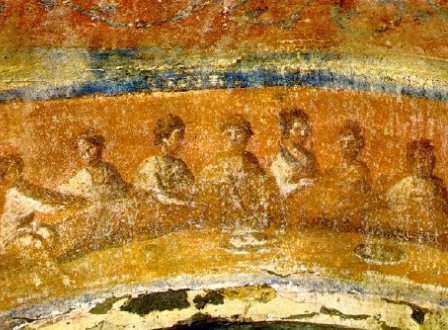
This week’s Life section of Time magazine features an issue that yet again raises the questions of definitions and who decides on correct religion. The feature by Tim Padgett entitled “Robes for Women” demonstrates the conflicted nature of religious authority. With the Vatican claiming women have never been priests, but historians questioning the assertion, the salient point is who has the right to decide. And what is lost, if such a change were to take place. Tradition is not threatened by change – it always stands sentinel over the past, but no religion remains unchanged for any length of time. It is not biblical authority that is lost either. Any religious body whose scriptures state, “call no man on earth your father,” yet which addresses its clergy by the title “Father” clearly possesses the casuistry to get around other biblical injunctions. What is lost is male power.

No matter how vociferous theologians may be concerning the genderlessness of God, the default male image seems deeply embedded in the human psyche. One of the most ancient and pervasive of mythological themes is the search for the father. The loving mother is the one who stays near and raises the child while the father leaves to make provision, or for reasons less wholesome. At some level we know that the deity portrayed by Scripture and tradition is male, a father who is difficult to find at times, particularly times of need. This archetypal image is not an excuse not to re-envision a genderless deity, but it underscores what generations of human experience has taught us. Referring to God as father and mother only complicates the matter by throwing into the mix all aspects of gender complications. Can humans even truly worship a god without gender?

If the Womenpriests movement succeeds, as no doubt it should, there will always remain a group who will not accept their authority. My experience at Nashotah House taught me that some prejudices are so deeply rooted that they are no longer even recognized by those who hold them. Wild examples of theological gymnastics were paraded before me as to why women should not hold priestly office. And like Nashotah House reveals, if women are finally accepted by Rome, others will split away and both sides will lay claim to the true faith. There will be no convincing either that the other is correct. The history of Christianity has taught us this sad truth. Current estimates suggest there are some 38,000 different Christian denominations. This is the common fate of all religions who claim to have exclusive access to the single, unambiguous truth.
The secret of the catacombs

Ends and Beginnings

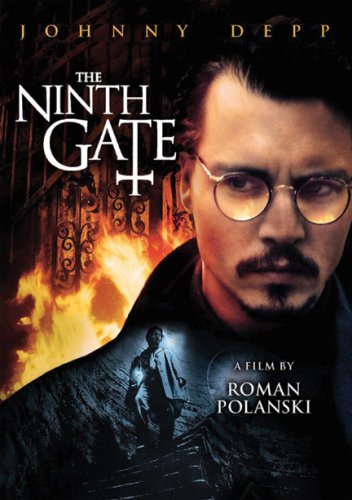
The Ninth Gate, a Roman Polanski film from a bygone decade, portrays a world the director doesn’t believe in. Typical of “devil movies,” the story involves a personified evil that not only seeks world domination, but who also writes books. I’ve been working on a book review for Relegere, the new online journal of Studies in Religion and Reception. In part the book addresses how the devil is portrayed in movies, although this particular film is not cited. Perhaps it is difficult to take seriously a film where the screenwriter is not a believer.

As a young teen I listened with horror as friends described The Omen, a movie that I never saw until just last year. The premise of the movie, that the Antichrist has already been born and is now walking the earth, ready to usher in Hal Lindsey-esque last days, is frightening to those who find a biblical basis for the idea. When finally watching the film the scariest part was viewing the extras. David Seltzer, author of both the book and screenplay, eerily tells the interviewer that he believes the Antichrist to be here now. His acceptance of mythology is admirable, but it is the problematic acquiescence to a modern reconstruction of disparate ancient views that is troubling. Like many late-twentieth century westerners, Seltzer has been influenced by attempts to construct a coherent account of the apocalypse from tattered bits of ancient traditions that never belonged together.

If education included a serious, critical look at how religious ideas developed, the world might be spared this sad predilection for seeking its own end. Apocalyptic ideas thrive in cultures of persecution, such as those very real torments of Jews under Antiochus and Christians under Nero. Their hopes for a brave new world of righteous rule, borrowing freely from Zoroastrian traditions of a new age, offered scraps of expectation of a better tomorrow to those dying today. When nineteenth-century evangelists saw the advances of industrialization and Darwin’s rational explanations of human origins, they felt the need to reconstruct the biblical demise of the world. Modern day apocalypticism, so evident in the Y2K, 9/11, and 2012 scares, is often ready to accept uncritically a supposed future already scripted by a sadly misunderstood Bible. If the world ends it will be our own doing, and maybe Roman Polanski will have to rethink whether or not a devil can actually write a book.


Mere Typography

Juxtapositions are important. The way that words are laid out on a page can say as much as the words themselves, as any poet knows. In the light of the ongoing media frenzy over Rev. Terry Jones’ misguided attempt to set everything right with the world – through fire – and a natural attempt to keep related stories together, the New Jersey Star-Ledger ran two stories on page three yesterday that display the deep ambivalence many Americans feel about Islamic culture. At the top of the page the headline reads, “In Florida pastor’s eyes, burning of Quran is an act of war against evil.” At the bottom of the same page runs an article headlined, “Iran: Stoning sentence for adultery under review.” Two or more faces of Islamophobia on the same page.

As remarks made on my previous post on the subject attest, many westerners simply do not understand Islam. This is perhaps to be blamed on the all-too-prevalent attitude that “history is boring.” Have people been asleep for the past thirteen centuries? Islam is much closer in time to the origin of Christianity than it is to us. With concerns of supersessionism and the covert desire to capitalize on one’s religion, Christianity has been content to ignore Islam as long as those in charge have been able to maintain capitalist quo. When forced to face the fact that two major monotheistic religions have designs on the same world, some members of each camp are only too ready to declare those in the other “evil.” An attempt to understand other religions would go a long way toward ending the carnage.

Perhaps the phobia should more properly be labeled religious xenophobia. We dislike those different from us. Rare is the person who, when confronted with a contrarian, will attempt to understand rather than destroy. Students may readily qualify for higher education degrees without ever having to face the question of how to handle different religious outlooks. We would rather pretend that they are not there. The ambivalence shown towards the issues of Islam in the Star-Ledger could just as easily be turned on Christianity, or even Judaism, Hinduism, Buddhism, or Sikhism. Religions are conflicted because people are conflicted. Instead of recriminating, we should all take a long, serious pause in front of a mirror before we start accusing other religions of being evil.

Who said what now?


Disconnect

Religion has a bad name among many intellectuals. Hailing from the misty period of superstition in a “demon haunted world,” religion seems to be a quaint hold-over from less enlightened times. Academics, for whom respectability is everything, generally keep a decorous distance from religion as the intellectually suspect field indulged in by the weak-minded. Then something enormous happens; terrorists, fueled by religious fervor, decide to kill many innocent victims. Or a religious guru leads followers into the jungle where they all commit ritual suicide. Or a group of zealots purchase heavy armaments and stockpile them in a Texas hideout to await the Second Coming. The next autumn the university want ads are filled with openings for specialists in this or that religion. Until the next budget crunch comes along.

An unfortunate aspect of this situation is that many deans and administrators make the equation of the study of religion with the promotion of a religion. Why populate a university faculty with superstitious religious sorts when a good secular economist will bring in more practical, if less transcendent, rewards? How often do administrators survey their religious studies faculty to ensure that level-headed, academic treatment of the subject matter is offered? How can we expect to move ahead if those empowered to assure an educated student clientele continually apply the brakes in religious studies departments?

I am no economist. This much is evident by my pay scale. Nevertheless, each year when I return to the multiple campuses that are my temporary homes, I notice the details. New furniture in classrooms and libraries, freshly painted and redecorated facilities. Often, entirely new buildings that were not there the semester before. There was a day when such things were known as window-dressing. I attended Edinburgh University for my doctorate. There were campus buildings that dated from the late middle ages. Classrooms often had mismatched furniture and blackboards rather than fancy projectors and smart-ports. And the educational experience was authentic. The religion faculty was thriving and universally well regarded. I’m no economist, but with fundamentalists already holding a match to the fuse about to light up a Quran, I have a feeling already of what I’ll be seeing in the want ads of next year’s university hiring season.


Quran 451?

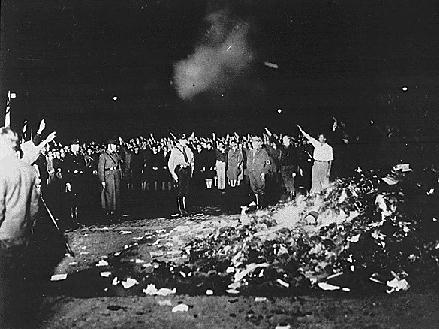
One of the saddest books I remember is Ray Bradbury’s Fahrenheit 451. Any society that burns books has whip-lashed far beyond Fascism into the enemyhood of humanity. Much of ancient culture has been lost through the natural or premeditated destruction of misunderstood “inflammatory” writings and we are much the poorer for it today.

According to an Associated Press story, the ironically named Rev. Terry Jones of the even more ironically named Dove World Outreach Center in Gainesville, Florida, is agitating for a “burn the Quran” day on September 11. Other than momentary, self-righteous catharsis, nothing is to be gained by burning books. The contradictory impulses here lie thick and deep: a Christian clergyman feels insulted by an extremist attack that killed indiscriminately (Muslims and well as Christians, Jews, and Atheists died in the September 11 attacks), bearing the symbol of peace he wishes to declare his personal war, and the follower of the willing victim of Nazareth wears a gun.

Burning books does not solve any problems. Surely Rev. Jones knows that plenty of copies of the Quran abound throughout the world. His action is calculated as a poignant symbol. Is such a symbol anything more than a base expression of outright hatred? When, apart from medieval Christendom, has Christianity insisted that violence is the way forward? All you need is hate? For although the burning of books may not physically harm anyone, the violence in this hatefully symbolic act is the very antithesis of tolerance and understanding that the religious world so desperately needs. Islam has given much to world culture, and we reap the benefits of Muslim scholars and thinkers each day, without any conscious consideration. Rev. Jones needs to read more than just Fahrenheit 451. He must learn truly to read and, like Montag, weep.

Jones' theological comrades


Delicate Matters of Faith

Friday’s New Jersey Star-Ledger ran an op-ed piece by Phyllis Zagano entitled “Teaching how, not what, to think.” The essay concerns a tale of two professors, one at the University of Illinois and one at Seton Hall. Both have come under fire for teaching on the issue of gay marriage, one from, one against, a Catholic viewpoint. Zagano’s point of view, evident from her title, is that professors should teach students how to think, but not what to think.

This is one of the most difficult aspects of teaching religious studies. I am in my eighteenth year of teaching in the field. In that time I have taught at both religious and secular schools and, in both settings, presented the material objectively. There are those in both settings who complain. Students at Nashotah House frequently wanted me to bend the Bible to fit conservative Anglo-Catholic teaching. Under immense logical pressure to accept what reason told them of the world, they wanted an authoritative book to back them up in a pre-decided outlook. A theological ace of spades to trump the uncomfortable conclusions of rationality. At the University of Wisconsin Oshkosh and at Rutgers University students frequently want to know my religious outlook so that they might know how to categorize what they are learning: is it sanctioned or is it anathematized? We need to know who you are so we can evaluate your authority in such delicate matters as faith.

I frequently ponder the issues raised by Zagano. I know of no other field of study where the stakes are so high, with the possible exception of political science. Religion is an all-encompassing phenomenon. All of life must conform to religious teaching, often with eternal consequences. It therefore makes an enormous difference what you are being taught. Like Zagano, I try to teach students to think for themselves. Both at the seminary and university I refused to reveal my personal outlook on the issues; I try to kick-start the thinking process. I have paid the price for this in the past, but it is a non-negotiable component of education. If the truth is uncomfortable, it is always possible to let someone else do the thinking for you.


Faker or Fakir?

An article posted on CNN on Friday, “More teens becoming ‘fake’ Christians,” suggests that many American teenagers aren’t really Christian. Whether that is a bad thing or not I’ll leave up to the reader to determine (Kenda Creasy Dean of Princeton Theological Seminary, cited in the article, has no doubt that it is bad). My concern with the premise and the presentation of Dean’s data is much larger: who has the right to determine what is “authentic” religion? In a world daily faced with the clash of religious views, particularly among passionate believers, most scholars of religion seem to agree that one’s religion is what an adherent claims it to be. There is no way to test the authenticity of a religion empirically. Whose Christianity does Dean mean? That of Jesus? Or of Paul? Or of the Pope? It seems to me that what she suggests is that “true” religion is “passionate” religion.

Religion, however, may extend well beyond belief structures. Religionists recognize many forms of religion that are primarily activity-oriented rather than belief-oriented. Does that mean the adherents of such religions are only half-hearted members of their tradition? Do only passionate believers qualify? Who is it that has the authority to decide what any religion is? If it is seminary instructors, I’d rather face the apocalypse right now. I’ve known far too many of those to trust their judgment on defining authentic religion.

Christianity is perhaps the most fragmented religion in the world, with tens of thousands of different denominations, each declaring itself correct and authentic. What person ever purposefully believes in an incorrect religion? “I know my religion’s wrong, but I think I’ll stick with it…” Who gets to determine which is the real real religion? Passion may not be an adequate measuring stick. The clashes of religious views that leave the highest body counts are between groups equally passionate about their beliefs. In such a world where people need to learn to control their religious passion, it is my hope that mere theological assent might be more than enough in most cases. And only for religions that are belief based.

The only true religion?


Freiheit

This week’s Time magazine has a rhetorical question on the cover: Is America Islamophobic? Not a word need be said. The real issue at stake, the one many Muslims feel the brunt of, is religious freedom. This founding concept of America has been eroding for decades. How many Americans have tried to imagine what it would be like if they were Muslims living in “the land of the free”? For that matter, how many have tried to imagine what it would be like to be Catholic, Protestant, or Unitarian? Certainly, it would seem, Jews know the value of religious freedom. Do we ever really try to feel their experience? It is much more cozy to be part of the religious majority and tell others to step in line.

With great roaring newts and Alaskan beauty queens telling them what to think, Americans are easily stoked to injustice. No, they have no right to worship here, they tell us. The truly frightening part is how easily manipulated the masses are. America a Christian nation? Who can adequately define “Christian”? Those who make such claims tend to be Neo-Cons who assume some fundamental form of Christianity is the default version. The only version. Their goals are not religious, but rather intensely selfish – the antithesis of Christianity. By their fruits you shall know them, a wise man once said. It is easy to forget who.

We live in a nation that since the Reagan years has attempted to privatize industries that had ensured fairer treatment because of government standards, no matter how faulty. Now private companies could run with the basic necessities of civilized existence and grow wealthy on them while those who were poor could be forced to pay more. This was done with the public image of a “Christian nation.” RR, the poster-child of the Religious Right. Laissez faire has come to mean “leggo my Eggo” – let me claim the one true religion and capitalize upon it. One size does fit all as long as the wealthy are left free to grow wealthier. Let’s call it religious freedom, but let’s prevent others from pursuing their religion freely. To me it feels like 1984. And that was decades earlier than 9/11.


Two Roads Diverged

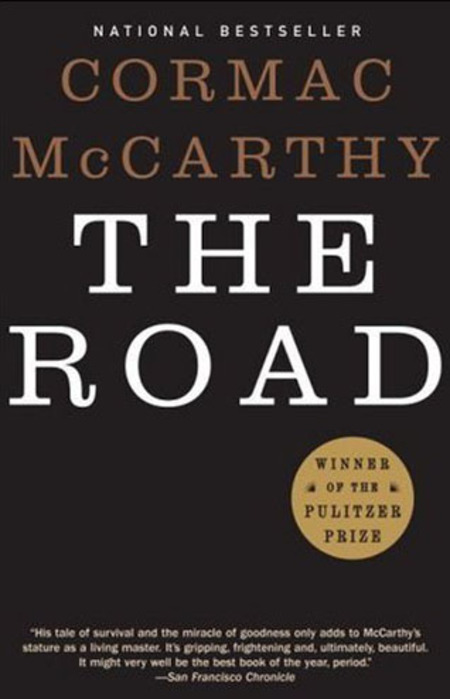
Back in my Gorgias Press days one of my co-laborers (BU) suggested that I might enjoy reading Cormac McCarthy’s The Road. Since then it has come out as a movie, and further apocalyptic events have occurred – the Deepwater Horizon disaster and the election of Chris Christie come to mind – so I finally got around to reading it. It is a harrowing book for any parent to read and I doubt I have the heart to see the movie. Already the book is spawning internet quotes and quips, but I was particularly interested in seeing how this post-apocalyptic novel handled God.

Since the Bible, via Zoroastrian influence, gave us the religious concept of the apocalypse, it is fitting to see how religion fares in its unhallowed progeny. Mostly God is absent. When the man and his son mention God, the language is spare and laced with betrayal. “There is no God and we are his prophets,” the old man declares after the man and his son leave the bunker. A few paragraphs later he states, “Where men cant live gods fare no better.” The value of the apocalyptic metaphor is that it forces us to face life as we find it: raw and uncompromising. In the fictional apocalypse it is permissible to utter aloud implications of life’s callous lessons.

My career has had its share of jagged edges. The lacerations I’ve personally received have been at the machinations of Christians eager for self-justification. Self-congratulatory individuals and collectives that suppose God has specially favored them. “There is no God and we are his prophets.” It is like reading Camus in slow motion. One of the lessons both Nashotah House and Gorgias Press taught me was that it can always get worse. Reading McCarthy’s sad yet true tale of the woe we bring upon ourselves, the lesson for those eager for the apocalypse is that they have only to open their eyes.


Lost Apocalypse

The Bible has many eminently quotable passages. I suspect that is one of the reasons it has the staying power that it does. Many critics of the theologies spun off by the Good Book have turned their vitriol toward the Bible itself, but I believe such hostility to be misplaced. Not everyone enjoys reading the Bible – that much is true for any book. The Bible, however, is foundational for not only our society, but the entire western literary tradition. Its influence on Shakespeare alone, who has, in turn, influenced just about every writer since the seventeenth century, underscores its literary importance. That’s why I’m always surprised with film-makers use concocted verses from the Bible when actual passages would produce the same effect. Granted, few Bible scholars comprise movie audiences and producers and directors seldom worry about writing the story for them. Last night I watched the “horror” film, Lost Souls, released in 2000. I’d read about the movie in Douglas Cowen’s Sacred Terror, so I wanted to see how it rated.

The movie begins with a false Bible quote: “… A man born of incest will become Satan and the world as we know it, will be no more. Deuteronomy Book 17.” Now granted, the movie failed to rock the critics, but the sheer weight of errors from pre-scene one should be the first warning to start from a better script. Beginning with an ellipsis for dramatic effect may be acceptable, but it serves no purpose – and what’s with the misplaced comma? A man born of incest in Deuteronomy is a non-starter because his potential parents could only be found dead, crushed together under a pile of hurled stones before the unfortunate could even be born. Satan as a devil is never mentioned in the Hebrew Bible, let alone Deuteronomy. Deuteronomy is almost never quoted by apocalypticists since it does not predict the end of the world, and Bible books are divided into chapters, not “books.” Well, the biblical illiteracy of Hollywood may be overlooked for a good story, but this is no such thing.

Lost Souls fails on the premise that a biblical “literalism” (and that is only if certain Evangelical interpretations are given unwarranted credence) about the coming of an Antichrist should be shored up by a fabricated quote from the Bible. I’m not trying to be a movie critic here, but a cultural one. The whole “end of the world” scenario held by many Evangelicals is a hodge-podge of biblical verses brought together by clever nineteenth-century clergy with little exegetical training. It is like trying to connect the dots while having to change pages constantly. The idea caught on amid the discarded lives left behind by advancing industrialism and the perceived threat of evolution. Apocalypticism has become its own industry as some otherwise unknown writers can attest. Movies like Lost Souls, or even The Omen, however, pale when compared to the antics of religiously motivated apocalypticists in the real world. Some of the rules in Deuteronomy itself are more frightening, if better written.


The Evil That Men Do

The graveyards of humankind are filled with the victims of religious violence. That fact does not seem to have lessened the impact of religion as a whole on humankind. One reason may be that religion has been a focal point of the good and humanitarian deeds of which people are capable, as well as a justification of the most heinous. The irony is that adherents of a religion claim that a just, true and righteous god is their motivation, for good or for ill. In the same church, mosque, or synagogue, there are widely differing views that live together. Sometime the truce is an uneasy one. Sometimes the adherents are united against a common enemy.

The furor over whether a mosque should be permitted near Ground Zero has become a major political whipping boy. Heavyweights like Newt Gingrich and featherweights like Sarah Palin are quick to fire off their half-cocked mouths about the impropriety of it. Michael Bloomberg, the mayor of New York City has been given the task that kindergarten teachers around the country – around the world – should incorporate in their curriculum, the task of teaching tolerance. In an excellent speech delivered yesterday, the mayor reminded citizens of what many appear to have forgotten: without religious freedom nobody is free.

Muslims are not to be blamed for 9/11 any more than Christians are to be blamed for the Inquisition. Every religion has members that misuse their sacred trust as a vehicle for hate and repression. By forbidding religious freedom to any religious group, America sets a precedent of a growing intolerance that can only lead to more, and greater suffering. Already the Gingriches and Palins of our nation tell us that there are indeed lesser citizens and greater citizens. Those like them deserve freedom of religious expression, of marriage recognition, of family size, of medical care, and those who believe differently and therefore deserve less. Speaking only for myself, I would rather have tolerant Muslims as my neighbors than supersessionist Christians.


The Return of Christendom

Well, the Internet is shaking because Anne Rice has left Christianity. Not exactly, however. In her own words, according to her Facebook page, “I remain committed to Christ as always but not to being ‘Christian’ or to being part of Christianity. It’s simply impossible for me to ‘belong’ to this quarrelsome, hostile, disputatious, and deservedly infamous group.” For years I have observed decent people “quitting” Christianity because the name has been co-opted by intolerant, bigoted Neo-Cons who more often than not have political agendas in mind. I think the battle has been lost, the trademark name of Christianity must be surrendered to those who claim it most loudly. The meek have disinherited the earth. How many Catholic students have introduced their comments to me with “Christians say…” as if Catholics aren’t part of the club?

There was a perfectly good word for what Neo-Cons are calling themselves. It used to be “Christendom.” Harkening back to the imperial days when Orthodox Christianity ruled the East and Roman Christianity ruled the West, Christendom implied the power and the glory in its very name. Beyond a religion, it was a system of rule. The world was fine as long as everyone stepped in line to a magisterial faith that held the only set of keys to Heaven. Then Islam. Then Reformation. Then Enlightenment. The keys began to jangle amid many others on that divine keyring. Christendom seemed pretentious when there was no military might to back the strappado or red-hot iron. Christianity was but one belief system, deeply fragmented, among others.

Under the vision of James Dobson, Ronald Reagan, George W. Bush, and their minions, Christianity in its Neo-Con armor has once again become a forum for abuse and intolerance. Bearing little resemblance to the ethics and outlook of the carpenter of Nazareth, this religion would find an easy home in imperial Rome or medieval Aragon. As Ms. Rice notes, she is committed to Christ, but not a Christian. Although my impotent voice bears little weight in this overly loud and hyper-productive world-wide web, I would humbly suggest that Christendom be reinstated, instead of Christianity, to describe the Neo-Con religion. Christendom, after all, retains the imperial bearing and absolute authority the movement craves. Those, like Ms. Rice, who prefer to follow the teachings of Jesus might then have use of the traditional term of “Christian” once again.


Jesus’ Broken Dates

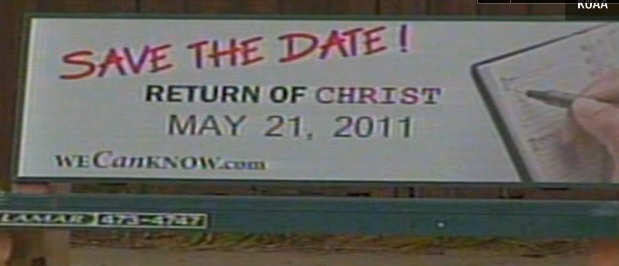
Jesus apparently has his calendar out. Again. This time it looks like May 21 is a red-letter day (he has a predilection for red-letters too). Well, at least it’s penciled in, like many other broken dates. An unemployed woman in Colorado Springs has decided to spend her dwindling reserves on bus bench advertisements reading “Save the Date / Return of Christ / May 21, 2011,” according to CNN. She states in the interview that she believes her job until judgment day is to get the world ready. She will find herself standing in the unemployment line on May 23 (the 22nd is a Sunday), more likely than not. Even more disturbing than the mostly harmless neurotic behavior of the unemployed (who am I to cast the first stone?) is the choice of Jerry Jenkins as an expert witness in the story.

Who questions a bus bench?

Jenkins and perennial Paleo-Con Timothy LaHaye wrote the “Left Behind” series that made more than a cottage industry out of repackaging Christian apocalyptic mythology into slick, science-fictionesque novels. They have more than a vested interest in promoting “and they lived horrifically ever after” scenarios. There is good money to be made by trolling the fears of the gullible. Very good money.

Our Colorado Springs prophet took her date from a billboard in Texas, a leading purveyor of rapture-mania. The thing that’s been left out of this – and many other apocalyptic episodes – is a serious consideration of the Bible. As most biblical scholars know, doomsday predictions generally derive from misinterpretations of ancient metaphors. Jesus, at least according to the canonical Gospels, was much more concerned about fair treatment of the poor and disadvantaged than he was about raining down brimstone on Babylon. Instead of spending money to warn the folks of Colorado Springs about yet another end of the world, why not donate the money to a local food bank and try to make the world a little bit better place?


Mythology Gone to the Dogs

Today’s New Jersey Star-Ledger reports an inter-species religious scandal that highlights the vast difference between god and dog. Last month a Canadian Anglican priest fed a dog a communion wafer. The gesture, a spur-of-the-moment reaction to a visitor who brought his dog to church (somewhat of a rarity in itself) was likely just a reflex to seeing that inevitable lolling tongue at the communion rail. Priests see lots of lolling tongues, mostly human.

In my long years at Nashotah House, where daily communion was a requirement of all faculty and students, I’m sure I consumed several pounds of communion wafer. I also received many stern warnings that this particular food item – if communion wafers can really be considered food – was unlike any other and must be treated with the utmost sanctity. Ironically, more than once I was handed a wafer by a priest with an out-of-control head-cold who’d clearly just contaminated an entire paten full of the sacrament with an eager virus. Within a week most of the student body would be hacking up an holy phlegm, not dissuaded from sharing the common cup. Despite the obvious fact that the ritual had become a disease vector, the mythology of its sanctity lived on.

The history of Christian ritual is a specialized field with experts who know the minutiae of each subtle gesture and the history of each preposition in the Anaphora. The ritual itself has become an object of worship. For some the fate of the wafer has become the fate of the world. This is mythology in action. Nevertheless, I have often received unbelievable hostility from those crowned with righteousness. As long as the right words are pronounced in the right order with the appropriate gestures, it is perfectly acceptable to stab another human being in the back.

I grew up with dogs. With the rare exception of the occasional biter, canines have treated me very well. Some on the verge of worship. If it comes down to choices, I’ll take my chances with the dog with a lolling tongue rather than with the priest with the magical bread.

Belief in dog is not a bad thing


Presbyterian Penance

Over the past week the Presbyterian Church (USA) has been in the news because of its overtures toward accepting gay clergy in committed relationships into ministry. While this is undoubtedly an honest approach to the issue, a disturbing subtext lies beneath the surface. That subtext, which may be practically impossible to escape completely, is that heterosexual clergy claim to have the right to “allow” homosexual clergy into “their” sanctioned leadership roles. The implied superiority is troubling. People have always found it easy to believe what suits them, the facts be damned.

Homosexual clergy is a picture-perfect example. Until society had evolved far enough to recognize that homosexuality is not a matter of choice, those who were homosexual existed in a kind of limbo. There was no lifestyle that could be displayed, just a secret predilection that could cost a person’s life if discovered. There were homosexual clergy, however, even in those days. They have very likely been part of Christianity from the first century on. In a society without the conceptual fortitude to realize that some people are born homosexual and others heterosexual – let alone the possibilities of evolution or stem-cell research – the lot of the homosexual clergy was one of pretense. There can be no doubt that homosexuality existed among the clergy, but the idea simply had no way to be delivered.

Many clergy, many of the best clergy, in my personal experience of the church, have been homosexual. Sexual orientation should make no difference in their ability to function as regular members of the clerical ranks. Only those with their eyes solidly closed can fail to recognize that Jesus never said anything about homosexuality, according to the Bible. What the early church taught was that all members should be equal. Somewhere along the past couple of millennia, however, the illusion slipped past actuality and the heterosexual (mostly male) clergy began to make all the rules. Perhaps we all have something to learn from the Presbyterians after all.